The Best Levels from the Tomb Raider Series

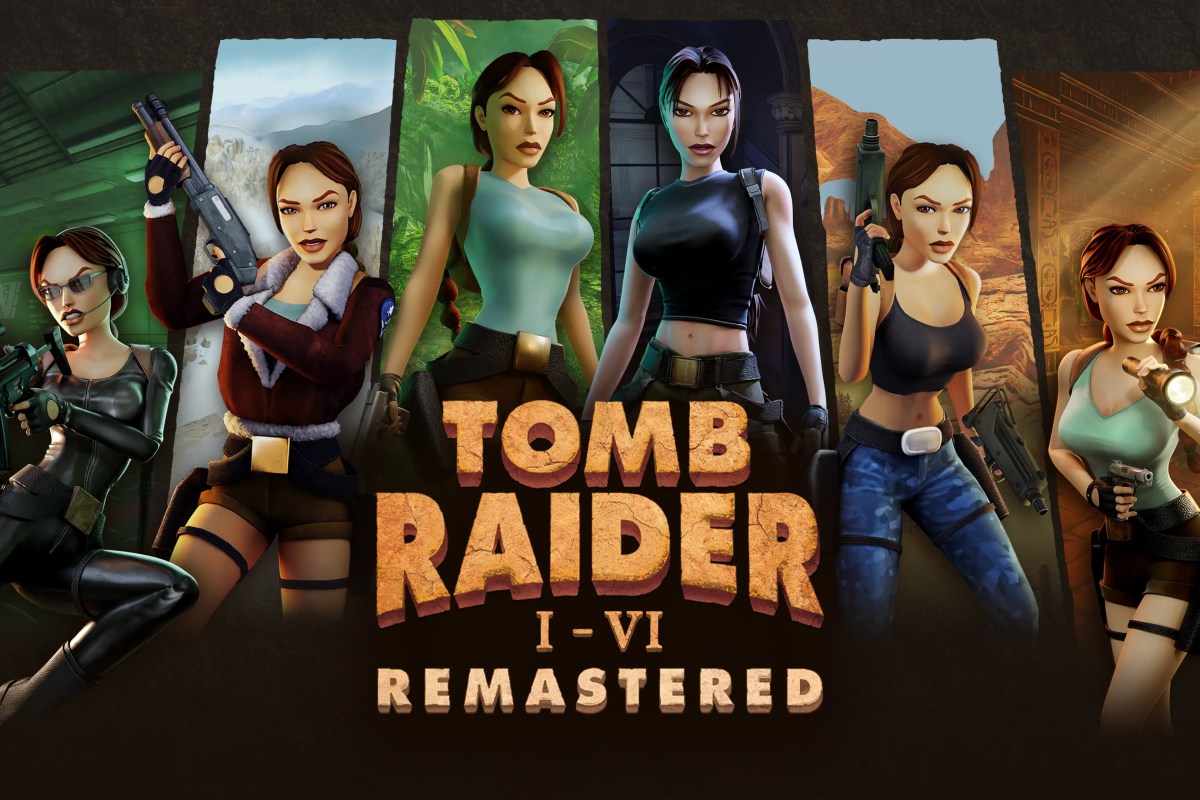
Two of my top-played games of the last year are Tomb Raider: Remastered I-III and IV-VI.

These are remasters of the first six games in the Tomb Raider series, originally released from 1996 to 2003.

The releases have delighted both longtime fans and newcomers with improved graphics and updated technology, bringing some of Lara’s most iconic moments back into mainstream gaming culture.

Since I finished the remasters, I got curious on following up the later games in the series, and hope soon they are also remastered and packaged just like the rest of the series.

But now after a good few months of my life has been dedicated to Lady Lara Croft, I decided it was time for my rankings of the best levels in each game. The series has designed some great locations over nearly thirty years and so I wanted to celebrate them here today. Let’s start!

Tomb Raider (1996) – St Francis’ Folly

I’m already courting controversy with this pick. It’s widely accepted amongst the TR community and in gaming that the best level of the original game is the third level, “Lost Valley”. It’s the level where Lara comes face-to-face with a T-Rex.

And while yes, it’s quite amazing when the T-Rex theme kicks in and the dinosaur appears out of the pitch-black draw distance, the rest of the level is standard jungle/cave exploring. Instead, my level choice is both iconic and a technical marvel.

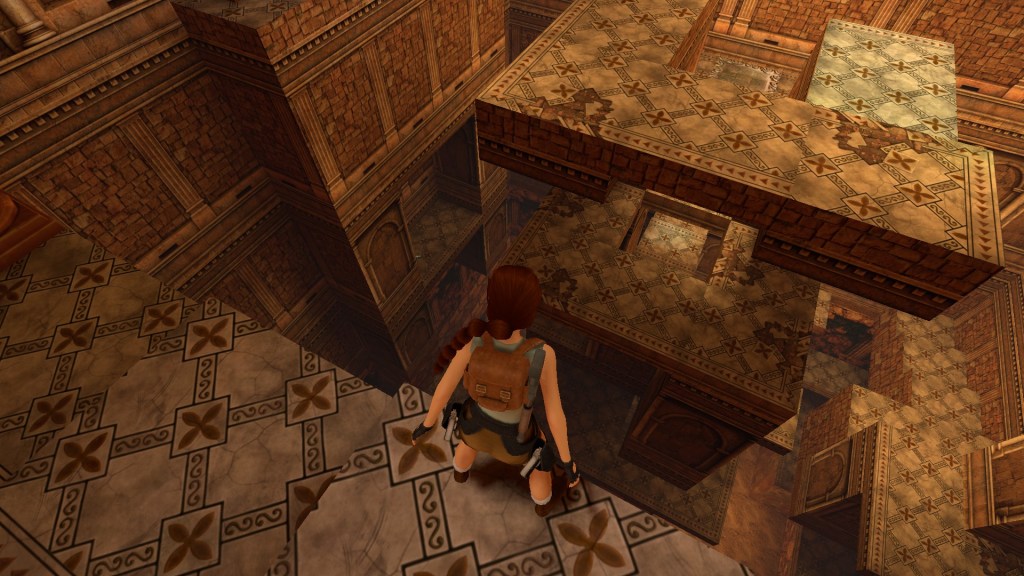
“St Francis’ Folly” is the 2nd most-famous level of the first game. A hidden complex underneath a Greek Monastery, “St Francis’ Folly”’s main structure is its high-point (metaphorically and literally); a broken central column where one mis-step will send Lara plummeting to the ground below.

Lara must traverse the central pillar and face devious challenges based on four Greek gods; Atlas, Damocles, Neptune, and Thor (I know none of these are either Greek or technically gods, I’m just going by the game).

Each of these challenges; escaping a boulder, slowly working through a room while swords drop towards you, being pulled down into a bottomless pool of water, and walking under a giant hammer, would have made the level iconic.

But pair all of those with the central column (which you can’t even see the bottom of from the top platform) makes this one of the best levels in the entire series.
Source: oldgames.sk

Tomb Raider II – 40 Fathoms

Again, this will probably raise some eyebrows in the TR community.

TRII has some iconic levels, such as the opening sequence on the Great Wall of China or the final level where Lara seemingly slips into an alternate dimension of floating jade islands, flying statues, and walls of fire.

But for me, “40 Fathoms” is the best due to its starting location. Having stowed away on a bad guy airplane and landing at an oil rig, Lara learns a magical item is lying inside a sunken ship and the bad guys are sending divers down to collect it.

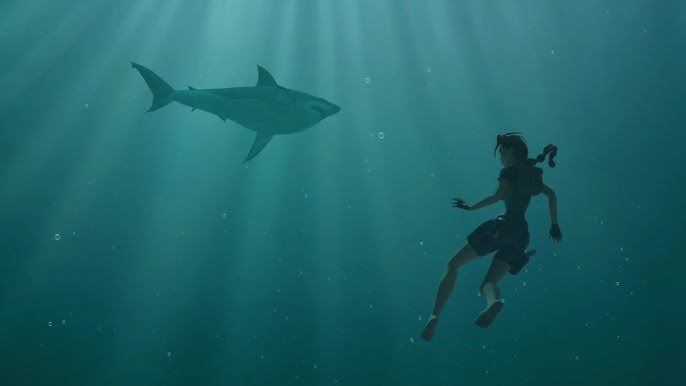
Lara hitches a ride on the outside of the submarine heading to the wreck, but sharks attack the submarine and cause it to crash, leaving Lara alone in the cold and dark water.

That’s where the level starts; The submarine’s lights flicker out and it begins to sink, sharks begin to circle, and Lara’s air supply begins to tick down.

There is a quote from Toby Gard, lead designer of the first Tomb Raider game, about the Neptune trial in “St. Francis’ Folly”.

“The moment you step into [the pool], it would suck you all the way down to the bottom and I wanted to get this feeling of that terror of being deep underwater and knowing you can hardly swim back.” (13:41)

That feeling, that idea, is beautifully replicated here in “40 Fathoms”; it is pure, undiluted terror. The dark void surrounding you, knowing there are monsters out there, your air supply running out, and having no clue where to go…that’s why it’s on the list and why it’s my favourite level in all of Tomb Raider.
Source: YouTube, Buffalo de Bill

Tomb Raider III – Nevada Desert

Okay, this is the first of my level choices that might be more widely accepted.

Actually, there are quite a few levels that might have been in this spot. TRIII has some great levels across four widely different biomes and any of the opening levels to these mini-adventures could have been in this spot.

“Antarctica” is cold and windy, “Jungle” in India feels muddy and damp, “Thames Wharf” in London is dark and rainy, and “Coastal Village” in the South Pacific feels tranquil and isolated. But I decided to go with “Nevada Desert” as my pick because it feels unique to the series.

The landscape is beautifully otherworldly, a mixture of open plains, quicksand, glacial canyons, and rivers, giving Lara the full aspect of climbing, jumping and swimming throughout the level. It feels like a proper extreme sports vibe that Lara would chase after.

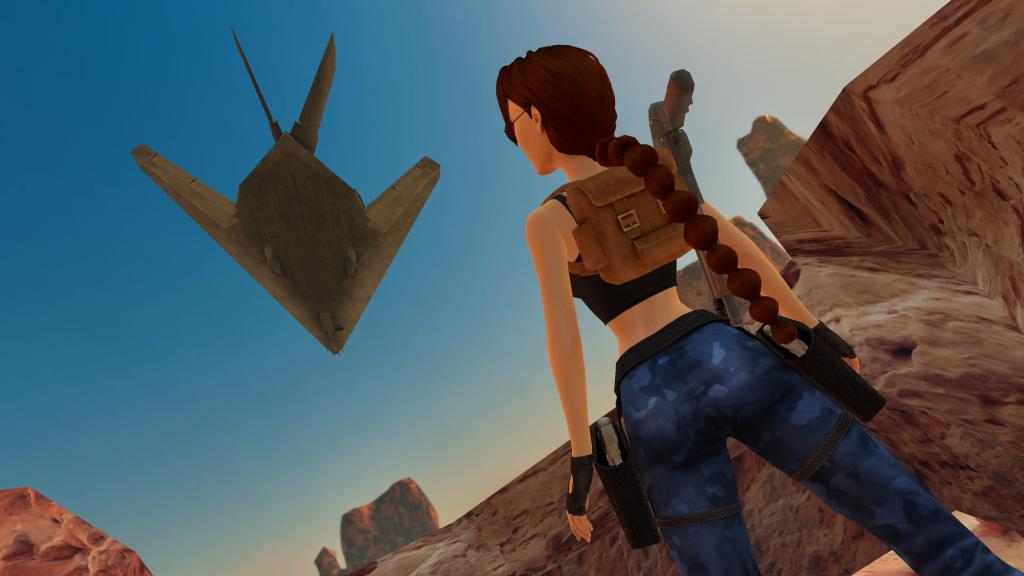
Starting with Lara sliding down into the desert basin, the atmosphere is top-notch, giving a great sense of the dry and hot landscape we have to traverse through. Vultures circle ahead and snakes hide in the tall grass, waiting for Lara to stumble close enough to attack. 

And then as we climb to the top of the rock formations, black stealth aircraft begin flying just over Lara’s head, showing us that we are not alone in this supposed wasteland. We soon find a water dam station and high security fences, leading to Lara stealing a quad bike to jump the barbed wire and land in…Area 51 (yeah, that happened).

Let’s not forget Lara’s outfit for the location as well, trading in the classic green top and shorts for a black crop top and baggy blue camo pants, showing how raiding tombs (or breaking into military bases) can still be done with style.
Source: reddit.com

Tomb Raider IV: The Last Revelation – Desert Railroad

The Last Revelation, despite only being set in Egypt, has some excellent locations. Driving a jeep across the desert in “KV5”, climbing up “The Great Pyramid” during the apocalypse, or facing devious traps in “The Tomb of Seth”, The Last Revelation does deliver.

But one level stands out amongst the rest and is truly iconic.

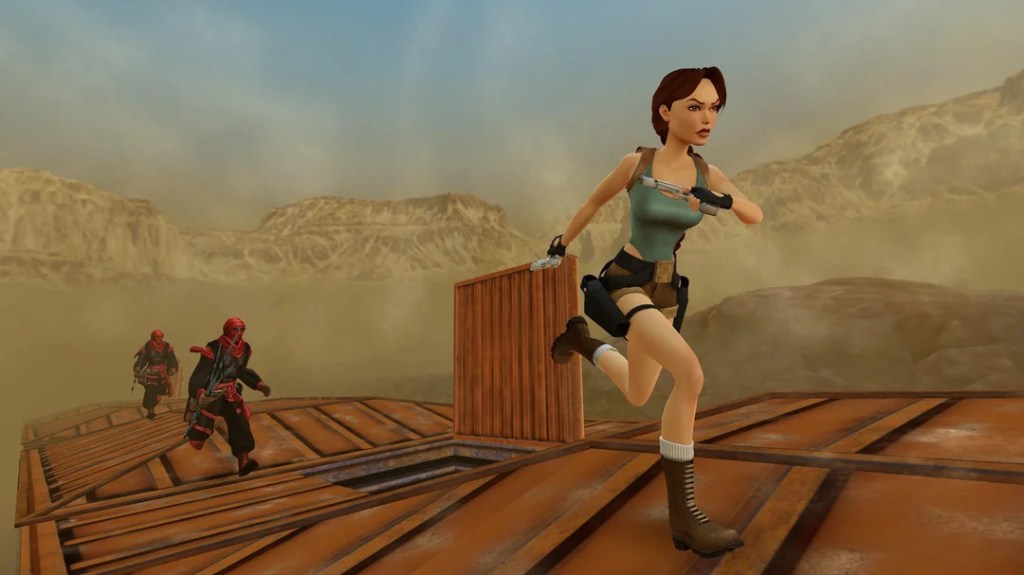
“Desert Railroad” might not feature temples or tombs, but facing bad guys on a moving train is the most cinematic level in all of classic TR. While it’s probably all very simple repeated graphics speeding past or under the train, just the fact we are on a moving object is great.

There isn’t much too the story or gameplay, just Lara needing to traverse over, under, and through the train to reach the back and collect a crowbar, to then go all the way back to the front and unhook the cars behind.

The level is very heavy on combat as bad guys pop out from hidden hatches or jump aboard from jeeps running alongside the train. Combat has never been TR’s strong point, but the spectacle of backflipping while on a speeding train will never get old. You can see where Naughty Dog got their idea for the train level in Uncharted 2.

And the final cherry, seeing Lara get caught under the train with a crunch if she misses a jump…oof it looks painful.
Source: reddit.com

Tomb Raider: Chronicles – Old Mill

Tomb Raider: Chronicles took a different approach to storytelling than the other games, instead treating players to mini-missions throughout Lara’s life.

One section, set on an island off the coast of Ireland, sees teenage Lara sneak aboard a ship belonging to her family friend Father Patrick and comes face to face with the undead and demons that haunt the island.

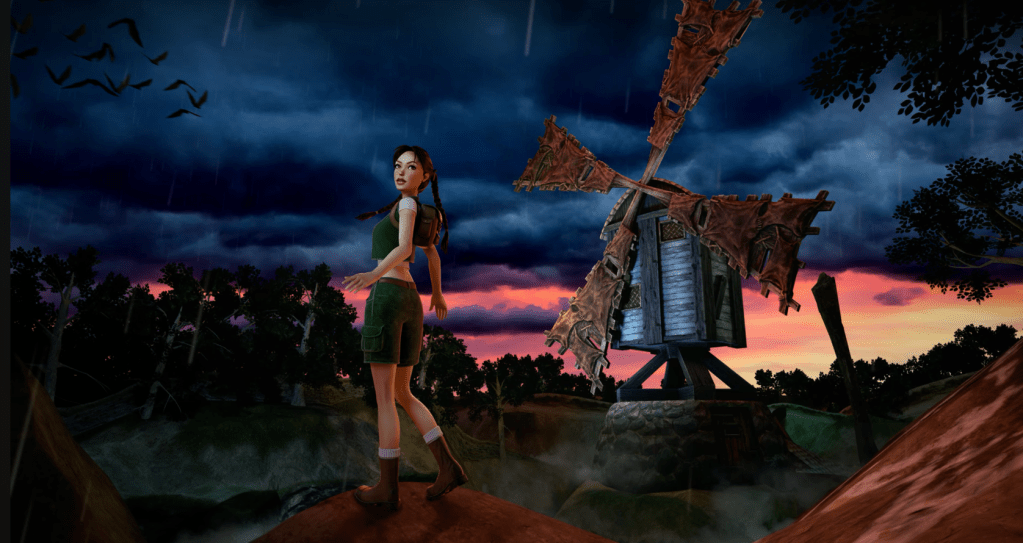
After passing an undead man hanging from a Gallow’s Tree and being chased by a werewolf through a Labyrinth, Lara then has to save Father Patrick from an undead knight who has been trapped in an Old Mill.

The setting is creepy enough with musical stings and otherworldly sounds. Lara being a teenager means she doesn’t have any of her weapons yet, so combat is non-existent, meaning you have to run away or outwit every creature.

Old Mill has one standout monster, the Sea Hag. Lara is tasked by the knight to stop the water flow of the mill, and so she must journey into the nearby lake. The Sea Hag, like a mermaid without skin, lives in the lake and will attack Lara if she catches her.

Lara has to stealthy swim around the Hag, luring her into a cage so other demons can fish the Hag out of the water, allowing Lara to proceed into the underwater caves.

Outside of the lake there are several nasty traps of water that will pull Lara to her doom, as well as the rickety roof of the mill and surrounding houses, that Lara has to jump between.

It’s really cool to see this little level from such a height and a treat that the original TR theme is slowly interwoven into the music.
Source: Youtube, MBog

Tomb Raider: The Angel of Darkness – Louvre Galleries

The Angel of Darkness turned the series on its head when it was released, playing more into an occult murder mystery than a straight treasure seeking adventure.

While some of its levels were a bit too modern or hi-tech in my view (things like derelict apartment complexes in Paris or a sanitarium filled with monsters), one of Lara’s earlier goals requires breaking in to one of the most guarded buildings in the world; The Louvre Galleries.

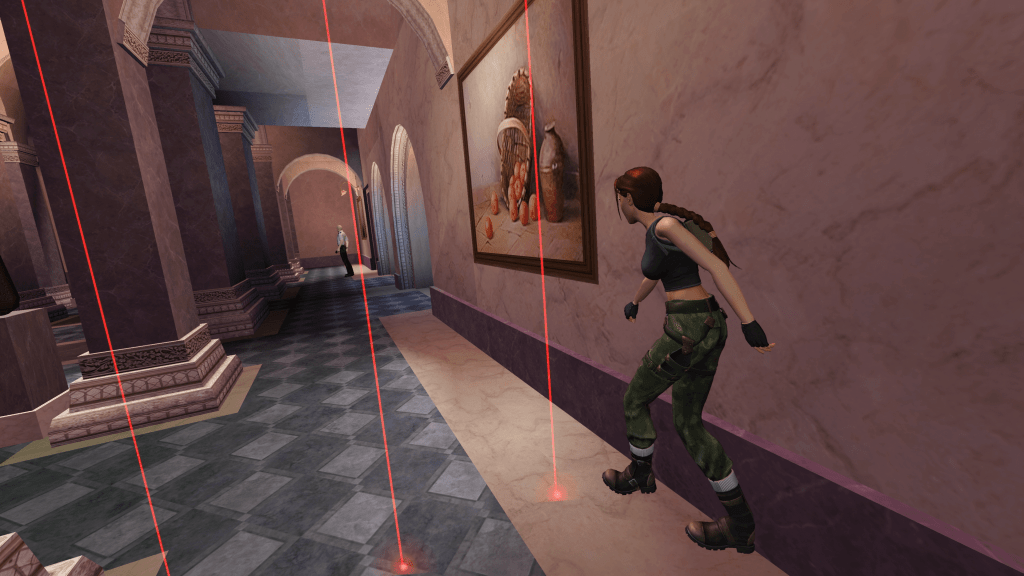
The Louvre is such a cool setting for a game and still fits with the general Tomb Raider aesthetic. Lara must slowly work her way through the galleries, stealthily taking out guards and slipping past laser trip wires, even climbing above the Mona Lisa to enter an air vent shaft.

Even from there it’s not smooth sailing for Lara, sneaking through tunnels and eventually outside and scaling the side of the building to reach locked off sections of the museum.

It recalls the style of The Da Vinci Code, of priceless relics giving clues to further adventures, the cunning grave robber effortlessly passing by security hazards to get to their goal. It’s such a standout level, echoed in games such as Uncharted 2, and I’m surprised the series hasn’t tried going back to a museum for a similar mission.
Source: store.epicgames.com

Tomb Raider: Legend – King Arthur’s Tomb?

Tomb Raider: Legend was the first game from Crystal Dynamics, who took over the series after the critical and commercial failure of The Angel of Darkness.

They brought Lara back to the tombs and exotic locales while also updating the controls for the modern day. The level “King Arthur’s Tomb?” Seems to have been designed from the ground up to be THE level to test the player’s mastery over Lara’s acrobatics.

Starting in a novelty King Arthur theme park before making our way underground into a crumbling and flooded tomb, The level focuses on precise jumping, evading, and climbing skills, with breakaway floors, fire pits and hidden blades in walls all waiting for Lara to slip up.

My favourite section is a large stairwell leading down into the tomb, the only issue being the stairs have fallen away to time, leading Lara to have to scale down using the small natural outcroppings in the walls and her handy grapple as a makeshift rope swing, flinging herself from wall to wall in order to not tumble down to the bottom.

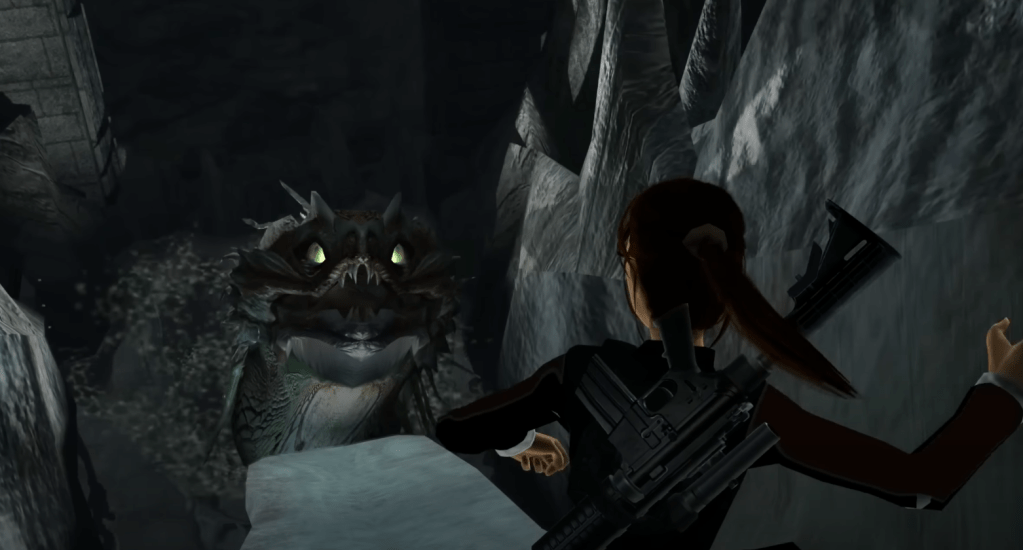
After navigating through several flooded chambers (using coffins to float along), Lara is deposited into a giant lake, with a beautiful and towering tomb built for King Arthur. The tomb is not unguarded though, with a giant serpent living below its depths. It can’t be killed by conventional means, so Lara must use the environment to defeat it.
Source: YouTube, steven3517

Tomb Raider: Anniversary – Midas’ Palace

Tomb Raider: Anniversary is a remake of the first Tomb Raider game, updating the levels and visuals to fit with the new gameplay introduced in Legend.

Some levels like “St. Francis’ Folly” have hardly changed a bit, where some like “Tomb of Tihocan” have been radically changed (to the point of being cut). The level here is a bit of both, remaining faithful but adding its own unique twist, and it just so happens to be my favourite.

“Palace Midas” in the original game was a sprawling trek through multiple cave systems and rock formations, finding a palace that had gone through cave-ins and destruction, seeing the few remaining rooms and columns (and only the feet and hand of what would have been an impressive Midas statue).

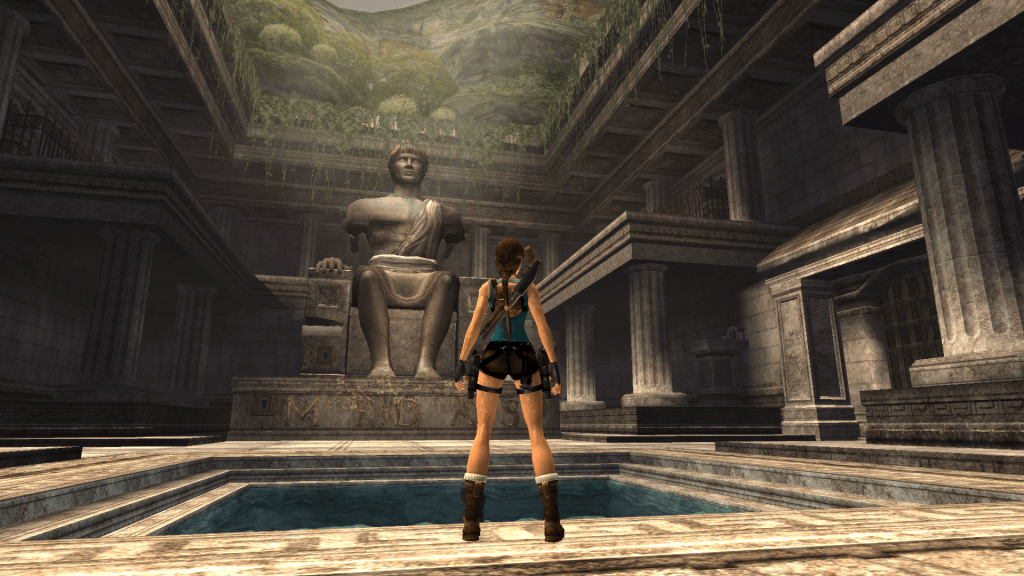
Anniversary decides to give the players what the palace would have looked like in its time. The opening room is impressive enough with beautiful polished marble, hanging gardens, and small waterways on the balconies above.

The player in Anniversary enters the level through a large set of door at the other end of the main room, framing the complete Midas statue at the other end, allowing its space to dwarf Lara in comparison.

The side rooms, essentially mini-tests of agility and speed have been pushed to the extreme. No longer are they simple platform leaps around spikes or spits of fire, the platforms move up and down and the hazards are numerous.

And since it’s Midas’ Palace, I can’t not mention the optional death where Lara is turned to gold. 
Source: reddit.com

Tomb Raider: Underworld – Bhogovati

Tomb Raider: Underworld still has some of the best looking environments in gaming up to this day.

With locations ranging from hidden temples in both the Mediterranean and Article Sea, overgrown complexes in the Mexico jungle (and having to use a motorbike to quickly move between them), and even a fun delve into the undiscovered caverns of Croft Manor, they are some of my favourites in the entire series.

But “Bhogovati” is one of the highest rated levels in the whole Tomb Raider community. Set in a forgotten temple on the coast of Thailand, the level is a greatest hits of both old and new Tomb Raider.

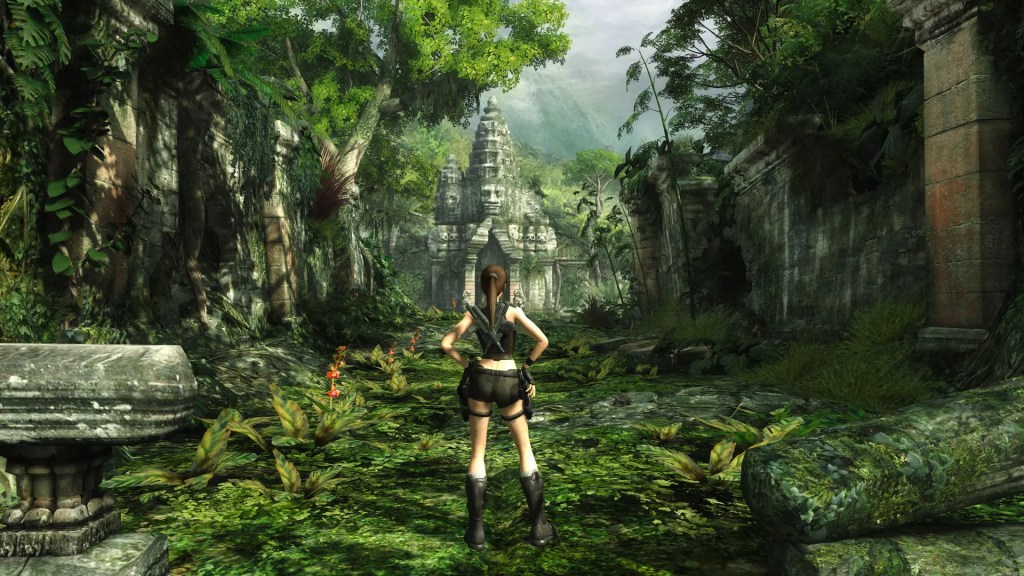
We start by swimming through crystal clear blue waters of the Andaman Sea to then scaling the rocky cliffs overloaded with vines. Once player reach the top of the cliff, players are greeted with a beautiful sight; an undiscovered temple looming high in the distance, perfectly framed against the sky.

Once inside, the level keeps getting better, with a multilayered puzzle involving two huge statues that Lara must control using levers and pulleys, getting both in the correct position to move forward.

It’s pure and classic Tomb Raider, a perfect blend of platforming, puzzling, and excellent atmosphere.
Source: tombraider.com

Tomb Raider (2013) – Cry for Help/A Road Less Traveled

Tomb Raider (2013) was a major shake up to the Lara Croft formula. Gone was the cool and collected Ms. Croft and instead a younger and naive adventurer on her first of many expeditions.

The level design was also radically changed; instead of individual levels and tombs, now the game was set on one island with Lara being able to go anywhere she wanted.

With this nomination, I’m cheating a little as it is two “missions”, but they lead into each other perfectly.

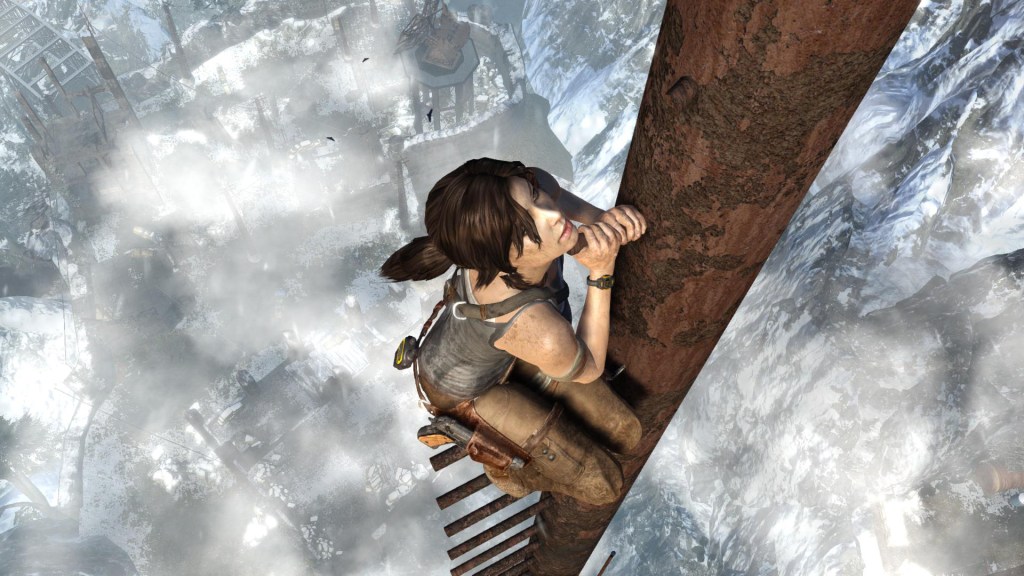
In “Cry for Help”, Lara is tasked with climbing a radio tower to send a distress signal. It’s a great character moment, of Lara having to stamp down her fear, the wind and snow whipping at her as she climbs higher and higher.

When Lara reaches the top and figures out how to send the signal, a radio message from a search and rescue plane comes through loud and clear. It’s a great moment of tension release, of knowing that help is on the way. The first time I played it, I remember I actually sighed with relief.

As the plane comes in to land, clouds begin to billow and lightning strikes, sending the aircraft plummeting towards Lara. She throws herself down the mountain side as the plane crashes, wings and turbines threatening to crush her.

Once Lara finally escapes from the plane’s downward trajectory, she begins to follow the distress signals of the two pilots through a cliffside village and the level “A Road Less Traveled”.

The setting is perfect for platforming and acrobatics, while also being a cool from a visual standpoint. The wooden houses and huts are attached to the cliff with nothing but a few beams and ropes, small stone pathways jut out from the cliff face like wayward teeth, and war banners (that Lara uses like a trapeze artist) flutter in the breeze.

Tomb Raider (2013) does a great job of making the player feel absolutely isolated in a dangerous world, and “Cry for Help” and “A Road Less Traveled” perfectly illustrates it.
Source: tombraiderhorizons.com

Rise of the Tomb Raider – The Prophet’s Tomb

Rise of the Tomb Raider follows 2013’s level design principle by having only one location for the game, taking place in a magical valley in Siberia.

But the game does feature one extra location for its opening section, “The Prophet’s Tomb” in Syria.

Following clues to an apparent immortal being buried in a hidden oasis, Lara races against nefarious bad guys in order to uncover the secrets of the tomb before they do.

“The Prophet’s Tomb” is like “Bhogovati” before it, a great modern take on classic Tomb Raider. It switches mechanics from platforming and puzzling, juggling quieter tension-building moments with the usual break-neck destructive set-pieces.

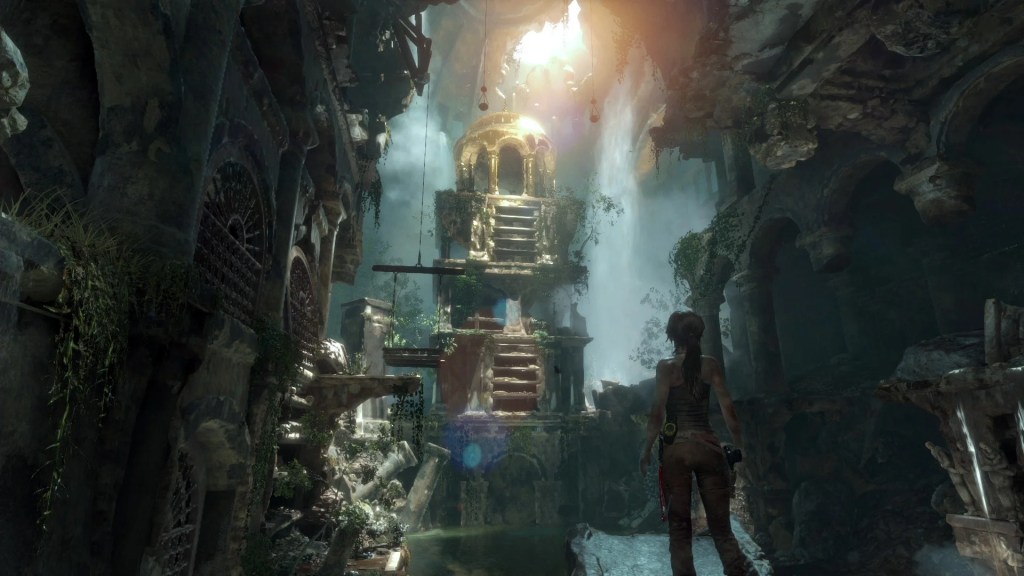
The setting is gorgeous; a huge desert mountain gorge lined with Greek columns and marble with the structure slowly deteriorating as both time and Lara make their mark.

Inside the first few ante-rooms are skeletal knights and spike traps. Christian murals cover the walls, telling a story of the Vatican hunting down the same prize Lara is after.

The central burial room is awe-inspiring, with flowing waterfalls and gilded structures, and a puzzle that throws back to the first Tomb Raider with having to flood areas to change the water level to proceed.

It’s a great mini-location and my only wish was that it lasted a bit longer.
Source: ign.com

Shadow of the Tomb Raider – Hunter’s Moon

Shadow of the Tomb Raider sets itself in Peru for the majority of the game. But just like Rise before it, Shadow has a mini-location of its opening, here being Mexico.

And once again I’m choosing one of the opening missions as the best level, because they are excellent updates to classic Tomb Raider.

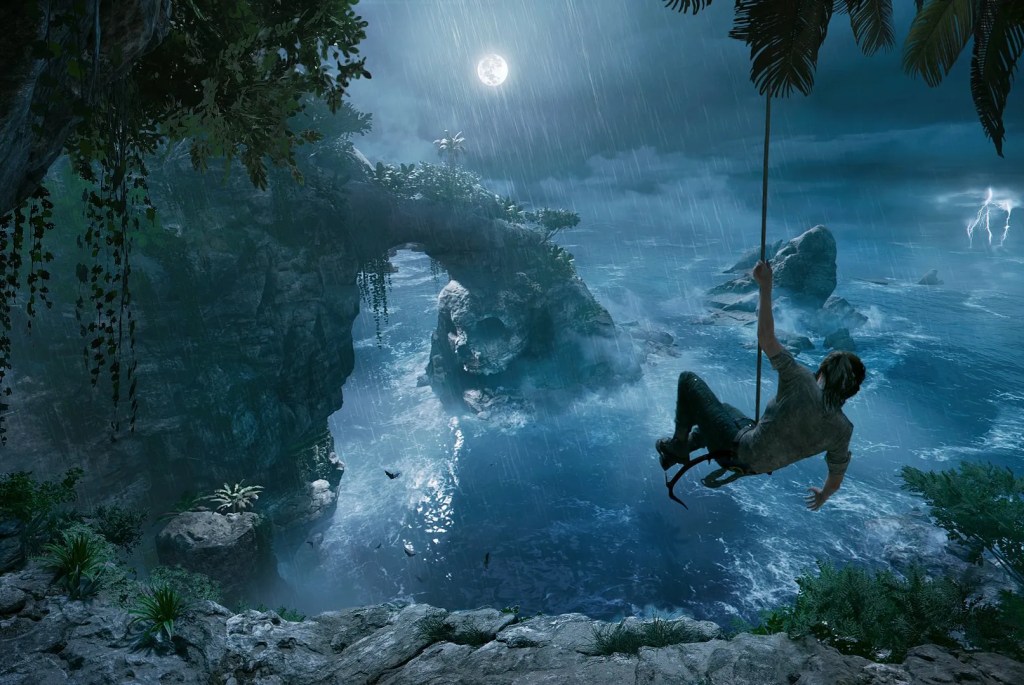
Starting in the dead of night in Cozumel, a island off the coast of Mexico, Lara is hot on the heels of bad guys who think they know the entrance to a hidden temple.

Following close behind, “Hunter’s Moon” begins with Lara scaling around the rocky cliffs to the secret cave entrance with nothing bull rolling white water below her.

The landscape is awe-inspiring, especially when Lara gets to rappel down from the cliffs, admiring the scenery while being suspended in the air is something I’ll never get tired of.

Once inside the cave, Lara is forced to swim through a flooded cenote. While there are a few pockets of air to help along, there are hazards like eels that wrap themselves around Lara, choking out precious air supply.

The final swim harkens back to the Neptune Room and “40 Fathoms”, as Lara is having to squeeze through rock formations to reach the surface, getting stuck and having to force herself through. I remember I actually held my breath in anxiety until she surfaced.

Climbing out of the water leads straight to the underground temple, and when I say underground temple I mean there is a huge Mayan Pyramid built in the cave system.

The lighting and shadow look amazing here and I love the way puzzles circle the pyramid, getting us closer and closer as we figure out each one. Once there Lara steals the shiny object…and unwittingly sets off the apocalypse, a great inciting incident for the rest of the game.

It’s quintessential Tomb Raider, and that’s why it completes the list of the best levels in the Tomb Raider series.
Source: polygon.com

Photo Banner Source: tombraider.com

Tomb Raider’s Unified Timeline: Explained

2021 marks the twenty-fifth anniversary of the Tomb Raider franchise.

While there is no new game on the horizon, Crystal Dynamics, the main studio that has been creating Tomb Raider since 2006, did announce something big, something to change the landscape of the franchise.

Up until now there have been three separate timelines of Lara Croft; the original Core Design era, the first reboot by Crystal Dynamics (often referred to as LAU, the letters of the three games of said reboot), and most recently the trilogy known as the Survivor timeline, starting with TR: 2013.

While these separate timelines have had crossover characters and reimagined scenes, they are mostly thought of as three interpretations of the character…until now.

In a video celebrating the anniversary, it was revealed that whenever the new game will be revealed, it will incorporate every single Tomb Raider game before it, creating the newly-dubbed Unified timeline.

While the Unified timeline has been announced, there have been zero hints as the chronology or where the series will pick up afterwards. But as someone has more than a passing interest in the last twenty-five years of Tomb Raider, I thought I would give a go at laying out a possible timeline, trying to knit it all together in one continuous line with as little breaks as possible.

Oh, and I would just like to say I called the Unified timeline two years ago when I wrote a post outlining what I would want to see in the next Tomb Raider game (in Section Four).

Tempus FugitTomb Raider’s Unified Timeline (in what I have to admit amounts to fan-fiction)

Early Lara

We start with the plane crash over the Himalayas. This was the backstory for Lara in both Classic and LAU timelines, with the only differences being age of Lara (21 in the original, 8 in LAU) and Lara’s mother, Amelia being present in the latter.

I think the new series will keep the LAU ideas but age Lara up, maybe into her early teens. This allows them to neatly tie up the mother/father storylines of the new games into the Classic games.

Trekking through the snow after the disappearance of her mother, Lara finds a need to be on the edge of life (as laid out in the Classic timeline), and she starts to head to all sorts of places with her father, Richard Croft, alongside his friends Conrad Roth, Werner Von Croy and Charles Kane.

One of the expeditions is a fateful trip to the Angkor Wat in Cambodia with only Werner and Lara present (as seen in Tomb Raider IV). Werner is injured by a trap Lara told him about but he dismissed as ‘hocus-pocus’, and as the tomb starts to collapse, Lara escapes, leaving Werner behind.

A search and rescue is ordered (maybe even led by Roth and Papa Croft) but they find Werner has already escaped using the magical artefact, the Iris (that Werner was searching for in Cambodia in TR4, and which it is shown has teleportation powers in Tomb Raider: Chronicles). Despite escaping, Werner now has a permanent limp (even being wheelchair bound for a while) and has a grudge against Lara for leaving him.

Richard Croft is unsure of putting his daughter in danger and tries to stamp out her need to experience the wild, sending her to Ireland with the butler Winston. Lara still manages to get into scrapes as she explores the haunted Black Isle (as seen by the Ireland levels in Tomb Raider: Chronicles).

Richard Croft is now invested in the mysterious and magical, inspired by Werner’s experience with the Iris. He starts neglecting Lara to do more search into immortality and items to bring back the dead, or finding where his wife vanished. This leads Lara to become increasingly reliant on Conrad Roth.

Roth, seeing that Lara will continue to travel the world, starts to train her in some skills like trekking, rock climbing, and even archery.

At around this time, Richard Croft exits the story. In the Survivor timeline he is murdered in his office, but I believe they will have him disappear while working in the field (as seen in the LAU timeline).

This leads into…

First Expeditions

There’s no getting around it, the Survivor games are seen as Lara’s introduction to being the ‘Tomb Raider’ so this bit has to go first.

Everything in the 2013 reboot, Rise of the Tomb Raider, and Shadow of the Tomb Raider, as well as little bit of the comics happens in the Unified timeline. Roth goes with Lara, hoping to mentor her better than Werner all of those years ago.

The only caveat I will make is that by the end of Shadow of the Tomb Raider, Trinity, the nefarious organisation that Lara has been battling with since the reboot began (and was instrumental in the death of her father) are wiped out, or are brought down enough that they will never return.

With the death of many of their high-ranking operatives at her hands, Trinity goes away, and Lara starts to enjoy life again, even starting to do some archeology (ya know, the thing she got a degree in).

She leads an archeological dig to Paraiso in Peru, but soon tragedy strikes when the dig site is attacked by a monstrous shadow being (as seen in TR: Legend, the first of the LAU games) and kills nearly everyone else on the dig.

After all these expeditions and seeing the countless deaths of her friends and colleagues, Lara decides it is time to head out into the world alone. She also vows to keep as many powerful artefacts in her possession, lest Trinity or another similar force gets their hands on them first.

Seasoned Raider

As time has gone on, Lara has encountered many treasure hunters and explorers, searching for the same artefacts as she does.

Some notable ones are Pierre Dupont and Larson Conway (from the Classic series) and Carter Bell (from the side game Temple of Osiris and the comic books) as well as her old mentor Werner Von Croy.

As seen in Tomb Raider: Chronicles (and the first expedition of Lara being alone) she battles against Pierre and Larson for the Philospher’s Stone. She meets them again later when Lara is hired by Jacqueline Natla to find the pieces of the mythical Scion and uncovers the remains of Atlantis (as seen in TR1/Anniversary).

Next, Tomb Raider II, sending Lara all the way from Venice, to the Indian Ocean, Tibet and finally China.

Soon after she heads to Russia after hearing about an underwater reconnaissance for a mysterious artefact. She calls one of her father’s old friends, Charles Kane, for assistance, due to his knowledge of countries that used to be behind the Iron Curtain (as seen in Chronicles and referenced in Anniversary).

When Kane tells her she will be going up against the Russia mob, Lara replies, “Dealt with mafiaoso before, unpleasant memories,” showing that this section happens after TR2.

After Russia, Lara learns that Werner Von Croy has been doing tests on the Iris that he escaped with in Cambodia.

From the cutscene at the beginning of TR4, Lara knows that this artefact is dangerous, so breaks into Von Croy’s HQ in New York (as seen in Chronicles) and steals the Iris (as the Iris can be seen in Lara’s treasure vault in TR3, showing she came into possession before the events of TR3).

Lara stealing the Iris widens the rift between Werner and Lara, but also ends Lara’s insistence on being alone during her expeditions. To break into Von Croy’s building, she needs help from a man called Zip, a former employee of Von Croy’s.

Using his knowledge of the building was instrumental for Lara, and so she hires him as a general tech advisor and aide. While she is out in the field, he stays behind at Croft Manor.

Before fully hiring him though, she has one last trip by herself in the form of Tomb Raider III. It is here though where she realises that she’ll need some extra help.

The amount of high-tech security she had to bypass in TRIII, not to mention the many hours of research to find her next destination have obviously taken a toll on Lara. She wants to be out in the world, not be in her manor doing thousands of hours of research.

So, alongside hiring Zip as her tech expert, she also hires Alistair, an old history colleague who helps research the places she needs to go to find her next artefact.

This leads into the Legend storyline, which then leads into Underworld (part of the LAU timeline). In Underworld Croft Manor is destroyed, Alistair is killed, and Lara does battle with Natla for the final time.

Lara once again is reminded that everyone around her is unsafe because of her, and so she severs ties with Zip, with only Winston staying with her.

Final Years (Death and Resurrection)

Leaving Winston to manage the rebuilding of Croft Manor, Lara heads back out into the world, alone, and into the story of The Last Revelation.

Learning that Von Croy is doing an excavation in Egypt for the fabled Tomb of Set, Lara sets out to beat him to the punch and steal whatever artefacts are buried in the tomb.

She does so, and inadvertently unlocks the Egyptian god of chaos from his prison. So begins a race against time between her and Von Croy, with him unaware of the larger implications of Set coming to destroy the world.

Von Croy is possessed by Set, but Lara manages to seal the evil god away beneath the Pyramids of Giza. As she exits the tomb, she sees Von Croy standing before her. The tomb starts to collapse and Von Croy offers his hand, seeing Lara in the same position as he was all those years ago.

Lara is still unsure whether Von Croy is under the influence of Set though, and so sadly falls into the tomb, presumed to be dead (all seen in TR4).

A memorial service is held for her (as seen at the beginning of Chronicles) at the recently rebuilt Croft Manor. While everyone else left her for dead, Von Croy is busy digging through the pyramid, eventually finding her.

It’s never actually explained how long Lara is buried underneath the pyramid for, but for the Unified Timeline, I’m going to say it was anywhere from a couple of weeks to a full month, with Lara barely surviving.

Having been buried alive, Lara is no longer the seasoned raider she once was. This can be seen in the next and final game in the Unified Timeline, Angel of Darkness. She does not have the strength, stamina, or reserve she was once known for, now she is cold, ruthless, and angry.

At the end of the game, where she once again saves the world but at the cost of Von Croy and her new friend Kurtis, she walks off into the darkness…

Where to go now?

Let’s do a bit of a time scale. TR 2013 to Shadow is approximately five years. That puts Lara at 26 years old.

After a few more years of archeology with groups, ending with the massacre at Paraiso, Lara is now into her thirties.

Everything from Paraiso to the destruction of Croft Manor is would estimate to be another five to six years, meaning Lara starts her trip in Egypt at around 35 years old.

After the events of The Last Revelation, she takes a few years before Angel of Darkness starts. So in my approximation of the Unified timeline, Lara is nearing her forties.

I think this is where the Unified timeline will pick up. Keeley Hawes (voice actress for Lara during the LAU reboot and the ‘Lara Croft’ spin offs games) is returning to the series for the new Tomb Raider: Reloaded mobile game.

Could this mean she is coming back for the mainline series? It would fit age-wise, with Lara and Keeley Hawes being within the same range.

I also think the Angel of Darkness ending leaves the door open to a new game. I don’t think Crystal Dynamics will make a sequel to Angel of Darkness (two were planned, but when AoD was a commercial and critical failure, all future sequels were scrapped), but they might take aspects of the Lara we last saw in that game.

Lara was a lot colder in AoD than she had been before, jaded by her experiences and not being able to climb and jump as well as she used to. I’m not saying the next game has to be about building Lara up again into the Tomb Raider, but maybe showing a harder, colder edge.

But then we also have all the returning characters from all the timelines; Jonah, Zip, Charles Kane maybe, Winston obviously. These character will allow our heroine to take a breather, to smile, to be happy. That would be the best compromise between Core and Crystal’s two sides of Lara.

Fans should rejoice. Everyone is getting their Lara back. And I for one can’t wait to she where she takes us next.

Banner Photo Source: “Evolution of Tomb Raider (Lara Croft) 1996 – 2014” by blazeofmind.

A Defence of the Tomb Raider Reboot and Lara’s Dead Parents as Motivation

I recently began playing Tomb Raider: Definitive Edition, an updated version of the 2013 reboot. It has been well over half a decade since I have played the original game, so there was a cool balance of rediscovering a gem of the past generation, now in crystal-clear HD.

While the new games brought a different gameplay experience and a fresh-faced Lara Croft to the players, it reused a critical element of the previous reboot games story; Lara Croft’s parents are dead, and they are her motivation for her tomb raiding journey.

The dead parent trope is nothing new in pop culture, used in everything from Batman to Star Wars, Harry Potter and yes, Tomb Raider. This was seen as a contentious choice by Crystal Dynamics and narrative writer Rhianna Pratchett (alongside Jill Murray and Jason Dozois for Shadow), with the majority of the audience saying that it took away Lara’s agency, removing a strong part of her character.

And…I don’t agree. Now that we’ve had three years to see the entire trilogy, I believe the dead parents trope was a fantastic stroke of creative work.

Papa Can You Hear Me? – The Tomb Raider Reboot and Lara’s Dead Parents; A Defence

The original Tomb Raider games rarely acknowledged Lara Croft’s parents. We learn a little bit from her biography in the game manual for the first TR; how they arranged a marriage for her, but when she found a love of exploring and grave robbing, they disowned her, cutting her off from their lives.

It’s an interesting quirk of the original character; rather than running around tombs because of her parents legacy, she is breaking out for herself, being whoever she wants to be and rejecting the life that was laid out for her.

The only time her parents are ever seen in-game is at the start of Tomb Raider: Chronicles, where they attend the memorial service of their daughter, who is presumed dead in Egypt.

This all changed with the Tomb Raider movie in 2001, where Lara’s dead father was an archeologist, leaving clues for Lara to follow in his footsteps when he died searching for a powerful artefact. This carried over into the initial reboot series in 2006, with Lara looking for clues about her mother’s disappearance in Legend and Underworld, and following her father’s clues to an artefact in Anniversary.

This continued into the second reboot, with the few differences. Instead of disappearing, Lara’s mother died during a plane crash. In the first reboot, Lara’s father was killed by one of his enemies, but in the new reboot, her father was suspected of committing suicide, until it was proven it was staged.

Lara’s memorial service in Tomb Raider: Chronicles. This is the only time her parents appear in-person in the original Classic series. (Source: tombraiderforums.com)

When Lara’s parents are mentioned for the first time in TR 2013, Lara is notably dismissive of her father. At this point in her journey she has seen her father waste away, leaving her to essentially grow up on her own. He then commits suicide, with Lara discovering his body in his office. She’s not angry at him, but there is a bitterness and a feeling of wanting to separate herself from the Croft name and legacy.

Near the start of the game, Lara and the head archeologist Dr. Whitman start talking about the legendary Queen Himiko. Lara is playful but dismissive about Whitman’s theories, jokingly comparing him to their air-headed documentarian Sam. When Whitman continues talking about mystical and shamanistic powers Himiko was believed to have, Lara replies,

“You sound like my father.”

Unlike her previous jokey comments, in which comical sighs, suppressed chuckles and sarcasm can be heard, Lara’s remark about her father is cold, devoid of the previous inflections of humour.

It’s not only when she is with others that her disdain for her father can be heard. After she flees the Stormguard Monastery and the monstrous Oni, Lara reprimands herself in her journal entry, saying,

“Shit, just listen to yourself, Lara. You sounds like dad.”

She continues, but her tone becomes softer.

“It’s like they’re the remnants of some lost civilisation. Okay, now you really sound like dad.”

For the first time she is starting to believe her father’s crazy theories, the ones that drove him away from her. She has lost her father to these ideas, and only now she realises that they might be true. Despite seeing that he might have been right, Lara doesn’t want to be like her father. This can be seen when Lara’s mentor, Roth, tells her he sees her father in her, and Lara replies that she,

…[isn’t] that type of Croft.”

But now she finds herself drawn to the space where her father used to be, finally seeing things from his point of view. As seen in the final scene of TR 2013, Lara says,

“For years I resented my father, doubted him like the rest. But he was right about so much. I just wish I could tell him that now.”

She is finally coming around to being in line with her father. She continues,

“There are so many mysteries that I once dismissed as mere stories. But the line between our myths and truth is fragile and blurry. I need to find answers…I must understand.”

It’s this last line that forms the crux of the entire trilogy. She’s doubted her father for so long, but now has evidence that he was right. She wants to fix the space between them, even though it would do nothing, essentially repairing the bond with a ghost.

In both 2013 and RotTR, the campfires are host to Lara monologuing about her father, their relationship, and Lara trying to understand a man that she had previously written off (Source: stripes.com).

The rest of the series continues with this in mind. Lara is following her father’s footsteps, following his clues and his research, but the emotion behind it gives it added weight, giving it more layers, with Lara adding her own spin on it.

In Rise it is mentioned during her therapy sessions that she’s been reading through her dad’s research. Lara responds,

“There’s so much in my head, but I don’t have the connections…”

Later on during one of the campfire sequences she says,

“I think about Dad every day. For years I was so angry with him. For losing himself in his work, for chasing what I thought were fairytales. I keep telling myself that I was young…that I couldn’t understand. But I still lost him. And now…for some reason, I feel more connected to him than I ever did when he was alive. He never got this far, but I know he’s with me…but he’s gone now. I’m the only one who knew he was right.”

She’s actively trying to repair the bond they had. It’s a broken connection between father and daughter, first of hatred, now of fascination. It makes sense after the first adventure that Lara would throw herself into his work, his research, in order to better understand him and feel close to him, having so long ago tried to separate herself from his legacy.

That’s not to say that Lara is totally forgiving of her father. Throughout Rise Lara listens to tapes that her father made for her. One of these is a tape that he made for her when she was at school. She’s angry that he left her alone, saying,

“I know your work was important, but it didn’t feel like it at the time.”

She falls back on humour and sarcasm to deflect the dark thoughts in her mind, saying,

“Still, it taught me independence, how to look after myself. Important lessons as it turns out.”

The parents storyline culminates at the end of Shadow Of The Tomb Raider. Lara has the power to reshape the world however she wants, using the artefact of the game. Despite the myriad of problems in the world that she could fix, she stops for a moment and thinks of one selfish act. She travels back in time, possibly thinking of rectifying the past, of saving her parents and having a normal childhood.

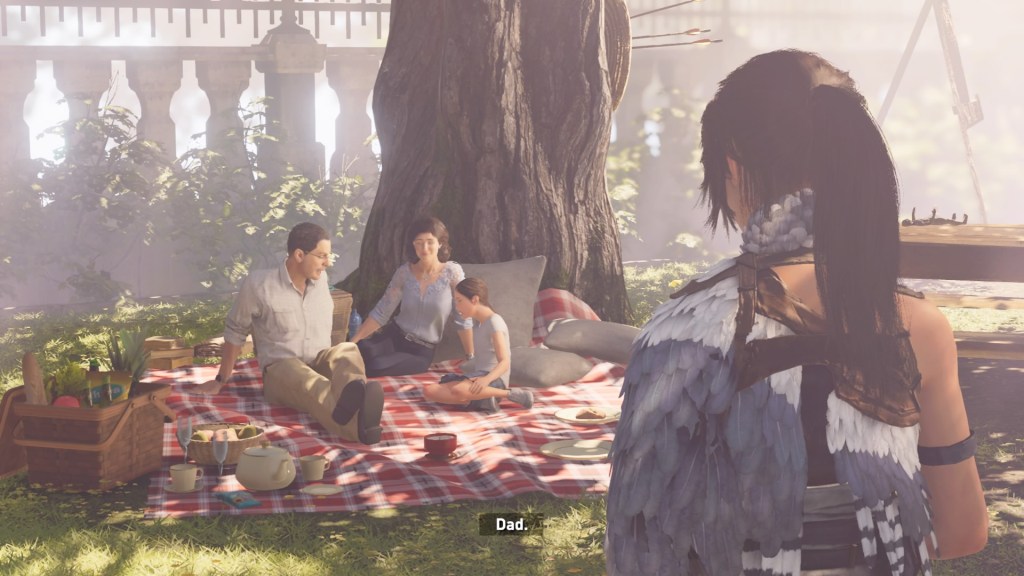
She travels to a half-remembered memory when she was young, when her mother and father were still alive, when they were having a picnic in the Croft Manor gardens. For the past two games she has been angry at her father, for burying himself away in his research, for neglecting Lara. She understands his reasoning, but does not agree that it was the right thing to do. This is why this memory is important.

Lara travelling back to a childhood memory in Shadow of the Tomb Raider, and finally putting the memory of her parents to rest. (Source: bloggingwithdragons.com).

This memory heals Lara, showing her that her father did in fact care for her and wasn’t the unloving neglectful monster that she thought him to be. It was obvious that her father loved her, as can be heard in the tapes that she listens to during Rise. But that love was only one-way; Lara was still dismissive of him during the time of Rise. It is only during this last moment when the bond is finally connected.

It is a beautiful melancholic arc that only hits when Lara is at the end of her journey. With the bond repaired she returns to the present, but holds that memory close at heart, filling her room at Croft Manor with items to remind herself of her parents.

So while detractors may sniff at Lara’s dead parents being used as a motivating factor instead of giving the heroine her own reasons to gallivant around the world, I maintain that this was an interesting inversion of the idea. It was cool to see Lara’s initial anger change over the course of three games, subtly morphing as Lara finds more and more ways to connect with the memory of her parents.

It was a great trilogy, backed by a powerful and personal story of growth and change, of Lara learning about herself and her family, seeing with fresh eyes someone she had previously written off.

It’s a nice arc, one that ends with Lara finally putting the demons of her past to rest, giving her a clear canvas to move onto.

***

Banner Photo Source: gamebyte.com/deviantart (@danytatu)

Ideas for Post-Shadow Tomb Raider

It has just been over one year since Shadow of the Tomb Raider was released. I wasn’t bowled over by the game (Rise is still my favourite of the new reboot series), but it had enough to keep me engaged.

However, I feel a need for change is coming on again. 2013 was a revelation, creating a Tomb Raider game and a Lara we hadn’t seen before. Rise built upon its predecessor’s work and tweaked and refined the experience.

Shadow… it feels a bit like replication. It is a very good replication and has a few nifty surprises hidden in its backpack, but it is not so much a step forward rather than a step sideways.

I don’t think this is just personal bias. For all the talk of Shadow being the final event that turned Lara Croft into the Tomb Raider, it felt like a story being stretched further than it needed to be.

So, with the reboot trilogy finished, let us throw a few ideas around that I would want to see in a new Tomb Raider game.

Where Should Tomb Raider go After Shadow of the Tomb Raider?

  1. A Different Lara

One of the things I find fascinating about Lara is that in twenty years she has gone through several redesigns but remains instantly recognisible. That may be a statement on female characters in gaming, but also could be because of her iconic outfit and accessories.

Now that we’ve had half a decade of hyper-realistic Lara, I wouldn’t mind a touch of cartoon styling for her next appearance. I don’t mean make her the impossibly proportioned character from the 90s, but something a bit more…Amazonian (a descriptor that was actually used in The Angel of Darkness at 1:03:16).

Lara is meant to be this kickass character able to throw herself up sheer cliff faces and fight a whole manner of creatures, so make her the peak of ‘killer kickass’. Shadow teased us with a character model with biceps before they nixed the idea. Let’s see that this time around.

My main two ideas for a cartoony Croft were Gridlock from Rainbow Six Siege and Laura from Street Fighter V (seen down below respectively). Both these women look like (and can) go toe-to-toe with any male character in their games, and I think it would work well seeing a physically imposing Lara, showing how she has changed over time. I wouldn’t even mind if they kept the scars from Rise and Shadow, another token of the change and history of the character.

With a less realistic design we could change Lara’s movement as well. I’ve recently been replaying Legend and one thing that struck me was that Lara’s movement is…goofier?

For example, instead of just climbing up a ledge, Lara will fling herself up using only her upper body strength and onto her feet. If a player continues to tap the Roll button, Lara will throw herself into a gymnastic display worthy of an Olympic gold medal. I haven’t even mentioned the swan dive and handstand that she could perform in the original series. I like these more over-the-top approaches.

In terms of character, yeah, I kind of want to see a more playful Lara next time around. Rise had a few moments, but I felt Shadow had hardly any levity (although that game was about the apocalypse so I’ll let it slide). And regarding her parents, it’s been cleared up, let’s move on.

  1. A Reworked World

It was quite a big step in 2013 to have Tomb Raider set in an open world, although it seems rather obvious. Previous games would have massive levels (with some in TR4 actually having multiple points of entry and having to return to a few of them several times), but 2013 nailed a great formula.

But just like a change regarding Lara, I am feeling an itch for a change in the level design. While I was playing Shadow I went for a trek and found some interesting places and hidden nooks, but then when I returned and spoke to the NPC to start a mission, the NPC took me through a whistle-stop tour of everywhere I had just been. It felt so weird to play through, and this would happen multiple times throughout the game, to the point where I stopped exploring (which is the antithesis of the game’s vision).

However, going back to a more linear frame would hamper the series, as it seems to have flourished now it has more room to play around with. So let’s make a compromise; a big but linear hub world, with several paths leading to several tombs. These tombs can be signposted by small but very deliberate signs like rocks in an odd formation or a broken tree (similar to the Monolith Puzzles in Shadow, which I suggested could be a gameplay feature back in 2017).

Once we play through the tomb we return to the hub world and follow another path to another tomb. The hub world could be a mash-up of Prince of Persia and Mirror’s Edge, with Tomb Raider’s aesthetic and individual trappings giving the world flavour (come to think of it, with all that climbing, surely Lara Croft would have learnt some gymnastics or parkour?).

Prince of Persia 2008
Prince Of Persia (2008) had several paths leading to each hub world, making the land feel expansive despite having a linear design. (Source: ripostedisponible.wordpress.com).

The hub world also allows us to open up geographically. While I enjoyed the single locations of the past three games (with Yamatai and Siberia having some geographical variety), the hub world allows our explorer to find all the pieces to a treasure in one location (after finishing all the tombs), before heading off to a new location with its own hub world and selection of tombs.

One request though, cut the collectibles, at least in the hub world. I get anxious whenever I access an open world map for the first time and all the items load in, and I can’t be the only one (not to mention ‘Touch The Shiny Thing’ doesn’t exactly get my blood racing). Keep the secrets to the levels and leave it as that. However, a counter argument to this would be,

“Why have an open world if there is nothing to do in it?”

This is a valid question. So I propose another solution to go with the level-based secrets; unmapped locations.

While Assassin’s Creed 4: Black Flag and Skyrim had some locations off their maps, the main game that gave me this inspiration was the original Mafia.

Mafia had an open city to drive around in, but many prominent locations were just off the map edge, giving the countryside a sense of danger and making any mission set outside the city tenser. There were several places in the city of Lost Heaven that the player was under no obligation to visit, such as the Lost Heaven Lighthouse or Dam. I think something like this but for Tomb Raider, like a disguised path leading to an optional tomb or puzzle, would be a good addition.

Mafia Lost Heaven Dam
The Lost Heaven Dam from Mafia. This location is not on a map or used in-game, yet makes the land feel richer for its inclusion. (Source: mafiagame.fandom.com)

  1. The Combat

Part of Lara’s iconic image is the twin pistols. They were missing from the reboot series, instead replaced with another now-iconic weapon, the bow.

Whoever the developer of the next game ends up being, the bow has been an integral inclusion of the rebooted Tomb Raider games and it would be a little sad to see it leave after three games.

The pistols were seen for one small scene near the end of the 2013 game, with Lara wielding akimbo pistols to shoot bad guy Mathias off a cliff edge. However I thought the dual pistols scene looked silly (even in a game about Sun Queens and zombie samurai) because the game had been aiming for realism for the past 20+ hours. If the series were to take a less realistic slant then twin pistols could make a return, complete with flips and kicks.

In terms of gameplay, of Lara is already throwing herself over ledges and walls why not have her take a leaf from Max Payne or Rubi Malone and fly through the air? TR has dabbled in bullet time before, both in set pieces and player enabled so it might be a cool thing to include.

The main reason why I wanted to mention combat is violence and death. The older Tomb Raider games got away with some gruesome deaths by their lack of graphics. Spike pits, being set on fire, drowned, shot, stabbed, eaten alive, blown up, disintegrated, all that jazz got Tomb Raider an 11+ rating.

Over time the series has fluctuated between 11+ and 16+, with the reboot being the first time that the series broke the 18+ rating. President of Eidos Interactive, Ian Livingstone, said the change was made to deliver the “gritty realism” that players wanted.

And I get it, the market in 2013 was heading in that direction. However, a lot of the violent deaths in the reboot felt that they were going for shock value (especially that spike through the neck, you know the one I’m talking about, 2:02).

The market today is a lot more colourful and cartoony. I want Tomb Raider to be playable to anyone who wants to pick up the controller, and I think taking that step back on the snuff film aesthetic would be a bit more refreshing.

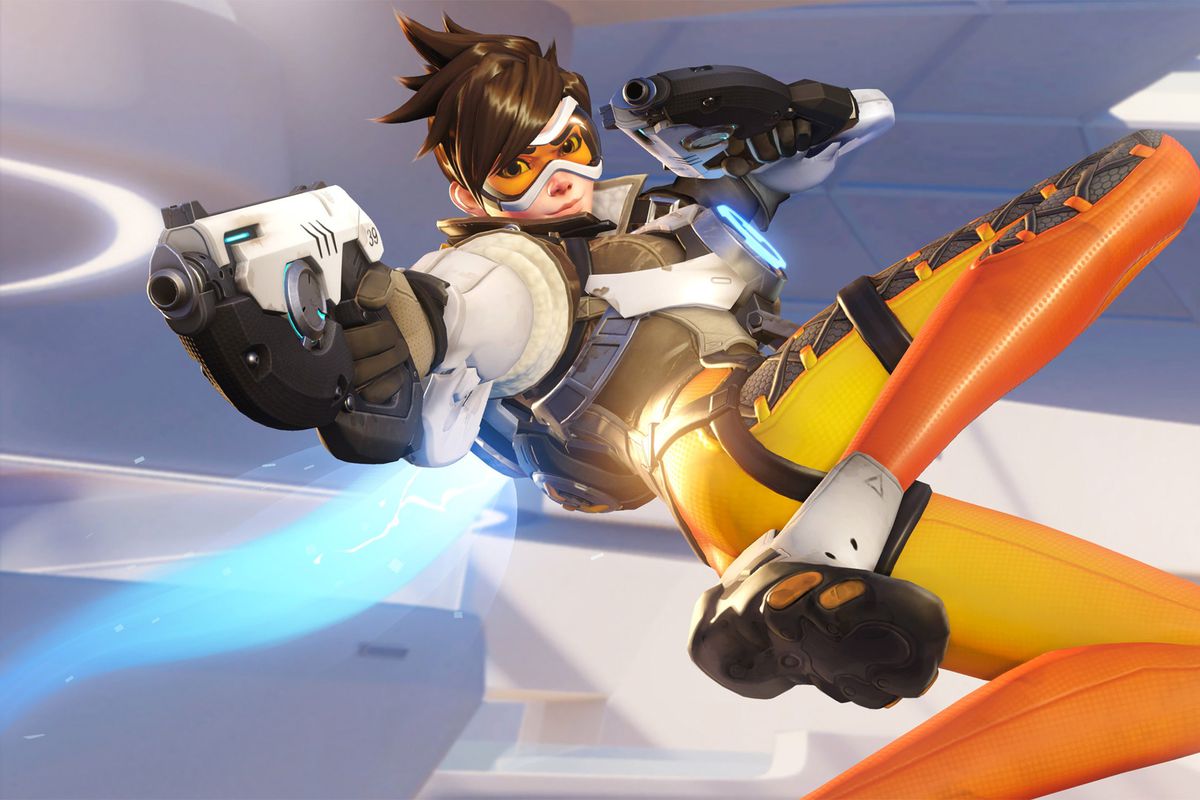
Tracer Overwatch
Overwatch, a game with fast frenetic gunplay and only a 12+ rating. Uncharted only got a 16+ rating. Why can’t Tomb Raider go lower? (Source: polygon.com).

  1. The Story

I’m not going into an in-depth “what-I-would-write” post, but there was a tease at the end of Shadow as to where Lara would be going next before it was patched out. On Lara’s desk in the original epilogue scene, there was a letter addressed to her from a Jacqueline Natla. Natla was the head baddy in both Tomb Raider 1 and the remake Anniversary.

I don’t want this to be the next Tomb Raider game. That story has already been done twice and I don’t know what making that game a third time will add to the experience.

So instead, I propose this. This is the trailer to the Hitman reboot, released in 2016.

To fans of the Hitman franchise (such as myself), this was a geek-out moment. All of the kills featured come from the previous games.

The sniper kill is “Kowloon Triads in Gang War” from the original Hitman game. The sushi death is from “Tracking Hayamoto” from Hitman 2. The drowning man is Fritz Fuchs in “Traditions of the Trade” from Contracts. The cello player is Don Fernando Delgado in “A Vintage Year” from Blood Money. And the final bullet through the one-way mirror kills Dom Osmond during “Hunter and Hunted” from Absolution.

There was a lot of grumbling in the Hitman community as to what it meant to the legacy of Agent 47 when 2016’s Hitman was referred to as a reboot. Fans were assuaged when we heard David Bateson’s voice in the “Sapienza” trailer, and this trailer was even better. We weren’t losing the character’s history, this trailer showed we were continuing on from Absolution.

I think this would be a good way to reintroduce Lara. A trailer in a similar style, seeing Lara at Yamatai, Kitezh, and Paititi (the reboot games), then St. Francis Folly (TR1), Venice/Barkhang Monastery (TR2), River Ganges/RX-Tech Mines (TR3), Valley Of The Kings (TR4) and beyond would be a great moment. It would allow Lara to grow beyond the reboot without throwing out the character established in the past three games.

Call it a soft reboot; heading back to square two, restarting the series but with the knowledge and experiences of previous games filling in Lara’s backstory.

Speaking of all of that established lore, a soft reboot allows us to keep the excellent Camilla Luddington as Lara and bring back many characters. Winston and Jonah are a given and I would personally love the return of Sam, Zip, and Alister as periphery characters.

One thing I would love to see in Tomb Raider are rival archeologists. We had Pierre and Larson in TR1/TRA and Chronicles, Von Croy in TR4, Chronicles, and Angel of Darkness, and Carter Bell in The Temple Of Osiris. It would be fun to have a story where Lara is facing off against people who are just as smart and slick as her. There is even a multiplayer component there, having players face off against each other if the developers wanted to.

Conclusion

I remember when Shadow was first teased, Square Enix said in a statement that it wouldn’t, “…be very long between the official reveal and when you can play.” With Shadow Of The Tomb Raider: Definitive Edition releasing earlier this month, a new lease of life has been given to the instalment.

There will probably be a moderate wait before any new moves for the franchise are announced. Square Enix, working with Eidos Montreal on Shadow, were able to deliver a relatively quick follow up to Rise as most of the pieces were in place. But for now they should have some time to relax, celebrate their success, before coming back with whatever new ideas they want to explore.

The reboot was a much needed boost for Tomb Raider. It brought me back to the series, and brought in a whole new set of fans. I don’t want to forget it, but I think Tomb Raider needs to strike out again.

Gridlock Photo Source: rainbows.fandom.com

Laura Photo Source: reddit.com (r/StreetFighter)

Photo Banner Source: twitter.com (@tombraider).

Learning to Love the Uncharted Series

During the late 2000s and most of the 2010s I was the owner of an Xbox 360. I think my main reasoning behind choosing that system was that all my friends had one, so if I wanted to play with them, that would be the console.

Before I had chosen a 360 I was scouring through games that looked interesting to me and I remember one catching my eye. I remember going into game stores and continually picking up one box and reading and re-reading the back cover.

That game was Uncharted 2: Among Thieves. I knew nothing about the series at that part of my life, but I was already hooked. I mean, it looked like a modern Indiana Jones game. Anyone who knows me knows I love Tomb Raider, so another treasure-hunting simulator would be right up my street.

But alas, when I finally picked up an Xbox I realised that Uncharted was a PlayStation  exclusive title, therefore I couldn’t play it (and I was not the position to buy a separate console). So Uncharted moved to the back of my mind until I picked up a PlayStation 4 in mid-2018.

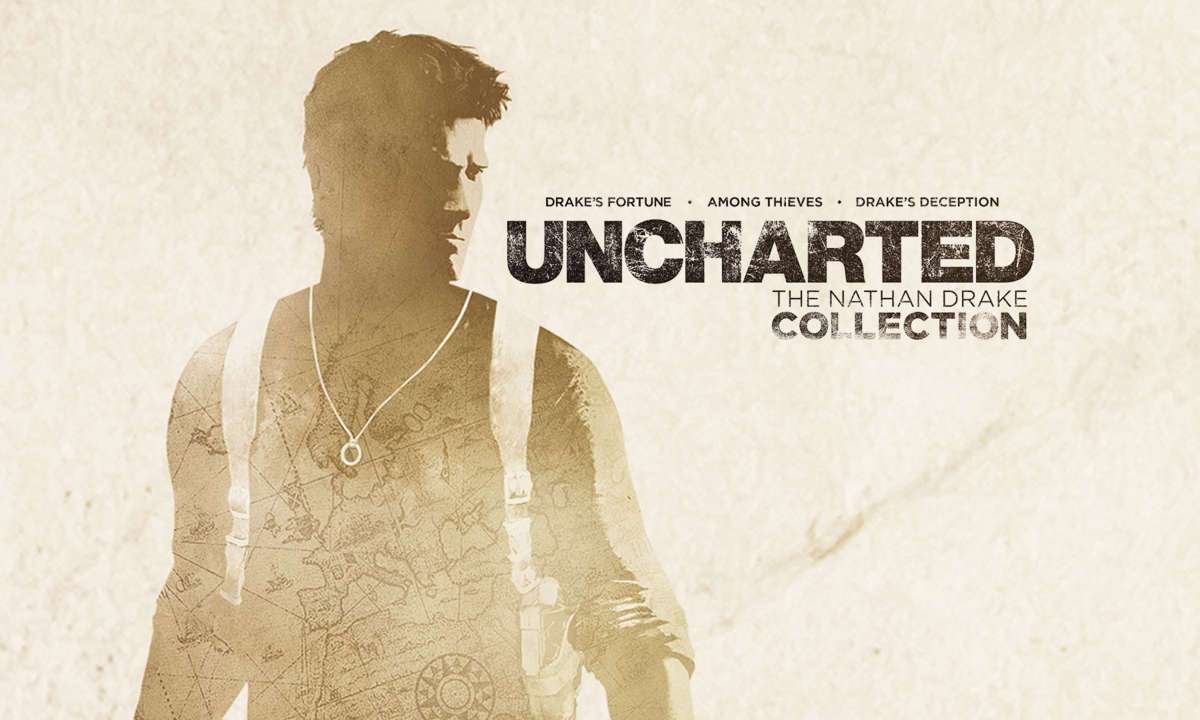
With Uncharted being one of Sony’s premiere exclusives, the first three games were given a quick polish and sent out as a boxset to customers. I quickly bought the collection and settled down for some classic shooting/platforming fun. I mean, these games were beloved, how could they be anything more than excellent?

Well…

What Spending 100+ Hours with Nathan Drake Looks Like

I felt very confused while playing Uncharted 1. Here was this game, lauded as inspirational and influential in its design and gameplay…yet all I could think was single sight plains, flat geometry, and tedious whack-a-mole gameplay.

I died many times just to try and speed up the process; it felt like my life was ebbing away from me as I continued to play. The only time when it livened up for me was when the Nazi Mutants appeared, changing gameplay into a more run-and-gun affair. This was on normal/moderate difficulty setting (because ‘normal’, as the word suggests, would be the standard way to play the game), yet it was like pulling teeth.

UC1 ElDorado
The game certainly livened up by the end, but couldn’t save the rest of the experience for me. (Source: engadget.com).

I rationalised my thoughts by thinking, ‘Maybe this was standard for 2007.” However, 2007 also gave us Assassin’s Creed (genre-defining), Bioshock (narrative behemoth), CoD4 and Halo 3 (game-changers). Even Tomb Raider Anniversary, much maligned by its own fanbase, felt fluid and fast, the complete opposite of UC1.

So maybe this was just a blueprint game, one that would get better with subsequent titles.

I put those bad feelings aside as I booted up Uncharted 2: Among Thieves. This one was going to be good. It is generally accepted as the best game in the series.

Hhhmm, how to put this…Uncharted 2 made me want to stop playing games.

There have been times where I have played games I haven’t enjoyed. There have been games I’ve actively disliked. But never have I played a game that has made me waver in my love of the medium.

Most of my complaints for UC1 were back, but tenfold. Long flat corridors or arenas, plinking away from behind cover with ineffective weapons, I could feel that draining sensation again.

The gunplay was serviceable, but it was nothing compared to the climbing. In most platforming sections, Uncharted 2 switches to a cinematic camera. I’m all for the cinematic approach to games, especially when it heightens the gameplay.

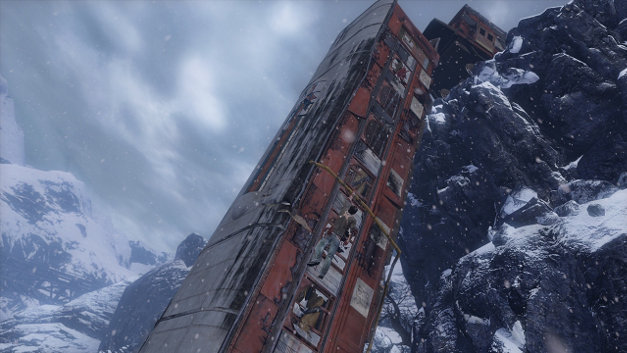
I hated Uncharted 2 from the very first sequence because of that bloody camera. Climbing up the train cars is a moment most gamers found thrilling, but because of the camera switches I couldn’t even figure out where to go.

The angles would throw off my depth perception, making me push forward and die when I should have been pushing sideways. Dying over and over again two minutes in because the game is giving you insufficient information will drive anyone to anger.

UC2 Train
Even now I still can’t do this sequence in one go…I feel my blood pressure rising already. (Source: playstation.com).

Even the introduction of Chloe Frazer hardly tempered my loathing. Just like UC1, the game picked up during the final stretch at the monastery, mainly due to the excellent level design and geometry, and the inclusion of the Nazi Mutants again.

As I booted up Uncharted 3: Drake’s Deception, I was worried. Was this third entry going to be more of the same? What was wrong with me? Was I playing the game wrong?

I knew I liked third-person shooters; I’ve spent unknown hours with several 007 games, I love all of Remedy Entertainment’s work, Spec Ops: The Line is my favourite game of all time. Even at the same time of playing UC2 I played The Order: 1886, Ready at Dawn’s Victorian-steampunk shooter PS4 launch title. I loved that game and still hope to see a sequel some day.

So, I started Uncharted 3…and a new feeling came over me. I was having fun. Good-hearted, honest fun. I thought there had to be a catch, but none came. It was a blast.

The fights and shootouts in London, the rooftop chases in Colombia and Yemen, the attack on the citadel in Syria, the shipyard/sunken cruiser (with a beautiful cinematic camera, this time not obscuring the way to go), the cargo plane…repeat, THE CARGO PLANE, the horse ride into the desert, then finishing off once more with an ancient city crumbling to dust, I loved it from start to finish.

UC3 Plane
Uncharted 3 still has some of the best set-pieces in all of gaming. (Source: YouTube.com, GameSpot).

Upon finishing UC3 I had a lull in my games at the time, so I went back to the first two games and cranked up the difficulty to Crushing. I had nothing to lose if I didn’t enjoy it, but I adored every second.

I don’t know what came over me, but it was like experiencing the game for the first time again, but this time being the game that everyone told me it was. Even in Uncharted 2, it seemed all the levels I had hated had switched positions, making the final push towards the monastery even better.

Uncharted 4 follows in UC3’s stellar footsteps. I’ve always liked when Nathan has had someone to bounce off like Charlie or Chloe, and Sam is a great addition to the narrative. Throw in some excellent set pieces and locations and delving into the married life of Elena and Nathan (something seldom seen in games), I think this one might be my favourite one.

Conclusion

So what changed? Well, obviously the graphics and design became better and more intricate as subsequent games were made, but what about that turnaround for UC1 and UC2?

As I said previously, I’ve played my fair share of third-person shooters, but I wasn’t exactly raised on them in same way I was raised on racing games or Tomb Raider. Looking back at my favourite TPSes, most come from the PS2 or 360 generations. I haven’t played a straight, linear shooter since Spec Ops, because they aren’t really made as much any more.

Sure, there are shooting games galore, but not many single player shooter games. Even Amy Hennig said they are “…a harder and harder proposition.” (Takahashi, D. 2019). The closest I could think of besides The Order: 1886 was Ghost Recon: Wildlands, which is another open-world extravaganza from Ubisoft.

Order 86 GP
If you haven’t had the chance yet, please play The Order: 1886. It looks and sounds stunning. (Source: huffingtonpost.co.uk).

That might be the reason. It is enthralling to see a gameplay or mechanic that hasn’t been felt in over a decade, to see a simple beginning-middle-end structure with some shooty bits in the middle. I know, what a concept!

But that sounds offensive, ‘I only liked your game because I had nothing else to play,’ that is definitely not the case. I must come clean and say the problem was probably me.

I just needed time. I came to Uncharted with my own ideas on what it would be and my own biases.

I was sure I was to like Nathan Drake, being a composite of swashbuckler and dork. Yet I never found him enthralling until UC3, when it was revealed he married but separated from deuteragonist and love interest Elena.

My appreciation grew even more in UC4 when we get to see married life for the pair. In a similar vein, when Sam Drake entered the story, I was overjoyed. This is what I meant earlier about loving Chloe Frazer despite hating UC2, I loved Nate when he had a partner. While Sully was around for the first two games, he never stuck around like Sam or Elena did. For Nate to be at his best (for me at least), he needed people to bounce off.

Yet when I returned to UC1 and 2, I was pleasantly surprised that I didn’t hate it as much as I did, and I think it was due to previously seeing Nate’s story through to the end. To know where it was going, to seeing him settle down and have a family, it gave me an odd sort of comfort when heading back into the earlier games.

Marriage and commitment are rarely seen in games, and it was charming to play and experience and made me want to see Nate and Elena’s story again, to ‘chart’ their course through life.

When I first played Uncharted I wasn’t on its wavelength, and I found it increasingly hard to get a handle on.

It may have taken a few games to get me to understand, but I get it now.

I like it now. I love it now.

I’ll treasure the experiences, both good and bad.

Banner Photo Source: gamespot.com

An Ode to Sam Nishimura from Tomb Raider

Once upon a time, there was a girl. She was a film studies graduate and looking for her big break in the world of post-education. She followed her friends to a mystical and mysterious island, documenting their travels.

When we as an audience first met the girl, it was only for a few seconds, where we saw her dragged off by a scary-looking man with a knife. She was hidden away until the release of the full story.

When the story was released, we saw the girl in a different light. Sure, she was still a little bit of a damsel in distress, but she turned out to be a lot more than that.

We saw her playful but sensitive banter with our protagonist. We saw the half-smiles. We saw the girl and the protagonist bond over the course of the narrative. And of course, some of us saw a little more, underneath all of the subtle movements and words. Something that kept us going. Something that pushed us forward.

But that girl is now forgotten, passed aside with a hand-wave explanation in the sequel, and only slightly more of a payoff in the side-stories.

At this moment, we are just like our protagonist. We think we know about sacrifices, but what we have here is a loss, a choice that is made for us. Despite the cries to bring her back, we must sadly think that the girl will never come grace our screens again.

***

I’ve been mulling over the loss of Sam Nishimura for the past few weeks. With the months leading up to the release of the new game, Shadow Of The Tomb Raider, we’ve been seeing a lot of people ask the developers, “where is Sam?

And I sadly have to admit, I’ve grown apart.

Please understand.

I love Sam; in the same way I love Lara as a character. But sometime that is not enough. And we need perspective. Lara is our protagonist, not Sam (although I would totally buy  Tomb Raider Snap, a spin off in the style of Pokémon Snap, where Sam tries to photograph Lara beside certain objects like a T-Rex, a relic and holding her dual pistols).

To love her knows when to let her go. Not forgotten, not a footnote, but a defining part or our heroine’s legacy. And with her departure, Lara can eventually start to heal and move on.

I, along with many others in the Sam Nishimura movement were unsatisfied with the way Sam was maligned during the interim between 2013 and RotTR. But I can see why they decided to focus on Jonah rather than Sam.

With Lara flying from desolate desert to hazardous hiking expedition, she needed someone to keep up, and Sam isn’t that. Jonah, Reyes, Roth, they would all be able to keep pace with our lead. Sam could not, not without changing a large sense of her character from 2013. Sure, Alister and Zip (Lara’s mates from the LAU trilogy) wouldn’t keep pace either, but a different Lara calls for different rules.

So I begin to look to the horizon. Shadow Of The Tomb Raider is nearing completion, so unless Eidos Montreal throw us a curve ball, these would have to be in a sequel.

So, what do I want from Lara’s belle?

Easy one start with, keep her ambiguous enough. I know, I know, we all want her to make out with a girl by the end of the game, and with Kassandra in AC: Odyssey and Ellie from The Last Of Us II at this year’s E3 being major talking points, TR could have been riding ahead of the curve with it’s non-straight lead.

Maybe it’s me, but I’m more of a fan of all that sweet hand-holding and the longing stares rather than character full on snogging each other. Yorda and Ico’s closeness in Ico has much more depth to it than if the characters just made out.

The problem with trying to add a character in is the questions that it poses. With Lara jetting off around the world, she needs a character that wants to wait for her and understands what her job is and where it takes her. For her to be a recurring character (which is needed if the interaction is going to have any bearing on the story), she needs to compliment our heroine, essentially becoming the “other half” or at least offering vital help.

And the major problem is, is that Sam was those things. Which is why it hurts more to cut her out and start anew. Because it was there. It was within reaching distance and possibility, but it wasn’t used.

So how to construct it?

The new Tomb Raiders take much from Uncharted, so here is another thing it can take from them. In Uncharted 2, Nathan Drake had a diary filled with sketches, notes, and importantly, phone numbers and names of girls all around the globe (this was actually inspired by a tweet by @pfangirl, who has written extensively about Lara Croft being a gay character).

Lara has a notebook, filled with her Dad’s notes, but soon they will be full of her own. She’s taken notes all the way since AoD and Anniversary. Her notebook can be filled with numbers and drawings. Jonah, Reyes, Conrad’s daughter (wouldn’t that be a scene to watch? Lara talking to her surrogate father’s ACTUAL daughter), these are all people from the first reboot game that Lara helped and in turn they helped Lara become the Tomb Raider.

From Rise, there is Sofia (because you could cut that sexual tension with a knife) and Nadia (who also had a full-on crush on our protagonist), two women who mirrored our protagonist; characters that she could relate to and find solace from their shared experiences.

And aside from character from the games, there could be a myriad of one-time flings; girls from Kathmandu to Kansas. Have her wake up next to a girl a la Girl With The Dragon Tattoo beside some watering hole in the backwoods of whatever country she’s in. There are so many ways you could play with this idea.

However, with the loss of Sam, I’m kind of annoyed that instead of a monogamous, strong relationship between two characters will be swapped out for the “promiscuous lesbian/bisexual” trope (I personally read her as ace, since I see Lara as seeing sex more as a biological need than an emotional one). But with Lara’s lifestyle, she can’t ask for a special someone to wait for her while she spends other ten months shooting chickens with fire arrows or petting another twenty llamas.

Conclusion

I had never thought about Lara as being part of a couple before 2013. And with Lara and Sam’s time together, seeing that vulnerable side, I was touched, because it was sweet and adorable, in that way first blossoms of affections are (and relationships of any kind are rarely seen in AAA games). But then I become irritated, because that vulnerability gives us a character like Sam, but then discards her. Would it have just been better to never have that part of Lara? The heart doesn’t miss what it doesn’t know.

I also see the limitations. I recently replayed 2013, in my series of “Play-Games-While-Listening-To-Podcasts-And-Achievement-Hunt” and despite talking to Sam several times; she doesn’t have much of a character. There is a base there, but not a fully developed character. She needed shades, she needed dimensions. To give her those aspects would have taken time, which would have disrupted the pace of RotTR, unless it was incorporated as an integral feature. Which as a side-story, it wouldn’t be.

Again, please understand.

I love the character. But I have to stop. I need to say goodbye. Because while Sam has been a character in my heart for half a decade, Lara has over four times that. And between the girl I have grown up with, against the girl I met when I was an adult, the former will win out every time.

Let me conclude with the poet Rumi’s #1849 from Kolliyaat-e Shams-e Tabrizi, which I feel fits the moment…


“The moment you find a companion in joy,

Is the moment you find your life’s own fate,

Beware that you don’t waste that moment in vain,

You will find very few such moments again.”


Sayonara Nishimura-san. 

Thank you for being there, for both the fans (so many who were brought in by you) and for being there for our dear Lara.


Banner Photo Source: Video Games Source, July 23 2013, Tomb Raider – Coastal Forest: Samantha Nishimura, Mathius Introduction Cutscene HD Gameplay PC. [YouTube video].

Tomb Raider’s St Francis’ Folly and Intention in Level Design

Level design is one of the fundamental building blocks of creating a game; it is the world that we inhabit. We can all think of great games with some excellent level design and all in different ways.

Some games use their design to aid you with traversal through a single path; Faith’s “Runner’s Vision” in Mirror’s Edge guiding the way through colour, or scratched/worn down walls in Prince Of Persia showing you can wall run are two that come to mind.

In a similar vein, other games allow a wide range of possibilities from a single starting point. Metroid and Castlevania have an almost exclusive hold over this type of design (so much that “Metroidvania” is a portmanteau in gaming culture). Newer titles such as Hitman and Ratchet And Clank also deliver this type of world. You may not be able to reach all the nooks and crannies until you have gone away and learnt new skills.

Other games use their level design to bring their worlds to life. Bioshock’s flooded and rusting hallways, blossoming gardens and…everything about Fort Frolic perfectly paints the dying embers of a Galtian wonderland. Remember Me’s narrative snakes around its levels, with the Bastille Lake and St. Michel Rotunda amplifying the narrative beats that occur in those levels. The hidden tombstones in Modern Warfare 2’s “Contingency” highlight a possible cultural heritage of the area.

Today I wanted to write about a level that encompasses all three types of design, to varying degrees. That level is “St Francis’ Folly” from the Tomb Raider series. “St Francis’ Folly” is a level in the first TR game, meaning that it was remade in Crystal Dynamics’ Tomb Raider Anniversary. So I wanted to talk about the two in tandem, because even though they are the same level, the way they differ gives a different tone to each level.

How “St Francis’ Folly”’s Meaning Changes Through Different Level Design

“St Francis’ Folly” is probably one of the most recognisable and memorable of the original Tomb Raider levels. Jason Botta, creative director for Tomb Raider Anniversary ranked the level second only to the “Lost Valley”, (mainly because the latter had a T-Rex) (2:14).

“St Francis’ Folly” is a really good example of a jump in a difficulty spike. The first four levels of TR1 are spent getting you used to the controls. You’ve done a bit of swimming, a bit of climbing, running, jumping, and most of it is forgiving. If you miss a jump, you just climb back to the spot and try again. “St Francis’ Folly” does not give you that privilege. If you mess up, you will most likely die. It’s really easy to die because the whole point of the level is being REALLY HIGH UP. The structure is so tall in the original game you can’t see the bottom; the draw distance fades to black.

Toby Gard, designer for the original Tomb Raider and Anniversary, stated the goal for the area;

“…It’s quite common that game designers even when they have a 3D vertical space that they can play with, they tend to sort of end up making long, flat things anyway. So that particular area from the original game was just sort of let’s go as vertical as we possibly can…” (2:55).

The level is virtually unchanged from game to game, only with a few trickier challenge rooms for TRA’s more nimble Lara and appropriately named rooms (TR1 had “Neptune” and “Thor” in a tomb in Greece).

The major change to the level is the opening just before the vertical room, so let’s jump back a bit and discuss that section.

Let’s Rewind To The Beginning

The openings of the level are again, very similar. All the designers really had to do was update the climbing and traversal mechanics and it was pretty much set.

But the main difference is GETTING to the vertical room and where in relation it is to the rest of the level. Lets start with TR1.

The start of the level introduces the vertical aspect, in a safe-ish way. You jump from pillar to pillar, working your way around the room. You have some fun with pressure plates and open the big door at the other end of the room. However, this does not lead to the next stage. It is another room with a switch.

The door is in fact above the entrance where you came in. You have to use the previously mentioned pillars to jump up into the rafters, before sliding down into a flooded tunnel and eventually finding the way out, into the vertical room.

Now onto TRA. 

The level starts off pretty much the same. You have a pressure plate that needs to be weighted down, which opens the big door at the far side of the room. You jump between the pillars to get into the rafters to secure the weight for the pressure plate, move it to the ground floor and proceed through the big door.

Then you proceed down a long, long corridor and into the vertical room.

So What?

This is such as small change, but for me it changes the meaning behind the whole set of Greek levels.

All levels in both Tomb Raider and Anniversary are built on top of each other. It is historically accurate; invaders have built on top of previous religious sites and settlements as an attempt to exert their dominance. It’s also thematically relevant, as the “origin” tombs are supposed to be hidden away, kept secret from the world.

But the opening for the first section of the Greek levels in Tomb Raider changes this meaning. In TR1, the vertical room (and by extension, the rest of the subterranean settlements) is hidden back the way you came. It takes a little more thought to figure out where you have to go. And even if you get that far you then have to survive an underwater current and a very hungry crocodile. It feels like a secret entrance to an underground network, somewhere hidden away so that grave robbers can’t just waltz in.

Tomb Raider Anniversary by comparison doesn’t feel like the entrance to a secret tomb, hidden away beneath 4000 years of history. It’s a straight line from the start of the level, the big door beckoning you forward. It feels more like the door to a vault (which is a rather good way of keeping people out). However, a vault-type opening indicates there is something precious behind it, giving grave robbers the incentive to break through rather than giving up because the entrance is hidden away.

Conclusion

It was only recently after playing the two games in comparison that I saw this minute difference. And it only really makes much of an impact if you are interested in the lore or the narrative of the world of Tomb Raider, but that distinction was big enough for me.

In terms of the original and Anniversary, there are more changes that are made for thematic reasons. “Sanctuary Of The Scion”, the final level of the Egyptian section of the game is one that springs to mind. In the original game you come out of the side of the temple, with your prize unceremoniously placed to your left.

In Anniversary, the sanctuary is at the end of a long corridor with a large gate blocking your entrance. You have to use the other two pieces of the Scion (the artifact Lara is searching for) to open up the gate. Thematically this makes much more sense that finding it on a pedestal, as it is the final piece of the artifact that has been locked away for safety.

Another one is the very first level, “Mountain Caves”. The finale of the level is once again, a large door, but to get to it you have to “run the gauntlet” of darts being shot at you. In TR1, you appear on in the corner of the room, an unglamorous (and not death defying) entrance to a hidden civilization.

The point I’m trying to make is the subtle differences between the two games. It’s almost like a translation error; giving us the same work but just off somehow. Don’t get me wrong, I love both version of “St Francis’ Folly”, but their thematic difference makes the original feel more “believable”, even in a game about mutants from Atlantis.

It’s a small change, but it manages to change the tone of the level for me. That’s how important level design is in creating the feel of a world.

That’s not a new observation, but it was very interesting to see it in action.


Banner Photo Source: gametripper.co.uk.