It has just been over one year since Shadow of the Tomb Raider was released. I wasn’t bowled over by the game (Rise is still my favourite of the new reboot series), but it had enough to keep me engaged.
However, I feel a need for change is coming on again. 2013 was a revelation, creating a Tomb Raider game and a Lara we hadn’t seen before. Rise built upon its predecessor’s work and tweaked and refined the experience.
Shadow… it feels a bit like replication. It is a very good replication and has a few nifty surprises hidden in its backpack, but it is not so much a step forward rather than a step sideways.
I don’t think this is just personal bias. For all the talk of Shadow being the final event that turned Lara Croft into the Tomb Raider, it felt like a story being stretched further than it needed to be.
So, with the reboot trilogy finished, let us throw a few ideas around that I would want to see in a new Tomb Raider game.
Where Should Tomb Raider go After Shadow of the Tomb Raider?
- A Different Lara
One of the things I find fascinating about Lara is that in twenty years she has gone through several redesigns but remains instantly recognisible. That may be a statement on female characters in gaming, but also could be because of her iconic outfit and accessories.
Now that we’ve had half a decade of hyper-realistic Lara, I wouldn’t mind a touch of cartoon styling for her next appearance. I don’t mean make her the impossibly proportioned character from the 90s, but something a bit more…Amazonian (a descriptor that was actually used in The Angel of Darkness at 1:03:16).
Lara is meant to be this kickass character able to throw herself up sheer cliff faces and fight a whole manner of creatures, so make her the peak of ‘killer kickass’. Shadow teased us with a character model with biceps before they nixed the idea. Let’s see that this time around.
My main two ideas for a cartoony Croft were Gridlock from Rainbow Six Siege and Laura from Street Fighter V (seen down below respectively). Both these women look like (and can) go toe-to-toe with any male character in their games, and I think it would work well seeing a physically imposing Lara, showing how she has changed over time. I wouldn’t even mind if they kept the scars from Rise and Shadow, another token of the change and history of the character.


With a less realistic design we could change Lara’s movement as well. I’ve recently been replaying Legend and one thing that struck me was that Lara’s movement is…goofier?
For example, instead of just climbing up a ledge, Lara will fling herself up using only her upper body strength and onto her feet. If a player continues to tap the Roll button, Lara will throw herself into a gymnastic display worthy of an Olympic gold medal. I haven’t even mentioned the swan dive and handstand that she could perform in the original series. I like these more over-the-top approaches.
In terms of character, yeah, I kind of want to see a more playful Lara next time around. Rise had a few moments, but I felt Shadow had hardly any levity (although that game was about the apocalypse so I’ll let it slide). And regarding her parents, it’s been cleared up, let’s move on.
- A Reworked World
It was quite a big step in 2013 to have Tomb Raider set in an open world, although it seems rather obvious. Previous games would have massive levels (with some in TR4 actually having multiple points of entry and having to return to a few of them several times), but 2013 nailed a great formula.
But just like a change regarding Lara, I am feeling an itch for a change in the level design. While I was playing Shadow I went for a trek and found some interesting places and hidden nooks, but then when I returned and spoke to the NPC to start a mission, the NPC took me through a whistle-stop tour of everywhere I had just been. It felt so weird to play through, and this would happen multiple times throughout the game, to the point where I stopped exploring (which is the antithesis of the game’s vision).
However, going back to a more linear frame would hamper the series, as it seems to have flourished now it has more room to play around with. So let’s make a compromise; a big but linear hub world, with several paths leading to several tombs. These tombs can be signposted by small but very deliberate signs like rocks in an odd formation or a broken tree (similar to the Monolith Puzzles in Shadow, which I suggested could be a gameplay feature back in 2017).
Once we play through the tomb we return to the hub world and follow another path to another tomb. The hub world could be a mash-up of Prince of Persia and Mirror’s Edge, with Tomb Raider’s aesthetic and individual trappings giving the world flavour (come to think of it, with all that climbing, surely Lara Croft would have learnt some gymnastics or parkour?).

The hub world also allows us to open up geographically. While I enjoyed the single locations of the past three games (with Yamatai and Siberia having some geographical variety), the hub world allows our explorer to find all the pieces to a treasure in one location (after finishing all the tombs), before heading off to a new location with its own hub world and selection of tombs.
One request though, cut the collectibles, at least in the hub world. I get anxious whenever I access an open world map for the first time and all the items load in, and I can’t be the only one (not to mention ‘Touch The Shiny Thing’ doesn’t exactly get my blood racing). Keep the secrets to the levels and leave it as that. However, a counter argument to this would be,
“Why have an open world if there is nothing to do in it?”
This is a valid question. So I propose another solution to go with the level-based secrets; unmapped locations.
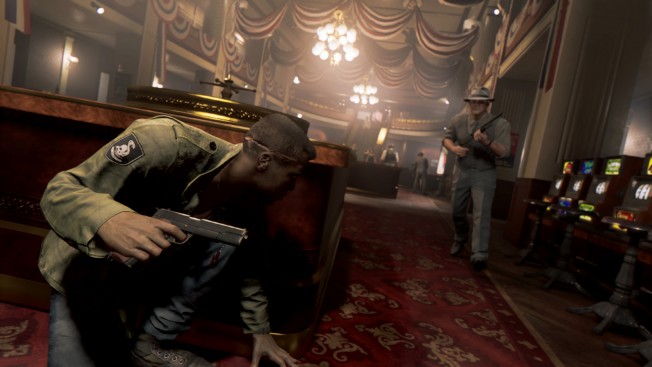
While Assassin’s Creed 4: Black Flag and Skyrim had some locations off their maps, the main game that gave me this inspiration was the original Mafia.
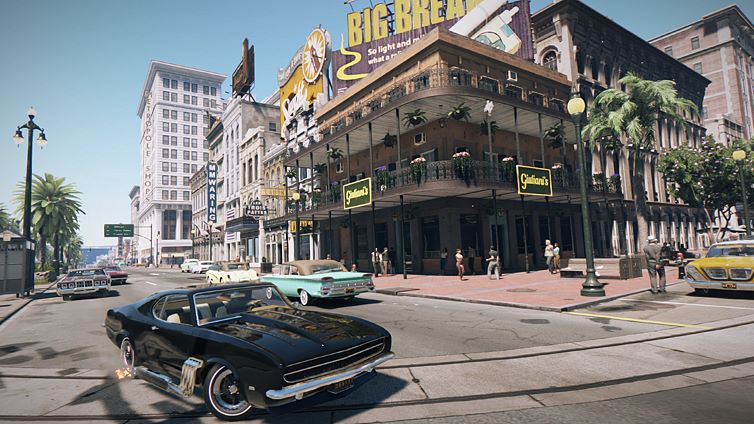
Mafia had an open city to drive around in, but many prominent locations were just off the map edge, giving the countryside a sense of danger and making any mission set outside the city tenser. There were several places in the city of Lost Heaven that the player was under no obligation to visit, such as the Lost Heaven Lighthouse or Dam. I think something like this but for Tomb Raider, like a disguised path leading to an optional tomb or puzzle, would be a good addition.

- The Combat
Part of Lara’s iconic image is the twin pistols. They were missing from the reboot series, instead replaced with another now-iconic weapon, the bow.
Whoever the developer of the next game ends up being, the bow has been an integral inclusion of the rebooted Tomb Raider games and it would be a little sad to see it leave after three games.
The pistols were seen for one small scene near the end of the 2013 game, with Lara wielding akimbo pistols to shoot bad guy Mathias off a cliff edge. However I thought the dual pistols scene looked silly (even in a game about Sun Queens and zombie samurai) because the game had been aiming for realism for the past 20+ hours. If the series were to take a less realistic slant then twin pistols could make a return, complete with flips and kicks.
In terms of gameplay, of Lara is already throwing herself over ledges and walls why not have her take a leaf from Max Payne or Rubi Malone and fly through the air? TR has dabbled in bullet time before, both in set pieces and player enabled so it might be a cool thing to include.
The main reason why I wanted to mention combat is violence and death. The older Tomb Raider games got away with some gruesome deaths by their lack of graphics. Spike pits, being set on fire, drowned, shot, stabbed, eaten alive, blown up, disintegrated, all that jazz got Tomb Raider an 11+ rating.
Over time the series has fluctuated between 11+ and 16+, with the reboot being the first time that the series broke the 18+ rating. President of Eidos Interactive, Ian Livingstone, said the change was made to deliver the “gritty realism” that players wanted.
And I get it, the market in 2013 was heading in that direction. However, a lot of the violent deaths in the reboot felt that they were going for shock value (especially that spike through the neck, you know the one I’m talking about, 2:02).
The market today is a lot more colourful and cartoony. I want Tomb Raider to be playable to anyone who wants to pick up the controller, and I think taking that step back on the snuff film aesthetic would be a bit more refreshing.

- The Story
I’m not going into an in-depth “what-I-would-write” post, but there was a tease at the end of Shadow as to where Lara would be going next before it was patched out. On Lara’s desk in the original epilogue scene, there was a letter addressed to her from a Jacqueline Natla. Natla was the head baddy in both Tomb Raider 1 and the remake Anniversary.
I don’t want this to be the next Tomb Raider game. That story has already been done twice and I don’t know what making that game a third time will add to the experience.
So instead, I propose this. This is the trailer to the Hitman reboot, released in 2016.
To fans of the Hitman franchise (such as myself), this was a geek-out moment. All of the kills featured come from the previous games.
The sniper kill is “Kowloon Triads in Gang War” from the original Hitman game. The sushi death is from “Tracking Hayamoto” from Hitman 2. The drowning man is Fritz Fuchs in “Traditions of the Trade” from Contracts. The cello player is Don Fernando Delgado in “A Vintage Year” from Blood Money. And the final bullet through the one-way mirror kills Dom Osmond during “Hunter and Hunted” from Absolution.
There was a lot of grumbling in the Hitman community as to what it meant to the legacy of Agent 47 when 2016’s Hitman was referred to as a reboot. Fans were assuaged when we heard David Bateson’s voice in the “Sapienza” trailer, and this trailer was even better. We weren’t losing the character’s history, this trailer showed we were continuing on from Absolution.
I think this would be a good way to reintroduce Lara. A trailer in a similar style, seeing Lara at Yamatai, Kitezh, and Paititi (the reboot games), then St. Francis Folly (TR1), Venice/Barkhang Monastery (TR2), River Ganges/RX-Tech Mines (TR3), Valley Of The Kings (TR4) and beyond would be a great moment. It would allow Lara to grow beyond the reboot without throwing out the character established in the past three games.
Call it a soft reboot; heading back to square two, restarting the series but with the knowledge and experiences of previous games filling in Lara’s backstory.
Speaking of all of that established lore, a soft reboot allows us to keep the excellent Camilla Luddington as Lara and bring back many characters. Winston and Jonah are a given and I would personally love the return of Sam, Zip, and Alister as periphery characters.
One thing I would love to see in Tomb Raider are rival archeologists. We had Pierre and Larson in TR1/TRA and Chronicles, Von Croy in TR4, Chronicles, and Angel of Darkness, and Carter Bell in The Temple Of Osiris. It would be fun to have a story where Lara is facing off against people who are just as smart and slick as her. There is even a multiplayer component there, having players face off against each other if the developers wanted to.
Conclusion
I remember when Shadow was first teased, Square Enix said in a statement that it wouldn’t, “…be very long between the official reveal and when you can play.” With Shadow Of The Tomb Raider: Definitive Edition releasing earlier this month, a new lease of life has been given to the instalment.
There will probably be a moderate wait before any new moves for the franchise are announced. Square Enix, working with Eidos Montreal on Shadow, were able to deliver a relatively quick follow up to Rise as most of the pieces were in place. But for now they should have some time to relax, celebrate their success, before coming back with whatever new ideas they want to explore.
The reboot was a much needed boost for Tomb Raider. It brought me back to the series, and brought in a whole new set of fans. I don’t want to forget it, but I think Tomb Raider needs to strike out again.
Gridlock Photo Source: rainbows.fandom.com
Laura Photo Source: reddit.com (r/StreetFighter)
Photo Banner Source: twitter.com (@tombraider).