Another Top Five Dialogue Scenes in Gaming

After my first post on my top dialogues in gaming I got thinking about other games that I thought had great dialogue sequences. I started to move away from just my favourite scenes instead looking at the different ways that dialogue is used.

I still like all of the scenes that are listed below, but I’ve tried to pick some dialogues that are special in the ways that they use character interaction especially those that work within adaptations or use factors outside of a simple back-and-forth.

So, let’s skip this preamble and jump right in, this is Another Top Five Dialogue Scenes In Gaming.

  1. Lara Croft and Pierre Dupont meet in Tomb Raider Anniversary

Tomb Raider Anniversary is a remake of the first Tomb Raider game. With a fantastic blueprint to work from in terms of level design, the creators, Crystal Dynamics, decided to focus on updating the story and fleshing out the characters who were mere cardboard cutouts in the first game.

While at this point we’ve already had a few verbal sparring matches with the morally-grey mercenary Larson, it’s Lara Croft’s interaction with fellow treasure hunter Pierre Dupont that takes the number five spot.

In the original game Pierre wasn’t much of a character. He would turn up during points of the Greece section of the game and shoot at Lara before running off and vanishing into thin air as soon he was out of line of sight.

Here in TRA we see two people who seem to have prior knowledge of each other. This can be seen by the fact that they are both on first name terms with each other, discussing each other’s personal philosophy that informs how they go about their work. This adds up to create a backstory for these two characters that will probably never see a gaming screen (although Pierre and Larson did come back for Tomb Raider Chronicles which was set before TR1). This gives all the characters a few different shades and facets rather than just “bad guy” and “good girl”.

The way that the cutscene plays also informs us about Pierre as a character. We only see his character model once during the sequence, instead following his voice as it reverberates around the room. This was meant to be a callback to his vanishing act from TR1, (1:50) but I read it as Pierre toying with Lara and messing with her head since she can’t find him.

When we finally see Pierre, he is in the shadows hidden from Lara and pointing both of his guns at her. He has a clear shot, ready to kill her, but backs off and disappears. This adds another layer to his character; he likes a challenge rather than eliminating his competition.

This continues through the game, as we hear his voice throughout the next levels, taunting us and finally ambushing us at the end, where once again, he and Lara’s conflicting worldviews clash.

All this makes him a much more interesting character rather than a simple shoot-first character like he was in the original.

(Cutscene starts at 10:32)

  1. The Confrontations with Red Grant in From Russia with Love

This one is quite different as it is an adaptation/remake of a film, but the subtle changes make it a good one to look at.

From Russia With Love came out during a period in the James Bond series between Pierce Brosnan being let go and Daniel Craig being signed on to play 007. EA wanted to keep making James Bond games so got Sean Connery to come back to play the iconic spy and took one of his films, From Russia With Love (an odd choice due to the film not being action heavy like Goldfinger or Thunderball) and adapted it to a game.

While the game takes several liberties with the original story it also remakes scenes shot-for-shot, word-for-word. The scene I’ve chosen is a mixture between the two.

The two characters, Red Grant (the bad guy pretending to be an MI6 agent) and James Bond meet on a smoky Turkish train platform, each providing their part of the secret code to each other to identify themselves. Red Grant is rather jovial, coming across as naive as he plays sidekick to Bond.

But as soon as they get to the dining car, Grant’s jovialness twists on a dime. His smile becomes a frown. His light-hearted phrase, “old man” takes on a sarcastic touch. Bond catches on when Grant orders red wine with their grilled sole (which adds to a funny line later when Grant hits Bond over the head with a bottle and says “There’s your white wine, old man!”). After pulling into the train station, Grant and Bond trade words lifted straight from the film. It is a cool scene, seeing dialogue that was originally in a tense interrogation repurposed as the start of an action sequence.

The connections made through Bond and Grant’s dialogue adds to up to their final confrontation at the very end of the game. After destroying the multi-appendage contraption that Grant is piloting, Bond finds him lying on the floor, defeated. Bond levels his gun and Grant starts to mock him.

“Are you going to shoot me in cold blood, old man? You don’t have the guts. It’s not the ‘English’ way. It’s just like red wine with fish.”

The way Grant delivers the line is perfect. The sneering disapproval of ‘English’, the reoccurrence of “old man” as an insult, and the final hint of their previous encounter with the mention of red wine and fish. Grant and the organisation Octopus set up the murder of Bond in the story because they misread the “British mentality”, which is stated at the beginning of the game (and the film). That’s why it hits much harder when Bond blows Grant away before he even finishes the word ‘fish’.

Bond’s final line of “That was for Kerim” also adds a somber tone to proceedings. Throughout the game, Kerim Bey has been by your side, helping you out along the way. Grant kills Kerim just before you meet in the dining car, and we see no hint of emotion from Bond when he first learns of Kerim’s death during gameplay.

Adding it here adds a nice little pathos to the end of the game and cements the fact that these two characters had a friendship rather than Kerim being just a helpful NPC.

(19:29-21:58 and 29:13)

  1. Sam Fisher in Ghost Recon: Wildlands

I put another Splinter Cell moment on my first list because the writing in Splinter Cell is top notch and Sam Fisher is one of the best-written characters in the entirety of gaming. Michael Ironside, the original voice of Sam Fisher, worked with the developers to create a more three-dimensional character, giving Sam not just a great voice but something more on a deeper level.

Ironside explains that originally Sam was going to be a G.I. Joe-esque, two-dimensional, flat, gung-ho type character. Ironside wasn’t interested in playing a character like that. He saw Fisher as, “…a weapon that the government has used too many times.” (0:52). The character is not a gruff, macho one-man army (who do have their place in gaming), Fisher is instead imbued with cynicism, dark humour and genuine moments of tenderness (such as when Sam is asked to tap phone lines for his former field handler Frances Coen, he says, “For Frances…of course I can” (2:30)).

But the moment I want to talk about it the character’s most recent appearance, as an NPC in the game Ghost Recon Wildlands. The Ghosts help Fisher with a mission (again voiced by Ironside rather than Eric Johnson, who took over for Splinter Cell Blacklist), before they help extract him and bring him back to their field handler, Karen.

The two characters of them have some nice banter (with Sam calling her Linda, to which she replies that she’s “Karen nowadays”). Karen notices that Sam has gotten old and he responds, “I’ve heard they don’t make them [spies] like me anymore” (14:44) before mentioning one guy that used to be like him. Most fans got a kick out of the scene because Fisher starts to describe Solid Snake. Karen cuts him off with, “I heard he finally retired.” (15:04).

Whether this was a reference to David Hayder being passed over for Keifer Sutherland or a wider swipe at Metal Gear Solid being shut down by Konami, Sam replies with a quiet, “Then it’s only me.” (15:09).

The beauty of this line is that it has so many different layers. The initial reaction is one of smug superiority; after many years of the two competing franchises Sam Fisher has outlived his greatest rival. But then it’s a sad dawning. Sam’s line of “they don’t make them like me anymore” has extra metatextual meaning; they don’t make spy/stealth games like Splinter Cell or Metal Gear Solid anymore.

Looking at it from a character perspective, what has Sam got? He’s outlived every other rival, and what does he have to show for it? He’s pushing sixty, in a job that he will never get any recognition or respect for, all of his friends have either betrayed him or died, he’s lost countless lovers, and he hardly knows his only daughter.

It’s a sad realisation and as Sam thinks through his place in the world, Karen snaps him out of his pondering, saying that he has a new mission and he’s shipping out in one hour. This adds even greater sadness to the scene and character. Just as he looks at his life from a different perspective and starts to have doubts, he gets pulled back in.

(Cutscene starts at 14:44).

  1. The Cristina Memories from Assassin’s Creed: Brotherhood

I am not a fan of Assassin’s Creed Brotherhood. I feel that it was a step down from Assassin’s Creed II and negates the entire downer ending of that game (although Revelations did bring it back round for the finale).

The only thing that kept me remotely interested in the game were the Cristina Memories. Cristina Vespucci was a minor character in the opening of Assassin’s Creed II and is one of Ezio’s many conquests throughout the game. She’s rather important because they are childhood sweethearts. It is safe to assume they were each other’s first relationship. While we hardly see any of that in AC2, their relationship is explored during the “Cristina Memories”, little vignettes of their relationship in Brotherhood.

These scenes are interesting because we get to see what being an Assassin does to a relationship. All of Ezio’s other ladies; Caterina Sforza, Rosa The Thief, Lucrezia Borgia, countless courtesans, they are all mainly one-offs or “distractions”, sex just for the hell of it. Cristina is so much more, and it can be seen during the dialogue.

Their first meeting is beautifully awkward with Cristina initially being dismissive but then intrigued by her would-be suitor (with his plea for a “second chance” to woo her (1:12)). The second memory has so much in what isn’t said. When Ezio asks Cristina to come with him, she simply says, “I want to…but I can’t…my family,” (9:55) reflecting Cristina’s conflicting priorities between her life and her love for Ezio.

My favourites of the Cristina Memories are the third and fourth. In the third scene Ezio returns to his belle only to find she is betrothed. His previous playful banter with Cristina is diminished as he learns that while he has been gallivanting around Tuscany sticking Templars and collecting feathers, Cristina has been living her life in quiet desperation. She has had to move on with her life while he is still chasing people that took away his former happy existence.

While Ezio has had to mature beyond his years to care for his mother and sister, but when he sees Cristina again he regresses back to being 17 years of age and hoping that pure love she had for him hasn’t waned. It hasn’t, but he sees that his life isn’t compatible with hers, and his final line of, “He’ll make a good husband, I made sure of it,” (13:55) is gently tender yet painful as he must accept that she can’t wait for him forever.

The fourth scene is especially heart wrenching, as Ezio tries to recapture that spark of what should have been, if only the couple had time and history had been different. When the two meet in a dark Venetian alley Cristina is understandably pissed at him. He pretended to be her husband and he says he, “…was afraid that you [she] wouldn’t come if I [he] just asked.” (17:00). Cristina confirms this, and it’s here that we see the pain of loving and losing someone.

Cristina stills loves Ezio, but she had to change. He was forever teasing her, reappearing every few years, tempting her with a life and a love that was true and innocent, but with him racing off faster than he arrived, leaving her alone again. And she couldn’t do it anymore.

She loves him too much, and to paraprhase a line from Professor Layton and the Unwound Future (and another great romance scene), “ she doesn’t want to say goodbye again. She can’t, she won’t.” (1:00). Because it hurts her every time when he leaves. She tells him that she loved him but she has to end their connection. He had his “second chance” and she leaves, telling him to never find her again.

For the finale we see that Cristina still carried a torch for Ezio after all the time spent apart, hoping that one day he might return to her. She whispers, “I wish we could have had a second chance,” before passing away in Ezio’s arms.

What hurts more is that Ezio never truly recovered. Despite having endless flings and floozies throughout the subsequent games, no one ever comes close to Cristina until Sofia Sartor arrives, when Ezio is well into his fifties.

And in a similar way he originally doesn’t want to get Sofia tangled up in his messed up life and endless struggle against the Templars, but she stays anyway. In a letter to his sister Claudia, Ezio says, “When Cristina died, something withered in me,” (15:55) showing that even with time, some wounds never truly heal.

  1. Elena and Nathan and “Are you happy?” in Uncharted 4.

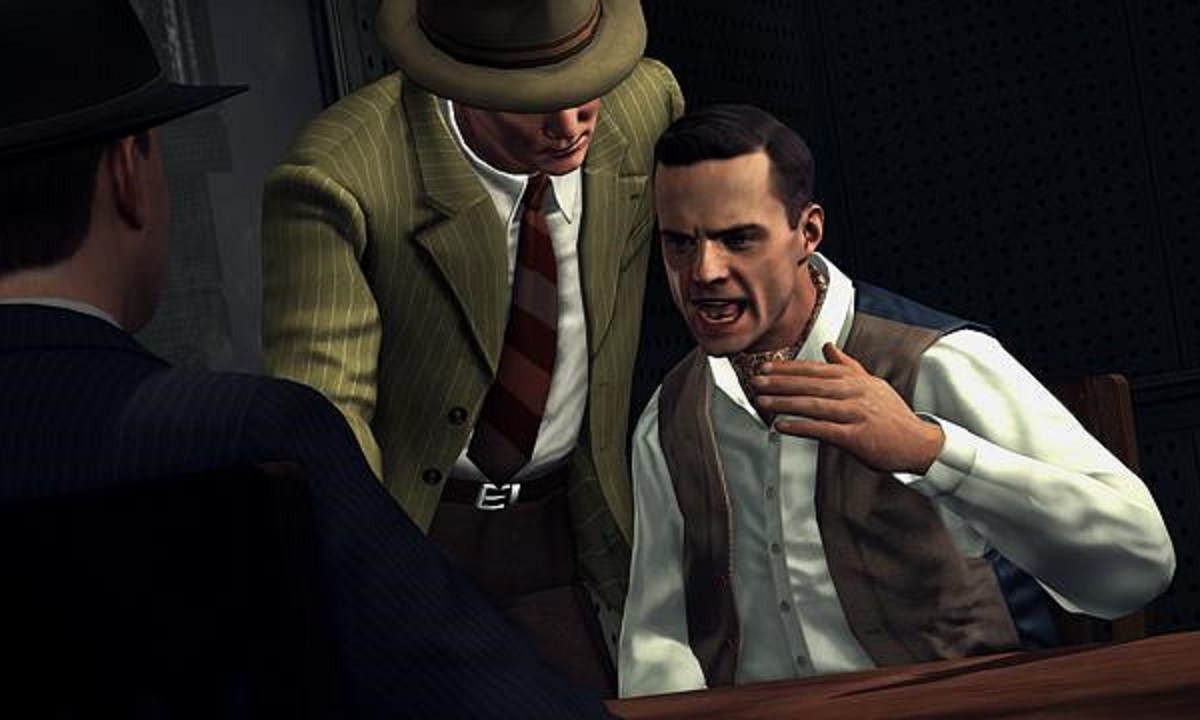
I know I mentioned in my first post that the Grosvenor McCaffrey interview in L.A. Noire is my favourite dialogue in all of gaming, but this one takes a close second.

After Uncharted 3 many people thought the series was over. Most games go for trilogies rather than quadrilogies, but Naughty Dog came back to tell one last hurrah.

The scene in Uncharted 4 shows life in the Drake household now that the two treasure hunters have “settled down”. Elena still has a little bit of adventure, travelling all around the world for travel magazines, while Nathan is relegated to menial cleaning jobs.

The two eat dinner and Nathan starts to zone out while Elena goes on about her current assignment. She can tell that he is dissatisfied with his job, but even when she tries to push him in a direction that would make him happy, he refuses.

Elena goes to wash up but Nathan says he wants to do it. He says he’ll play her for it on her “TV game thing” (a lovely jaunt through Naughty Dog’s Crash Banidcoot). One short game session later Nathan has lost and Elena starts to sweetly trash talk him, “You can give it another shot. C’mon double or nothing, my car could really use a good cleaning…there’s this mode called “easy mode”, I just switch it. It’s way easier on easy mode.” (12:37).

The two start to bicker like the cute married couple they are until Nate snaps and grabs Elena, tickling her into submission on the couch. The two stop and stare lovingly into each other’s eyes, until Elena says one of my favourite lines in all of gaming,

“Hey, are you happy?”

Nate’s unsteady reply of, “Yeah…course,” says so much about the two’s relationship, of settling down and moving away from hopes and dreams so they could have a shot at a safer and normal life.

The scene ends beautifully too with Nate asking, “You?” Elena puts on a mock thinking face and says “Um,” before the two laugh and kiss.

I would call the scene verisimilitudinous, but that would be a disservice to the scene, because it isn’t a simulation of the real, it is real. I’ve had this conversation in real life and similar ones like it as I assume many other people have. This isn’t just a sweet scene with some heartfelt emotion and some beautifully understated lines, this is a perfect representation of real life with all of its mundanity and shows of affection. And that’s why it tops my list as one of the best dialogue scenes in all of gaming.

(Start at 5:49).

Conclusion

Rounding out the list are some honourable mentions as well as a few single lines not from dialogues that I like. In terms of dialogues pretty much all of 2008’s Prince Of Persia  is excellent with the main characters of the Prince and Elika seamlessly morphing from vaguely antagonistic to potential lovers over time (and all in optional dialogue, which is interesting).

In the Hitman series Agent 47 and Diana Burnwood’s interactions are fascinating dialogues mainly because of their working relationship. Diana is the only person that is “close” to 47, and even then he doesn’t see her face whenever they are together. Like the Prince and Elika their relationship has changed as the games have gone on, developing as the stories have got more intricate and personal.

For single lines (disqualified from the numbered entries because I wanted more than one character in the scene), the Max Payne series always has good lines. While I and my housemates have fun shouting lines from Max Payne 3  at each other (especially the over-the-top ones where Max’s voice cracks), my favourite line from the series is the last line of Max Payne 2;

“I had a dream of my wife. She was dead, but it was all right.”

That line sums up the pain of Max and his redemption over the first two games, quietly bringing the second chapter of his life to a close.

And lastly a funny one (warning, phonetically-spelt swear words ahead). From Rainbow Six Siege, the SAS Operator Thatcher has a hatred of all electrical gadgets, listing them, “GPS Satellites, Unmanned drones…” and my favourite, “…fookin lazeh soights…” (as it is phonetically pronounced). The delivery of the line sealed my appreciation of it, and much like Max Payne 3, this line became a staple of my university house, with much hilarity ensuing when a barely audible “fookin lazeh soights” would be heard when passing each other on the stairs.

Photo Banner Source: gamesradar.com.
How to Make a Good Video Game Film – Part Two

After sitting through the awful Assassin’s Creed movie three months ago, I wrote a blog post titled, “How To Make A Good Video Game Film“. It’s probably one of the highest-viewed posts on this site and I had fun writing it and it led to some good conversations with people who disagreed with my points.

I was playing some Minecraft with some friends and I mentioned that there was a Minecraft movie in the works. My friend sighed loudly and said there was no point to making a Minecraft movie because, “…it would take out the entire reason for playing Minecraft, the gameplay.” I understood where he was coming from, (it’s one of the main reasons given for stopping game-to-movie adaptations), some games are inexorably tied to their gameplay.

(SPOILERS AHEAD for Bioshock and Spec Ops: The Line) Bioshock is a key example. While it might be fun to see Rapture on the big screen, “Would You Kindly” (the phrase that controls the main character) would lose pretty much all of its awesomeness, since we are not playing. Spec Ops: The Line is another. We decide to enter Dubai, we decide to use the white phosphorous and game chastises us for how we play the game. Those choices wouldn’t be there in a non-interactive medium.

To take away the thing that separates games from all other media makes sense, so we should stop game-movies, right?

HOWEVER…

Before we decide that, let me show you a few things.

The Defence of Video Games – The Last Question

Books have been a main source of adaptation since the inception of filmmaking. The Bible, Shakespeare, Dickens, Christie; several key books and authors have been successfully transposed from page to screen. Heck, Chuck Palahniuk is on record as saying the film version of Fight Club is better than his book.

So, we can all agree that book to movie’s work. And believe it or not, there are some books to games. A non-interactive media working in an interactive one. Let’s look at some examples.

  1. I Have No Mouth And I Must Scream

i_have_no_mouth_and_i_must_scream

One of the best science-fiction stories ever written, Harlan Ellison’s post-apocalyptic sci-fi story is a slim tome, I think it’s around ten pages. And they managed to make it into a sprawling hours-long adventure game. Reading it again and again, I’m surprised they managed to make this short story, one with not a lot of character backstory or traditional narrative, into a game, but they did and they managed to create what is regarded as an actual mature game, when mature meant dealing with themes such as sexual assault and the Holocaust (see the link below), rather than mature meaning an 18 Rating and lots of blood.

Harlan Ellison worked on the script with the creators (showing that getting people who care about the property makes it better) and it while it is technical ‘sequel’ and throws out a couple of the themes, it’s thought to be one of the best point-and-click games ever created.

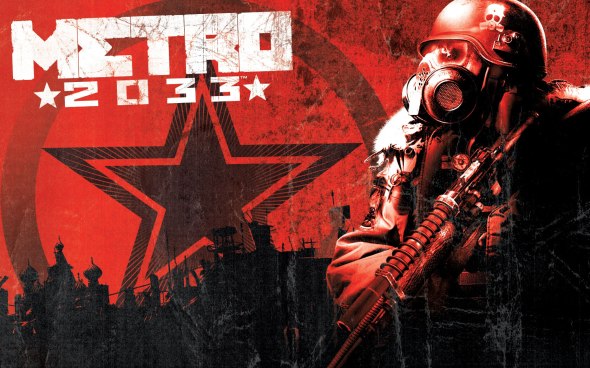
  1. Metro 2033

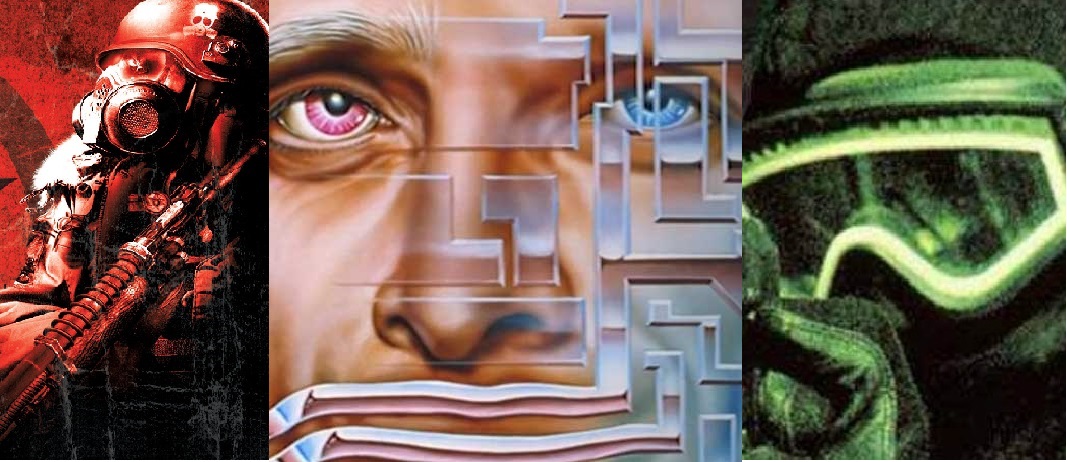
metro2033.jpg

I got to read Metro 2033 before I played the game, surprising how it came out in the United Kingdom the same year as the game did. The Metro series, written by Russian author Dmitry Glukhovsky tells the story of people living in the Moscow Metro system (partly designed as the Soviet Union’s nuclear bomb shelter) twenty years after a nuclear war.

The game follows the same story of the book fairly closely. Players/readers follow Artyom as he travels from one side to the other trying to save his station while encountering hostile humans and supernatural enemies. In the game we get all the main characters from the book, like Bourbon and Khan as well as some of the minute details such as staring down the Librarians or the mummified lady in the ticket booth. I guess this is what happens when the writer of the book helps write the game.

  1. Rainbow Six

rainbow six.jpg

Much like Metro, I read Tom Clancy’s Rainbow Six before I played the original game (which sold 25m copies when it was released). There has only been one R6 novel, and while the newer games have made their own stories, the first game stuck extremely close to the novel, with missions directly lifted from the novel. It’s not even a run-and-gun shooter. Violence is to be feared in Rainbow Six, where one stray bullet can kill you, something which the book emphasised heavily. And again, just like the two cases before, Tom Clancy not only helped develop the game but was one of the founders of the company that made it, Red Storm.

Closing Arguments

So what’s my point? Well, if a book can be turned into a film and be successful (LOTR, Harry Potter etc.) and a book can be turned into a game and be successful (the three above, as well as The Witcher and Parasite Eve) why can’t a game into movie work? A book into game shows a non-interactive media working in interactive, so that dispels the usual video-game-to-film argument that the film would just be gameplay footage.

Heck, most games have equivalent films. Tomb Raider is Indiana JonesAssassin’s Creed is both The Matrix and The Mask Of ZorroRainbow Six is Sicario (not to mention the five other Tom Clancy films, showing that his action can work in all three mediums). This is what I meant in my original article about choosing a correct property, something that would work as a film, not Angry Birds or bloody Tetris. A follow up argument might be, “well why do we need video-game films if other films do it the exact same?” That’s a non-argument. Every slasher film has pretty much the same story, but we watch it to see the new things added to it.

Tetris
Why is this a thing? Do not go see it, I beg all of you. Don’t go even as a joke.

And if we want to look at it the other way, we can. Several games have been turned into books, and not just concept art books or behind-the-scenes. Max Payne 3 had a three-comic series written by Sam Lake and Dan Houser which fits right into the series. Halo, Splinter Cell (a Tom Clancy property) and Assassin’s Creed (which was also based off a novel, Alamut) have all jumped from games into book form and are well-received by their fan-bases. The new Tomb Raider comics had Rhianna Pratchett and Gail Simone (the latter being comic writer of Deadpool, Wonder Woman and Batgirl). That’s an interactive media moving into non-interactive.

And to finish, there is a long-running game series known as S.T.A.L.K.E.R., which is set around the nuclear site at Chernobyl. And before it was made into a game, it was a book before being turned into a play, another book and even a tabletop role-playing game. The creators managed to move between all those types of media, both interactive and non-interactive. But the main thread I want to bring up was the film that was based on the same text. The film is called Stalker (that’s where the game got the name from). And do you know who made that film? Andrei flippin’ Tarkovsky, one of the premier filmmakers to ever come out of the Soviet Union. That film is ranked 29th at the BFI’s ’50 Greatest Films Of All Time’.

While the game is much more bang-bang-shooty than the film, which is a 163-minute philosophical breakdown, the New York Review of Books still said that, “…much of the players activity is oddly in-keeping with Stalker‘s spirit, sometimes even managing to expand upon it.” And while NYRoB says, “…on the face of it, the games don’t have much that in common with the film,” S.T.A.L.K.E.R. isn’t just defined by it’s shooting. Again, it’s one of those games that it’s gameplay might be boring if it were beamed straight into a theatre, but moving away from that might create a great film. I never said that game-films had to stick to their gameplay, but it’s knowing which gameplay can translate into movie action well.

So, let me put that question to you again. If a book can be turned into a critically and commercially successful film and a book can be turned into a critically and commercially successful game, why can’t a game be turned into a critically and commercially successful film?

Argue with me in comments if you have a reason why it wouldn’t work.

How to Make a Good Video Game Film

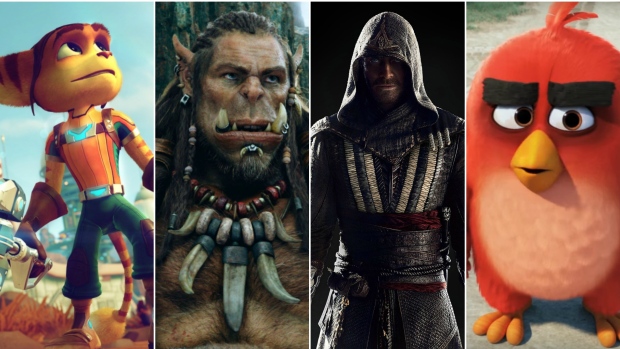
So, 16% on Rotten Tomatoes for Assassin’s Creed eh?  And after seeing it myself, I can whole heartedly agree. Seeing as we are all disappointed after Warcraft, Ratchet And Clank (remember Ratchet And Clank came out in 2016? No you didn’t, because nobody went to see it) and now Assassin’s Creed, I’ve decided to help Hollywood and the rest of cinema out. As a film fanatic and a gamer, I have been hoping for a good video game adaptation for a LONG time. And while some have come close, none of them ever become worldwide smashes. So, I have devised the four major points of how to get a video game film going in the right direction. Directors and producers, when you approach a video game film, feel free to use this as a tick list to make sure you are on course.

1.Know Your Source Material (And Whether It’s A Good Choice)

To truly understand a book you are adapting, it is widely accepted that you read it multiple times. Why are video games any different? Sure, some games range from four to forty hours, but you don’t even have to play the whole thing. Watch a Let’s Play, or if that’s still too hard, have someone in the crew play it and give you a highlight reel of moments.

You wouldn’t try and make a film adaptation of The Lord Of The Rings if you had only read the blurb and if you’re serious about adapting it, you should know the lore and story of your game. I’m not a huge fan of Halo, but I really enjoyed Halo: Legends because the creators knew the source material. They took the time to learn the lore of the galaxy and world and didn’t deviate from it, creating some exciting action anime fights.

Knowing your game also means knowing whether it is a good property to adapt. Usually this means having a game with a narrative, as you don’t have to faff about with devising a new script. Tomb Raider, good. Silent Hill, good. Warcraft, promising. Angry Birds, Fruit Ninja, Tetris, FNAF, terrible, terrible, terrible. 

  1. Understand Your Source Material (What Makes It Successful)

Now that you’ve invested time into learning about your video game, you now need to understand why that video game has fans and is widely celebrated. For example, I give you Hitman.

The appeal of Hitman is simple. A stylish man heads to exotic locales, kills usually the maximum of one person in an understated manner and then leaves without anyone knowing he was ever there. Understanding Hitman means that you know this is the gold standard for play, and that unnecessary killing, especially spectacular explosions where everyone in the surrounding area becomes aware of you is seen as the worst and wrong way to play Hitman. Yet both Hitman films have gone down the explosions and gun-battles route because it’s “easier”. To some the proper way to play Hitman may not seem cinematic enough. In response, I would offer up 2010’s The American of how to do a Hitman-esque film and it to still be entertaining.

For another example, Max Payne. The fun in Max Payne comes from the slow-motion action and the over-the-top hardboiled detective genre. The film didn’t include either of those, with terrible slow-motion effects and a dull script. They took the two things that separated Max Payne apart in the video game world and didn’t add an ounce of them into the film. A film that would be a good template is John Woo’s Hard Boiled.

And I obviously don’t need to talk about Super Mario Bros and why that failed.

  1. Get People Who Are Enthusiastic About The Project (And Dismiss Those Who Aren’t)

I know films have a limited budget, but you can at least try and get people who are interested or have investment in the film. I’ve been critical of Warcraft, but at least Duncan Jones was passionate about his film. Another one would be Christophe Gans, the director of the first Silent Hill (which in my opinion is the best video game based film so far). Gans went out of his way to make sure it was as true to the game as possible, even recreating shots from memorable sections. Actors can also help the film, such as Angelina Jolie as Lara Croft. Jolie wanted to do the stunts for real and worked with the filmmakers to create some amazing action scenes (go back and watch Tomb Raider II before you dismiss me, some of those are great action sequences). And most of us will sit through the turgid Street Fighter for oodles of Raul Julia. Passion from the filmmakers makes things watchable.

Don’t get people who aren’t going to invest time or effort or think video games aren’t worth it. Mark Whalberg loved the original script for Max Payne but became wary after learning it was based on a game. Skip Woods looks like he hasn’t played any of the Hitman franchise before writing the scripts to BOTH Hitman films. And it seems Uwe Boll just uses the name of the games he adapts to generate interest, rather than create anything remotely connected to the games. This type of bounty-hunter approach to filmmaking needs to stop.

  1. STICK AT IT

I’ve been hearing over and over again from many facets of both the film world and the geek world that video game movies should just stop. We got our hopes up that 2016 would be the year where video games films started achieving critical success from both fans AND critics, but we were once again left saddened at what could have been.

But we mustn’t shut video game films down. The only way to get good is to persevere. Let’s look at superheroes. Comic book/superhero films are dominating the box office nowadays, but they weren’t always a massive success, critically or commercially. Another geek touchstone, Star Wars. We had to get through two terrible Star Wars films to get back to good ones (yes, two. Phantom Menace is entertaining). Video games are a young medium. Superman was introduced nearly eighty years ago; the superhero genre has had a while to simmer before becoming the hottest property in Hollywood. Lord Of The Rings was almost a century old before that got the full cinematic approach. Games as a cultural phenomenon have had only a fraction of that time; they will have their moment any day now.

So, do you think they are any legitimately good video game films? Are you waiting for a singular property to get the silver screen treatment? Or should we all just drop them and never speak of video games and movies again?

Banner picture courtesy of cbcnews.ca.

Thoughts on the Assassin’s Creed Film/Trailer

The first teaser trailer for the Assassins Creed film came out last night morning and as both a connoisseur of film and a fan of the games (up until Assassins Creed III, because that’s when it went too far into stupid territory) I thought I would give my thoughts on the trailer and then general ideas about the film and casting.

First, roll call of the men and women involved in bringing Assassins Creed to the cinema. Kurzel, Fassbender, Cotiallard, Kurzel (again?), Arkapaw and finally Kyd. To most people, they are just a load of names, so let’s break it down.

  1. Justin Kurzel. The director of Assassins Creed. Director of 2015’s Macbeth (prepare to see that film pop up a lot in the following paragraph) my number one film of 2015.
  2. Michael Fassbender. The main star. To see his best work, I recommend Hunger, Shame (if you’re feeling up for it) and 12 Years A Slave (all by Steve McQueen). Also Macbeth.
  3. Marion Cotillard. The first female role in the trailer. To see more of her work, look for the Edith Piaf musical biopic La Vie En Rose or if that ain’t your thing watch her work in Public Enemies. Also Macbeth.
  4. Jed Kurzel. The composer. Brother to director Justin. His best work includes Kodi Smit-Pchee and Fassbender’s Slow West last year. Also Macbeth.
  5. Adam Arkapaw. The cinematographer (aka the guy who makes the film look like it does). Responsible for the camera work in season one of True Detective and THAT six-minute long take (WARNING: Contains strong language and violence). Also Macbeth.
  6. Jesper Kyd. The other composer (although for Assassins Creed he’s in the “music department”). Composer of the AC games from the first through to Revelations and the superb Hitman game scores. Sadly no ties to Macbeth.

I could stop writing there. Six names. Damn good pedigree and an exciting intellectual property. Let’s look at the trailer.

Done? Okay. Let’s talk.

The Assassins Creed trailer is how you do a trailer. Oh yeah, there are problems with it, but what a trailer should do is tell you the story, not the plot. To see of a film that does the reverse, look at the trailer for The Double. It gave away its twist long before it was ever in theatres. What does Assassins Creed do? We learn about the Animus, Michael Fassbender’s double lead role, his abilities as an Assassin and our setting, but what have we learnt about the plot? Nothing.

The trailer is giving us the nice blend of the things that made Assassins Creed the series it now is. Hack-and-slash combat, free-running across exotic rooftops, a brooding misery-guts under the hood and some bonkers modern day stuff involving sinister corporations. It’s got the iconography down; the eagle, the colourful rooftop base-jumping (Spain here is represented by Malta), the mantras of the Assassins and the signature Leap of Faith at the end. According to Fassbender, that move is a real guy and a real stunt, “We’ve got [stuntman] Damien Walters doing a 120-foot leap of faith, without any rope, into a bag.” If the rest of the parkour-infused set pieces are practical as well then this will definitely be one to watch just for the stunts alone. Malta is also a good choice of location/filming. While big films like Captain Phillips and World War Z were filmed there, no film has shown off the architecture of the small island or it’s capital Valetta.

From the clips, the film looks great. Arkapaw is earning his name as one of the greatest cinematographers alive today with the compositions. The fights look to be wide-angle shots with good choreography, so hopefully the rest of the film doesn’t mirror something akin to the fights in Quantum of Solace. There will obviously be handheld camerawork for some fights (ever since Paul Greengrass popularised it in The Bourne Supremacy it will feature in every film with a fight scene) but hopefully most will keep their distance from the actors.

mW2eyqtp4TmayXxSRPTSCL-970-80
Still from the trailer showing Fassbender in combat. Source: Games Radar.

The Animus was a sticking point for me. To any who don’t know, the Animus is a machine that when you are plugged in, you can jump back into the memories of your ancestors (Michael Fassbender will be playing two roles, one as Callum Lynch in the present and Aguilar the Assassin during the 1500s.) I thought this might throw a film audience. Gamers can suspend their disbelief while I think films need a bit more coercing. To anyone a bit confused, think of the Animus as similar to The Matrix. It’s a fake world that you can play around in to your hearts content. It might have been better to drop all present day stuff though. The games tried a similar double narrative and it only served to highlight how bland the present day character was in comparison to his ancestors. Eventually they did drop all pretence about a future-based war and got on with the free-running across European cities, but if the film handles it, again, like The Matrix did in the first film, it might just work.

The film moves away from the storylines of the game, which I think is for the best. The ability of the Animus is that we can have several unconnected films but they are all under the banner of Assassins Creed. I’m curious however on the choice of the Spanish Inquisition as a setting. Sure, it’s a great setting, mirroring the settings of the American War Of Independence in AC3 and the French Revolution in AC: Unity. But the choice of the Inquisition, the 1500s, mirrors the timeline of the “Ezio Auditore trilogy” three games following Italian Assassin Ezio Auditore during the Italian Renaissance. There is also a rumour of a Caribbean Assassin featuring in the film, which ties in with the Kenway Saga (which follows a grandfather to grandson storyline of the Golden Age of Piracy to the American War of Independence). If they do want to include these references to the games, I hope they keep them to a cameo at best. As a fan I want Assassins Creed to draw in more people than the games ever could and I think these titbits might detract from the story at play here.

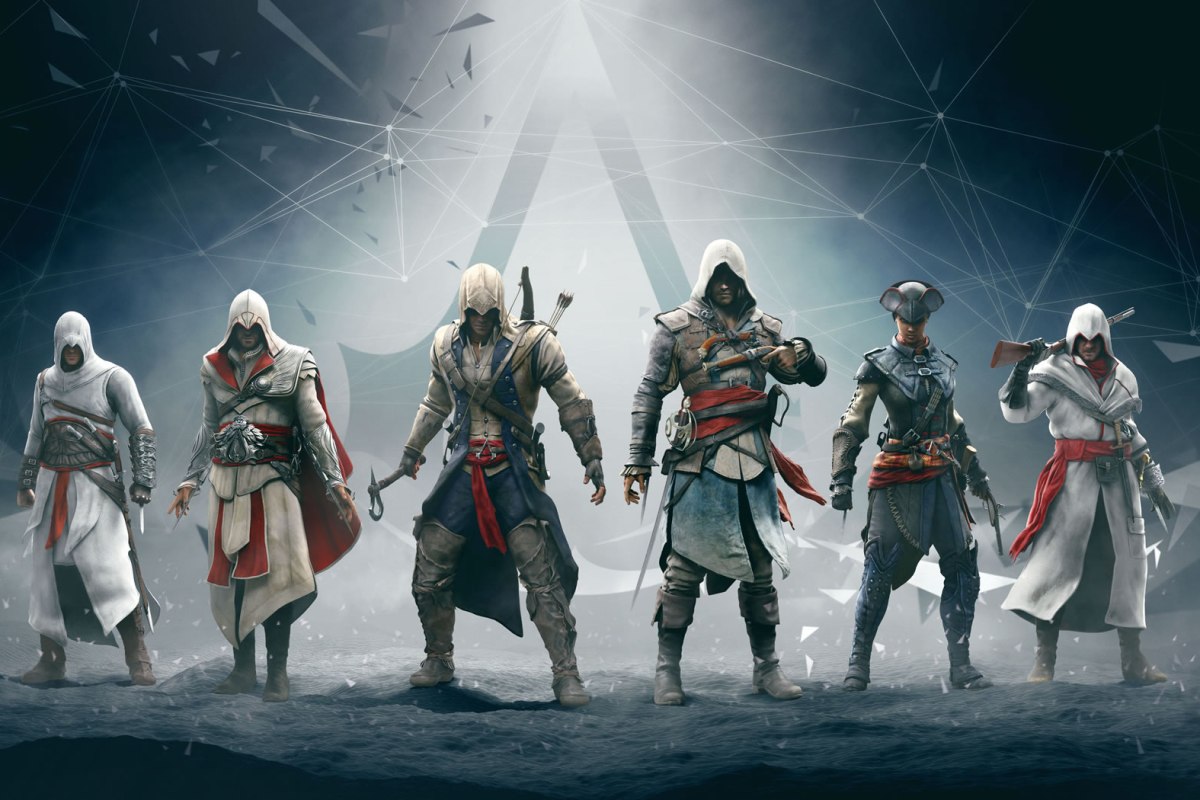
Assassins-Creed-videogame-characters
Will the other Assassins appear in the film? From L to R, Altair Ibn-La’ahad, Ezio Auditore, Connor Kenway, Edward Kenway, Aveline De Grandpre and Nikolai Orelov. Source: Google Images.

Lastly, that trailer music. Ugh. The AC series is known for it’s rather excellent musical choices for it’s trailers (Justice for AC2, Imagine Dragons for AC3 and Nils Frahm for Unity) but here we have Kanye West. Remember this is a teaser to start with and it’s more a marketing decision rather than a reflection of the film. Let’s wait until the next one, it can only get better.

And to end, I’ll rank my list of Assassins Creed games. Note: I have only played up until AC3, so everyone shouting “B-but Black Flag…”, I haven’t had a game system for a while, so calm down.

  1. Assassin’s Creed 2
  2. Assassin’s Creed Revelations (mainly for the city and multiplayer)
  3. Assassin’s Creed (best combat of the entire series and the Arabian setting was interesting. Also you actually assassinated people)
  4. Assassin’s Creed Brotherhood (felt like a step back after AC2 and a terrible story. This is where is became less about the assassinating and more about faffing about)
  5. Assassin’s Creed III (the only redeeming thing about it was the tomahawk combat)

Cover photo source: Google Images.