A Feminist/Masculine Critique of Fighting Video Games: Part I


After sitting through the awful Assassin’s Creed movie three months ago, I wrote a blog post titled, “How To Make A Good Video Game Film“. It’s probably one of the highest-viewed posts on this site and I had fun writing it and it led to some good conversations with people who disagreed with my points.
I was playing some Minecraft with some friends and I mentioned that there was a Minecraft movie in the works. My friend sighed loudly and said there was no point to making a Minecraft movie because, “…it would take out the entire reason for playing Minecraft, the gameplay.” I understood where he was coming from, (it’s one of the main reasons given for stopping game-to-movie adaptations), some games are inexorably tied to their gameplay.
(SPOILERS AHEAD for Bioshock and Spec Ops: The Line) Bioshock is a key example. While it might be fun to see Rapture on the big screen, “Would You Kindly” (the phrase that controls the main character) would lose pretty much all of its awesomeness, since we are not playing. Spec Ops: The Line is another. We decide to enter Dubai, we decide to use the white phosphorous and game chastises us for how we play the game. Those choices wouldn’t be there in a non-interactive medium.
To take away the thing that separates games from all other media makes sense, so we should stop game-movies, right?
HOWEVER…
Before we decide that, let me show you a few things.
The Defence of Video Games – The Last Question
Books have been a main source of adaptation since the inception of filmmaking. The Bible, Shakespeare, Dickens, Christie; several key books and authors have been successfully transposed from page to screen. Heck, Chuck Palahniuk is on record as saying the film version of Fight Club is better than his book.
So, we can all agree that book to movie’s work. And believe it or not, there are some books to games. A non-interactive media working in an interactive one. Let’s look at some examples.

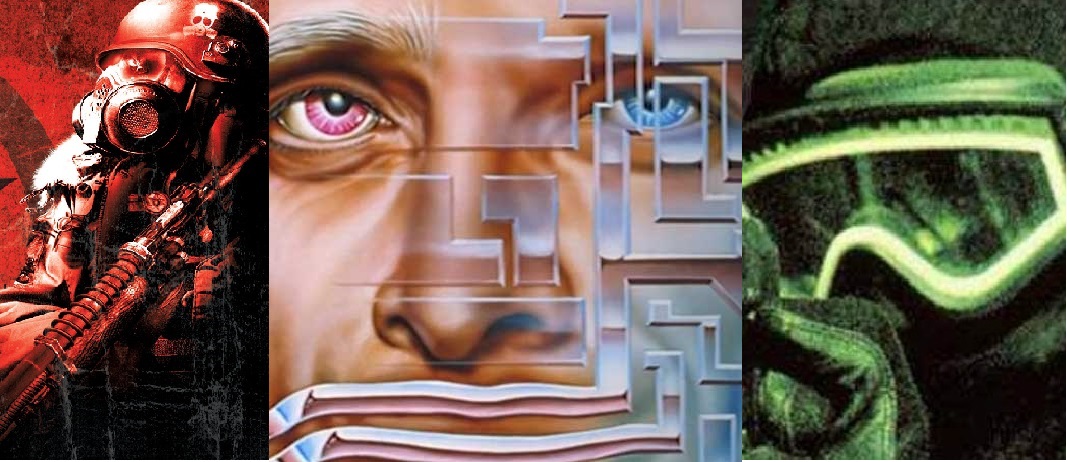
One of the best science-fiction stories ever written, Harlan Ellison’s post-apocalyptic sci-fi story is a slim tome, I think it’s around ten pages. And they managed to make it into a sprawling hours-long adventure game. Reading it again and again, I’m surprised they managed to make this short story, one with not a lot of character backstory or traditional narrative, into a game, but they did and they managed to create what is regarded as an actual mature game, when mature meant dealing with themes such as sexual assault and the Holocaust (see the link below), rather than mature meaning an 18 Rating and lots of blood.
Harlan Ellison worked on the script with the creators (showing that getting people who care about the property makes it better) and it while it is technical ‘sequel’ and throws out a couple of the themes, it’s thought to be one of the best point-and-click games ever created.
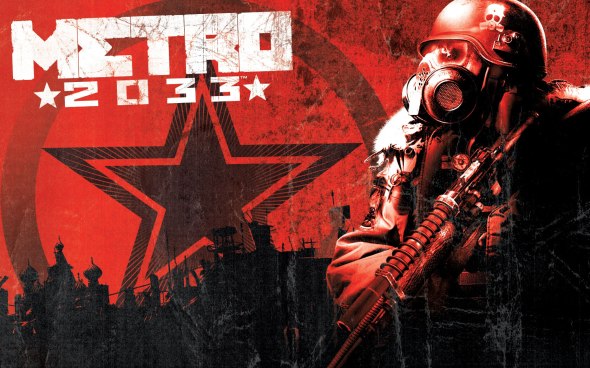
I got to read Metro 2033 before I played the game, surprising how it came out in the United Kingdom the same year as the game did. The Metro series, written by Russian author Dmitry Glukhovsky tells the story of people living in the Moscow Metro system (partly designed as the Soviet Union’s nuclear bomb shelter) twenty years after a nuclear war.
The game follows the same story of the book fairly closely. Players/readers follow Artyom as he travels from one side to the other trying to save his station while encountering hostile humans and supernatural enemies. In the game we get all the main characters from the book, like Bourbon and Khan as well as some of the minute details such as staring down the Librarians or the mummified lady in the ticket booth. I guess this is what happens when the writer of the book helps write the game.

Much like Metro, I read Tom Clancy’s Rainbow Six before I played the original game (which sold 25m copies when it was released). There has only been one R6 novel, and while the newer games have made their own stories, the first game stuck extremely close to the novel, with missions directly lifted from the novel. It’s not even a run-and-gun shooter. Violence is to be feared in Rainbow Six, where one stray bullet can kill you, something which the book emphasised heavily. And again, just like the two cases before, Tom Clancy not only helped develop the game but was one of the founders of the company that made it, Red Storm.
Closing Arguments
So what’s my point? Well, if a book can be turned into a film and be successful (LOTR, Harry Potter etc.) and a book can be turned into a game and be successful (the three above, as well as The Witcher and Parasite Eve) why can’t a game into movie work? A book into game shows a non-interactive media working in interactive, so that dispels the usual video-game-to-film argument that the film would just be gameplay footage.
Heck, most games have equivalent films. Tomb Raider is Indiana Jones, Assassin’s Creed is both The Matrix and The Mask Of Zorro, Rainbow Six is Sicario (not to mention the five other Tom Clancy films, showing that his action can work in all three mediums). This is what I meant in my original article about choosing a correct property, something that would work as a film, not Angry Birds or bloody Tetris. A follow up argument might be, “well why do we need video-game films if other films do it the exact same?” That’s a non-argument. Every slasher film has pretty much the same story, but we watch it to see the new things added to it.
And if we want to look at it the other way, we can. Several games have been turned into books, and not just concept art books or behind-the-scenes. Max Payne 3 had a three-comic series written by Sam Lake and Dan Houser which fits right into the series. Halo, Splinter Cell (a Tom Clancy property) and Assassin’s Creed (which was also based off a novel, Alamut) have all jumped from games into book form and are well-received by their fan-bases. The new Tomb Raider comics had Rhianna Pratchett and Gail Simone (the latter being comic writer of Deadpool, Wonder Woman and Batgirl). That’s an interactive media moving into non-interactive.
And to finish, there is a long-running game series known as S.T.A.L.K.E.R., which is set around the nuclear site at Chernobyl. And before it was made into a game, it was a book before being turned into a play, another book and even a tabletop role-playing game. The creators managed to move between all those types of media, both interactive and non-interactive. But the main thread I want to bring up was the film that was based on the same text. The film is called Stalker (that’s where the game got the name from). And do you know who made that film? Andrei flippin’ Tarkovsky, one of the premier filmmakers to ever come out of the Soviet Union. That film is ranked 29th at the BFI’s ’50 Greatest Films Of All Time’.
While the game is much more bang-bang-shooty than the film, which is a 163-minute philosophical breakdown, the New York Review of Books still said that, “…much of the players activity is oddly in-keeping with Stalker‘s spirit, sometimes even managing to expand upon it.” And while NYRoB says, “…on the face of it, the games don’t have much that in common with the film,” S.T.A.L.K.E.R. isn’t just defined by it’s shooting. Again, it’s one of those games that it’s gameplay might be boring if it were beamed straight into a theatre, but moving away from that might create a great film. I never said that game-films had to stick to their gameplay, but it’s knowing which gameplay can translate into movie action well.
So, let me put that question to you again. If a book can be turned into a critically and commercially successful film and a book can be turned into a critically and commercially successful game, why can’t a game be turned into a critically and commercially successful film?
Argue with me in comments if you have a reason why it wouldn’t work.
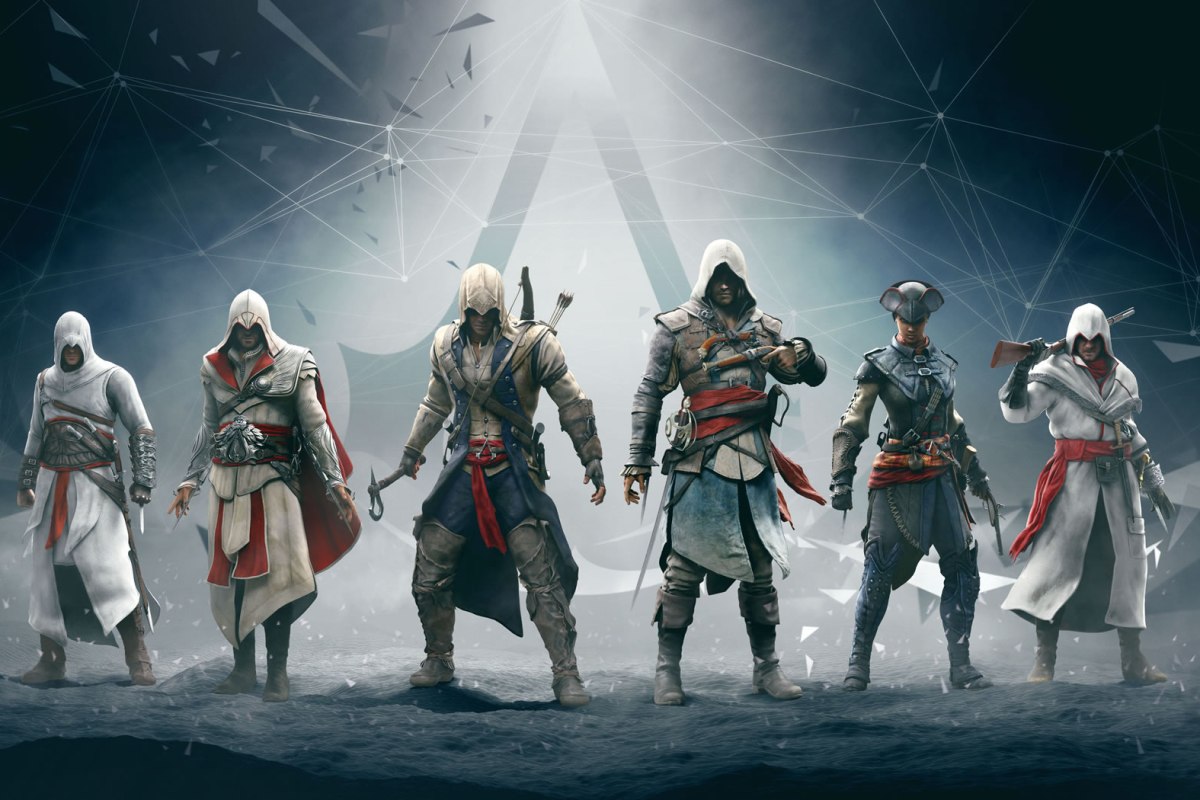

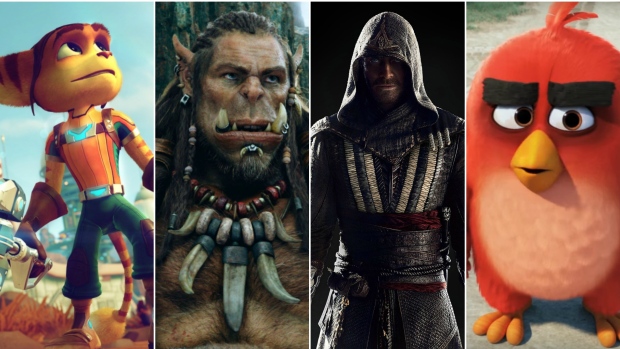
So, 16% on Rotten Tomatoes for Assassin’s Creed eh? And after seeing it myself, I can whole heartedly agree. Seeing as we are all disappointed after Warcraft, Ratchet And Clank (remember Ratchet And Clank came out in 2016? No you didn’t, because nobody went to see it) and now Assassin’s Creed, I’ve decided to help Hollywood and the rest of cinema out. As a film fanatic and a gamer, I have been hoping for a good video game adaptation for a LONG time. And while some have come close, none of them ever become worldwide smashes. So, I have devised the four major points of how to get a video game film going in the right direction. Directors and producers, when you approach a video game film, feel free to use this as a tick list to make sure you are on course.
1.Know Your Source Material (And Whether It’s A Good Choice)
To truly understand a book you are adapting, it is widely accepted that you read it multiple times. Why are video games any different? Sure, some games range from four to forty hours, but you don’t even have to play the whole thing. Watch a Let’s Play, or if that’s still too hard, have someone in the crew play it and give you a highlight reel of moments.
You wouldn’t try and make a film adaptation of The Lord Of The Rings if you had only read the blurb and if you’re serious about adapting it, you should know the lore and story of your game. I’m not a huge fan of Halo, but I really enjoyed Halo: Legends because the creators knew the source material. They took the time to learn the lore of the galaxy and world and didn’t deviate from it, creating some exciting action anime fights.
Knowing your game also means knowing whether it is a good property to adapt. Usually this means having a game with a narrative, as you don’t have to faff about with devising a new script. Tomb Raider, good. Silent Hill, good. Warcraft, promising. Angry Birds, Fruit Ninja, Tetris, FNAF, terrible, terrible, terrible.
Now that you’ve invested time into learning about your video game, you now need to understand why that video game has fans and is widely celebrated. For example, I give you Hitman.
The appeal of Hitman is simple. A stylish man heads to exotic locales, kills usually the maximum of one person in an understated manner and then leaves without anyone knowing he was ever there. Understanding Hitman means that you know this is the gold standard for play, and that unnecessary killing, especially spectacular explosions where everyone in the surrounding area becomes aware of you is seen as the worst and wrong way to play Hitman. Yet both Hitman films have gone down the explosions and gun-battles route because it’s “easier”. To some the proper way to play Hitman may not seem cinematic enough. In response, I would offer up 2010’s The American of how to do a Hitman-esque film and it to still be entertaining.
For another example, Max Payne. The fun in Max Payne comes from the slow-motion action and the over-the-top hardboiled detective genre. The film didn’t include either of those, with terrible slow-motion effects and a dull script. They took the two things that separated Max Payne apart in the video game world and didn’t add an ounce of them into the film. A film that would be a good template is John Woo’s Hard Boiled.
And I obviously don’t need to talk about Super Mario Bros and why that failed.
I know films have a limited budget, but you can at least try and get people who are interested or have investment in the film. I’ve been critical of Warcraft, but at least Duncan Jones was passionate about his film. Another one would be Christophe Gans, the director of the first Silent Hill (which in my opinion is the best video game based film so far). Gans went out of his way to make sure it was as true to the game as possible, even recreating shots from memorable sections. Actors can also help the film, such as Angelina Jolie as Lara Croft. Jolie wanted to do the stunts for real and worked with the filmmakers to create some amazing action scenes (go back and watch Tomb Raider II before you dismiss me, some of those are great action sequences). And most of us will sit through the turgid Street Fighter for oodles of Raul Julia. Passion from the filmmakers makes things watchable.
Don’t get people who aren’t going to invest time or effort or think video games aren’t worth it. Mark Whalberg loved the original script for Max Payne but became wary after learning it was based on a game. Skip Woods looks like he hasn’t played any of the Hitman franchise before writing the scripts to BOTH Hitman films. And it seems Uwe Boll just uses the name of the games he adapts to generate interest, rather than create anything remotely connected to the games. This type of bounty-hunter approach to filmmaking needs to stop.
I’ve been hearing over and over again from many facets of both the film world and the geek world that video game movies should just stop. We got our hopes up that 2016 would be the year where video games films started achieving critical success from both fans AND critics, but we were once again left saddened at what could have been.
But we mustn’t shut video game films down. The only way to get good is to persevere. Let’s look at superheroes. Comic book/superhero films are dominating the box office nowadays, but they weren’t always a massive success, critically or commercially. Another geek touchstone, Star Wars. We had to get through two terrible Star Wars films to get back to good ones (yes, two. Phantom Menace is entertaining). Video games are a young medium. Superman was introduced nearly eighty years ago; the superhero genre has had a while to simmer before becoming the hottest property in Hollywood. Lord Of The Rings was almost a century old before that got the full cinematic approach. Games as a cultural phenomenon have had only a fraction of that time; they will have their moment any day now.
So, do you think they are any legitimately good video game films? Are you waiting for a singular property to get the silver screen treatment? Or should we all just drop them and never speak of video games and movies again?
Banner picture courtesy of cbcnews.ca.

The third and final round of Martial Arts In Movies. We’ll keep this short, I’ll just say we have a mix of arts again, some from Asia and Europe as well as arts that don’t even exist, and maybe even a collection of several. Enjoy!
Creed – Boxing
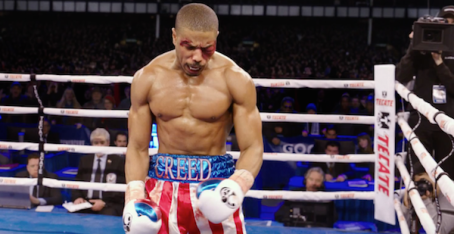
Boxing, easy enough. Everyone knows what boxing is. Boxers use their fists to attack and defend, but boxing is a full body sport. Boxers feet are one of their greatest assets, not for attacking, but for moving around an opponent. It’s said that boxers should be able to jump rope 100 times a minute, making them probably one of the fastest fighters in the world. Through training, whether it be through sparring or bag work, a boxer will have one of the hardest and quickest punches, making it, maybe not the most well-rounded stand-up art, but one of the most dangerous. Now to films.
Some people would probably be angry that I chose a non-Rocky film (or that I chose a film in the Rocky universe. Basically not Raging Bull). And while they might be great films as a whole, I wanted to choose Creed for the boxing matches.
While there might be only two full on boxing matches in the film, the first match is the one to look out for. The entire scene is done all in one take and with the camera inside the ring, sometimes going into the point-of-view of one of the fighters. It’s probably the closest many of us will get to being in the ring in a semi-pro to pro match, and not get hurt in the process.
Picture: Michael B. Jordan in during the final fight in Creed (2016).
Man Of Tai Chi – Tai Chi
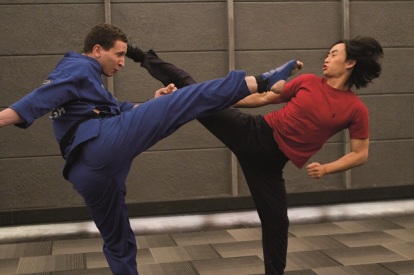
Tai Chi (the full name is “taiji quan”, which translates to “Supreme Ultimate Boxing”) falls under the Kung Fu umbrella and is said to be one of the oldest fighting style in the world. It’s characteristics are it’s slow movements, making a less demanding, more health-focussed approach to fighting. It’s main students are actually older people, who like tai chi for its benefits towards mobility and healing qualities, such as helping after accidents. Some people would not even regard it as a martial art, but tai chi, just like many martial arts, has several different styles. Some are slow and soft, much like yoga, but the faster and “hard” styles are more combat focussed. And the combat side is what we are looking at.
Man Of Tai Chi is my #1 favourite film. Not the best film of all time, just my personal favourite. And part of the appeal is the amazing choreography of the fight scenes. Choreographed by the excellent Yuen Woo-Ping (who did The Matrix, Crouching Tiger and both Kill Bill‘s just to name a few), Man of Tai Chi shows the flowing style sped up and used in combat. The film revolves around an underground tournament, so we see it against Taekwondo, Muay Thai and Brazilian Jiu-Jitsu. the main character Tiger Chen also fights his master in the middle of the film, so it’s interesting to see Tai Chi vs. Tai Chi. And the film is low on chi blasts and psychic attacks, focussing more on real life moves rather than ancient superpowers.
Picture: Tiger Chen defeats another opponent in Man Of Tai Chi (2013).
The Matrix Series – Wire Fu
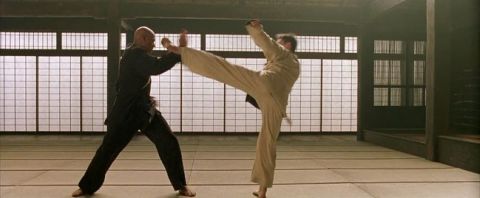
Wire Fu, a fake martial art that uses wires to make fighters fly and float through the sky while blending it with kung fu to create an art, that while doesn’t exist, looks incredible on screen.
Many films have taken and used Wire Fu for some of their best action scenes, Crouching Tiger Hidden Dragon and House Of Flying Daggers are the two main ones (both excellent films, if you ever have a chance to check them out do. While Crouching Tiger is widely considered the better one, I like the ending to House Of Flying Daggers more). The other film that uses Wire Fu is The Matrix.
In The Matrix, we see Neo (Keanu Reeves) learn several different martial arts. Savate Kickboxing, Jiu Jitsu, Kempo Karate, Tae Kwon Do, Drunken Boxing and obviously Kung Fu. But due to the simulated reality of the film, the people inside are not bound to the laws of physics, creating a hyper-form of martial arts, featuring incredible acrobatic moves and impossible attacks.
The Dojo fight from the first film is an incredible scene, blending all the martial arts that Neo has so far learnt, spliced in with the signature flying attacks and jumps that set Wire Fu apart. The first film also features the first hand-to-hand fight of Neo vs. Smith (Hugo Weaving) and features many of the same unattainable moves, such as wall running and bullet-time, helped by the use of a 360 degrees camera. While the slow-motion might be a cheap gimmick to some, and the slowed hand-to-hand combat look boring in comparison to its counterparts, it allows for full appreciation of the “art” part of martial art.
While The Matrix is undoubtedly the best film, the other films have some fights to watch out for. The Matrix Reloaded, the second film in the franchise, includes Neo fighting with Seraph, the best fighter within the system, as well as more acrobatic skills in a seven-on-one fight in a chateau, which features Tiger Chen before his lead role in Man of Tai Chi.
Picture: Neo (Reeves) vs. Morpheus (Fishburne) in the Dojo from The Matrix (1999).
Virtua Fighter – Various Styles
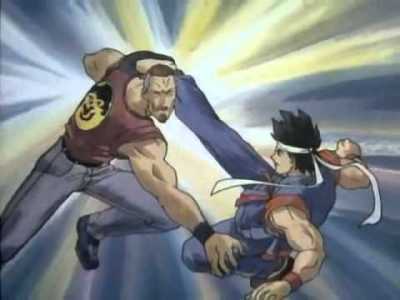
I’m cheating with this final example, as Virtua Fighter is an anime television show rather than a film like the mini-series title would lead you to believe…but damn it, this is my blog and Virtua Fighter needs more love. Based on the fighting game of the same name (which also doesn’t get much love, people like Mortal Kombat or Street Fighter more), the show follows several martial artists who battle a crime syndicate who is trying to create a robot who is the perfect warrior (it’s Japanese and an anime, of course a robot is going to appear).
Several styles appear in the show, Bajiquan (Eight Extreme Fists), Mizongquan (Lost Track Skill), Northern Praying Mantis and Tiger Swallow Fist, which are four styles that come under the Wushu “Kung Fu” umbrella, Jeet Kune Do, Pro Wrestling, Drunken Boxing, Ninjutsu (yes ninjas) and Pancratium, the ancient form of Greek wrestling from the Olympics.
Despite being animated, the styles and moves are almost true-to-life, with some creative license taken in scenes where opponents fly through the air when hit. One addition though which makes Virtua Fighter stand out is the “Special Attack” sections. When a fighter uses a move that is unique to their art (such as the Flash Kick in Jeet Kune Do or Splash Mountain from Pancratium) the episode pauses and does a detailed breakdown of the move, repeating it over and over, in a simplified version of the physics breakdowns in the martial art show Human Weapon.
If you’re interested, the entire thing is on YouTube, subbed and dubbed.
Picture: Akira (right) fights off a Koen-Ken fighter in Virtua Fighter (1996).
End
That’s the end of this mini-series! I hope you’ve enjoyed reading all three posts as much as I’ve had creating them. Again, any corrections are greatly received.
 TOM CLEMENT | GAME PRODUCER | NARRATIVE DESIGNER