How to Make a Good Video Game Film

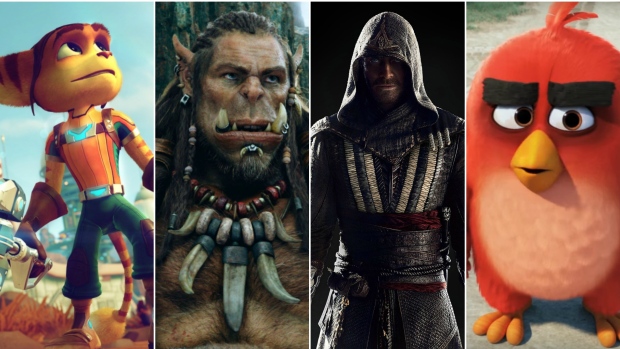
So, 16% on Rotten Tomatoes for Assassin’s Creed eh?  And after seeing it myself, I can whole heartedly agree. Seeing as we are all disappointed after Warcraft, Ratchet And Clank (remember Ratchet And Clank came out in 2016? No you didn’t, because nobody went to see it) and now Assassin’s Creed, I’ve decided to help Hollywood and the rest of cinema out. As a film fanatic and a gamer, I have been hoping for a good video game adaptation for a LONG time. And while some have come close, none of them ever become worldwide smashes. So, I have devised the four major points of how to get a video game film going in the right direction. Directors and producers, when you approach a video game film, feel free to use this as a tick list to make sure you are on course.

1.Know Your Source Material (And Whether It’s A Good Choice)

To truly understand a book you are adapting, it is widely accepted that you read it multiple times. Why are video games any different? Sure, some games range from four to forty hours, but you don’t even have to play the whole thing. Watch a Let’s Play, or if that’s still too hard, have someone in the crew play it and give you a highlight reel of moments.

You wouldn’t try and make a film adaptation of The Lord Of The Rings if you had only read the blurb and if you’re serious about adapting it, you should know the lore and story of your game. I’m not a huge fan of Halo, but I really enjoyed Halo: Legends because the creators knew the source material. They took the time to learn the lore of the galaxy and world and didn’t deviate from it, creating some exciting action anime fights.

Knowing your game also means knowing whether it is a good property to adapt. Usually this means having a game with a narrative, as you don’t have to faff about with devising a new script. Tomb Raider, good. Silent Hill, good. Warcraft, promising. Angry Birds, Fruit Ninja, Tetris, FNAF, terrible, terrible, terrible. 

  1. Understand Your Source Material (What Makes It Successful)

Now that you’ve invested time into learning about your video game, you now need to understand why that video game has fans and is widely celebrated. For example, I give you Hitman.

The appeal of Hitman is simple. A stylish man heads to exotic locales, kills usually the maximum of one person in an understated manner and then leaves without anyone knowing he was ever there. Understanding Hitman means that you know this is the gold standard for play, and that unnecessary killing, especially spectacular explosions where everyone in the surrounding area becomes aware of you is seen as the worst and wrong way to play Hitman. Yet both Hitman films have gone down the explosions and gun-battles route because it’s “easier”. To some the proper way to play Hitman may not seem cinematic enough. In response, I would offer up 2010’s The American of how to do a Hitman-esque film and it to still be entertaining.

For another example, Max Payne. The fun in Max Payne comes from the slow-motion action and the over-the-top hardboiled detective genre. The film didn’t include either of those, with terrible slow-motion effects and a dull script. They took the two things that separated Max Payne apart in the video game world and didn’t add an ounce of them into the film. A film that would be a good template is John Woo’s Hard Boiled.

And I obviously don’t need to talk about Super Mario Bros and why that failed.

  1. Get People Who Are Enthusiastic About The Project (And Dismiss Those Who Aren’t)

I know films have a limited budget, but you can at least try and get people who are interested or have investment in the film. I’ve been critical of Warcraft, but at least Duncan Jones was passionate about his film. Another one would be Christophe Gans, the director of the first Silent Hill (which in my opinion is the best video game based film so far). Gans went out of his way to make sure it was as true to the game as possible, even recreating shots from memorable sections. Actors can also help the film, such as Angelina Jolie as Lara Croft. Jolie wanted to do the stunts for real and worked with the filmmakers to create some amazing action scenes (go back and watch Tomb Raider II before you dismiss me, some of those are great action sequences). And most of us will sit through the turgid Street Fighter for oodles of Raul Julia. Passion from the filmmakers makes things watchable.

Don’t get people who aren’t going to invest time or effort or think video games aren’t worth it. Mark Whalberg loved the original script for Max Payne but became wary after learning it was based on a game. Skip Woods looks like he hasn’t played any of the Hitman franchise before writing the scripts to BOTH Hitman films. And it seems Uwe Boll just uses the name of the games he adapts to generate interest, rather than create anything remotely connected to the games. This type of bounty-hunter approach to filmmaking needs to stop.

  1. STICK AT IT

I’ve been hearing over and over again from many facets of both the film world and the geek world that video game movies should just stop. We got our hopes up that 2016 would be the year where video games films started achieving critical success from both fans AND critics, but we were once again left saddened at what could have been.

But we mustn’t shut video game films down. The only way to get good is to persevere. Let’s look at superheroes. Comic book/superhero films are dominating the box office nowadays, but they weren’t always a massive success, critically or commercially. Another geek touchstone, Star Wars. We had to get through two terrible Star Wars films to get back to good ones (yes, two. Phantom Menace is entertaining). Video games are a young medium. Superman was introduced nearly eighty years ago; the superhero genre has had a while to simmer before becoming the hottest property in Hollywood. Lord Of The Rings was almost a century old before that got the full cinematic approach. Games as a cultural phenomenon have had only a fraction of that time; they will have their moment any day now.

So, do you think they are any legitimately good video game films? Are you waiting for a singular property to get the silver screen treatment? Or should we all just drop them and never speak of video games and movies again?

Banner picture courtesy of cbcnews.ca.

Martial Arts in Movies: Part Three

The third and final round of Martial Arts In Movies. We’ll keep this short, I’ll just say we have a mix of arts again, some from Asia and Europe as well as arts that don’t even exist, and maybe even a collection of several. Enjoy!

Creed – Boxing

creed

Boxing, easy enough. Everyone knows what boxing is. Boxers use their fists to attack and defend, but boxing is a full body sport. Boxers feet are one of their greatest assets, not for attacking, but for moving around an opponent. It’s said that boxers should be able to jump rope 100 times a minute, making them probably one of the fastest fighters in the world. Through training, whether it be through sparring or bag work, a boxer will have one of the hardest and quickest punches, making it, maybe not the most well-rounded stand-up art, but one of the most dangerous. Now to films.

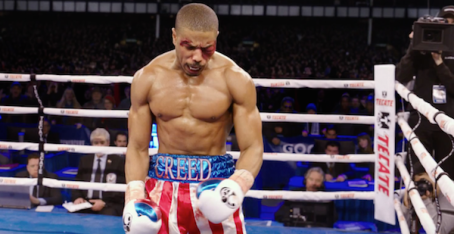
Some people would probably be angry that I chose a non-Rocky film (or that I chose a film in the Rocky universe. Basically not Raging Bull). And while they might be great films as a whole, I wanted to choose Creed for the boxing matches.

While there might be only two full on boxing matches in the film, the first match is the one to look out for. The entire scene is done all in one take and with the camera inside the ring, sometimes going into the point-of-view of one of the fighters. It’s probably the closest many of us will get to being in the ring in a semi-pro to pro match, and not get hurt in the process.

Picture: Michael B. Jordan in during the final fight in Creed (2016).

Man Of Tai Chi – Tai Chi

man of tai

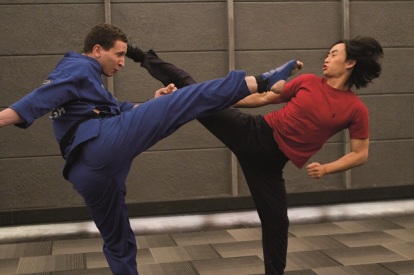
Tai Chi (the full name is “taiji quan”, which translates to “Supreme Ultimate Boxing”) falls under the Kung Fu umbrella and is said to be one of the oldest fighting style in the world. It’s characteristics are it’s slow movements, making a less demanding, more health-focussed approach to fighting. It’s main students are actually older people, who like tai chi for its benefits towards mobility and healing qualities, such as helping after accidents. Some people would not even regard it as a martial art, but tai chi, just like many martial arts, has several different styles. Some are slow and soft, much like yoga, but the faster and “hard” styles are more combat focussed. And the combat side is what we are looking at.

Man Of Tai Chi is my #1 favourite film. Not the best film of all time, just my personal favourite. And part of the appeal is the amazing choreography of the fight scenes. Choreographed by the excellent Yuen Woo-Ping (who did The Matrix, Crouching Tiger and both Kill Bill‘s just to name a few), Man of Tai Chi shows the flowing style sped up and used in combat. The film revolves around an underground tournament, so we see it against Taekwondo, Muay Thai and Brazilian Jiu-Jitsu. the main character Tiger Chen also fights his master in the middle of the film, so it’s interesting to see Tai Chi vs. Tai Chi. And the film is low on chi blasts and psychic attacks, focussing more on real life moves rather than ancient superpowers.

Picture: Tiger Chen defeats another opponent in Man Of Tai Chi (2013).

The Matrix Series – Wire Fu

TheMatrix

Wire Fu, a fake martial art that uses wires to make fighters fly and float through the sky while blending it with kung fu to create an art, that while doesn’t exist, looks incredible on screen.

Many films have taken and used Wire Fu for some of their best action scenes, Crouching Tiger Hidden Dragon and House Of Flying Daggers are the two main ones (both excellent films, if you ever have a chance to check them out do. While Crouching Tiger is widely considered the better one, I like the ending to House Of Flying Daggers more). The other film that uses Wire Fu is The Matrix.

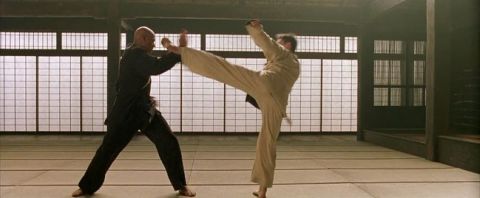
In The Matrix, we see Neo (Keanu Reeves) learn several different martial arts. Savate Kickboxing, Jiu Jitsu, Kempo Karate, Tae Kwon Do, Drunken Boxing and obviously Kung Fu. But due to the simulated reality of the film, the people inside are not bound to the laws of physics, creating a hyper-form of martial arts, featuring incredible acrobatic moves and impossible attacks.

The Dojo fight from the first film is an incredible scene, blending all the martial arts that Neo has so far learnt, spliced in with the signature flying attacks and jumps that set Wire Fu apart. The first film also features the first hand-to-hand fight of Neo vs. Smith (Hugo Weaving) and features many of the same unattainable moves, such as wall running and bullet-time, helped by the use of a 360 degrees camera. While the slow-motion might be a cheap gimmick to some, and the slowed hand-to-hand combat look boring in comparison to its counterparts, it allows for full appreciation of the “art” part of martial art.

While The Matrix is undoubtedly the best film, the other films have some fights to watch out for. The Matrix Reloaded, the second film in the franchise, includes Neo fighting with Seraph, the best fighter within the system, as well as more acrobatic skills in a seven-on-one fight in a chateau, which features Tiger Chen before his lead role in Man of Tai Chi.

Picture: Neo (Reeves) vs. Morpheus (Fishburne) in the Dojo from The Matrix (1999).

Virtua Fighter – Various Styles

VirtuaFighter

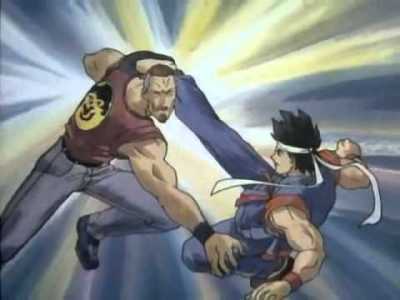
I’m cheating with this final example, as Virtua Fighter is an anime television show rather than a film like the mini-series title would lead you to believe…but damn it, this is my blog and Virtua Fighter needs more love. Based on the fighting game of the same name (which also doesn’t get much love, people like Mortal Kombat or Street Fighter more), the show follows several martial artists who battle a crime syndicate who is trying to create a robot who is the perfect warrior (it’s Japanese and an anime, of course a robot is going to appear).

Several styles appear in the show, Bajiquan (Eight Extreme Fists), Mizongquan (Lost Track Skill), Northern Praying Mantis and Tiger Swallow Fist, which are four styles that come under the Wushu “Kung Fu” umbrella, Jeet Kune Do, Pro Wrestling, Drunken Boxing, Ninjutsu (yes ninjas) and Pancratium, the ancient form of Greek wrestling from the Olympics.

Despite being animated, the styles and moves are almost true-to-life, with some creative license taken in scenes where opponents fly through the air when hit. One addition though which makes Virtua Fighter stand out is the “Special Attack” sections. When a fighter uses a move that is unique to their art (such as the Flash Kick in Jeet Kune Do or Splash Mountain from Pancratium) the episode pauses and does a detailed breakdown of the move, repeating it over and over, in a simplified version of the physics breakdowns in the martial art show Human Weapon.

If you’re interested, the entire thing is on YouTube, subbed and dubbed.

Picture: Akira (right) fights off a Koen-Ken fighter in Virtua Fighter (1996).

End

That’s the end of this mini-series! I hope you’ve enjoyed reading all three posts as much as I’ve had creating them. Again, any corrections are greatly received.

To read Part One and Part Two, just follow the links!

Thoughts on the New Tomb Raider Film

After months of speculation, with names coming and going and the writers and directors being announced, we finally have our next big screen version of Lara Croft; Alicia Vikander. But let’s go back half a year and see the beginning of the third Tomb Raider film and the names that are already connected to it.

Ever since October time in 2015, when the first proper rumours announced of a return to the film screen (MGM bought the rights in 2013 but only in 2015 had they started making moves). The studio, obviously wanting to mimic last year’s Suffragette (a film notable for the main crew being entirely women) started canvassing for female directors. Kathryn Bigelow (The Hurt Locker, Zero Dark Thirty), Mimi Leder (Deep Impact, Pay It Forward) and Catherine Hardwicke (Twilight) were all brought up as possible directors for the film. Out of those three I would have gone Bigelow, she would have drawn in crowds.

In the end, a fairly unknown Norwegian director, Roar Uthaug, was brought in to direct around November 2015. I researched his film, The Wave, to see what he could bring to the film. The Wave is a Norwegian disaster film about a giant-tsunami destroying a small town in a Norwegian fjord and has received critical acclaim (it was even submitted for Best Foreign Film Oscar). If Tomb Raider 2013 (what they’re basing the film on) was anything, it was destruction and just from the trailer, The Wave looks like a perfect audition.

Just a side-note, many people managed to confuse The Wave with The 5th Wave, a frankly rubbish YA film starring Chloe-Grace Moretz. They have similar names but they are not the same film. Similar to how people managed to confuse The Room (honestly the worst film ever made) with Room (one of the best films of 2016).

The script-writer has already been brought on as well. Geneva Robertson-Dworet, (Transformers: The Last Knight, Blacklist) is penning the script, following the tradition of female writers of Tomb Raider (Vicky Arnold for TR2 and Rihanna Pratchett for TR 2013). Hopefully Robertson-Dworet will find some inspiration from Pratchett’s 2013 work, but change where appropriate. The “First Kill” arc (where Lara kills her first human and starts to uncontrollably sob, but then five minutes later is mowing down enemies like Rambo) would be a good place to deviate. It would turn into parody if the film went the same way as the games, but it could be a glorious high stab at violence and brutality and what it does to a person if they film it right. And last point about the games, they damn better put some Lara/Sam in there. I, along with a large amount of 2013’s player base did not put so much investment into that relationship for it to not feature in the film.

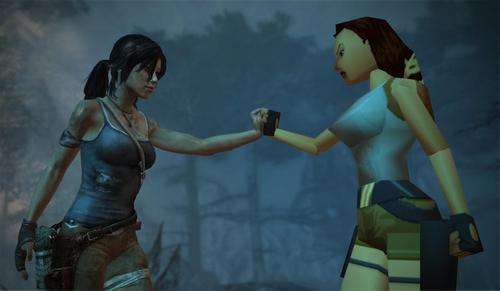
Lara vs Lara
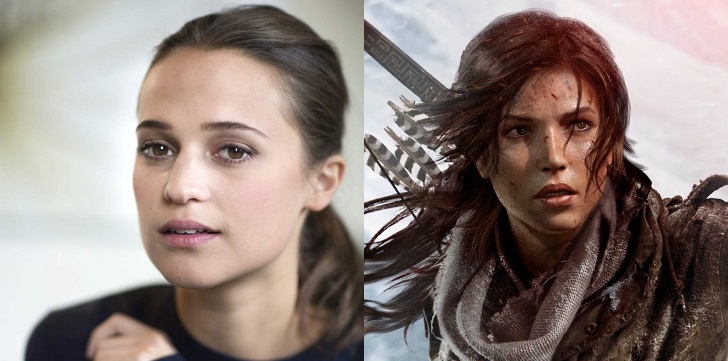
The new film will focus less of the action girl (right) and more of the survivor plotline (left). Source: imgur.com.

And finally, just a few weeks ago, Alicia Vikander was announced to play Lara Croft. Before her announcement, all bets were on Daisy Ridley. Yes, Ridley was great in Star Wars VII and looked a lot like LC, and with her telling the Hollywood Reporter that she had been in talks to play the part, it looked almost certain that she would be cast. I had my reservations however. Ridley had only been in bit parts before jumping into Star Wars. I thought maybe trying to helm two franchises might be a bit much for one relative newcomer.

Compare her to another Star Wars alumni Harrison Ford, or another actress Jennifer Lawrence. Sure, both of them have held two major franchises before, but in between they did other contained work (Apocalypse Now and Blade Runner for Ford, The House At the End Of The Street and anything David O. Russell for Lawrence). That’s what I think Ridley needs, instead of another blockbuster, she could build a reputation for smaller, indie work. Sadly, deep down I knew my #1 choice, Camilla Luddington (the voice and motion-capture for Lara in the games) would not be chosen due to her less-known status (unless you watch Greys Anatomy). But as soon as Vikander was chosen, I knew it was a good shout.

Alicia Vikander HQ photo
Our next Lara, Alicia Vikander on the left. Render of Lara from Rise Of The Tomb Raider on the right. Source: filmonic.com.

Vikander has only really come onto the mainstream scene recently. Despite performing since 2006, many people haven’t seen her work. I first saw her in 2012’s A Royal Affair, but you may have seen her in one of the six films she was in back in 2015. If you want a good base for her work, I suggest A Royal Affair, Ex Machina and The Man From U.N.C.L.E. That trio will show off action, drama and romance and several flourishes of what Vikander may bring to Lara. If you really want to you can go see The Danish Girl but her performance wasn’t anything particularly special. Also, keep an eye out for her in the new Jason Bourne, although how “hands-on” (i.e. breaking people faces) she will be is unknown.

So, we’ve got around a couple of years until we see the third Tomb Raider in cinemas (at the time of writing it was a 2017/18 release date). And with Duncan Jones’ Warcraft and Justin Kurzel’s Assassins Creed coming out later in 2016, are we seeing a tipping point for video games? If anything, Vikander will bring a strong performance and it’s always nice to see Gaming’s First Lady back in the limelight.

P.S. In TR 2013 there was this scene…

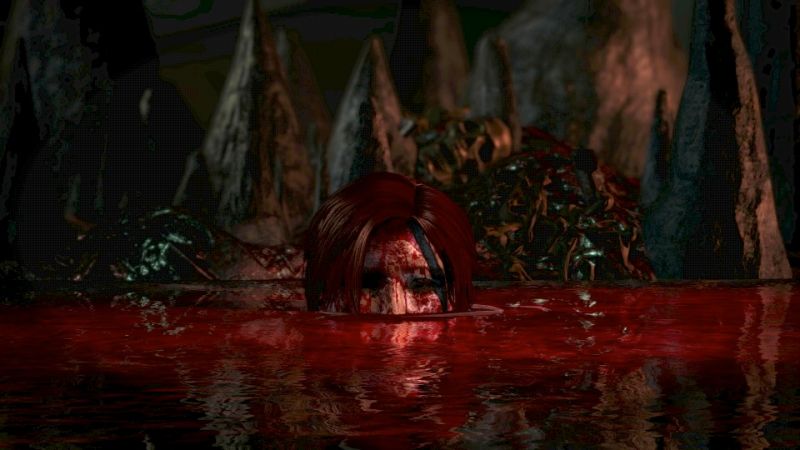
TR the descent
Source: kotaku.com.

This is a scene ripped directly from 2001’s horror film The Descent. Just something interesting, I wonder if they put it back in the TR film. Film imitating games imitating film?


Banner Picture. Source: Google Images.

Thoughts on the Assassin’s Creed Film/Trailer

The first teaser trailer for the Assassins Creed film came out last night morning and as both a connoisseur of film and a fan of the games (up until Assassins Creed III, because that’s when it went too far into stupid territory) I thought I would give my thoughts on the trailer and then general ideas about the film and casting.

First, roll call of the men and women involved in bringing Assassins Creed to the cinema. Kurzel, Fassbender, Cotiallard, Kurzel (again?), Arkapaw and finally Kyd. To most people, they are just a load of names, so let’s break it down.

  1. Justin Kurzel. The director of Assassins Creed. Director of 2015’s Macbeth (prepare to see that film pop up a lot in the following paragraph) my number one film of 2015.
  2. Michael Fassbender. The main star. To see his best work, I recommend Hunger, Shame (if you’re feeling up for it) and 12 Years A Slave (all by Steve McQueen). Also Macbeth.
  3. Marion Cotillard. The first female role in the trailer. To see more of her work, look for the Edith Piaf musical biopic La Vie En Rose or if that ain’t your thing watch her work in Public Enemies. Also Macbeth.
  4. Jed Kurzel. The composer. Brother to director Justin. His best work includes Kodi Smit-Pchee and Fassbender’s Slow West last year. Also Macbeth.
  5. Adam Arkapaw. The cinematographer (aka the guy who makes the film look like it does). Responsible for the camera work in season one of True Detective and THAT six-minute long take (WARNING: Contains strong language and violence). Also Macbeth.
  6. Jesper Kyd. The other composer (although for Assassins Creed he’s in the “music department”). Composer of the AC games from the first through to Revelations and the superb Hitman game scores. Sadly no ties to Macbeth.

I could stop writing there. Six names. Damn good pedigree and an exciting intellectual property. Let’s look at the trailer.

Done? Okay. Let’s talk.

The Assassins Creed trailer is how you do a trailer. Oh yeah, there are problems with it, but what a trailer should do is tell you the story, not the plot. To see of a film that does the reverse, look at the trailer for The Double. It gave away its twist long before it was ever in theatres. What does Assassins Creed do? We learn about the Animus, Michael Fassbender’s double lead role, his abilities as an Assassin and our setting, but what have we learnt about the plot? Nothing.

The trailer is giving us the nice blend of the things that made Assassins Creed the series it now is. Hack-and-slash combat, free-running across exotic rooftops, a brooding misery-guts under the hood and some bonkers modern day stuff involving sinister corporations. It’s got the iconography down; the eagle, the colourful rooftop base-jumping (Spain here is represented by Malta), the mantras of the Assassins and the signature Leap of Faith at the end. According to Fassbender, that move is a real guy and a real stunt, “We’ve got [stuntman] Damien Walters doing a 120-foot leap of faith, without any rope, into a bag.” If the rest of the parkour-infused set pieces are practical as well then this will definitely be one to watch just for the stunts alone. Malta is also a good choice of location/filming. While big films like Captain Phillips and World War Z were filmed there, no film has shown off the architecture of the small island or it’s capital Valetta.

From the clips, the film looks great. Arkapaw is earning his name as one of the greatest cinematographers alive today with the compositions. The fights look to be wide-angle shots with good choreography, so hopefully the rest of the film doesn’t mirror something akin to the fights in Quantum of Solace. There will obviously be handheld camerawork for some fights (ever since Paul Greengrass popularised it in The Bourne Supremacy it will feature in every film with a fight scene) but hopefully most will keep their distance from the actors.

mW2eyqtp4TmayXxSRPTSCL-970-80
Still from the trailer showing Fassbender in combat. Source: Games Radar.

The Animus was a sticking point for me. To any who don’t know, the Animus is a machine that when you are plugged in, you can jump back into the memories of your ancestors (Michael Fassbender will be playing two roles, one as Callum Lynch in the present and Aguilar the Assassin during the 1500s.) I thought this might throw a film audience. Gamers can suspend their disbelief while I think films need a bit more coercing. To anyone a bit confused, think of the Animus as similar to The Matrix. It’s a fake world that you can play around in to your hearts content. It might have been better to drop all present day stuff though. The games tried a similar double narrative and it only served to highlight how bland the present day character was in comparison to his ancestors. Eventually they did drop all pretence about a future-based war and got on with the free-running across European cities, but if the film handles it, again, like The Matrix did in the first film, it might just work.

The film moves away from the storylines of the game, which I think is for the best. The ability of the Animus is that we can have several unconnected films but they are all under the banner of Assassins Creed. I’m curious however on the choice of the Spanish Inquisition as a setting. Sure, it’s a great setting, mirroring the settings of the American War Of Independence in AC3 and the French Revolution in AC: Unity. But the choice of the Inquisition, the 1500s, mirrors the timeline of the “Ezio Auditore trilogy” three games following Italian Assassin Ezio Auditore during the Italian Renaissance. There is also a rumour of a Caribbean Assassin featuring in the film, which ties in with the Kenway Saga (which follows a grandfather to grandson storyline of the Golden Age of Piracy to the American War of Independence). If they do want to include these references to the games, I hope they keep them to a cameo at best. As a fan I want Assassins Creed to draw in more people than the games ever could and I think these titbits might detract from the story at play here.

Assassins-Creed-videogame-characters
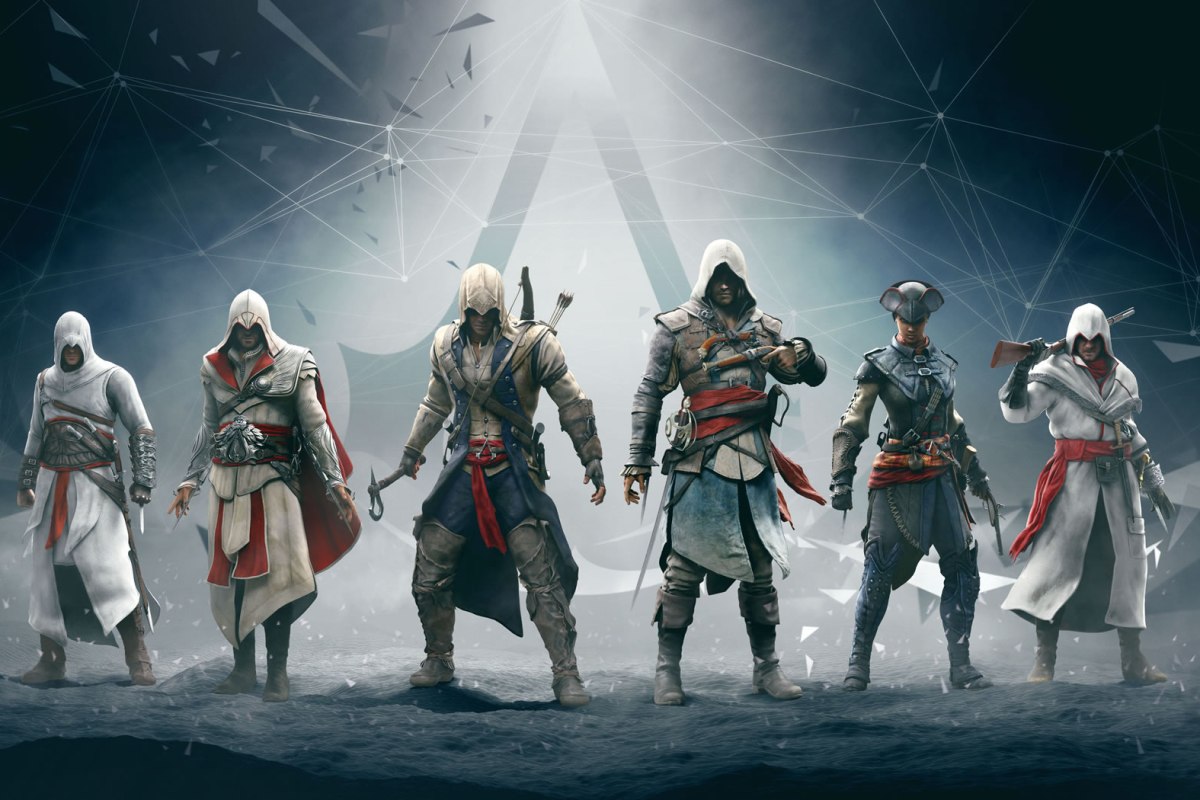
Will the other Assassins appear in the film? From L to R, Altair Ibn-La’ahad, Ezio Auditore, Connor Kenway, Edward Kenway, Aveline De Grandpre and Nikolai Orelov. Source: Google Images.

Lastly, that trailer music. Ugh. The AC series is known for it’s rather excellent musical choices for it’s trailers (Justice for AC2, Imagine Dragons for AC3 and Nils Frahm for Unity) but here we have Kanye West. Remember this is a teaser to start with and it’s more a marketing decision rather than a reflection of the film. Let’s wait until the next one, it can only get better.

And to end, I’ll rank my list of Assassins Creed games. Note: I have only played up until AC3, so everyone shouting “B-but Black Flag…”, I haven’t had a game system for a while, so calm down.

  1. Assassin’s Creed 2
  2. Assassin’s Creed Revelations (mainly for the city and multiplayer)
  3. Assassin’s Creed (best combat of the entire series and the Arabian setting was interesting. Also you actually assassinated people)
  4. Assassin’s Creed Brotherhood (felt like a step back after AC2 and a terrible story. This is where is became less about the assassinating and more about faffing about)
  5. Assassin’s Creed III (the only redeeming thing about it was the tomahawk combat)

Cover photo source: Google Images.