I have been on-and-off learning German for five years now.
Through online classes, a dash of Duolingo, and general real-world-exposure, I am able to get by in most situations and conversations, only struggling with speed and specialised words.
General linguistic wisdom tells a student to immersive themselves in a language, such as reading books and watching films and TV in the target language. But as gaming fought with TV time, I decided I was should start playing games in German to increase my vocabulary.
While I had pondered whether to play a game I knew the dialogue of for a fun challenge, I also had a behemoth of a game on my “to-play” pile, and decided to go for that.
The first game I would play in German would be Assassin’s Creed: Valhalla.
So, let me have an indulgence as I write about my time in Viking England, with a German valkyrie as my avatar guide (because who plays Valhalla as male Eivor? Female Eivor forever!)
“Ich bin Eivor vom Raben-Clan!” – Learning German With Assassin’s Creed: Valhalla
I have written before about the use of other languages in games, even using Assassin’s Creed as an example.
When I had played AC: Unity and Liberation, I set the language for both to French, as Unity is set in Paris and Liberation in colonial-era New Orleans. However, these switches were for immersion rather than to learn, but they had started an interest in me to search for language settings in games.
And actually, Ubisoft, creators of Assassin’s Creed, have a great track record for doing languages in games. So many games, even AAA ones, don’t make a distinction between language audio, subtitles, and game text.
You may want a different language for dialogue, but keep the text and subtitles in another, and most games won’t let you. It’s a luxury in development time and extra tech logic to separate them. But Ubisoft separates the individual components, so players can customise how they would like.
AC: Unity was one of the first games I changed the language, making Paris much more immersive (Source: ign.com).
***
One of the main reasons I chose AC: Valhalla for my start in German is for the story. Not the narrative per se, but the nuts-and-bolts dialogue and missions.
If I had played something like Call of Duty in German, I might learn the words for “missile”, “tango” and “terrorist”. Interesting for sure, but not words I would be able to use every day.
A big part of Valhalla is the role-playing aspect, dialogue trees and quest-based design. It would give ample opportunities and for every day words to be used in-game.
So whenever I would play, I would sit down with my pen and paper and when I would hear a word that I could use, I would note the English from the subtitle and write down a phonetic sound-by-sound version of the word.
After playing I would go through and edit my notes to be the correct spelling or straighten up any mis-aligned phonetics. When I started, my focus was on singular words, meaning I could easily match subtitle to phonetic, something like “sofort”, meaning “exactly”. I eventually graduated to full sentences and questions.
And after marauding across the English hills for many hours, I had an eye-opening moment. I heard Eivor ask, “Habe ich eine Wahl?” (“Do I have a choice?”) and I could understand each and every word without even glancing at the subtitles.
It was a true light-bulb moment, of words I had learned through classes, exposure, or TV, and my brain made the snap translation almost immediately.
“Was siehst du, Synin?” – Eivor’s pet raven, and one of my first noted phrases (Source: reddit.com).
***
Something that I learnt about while playing was German dubbing culture in film, TV, and games.
While a lot of films and TV made in the US or UK are shown in Germany and Europe as a whole, that can be two different ways it is presented.
Many if,ms and TV shows are shown in their original language, but with subtitles (this is how a lot of non-English speakers learn English, and why sometimes they come away with specific accents because of a show they watched).
The second is dubbing, where voiceover actors are attached to one or two real-world actors. For example, Maria Koschny, female Eivor’s German dub, also dubs for Jennifer Lawrence, and does all the films that Jennifer Lawrence has starred in.
Being voiceover specialists, these voice actors are usually brought in for games and anime dubbing, even if the real-world actor they are attached to is not present. This led to a great moment where my partner, in earshot of me playing, asked “Why is Julia Roberts playing a Viking princess?”
I have to praise Maria Koschny’s excellent performance, whose voice I now solely associate with Eivor (Source: ign.com).
***
One of the great things about such a deep narrative game as Valhalla is it’s interpersonal connections. Eivor has several deep discussions with allies, enemies, and everyone in-between.
Valhalla has a sprawling 300+ hours of content with main story missions, as well as a variety of in-world encounters and side-quests.
The people that Eivor encounters in each mission life to talk about a whole range of topics such as life, history, politics, and philosophy, mainly advancing character development rather than advancing a plot point.
It was here where I found the most advantageous words and phrases, rehearsed their sounds and how to use them in a sentence, and then brought them out into the world.
And still, when I think of those specific words, my memory returns to those exact moments in the game. Eivor walking through a night-time market, celebrating with friends after a successful siege, arguing with ice giants in Jotenheim, and returning relics to the Saxon king Alfred.
When the end credits came, I was a little emotional. Not only for the countless hours and months I put into the story, but also something deeper. A learning experience, personalised to not feel like memorisation of key words. And so I will continue to change languages where I can and adding to my word list.
But AC: Valhalla has a soft spot in my heart, for being the first and being a great introduction to learning through play.
He started a franchise, was a standout for the start of the seventh generation, and defined an entire series…yet he’s only appeared in one game.
Over a decade and half after his first and only major role in video games, Altaïr Ibn-La’Ahad is still referenced and idolised in the Assassin’s Creed series.
Yet as I mentioned above, he only got one major game to himself, with only short extra chapters in Assassin’s Creed: Revelations tying him in with the more famous Assassin, Ezio Auditore.
So who is this man? How did he start this franchise, and does he deserve more accolades for his action? I want to study him.
“Nothing is True. Everything Is Permitted” – What Makes Altaïr a Great Character
As with any character study, there are points of contention that must be addressed. Firstly, the game is not just about Altaïr during the Third Crusade in 1191, but about his descendant Desmond Miles in the modern day.
Not all memories available to the player (and Desmond) flow in a sequential order. At many points the Animus, the machine Desmond is using to relive his ancestor’s memories, skips forward to a more recent one.
For the most part the skip ahead is during travel or resting periods at the Assassin Bureau, it is something to keep in mind as it leaves sections of Altaïr’s life out of the picture.
Second, at the start of the game Altaïr loses all of his Assassin abilities and gear, having to earn his rank back over the course of the game. While this is to facilitate the gameplay loop, it is something to keep in mind, no matter how silly it is.
Finally, the Animus adapts speech for Desmond and the player to aid communication. The first AC is set during the Crusades in the Levant, comprising of modern day Syria, Israel, Palestine, Lebanon, and Jordan, meaning that Arabic, English, German, and French would have been spoken.
Not only are translations to be made, but also updating the language from 12th Century to modern day, as the Animus is known to do. Some languages don’t have exact word-for-word translations, so it’s something to keep in mind when thinking of meaning.
But with that out of the way, let’s begin.
The first thing to come to mind when discussing characters is their names. Names can tell us so much about a character from their meaning to their social status to the etymology, it’s quite fascinating.
For example, from Assassin’s Creed Valhalla, the main character, Eivor, last name changes depending on the gender picked by the player, between Varinsson or Varinsdottir, based on Icelandic and Viking tradition.
Altaïr Ibn-La’Ahad, translated from Arabic means, “The Bird, Son of No-One”. Birds are a well-known trope in Assassin’s Creed. “Altaïr” is the name of the brightest star in the Aquila constellation, which means “eagle” in Latin. Despite being Latin, a lot of stars have Arabic names, with one of them being Altaïr.
I believe though that Altaïr is not a given name, but rather a nickname that has been given to him by the Assassins around him. As mentioned in his Revelations database entry, the other Assassins knew of his “sixth sense” and had dubbed it “Eagle Vision”.
It would seem serendipitous that Altaïr’s name literally matches up with the name that his fellow Assassin’s would name it, but I believe the clue to “Altaïr” being a nickname or chosen name can be found in his last name.
“Ibn-La’Ahad”, literally translated as “Son of No-One”. Altaïr’s parents are only briefly mentioned in-game, during his Codex pages. But in the companion book, The Secret Crusade, we learn more about Altaïr’s life before and after the events of the first AC.
His mother, Maud, an English Assassin, died after childbirth, leading Altaïr to be raised solely by his father, but this was short-lived.
Maud, Altaïr’s mother, in one of only a few images of her, in Assassin’s Creed Initiates. (Source: assassinscreed.fandom)
***
When Altaïr was only eleven years old, the Saracen leader Salah Al’din laid a siege on the Assassin stronghold of Masyaf. Umar, Altaïr’s father, was sent to deliver a threat stealthily to Salah Al’din, but was spotted and had to kill a nobleman to escape.
Salah Al’din’s uncle, Šihab, was sent to broker peace, demanding the Assassin that killed the nobleman to be executed. Umar agreed and was beheaded in front of the Assassin stronghold, with Altaïr watching on.
While Al Mualim in the first game says that Assassins “do not fear death, they welcome it!” (3:12), it could be still thought that some sort of honour system exists during the time period or location. When Altaïr is stripped of his rank, Al Muslim refers to it as “lost honour” (18:40).
Other instances of honour include when Altaïr flees Masyaf thirty years after liberating it from Al-Mualim. His Assassin rival, Abbas scream after him, “I will have your head for the dishonour you brought upon my family.” (25:00). Altaïr comments later that Abbas feels, “shamed by his family’s legacy.” (26:23)
Even so, if it wasn’t a strict hierarchical honour system, the fact Umar had to kill to escape rather than slip into shadows may have made others think that he wasn’t a gifted Assassin, and had to die to restore his honour.
As one Assassin says to Altaïr in the memory “The Mentor’s Keeper”, “He was a fine man your father. He lived just as he died, with honour.” (0:38).
Concept art with Altaïr and eagle imagery. (Source: assassinscreed.fandom.com)
***
If others made callous remarks about Umar, these jabs would have eventually comes to rest on Altaïr. So with the death of both his parents and trying to escape his disgraced father’s shadow, a name which translates to “Son of No-One” would make sense.
There is another theory however, as according to Altaïr’s Codex Entires found in ACII, his parents weren’t the most caring. He writes in #24,
“Some days I miss my family… Or at least the thought of them. I never knew my parents well, despite them both having lived within these walls. It was our way. Perhaps they were sad, though they showed no sign—it was not allowed.”
So “Son of No-One” could just be a reflection on his parents distance to him, biologically his parents but in no way crossing into social parentage. In the same Codex entry, Altaïr muses,
“Some day I will have a child—such is the way of our Order,” which also makes it sound as if there used to be no real love or companionship when deciding to become a parent, just having a child so they too can be inducted into the Order.
This is further compounded by Altaïr in AC: Revelations, when Al Mualim compares his excellent skills to his father, Altaïr responds, “I did not know him as a father…he was an Assassin above all.” (9:32).
Just before his death, Umar calls out to Al Mualim to take guard over Altaïr and induct him into the Brotherhood. Al Mualim accepts and guides Altaïr into adulthood and it is hinted that Altaïr sees Al Mualim as the father figure that is always there for him when he needed him most.
Indeed, twice in his Codex from ACII, Altaïr refers to Al Mualim as his “father”(#24) or “like a father” (#1).
It’s a hope of a father figure, but even at a young age knowing the boundaries of the Order does not allow anything, leading to a coldness later on.
Even when Al Mualim asks if Altaïr regrest living as an Assassin, Altaïr shrugs it off saying, “How can I regret the only life I’ve ever known?” (9:40). He response is nonchalant, not bitter at a possible other life, resigned that his skills are suited to being an Assassin.
Wise and powerful, Al Mualim is a cunning adversary, whose treachery is found only too late. (Source: assassinscreed.fandom.com)
***
Altaïr grows into a gifted fighter and Assassin, the youngest person in the Order to reach the rank of Master, and proves himself worthy time and time again to wear the hood and hidden blade.
By the start of the first gamethough, he is cold, arrogant, and foolish. The earliest memory in-game that we see of Altaïr is “The Mentor’s Keeper” (set in 1189, two years before the start of the first AC) where he directs other Assassin’s to drive the Templars back and saves Al Mualim’s life.
However, during his talk with Al Mualim after the siege, Altaïr doesn’t strike me as arrogant or aloof. When directing the other Assassins, sure he is brash, but not the “my way is better” approach in the original AC. What changed?
Answers can be found in the Nintendo DS game, Altaïr’s Chronicles. Set a year before the original game, Altaïr is sent by Al-Mualim to retrieve another fabled artifact, this one called The Chalice, before the Templars reach it first.
Altaïr’s investigation leads him to find that the Chalice is not an object, but in fact a woman called Adha. After freeing her from the Templars and escaping together, the two fell in love and planned to run away together. Altaïr even assassinated an Assassin spy to safeguard their flight, even though he knew it would mean being outcast by the brotherhood.
This did not go to plan however. Adha was once again captured by the Templars and taken aboard a ship, sailing away from Altaïr even as he called out to her that he would find her. He pursued the Templars across the sea, but Adha was executed not long afterwards.
As mentioned in #7 his Codex in ACII, Altaïr writes;
“I had thought Adha would be the one to lead me to rest, that I might lay down my blade and live as a normal man. But now I know such dreams are best left to sleep…
…I hunted each man—one by one—until all responsible were gone from the world. But there was joy in this. No satisfaction or release. Their deaths did not bring her back. Did not heal my wounds. After that I was certain I would never again feel for a woman as I had for her.”
Adha (in the middle) as she is shipped away at the end of Altaïr’s Chronicles. (Source: YouTube, Assassin’s Creed Series).
***
Up until meeting Adha, Altaïr would have been the model Assassin student, but on encountering love and romance for the first time, his resolve in the Creed fails. He finds it limits him, denying him a true and powerful feeling.
Coupled with the knowledge of his parents’ relationship, he obviously believed that being in love and being an Assassin are antithetical.
So at the sight of a new and exciting life ahead that was snatched away, you can see Altaïr becoming disillusioned with the Creed, leading him to break all the tenets during the raid on Solomon’s Temple. It’s not a rebellion in an edgy “I-don’t-play-by-the-rules” way, but cynicism and almost a nihilistic approach to life.
And so after fleeing Solomon’s Temple, Altaïr head back to Masyaf and inadvertently leads the Templars straight to the gates. Despite this, Altaïr is one of the Assassins tasked with trapping the Templars after performing a Leap of Faith.
Just as a sidenote, it’s interesting that Altaïr is placed almost in the same way as his father was twenty years previously. Both lead a foreign army to their door and both symbolically die to drive the forces back, the only difference being Altaïr physically survives his ‘fall from grace’.
After stopping the Templars, Altaïr is sentenced to death and Al Mualim stabs him with a dagger, only later to be revelled as a ruse to warn other wayward Assassins. Again, it’s another marker of Altaïr being symbolically cutting him off from his old life, allowing him to be reborn, with Al Muslim literally saying, “…you slept the sleep of the dead, of the womb.” (6:24).
And it really does seem like this wakes Altaïr from his nihilism. Reduced to a novice rank and given a list of nine targets across the Holy Land, Altaïr throws himself into his assignment, systematically taking down those that profit from the war without a hint of the arrogance or nihilism of before.
However, in being ‘reborn’, it is almost as if this has washed away the mental supports of the Creed, leaving a belief system that only needs a few choice pressures to fall apart, but also freed Altaïr from its confines as well.
After every assassination, Altaïr extracts a last confession from his targets. And while they try and moralise their work to Altaïr, they also begin to sow the seeds of doubt within his mind. About why these particular men and their intentions, so much that Altaïr begins to ask Al Mualim about it.
Altaïr extracting a confession from Sibrand in the “Memory Corridor” (Source: assassinscreed.fandom.com).
***
“I am fortunate to have been wrong.”
Despite these invasive thoughts, Altaïr does seem to develop as a character, and it can be seen in the confessions. At the start of nearly every assassination Altaïr tells the target to be at peace, laying them down and letting them slip without judgement into the void.
In “The Mentor’s Keeper” he relfected with Al Mulaim that, “No man should pass from this world without knowing some kindess.” (9:07), and he seems to have found it within himself again.
With Abul Nu’qoud, scarred and deformed, and who killed other nobles for their cruel mockery of him, Altaïr says, “Be at peace now. Their words can no longer do harm.”
When talking with Sibrand, Altaïr tries to connect on a spiritual level during the dialogue;
Sibrand: Please, don't do this.
Altaïr: You are afraid.
Sibrand: Of course I am afraid!
Altaïr: But you'll be safe now. Held in the arms of your God.
When speaking with Majd Addin, Altaïr finally seems to have developed a conscience, reflecting on his former viewpoint;
Addin: I killed because I could, because it was fun! Do you know what it feels like, to determine another man's fate? And did you see the way the people cheered? The way they feared me? I was like a God! You'd have done the same if you could. Such power!
Altaïr: Once perhaps. But then I learned what becomes of those who lift themselves above others.
And when Altaïr learns of the Templar Grand Master Robert de Sablé’s plan to unite the Holy Land against the Assassins, he argues the case to strike before permission with Bureau Leader Malik.
Malik: Look, Brother. Things have changed. You must return to Masyaf. We cannot act without our Master’s permission. It could compromise the Brotherhood. I thought... I thought you had learned this.
Altaïr: Stop hiding behind word, Malik! You wield the Creed and its tenets like some shield. He's keeping things from us, important things!
Malik is another integral character to Altaïr’s story, with Malik losing an arm and his brother due to Altaïr’s mistakes. (Source: assassinscreed.fandom.com)
***
Alongside the development of skepticism on Assassin ritual, Altaïr has learned to take a moment with his targets, seeing them not as enemies but as humans, with their own fears and ambitions.
All of this develops into a greater understanding of the world, which then brings Altaïr into direct conflict with Al Mualim.
While the master and student do finally face-off, the downward spiral can be seen throughout their interactions with every Templar Altaïr hunts.
At first Altaïr comes back to Al Mualim with curiosity of the seeds of doubt the Templars sowed, but towards the end he begins to demand answers, confronting Al Mualim for speaking cryptically.
In the end, when the two meet for the last time in the Masyaf Garden, Al Mualim chastises Altaïr, demeaning him for his supposed failures as an Assassin, of being blind to the bigger picture, and falling to emotion rather than logic.
Al Mualim then reveals the Piece of Eden’s power and explains that he tried to force Altaïr to bend to his will, yet couldn’t.
‘Who you are and what you do are twined too tight together. To rob you of one would have deprived me of the other.”
Altaïr strikes back with words every time Al Mulaim tries to lecture him and I believe this is how he eventually bests his former Master.
Al Mualim could have easily stabbed Altaïr as he did at the start of the game, but Altaïr goads him into a fight, and Altaïr, now quietly confident in his reaquired abilities, quickly dispatches his teacher.
He fights both with steel and his wits, learning that a closer emotional resonance with the world around him will lead to greater things, and so takes this facet with him from the garden and applies it now that he is Grand Master of the Assassin Order.
“…and he that increaseth knowledge, increaseth sorrow.” Altaïr sees through his master’s hypocrisy cynicism and vows to undo the damage caused. (Source: assassinscreed.fandom.com).
***
This development of a greater pastoral care can also be seen in his Codex. First in #4, Altaïr tries to break down the Creed and the Order on a moral level, but every time he thinks he has found justification, there is always one nagging doubt at the back of his head that they cause more chaos than peace.
Later on in #14, Altaïr resolves himself that they must continue to do violence, but only when the time is right. He views domestic abuse and children sold in war and slavery and writes;
“…On these days, I do not think that dialogue will make a difference. On these days, I can think only of how the perpetrators need to die.”
And in #6, Altaïr resolves to remake the Order, abandoning the rituals but not the Creed, seeking ways previously thought unwise, and in his own words, “We will be born anew…”
In #27 he realises that the Order is growing, and to teach those that seek understanding. He writes;
“More make their way to our fortresses every day…Each tells a similar story—of having discovered the first part of our creed: that nothing is true.
Too often, though, the revelation undoes them. They lose their morality, certainty, security. Many are driven mad. We must guide them. Help them heal.”
It is a development of mellowing and maturing with age, very similar to Ezio in Revelations compared to Brotherhood.
And while some of it comes from Altaïr’s self-discovery over the course of the first game, I believe two people helped him on this course.
One was Malik, the previously mentioned Bureau Leader in Jerusalem. Malik and his brother Kadar were alongside Altaïr in Solomon’s Temple. During the ensuing battle Malik lost an arm and Kadar was killed, leading Malik to foster a grudge against Altaïr.
As Altaïr rises through the ranks again duringthe story, the connection between him and Malik softens. Malik helps Altaïr infiltrate Masyaf to assassinate Al Mualim, and becomes Altaïr’s right-hand-man as Mentor, and is mentioned many times in the Codex.
The other person that helps Altaïr develop his inner self is the “templar Tomboy” Maria Thorpe. Their first interaction lasts no more than a minute, yet it sends ripples throughout Altaïr’s life and the Order of Assassins.
“I sense you expected someone else…” Maria acts as a decoy for Altaïr’s true target. (Source: assassinscreed.fandom.com)
***
The pair meet when Altaïr is sent to kill the Templar Grand Master Robert de Sablé, who is attending a funeral for the Saracen Regent Majid Addin (a nice connection between a previous target).
When Altaïr finally defeats Robert, the Assassin demands to see the latter’s face before striking the killer blow but he is shocked to see a woman underneath the helmet. Maria taunts him and explains Robert’s plan to unite the Holy Land, before Altaïr lets her go.
Maria is confused at this, she thought he would take her life as he had done to the last eight targets. He says she was never a target, so she is allowed to go.
It’s a long way from Altaïr at the beginning of the game, killing an innocent without a second thought, or even Altaïr during his Hunt for the Nine, who would kill any street preacher that he interrogated.
The two meet not long after though, in the PlayStation Portable game, Altaïr’s Chronicles. Set one month after the main game, the Templars have been weakened after Altaïr’s assassinations and flee Acre. They leave to Cyprus, so Altaïr follows them to eradicate them and uncover the Templar Archive rumoured to exist on the island.
Maria is with the Templars at the start, but without Robert vouching for her, she is now at their mercy. She is not trusted, thought to be a trickster and harlot, with the new Templar Grand Master saying that, “…it is through women that the Devil weaves his strongest web.”
As the Templars begin to turn on Maria, Altaïr repeatedly rescues her. And over time, Maria slowly warms to him as they make and break alliances against the Templars.
WhenMaria and Altaïr travel to Cyprus together, the first hints of romance begin to blossom (Source: assassinscreed.fandom.com)
***
During their first conversation in Altaïr’s Chronicles, Maria remarks, “the man who spared my neck but ruined my life”. It could be a sense of honour that binds Maria to not strike back against Altaïr, despite many chances to do so, instead fleeing each time.
Maria tries to make it back into the Templar’s favour, but when she Altaïr discusses the philosophy of the Assassins and Templars, Maria starts to become disillusioned.
When she confronts the twin ruling Templars of Kyrenia, Shalim and Shahar about their oppressive methods, she asks;
Maria: But our Order was created to protect the people, not rob them of their liberty.
Shahar: The Templars put no stock in liberty, Maria. We seek order, nothing more.
Maria: Liberty? Or enslavement?
Shahar: You can call it whatever you like, my dear.
Shahar went to subdue Maria, but Altaïr rescued her again, and she dispatched two of Altaïr’s pursuers before fleeing again. This was the turning point for the duo, as Maria now began to actively fight against the Templars, with and without Altaïr.
Once the duo had defeated the Templars upon Cyprus and buried the Archive, the two reflect with each other on the docks, preparing to leave the island.
Maria says, “Everything I worked for in the Holy Land, I no longer want. And everything I have up to join the Templars…I wonder where all that went, and if I should try to find it again.”
It’s the same revelations that the people coming to the Masyaf fortress discovered, the first line of the creed, that “nothing is true.”
Altaïr bonds with Maria, telling her that;
“For a long time under Al Mualim, I thought my life had reached its limit, and that my sole duty was to show others the same precipice I had discovered.”
Altaïr asks what she will do now, and Maria says she wants to travel, possibly to the East. She returns the question and Altaïr ponders while looking at the Apple of Eden. He too wants to travel to satiate his newly developed curiosity.
And when Maria asks where he wants to go first, Altaïr thinks for a second before saying, “East”. As the final cutscene plays with Altaïr writing in his journal, Maria moves close to his shoulder, reading over his notes.
It’s such a tiny detail, one word and a closeness that wasn’t there before, but it implies the start of a romance. And in the Codex page relating to the story of his love for Adha, Altaïr finishes writing;
“After [Adha’s death] I was certain I would never again feel for a woman as I had for her. I am fortunate to have been wrong.”
Again, it’s a small touch, both his previous mentions of Adha and not even mentioning Maria by name. Maria doesn’t even get named until ACII, by Desmond when he experiences the Bleeding Effect outside the Animus.
Speaking of, the vision Desmond has is the first indication of Maria and Altaïr together in the main games.
The vision starts with Altair chasing after a hooded “target” across the rooftops of Acre. Only when the target is cornered at the top of a tower that she pulls down her hood, revealing her face, and beckoning Altaïr towards her. It hints at a playfulness that has developed between the two, followed by a night of passionate lovemaking beneath the stars.
Altaïr and Maria, having just conceived Sef. The player perspective enters Maria’s womb when the scene ends. (Source: assassinscreed.fandom.com).
***
In the novelisation The Secret Crusade, the narrator Niccolò Polo says to his brother,
“This [time with Maria] represented a mainly peaceful and fruitful period for the Master. He talks of it little, as though it is too precious to bring out into the light.”
It could be read as a continuation of Altaïr’s parents, something which isn’t discussed or important to the Order, something to be held inside. It could also be Maria’s background. Being the first Templar to switch sides to the Assassins, a lot of the Order would have held her in suspicion.
But Maria proves herself, helping Altaïr and their two sons Darim and Sef in learning the ways of the Assassins, aiding Darim in his assassination of Genghis Khan, mentioned in #29 of Altaïr’s Codex.
However, tragedy strikes when they arrive back to Masyaf after the family’s time working in the field. When Altaïr and Maria come back through the gates, they find Abbas, another Assassin Master having taken over the Order, killing Malik and Altaïr’s son Sef.
Abbas wants the Apple and sends the other Assassin’s to take it, but in the struggle Maria is killed and Altaïr has to flee for his life. In the novelisation of the events, Altaïr leaps once again from the platform that allowed him to defeat Robert, another “fall from grace”.
We do not see or hear of Altaïr for another twenty years. Nothing has been even speculated as to what he has been doing, only that he returns to Masyaf first to talk with Abbas, and leading a full-on revolt as more Assassin’s join his side.
There are whispers in the village of an old man saving a merchant in the next valley over, and using a hidden blade. Even at over 80 years old, Altaïr is still protecting the innocent, but in the novelisation, he is almost killed, his age slowly his reflexes. At first I thought this was a relapse of his nihilism drawn from losing his lover again, but its actually Maria’s memory that keeps him going.
Before Altaïr fled Masyaf, Maria tells him, “Resist your desire for revenge…speak truth and they will see their error…speak reasonably, and reasonable men will listen.” As they continue into the Masyaf Garden, Altaïr says they may be walking to their doom, and Maria replies. “We may. But we walk together.”
When Altaïr returns it is this message that emboldens him, to fight the honourable fight and if it is his time to die then he will face it.
As the Assassins turn to his side and face off against their former brothers, Altaïr shows that pastoral care that he developed when he took over as Mentor. He says only those that have, “…raised their blade against an innocent,” should die for they have comprised the Order and the creed.
When fighting against Abbas’ minions, he orders the Assassins to, “…spill no blood if [they] can help it,” calling back to Maria’s final words to him.
Many in the Assassin Order do not trust Maria, no matter her actions for the Brotherhood. (Source: assassinscreed.fandom.com)
***
Once he frees Masyaf from Abbas’ grip, Altaïr disbands the entire Order in its current form. He sends the townspeople away and empties the castle. Ezio remarks when he visit the castle with Sofia Sartor, “[Altaïr] built us up, then set us free. He saw the folly of keeping a castle like this. It had become a symbol of arrogance and a beacon for all our enemies.”
Altaïr alone stays in Masyaf with the Apple. As opposed to Ezio who earned comfort in leaving the Piece of Eden, Altaïr still yearns to seek truth even in his dying days.
He says to his son Darim, “When I was very young, I was foolish enough to believe that our Creed would bring an end to all these conflicts. If only I had possessed the humility to say to myself, I have seen enough for one life. I have done my part. Then again, there is no greater glory than fighting to find truth.” (36:23).
In his final Codex entry, Altaïr ponders about what will happen to him once he dies, what of his consciousness and identity. He thinks back on his time with the Apple and there was no greater force stopping him from abusing its power. He is even tempted to look back into it to see if there is some way to extend his time on Earth.
These two sections are a perfect distillation of Altaïr’s entire persona; a life of contradictions and internal struggle, a journey of finding the secrets of the world, yet conflicted by his connection to the Order and his life.
And so he looks one last time into the Apple, before heading to his library vault, cleared out of all his possessions. He douses the fire in the brackets, and hears Maria’s voice calling out to him, telling him to abandon the Apple, and him regretting not listening to her. (38:25).
A man once known for his cold and calculating air, with his final thoughts, remembering those he loved, a departure from the Creed he grew up with.
“No books. No wisdom. Only you…fratello mio.” (Source: assassinscreed.fandom.com)
Conclusion
It’s been interesting to look back on Altaïr, especially for the shadow he has cast long after his one game.
I think he got forgotten quite quickly due to his follow-up, Ezio (who I’ve also written a character study about).
And I get it. Ezio is a lot of players’ entry point to the series. He’s fun, he’s cool, his story is better. There were a few nods to Altaïr in ACII but they could be brushed aside if you hadn’t played it.
I remember at the time of Revelations that there was a sense of fatigue in the air surrounding the game. It was another Ezio game, another Desmond game…and then also partly an Altaïr game.
I think he got lost again, a call back to something players had already forgotten about too, with the audience ready for Edward to sweep them off their feet again like Ezio had done at the beginning of his trilogy.
Yet I feel Altaïr has made his way back into the pantheon. His outfit has been an unlock able in Unity, Syndicate, Origins and Mirage. There have even been talks about a remake of the first game.
And while Ezio may have the accolades and the high praise, it doesn’t take away the fact that an entire franchise started around this quiet and unassuming man in a white hood.
Altaïr is still one of the prominent figures of Assassin’s Creed, influencing countless others along the way, and that’s why he deserves to be remembered.
One-on-one combat is such a thrilling experience, knowing that through reading your opponent you clutch a win or deliver a flawless victory…it can’t be topped.
I’ve dabbled in all types of fighting games; the traditional martial arts of Street Fighter, Tekken, and Virtua Fighter, to the sword fights of Soul Calibur, and the magical fantasy of Fantasy Strike.
My first proper fighting game though has been a single release, never got a sequel or a re-release, but is still one of the most fun games I played as a child. It is the movie tie-in game for Star Wars Episode III: Revenge of the Sith.
The mid-2000s were a goldmine for licensed games, being some of most fondly remembered gems of their generation.
Spiderman 2 from 2004 brought physics-based web-swinging into gaming.
King Kong is still one of the best first-person immersive survival games ever.
And X-Men Origins: Wolverine had a level of gore and violence hardly seen in any previous or following incarnation of the character along with real-time injury regeneration.
And then on top of those greats, Star Wars comes out with one of the best sword-fighting simulations of all time. So today I want to talk about it.
An Elegant Weapon, A More Civilised Age – Star Wars and Lightsaber Duels
Episode III is for the majority of the time a brawling game. Playing as either Anakin Skywalker or Obi-Wan Kenobi, you fight droids, clones, and a few low-level Jedi through the locations of the film.
But every so often, these two will enter a duel with other fighters such as Count Dooku, General Grievous, Mace Windu, other Jedi Masters, and eventually each other in spectacular one-on-one fights.
Alongside the game’s storyline, you can participate in one-on-one fights either against an AI opponent, or in couch co-op.
While you only start out with Anakin and Obi-Wan and one location (the Jedi Temple), with each duel in the game’s storyline unlocks a character and the location.
By the final credits there are nine fighters to choose from: Anakin, Obi-Wan, Count Dooku, Mace Windu, General Grevious, Jedi Masters Cin Drallig and Serra Keto, and finally Ben Kenobi and Darth Vader from Episode IV.
The duellists that you can choose from. For mirror matches each character has an alternate skin. (Source: Youtube – mrnygren2)
While it would have been easy to give all of these characters the same general moves and only a few signature moves, each one plays totally differently, giving players a proper choice in regards to playstyle.
Anakin is fast and powerful whereas Obi-Wan is slower but has the better defensive option. Count Dooku is based more on parries and thrusts, similar to a fencer.
Mace Windu is slower but has good reach and strong attacks, while General Grievous can overwhelm opponents with his four lightsabers and get a few cheap shots in with his concealed blaster.
Non-canon Jedi Serra Keto and Cin Drallig (the latter being SW combat choreographer Nic Gillard, his name reversed) are two unique styles, with Keto employing two lightsabers and multiple acrobatic moves, and Drallig being able to literally blur himself during combat.
And finally, Darth Vader is the strongest but one of the slowest fighters in the game, and Ben sacrifices some speed with stronger attacks and Force powers.
One of the strongest characters versus the best defensive option…who will win? (Source: Youtube – CJR Gaming)
The combat is similar to your standard string-based fighting game like Tekken or Guilty Gear, meaning that inputting the attack buttons in specific orders will net you different attacks and sequences. As I said previously, each string gives a unique animation, which elevates the game higher than a standard movie tie-in.
Attacks are broken into light and heavy varieties, but what gives Star Wars a bit of flair is the Force, which adds a whole new system of control and power into the combat.
Despite eight of the nine characters being able to use the Force, it’s actually the thing which is most standardised across the fighters.
Every fighter has two variants of Force Push, one as a general move any objects around you, but then a more controlled version where they pick up a singular object and throw it, which can also be used on opponents.
All fighters can throw their lightsaber like a boomerang and can even heal themselves using the Force. The only main difference is the Force Stun (for the Jedi) and Force Lightning (for the Sith).
Force Stun…well, stuns the player, leaving them vulnerable for a few seconds to be attacked or for the opponent to heal, whereas Force Lightning is purely offensive, draining the health of the opponent. It’s an interesting trade off, going with a more offensive option or one that can be both offensive or defensive.
Anakin in the Duel Mode actually changes between the two as you progress in the story mode, using Force Stun until he falls to the Dark Side, where he will then start using Force Lightning.
Serra Keto is unqiue for her two lightsabers and her slow but unblockable Force-infused attacks. (Source: Youtube – RGLD Gamer)
General Grevious is the only outlier being a non-Force User, but he gets some additional help, with a rapid fire blaster replacing his Force Push and a charged-up shot replacing Force Lightning. His signature four-armed attack takes the spot over the Saber Throw.
The stages are all taken from the story mode, being unlocked at the same time as the other characters.
Since they are all focussed on Episode III, the locations span space-stations, landing platforms, the Jedi Temple, and the impressive vistas of both the sinkholes of Utapau and the volcanic rivers of Mustafar.
The locations in the game are broken up by area into smaller chunks as well. Take Mustafar for instance.
The first section is the landing platform that Anakin and Obi-Wan first clash sabers. It’s a wide area with several explosive crates to throw at your opponent.
The second area is the control room, with command tables splitting the room, allowing a player to be out of range of lightsaber attacks, and either regain some health or use a long range attack to keep their opponent back.
Out from the control room onto the third section, the balcony. It’s cramped and linear, the complete opposite of where the fight started. To add even more to the mix, the explosive crates are back, but since the area is so small any explosion could impact you as well.
Dropping down from the balcony onto the “Control Arm”, again a linear section, but extremely long, not the cramped quarters of the balcony.
And while there are no more explosive canisters, the control arm is constantly getting rained down on by lava, stopping players from either retreating or advancing, having to riskily jump towards their opponent or wait until the magma has cooled.
Finally, the fight culminates on the Lava Platform, the smallest map in the game, barely big enough for the two fighters to deliver their most devastating moves.
That’s just one planet and it gives such a variety of locations that either compliment or hinder certain styles of combat, with every other location also containing environmental hazards, barriers, or extremely linear or cramped fighting halls.
Darth Vader unleashes force lightning on his former master on Mustafar. (Source: ign.com)
In research for this piece I wanted to look at other players and see how they related to the game and found a small but thriving community that still plays the game competitively today.
Using a PlayStation 2 emulator, players have been continually hosting tournaments even up until a few months ago, with rulesets to keep things interesting (the main ones being no Force Heal and no Mustafar Lava Platform stage).
The fighting game tech has gotten so meta that players will use a particular save state that allows them to choose Anakin with Force Stun instead of Force Lightning.
It’s amazing to watch, with clutch matches and spectacular finishes, and the added bonus that it is a Star Wars game, with the characters, fighting styles, weapons, locations, and music that we all know and love.
There has been a brief upsurge in announcements, with names such as Quantic Dream, Zynga, Ubisoft, and Skydance all developing some sort of game and a wide range of genres including strategy and interactive drama.
And while there were Star Wars games dedicated to duelling before (Masters of Teräs Käsi for PS1) and after (The Clone Wars – Lightsaber Duels for the Wii) neither have had the impact and staying power of Episode III.
Just like with Ep.I Racer, you can see the outline of a game that would sell great today. Having duellists from all three eras, different and expansive locations, selectable force powers and fighting styles, customisable lightsabers, and of course online play. But sadly I think the time has passed.
In my research I found several players reminiscing on playing the duel mode and wishing for more. Even I bought the game nearly fifteen years after it released because I hadn’t found anything that simulated lightsaber combat so well.
It was the duelling game that did Star Wars well, and it deserves to be remembered and played to this day.
I love Splinter Cell. I am a massive fan of James Bond and spy stories in general, so the main crux of Splinter Cell, being a super secret stealthy agent, greatly appeals to me.
I’ve loved every game in the series, from the hard-as-nails original game to the modern and fluid games like Blacklist. Every game brings something new to the table, with ethical tales of the horrors of war, torture, war profiteering and the US government spying on its own people, with the series rarely dropping into po-faced American jingoism.
There have been recent rumours of a new Splinter Cell game coming in the near future. Indeed, it has been seven years since the last full game, Splinter Cell: Blacklist hit our shelves, with nearly every other game in the Tom Clancy pantheon getting regular updates.
Talking of those other games, Splinter Cell has been keen to get involved, with leading man Sam Fisher featured as a special guest in the most recent Ghost Recon games (Wildlands and Breakpoint), as well as a leaked Splinter Cell-inspired operator for Rainbow Six: Siege. Why would there be all this push for the series if no new game was to be announced?
Well, as a fan who has waited a very long time for a new game, I thought I would have a go at what I would want to see in a new Splinter Cell game.
Play it Again Sam – What I Would Like to see in the Next Splinter Cell Game
1. Sam
An easy one to start with, Sam Fisher needs to be in Splinter Cell. He is the face of the franchise and cannot be allowed to be absent from the game.
There was a big row during the release of the last game, Blacklist, as Michael Ironside, the iconic voice of Sam Fisher, was recast with Eric Johnson. Lots of fans were angry over the change, seeing Sam losing a big part of his character with Ironside being replaced.
Ironside however has voiced Sam during his last two cameos in the Ghost Recon games, so it seems as if Ironside is returning to the role.
This puts Sam in a precarious place though. Sam is fifty-five years old in Blacklist, and in his most recent appearances sees him going grey and wrinkled. Sam is a superman, but his is still only human. I think it would break the laws of physics to see a pensioner taking on heavily-armed militias all around the world.
So there are two compromises; Eric Johnson (or another actor) returns to give us a younger Sam, essentially rebooting the series, or Sam moves into a support role with Ironside voicing him and a new Splinter Cell agent steps into the frame. It looked like in Blacklist they were going to do that with the character of Briggs, but it is unclear what they will do now.
Sam is getting old. Is it time for him to retire and give his goggles to a protege? (Source: dailytech.page).
2. No Open World
The company in charge of Splinter Cell, Ubisoft, are known for their open worlds. Everything from Assassin’s Creed, The Crew, Far Cry, and other Tom Clancy properties The Division and recently Ghost Recon have all been set in expansive environments, ranging from cities to entire countries.
While Ubisoft would want to get another open world extravaganza out of their properties, it would not work for Splinter Cell.
Splinter Cell is all about sneaking and stealth, unseen and unheard. High-security buildings and compounds are Splinter Cell’s bread and butter, it doesn’t need a whole country to explore.
This quite nicely leads onto my third point…
3. Level Design and Locations
What I also love about Splinter Cell is the…mundanity of the locations. Let me explain. Most spy thrillers and games take place in exotic locations, partly inspired by the ‘travelogue’ aspect of James Bond films. Splinter Cell rejects those ideas.
Locations from the games are noticeably different and much more lifelike. Sure, every now and again you’ll get a standout level such as an oil tanker stuck in frozen waters off the coast of Japan, a high-security bank in Panama, a terrorist-owned villa-turned-fortress in Malta, or the 88-floored Jin Mao Hotel in Shanghai.
But for every mind-blowing location, the others are nice and tame in comparison; office buildings and embassies across the world, a police station in T’blisi , abandoned factories and dockyards in London, a shopping mall in Chicago, and an overnight train heading from Paris to Nice. This is the essence of Splinter Cell, the normal and drab turned into the battleground for tense spy vs. spy standoffs, with the fate of the world hanging in the balance.
When Splinter Cell decides to come out of the shadows, it needs to stick to single levels.
Border crossings, embassies, highly populated areas, these are the places where Splinter Cell shines. (Source: splintercellwikia.com)
4. A Blend Of Stealth And Combat (and Player Freedom)
Splinter Cell has always been about sneaking around in the shadows, slipping unnoticed by the guards and enemies, or silently taking them out when nobody is looking.
The fifth game in the series, Conviction, turned this on its head and made aggression a core tenant. The next in the series, Blacklist, alsofollowed this push towards combat, but adding back the stealth experience.
While I sometimes like the ability to go full Rambo on enemies, it doesn’t scream Splinter Cell to me. The majority of the game should be stealth, sneaking around in the dark with your night-vision goggles, being a ghost.
However, giving Sam every single ability under the sun is a great way to let players play how they want. Lethal and non-lethal hand-to-hand combat, gadgets to distract, incapacitate and complete objectives, aggressive ways to move forward like breaking open doors, and if needs be, some combat in there as well.
Conviction and Blacklist both implemented an upgrade system where players could choose to customise their equipment. While Conviction was limited to just combat, this made the upgrades skew towards that. In Blacklist, players could choose between stealth-focused and combat-focused upgrades. This would work…until mandatory stealth or combat sections would start, leading to many level restarts on my end.
If players are going to be given freedom of choice, then every situation and level has to be built for it. A great example would be the modern Deus Ex games, where nearly every situation and scenario can be tackled from any and every angle.
Splinter Cell: Blacklist gave the player the freedom to tackle objectives and missions how they wanted. This needs to continue in the next game. (Source: steamcommunity.com)
5. The Story (And The World Of Spies)
I won’t write a summary or synopsis, but rather a few things that might be cool to see.
The games are set in the modern day, focussing on what could be the next big threat to come along. These have included North Korea, former Soviet states, Indonesian rebels, Iranian hit squads, war profiteers, and traitorous United States officials, as well as the identikit Middle Eastern terrorists that littered shooters for the better part of a decade. While Blacklist was an interesting proposition (former spies becoming turncoats), I wouldn’t mind going in a different direction, namely the Cold War in the 1980s.
The Cold War gives Sam the greatest of stages as a spy. The setting gives the all-American spook some beautiful Communist-controlled nations to visit such as Cuba, Russia, and the best setting for any Cold War spy, Berlin, complete with Wall. The time period also allows Sam to face off against his Soviet counterparts. In Conviction and Blacklist players were introduced to Agent Kestrel of Voron, the Russian equivalent to Sam’s Third Echelon. Having East vs. West as the backdrop allows for tense spy battles as each tries to outwit the other. The 1980s also allows the game to have ‘prototype’ gadgets like the iconic trifocal goggles, OPSAT computer and trusty SC20k rifle. It doesn’t need to be an origin story or Sam’s first mission as a Splinter Cell, but just a retro-fitted adventure.
Voron’s Kestrel (L) and 3E’s Archer (R), the two leads of Splinter Cell: Conviction‘s co-op story. These two opposing forces led to an excellent dynamic of trust and mistrust. (Source: pinterest.com)
The stories have always been the usual Clancy fare about rogue nations and terrorist cells, hoping to cause damage to America. Sam works for the NSA, who are specifically based on protecting the United States, whereas the CIA focus their tasks on foreign interests. This has always led Sam and the NSA into morally dark territory, where they are spying on the CIA, FBI, the government, US citizens, and carrying out illegal assassinations (known as the ‘Fifth Freedom’ in-game). That darker edge is always an interesting angle, with Sam not always agreeing with his superiors. Add the murky ethical questions with all the declassified defections, false nuclear alerts and NATO/Warsaw Pact war games from the entire history of the Cold War, it is a great canvas for the game to build on.
Another note to mention, during his excursion in Wildlands, Sam was shipping out on a mission due to an “empty quiver” (codeword for a missing, lost, or stolen nuclear weapon). Could this be the plot of the next SC game? It wouldn’t be first time for a Tom Clancy property; the book The Sum Of All Fears also focuses on a similar premise. Aside from the original Rainbow Six, the games have strayed further from Clancy’s original text. Is this a sign they’ll be making their way back?
Conclusion
In the final cutscene during his mission in Wildlands, Sam remarks that “they don’t make ’em [spies like him] anymore.” It’s a sad remark on the nature of stealth games. Metal Gear Solid has gone the way of the dodo. Thief has slipped back into the shadows.
Hitman is still going strong, but had to go through a whole heap of publisher interference, a radical change of release, and finally developer IO Interactive going independent, all while Hitman 2 was still in development.
Aside from these games, there isn’t a true stealth game left in the market. Sure there are games like Alien: Isolation and Deus Ex which have stealth elements, but they are both influenced by other genres, namely survival and RPG respectively.
With Rainbow Six Siege now entering its fifth year, alongside the release of The Division 2 and Ghost Recon: Breakpoint in 2019, Ubisoft look set on bringing back their Clancy properties.
It took eight years between Rainbow Six: Vegas 2 and Siege. It took five between Ghost Recon: Future Soldier and Wildlands. It has been seven years since Splinter Cell: Blacklist. With all the Clancy properties on the rise (not mention Sam’s appearance), along with no true stealth competitor left in the market, the time is now for Splinter Cell to come back.
He is undoubtedly the face of a franchise, a mascot of the seventh generation, the most famous fictional assassin to come across a computer screen…and yet only the second-most-famous Italian in gaming.
Ten years after his debut, Ezio Auditore da Firenze is still held in high regard as the best protagonist of the Assassin’s Creed series. He’s many people’s introduction to the series, appearing in three top-selling games of the time, reinvigorating the series and pushing it in new directions.
His connection over three games allows us as players to see new dimensions and sides to Ezio as he begins to age and his body begins to fail him. We see Ezio grow in stature, from noble child to Master, then Mentor and eventually Assassin General.
We grew up with Ezio, just as main character and descendant Desmond Miles grew as well. It’s a fascinating character, both from what he brought to gaming and to real life.
So let’s dive in, here is why Ezio Auditore is such a great character.
“You are the man I long to meet…” – (Yusuf Tazimto Ezio, AC: Revelations) -What Makes Ezio Auditore a Great Character
There are three major factors when looking at not just Ezio, but any AC character, that need to be addressed. Firstly, the game is not just the story of Ezio Auditore. The player actually controls Desmond Miles, Ezio’s descendant, and through Desmond we play Ezio.
As seen in the first Assassin’s Creed, not all memories flow in a sequential order. At many points the Animus, the machine that allows Desmond to relive his ancestors’ memories, skips forward to a more recent one.
In the orignal AC this time-hopping happens in travel or resting periods, but when it happens in the Ezio Trilogy, it cuts significant story points out of the game. We see more than the vague snapshots of Altair, but we also miss out on important points and character turns that Ezio has.
Concurrently, in comparison to Altair, Ezio is a new Assassin. Altair knows most of the acrobatic and combat skills to be an Assassin, while Ezio learns them as he goes. While this is mainly a gameplay loop, it undoubtedly affects the story and character.
Finally, the Animus adapts speech for Desmond and therefore the player to aid understanding. In the first game it was 12th Century Arabic and English into modern vernacular, and in the Ezio Trilogyit is 15th-16th Century Italian, Turkish and Greek. Words don’t always have exact translations, not just through different languages but also time periods. These are factors to keep in mind when thinking about the game.
So with those arguments out of the way, let’s begin.
We are introduced to Ezio twice within the first five minutes of ACII, with both scenes reflecting importantly on him as a character. The first is his literal birth. Yet when he is born he is not moving, not breathing. His father urges him to hang on to life,
“You are an Auditore. You are a fighter. So fight!” (1:09).
The scene is taken over by the player making Ezio kicks his legs, punch his fists, and scream the roof down, but for a moment we nearly lost him. This is such a small scene but reverberates through to the end of the trilogy and how he ‘connects’ with Desmond.
The game then jumps seventeen years into the future to the city of Florence. We get a build-up of shots, teenage nobles congregating on a bridge, one steps out of the crowd, his back to the camera. It tracks up this mysterious man’s back before he turns and is revealed as Ezio, giving off the first of his trademark smiles.
The ‘Ezio Smile’. Cheeky yet subdued. Even the box art for the first two games in the trilogy incorporate it. (Source: theshortgamer.wordpress.com).
It’s instantly iconic, a real character defining moment. We don’t need the previous seventeen years, as we learn everything we need to know about Ezio in these opening moments, from his mannerisms, to his tone of voice, his friendships and infamy.
In a developer diary of the first game, Project Manager Jean-Francois Boivin described Ezio’s personality,
“…he’s a carefree guy, he does what he has to do, he’s got lots of money, he’s got lots of friends and in regards to the women he is very charming…he always says the right thing to surprise them, to make him stand out from the crowd.” (1:17).
It’s an easy and almost archetypal creation, evoking pop culture staples like the Three Musketeers. We get a basis of the character and from there it helps create an interesting portrait when he moves from that basis.
In a retrospective when the Ezio Trilogy was re-released, Producer Sebastien Puel said in an interview,
“Ezio grows as a warrior, he’s an Assassin, he has that in his blood. He is very gifted and along the game he learns to become a better warrior. But what is really important for us as a development team is he becomes a better human.” (0:31).
Puel continues saying that at the start of ACII, Ezio is a very ‘callous’ young man. As seen during the first sequence he believes in the social hierarchy. Ezio looks down on the thieves and courtesans (such as when he delivers a message in “Special Delivery” (1:09)), and putting faith in the nobles that betray his family.
Over time he begins to respect and find family in society’s outcasts, leading them to take over not just Florence and Venice, but Rome and then Constantinople, liberating the districts from the Templar’s control.
ACB started the trend of liberating districts from the Templars, something which carried on throughout the entire series. (Source: assassinscreed.fandom.com)
The change in his character is thrust upon him by circumstance. After the death of his father and brothers, Ezio is the head of the Auditore household, trying to care for his mother and sister. As seen when the family flees Florence in Sequence 2, Ezio tries to keep his voice low and commanding, but is noticeably agitated and worried (2:50).
Once they are safe in Monteriggioni, Ezio returns to his old carefree self, with only one major break in Sequence 3, when he kills Vieri De Pazzi. Ezio tries to pull a confession from Vieri, but he dies before Ezio can learn anything.
Ezio begins to berate Vieri’s corpse until his Uncle Mario tells him to not disrespect the dead, saying, “You are not Vieri, do not become him.” (2:15). Ezio takes this to heart and for the rest of the series he gives all his targets their last rites.
Another significant moment is in Sequence 13 of ACII, the Bonfire of the Vanities. The city has been taken over by a puritanical friar named Savonarola, aided by the Apple of Eden.
Ezio takes out the friar’s lieutenants to cause havoc in the city and as usual gives them their last rites. However, during this sequence his manner changes from the emotionless blessings he gives the main Templars.
The first target is an artist that was bewitched by the Apple (4:08) and Ezio feels remorse at felling a man in the prime of his life. There is a similar feeling when Ezio kills a street preacher, who when bewitched led his flock astray. Yet when Ezio kills those who would have profited from the rioting or starved the innocent, he is noticeably angry (13:20).
By the end of the sequence, Savonarola is tied to a stake and left to burn by the enraged citizens. Ezio believes that it is too cruel a death and leaps onto the pyre and killing the monk with his Hidden Blade. He turns to crowd and delivers a speech,
“Twenty-two years ago, I stood where I stand now and watched my loved ones die, betrayed by those I called friends. Vengeance clouded my mind. It would have consumed me, were it not for the wisdom of a few strangers, who taught me to look past my instincts. They never preached answers, but guided me to learn from myself…there is no book or teacher to give you the answers, to show you the path! Choose your own way. Do not follow me. Or anyone else.”
It’s a special moment in ACII that shows Ezio’s growth as he enters the final sequence, only let down by the fact this wasn’t in the original product. Sequences 12 and 13 were DLC, yet hold vital clues as to see Ezio’s growth as a character.
With the death of his Uncle Mario at the beginning of Assassin’s Creed: Brotherhood, Ezio takes on the mantle of Mentor Assassin. While he is light and humorous in ACII,he is stoic and commanding when interacting with his new recruits in ACB. His voice booms, telling them that the liberation of Roma has begun.
Every person he saves swears allegiance to him and the Assassins, offering their life in debt (for example, 18:54). It’s an odd contradiction to Ezio’s speech in the Bonfire of the Vanities, but could be said that Ezio is giving these people the option to follow him rather than forcing them into servitude.
Scriptwriter of the series, Jeffery Yohalem said in the Developer Diary for Brotherhood that one of the aspects of Ezio’s journey is learning that he “…truly can lead [the Assassin Order].” (3:09). In the final act of ACB, Ezio finally realises his purpose as the leader of the Assassins, telling Cesare Borgia that,
“A true leader empowers the people he rules.” (9:57).
Ezio continues to bolster the ranks of the Brotherhood in Assassin’s Creed: Revelations, but his manner of talking to these new recruits is different than in ACB. Ezio’s voice is softer, as if he is only imparting words for their ears to catch.
Instead of declaring war on the city and its rulers, Ezio focuses on the internal struggles of the person, telling them they need not be afraid or that they should better themselves, telling them the Assassins will welcome any and all (3:12, 7:47, 9:14, 10:18).
It’s an indication that with age, Ezio has seen past the black vs. white morality shown in ACIIand ACB and if people do not want to follow him then they can leave, but are always welcome back.
The shift into old age and the change to Ezio’s outlook on life is a great theme for the series. While we’ve seen characters change over games, the span over an entire trilogy helps aid that change from naive teen to world-weary man.
“I did not choose this path. It was chosen for me.”
In Sequence 11 of ACII, it is revealed that all the Thieves, Courtesans and Mercenaries that Ezio has met along the way have been guiding Ezio into becoming a true Assassin. Under the guidance of Niccolo Machiavelli, the Order believes Ezio is the Prophet, the Chosen One to open the vault beneath the Vatican and bring peace to the world.
The burden of godhood doesn’t mesh well with Ezio though. Much like Desmond at the end of Assassin’s Creed III, Ezio rejects anything that is special about him. His speech in Sequence 13 explicitly states that he is not the leader they seek, but he still enters the vault.
Once Minerva has used him to deliver her message to Desmond, she leaves, leaving Ezio literally and metaphorically in the dark, with him calling out to her saying he has, “so many questions.”
It is a cruel awakening for Ezio, at that moment he believes for a second he may be the Chosen One, but he is shown to be nothing but a conduit, an anchor for his descendants.
Ezio’s discovery of the Ones Who Came Before only raises more questions for him. (Source: eskipaper.com).
Ezio only confides to a handful of his most trusted confidantes about what happened between him and Rodrigo Borgia down in the vault, knowing that others would not understand and would try to rediscover the power. Even his mentor Machiavelli is doubtful over Ezio’s story.
So Ezio relegates the image of the Chosen One to the back of his mind, instead taking up the mantle of Mentor and putting the Brotherhood before all else. When he sees his oldest friend, Leonardo Da Vinci, for the final time in ACB, Ezio tells him,
“I built this Brotherhood to last, with or without me.” (3:40).
He’s had the idea of his destiny, the thing he was made for, the thing he fought to stay alive for when he had just been born, completed as soon as he stepped into the Vatican. He was given a glimpse at a world beyond the one he knew, but he had no claim to it.
I believe this is why he throws himself into the Brotherhood, into building the systems, dismantling the Templars in an effect to be remembered, to be forgiven for not achieving what everyone believed he could. By the beginning of Revelations he is resigned to meet his maker, stating in the launch trailer,
“Fate may command I die before the answers are discovered.” (1:22).
He is hardly a member of the Brotherhood anymore, only establishing connections with the Ottoman Assassins as more of a courtesy. Ezio finds purpose outside of the Brotherhood, directing the teenage Prince Sueliman into adulthood, settling down with the Venetian merchant Sofia Sartor, and discussing his disillusionment of the Creed with the Assassin contact Piri Reis.
It feels like the game and story were meant as a deconstruction of what had come before. Indeed, the final scenes of Ezio and Sofia at Masyaf are punctuated with Ezio breaking down the famous creed, identifying its faults and compromises.
When he finally makes it Altair’s Library, Ezio is greeted by another Piece of Eden, but leaves it, now content with not knowing what lays beyond, saying,
“I have seen enough for one life.”
But just before he leaves Masyaf and the Assassins behind, he calls out to Desmond again. Throughout the series Ezio has been a pragmatist, finding realistic solutions to the problems of the Brotherhood and creating guidelines for his followers to live by. This is the first time he has had to take a metaphorical ‘Leap of Faith’, unsure of how his message will be received, but just that it will.
Conclusion
I’m trying to think of another character we get to see change over such a span of games.
The only other character that comes to mind is Solid Snake from the Metal Gear series, with character duties swapping to other protagonists after his death in Metal Gear Solid 4. Even then, MGS is a pretty niche series in comparison, and we learnt of Snake’s eventual demise in the first Metal Gear Solid, so it was always on the cards. The same cannot be said for Ezio.
The closest I can think is possibly Vito Scaletta in the Mafia series, but he is only a playable character in one game. Ezio is playable across his entire life, from his birth to him leaving the Brotherhood, with his death featured in the animated film Assassin’s Creed: Embers. The sequence and change that is noticeable in gaming is something new and remarkable for a mainstream AAA series.
Ezio came to the series when it was hitting its stride. The seventh console cycle inducted a whole new generation to gaming, with Assassin’s Creed being one of the tentpole games every Holiday Season. It was possible that he was one of the first characters that gamers were introduced to on their new console.
Being the most recognisable face of a new series, having three games to himself, and being the lead of a solely single-player, narrative heavy story would endear him to a willing and waiting audience.
What did I see in him? The story and character is definitely there, playing as a noble in 1500s Italy, scaling rooftops and getting embroiled in conspiracies is a fun product. But I think it comes down to that I was a part of that generation that grew up with him.
I had played games all my life and already had a favourite character, Lara Croft. But I think the seventh generation is when I really became a ‘gamer’, for want of a better word. Yet I played the original AC, and while I like Altair…there is just something else about Ezio, that mystical ideal of ‘people want to be him or people want to be with him’.
He is still undoubtedly the mascot of the franchise and he deserves it. It has been a pleasure to play through his life, to see him rise, fall, and rise again, to continue on even after his time in the limelight has long faded.
***
If you enjoyed this post, then please have a look at another Assassin’s Creed character study I have written, this time focussing on Altaïr Ibn-La’Ahad. You can read it here.
I love Splinter Cell and its lead Sam Fisher. I am a Tom Clancy fan and love playing the games bearing his endorsement filled with his pulpy action and ultra-competent badasses.
While Rainbow Six and Ghost Recon have the fun of being a member of an elite squad, Splinter Cell always held more of a draw for me. Perhaps it was because a fan of James Bond, being a lone operative and relying only on your wits and tactics to survive seemed much more thrilling.
While I did enjoy the first four games in thefranchise, with Chaos Theory being the best of that set, I am only truly a mega-fan due to the fifth entry, Conviction. This may raise some eyebrows among other SC fans as Conviction is seen as a lesser game for its shift towards action and linearity, but I love Conviction for its story and presentation.
While the narrative is the usual Clancy stuff about secret government conspiracies, industrial espionage, and spy vs. spy standoffs, the story of Conviction is a good deconstruction of the entire series to that point. However, the deconstruction only works if you pick the non-canon ending.
Everybody Walks – How Splinter Cell: Conviction’s Ending Deconstructs the Entire Series
All games have messages. There has been debate recently with games like Modern Warfare (2019) and The Division 2(another Clancy game), over messages and political leanings in games. Splinter Cell, along with other games in the same stealth genre, are not immune to adding messages and themes in their games.
The Metal Gear Solid series was famously anti-war and dealt with themes of marginalised servicemen and women, the military-industrial complex, and the repercussions of Mutually Assured Destruction.
The earlier Hitman games had subtle hints on the dogmas and doctrines of Catholicism such as original sin, the capacity for God, and absolution (so much that they subtitled the fifth Hitman game Absolution).
Splinter Cell’s overarching theme is family and friendship. From the beginning of the series there has always been a sense of camaraderie, of not just co-workers, but of intimate connections. These can be seen both in the larger frame of the story as well as in individual scenes.
During the first three games Sam has a tendency to crack some jokes and have some light-hearted banter with his handlers over the radio. He argues with Grim over whether lasers or a 90s spy thing or 70s spy thing in Chaos Theory, discusses relationships and religion with Frances in Pandora Tomorrow, and negotiates a pay raise from Lambert after breaking into a bank vault, again in Chaos Theory.
Michael Ironside was the voice of Sam Fisher until Blacklist. He sat down with Ubisoft to flesh out Sam’s character, making him more human and less gung-ho. (Source: YouTube.com)
In terms of the story as a whole, friends and connections to Sam appear in every game. His daughter, Sarah, has been a major figure from the start. Her inclusion gives Sam something to focus on outside of work. In the ending cutscene of the first game when Sam laughs at the news covering up all the spy intrigue, Sarah says she hasn’t heard him laugh like that, “…since the Reagan administration!”
Sarah is also the focal point of the Conviction storyline. Sarah is supposedly killed by a drunk driver at the start of the previous game, Double Agent, but it is revealed her death was faked so an enemy agent couldn’t use her as leverage over Sam. Upon hearing his daughter’s voice for the first time in three years, Sam audibly clams up, stuttering over his words. His reunion with her later in the game has no dialogue, just a look between the two before they embrace.
During Conviction we see Sam and Sarah before he lost her, strengthening the bond between the two. (Source: splinter cell.wikia.com).
During the events of Pandora Tomorrow, the second game, Sam saves an old army buddy, Douglas Shetland, from a guerrilla camp. In the sequel, Chaos Theory, Shetland is a valuable asset to Sam, helping with logistics and even offering him a job at his mercenary company if Sam wanted to leave the spy work behind. However, Shetland had been using his contacts to fuel a war between the United States, Japan, Korea, and China, and Sam confronts him at the end of the game. Sam and Shetland level their weapons at each other as Shetland starts to monologue about his reasoning. He ends with, “You wouldn’t shoot an old friend…” Sam can either shoot him, or if Shetland goes to shoot, Sam ducks and stabs Shetland with his knife, before pushing him off the roof they were on. Sam replies, “You’re right Doug, I wouldn’t shoot an old friend.”
During Double Agent, Sam has conflicting allegiances between the NSA and the terrorist group John Brown’s Army (JBA). He obviously doesn’t align with the JBA, but does emotionally connect with Enrica, the weapons expert of the JBA. The two become romantically involved and plan to run away together by the end of the game. Enrica is killed by another Splinter Cell just before the finale. Sam murders the Splinter Cell in a fit of rage before fleeing.
Another major event that happens in Double Agent is the death of Irving Lambert, Sam’s boss and friend. Lambert is taken hostage by the JBA, and Sam is forced to either shoot him or blow his cover. It is confirmed in Conviction that Sam did in fact shoot Lambert. When the scene is referenced in Conviction, the narrator, Victor Coste, says, “Lambert died that day by Sam’s hand. And so did Sam.”
Victor Coste is another of Sam’s army buddies and tells the story of Conviction via flashbacks. During the Gulf War Coste saved Sam after enemy forces captured the latter. Upon saving Sam, Coste chuckles, “You don’t leave a brother behind Sam. You don’t leave family.” Another theme present in Conviction is paranoia, with the voice of Sam, Michael Ironside stating in an interview, “Sam doesn’t trust anyone…” (1:31). His former handler, Grim, has seemingly become a turncoat, both helping and hindering Sam. It is seen through flash-forwards that she shoots Sam and captures him for the bad guy, Tom Reed.
When Sam meets Grim face-to-face after she had him captured and tortured, his trust in her has already started to crack. (Source: steamcommunity.com).
Grim holds Sarah hostage and forces Sam back into duty if he wants to see her again. During the climax of the game Grim reveals that it was Lambert who faked Sarah’s death to make sure Sam couldn’t be compromised. She plays Sam a recording Lambert made before he died, explaining his motives and saying how he, “…lied to his [my] best friend.” Grim follows up by saying that she never held Sarah hostage, “That was just a bluff to get you in the game and for whatever it’s worth…I’m sorry.”
And we finally get to the ending of Conviction. After killing all the remaining Splinter Cells and saving the President, Sam has the traitorous head of the NSA, Tom Reed, at gunpoint. There are two options; kill him dead or spare him. Killing him is the canonical ending. Sam has been ‘activated’ again by the events of the game and is back to being a spy. In the final custscene of the game he breaks Coste out of the prison cell that he has been telling his story from (with Coste repeating his line about being ‘brothers’).
In the non-canon ending, Grim shoots Reed. The game ends with the following conversation.
Sam: You didn’t have to do that.
Grim: I disagree.
Sam: There was a time where you wouldn’t have said that.
Grim: Things change Sam.
Sam: Yeah, things change. Remember what you told me Anna, when this was over? Everybody walks. I’m walking.
Grim: You can’t. There is too much left to do.
Sam: Ask Lambert. I’ve done too much already.
Grim: Sam, please. I don’t know who else I can trust.
Sam: Trust? Funny you should say that. Goodbye Grim.
Throughout the entire series of Splinter Cell, Sam has always had his morals. Even when friends have become enemies, such as Shetland, he has always rationalised killing them, seeing them as bad guys.
After all that he has seen over the narrative of Conviction and the revelations of Grim and Lambert, he is an old and broken man. He may have got his daughter back, but he has lost everything else. And when Grim tries to reconcile and make it just like the ‘good old days’ Sam snubs her. It makes total sense that he would walk just like he did after Lambert’s death.
Throughout the game Grim is constantly switching sides, leaving Sam never knowing if he can truly trust her. (Source: steamcommunity.com)
While I enjoy the sequel, Blacklist, I feel that the original run of Splinter Cell should have ended here with Sam coming to terms with his former allies and retiring into the sunset. Blacklist could have been a reboot as they changed the entire principal cast, with a new voice for Sam and Grim (as well as not having Sam Fisher, who is pushing fifty-four in Conviction, still be a spy).
By the time of Conviction we see those friends and relationships finally break down and rot, held together by only lies and deceit. It is a beautiful melancholic arc that punctuates the end of not just Michael Ironside’s last performance as Sam Fisher, but the last performances of the original voices of Grim and Lambert, Claudia Besso and Don Jordan respectively.
So while it was good to see Sam back in action both in Blacklist and more recently in Ghost Recon: Wildlands, it is here where Sam’s story came to a fitting end. When Sam leaves the Oval Office, he has nothing but Sarah. After years of field work where he would never get the recognition for his sacrifices, losing friends and lovers, until he can longer trust those he never thought would betray him, he still has a reason to go on.
It is the best ending the man could hope for despite the circumstances and one of my favourite narrative conclusions.
Games are an outlet for our sometimes drab and dreary lives. The stories and locations that video games transport us to can give us a taste of a life different from ours.
Being able to travel across the entirety of the USA in a muscle car, keeping the gas pedal to the tarmac, while an army of pursuing police cars grows in your rear-view mirror is something that I can’t claim to have done in real life. But for nearly twenty years I’ve been doing it in several games. One stands out however, for being exactly twenty years old in 2019. That game is Driver.
And as it has been two decades since the original entry was released, I thought a deconstruction was due. Does Driver still hold up?
Reflections in the Car Mirror – A Look Back at Driver
Part I: First Gear – Pre-Production
During the late 90s, driving games had been on a string of hits. Every style was catered for; Gran Turismo was simulation, Need For Speed brought underground drag racing, and SF: Rush brought arcade physics and gameplay to home consoles.
During the latter half of the decade, two British teams were working on games with a heavy emphasis on driving, both with a distinctly criminal tone to them. One was DMA Design, who released crime simulator Grand Theft Auto in 1997. With the ability to drive and steal motor vehicles and partake in joyriding and hit-and-runs, the game was blasted by moral guardians and even debated in the House of Lords to be refused classification.
The other game, by Newcastle-based Reflections Interactive also had shades of reckless driving, but had a more cinematic angle to its freewheeling antics rather than the psychotic gameplay of GTA. Reflections were a well-known studio with several successes under their belt including Shadow Of The Beast and Destruction Derby. The latter game and its sequel were pioneers of 3D driving and in Reflections own words were, “Hailed as a significant step forward…” (1999, para. 5), with both games selling over a million copies each.
With the release of Grand Theft Auto, Reflections saw an opportunity. One of the drawbacks of the GTA series in its infancy was the top-down camera, limiting the action to the 2D plain. The team at Reflections had a thought; could the open-world of GTA be married to the 3D design and driving mechanics of Destruction Derby?
Reflections co-founder Martin Edmondson was a fan of car chase films, stating in an interview with gamesindustry.biz that,
“…one of the first movies I remember going to see at the cinema…was Walter Hill’s The Driver. And then any other car chase film that came along, I was first in line to go and see it.” (2011, Meer).
Edmondson was passionate about the idea and designed Driver to be a reflection (aha!) of his personal love of car chase movies. In the same interview, Edmondson highlighted that was the feeling that the team was aiming for,
“There are plenty of driving games and racing games, but something that really nails or attempts to nail the car chase environment, there really isn’t anything out there. I’m talking about the movie car chase style, not a videogame car chase.” (2011, Meer).
So the team got to work on developing a new title. The game would evoke the feel of the classic car chase films of the 60s and 70s while marrying it to the 3D work of their previous titles and the open-world aspect that was taking the industry by storm.
According to then Project Manager Gareth Edmondson (brother of Martin) it was a tough production cycle as,
“…we were reinventing gameplay technology in many new ways. It was the first game to; tackle the free-roaming city environment; re-create an entirely new vehicle-destruction system, and develop an entirely new in-game AI system.” (Edmondson, 2006, para. 3).
But all that hard worked paid off. Two and half years after the release of Grant Theft Auto, Driver released to the public on PC and PSOne.
Reflections took many inspirations from car chase films of the 70s, with The Driver (1976) sharing many aspects of presentation. (Source: forum.blu-ray.com).
Part II: Five Wheels and an Engine – Controls and Gameplay
It is interesting that if you updated Driver’s graphics it could stand toe-to-toe with any open-world game with driving segments.
While the controls have some kinks (Triangle as handbrake is always a little hard to perform as it is further away than X, the accelerate button) it is a solid basis and is intuitive enough that after a few missions you have mastered it. This was Reflections intention, with the original website for Driver stating, “[Our] titles can be picked up and played instantly by a novice yet provide a tough enough challenge for experienced players.” (1999, para. 12).
X is accelerate, Square is brake/reverse, Triangle is handbrake, L2/R2 are camera controls, and the directional arrows or analog stick are for control, all pretty standard stuff. But Driver has a few unique tricks under its bonnet.
Circle is burnout, which spins your wheels to build up speed. R1 is a horn, seemingly to get cars in front of you to move lanes, although on my playthrough I didn’t see a notable difference of cars getting out of the way. But the one new button that I haven’t seen anywhere else is L1, which locks your wheels to whatever side you press the directional arrows or stick. This button is integral to many of the evasive and film-worthy moves that you can pull off such as drifting and the beautiful 180 Reverse. It is also needed as most of the cars in the game have a habit to understeer, so having a button that can flick the back wheels out helps in certain cornering situations.
And that is pretty much it.
The player car has two bars at the top of the screen, one for “Damage” and the other for “Felony”. Damage is straightforward. Every time your prang your car the bar fills up until the car is busted and you fail whatever mission you were playing.
Felony applies to any laws broken in front of a police vehicle. Burnouts, running red lights, crashing into other vehicles, being a public menace, and going over the speed limit (the latter is only available in the PC version) in view of a police officer will start to fill up your Felony bar. Luckily you can’t kill any pedestrians when driving as each one seems to be related to The Flash and can zip out of the way a second before you flatten them. It is a nice addition after the wanton rampages of Grand Theft Auto.
With more infractions the Felony bar continues to fill and more police pile in, chasing you and setting up roadblocks. They hunt you down with the ruthlessness of a tiger but the intelligence of a goldfish. With some chases having upwards of ten police cars, their AI is neutered, making them come at you like the Keystone cops (hey, film reference!). Police cars will fly right by you, ping themselves off geometry, or Austin Powers themselves against lampposts and garbage bins.
The main obstacle you’ll come across in the game is the police. Or rival mobsters. Or the FBI. Or just anyone in a car that is gunning for you. Most rival cars are faster than yours, meaning that they can easily catch you and appear constantly in your back mirror. Luckily a lot of them are weaker than your car, meaning they will get damaged quicker and can be dispatched with relative ease. This is obviously done with the intention to keep the tension high while also being able to shake off your pursuers. The game does also have a selectable difficulty level, allowing players to decide their level of challenge.
Flying around corners in Miami, the first city that Tanner visits in Driver. Notice the wheel lock to aid cornering. (Source: Sega-16.com).
Part III: Manual or Automatic? – Game Modes
Speaking of drifting and the 180 Reverse, before you start the narrative you have to pass “The Interview”. Vaguely reminiscent of a scene from 1976’s The Driver, the player must show off their driving skills to some prospective clients in a parking garage.
This mission is infamous for being incredibly difficult; with a sixty-second time limit and only allowing four “penalties” (crashing your car into objects), many players never actually saw the rest of the game because of this “tutorial”. There is a video on the main menu that tells the player the inputs to perform the moves, but isn’t exactly intuitive.
The narrative (known as Undercover) is the meat of the game. It features several types of driving missions; pursuit, evade, rampage, every single idea you could have about driving a car around a city, Driver probably has it. That does cause a problem in that a lot of the missions have the same objectives, just starting at different ends of the map. This repetitive nature does serve a purpose though, as will be highlighted in Part IV.
Alongside the narrative are a collection of mini games. There are time trials, checkpoint hits, pursuit, getaway, and survival (a variant horde mode where the police will never stop pursuing you). While many are similar to scenarios that the player will perform in Undercover, these are bite-size gameplay modes that provide their own unique fun.
There is also the Take A Ride mode. This is essentially a free roam option, with the player dropped into the map with no restrictions. I bet a lot of memories of this game are based in this mode, featuring high-octane chases and crazy collisions without a time limit to ruin a player’s fun. The player can visit any of the locations in free roam, but must unlock them in the narrative first, with the same being true for the mini games as well. The first two cities are open from the start though, allowing for reckless fun even if you can’t beat The Interview.
Alongside the game modes was a mechanic that elevated the cinematic design that Martin Edmondson wanted from Driver. At any time during the game the player can hit pause and enter the Director Mode. Said mode plays the entirety of the gameplay up to that moment and gives the player control over a slew of camera angles and techniques, letting players create exciting short movies of their car chases. It is quietly revolutionary and predates things like Machinima and sharing/streaming options that have become a major force within the industry.
Director Mode allowed you to place cameras anywhere on the map to capture the action. (Source: playstation.com).
Part IV: Does Anyone Have a Map? – The Cities and Roads
Driver takes place across four cities from all corners of the United States. The cities are Miami, San Francisco, Los Angeles, and New York, as well as a small track in the desert (possibly outside Las Vegas?). There is also a secret city, Newcastle (where Reflections are based) that can be unlocked using cheats and also viewed on the credits. Each city has a day/night variation (except L.A.) and have several weather effects such as rain and snow.
The cities are all distinct from one another, with geography that helps set up the possibility of great movie-esque chases. Miami has wide-open roads for four lane drifts, San Francisco has steep hills to catch some air while speeding, L.A. has long straights that are perfect for police pursuits, and New York has tight-knit neighbourhoods that require excellent use of slaloming. Each city has its own car with unique traits, be it having greater speed or greater traction. While it could be annoying to not be able to choose your favourite car, limiting us to a single vehicle allows you to get to grips with its individual quirks.
Each city is rather small compared to today’s MAHOOSIVE open-worlds (due to obvious memory issues). I timed a drive from one side to the other and it took roughly two minutes to go from point to point on each map. But the smaller intimate design is an asset to the game. With a tight control over player movement, it means that the map gets imprinted on our memory, allowing for quicker recognition and a better game experience, where we know which roads link together rather than relying on the mini map. This is heightened by the fact that a lot of the back streets and alleys aren’t on the mini map. We have to use our minds and instincts rather than the handy GPS in the corner.
Just like using one car per location, the game inadvertently teaches us by dropping us in the deep end. Even just basic map knowledge and semi-competent car control allows for easier getaways and it is more rewarding when you remember which way gives you the best advantage because you know about it, rather than a shiny arrow telling you the way to go.
That’s why the greatest asset to the open-world is the Take A Ride function. Being able to free-roam the map at any point without a time limit holding you back helps novice drivers figure out the basics and lets experienced drivers search for shortcuts to aid in the missions.
San Francisco during the daytime. While not exactly realistic, Driver managed to capture the feel of each location perfectly. (Source: listal.com).
Part V: Start From the Top – The Narrative and Characters
Driver does have a narrative, but to call it threadbare is almost a compliment in how non-existent the storyline is.
Inspired by the same car chase films that gave birth to the gameplay, Driver follows NYPD officer John Tanner as he is drafted to go undercover. His target is the powerful and wealthy Castaldi crime family who has set up operations in Miami. Soon the story will take Tanner to different cities all across the USA in a bid to stop the Castaldi family from carrying out a series of high-profile assassinations, culminating in an attempt on the President Of The United States’ life.
Tanner’s backstory is that before he became a police officer he was a racing champion. This is referenced through the story with criminals recognising him from his track days as well as the Police Lieutenant who recruits Tanner saying he is the best driver on the force. That’s pretty much all we get on the man.
Tanner’s dialogue doesn’t give us any hints to his personality either. I would be surprised if his dialogue passes the twenty-word mark from start to finish. It seems the cars we drive have more personality than the protagonist. Sure, he fits the mould of a silent badass (like most great car chase films) and he shows his character through his driving, but it would be nice to learn a little more about the person we are playing as.
A newspaper that can be seen in Tanner’s apartment. This is the most characterisation we get outside of gameplay. (Source: driver.wikia.com).
Tanner heads to Miami and sets himself up as a wheelman for hire. The game then puts you in Tanner’s spartan apartment, with nothing but a TV and VCR, a toolbox, and an answering machine. Tanner’s apartment is the main menu with each object as a category (VCR is save, toolbox is options, door is quit, and the car keys is Take A Ride). It is a fun concept and cool that the layout changes when the game changes city.
The answering machine is the level select. You listen through messages left by prospective clients in need of your particular driving skills and accept jobs. At the start there is only one message waiting for you, but as you rise through the ranks you will get calls from other criminals in need of your expertise.
It is a limited choice system with only a few branches, but broad enough that a player can have a different experience on a second playthrough. Some missions give a deeper intrigue into the conspiracy at the heart of the story and Driver even has multiple endings depending on the missions that you’ve taken, with distinctly “good” and “bad” endings. The answering machine also houses a few Easter eggs such as repeated wrong numbers.
The game is interspersed with cutscenes. The majority of these are used to set up missions or to help us switch cities. It is apparent that the team were mastering character models, as most walk ramrod straight, with still frames being used when characters are on phones. But there is a charm to it, an obvious want rather than a need. It would have been easy to have talking cars and buildings (much like the more recent Crash Time/Cobra 11 series), but the team went and built over half an hour of cutscenes with character models and camera angles that weren’t needed in the base game.
The voices are delightfully hammy, giving off that 70s grindhouse feel of amateur filmmakers and actors producing a film. The script also has inflections of films from the era, with smooth-talking hustlers, high-pitched squealers, and smoky-voiced police chiefs. These inflections can inadvertently make it hard to understand certain mission briefings, as characters are using 70s slang that hasn’t carried over to the modern day. But since most missions resort to driving fast, we are rarely stuck as what to do.
As mentioned in Part III, the gameplay doesn’t have many variations, only having a few unique missions due to non-standard cars or scenarios. These include levels such as chasing a cable car/yacht, protecting a shipment of guns in a pick-up truck, or escaping an assassination attempt with the President Of The United States. But the team knew that the missions and storyline weren’t the best. In a Developer Diary Interview with GameSpot during the development of Driver: Parallel Lines, original Project Manager Gareth Edmondson said,
“…we were ultimately disappointed in the storyline overall, and we believed the mission design to be weak because it didn’t support the story very well.” (Edmondson, 2006, para. 4).
That narrative may have been weak, but it served its purpose. It got us out into the world that Reflections had created and from there they could only go up. And despite the sometimes ropey presentation, there is definitely an attempt at cinematic flair to some shots.
Part VI: Into the Sunset – Legacy
Driver was a smash hit across all markets, quickly going Gold and Platinum. It is the 27th best-selling game on PSOnewith over three million copies sold and the 42nd best-selling PC game between 2000 and 2006, with an estimate of close to four million copies.
Despite releasing at the tail end of the PSOne development cycle, the game was massive, spawning a sequel in 2000 named Driver 2: Back On The Streets/The Wheelman Is Back.
Reflections spent only fourteen months on the sequel (Edmondson, 2006, para.5) using the same tech but tweaking it to add more complex road structures and curved objects. The open-ended story was dropped for a more linear structure, with a stronger narrative throughout. The player could also get out of their car and hijack other vehicles around the city, although there was still no interaction besides cars.
Reflections pushed the aging console to its breaking point, trying to squeeze every ounce of processing power into Driver 2. This proved a detriment however with numerous bugs and framerate issues plaguing the entry.
Driver 2 was released just after the release of the PlayStation 2 in 2000. A year later, DMA Design, now renamed Rockstar North, released Grand Theft Auto 3 to the public.
Taking the open world that Driver had popularised, GTAIII took things even further, with out-of-car and shooting sections, allowing player to cause havoc and play at their own pace. GTA even started poking fun at Driver, with missions in both III (GTA Series Videos, 2009) and its sequel Vice City (SebyGaming, 2016) allowing players to kill an undercover cop/driver named Tanner. In the sequel, San Andreas, a rival gangster plays a game made by “Refractions” and says, “Tanner, you suck ass.” (GTA Series Videos, 2010).
Driver 2 allowed players to explore on-foot. Tanner’s odd running animation was highlighted and mocked in Grand Theft Auto III. (Source: thecheapferret.wordpress.com)
With GTA taking the spotlight, Reflections tried to step up their game. The third entry (stylised as Driv3r) tried to tell a sprawling crime tale with several cities, vehicles, and on-foot segments, but came up weak against Rockstar’s efforts. Driv3r was also mired in controversy before it launched, with exclusive access given in exchange for perfect review scores. Driver: Parallel Lines followed up in 2006, fixing many of Driv3r’s problems but feeling more and more like a Rockstar knock-off.
In late 2006, publisher Atari sold Reflections to Ubisoft. After developing a sequel to Parallel Lines, Driver 76, which was released for the fledgling PSP, the series would go dormant for a few years.
It took until 2011 for the series, and protagonist John Tanner, to come back in Driver: San Francisco. With a huge city and a new mechanic called “Shift” allowing players to move seamlessly between cars (alleviating any on-foot gameplay), the series seemed to be revived. The notorious garage tutorial of Driver was even remade in San Francisco, unlocked when a player finds a DeLorean and reaches 88mph (ha, more film references!).
Since 2011, there have been a few rumours but no official moves on the Driver series, despite a few mobile and handheld games. San Francisco was a nice return to form and if it is sadly the last we see of the series, then it means it goes out on a high.
Driver San Francisco brought the series back to its roots and did an excellent job of capturing those movie-quality high speed chases. (Source: gamepur.com).
Part VII: Park it Right Here – Conclusion
Driver was one of the first games I remember playing as a child. I didn’t play the story at all, just Take A Ride. So when I decided to pick up the game twenty years after it was published, I was essentially doing a blind playthrough.
The graphics are obviously a sore point. The draw distance isn’t the best and the environments and cars are blocky boxes. You have to look at it when it came out. This was revolutionary design in 1999, giving the small sandbox genre a much-needed shot in the arm.
The story isn’t exactly presented well, but it does the job fine. As I said previously, it gets us into the cities and into the gameplay with little fanfare. It is kind of refreshing after playing games like Detroit: Become Human and The Pillars Of The Earth (both fantastic games in their own right) that Driver gets straight into gameplay without spending minutes at a time in cutscenes.
Controls are fine. It is a strange mix of sim and arcade, but they are easy to learn. Things like the L1 button were completely new to me and it became invaluable during my playthrough. Even Triangle became intuitive after a while. It caused problems when going back to open-world games on my PS4, as most controllers nowadays use the L2/R2 configuration for accelerate and brake. It led to moments where I would accidentally throw myself out of speeding cars because I mistakenly pressed Triangle or Square.
Driver is a curio, maybe one for driving enthusiasts or for those yearning for nostalgic days of the late 90s. It even became available on the PS Now online service for a short time for less than two quid.
And there is really nothing like it. I bought my copy after watching a slew of car chase films, notably Drive, which game critic Keith Stuart highlighted as a film taking from games, “…I do not believe that film would look the way it does if it wasn’t for Grand Theft Auto…” (Ikoc Voice, 2016).
Just like Martin Edmondson said, there isn’t a game that fully captures a real movie-esque chase scene. The only one that comes close is Driver.
And that means it deserves to be remembered and to be played.
When players of the future will look back on games that could be part of the ludo-canon there will be a whole host of different styles and genres, from indie games to AAA releases.
Some games, such as Grand Theft Auto III, won’t be the best in their series, but will indicate the start of something bigger. Some, like Bioshock, show a more thoughtful, provocative, and literate attempt at the art form. And some, like Minecraft, are, well…revolutionary.
The list will go on and on as more games and platforms are released, but today I want to focus on one game. This game, much like GTAIII before it, was the start of not just a best-selling franchise, but managed to blend genres, brought a completely revolutionary idea of multiplayer to our screens, and kick-started a whole slew of imitators. Today, I’ll be talking about Assassin’s Creed, all the way back from 2007.
At the time of writing the series has been going for eleven years with nine games so far. Its most recent release, Origins, came out in late 2017, ten years after the first game. So, with over a decade of gaming to look back over let’s dive in.
This isn’t going to be a simple re-review of the game, but more a sort of breakdown and rethinking of the game. Enjoy!
Nothing is True, Everything is Permitted – A Look Back at Assassin’s Creed (2007)
Origins (no, not that Origins)
At the tale end of 2003, Ubisoft Montreal had just released Prince Of Persia: The Sands Of Time. Sands Of Time was the reboot of the series and would go on to spawn two sequels, Warrior Within in 2004, and Two Thrones in 2005. It was from this creative team that Assassin’s Creed would be born.
In a surprisingly detailed feature in Edge Magazine(Note: This is a second-hand account of the work, as all links to the original revert back to GamesRadar’s homepage), Creative Director Patrice Désilets talked about how the idea grew from the PoP series, where the player would be an assassin bodyguard protecting the child version of the Prince. Long after the game was released, this test footage of the game was leaked. (Source: Felipe Orion).
You can see the building blocks of the series; the crowd mechanics, the ominous white hoods, and hidden blades. There is a lot of stuff in that trailer that would take several games to be brought back into the series, with the main ones being co-op and bows and arrows being used.
You can easily see how PoP was the precursor. The free-running mechanics are obviously the key influence, but in a much larger way. The fun of a PoP game, even the more open ended-style like the 2008 reboot, the free running is in more of a linear sequence. The game world is an assault course; you see the path and you have to hit the buttons at the correct time to move through the land. It’s not experimental or improvisational; the path forward is set. Assassin’s Creed is more open with a world full of opportunities and pathways. In the feature Désilets remarks the freerunning was meant to be similar to the use of vehicles in GTA, “The pleasure of driving a car in Liberty City should be the same as a main character in Assassin’s Creed.” (para. 19).
The Arabian aesthetic would be another key factor. While PoP would feature expansive areas, the game is limited mostly to palaces and corridors to feature the prince’s wall-hopping acrobatics. Assassin’s Creed builds on that by opening up the world, not just into outdoor areas, but three different cities and a huge countryside to explore.
So with the building blocks of the game set let’s look into how Assassin’s Creed actually works.
“The World is a Stage” – The City and Lands of Assassin’s Creed
Assassin’s Creed is set in the Holy Land and the bulk of gameplay is divided between three cities in the region; Damascus, Jerusalem, and Acre. Despite all being in relative proximity to each other they all have different design and artwork.
Damascus is bright and tan, with minarets and spires stretching high into the sky. Jerusalem is has muted shades of brown, with mosques sitting beside churches and synagogues. And Acre, well, Acre is a warzone; cold, dark, and grey, with most houses reduced to smouldering ash and rubble.
This slideshow requires JavaScript.
The three cities are distinct and each tell a different facet of the Crusades. For example, the Teutonic Crusaders were the invaders of Acre, so while they want to be seen as the saviours of the city’s Christian inhabitants, the scars of war show them to also be invaders and destroyers. The cities are split between three districts; poor, middle and rich. While this helps design variety, it’s also meant to be a visual signifier for player interaction and gameplay (which we will talk about later in this retrospective).
The only part of the world that seems a bit pointless is the Kingdom. It boils down to a really big set of crossroads with a single path leading to each city and to the Assassin’s mountain top castle, Masyaf. There is nothing to do here, apart from collect flags (for no benefit besides 100% completion) and annoy roaming Saracens and Templars (although according to Désilets, this was an effort for an “improv” sense of gameplay, where each player’s story is different (para. 24-26)).
Masyaf is, again, different to any of the other cities. Having the game unceremoniously start there in a weird dream sequence and also end there with the fight against the shape-shifting Al Mualim has a nice cyclical nature to it. Again, like the Kingdom, there isn’t really a need to explore aside from flag collecting, so they majority of the gameplay will be spent in the targets hometowns.
I mentioned that visual significance of the districts allowing for greater player clarity in traversing the city, so let’s explore that idea. The problem of the city comes down to the inclusion of the mini map.
“In the Kingdom of the Blind, The Man with Eagle Vision is King” – Visual Signifiers and the Mini Map (and also the side missions)
One of the biggest faults many people find with Assassin’s Creed is its repetitive nature. Receive a target, go to the city, talk to the Assassin Bureau, do three tasks such as eavesdrop, pickpocket, or beat up a public speaker, return to the Bureau and then assassinate your target. Rinse and repeat nine times, game over. But that is a shallow experience of the game, and I would expect 98% of that comes from the mini-map.
Back in May 2017 on Twitter I got into a conversation with Stanislav Costiuc, a developer at Ubisoft, who wrote a fantastic essay on how Assassin’s Creed was designed for HUD-less gameplay and no mini-map. Costiuc explains that the levels and districts were designed in such a way to aid player exploration but also player interaction with the world.
Going back and playing Assassin’s Creed without the HUD makes playing the game a much different experience. You have to be in tune with your surroundings and recognise patterns. Costiuc shows this with a running commentary of how he played through one of the assassinations without the HUD.
Without the map telling him where to go, Costiuc had to find markers in the world that would help him find the Bureau and his targets. Each Bureau leader tells the player where to start their investigations; the north markets, the west gardens, the south gates, each one filling in the world. All these dialogues are meant to help the player rather than just fill for time. That’s why the different sections of the maps and specific locations are needed in AC1 because they were originally used for player education, without the mini-map as a crutch.
This is one thing I wish had been carried over to the rest of the games. With the more detailed world and the inclusion of a database helping identify actual buildings, this type of landmark guidance would have worked wonders. For example, after getting back one holiday from Florence I booted up AC2 and was able to find my hotel just by going to the buildings I recognised.
This makes me think the original game was meant to be much slower paced, almost similar to IO-Interactive’s Hitman, with the player finding pieces of information that could help or hinder them with their assassination attempt.
For those assassination attempts the player needs to get close to the target and then attack them with a weapon. So, let’s talk about traversal and combat.
“He’s Going to Hurt Himself” – Freerunning, Movement, and Killing Targets
I previously talked about the freerunning aspect in comparison with Prince Of Persia, but Assassin’s Creed has a more dynamic movement system than its ancestor. Each of the face buttons is a part of the body; A/X is legs, B/Circle is empty hand, X/Square is weapon hand, and Y/Triangle is for the head. All of these are then modified with the use of RT/R2 into high-profile moves. In the Edge feature Désilets mentioned how it was based on puppets (para. 21), and the system is simple enough that you don’t have to spend several hours getting to grips with the control layout.
Again, AC1 is slower than its sequels; there is no jump climb ability and you can’t sprint across beams, but the central mechanics are solid. Swimming is also absent (there is a debate over whether it’s historical accuracy since we are covered in armour, or a technical feat since swimming mechanics were still in their infancy, only appearing a few years prior in Rockstar’s GTA: San Andreas), but this is offset by only having a few water sections in the game. This does come to the fore during the assassination of Sibrand in Acre, where the stealthiest way to his ship is via jumping precariously around the harbour.
Still from Jerusalem of Altair in “flight”. Source: AC Wikia
Freerunning is especially well defined for such an early game. Apart from PoP I can’t think of many games before the first Assassin’s Creed that had a smooth freerunning mechanic. It also feels like there is small amount of auto-guiding in terms of chasing targets. Many times in AC sequels I would find myself chasing a target and instead of following them through an archway, Ezio or Connor would instead get stuck to the doorframe or run up a wall. I’ve never had that problem during my playthroughs with Altair.
The combat of AC1 is my favourite of the entire series. I’ve written previously about the feeling of the combat, how the sword has weight behind it, but there is so much more than that. It feels like a multi-tiered system with different moves for skill levels and play-styles. For those just wanting to kill enemies with brute strength there is the charge up sword. For those with patience there is the counter mechanic. And for those with good timing there is the combo kill and the break defence, which are rewarding for being the quickest kills.
None of the skill-based attacks have the same depth as in later games and merely reduced to a single button presses (AC2 was concered more on movement, but because the Hidden Blades were perfect counters and the sword/short blade took two or three counters and are slower in general, there is no reason to use them).
The revamped combat in the sequels was due to the supposed stalling enemies, crowding around you and staring you down for several seconds before attacking. But that is simply not true in AC1. Sure, if all you are using are counters then yes there is a lot of dead air when it comes to battles. But using the break defence and combo kills, or the Short Blade and Throwing Knives, and again, recognising the visual signifiers of scared/taunting soldiers (which leaves them open to a quick hidden blade or throwing knife kill) the combat is far from static.
You get these moves through the game so you are meant to up your strategy. The problem is that the counter is way too powerful leading to players defaulting to that, making the battles seems stilted. These was “rectified” in later games by having enemies that could stop counters (here is a video by Extra Credits talking about this problem, calling them FOO strategies), but made combat even more stilted by having to perform these actions several times to defeat one enemy.
The weapons feed into the aspect of upping strategy alongside the moveset. The sword is good for defence and strong attacks but is slow. The short blade/knives are faster, and the hidden blade (which we will get onto next) is a one-hit kill. They allow for a sense of personalisation when it comes to combat.
The Hidden Blade is the best weapon in the game. The blade only kills in low profile situations (or as a counter), otherwise the target can block your attack and force you into open combat. Knowing this feeds back into the world and those visual signifiers, trying to find a way to get close to your target without raising the alarm.
For example, the assassination of Majd Addin in Jerusalem has the target on a platform surrounded by guards. There is no way to break through the guards and get a clean kill with the hidden blade. You have to look at your surroundings; should you take the ladder to the side of you to climb up and around to the platform, or should you hide among the scholars to try and pass through the crowds? The limits of the blade make you work for the best kills, but then the sequels turned them into insta-kill spree-delivering devices.
The only problems with combat in Assassin’s Creed are in hindsight of the sequels. Things like Air Assassinations and Haystack Drags that debuted in AC2 are sorely missing. And while the throwing knives are a good ranged weapon, certain guards seem invincible to them which breaks immersion. AC1 also has the odd habit of making you a wanted man just for locking onto a guard.
Now that I’ve talked about most of the design and gameplay aspects that I wanted to mention, let’s move onto the story and narrative.
“Sit Down and I Will Tell you a Tale Like None You Have Ever Heard!” – The Dual Narrative
I remember when I first played Assassin’s Creed I thought, “This is so cool, I get to run around fighting medieval knights, run across rooftops like a high-wire trapeze artist, and there is even some conspiracies and intrigue. I love this!” Then the game would wrench me out the experience, taking me away from the badass Altair and replacing him with bland bartender Desmond Miles.
The “very special boy” Desmond Miles, who seems to be a descendant of EVERY single Assassin ever. Source: giantbomb.com.
I think the overarching, modern day narrative was the part that lost a lot of players. Because we don’t spend enough time with dear old Desmond we have no reason to care about him or his trials. Even when the games tried to jazz up his role such as learning the skills of the Assassin’s in Brotherhood, learning about his past in Revelations, or making him the most super special person in the world in III, Desmond still felt like an afterthought. Even next to Connor “What-Would-You-Have-Me-Do” Kenway (honestly the worst protagonist I’ve ever played as), Desmond was a poorly defined character. Another problem with the wider narrative is that it never got a satisfying ending. Every game would end with Desmond and his posse running from the Templars to another safe haven, meaning we would have to buy the next instalment to get a follow up.
I’m not sure how I feel about Desmond’s departure after III and Abstergo basically turning into Ubisoft and selling genetic memories as games, but it seems a rather silly hold over. The modern aspect is only in there for the game to have overt gamey-aspects not break narrative cohesion by saying “we’re in the Animus”. It should just be ditched; I think gamers would understand that their game has to have some anachronisms. The fact that both Subject 16 and Desmond both started hallucinating outside of Animus shows that humans can experience genetic memories without a wacky machine. Why not focus on that; a character that has learnt to go into a zen-like trance to relive their memories?
The reveals of the wider story, especially the surprise ending where the Apple Of Eden presents us with several Precursor Temple sites, would have worked a lot better without the pre-knowledge of technology and conspiracy. That reveal of a story much wider than the one being presented to you would have been a gut-punch of a reveal, possibly similar to the world of Columbia and “swimming in different oceans but landing on the same shores”. It still sets up the possibility of other Assassins around the globe and without Desmond’s genes limiting the range of Assassins for sequels to mostly European white guys.
One thing I do like about the Holy Land story of Assassin’s Creed is that it takes some risks. It brings ideas about religion, secularism, hypocrisy, and violence to the table, and explores them with each target during the confessions sequences. It’s interesting and I can’t think of another game bar the AC sequels that tries to shine a torch on some of the not-too-pleasant aspects of mankind. While the splash screen at the front of the game, with the now infamous “various different religions and cultures” was meant to be a failsafe against typecasting most of the Arab characters as cutthroat murderers, I think the Templars are portrayed much worse. They are already the invaders, destroying Acre pre-game, and just from my own play sessions, they are always seem more aggressive.
Legacy (no, not that Legacy)
The first Assassin’s Creed is seen as an important stepping-stone in the way open-world games are developed nowadays. While more people find AC2 to be the high point of the series (including me until this final play session, where I think AC1 just pips it), AC1 is remarkable in how if you updated the graphics it could still stand somewhat with its contemporaries.
Let’s count them off;
Open world, check.
Collectables that are pretty meaningless, check.
Map that opens up when you scale towers, even Ubisoft made a joke about how much of a trope it had become in their games.
This idea of AC1 as being more of a proof-of-concept is so ingrained that it has become shorthand for other similarly repetitive games. Mafia 3 was unfavourably compared to AC1 by it being a mostly empty map with the same few side missions.
Looking at Assassin’s Creed nowadays, you can see how it influenced the later games. Characters like Ezio, Edward, and the Frye twins were obviously created in response to Altair and his other sour brothers, Connor and Arno. The setting influenced later games locations, with Revelations obviously taking inspiration from AC1 with its Eastern location and design after having two games of classical European architecture in the form of AC2 and Brotherhood.
In my experience though I feel the later games fall prey to trying to compensate for the somewhat spartan presentation of AC1. This came to the forefront when I recently played AC: Unity. When I first brought the map up I said to myself, “What is this?!” The map was full of stuff, juststuff, that had very little bearing on the main narrative; chests, cockades, underground systems, side quests, murder mysteries, cryptic puzzles, hours upon hours of nebulous content. For the longest time I didn’t synchronise viewpoints and turned all the collectables off, because I knew the game was screwing with my completionist tendencies.
This is a picture from a forum post called “Is Assassin’s Creed Unity Just A Bit Too Much?” Seems that a lot of people have been thinking the same idea. Source: gamespot.com
Altair is also a major factor in AC2. Thinking back to 2009 before we knew that he would come back in Revelations, Altair does share brief moments with us again. First and most notably, Altair returns in the Codex pages. As we read his notes we see an older and more cynical Altair, testing out the Apple of Eden, creating new mechanics for the Assassins such as the Poison Blade, and writing about the upcoming Mongol threat. Then we see him in a flashback getting busy with Maria Thorpe, with the player staying with Maria and entering her womb once Altair has deposited his seed. While the descendant aspect of the series had been explained at this point in the series this was the first time it was “shown” to an extent.
And just talking numbers, Assassin’s Creed was a hit. In Ubisoft’s own words it, “greatly outstripped” their expectations. It became the fastest-selling new IP at the time, projected to sell five million copies for 2007-2008. This was enough to send what was originally a spinoff of Ubisoft’s popular wall-crawler into a multi-million dollar franchising spanning books, comics, and even films.
Conclusion
After going back to the first Assassin’s Creed my views on it have changed quite a bit. I played AC1 and AC2 back-to-back, with only a few hours between finishing AC1 and starting AC2. And now having played all the way up until AC: Unity, what I used to see as a nice blueprint feels much more like a refined experience.
The brilliant open-ended assassinations are obviously a high point especially as soon as AC2, the assassinations were distilled and streamlined (mainly for narrative sense). For reference even now in Unity I play the “levantine” approach to combat; sneak until within a few metres, high-profile assassination, then flee into the crowds. It’s a classic set of moves that AC1 instilled into me, highlighted with its “Chase Cam”.
The repetitive grinding of missions is the takeaway most people get from the gameplay with the assassinations only being a sliver of the content on offer. That obviously wasn’t the intention, with the side quests meaning to be information on how to approach your target, but the mini-map turns them into chores.
The combat suffers from the same aspect of having good intentions, but it not being found when first playing. The combat arena where you learn new moves doesn’t do a great job at telling you how to fight and so we revert to what we know; hold RT/R2, pressing X/Square when hit.
The open world, especially the Kingdom, feels like needless padding and is only really there for the first feeling of odyssey-like wonder at riding off into unknown lands. The cities though are a fantastic if not realistic portrayal, having rooftops close enough that endless running is a delight. This is where the freerunning in III didn’t work, with cities that might be historically accurate but aren’t fun to parkour around due to the wide gaps between buildings.
Looking at it eleven years later, it’s obvious that Assassin’s Creed grabbed people because it was fresh and exciting. We had seen open-worlds before and we had seen historical action combat before. But together they were a match made in heaven, a license to go to whatever historical setting Ubisoft wanted and print money to set up new IPs with.
That same sense of freshness is why I think we all got on board for the modern day aspect. While Desmond’s story did get little payoff in the grand scheme of things, that new blend for gaming was novel. While we had seen the same beats in media such as The Matrix or Ghost In The Shell, in gaming it hadn’t really been explored before apart from maybe David Cage’s debut, Omnikron: The Nomad Soul.
With the new game AC: Origins, the series seemed to be travelling back to its roots. With a revamped modern day aspect that is moving away from the memories-as-games plot thread as well as bringing back a more branching style to combat, Origins was seen as a return to form to what many thought to be a dying and withered franchise.
Many have been quick to dismiss the new Assassin’s Creeds as not true AC experiences. I understand their criticisms, but don’t necessarily agree with them. Assassin’s Creed 1 shows us that you can pretty much take a whole new spin on a well known trope and make it its own thing, and that’s pretty much the defining theme of the series;
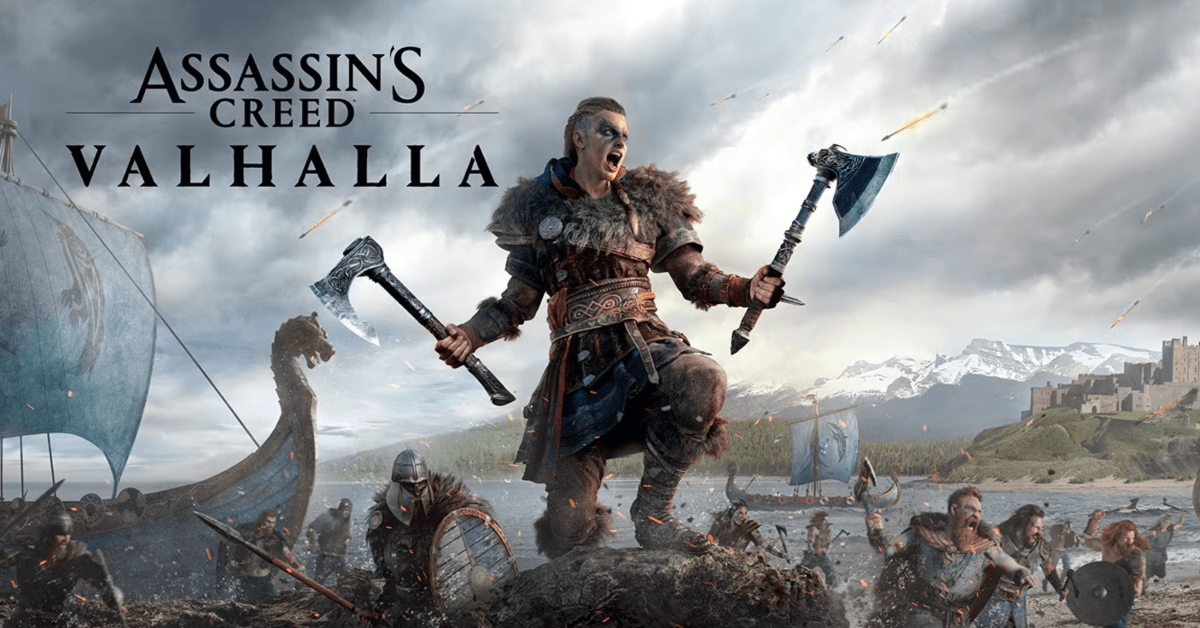
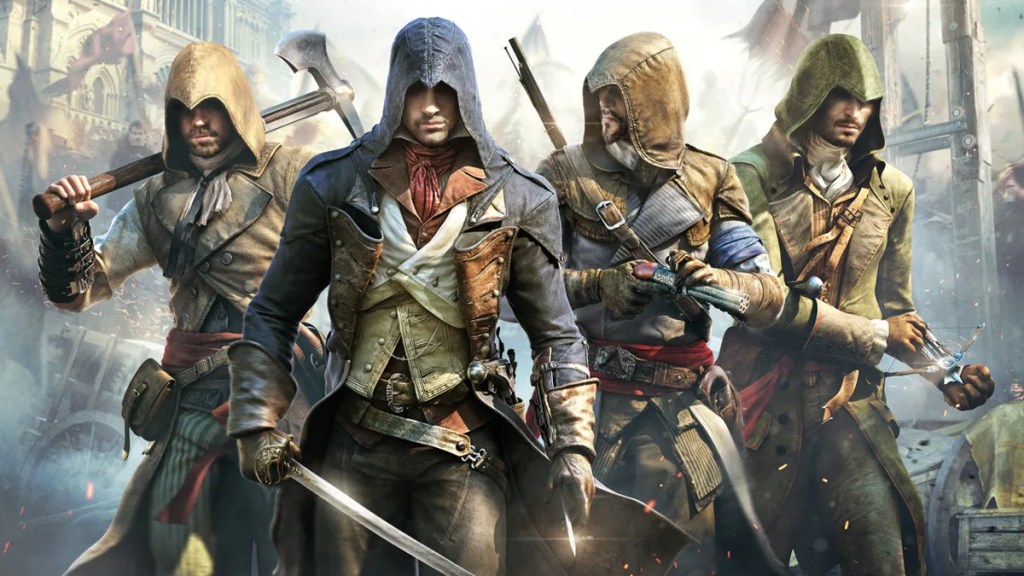
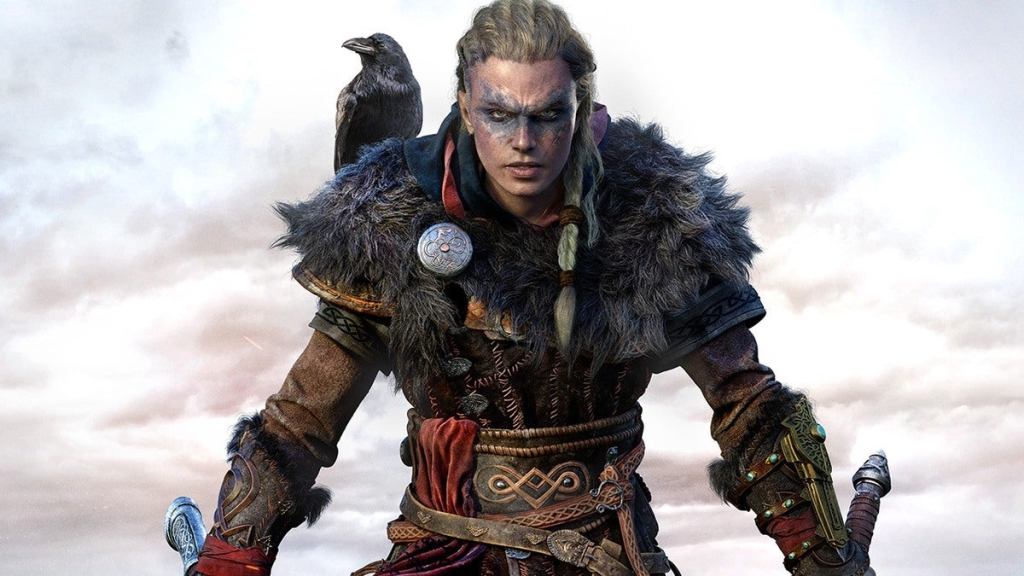
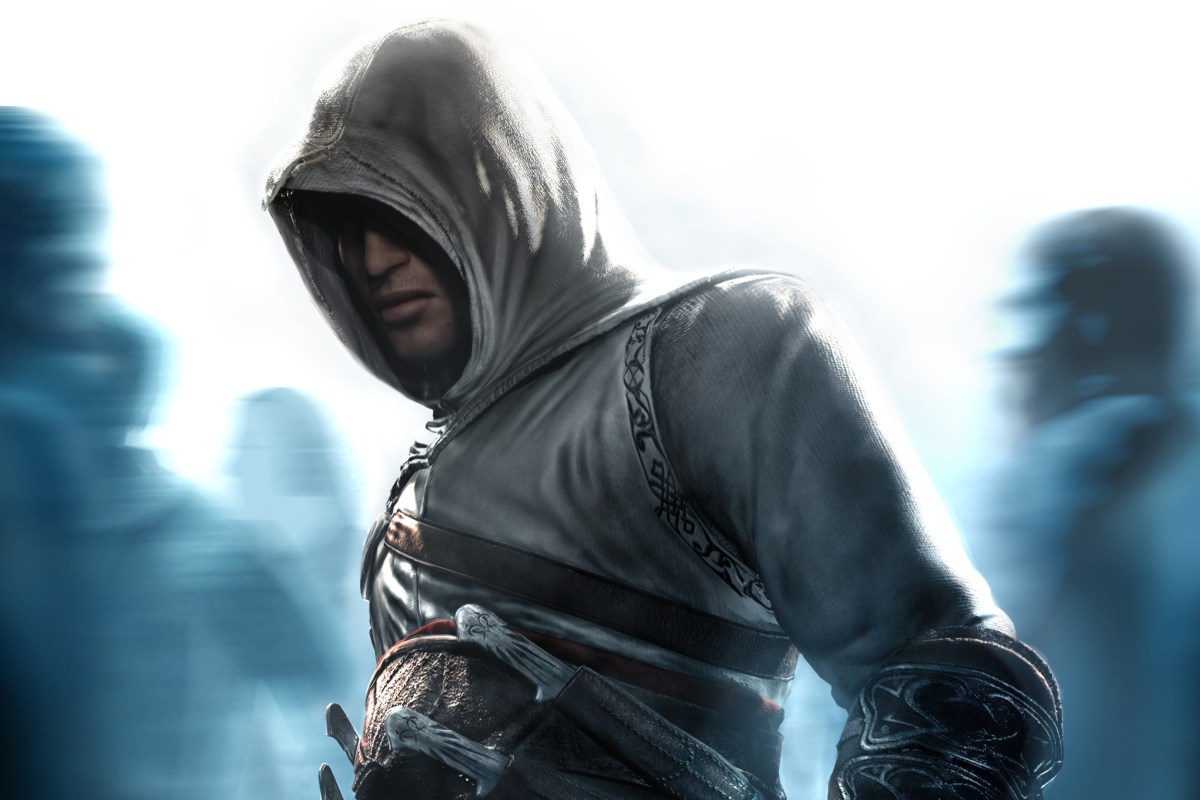
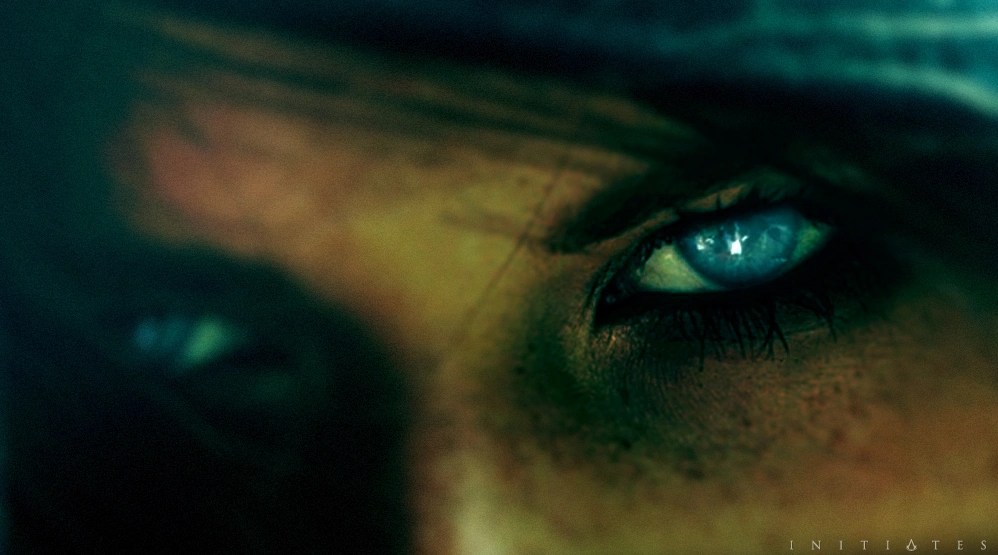
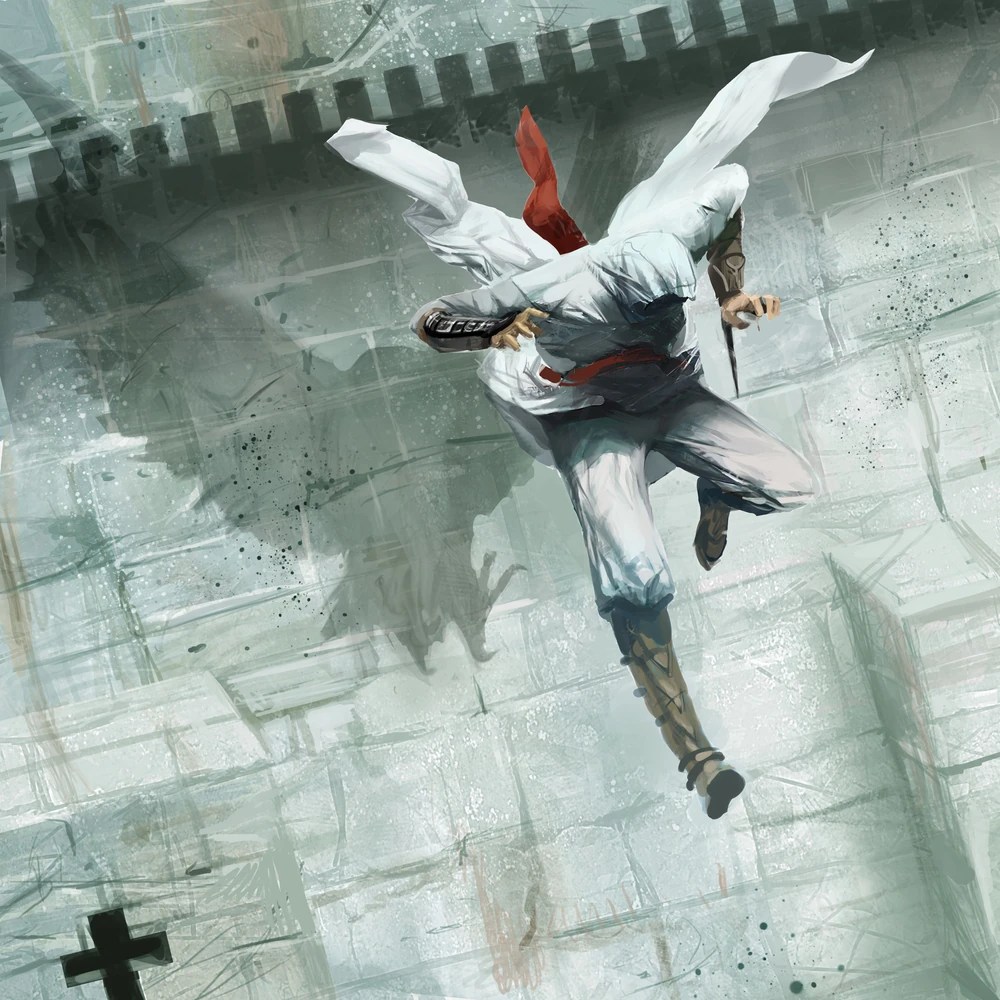
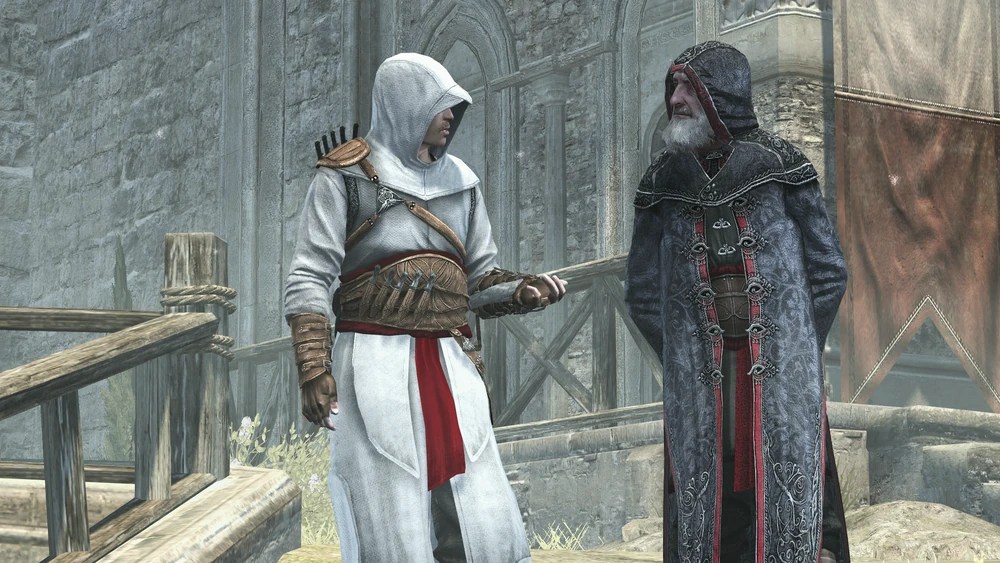
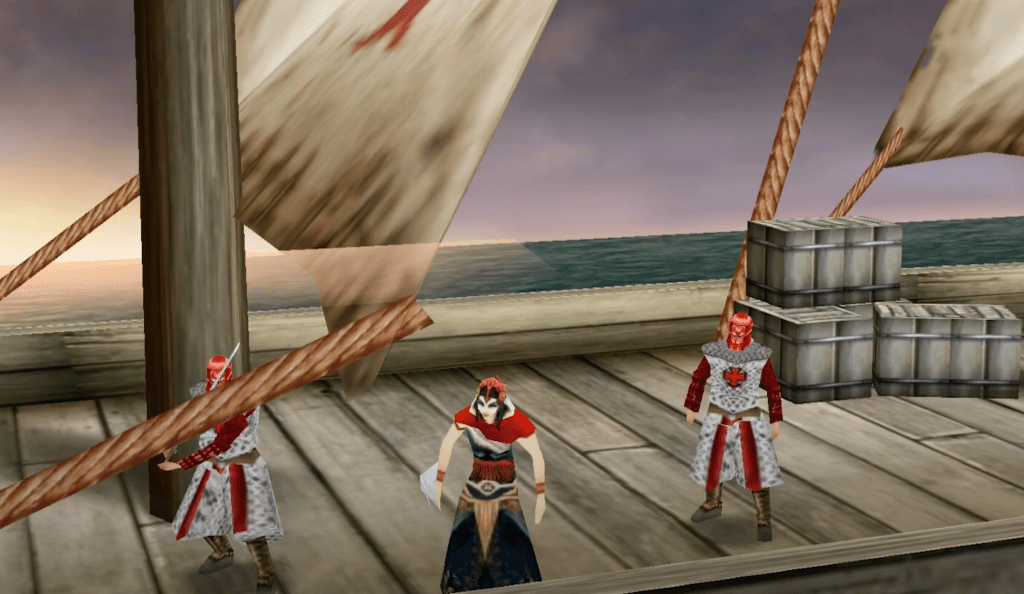
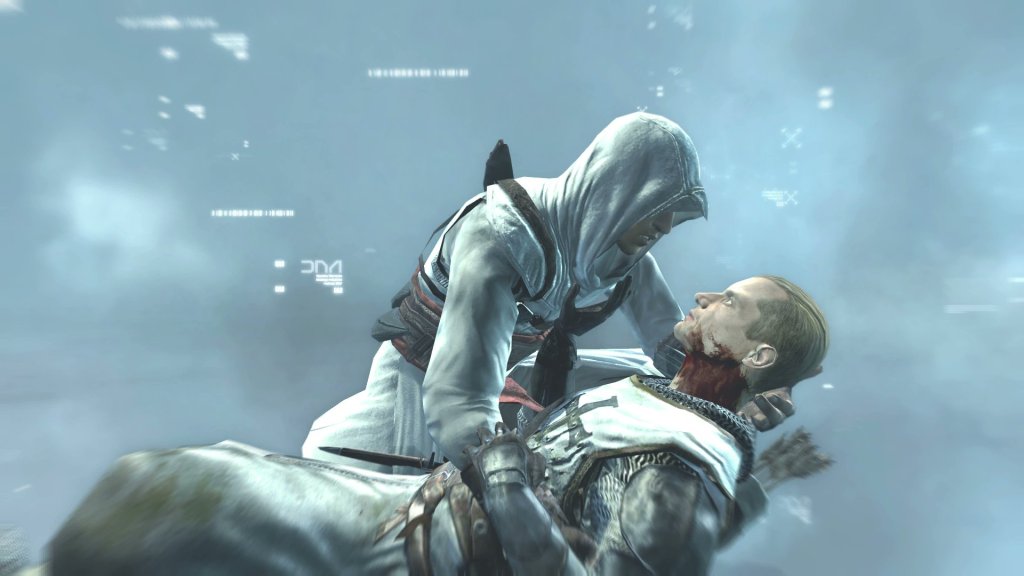
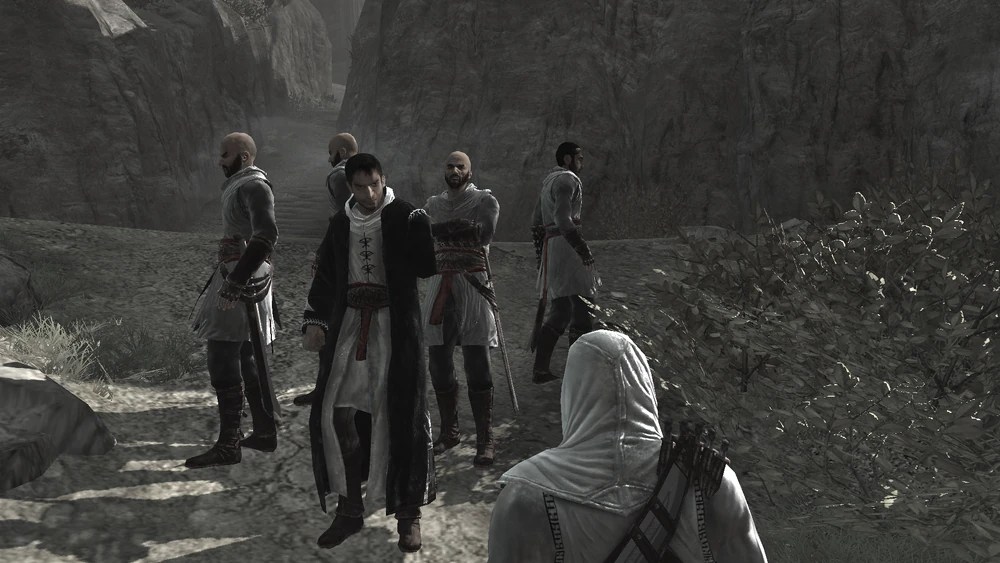
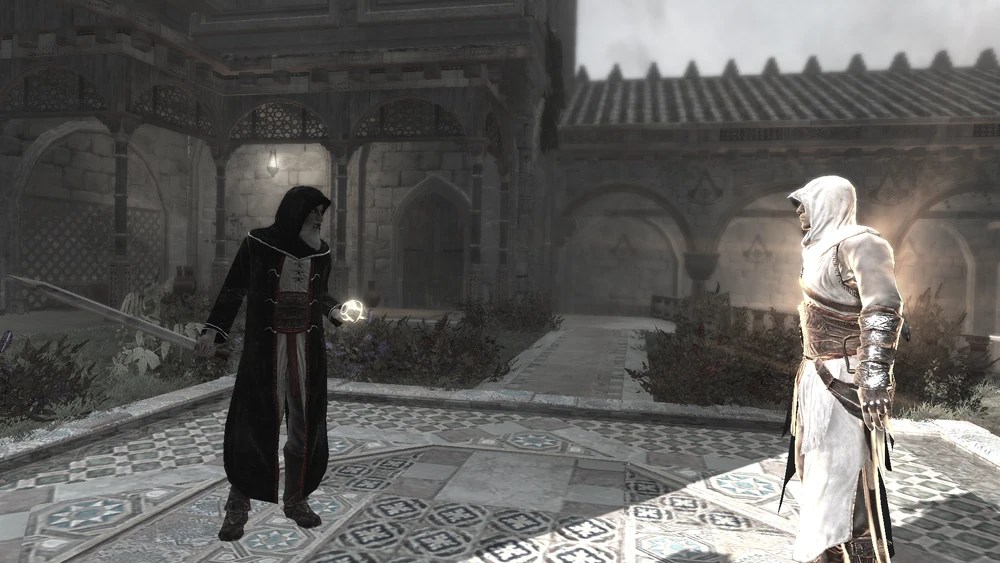
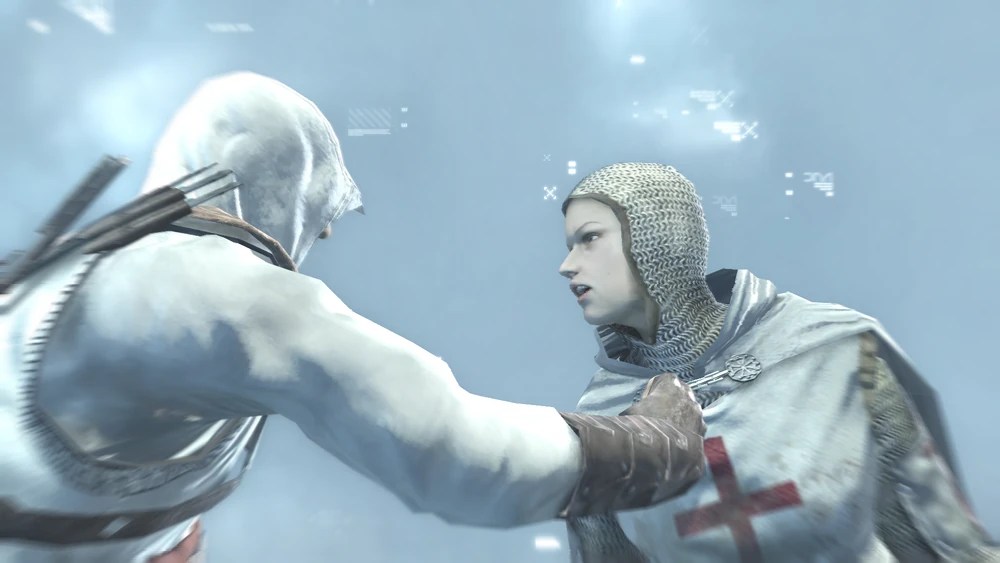
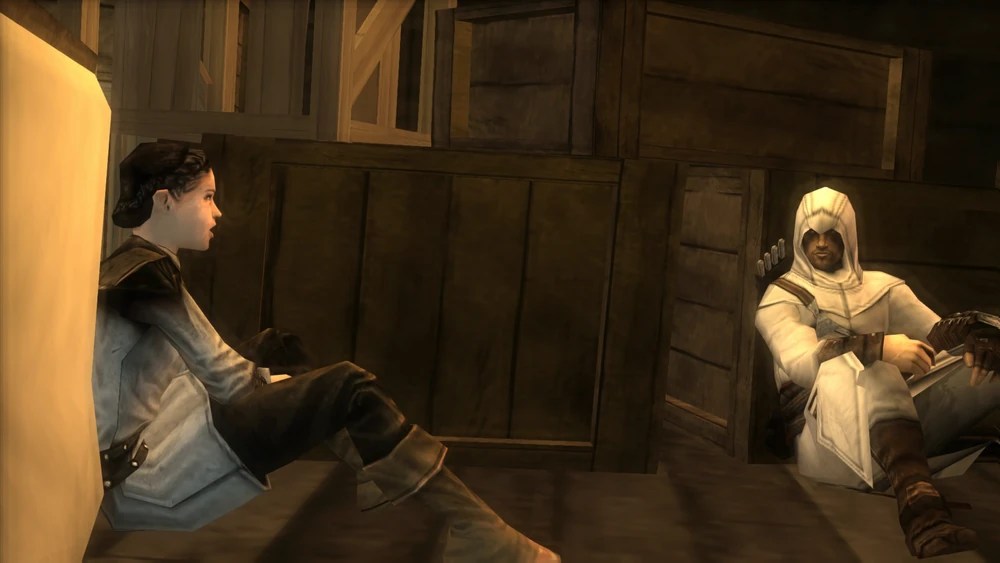
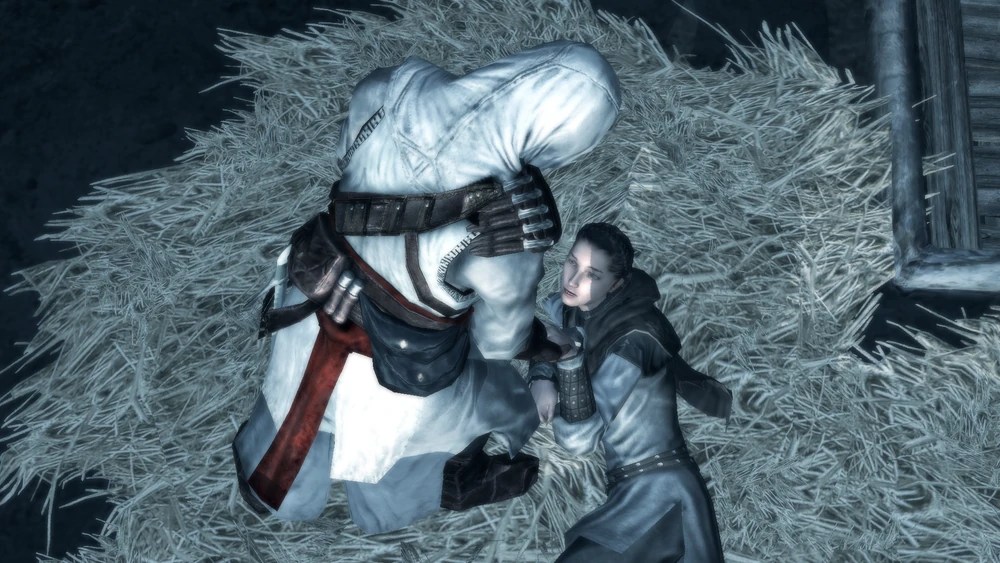
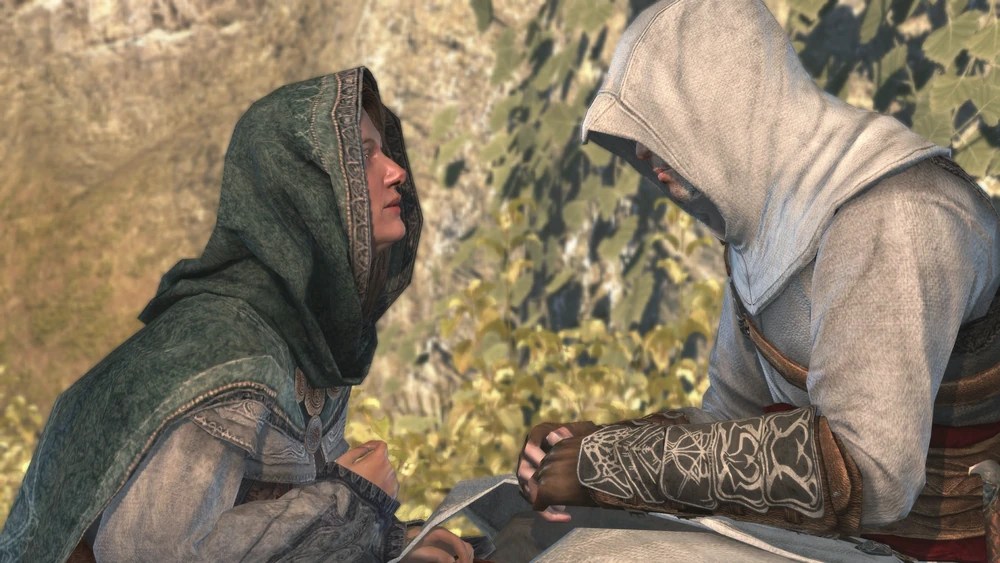
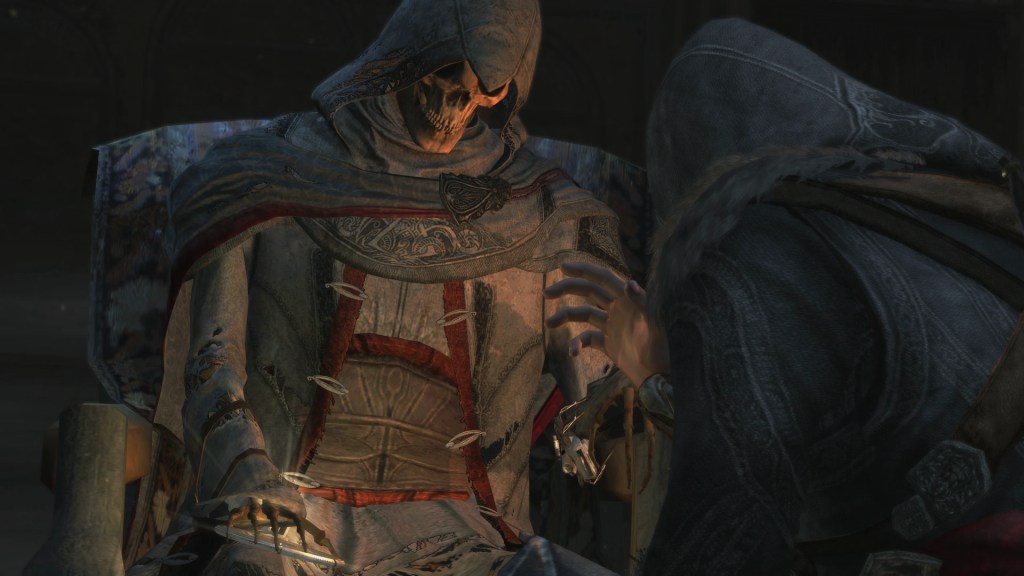

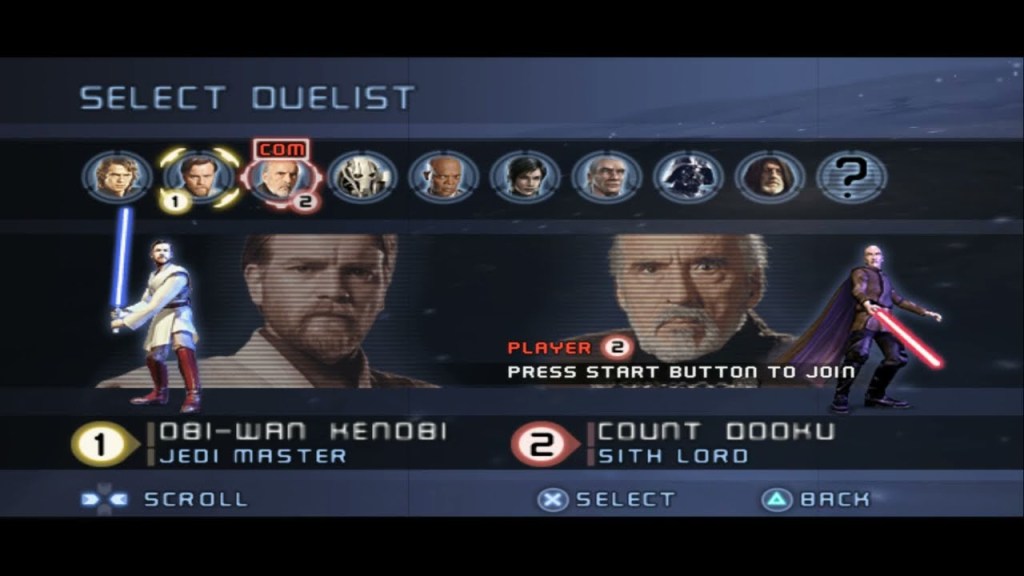
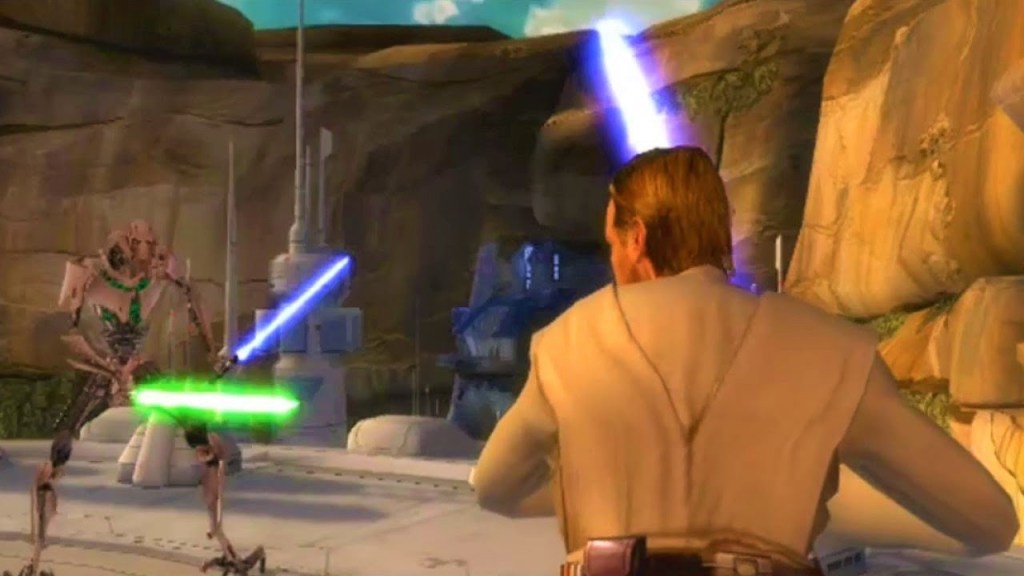
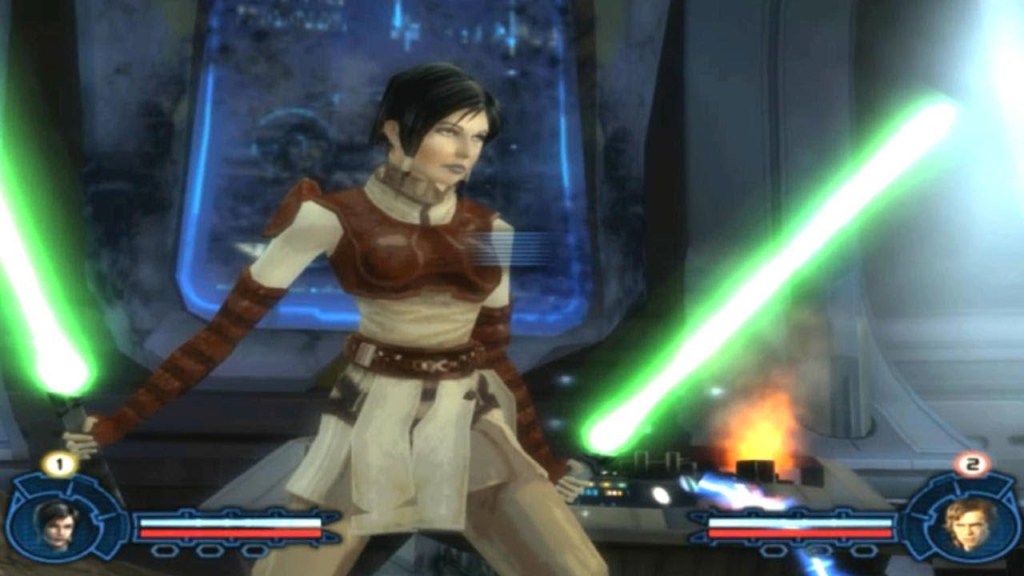
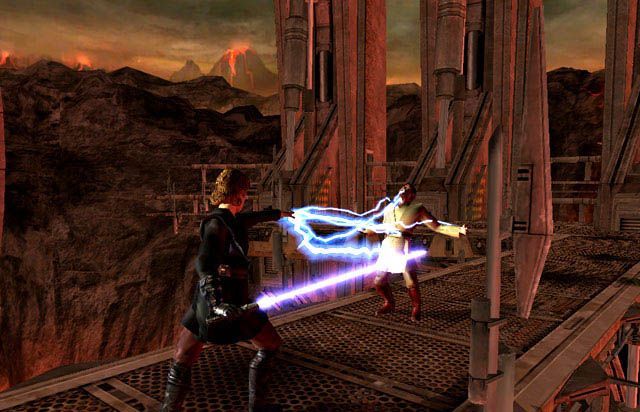

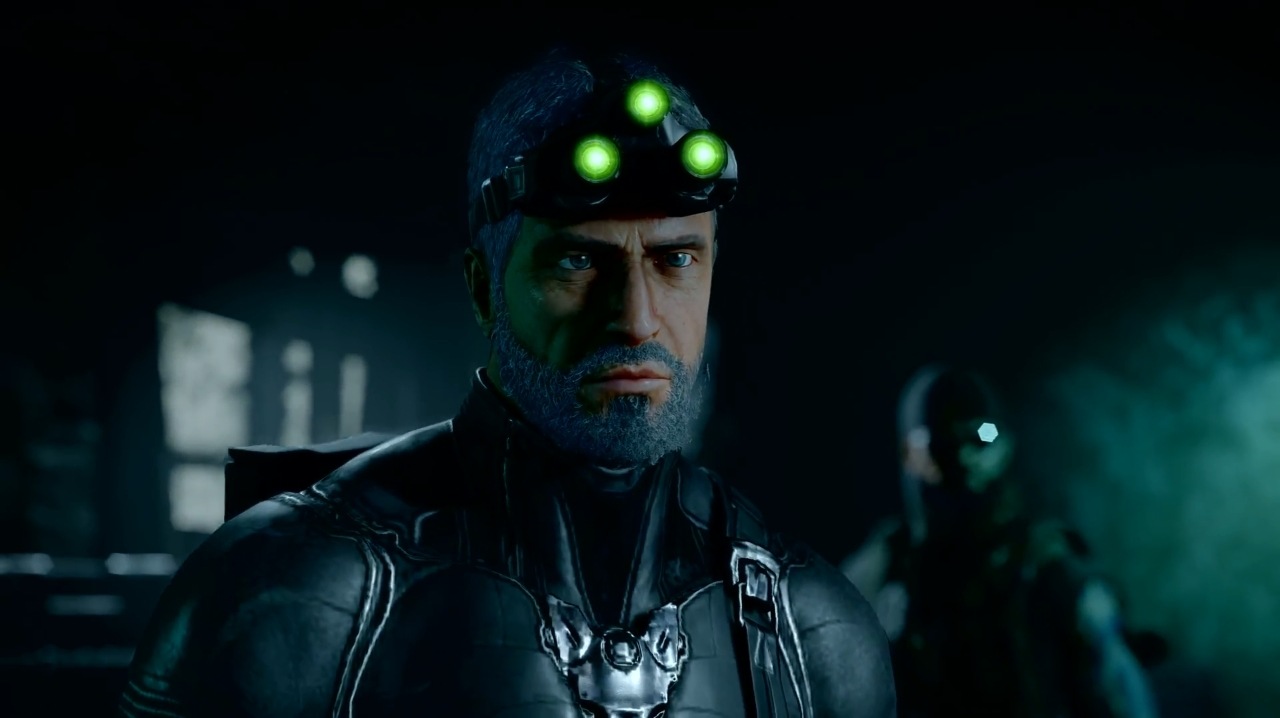
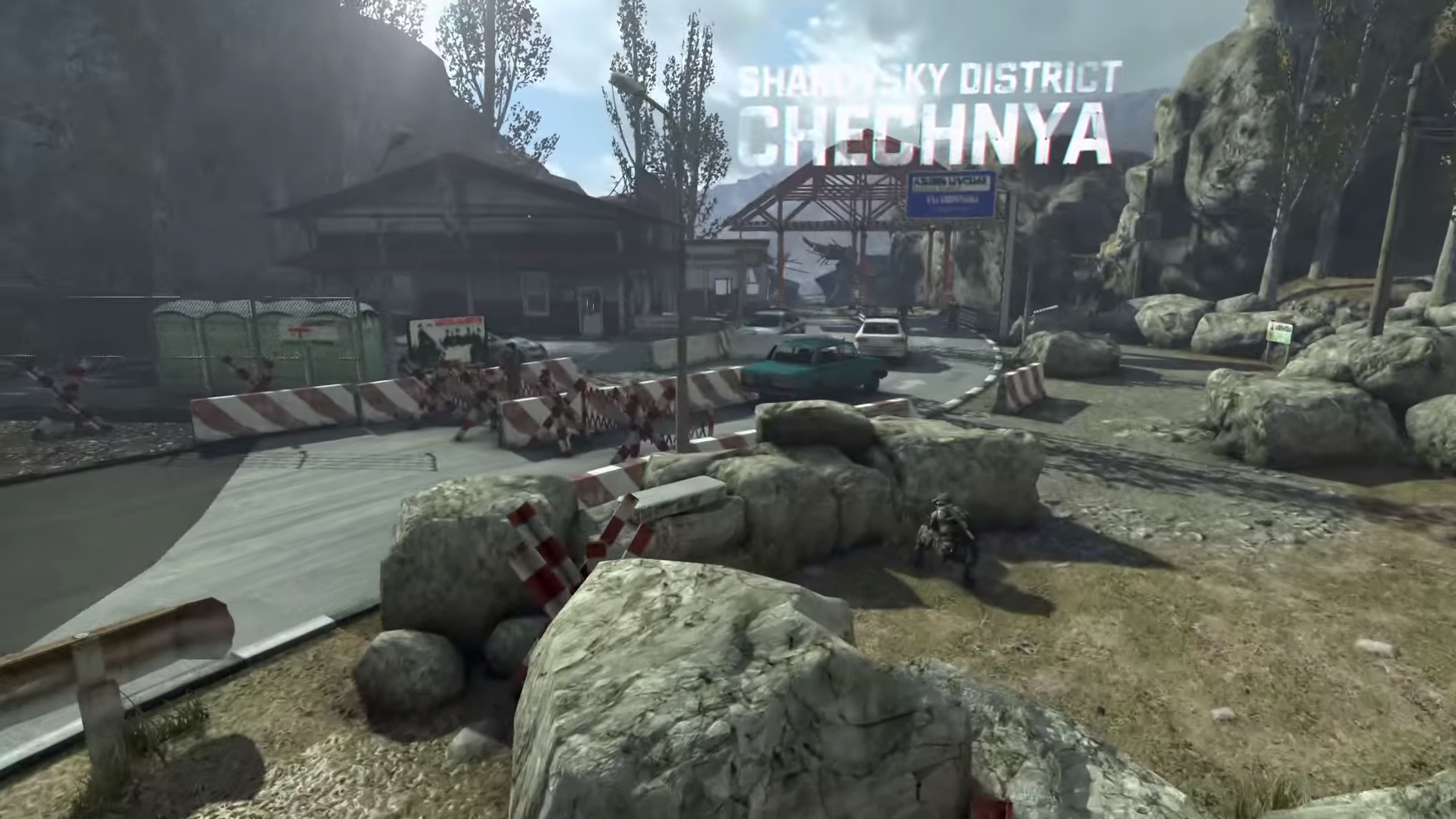
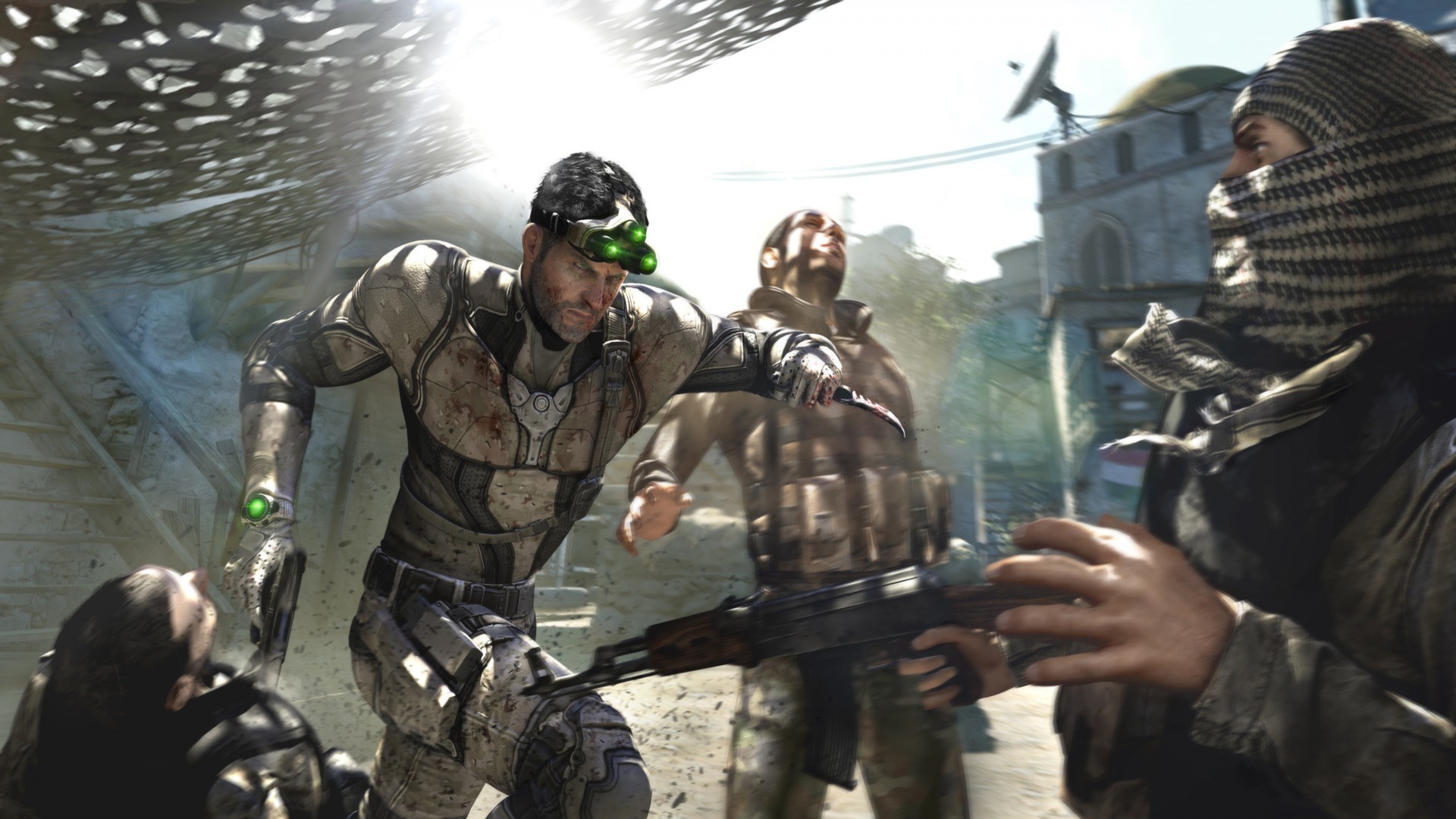
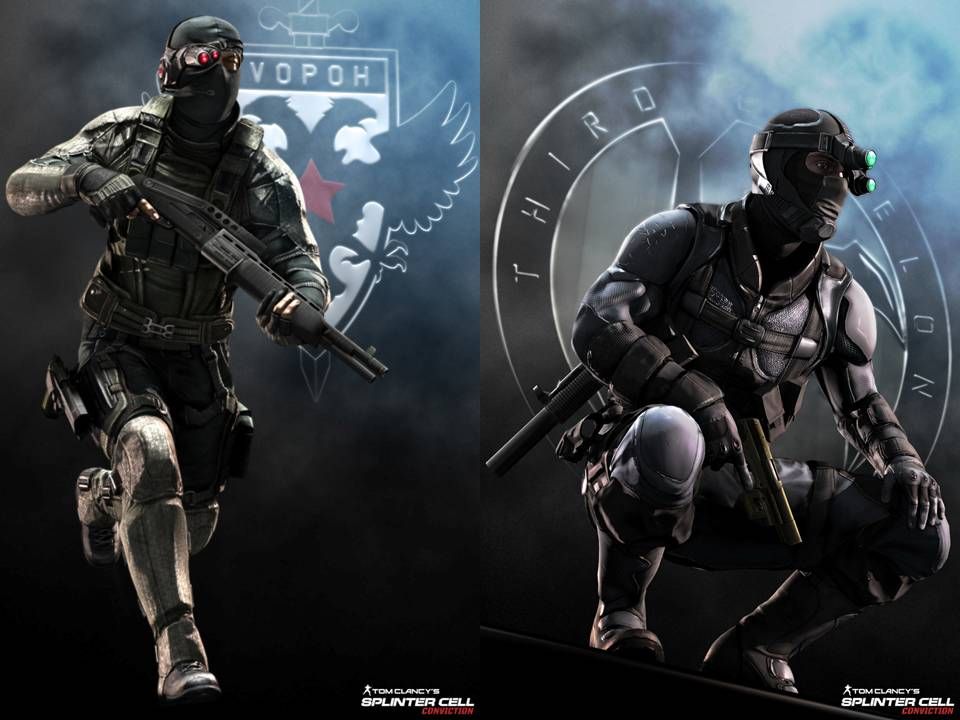

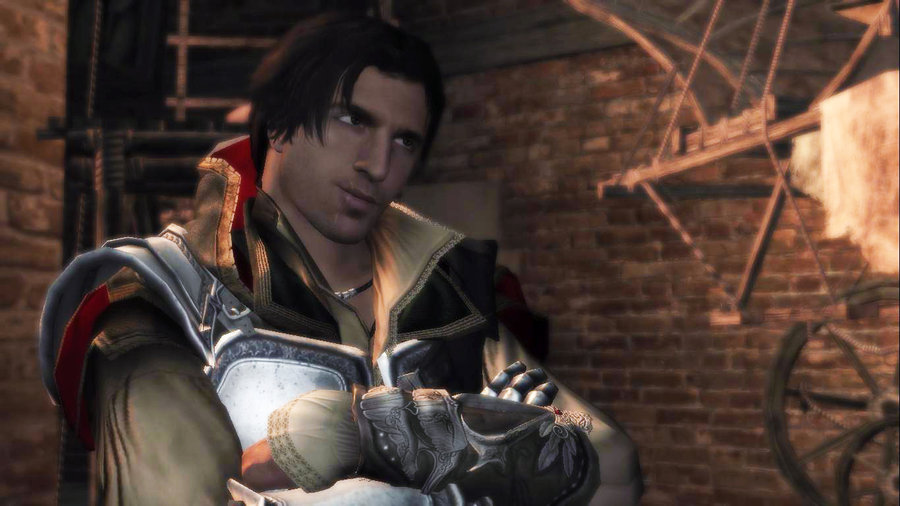
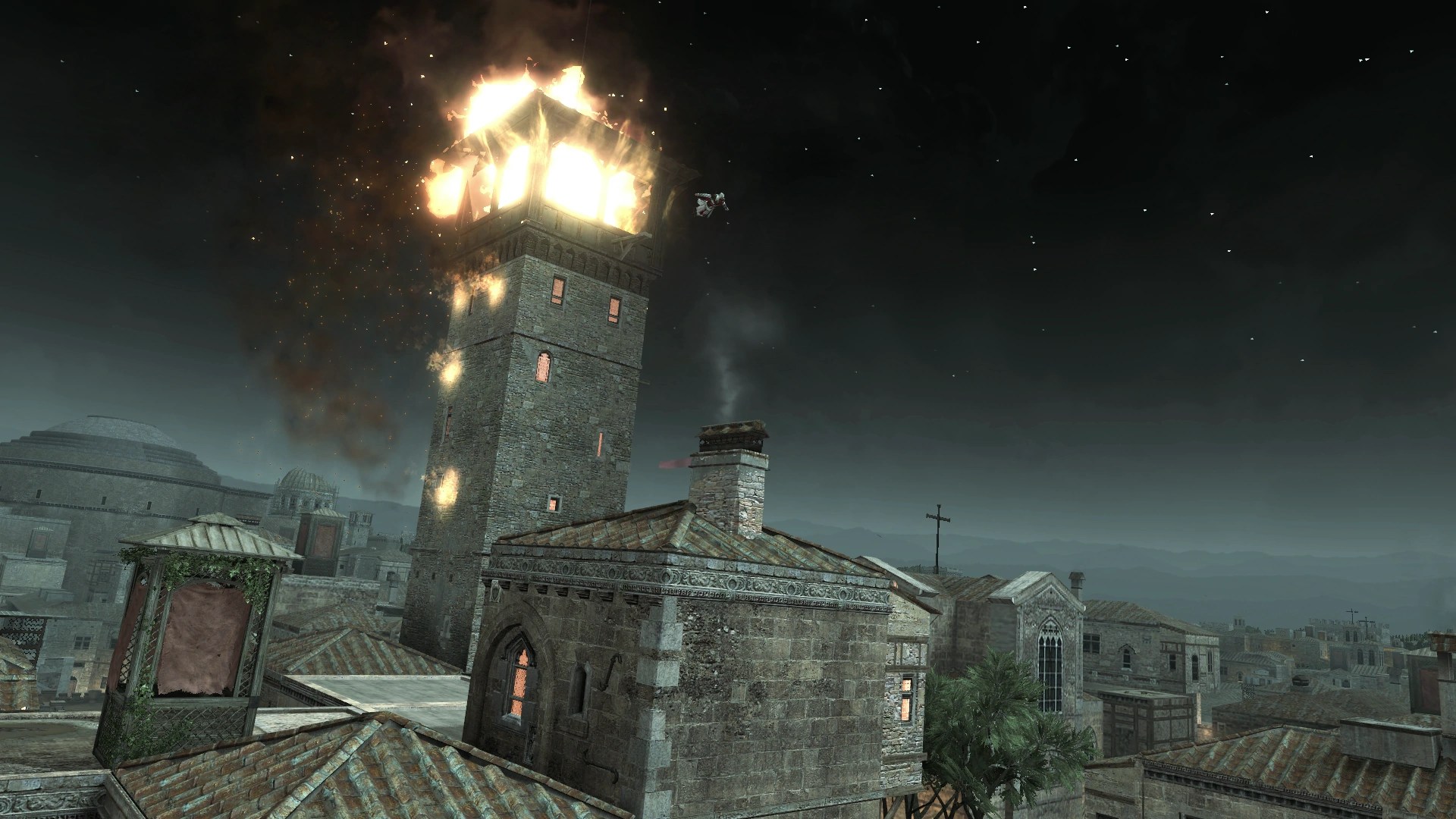
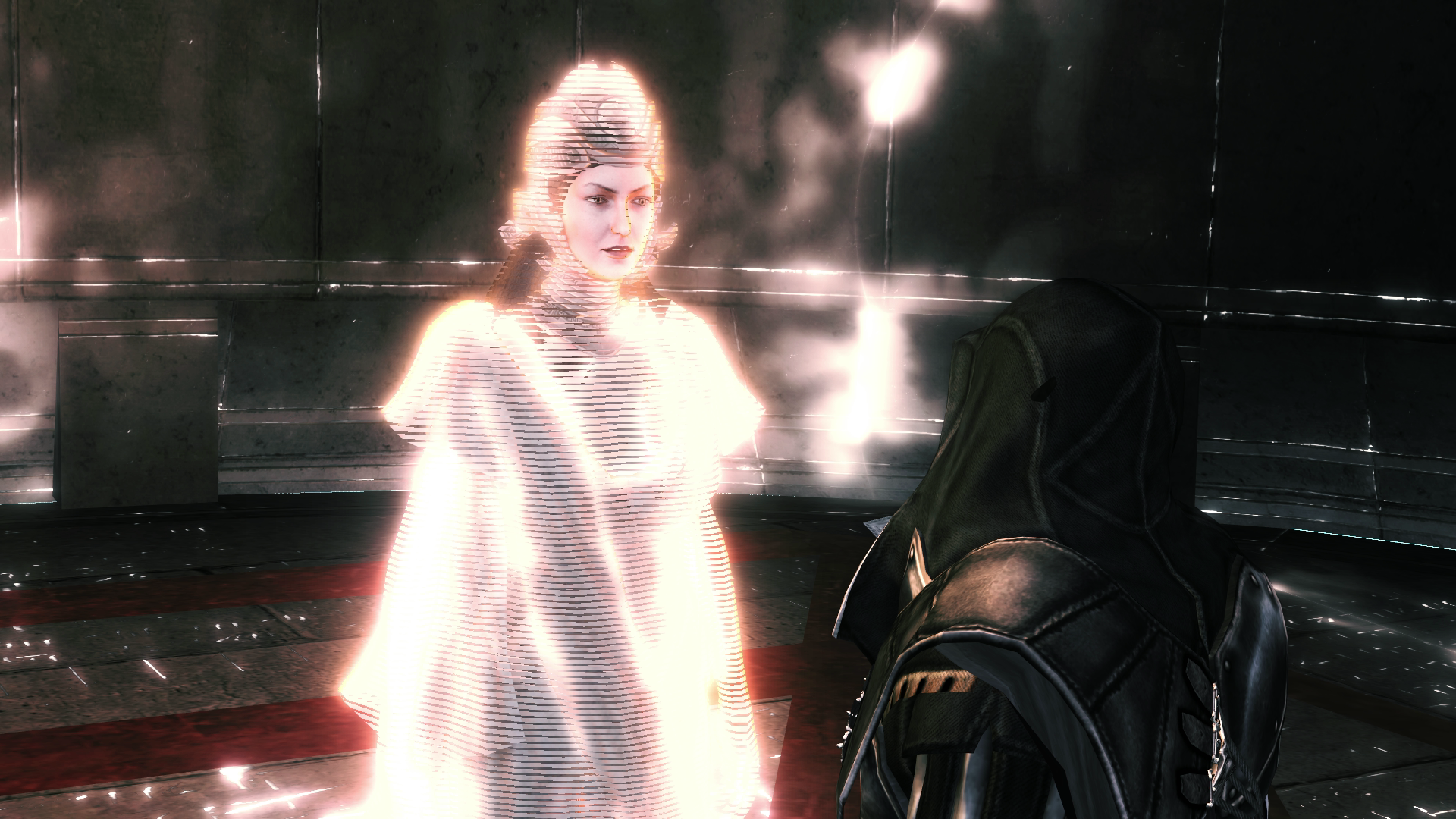


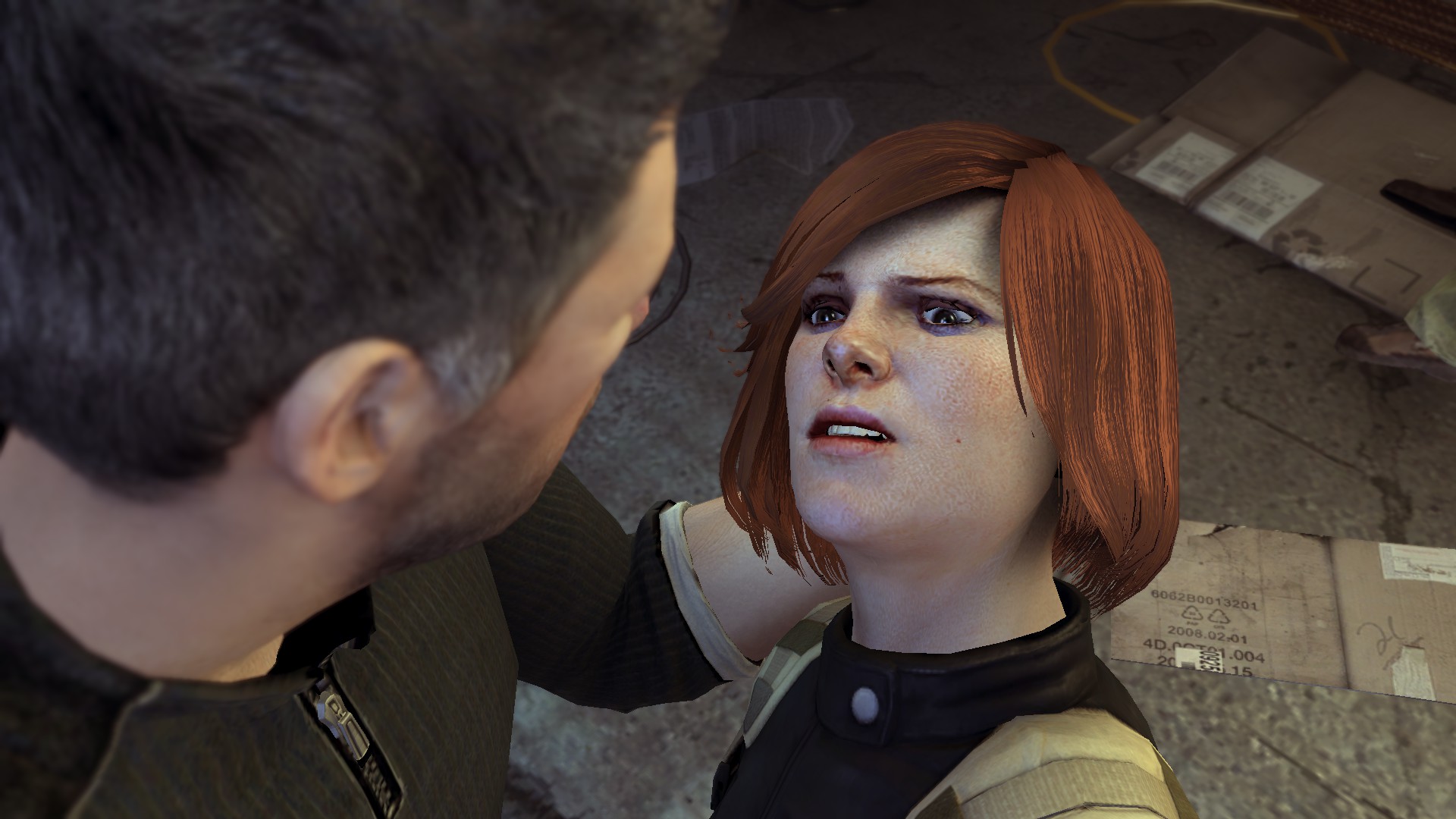
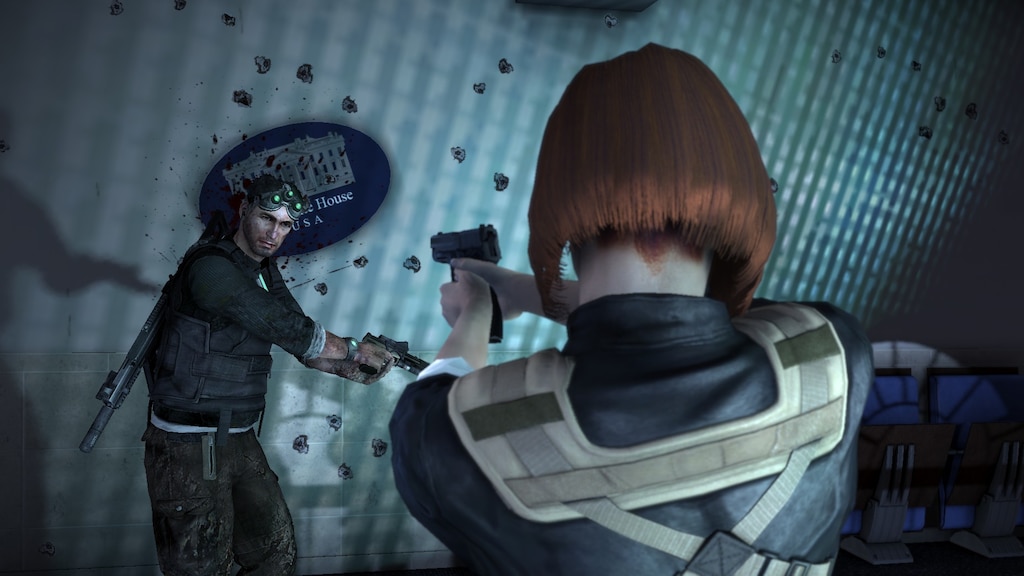

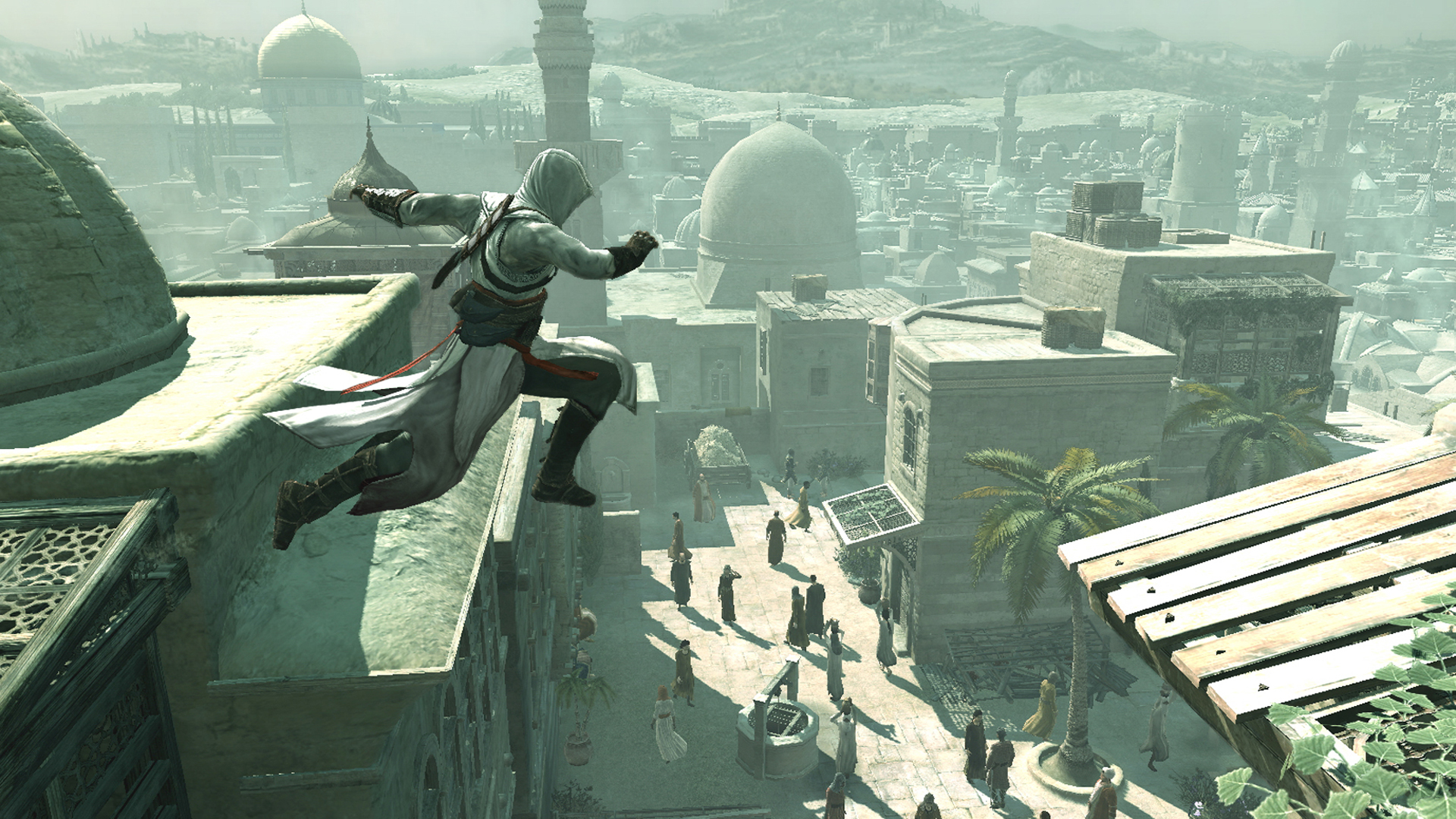
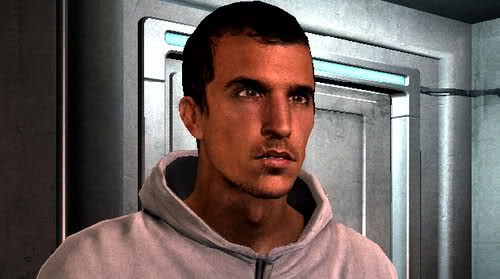
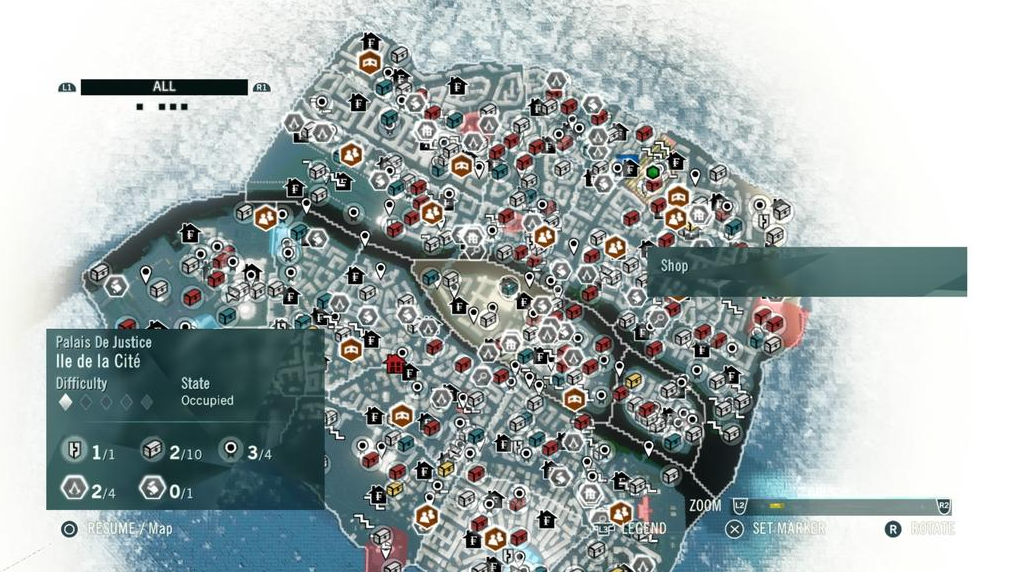

 TOM CLEMENT | GAME PRODUCER | NARRATIVE DESIGNER