Sony Playstation’s “State of Play” event was broadcast yesterday, announcing games and showcasing trailers for PS games set to release in the next few years.
Despite lots of cool teasers only one trailer has got me fully invested in the hype-cycle; 007: First Light.
Initially teased five years ago as of writing with the codename Project 007, First Light is…well, the first look at the newest James Bond game since 2012. I even wrote a post speculating what we might see in the final game back when all we had to go on was the teaser.
Developed by IO Interactive, the studio behind the Hitman series, First Light looks to be giving us a radically different Bond to any we’ve seen before, but with a few classic references for fans to find.
And as a fan of both 007 and Hitman, I wanted to dissect as much as I can from it. If you haven’t seen the trailer, here it is!
***
On His Majesty’s Secret Service – Dissecting the 007: First Light Trailer
I think anyone that would glance at the trailer for a second could mistake it for the trailer of a new James Bond film. It’s that good.
The pacing, the music, the mix of character charm and action set pieces, it all blends together and hits all the points to get fans excited. It even has the product placement, with Omega watches and Aston Martins being given prime real estate time on the screen (probably courtesy of Amazon’s acquisition of the Bond license back in 2021).
Despite hitting several Bond motifs and references, IOI have stressed in all their statements about the game that it will be an entirely new “origin” story for the character, disconnected from all previous works. It’s the right way to go, cutting off any preconceived notion of who or what James Bond to build him up for a new generation.
The opening dialogue between M and a new character, Greenway (played by The Walking Dead’s Lennie James) sets up our hero excellently, taking Bond’s original backstory from the books and giving it subtle tweaks; witnessing his parents die in a mountaineering accident, bouncing from private school to private school, then enlisting in the Navy and acting with reckless abandon.
It all adds up the M describing Bond as a “bullet without a target”, very similar to how Judi Dench’s M described Bond in Casino Royale, “a blunt instrument”.
And then we see our new James Bond for the first time. It’s a good reveal, seeing his silhouette to begin with, him stepping out into the light, his hand shielding his face for a second, before the corner of his mouth twitches into a grin.
Supposedly modelled and voiced by Irish actor Patrick Gisbon (most well-known as playing Dexter Morgan in the television series Dexter: Original Sin), he’s the youngest Bond we’ve ever seen (IOI list him as 26 in their press-release), yet he still has a few of the marks of Bond from the original text such as the thin vertical scar on his cheek and blue-grey eyes.
The settings look stunning, matching the high-quality of the Hitman trilogy, with locations such as South-East Asian beach resorts, French chateaus, rooftop chases and fireworks shows, and if my eyes do not deceive me…James Bond in a nightclub!
Speaking of the locations, one of the most exciting teases in the trailer is Bond barreling down country roads behind the wheel of an Aston Martin DBS, last seen in 1969’s On Her Majesty’s Secret Service.
I speculated in my previous post that driving missions would make their way back into the series and I hope that IOI have done their homework on previous Bond games. Other 007 games have excellent driving missions giving players a small open world to complete their objectives rather than just simple chases.
Another prediction I made of the game would be the return of gadgets. During Craig’s tenure as Bond in both films and games there were less about the individual gadgets of Q Branch, instead cramming all the agent’s needs into his mobile phone.
But two scenes stand out in the trailer; Bond using some sort of dart device to put a guard to sleep, as well has using his laser watch to temporarily blind a bad guy. The laser watch is a staple of the movies and so I’m happy to see it replicated here. I hope we have more gadgets on show with each one being its own item rather than just being interchangeable parts.
Alongside gadgets, the rest of the gameplay loop looks solid, as anyone would expect from the creators of Hitman. Hand-to-hand combat looking nice and weighty (I think I see a Judo hip throw at one point) and Bond looks effortlessly cool catching guns in mid-air or kicking them into his hands.
IOI have also teased that players can use “charming wit” to overcome challenges, so maybe their will be short dialogue sequences or wry comments to choose. There are a few jokes in the trailer along with Bond smiling, so it seems we are getting a more light-heartened Bond that we have in the most recent films.
One final part I want to point out in the trailer is MI6 as an organisation. We get the usual suspects of M, Q, and Moneypenny sprinkled through the trailer, as well as scenes of Bond taking part in combat and firearms training amongst other recruits.
One scene later features M speaking to a group of people that look around Bond’s age, saying “I need all my pieces on the board”. Another line later in the trailer says “009 is a master manipulator. Whatever the endgame is we won’t see it coming.”
In both the books and the films the other 00 agents are only mentioned in passing, usually dying early on and spurring MI6 to send in Bond to clear up the mess. But here it seems that Bond might be working with and also against other agents, which is a unique scenario both for new and old Bond media.
Hakan Abrak, CEO of IO Interactive stated in an interview that they are aiming for a trilogy of 007 games and so I hope that with this cast of potential co-workers we get to see them grow too and interact with them in gameplay.
Either way, this is just the first teaser with the game aiming for a 2026 release date. I am excited to see more as First Light looks like its shaping up to rightfully take the mantle from GoldenEye of being the best James Bond game ever.
With the announcement in 2020 that IO Interactive (makers of Hitman) were working on a James Bond video game, I became curious about the past games of 007.
A lot of these games, Nightfire, Everything or Nothing, even the poorly received Goldeneye: Rogue Agent, were staples of my gaming childhood.
I hadn’t played these games in fifteen to twenty years and there was a dual sense of familiarity and moments lost to memory when I went back to play them.
But one game in the back catalogue of JamesBond really took me by surprise. Even now, looking back at the games that come before and after, it seems like the odd-one-out, a possible start to an entirely new franchise.
In 2005, Electronic Arts, creators of the 007 games, were in a bit of a jam. Pierce Brosnan, the main lead in the past four Bond films and of the game Everything or Nothing, had been let go from the role. EA still had a license to develop 007 games but they had no 007.
While one of their efforts in 2004 put the player in the role of a Bond villain (Goldeneye: Rogue Agent), in 2005 they took a remarkable leap of courage and got another actor for the role of James Bond…Sean Connery.
Yes, 2005 saw the release of Sean Connery’s video game debut, From Russia With Love.
Red Wine with Fish – From Russia with Love: The Game
It’s very strange looking at the entire filmography of James Bond and thinking From Russia with Love would be chosen to be a video game. Even Sean Connery’s later 007 films, Goldfinger, Thunderball and You Only Live Twice are much stronger on the action and could deliver bigger set pieces.
From Russia with Love, while being an excellent film (usually ranked high in fan ratings and being Sean Connery’s favourite) is much more of a slow-burn thriller than an action film, with large parts of the film being set on smoky Istanbul streets and Bond using stealth and subterfuge rather than blasting baddies away with a gun.
According to Executive Producer at EA, Glen Schofield, the film was chosen because “it’s one of the more popular films”. It makes sense, and as a name, From Russia with Love has the same association as Casino Royale or The Spy Who Loved Me, so ingrained in culture that even if you have never seen a Bond film you could probably associate the title with him.
And yes, the other strange thing being Sir Sean Connery is on voice acting duties for 007. These aren’t clips from the film or a soundalike, it’s the man who got so fed up with the role he once said, “I have always hated that damned James Bond, I’d like to kill him.”
Sean Connery, recording his lines from his home in the Bahamas. (Source: jamesbond.fandom)
But Sean Connery decided to return, partly because of his love of the film, partly because his grandkids were big fans of video games, and that it was a whole new and interesting creative vision.
In the lead up to the game, Connery said, “As an artist, I see this as another way to explore the creative process. Video games are an extremely popular form of entertainment today, and I am looking forward to seeing how it all fits together”.
And in fact, it was a bit of a different creative process than the film. EA described the project as a “director’s cut”, expanding on the action and story of the film. Only eight of the fourteen levels can be tied directly to the original and nearly every action set piece ramps up the enemies and explosions.
I understand From Russia with Love was chosen for name recognition, but there is enough new material here that could have been a wholly original Bond story.
The game delivers its own pre-title sequence, of 007 fighting terrorists at the UK Parliament and protecting the Prime Minister’s daughter (surprisingly portrayed by pop star Natasha Bedingfield). It’s an exciting and explosive start to the game, watching Connery take down baddies with his classic silenced pistol, leaping across chandeliers, and finally climbing onto the roof, where he commandeers a jetpack and fights enemy helicopters around Big Ben.
The first if many jetpack rides in the game, with huge arenas for destruction (Source: eurogamer.net)
Speaking of the jetpack, a few of the non-FRWL levels are based on later Connery films, and fan-favourite vehicles such as the gadget-filled Aston Martin DB5 from Goldfinger and jetpack from Thunderball appear throughout. The final mission is Bond dismantling the villain’s base inside an island volcano, taking the setting from his fifth film, You Only Live Twice.
Alongside the items and design choices taken from the 1960s, a lot of Connery’s acting quirks make it into the game.
There is a quote attributed to Dana Broccoli, wife of the 007 film producer Cubby Broccoli. When they were first casting for the role of James Bond, after Sean Connery left the audition the producers weren’t too sure on him. But Cubby’s wife Dana convinced them, saying that Connery, “moves like a panther”. He’s confident, measured, quietly powerful. I feel the animators really went to great lengths to capture that essence.
They way the character runs at a constant beat, the slight body tilt while strafing, holding a machine gun in one hand and braced against his hip, the judo roll to cover ground quickly or dodge incoming fire, it’s all fluid and conveys the idea that this is man who is confident in his abilities as a secret agent.
The designers also talked about much detail they went into their animations, such as modelling how Connery would hold his gun in the films, as well as in his fighting style. Connery’s Bond was more of a grappler, throwing enemies to the ground or dealing them a swift Judo chop, which was added to the game.
Each move is mo-capped excellently, with Connery using several Judo throws (Source: imdb.com)
The game takes the standard third-person shooter conventions of the time. Cover mechanics, lock-on shooting, it’s smooth in animation and snappy in its combat, putting greater emphasis on character movement that on shot placement. One article I read in research compared gameplay to the film series John Wick and I definitely see the comparison.
One facet of the combat I really like is creating cover. If Bond is in a room with a table, he can knock it over and automatically ducks behind it. It’s a nice touch and feels very Bond-like.
And since the game is primarily a third-person-shooter, we get to enjoy the highly detailed model of Sean Connery throughout the game.
The model is a tremendous feat of artistic wizardry, incredibly detailed and expressive, all on the sixth console generation, machines not known for their technical power. It’s the perfect balance of facial scanning and artistic license.
One aspect of the game that I unexpectedly loved is the fashion of Bond. When exploring the levels, players can find outfits that Bond can wear.
These are all outfits that Bond has worn at some point; his Black Tuxedo and Grey Suit from FRWL, his White Tuxedo and Stealth Suit from Goldfinger, and a Snow Suit (a possible reference to On Her Majesty’s Secret Service). At one point Bond has to wear an enemy uniform to sneak past patrols undetected.
None of these outfits give bonuses like a certain tuxedo giving more armour or whatever, but it’s a taste of role-playing, of getting to play our version of Bond.
A secret infiltration, the perfect opportunity for a stealth suit…or white tuxedo, you choose. (Source: denofgeek.com)
The role-playing aspects are further exemplified by the Upgrade Shop, ostensibly Q’s Workshop in MI6.
Earning points throughout the game, the player can invest in technology for their weapons and gadgets, improving their abilities as they go. As the player collects and keeps weapons and gadgets over the course of the entire game, the investments work almost like an RPG, finding your preferred way to play and upgrading with your favourite weapons.
It’s not a full RPG character builder such as putting skill points into being stealthy or non-lethal, but for the time this was new territory for Bond games.
The upgrade points can also be used to unlock new characters in multiplayer. The multiplayer here is solely bad guys, almost like a SPECTRE civil war (seen in the previous game Goldeneye: Rogue Agent). It’s here where the the “director’s cut” approach to the film is full realised. Characters like Kronsteen and Morenzy, who are major players in the film but are absent from the game, are playable characters and modelled on the actors.
The cast of the film return in digital form, including Bond’s nemesis Red Grant, modelled on actor Robert Shaw, (Source: jamesbond.fandom)
Dr. No and Goldfinger show up (the villains in the previous and following films in the series), along with a few normal enemy soldiers, but there are three characters that only exist in multiplayer and do not appear in any media form, be it the film, original book, or the game story.
Three female characters, Leyla Karistarin (an exotic mercenary), Portia Lovejoy (a mercenary from the English upper class) and Zora Casonovic (a volatile Russian enforcer), each are given a simple one-line description and nothing more.
I’ve been obsessed with these characters for fifteen years; where did they come from? Were they meant for the game and never got added? Are they just to boost the male/female ratio in the multiplayer?
They have so much character to them just in their designs, I’m captivated with finding out more. I’ve been searching for images of them to show here, and I can’t. These character have no presence outside of the game. That is fascinating, that these visually striking characters are just there, it speaks to a care and dedication for the creative work.
Really, that care and dedication is emblematic of the entire game. Based on a film over forty years old, tweaking aspects, adding dashes of modernity, yet staying true to the basic beats and themes of the story, I’m beguiled by the fact that this thing actually got MADE.
As I mentioned at the beginning, you could almost see it at the start of another franchise. After Connery could be Lazenby and a retelling of On Her Majesty’s Secret Service. Next would be Roger Moore with Moonraker (come on, you know it would have to be that film). And after that would be Timothy Dalton and License to Kill. Think of an expanded version of the 007: Legends game, where key movies from each Bond were adapted and the lead Bond actors returned, instead of Daniel Craig standing in for all of them.
007: Legends re-created several films from the series, but was met with critical and commercial failure (Source: demonews.de)
But sadly, From Russia with Love was a one-and-done, marking the end of Electronic Arts’ work on the franchise.
Speaking of, that run of EA 007 games will probably never be bettered. Mixing different gameplay elements and styles, enthusiasm and care to representing the series, by talented teams at the height of their creative output, EA managed to knock out nearly one game a year for half a decade and all of them (even Rogue Agent), deserve to be remembered for what they brought to the genre.
And From Russia with Love, while it might not be the best of the bunch, deserves to be remembered for its artistic and technical feats, its fast and frenetic gunplay, and the creative confidence to adapt a story from nearly half a century ago. It’s weird and wonderful and a game I will continue to treasure, pining that one day it will be backwards compatible.
One-on-one combat is such a thrilling experience, knowing that through reading your opponent you clutch a win or deliver a flawless victory…it can’t be topped.
I’ve dabbled in all types of fighting games; the traditional martial arts of Street Fighter, Tekken, and Virtua Fighter, to the sword fights of Soul Calibur, and the magical fantasy of Fantasy Strike.
My first proper fighting game though has been a single release, never got a sequel or a re-release, but is still one of the most fun games I played as a child. It is the movie tie-in game for Star Wars Episode III: Revenge of the Sith.
The mid-2000s were a goldmine for licensed games, being some of most fondly remembered gems of their generation.
Spiderman 2 from 2004 brought physics-based web-swinging into gaming.
King Kong is still one of the best first-person immersive survival games ever.
And X-Men Origins: Wolverine had a level of gore and violence hardly seen in any previous or following incarnation of the character along with real-time injury regeneration.
And then on top of those greats, Star Wars comes out with one of the best sword-fighting simulations of all time. So today I want to talk about it.
An Elegant Weapon, A More Civilised Age – Star Wars and Lightsaber Duels
Episode III is for the majority of the time a brawling game. Playing as either Anakin Skywalker or Obi-Wan Kenobi, you fight droids, clones, and a few low-level Jedi through the locations of the film.
But every so often, these two will enter a duel with other fighters such as Count Dooku, General Grievous, Mace Windu, other Jedi Masters, and eventually each other in spectacular one-on-one fights.
Alongside the game’s storyline, you can participate in one-on-one fights either against an AI opponent, or in couch co-op.
While you only start out with Anakin and Obi-Wan and one location (the Jedi Temple), with each duel in the game’s storyline unlocks a character and the location.
By the final credits there are nine fighters to choose from: Anakin, Obi-Wan, Count Dooku, Mace Windu, General Grevious, Jedi Masters Cin Drallig and Serra Keto, and finally Ben Kenobi and Darth Vader from Episode IV.
The duellists that you can choose from. For mirror matches each character has an alternate skin. (Source: Youtube – mrnygren2)
While it would have been easy to give all of these characters the same general moves and only a few signature moves, each one plays totally differently, giving players a proper choice in regards to playstyle.
Anakin is fast and powerful whereas Obi-Wan is slower but has the better defensive option. Count Dooku is based more on parries and thrusts, similar to a fencer.
Mace Windu is slower but has good reach and strong attacks, while General Grievous can overwhelm opponents with his four lightsabers and get a few cheap shots in with his concealed blaster.
Non-canon Jedi Serra Keto and Cin Drallig (the latter being SW combat choreographer Nic Gillard, his name reversed) are two unique styles, with Keto employing two lightsabers and multiple acrobatic moves, and Drallig being able to literally blur himself during combat.
And finally, Darth Vader is the strongest but one of the slowest fighters in the game, and Ben sacrifices some speed with stronger attacks and Force powers.
One of the strongest characters versus the best defensive option…who will win? (Source: Youtube – CJR Gaming)
The combat is similar to your standard string-based fighting game like Tekken or Guilty Gear, meaning that inputting the attack buttons in specific orders will net you different attacks and sequences. As I said previously, each string gives a unique animation, which elevates the game higher than a standard movie tie-in.
Attacks are broken into light and heavy varieties, but what gives Star Wars a bit of flair is the Force, which adds a whole new system of control and power into the combat.
Despite eight of the nine characters being able to use the Force, it’s actually the thing which is most standardised across the fighters.
Every fighter has two variants of Force Push, one as a general move any objects around you, but then a more controlled version where they pick up a singular object and throw it, which can also be used on opponents.
All fighters can throw their lightsaber like a boomerang and can even heal themselves using the Force. The only main difference is the Force Stun (for the Jedi) and Force Lightning (for the Sith).
Force Stun…well, stuns the player, leaving them vulnerable for a few seconds to be attacked or for the opponent to heal, whereas Force Lightning is purely offensive, draining the health of the opponent. It’s an interesting trade off, going with a more offensive option or one that can be both offensive or defensive.
Anakin in the Duel Mode actually changes between the two as you progress in the story mode, using Force Stun until he falls to the Dark Side, where he will then start using Force Lightning.
Serra Keto is unqiue for her two lightsabers and her slow but unblockable Force-infused attacks. (Source: Youtube – RGLD Gamer)
General Grevious is the only outlier being a non-Force User, but he gets some additional help, with a rapid fire blaster replacing his Force Push and a charged-up shot replacing Force Lightning. His signature four-armed attack takes the spot over the Saber Throw.
The stages are all taken from the story mode, being unlocked at the same time as the other characters.
Since they are all focussed on Episode III, the locations span space-stations, landing platforms, the Jedi Temple, and the impressive vistas of both the sinkholes of Utapau and the volcanic rivers of Mustafar.
The locations in the game are broken up by area into smaller chunks as well. Take Mustafar for instance.
The first section is the landing platform that Anakin and Obi-Wan first clash sabers. It’s a wide area with several explosive crates to throw at your opponent.
The second area is the control room, with command tables splitting the room, allowing a player to be out of range of lightsaber attacks, and either regain some health or use a long range attack to keep their opponent back.
Out from the control room onto the third section, the balcony. It’s cramped and linear, the complete opposite of where the fight started. To add even more to the mix, the explosive crates are back, but since the area is so small any explosion could impact you as well.
Dropping down from the balcony onto the “Control Arm”, again a linear section, but extremely long, not the cramped quarters of the balcony.
And while there are no more explosive canisters, the control arm is constantly getting rained down on by lava, stopping players from either retreating or advancing, having to riskily jump towards their opponent or wait until the magma has cooled.
Finally, the fight culminates on the Lava Platform, the smallest map in the game, barely big enough for the two fighters to deliver their most devastating moves.
That’s just one planet and it gives such a variety of locations that either compliment or hinder certain styles of combat, with every other location also containing environmental hazards, barriers, or extremely linear or cramped fighting halls.
Darth Vader unleashes force lightning on his former master on Mustafar. (Source: ign.com)
In research for this piece I wanted to look at other players and see how they related to the game and found a small but thriving community that still plays the game competitively today.
Using a PlayStation 2 emulator, players have been continually hosting tournaments even up until a few months ago, with rulesets to keep things interesting (the main ones being no Force Heal and no Mustafar Lava Platform stage).
The fighting game tech has gotten so meta that players will use a particular save state that allows them to choose Anakin with Force Stun instead of Force Lightning.
It’s amazing to watch, with clutch matches and spectacular finishes, and the added bonus that it is a Star Wars game, with the characters, fighting styles, weapons, locations, and music that we all know and love.
There has been a brief upsurge in announcements, with names such as Quantic Dream, Zynga, Ubisoft, and Skydance all developing some sort of game and a wide range of genres including strategy and interactive drama.
And while there were Star Wars games dedicated to duelling before (Masters of Teräs Käsi for PS1) and after (The Clone Wars – Lightsaber Duels for the Wii) neither have had the impact and staying power of Episode III.
Just like with Ep.I Racer, you can see the outline of a game that would sell great today. Having duellists from all three eras, different and expansive locations, selectable force powers and fighting styles, customisable lightsabers, and of course online play. But sadly I think the time has passed.
In my research I found several players reminiscing on playing the duel mode and wishing for more. Even I bought the game nearly fifteen years after it released because I hadn’t found anything that simulated lightsaber combat so well.
It was the duelling game that did Star Wars well, and it deserves to be remembered and played to this day.
The first Assassin’s Creed broke all sorts of records. What started as a spin-off of the then still popular Prince Of Persia series sold over eight million copies in 2007-2008, an impressive feat for a new IP even at a major AAA studio.
According to MCV, it debuted at No.1 in the UK charts, snatching the position from under probably the most influential game of the 2000s, Call Of Duty 4: Modern Warfare.
With Assassin’s Creed being one of the biggest-selling new IPs in history (it is currently 18th of all time), Ubisoft knew they needed to have a sure-fire hit follow-up. This seems to have been the intention from the beginning, with AC1’s producer Jade Raymond stating in an interview,
“We did ask ourselves the question, you know if we do create a game that is successful, how do we make sure there is a structure, an overarching kind of meta-story that can continue to play out…that was one of our aspirations…” (2:03)
Tripling the size of the team in Ubisoft Montreal, with 75% of the original creators working on the sequel, Ubisoft sure had the pedigree. And with so many features that were missing in AC1 due to development times, the team now had the ability to implement them. Raymond mentioned this in the same interview,
“…we didn’t succeed on all of the fronts and we realised some of the things some of the ideas we tried turned out great and some of the ideas we tried didn’t turn out, and because we were trying to innovate so much we kind of ran out of time to do some of the things we wanted to do.” (4:16)
You have to remember, Assassin’s Creed 1 was built with an entirely new engine, and Raymond said Ubisoft were looking to, “…redefine gameplay…” (1:43). Possibly overly ambitious, but that’s why a sequel seems perfect. Ubisoft wanted a sequel soon, with only two years of development time given compared to the four that the original had got. The first major change would be started with Assassin’s Creed 3, whose production ran concurrently with a second team in Montreal.
But the developers didn’t need a grand vision. They had the perfect base, and now the time and the resources to nail the formula down.
Gameplay and Missions
Even though I just said Ubisoft had the perfect base to create a sequel from, all of it pretty much went out the window from the start. Creative Director Patrice Désilets said in an interview that,
“…we got rid of the entire structure of the first one where we had the investigation part and then the assassination parts. That’s gone.” (0:57).
The missions were scrapped and revamped for the sequel (Source: mobygames.com).
What the team kept were the missions. The five or six different missions types in AC1 were taken and expanded upon, with Désilets saying there would be around sixteen different mission types for the sequel (0:39). He expanded upon this by saying that missions would be knitted together to create unique scenarios, such as starting with an escort, then a chase, followed by an assassination.
What helped was that in theory they were working from scratch again. Ezio at the start is not an Assassin. Desmond is the exact same. When Lucy breaks him out of Abstergo and takes him to the Assassin hideout, she says,
“We’re going to train you. Turn you into one of us…if you can follow in [Ezio’s] footsteps, you’ll learn everything he did…years of training absorbed in a matter of days. (8:30).
Instead of starting with a Master Assassin like with AC1 before having all your powers taken away, this time the gameplay and the story would work in tandem. The missions evolve as the game goes on.
In Sequence 1 we have a bit of fighting, a bit of chasing, hiding, and climbing. Each mission is self-contained, focusing on a single aspect of gameplay, maybe two. Most of the missions in Sequence 1 are also in service to the narrative. The gameplay is wrapped around either setting up the wider narrative or adding something to the supporting cast e.g. delivering a letter to disguised Assassin spies, or beating up your sister’s unfaithful fiancée.
The first three sequences follow this learning template, only opening up until Sequence 4. The world is shrunk, but not distilled. Sequence 2 (the first sequence with an assassination mission) gives you everything you would need; weapons training, social stealth, traversal, and lets you play. Even if you muck up your inaugural assassination the target does not flee or fight back, allowing you to take the kill without being overwhelmed like if you messed up the first assassination in AC1.
As the game goes on we find more and more intricate missions, just like Désilets mentioned, with several styles of play weaving between each other.
One of Venice’s memorable missions; flying into the Doge’s Palace, followed by an assassination, then having to flee. Three unique structures to create a greater whole. (Source: wandering free.co.za).
Along with these new mission types, AC2 has added several new moves to the assassin’s repertoire. I believed that AC1’s gameplay state was one of flow, using timing and precision to effectively play the game. AC2’s mission statement has changed to one of speed.
Most of the new moves are directed at making Ezio as nimble as possible. In low profile mode, the previous ‘blend’ button became a fast walk, allowing Ezio to gain ground without sacrificing exposure. In a similar vein, the crowd systems were overhauled, allowing Ezio to blend with any gathering of NPCs and not just specific groups.
Climbing and traversal were also beefed up with Ezio now able to sprint across beams and scale walls quicker with a jump grab ability.
During combat, the A button, previously the dodge button, now allows Ezio to pirouette around his adversaries, allowing him to stab them in the back for a one-hit kill.
The biggest change was to combat, speaking of which…
Combat
AC1 had five weapons, four of which were of any use (what was the point of using fists aside from the occasional interrogation?). AC2 expanded with not just new weapons but new fighting styles.
Using the R1/RB button would bring up the weapon wheel, with the four directions of the D-Pad allowing for quick selection. The throwing knives, previously a sub category of the dagger, were given their own slots, as well as new additions of smoke bombs (useful for escaping sticky situations) and a moneybag (for drawing crowds and stalling enemies).
The fists became useful during earlier missions, where Ezio was without a sword or blade. Using a similar counter to the first game, Ezio could now disarm enemies, using their own weapons against them. This extended out to all weapons, allowing Ezio to pick up battleaxes, lances, and, err…sweeping brooms. Any of these larger weapons could be bought from stores across the land, each one with stats making them quicker or more deadly.
The lance and battle-axe came with their now unique finishers (Source: wikinut.com).
The former battleaxes and lances could also be upgraded, allowing Ezio to throw the axe or sweep enemy legs with the lances. Throwing knives were also given a boost, allowing three knives to be thrown simultaneously to disperse crowds of enemies. In a similar vein the fists can be upgraded to throw sand.
More ranged options were developed, with one of the later sequences giving Ezio a hidden gun. While a little preposterous, the dev team balanced it well. It takes a long time to aim a shot, with a long reload time and loud gunshot. This meant it could only be used at the most important moments, rather than a squad-devouring machine like it became in ACB.
The signature Hidden Blades were buffed for the sequel (the most noticeable being that they are now plural). Gone was the counter-only method, allowing the blades to counter, parry and combo into gruesome kills. A poison blade was also added as a distraction method.
But the greatest change were the opportunities now offered to the player. Air assassinations (now helpfully explained in a tutorial), haystack drags, bench reversals, they gave players a large opportunity to experiment and play stealthily.
But with the Hidden Blades becoming top dog, everything else felt like an afterthought. Swords and daggers, so important in the first game, became useless. Hidden Blades could counter kill in one hit whereas other weapons could take two or three counter hits to kill an enemy.
There were times in AC1 where you had to run. In certain sections of the city such as Acre’s Arsenal, it was nearly impossible to clear all enemies from your sight (that’s why the Sibrand assassination mission in the Arsenal was great). AC2 has the opposite issue; it is easier to kill everyone before moving on. Even in the only mission where it is encouraged to flee (Sequence 1, Memory 12), when you are disarmed and cornered after your family have been murdered, you can still fight back using your fists and actually win.
With new weapons came new enemies. While AC1 had different rankings and skills (such as Captains being able to grab the player and throw them), AC2 made these changes more distinct. Agile guards who could out-run Ezio, Brutes with heavy weapons and would not retreat, seekers with the lances and checked haystacks for Ezio hiding in them, these would throw some x-factor into the sequence, making a carefully laid plan have to adapt.
In response to the enemies, Ezio had helpers in the cities he visited. Courtesans who could act as mobile cover and distract guards, thieves that could follow him across roofs and distract guards, and mercenaries that could remove unwanted guards, these became valuable assets that could aid in granting greater access to a target. In the sequel the factions were added to with the Brotherhood coming to assist Ezio in battle, but it is cool to see the germ of an idea here in only the second game.
Overall, the combat was buffed enough to make combat a little more forward. It would be for another game, the next one, where combat went from an advantage to an absurdity.
Ezio could even call upon some mercenaries, thieves, or courtesans to assist him in combat or stealth, obviously gearing up for Brotherhood. (Source: true achievements.com)
The Cities
The setting of Renaissance Italy was a stroke of genius.
Similar to AC1, the game takes place in several cities the player can travel between. These include big cities like Florence and Venice, smaller outposts like Forli and Monteriggioni, and the countryside such as Tuscany, San Gimignano and the Apennine Mountains.
I have previously written about how each place in AC1 has a different tone to them, such as Damascus being bright and cheerful and Acre being grey and depressing. A few of the cities do have this feeling, with Florence (the opening city of the game) having a sense of warmth to it, and Forli looking like Acre 2.0. But I think the cities have moved beyond tone and focus more on player traversal.
While each city in AC1 was distinct, their traversal was very similar. In AC2, each city feels unique in how the player works their way through it. Venice has many tight-knit alleyways. Tuscany and San Gimignano focus on extreme verticality. Forli is flat and low. Florence is the only one that seems so generic, but in a good way. It has a bit of everything, teaching us the mechanics before sending us out into the world.
Venice’s verticality and abundance of canals was something unique in the open-world genre. (Source: archdaily.com).
“Unsurprisingly, the design team talk of long field trips to each location, with artists taking thousands of photos and hours of video footage.”
The designers were so dedicated to representing the cities that they hired Maria Elisa Navarro, a Professor of Architectural History and Theory, as a historical consultant. In a great interview with architect Manuel Saga, Navarro explains how she was brought on board to help not only with architectural inaccuracies, but also with wardrobe and hair styling.
In AC1 the narrative had Altair heading between the three cities and his base in Masyaf, with new parts of the city unlocked as the game progressed. This was to aid non-mini-map design (read the ‘Visual Signifiers and the Mini Map’ section in the AC1 retrospective for more details). From the start of the game, the entire map of the city is open to the player.
While AC2 still included the mini map, the want for accuracy feeds back into the original idea for AC1 to be played without the need for a mini-map. Now with recognisible landmarks such as St. Mark’s Square in Venice or the Santa Maria del Fiore (Duomo) and Giotto’s Campanile in Florence (along with the brilliant database that lists buildings, people and documents), players were able to guide themselves around the city without needing a map.
One of the odd map’s inclusions of AC1 was the Kingdom, a crossroad between the four main cities. AC2 has some countryside, but it is linked with the main cities. It becomes an integral part of the locations (such as the assassination mission of Jacapo De’ Pazzi at the isolated Anitco Teatro Romano, a Roman theatre in the Tuscan countryside), rather than feeling like a timewasting slog during the previous game.
Monteriggioni would take the place of Masyaf, owned by Ezio’s uncle Mario, (yes, they did make a “It’s-a me, Mario!” joke). A safe place outside of Florence, the villa and surrounding town has a few nooks and crannies for curious players, whereas ones who just want to get back to the stabbing can spend as little time there as possible.
Monteriggioni started the series mini-game of buying and upgrading property, creating a unique outpost for the player (Source: assassins creed.fandom.com).
The cities were magnificent, each with their own unique quirks and feels. But one thing made them feel extra special…Jepser Kyd. And so it is probably time to turn to his contribution to Assassin’s Creed.
The Music
Eight minim notes in 4/4 time in F Major. D, F, G, A, D, F, G, F.
That sequence is imprinted on thousands of gamer’s minds.
Jesper Kyd had worked on quite a few games, notably the Hitman series by IO Interactive. He worked on the soundtrack for first Assassin’s Creed, creating music that evoked the location, using Middle Eastern instruments, percussion, and singing styles, with a hint of synthesizers and reverb to hint at the modern aspect of the game.
With Assassin’s Creed II, he emboldened the score with sweeping strings and operatic style vocals, meshed in with electric guitars and remixes…and in the process created one of the most iconic (real iconic, not Ubisoft iconic) musical scores in gaming.
Just like with the architectural styles are different, each city has its own soundtrack. Florence’s soundtrack is usually light and melodic (reflecting the warm notes in the level design). Even with tracks such as ‘Darkness Falls in Florence,’ it still uses richer instruments that the rest of the OST.
Tuscany is stripped back, with fewer instruments and focusing on small bursts of melody, which feels reminiscent of how the location is wide-open spaces with a few noteworthy constructions dotted in between. Forli is heavy on percussion and deeper notes, evoking the drab and grey surroundings of the wetlands and industry.
And Venice likes to focus on minor keys, starting small in stature before building up with more instruments and higher notes, very much like starting a climb in the city. And ‘Venice Rooftops’ is a kicker of a track, effortlessly rising and falling, feeling almost like the ups and downs of parkour.
But there is one track that stands above them all.
Even now, ten years after AC2 came out, ‘Ezio’s Family’, the track I alluded to at the beginning of the section, is the de-facto theme for the entire series. It is continually referenced in later games in the series, such as Rogue’s ‘Main Theme’, Unity’s ‘Le Roi Est Mort’, Syndicate’s “Frye’s Family” or Origins’ aptly titled ‘Ezio’s Family (Origins Version)’. It’s a beautiful canon style track, effortlessly building, adding anachronistic instruments, getting higher and louder until it quietly returns to the opening notes, simultaneously changing and unchanging at the same time.
Just…if you have never heard this piece before, here it is. Have a listen. And if you are an AC fan, prepare to fall in love again.
This piece opened up the game. Ezio and his brother Frederico admiring the night-sky of Florence from the top of a church, then the camera pulls back, the music swells and the logo indents itself. I think this also started the trend of the series indenting the title with the characters perched somewhere high. Seriously, every game up until Syndicate had the characters looking out over the landscape as the logo popped up.
Anyway, back to ‘Ezio’s Family’…it’s perfect. And while AC1 had some good tracks, none of them have stuck with me like AC2. Every subsequent game’s OST, created by talented composers like Lorne Balfe, Elitsa Alexandrova, Brian Tyler, Austin Wintory, Sarah Schachner, and most recently the composing duo The Flight, is compared to Kyd and his revolutionary work.
I realise writing this section, it is pretty short, but I feel it doesn’t need any more discussion. This is one of the greatest soundtracks that gaming has ever and will ever produce and Jesper Kyd is such a talent.
The Story & The Characters
The story of AC2 is still considered one of the best narratives of the seventh generation and of the series as a whole. Part of that comes down to the main character, Ezio Auditore.
Where previous main character Altair was sour and serious, Ezio was fun and playful. Where we were thrown straight into Altair’s story, we followed Ezio from birth to middle age, filled with both victories and losses. And while Altair’s motives were understandable, Ezio’s connected on a deeper emotional channel.
Aside from an odd birth scene where we control Ezio as he is brought naked and screaming into the world, the narrative really starts on the Ponte Vecchio, with a now 17-year old Ezio before he becomes an Assassin. He is a privileged noble kid, getting into fistfights, boasting of nights spent with wine and women. It’s been thirty seconds and we have learnt the basics of the character; he is charming, he likes a laugh, and when it gets violent he can hold his own.
He is a pastiche of classical literature, part Zorro, part Casanova, and part Monte Cristo, containing all the endearing qualities why we love those characters without any of the downsides.
Ezio giving one of his trademark smirks (Source: theshortgamer.wordpress.com).
The narrative drives like a bullet, none of the fluff or side-quests of a latter day Ubisoft game, and I think that’s another reason why the game is loved. Even with fourteen sequences (two as DLC), Ezio only takes until the finale of Sequence 1 to get his hood and Hidden Blade, and is driven to make the men who killed his father and brothers pay. Even though Ezio starts the narrative worried and alone, facing off against a threat too big to comprehend, he gains friends and allies; mercenaries, thieves, and courtesans, who all believe the same creed. The scene at the end of Sequence 11 where all previous allies come to Ezio’s aid and fight alongside him is one of the high points for the level of fan service.
Another of Ezio’s friends is Leonardo Da Vinci. While later games would sometimes bash the player of the head with historical figures here it feels restrained, using the name but not having Ezio comment on the Mona Lisa or reference certain codes involving Jesus’ descendants. Leonardo starts as a lowly painter who Ezio’s mother is patroning, but eventually he turns into something like a quartermaster by supplying our hero with weapons and equipment. He even takes Ezio in when the Auditores are fugitives, seeing it as a sense of duty to help out the lost and scared Ezio. His ever-jovial nature and wide-eyed wonder is always endearing, giving a lot of the early story points levity, and many of the late-game plot points a sense of satisfied contentment.
With Ezio doing most of the heavy lifting narratively, the modern day plot and Desmond got to grow a litter more. Gone are the sterile hallways of Abstergo and monologues of bad guy Warren Vidic, here Desmond is supported by a relatively warm cast of Abstergo turncoat Lucy, tech support Rebecca, and historical consultant and professional sarcasm champion Shaun Hastings, the latter voiced impeccably by Danny Wallace. Apart from one scene halfway through the game showing that Desmond has started to learn the skills passed through the Animus, we don’t really get much else on the main man. Yet the moments where he gets to interact with his Mystery Machine assortment of chums, either in person or through voicemail in the Animus, never fail to bring a smile to my face.
Another modern day addition were the Glyphs. Hidden around the architecture of Italy were symbols (much like those on Desmond’s floor in Abstergo), left in the Animus by a previous Abstergo test subject, #16. Finding all of these Glyphs and deciphering their codes focusing on everything from Tesla to Milton, unlocked a hidden video featuring the Apple and the Ones That Came Before, adding more to the modern day plot line before it became a main thread in the sequel Brotherhood.
From L to R: Rebecca, Desmond, Shaun, and Lucy. Rebecca and Shaun have almost become secondary mascots for the series, turning up in subsequent titles. (Source: cityboygeekiness.com)
While the baddies of AC1 are varied and well-acted during their scenes on screen, many are simple outlines, with stories hinted at in their mannerisms and through half-told whispers in the investigation leading up to the assassination. Most are kept to their occupations; a Slave Trader, a Doctor, a Scribe, a Merchant King. In AC2 we get to spend time with the new bad guys, both in cutscenes well before their assassinations and through the database entries voiced by Danny Wallace. It helps keep us involved by knowing who we are killing and why, a problem that I feel has plagued my enjoyment of other AC games. Here you learn about these characters, how they conduct themselves, how they got to their positions of power, which makes it all the more satisfying to finally take them down.
Speaking of the assassinations, I previously praised the first game’s assassination sequences and said AC2’s are as linear as possible. Nearly every major assassination up until Sequence 7 (when Ezio arrives in Venice) has Ezio chasing his target rather than waiting for the right moment. Even later missions like Sequence 9, set during Carnevale, has only one way to complete it. But I forgive the game because of its uniqueness; having you kill a target during Carnevale using a handcannon, throwing a monk from the tallest tower in San Gimignano, jumping onto a bonfire to ease a target’s suffering, using a hang-glider to enter a target’s palace, these are all completely original ideas that help make the sometimes standard and linear assassinations feel grand in scope and spectacle.
Legacy
Ezio has had the longest run of all AC series leads, fronting two/three major release (Revelations is different in that he shares it with Altair) as well as featuring in smaller titles like Discovery on Nintendo DS and Rebellion for mobile devices. His legacy spans not just across games, but books and animated short films. As Associate Producer Julien Laferrière said in an interview with Eurogamer,
“We made three games with Ezio because people loved Ezio.”
It was nice to see the Renaissance hunk return after AC2 to stalk his way around Rome and then Constantinople, and during that time see a marked change on the man. We’ve had characters get older as games have gone on, Joel from The Last Of Us and Solid Snake in Metal Gear Solid are two that come to mind, but I think AC was different in showing Ezio before and after the change into the hooded killer. He starts as simple spoilt noble kid having to mature beyond his years before becoming an Assassin, then graduating to Master and Mentor, and achieving the rank of Assassin General in Revelations.
Looking back at AC2’s ending, before we knew if we would ever see Ezio again, the final moments in the Vatican Vault are oddly chilling. The Assassins have told Ezio that he is the Prophet, the Chosen One, yet when he enters the First Civilization Vault the goddess Minerva greets him then dismisses him, talking instead to Desmond. Here is a man who has spent his whole life dismantling corruption and evil in the name of a higher cause, finding out that he is merely a pawn, with no greater significance.
The finale follows AC1‘s formula, reinforcing Demond’s story to the detriment of the historical assassin (Source: definition.co.uk).
Imagine if Ezio’s story stopped here, and the next entry was Connor in AC3. We’ve spent 20+ hours with this character, only to find at the end that he isn’t destined for greatness. At the same time this realisation dawns on him we are pulled away, leaving him in the dark. He has spent over twenty years with one goal in mind and now at what should be the apotheosis of his life, he is scared and alone, just as he was in Sequence 1. That image is haunting.
Altair’s ending in AC1 was much the same, realising there was a world and a story greater than his own. This can be seen by reading in his Codex, unlockable text files hidden throughout AC2. Yet Altair understood his ending, Ezio does not, literally saying to Minerva that he has “so many questions.”
I hated this ending when I first played it, only seeing it as a cliffhanger, rather than the gut-punch existential dread I now see it as ten years on. Many of the games in the series follow this thread, with Connor and the Temple, Edward and the Observatory, Arno and the Sage and the Fryes with the Shroud. These men and women, spanning centuries, who glimpse a story bigger than heaven itself, only to realise that their goal in the grand scheme is to procreate enough so that hopefully one of their descendants becomes the mythical ‘Desmond’. It is only by Revelations, when Ezio is into his fifties that he finally understands that he is nothing but a conduit, a lightning rod that allows Minerva to speak to Desmond.
The last media appearance of Ezio is in Assassin’s Creed: Embers, a short animated film detailing the last days of Ezio’s life. In the film it shows a man withered by old age, trying to aid both his family and Chinese Assassin Shao Jun, who has come to speak with the famous Italian Batman. The ending reinforces Ezio’s final words in Revelations, showing that with time he has settled as a man who knows too much but can never do enough.
Minerva’s introduction was a new direction for the series, bringing the Ones Who Came Before a major part of the canon after AC1 (Source: eskipaper.com).
One other aspect must be mentioned when it comes to the legacy of AC2, one that still lives to this day. The original run on PC is ‘protected’ by DRM software (digital rights management), an attempt to stop people pirating the game. In an effort to stop this, AC2 was only playable when connected online. No internet connection…you won’t be able to play the product you bought (leading to many frustrated consumers when the company servers go down). Ubisoft still uses these practices today, with AC: Origins doubling-up with two different DRM products. I thankfully never came across these with the console version, but it still needs to be mentioned as it is a very important point of the game’s history.
Conclusion
I will admit, coming back to this game was hard. I had fallen in love with game series before, most notably Timesplitters and the early Lego games. Assassin’s Creed was one of the first major series I played on the seventh generation, and I saw the remarkable jump from AC1 to AC2 in the span of switching out one disc for the other. When I returned after ten years to the first game there was an odd feeling of comfort, settling back in with ease.
I was a little worried that with AC2 I was going to have the reverse. Several games I loved when I was younger have not got better with time. And while I noticed a lot more hand-holding and linearity with the recent playthrough, it still has that charm almost ten years later.
Ezio is one of the biggest draws to replay. I think he is one of the best examples of “people want be him, or people want to be with him”, an all-round top lad whose sense of honour and personal drive keeps us engaged. Another highlight to returning are the locations. The cities are also so much fun to move through and completely different to the Holy Land Of AC1, or the other big-budget open world games like GTAIV‘s Liberty City the previous year, or war-torn Paris in The Saboteur the same year.
The villains are fun, the soundtrack is awe-inspiring, and even poor old Desmond gets to flex his protagonist muscles both in and outside of the Animus. Most of my grumbles are nitpicks; DLC disrupting narrative flow, overpowered attacks, and only a few instances of linear design. None of these spoil the game to any large degree, they can even be a benefit for those more casually inclined, with DLC only being an issue for those that played it in chronological order (I’ve written more about that here).
When I played AC1 for a retrospective I said it felt a lot like a blueprint of games to come. AC2 could almost be the opposite side of the coin, refinement while also laying foundations for later games. While we still have the upgrades and items available for purchase, they don’t swamp out the gameplay.
Assassin’s Creed II took what worked in the first, added its own flavours and tone, and became one of the most adored games of the seventh generation and the series as a whole. It’s a beautiful game and still deserves to be played today.
It has just been over one year since Shadow of the Tomb Raider was released. I wasn’t bowled over by the game (Rise is still my favourite of the new reboot series), but it had enough to keep me engaged.
However, I feel a need for change is coming on again. 2013 was a revelation, creating a Tomb Raider game and a Lara we hadn’t seen before. Rise built upon its predecessor’s work and tweaked and refined the experience.
Shadow… it feels a bit like replication. It is a very good replication and has a few nifty surprises hidden in its backpack, but it is not so much a step forward rather than a step sideways.
I don’t think this is just personal bias. For all the talk of Shadow being the final event that turned Lara Croft into the Tomb Raider, it felt like a story being stretched further than it needed to be.
So, with the reboot trilogy finished, let us throw a few ideas around that I would want to see in a new Tomb Raider game.
Where Should Tomb Raider go After Shadow of the Tomb Raider?
A Different Lara
One of the things I find fascinating about Lara is that in twenty years she has gone through several redesigns but remains instantly recognisible. That may be a statement on female characters in gaming, but also could be because of her iconic outfit and accessories.
Now that we’ve had half a decade of hyper-realistic Lara, I wouldn’t mind a touch of cartoon styling for her next appearance. I don’t mean make her the impossibly proportioned character from the 90s, but something a bit more…Amazonian (a descriptor that was actually used in The Angel of Darkness at 1:03:16).
Lara is meant to be this kickass character able to throw herself up sheer cliff faces and fight a whole manner of creatures, so make her the peak of ‘killer kickass’. Shadow teased us with a character model with biceps before they nixed the idea. Let’s see that this time around.
My main two ideas for a cartoony Croft were Gridlock from Rainbow Six Siege and Laura from Street Fighter V (seen down below respectively). Both these women look like (and can) go toe-to-toe with any male character in their games, and I think it would work well seeing a physically imposing Lara, showing how she has changed over time. I wouldn’t even mind if they kept the scars from Rise and Shadow, another token of the change and history of the character.
With a less realistic design we could change Lara’s movement as well. I’ve recently been replaying Legend and one thing that struck me was that Lara’s movement is…goofier?
For example, instead of just climbing up a ledge, Lara will fling herself up using only her upper body strength and onto her feet. If a player continues to tap the Roll button, Lara will throw herself into a gymnastic display worthy of an Olympic gold medal. I haven’t even mentioned the swan dive and handstand that she could perform in the original series. I like these more over-the-top approaches.
In terms of character, yeah, I kind of want to see a more playful Lara next time around. Rise had a few moments, but I felt Shadow had hardly any levity (although that game was about the apocalypse so I’ll let it slide). And regarding her parents, it’s been cleared up, let’s move on.
A Reworked World
It was quite a big step in 2013 to have Tomb Raider set in an open world, although it seems rather obvious. Previous games would have massive levels (with some in TR4 actually having multiple points of entry and having to return to a few of them several times), but 2013 nailed a great formula.
But just like a change regarding Lara, I am feeling an itch for a change in the level design. While I was playing Shadow I went for a trek and found some interesting places and hidden nooks, but then when I returned and spoke to the NPC to start a mission, the NPC took me through a whistle-stop tour of everywhere I had just been. It felt so weird to play through, and this would happen multiple times throughout the game, to the point where I stopped exploring (which is the antithesis of the game’s vision).
However, going back to a more linear frame would hamper the series, as it seems to have flourished now it has more room to play around with. So let’s make a compromise; a big but linear hub world, with several paths leading to several tombs. These tombs can be signposted by small but very deliberate signs like rocks in an odd formation or a broken tree (similar to the Monolith Puzzles in Shadow,which I suggested could be a gameplay feature back in 2017).
Once we play through the tomb we return to the hub world and follow another path to another tomb. The hub world could be a mash-up of Prince of Persia and Mirror’s Edge, with Tomb Raider’s aesthetic and individual trappings giving the world flavour (come to think of it, with all that climbing, surely Lara Croft would have learnt some gymnastics or parkour?).
Prince Of Persia (2008) had several paths leading to each hub world, making the land feel expansive despite having a linear design. (Source: ripostedisponible.wordpress.com).
The hub world also allows us to open up geographically. While I enjoyed the single locations of the past three games (with Yamatai and Siberia having some geographical variety), the hub world allows our explorer to find all the pieces to a treasure in one location (after finishing all the tombs), before heading off to a new location with its own hub world and selection of tombs.
One request though, cut the collectibles, at least in the hub world. I get anxious whenever I access an open world map for the first time and all the items load in, and I can’t be the only one (not to mention ‘Touch The Shiny Thing’ doesn’t exactly get my blood racing). Keep the secrets to the levels and leave it as that. However, a counter argument to this would be,
“Why have an open world if there is nothing to do in it?”
This is a valid question. So I propose another solution to go with the level-based secrets; unmapped locations.
While Assassin’s Creed 4: Black Flag and Skyrim had some locations off their maps, the main game that gave me this inspiration was the original Mafia.
Mafia had an open city to drive around in, but many prominent locations were just off the map edge, giving the countryside a sense of danger and making any mission set outside the city tenser. There were several places in the city of Lost Heaven that the player was under no obligation to visit, such as the Lost Heaven Lighthouse or Dam. I think something like this but for Tomb Raider, like a disguised path leading to an optional tomb or puzzle, would be a good addition.
The Lost Heaven Dam from Mafia. This location is not on a map or used in-game, yet makes the land feel richer for its inclusion. (Source: mafiagame.fandom.com)
The Combat
Part of Lara’s iconic image is the twin pistols. They were missing from the reboot series, instead replaced with another now-iconic weapon, the bow.
Whoever the developer of the next game ends up being, the bow has been an integral inclusion of the rebooted Tomb Raider games and it would be a little sad to see it leave after three games.
The pistols were seen for one small scene near the end of the 2013 game, with Lara wielding akimbo pistols to shoot bad guy Mathias off a cliff edge. However I thought the dual pistols scene looked silly (even in a game about Sun Queens and zombie samurai) because the game had been aiming for realism for the past 20+ hours. If the series were to take a less realistic slant then twin pistols could make a return, complete with flips and kicks.
In terms of gameplay, of Lara is already throwing herself over ledges and walls why not have her take a leaf from Max Payne or Rubi Malone and fly through the air? TR has dabbled in bullet time before, both in set pieces and player enabled so it might be a cool thing to include.
The main reason why I wanted to mention combat is violence and death. The older Tomb Raider games got away with some gruesome deaths by their lack of graphics. Spike pits, being set on fire, drowned, shot, stabbed, eaten alive, blown up, disintegrated, all that jazz got Tomb Raider an 11+ rating.
Over time the series has fluctuated between 11+ and 16+, with the reboot being the first time that the series broke the 18+ rating. President of Eidos Interactive, Ian Livingstone, said the change was made to deliver the “gritty realism” that players wanted.
And I get it, the market in 2013 was heading in that direction. However, a lot of the violent deaths in the reboot felt that they were going for shock value (especially that spike through the neck, you know the one I’m talking about, 2:02).
The market today is a lot more colourful and cartoony. I want Tomb Raider to be playable to anyone who wants to pick up the controller, and I think taking that step back on the snuff film aesthetic would be a bit more refreshing.
Overwatch, a game with fast frenetic gunplay and only a 12+ rating. Uncharted only got a 16+ rating. Why can’t Tomb Raider go lower? (Source: polygon.com).
The Story
I’m not going into an in-depth “what-I-would-write” post, but there was a tease at the end of Shadow as to where Lara would be going next before it was patched out. On Lara’s desk in the original epilogue scene, there was a letter addressed to her from a Jacqueline Natla. Natla was the head baddy in both Tomb Raider 1 and the remake Anniversary.
I don’t want this to be the next Tomb Raider game. That story has already been done twice and I don’t know what making that game a third time will add to the experience.
So instead, I propose this. This is the trailer to the Hitman reboot, released in 2016.
To fans of the Hitman franchise (such as myself), this was a geek-out moment. All of the kills featured come from the previous games.
The sniper kill is “Kowloon Triads in Gang War” from the original Hitman game. The sushi death is from “Tracking Hayamoto” from Hitman 2. The drowning man is Fritz Fuchs in “Traditions of the Trade” from Contracts. The cello player is Don Fernando Delgado in “A Vintage Year” from Blood Money. And the final bullet through the one-way mirror kills Dom Osmond during “Hunter and Hunted” from Absolution.
There was a lot of grumbling in the Hitman community as to what it meant to the legacy of Agent 47 when 2016’s Hitman was referred to as a reboot. Fans were assuaged when we heard David Bateson’s voice in the “Sapienza” trailer, and this trailer was even better. We weren’t losing the character’s history, this trailer showed we were continuing on from Absolution.
I think this would be a good way to reintroduce Lara. A trailer in a similar style, seeing Lara at Yamatai, Kitezh, and Paititi (the reboot games), then St. Francis Folly (TR1), Venice/Barkhang Monastery (TR2), River Ganges/RX-Tech Mines (TR3), Valley Of The Kings (TR4) and beyond would be a great moment. It would allow Lara to grow beyond the reboot without throwing out the character established in the past three games.
Call it a soft reboot; heading back to square two, restarting the series but with the knowledge and experiences of previous games filling in Lara’s backstory.
Speaking of all of that established lore, a soft reboot allows us to keep the excellent Camilla Luddington as Lara and bring back many characters. Winston and Jonah are a given and I would personally love the return of Sam, Zip, and Alister as periphery characters.
One thing I would love to see in Tomb Raider are rival archeologists. We had Pierre and Larson in TR1/TRA and Chronicles, Von Croy in TR4, Chronicles, and Angel of Darkness, and Carter Bell in The Temple Of Osiris. It would be fun to have a story where Lara is facing off against people who are just as smart and slick as her. There is even a multiplayer component there, having players face off against each other if the developers wanted to.
Conclusion
I remember when Shadow was first teased, Square Enix said in a statement that it wouldn’t, “…be very long between the official reveal and when you can play.” With Shadow Of The Tomb Raider: Definitive Edition releasing earlier this month, a new lease of life has been given to the instalment.
There will probably be a moderate wait before any new moves for the franchise are announced. Square Enix, working with Eidos Montreal on Shadow, were able to deliver a relatively quick follow up to Rise as most of the pieces were in place. But for now they should have some time to relax, celebrate their success, before coming back with whatever new ideas they want to explore.
The reboot was a much needed boost for Tomb Raider. It brought me back to the series, and brought in a whole new set of fans. I don’t want to forget it, but I think Tomb Raider needs to strike out again.
Back in June 2016 I wrote a piece on the then announcement of Alicia Vikander being cast in the role of Lara Croft for the new Tomb Raider film. There have been quite a few updates from when I last spoke about the film, the major point being the release of the poster and the first teaser trailer for the film. For those who haven’t seen the latter, let’s have a look right now, then I’ll go through parts I like along with some other general stuff
Okay, so let’s get into this.
First things first, the film has a reported release date of March 16 2018. At the time of writing that is still half a year away. Teaser trailers are usually sent out before the film has been signed off, so a lot of people complaining about poor CGI quality, it’s not fully representative of the final film. Yes, it’s odd to show it in a trailer if it’s not representative of a final film, but hey-ho, look at Suicide Squad. But while the CGI doesn’t look particularly good, the stunts are done for real. Looking at this behind-the-scenes featurette (warning: may contain spoilers), you can see for yourself that the sets are largely built and that the Stunt Co-ordinator is none other than Franklin Henson (whose list of credits is extensive). He has worked on similar themed films such as Indiana Jones and the Temple Of Doom and National Treasure: Book Of Secrets, which if they are anything are fun, pulpy adventure films that Tomb Raider should fit comfortably alongside.
One point I also want to make is that I love how many references to the 2013 game are in the trailer. The majority of the film is based on the 2013 reboot, along with dashes of the sequel to said reboot, which was released in mid-2015. These are more than just a wink-and-a-nod to the audience who are in the know, these are the scenes ripped direct from the screen to the…erm, slightly bigger screen. The slow-motion jump from the ship, falling through the broken glass of an airplane cockpit, climbing the broken wing of another airplane; these are all shots players of the reboot will recognise. This is probably to appeal to us fans since the film won’t be truly following the game, but that’s adaptations for you, what works for one medium won’t work for another. One scene from the game that hasn’t been shown in the trailer is Lara’s first kill. Lara is using her bow and axe in the trailer, so it’s guaranteed they’ll be some bloodshed, so I hope that this dramatic and memorable scene from the game, where Lara is covered in blood and in shock after killing someone for the first time is in there.
Sadly, there is no Sam or Sam-approximate featured (Lara’s possible beau in the reboot series), just a few lines from Kirsten Scott Thomas being the only female interaction in the trailer. Vikander stated that the film will pass the Bechdel Test, so there has to be some more female characters in there. In the same interview, Vikander also stated the film “…actually has relationships and stories…” so maybe it could be a subtle approach to the perceived “not-straightness” at play in Tomb Raider, which I’ve written about here.
The trailer and the behind-the-scenes featurette do sadly give away a bit too much of the plot for my liking. Maybe that’s my fault for watching too much, but to be honest, apart from the trailer and poster, I’ve stayed away from news about this film. I’m not going to go through the trailer and start dissecting all the scenes and speculate about what might happen in the story (despite previously doing it forRed Dead, Call of Duty, Assassin’s Creed and many more on this exact site) because the trailer is pretty clear on the narrative beats, evil scheming and all. Thinking about it, it’s better than Assassin’s Creed, which hid half of its bogus story away from the trailer, making us all believe more than half of it was going to be in the Animus.
Talking of Assassin’s Creed, yeah I know. We’ve all been burned before. Assassin’s Creed was a personal one for me. I’m going to keep harping on about Macbethforever, because it was the perfect precursor to what an Assassin’s Creed film could look like. That film was excellent, and yet despite having the exact same cast and crew, Assassin’s Creed was a confusing mess, despite showing us the exact opposite in it’s promotional material. Maybe I’m too forgiving of Hollywood, maybe I’m clutching at straws in the hopes of a game I love being adapted for a wider audience. All it has to do is not be terrible. That really shouldn’t be a big ask.
Finally, I just want to address the wave of backlash against Alicia Vikander as Lara Croft. Check out the comments for the trailer up above, or the comments in IGN’s thread on the trailer. I called this back in May, that Vikander was going to have a hard time because she wasn’t “real Lara” i.e. Lara from the 1990s. Despite Vikander herself, the trailer, the behind-the-scenes clips and the poster all saying or inferring that this is an origin story, some people are just not getting it. However, the lovely Easter Egg at the end of the trailer with the dual pistols is a neat nod to the series roots, especially since they look like the same pistols from Angelina Jolie’s TR films…
And hey, Nick Frost is in there, it’s always nice to see him.
Those are my thoughts (or looking back on it, ramble) on the Tomb Raider trailer. Time will tell if the film is going to be any good, but I’m already excited.
After sitting through the awful Assassin’s Creed movie three months ago, I wrote a blog post titled, “How To Make A Good Video Game Film“. It’s probably one of the highest-viewed posts on this site and I had fun writing it and it led to some good conversations with people who disagreed with my points.
I was playing some Minecraft with some friends and I mentioned that there was a Minecraft movie in the works. My friend sighed loudly and said there was no point to making a Minecraft movie because, “…it would take out the entire reason for playing Minecraft, the gameplay.” I understood where he was coming from, (it’s one of the main reasons given for stopping game-to-movie adaptations), some games are inexorably tied to their gameplay.
(SPOILERS AHEAD for Bioshock and Spec Ops: The Line) Bioshock is a key example. While it might be fun to see Rapture on the big screen, “Would You Kindly” (the phrase that controls the main character) would lose pretty much all of its awesomeness, since we are not playing. Spec Ops: The Line is another. We decide to enter Dubai, we decide to use the white phosphorous and game chastises us for how we play the game. Those choices wouldn’t be there in a non-interactive medium.
To take away the thing that separates games from all other media makes sense, so we should stop game-movies, right?
HOWEVER…
Before we decide that, let me show you a few things.
The Defence of Video Games – The Last Question
Books have been a main source of adaptation since the inception of filmmaking. The Bible, Shakespeare, Dickens, Christie; several key books and authors have been successfully transposed from page to screen. Heck, Chuck Palahniuk is on record as saying the film version of Fight Club is better than his book.
So, we can all agree that book to movie’s work. And believe it or not, there are some books to games. A non-interactive media working in an interactive one. Let’s look at some examples.
I Have No Mouth And I Must Scream
One of the best science-fiction stories ever written, Harlan Ellison’s post-apocalyptic sci-fi story is a slim tome, I think it’s around ten pages. And they managed to make it into a sprawling hours-long adventure game. Reading it again and again, I’m surprised they managed to make this short story, one with not a lot of character backstory or traditional narrative, into a game, but they did and they managed to create what is regarded as an actual mature game, when mature meant dealing with themes such as sexual assault and the Holocaust (see the link below), rather than mature meaning an 18 Rating and lots of blood.
Harlan Ellison worked on the script with the creators (showing that getting people who care about the property makes it better) and it while it is technical ‘sequel’ and throws out a couple of the themes, it’s thought to be one of the best point-and-click games ever created.
Metro 2033
I got to read Metro 2033 before I played the game, surprising how it came out in the United Kingdom the same year as the game did. The Metro series, written by Russian author Dmitry Glukhovsky tells the story of people living in the Moscow Metro system (partly designed as the Soviet Union’s nuclear bomb shelter) twenty years after a nuclear war.
The game follows the same story of the book fairly closely. Players/readers follow Artyom as he travels from one side to the other trying to save his station while encountering hostile humans and supernatural enemies. In the game we get all the main characters from the book, like Bourbon and Khan as well as some of the minute details such as staring down the Librarians or the mummified lady in the ticket booth. I guess this is what happens when the writer of the book helps write the game.
Rainbow Six
Much like Metro, I read Tom Clancy’s Rainbow Six before I played the original game (which sold 25m copies when it was released). There has only been one R6 novel, and while the newer games have made their own stories, the first game stuck extremely close to the novel, with missions directly lifted from the novel. It’s not even a run-and-gun shooter. Violence is to be feared in Rainbow Six, where one stray bullet can kill you, something which the book emphasised heavily. And again, just like the two cases before, Tom Clancy not only helped develop the game but was one of the founders of the company that made it, Red Storm.
Closing Arguments
So what’s my point? Well, if a book can be turned into a film and be successful (LOTR, Harry Potter etc.) and a book can be turned into a game and be successful (the three above, as well as The Witcher and Parasite Eve) why can’t a game into movie work? A book into game shows a non-interactive media working in interactive, so that dispels the usual video-game-to-film argument that the film would just be gameplay footage.
Heck, most games have equivalent films. Tomb Raider is Indiana Jones, Assassin’s Creed is both The Matrix and The Mask Of Zorro, Rainbow Six is Sicario (not to mention the five other Tom Clancy films, showing that his action can work in all three mediums). This is what I meant in my original article about choosing a correct property, something that would work as a film, not Angry Birds or bloody Tetris. A follow up argument might be, “well why do we need video-game films if other films do it the exact same?” That’s a non-argument. Every slasher film has pretty much the same story, but we watch it to see the new things added to it.
Why is this a thing? Do not go see it, I beg all of you. Don’t go even as a joke.
And if we want to look at it the other way, we can. Several games have been turned into books, and not just concept art books or behind-the-scenes. Max Payne 3 had a three-comic series written by Sam Lake and Dan Houser which fits right into the series. Halo, Splinter Cell (a Tom Clancy property) and Assassin’s Creed (which was also based off a novel, Alamut) have all jumped from games into book form and are well-received by their fan-bases. The new Tomb Raider comics had Rhianna Pratchett and Gail Simone (the latter being comic writer of Deadpool, Wonder Woman and Batgirl). That’s an interactive media moving into non-interactive.
And to finish, there is a long-running game series known as S.T.A.L.K.E.R., which is set around the nuclear site at Chernobyl. And before it was made into a game, it was a book before being turned into a play, another book and even a tabletop role-playing game. The creators managed to move between all those types of media, both interactive and non-interactive. But the main thread I want to bring up was the film that was based on the same text. The film is called Stalker (that’s where the game got the name from). And do you know who made that film? Andrei flippin’ Tarkovsky, one of the premier filmmakers to ever come out of the Soviet Union. That film is ranked 29th at the BFI’s ’50 Greatest Films Of All Time’.
While the game is much more bang-bang-shooty than the film, which is a 163-minute philosophical breakdown, the New York Review of Booksstill said that, “…much of the players activity is oddly in-keeping with Stalker‘s spirit, sometimes even managing to expand upon it.” And while NYRoB says, “…on the face of it, the games don’t have much that in common with the film,” S.T.A.L.K.E.R. isn’t just defined by it’s shooting. Again, it’s one of those games that it’s gameplay might be boring if it were beamed straight into a theatre, but moving away from that might create a great film. I never said that game-films had to stick to their gameplay, but it’s knowing which gameplay can translate into movie action well.
So, let me put that question to you again. If a book can be turned into a critically and commercially successful film and a book can be turned into a critically and commercially successful game, why can’t a game be turned into a critically and commercially successful film?
Argue with me in comments if you have a reason why it wouldn’t work.
I think we can all agree that La La Land was pretty good, right? While I am only comfortable only saying that three of its record-equalling fourteen Academy Award nominations were justified (best director, musical score, and cinematography), it is still going to be remembered for years as not just the movie that nearly stole Moonlight‘s Best Picture win, but also on its own merits of being a stupendously good film.
Most of the pre-Oscar buzz was that it didn’t deserve most of its nominations because it was just pandering to Hollywood. I can see where that line of thought comes from; Hollywood has shown time and time again that making films about Hollywood will net you a good couple of nominations and wins if you play it right. Remember The Artist from 2012? It did the exact same thing, but going back to the Silent Era rather than the Golden Age of musicals like La La Land did. However, I disagree that La La Land got its Oscars by just being a throwback to when Hollywood was the only market in the world.
The nominations idea would only make sense if everyone outside of Hollywood did not enjoy it. I can safely say that’s not the case. Personally, I gave it 10/10 and went to go see it twice, something which I never did in my stint as a film critic. I have a different theory for why it became so popular and not just that it has been so long since we’ve seen an truly dyed-in-the-wool musical. Heck, Disney has been reliably been doing that since the early 1990s. No, my theory entails going back to 1971 and the Dragon himself, Bruce Lee.
What Bruce Lee can teach us about La La Land
Why do we go see films? Sorry to throw such a philosophical question right at the start of a new section, but it does warrant thinking about for my analogy. I’ve thought up a few ideas; narrative, escapism, favourite actor, favourite director, great marketing or its been lauded as a classic by your friends, family, and critics. Those have been some I reasons I have gone to see films. But all of that can be boiled down into one word; spectacle.
Spectacle as been at the forefront of cinema since the conception of the film industry. People went mad when they saw a train pulling into a station on screen and started fleeing the cinema because they thought it was going to burst through the screen and flatten them all. Imagine when Al Jonson first started speaking in The Jazz Singer, people probably went mental over hearing sound and screen in sync with one another. For a more modern example, why do we pride ourselves on watching the most sick and depraved films we can find? Why do films like The Human Centipede Trilogy, A Serbian Film or Martyrs have an odd cultural capital around them? Why do we go and watch horror films, even though a lot of us hate the loud noises and flashing spooky faces? Spectacle. We love seeing things of screen that would be hard to replicate on stage, on television, or even in real life. Now onto Bruce Lee.
In a fascinating interview in 1971 with Pierre Berton, Bruce Lee discussed his blossoming acting career, his history with martial arts, and his personal philosophies. Even for non-martial artists, it is still an interesting watch to see one of the most clued-in men who ever lived give his wisdom on certain aspects of life. At the beginning of the interview Berton and Lee talk about the latter’s movie career and how most of it is translated for the wider Chinese audience (Lee spoke Cantonese while most of mainland China speaks Mandarin). Staring at 2:14 the conversation goes like this;
Berton: I gather in the movies made here, the dialogue is rather stilted anyway…
Lee: Yeah, I agree with you. I mean, see to me, a motion picture is motion…
Berton: Yeah…
Lee: I mean, you gotta keep the dialogue down to a minimum.
Obviously Lee was talking about his own films. His films were to showcase his extraordinary abilities at martial arts, any story that was there was to just set up the next protracted hand-to-hand sequence. But I like his theory, the film is about motion and so should be reflected in the film.
Don’t get me wrong, I love a good talkie movie. I think Casablanca is objectively the best film ever made and that is mostly people talking to one another in a bar or on an airstrip. But it is that something, that spectacle of seeing an incredible dance performed on screen, in La La Land‘s case in one take. Remember this tap dancing sequence? (For those who do not wish to be spoiled, don’t watch the clip)
This is exactly what Lee was talking about. It is the motion of Gosling and Stone, how in sync they are with their moves that makes it inherently watchable and enjoyable. That’s why if you YouTube that clip, you’ll find so many remakes or news clips about how influential it is. People love to see that spectacle and wish to recreate it. For another, look at any dance number Fred Astaire and Ginger Rogers performed. Or if you want to go to the extreme, the fights scenes from The Raid or The Raid 2.
The two latter films are another great example of what Lee said, dialogue kept to a minimum so that we can see some gloriously choreographed fights. Fighting and dance are incredibly close; both require full body motion nearly at all times which is why they are so amazing to watch on screen. Edit: In an interview on BBC 5 Live, Gareth Evans, director of The Raid discussed how he would work out choreography to his fight scenes to music,
Kermode: …for me, the best of those [martial arts] movies…are closer to musicals, to dance numbers than anything else and that’s how they should be understood.
Evans: It is interesting you say that because when we are actually doing the choreography we clap along, we figure out what the rhythm is to the fight. So the idea between how long blocks before a punch is kind of like percussion…it takes on a certain musical form. (9:11).
Another famous martial artist, Jackie Chan, also follows this principle when he choreographs fight scenes. In commentary for the film Project A, film executive Bey Logan comments,
“…and there is a rhythm also, to the way shots are performed, and also the way they are edited. And Jackie said something very interesting, that the audience don’t know the rhythm there until it is NOT there.” (4:18).
Following on from that, the YouTube channel Every Frame A Painting mentions, “Jackie’s fight scenes have a distinct musical rhythm, a timing he sets out with the performers.” (4:29).
We get spectacle, either from seeing an excellent spring ball-change or a man getting hit in the face with a claw hammer. Both require a rhythm and endless practice, but once they are done filming they are some of the most electric scenes ever put to screen.
But anyway that’s my theory for why La La Land became such a big hit. It wasn’t just that it made a musical that could have stood up there with Singin’ In The Rain, but that fact that it played up to the motion part of the motion picture, with a performance that was more than just your average dance or action scene.
When I first saw Rogue One, I was put out by the meandering script and the vacant characters, but upon reflection I’ve come to enjoy it more and more (even more than The Force Awakens which in my opinion is not a great film). And with Rogue One, it showed that Lucasfilm and by extension Disney can make a good spinoff film set in the Star Wars Universe. They’ve already started work on a Han Solo film and a Boba Fett movie was in the works before being stuck in development limbo, it’ll be interesting to see where the Star Wars series will go. Well, I thought up a couple of ideas and treatments of films just to get the ball rolling. These are just some themes and settings that I wouldn’t mind see in the Star Wars universe.
A Wookie Film
After the Battle Of Kashyyyk (seen in Ep.III), we see the Clones turn on the Wookies, with some fighting back but the majority being slaughtered. This would be an excellent, tense setting for a film. The main inspiration would be 2008s Defiance; Wookies hiding out in the forests, taking out one or two patrols and generally trying to survive on a planet that has been conquered by the Empire. This would also be a place for Lucasfilm to go darker if they wanted to, with prison camps full of Wookies after they are rounded up by the Clones. To tie in with the series, Chewbacca could be a character in the film, and Peter Mayhew could play an older Wookie tribe leader. My pick would be to get some of the guys from the Planet Of The Apes series to help out; I’m sure Toby Kebbel is free after they killed him off in Dawn and Warcraft, and to be a Wookie you’ll need a physical actor rather than a thespian. This film might need subtitles (not such a big deal, Apes did that), or if Disney are brave they could omit all dialogue and make it an almost silent film (if it worked for WALL-E it can work for Star Wars).
Defiance was fine, now imagine it starring seven-foot tall walking carpets. Yeah, doesn’t that sound good?
2. A Podracing Film
Many criticisms have been hurled at The Phantom Menace (a lot of them unfairly in my opinion), but it’s generally accepted that the podracing sequence is one of the highlights. So, make a film on that. For inspiration, let’s look at something like Rush or Real Steel. We need a single character to focus on, but since it’s a tournament we can have a whole host of colourful and creative characters. In the deleted scenes for Ep.I we get an extended scene of listing all the racers for the Boonta Eve, some of these characters could come back in one way or another. Newer characters, especially alien characters, would be a place for the make-up, costume and special effects department to deliver some superb designs and additions to the canon. Tatooine has already been used for a race, so this is an great time to open up some new planets. Qui-Gon mentioned in Ep.I that they race on Malasatare, a planet made up of methane lakes and geysers. Now tell me that doesn’t sound like an excellent place for a set-piece; a racer crashes on the lake and now it’s just a wall of flames that they have to race through? And while I love Sebulba, I think his presence would feel a little token. Instead, this might be a good time to flesh out the underground world, with references to smugglers and pirates that could feature in other spin-offs, say the start of a smuggler’s career with The Hutts?
So much character and world-building, without an ounce of exposition.
3. A Costume/Political Drama
Now hear me out. I know a lot of people didn’t like the “political” parts of Star Wars; taxation routes and committee meetings, I can see why that can get boring. But I believe with the right care and approach, Disney can pull off political intrigue in the Star Wars Universe. As a blueprint, I would say something like A Royal Affair, Prince of Egypt or Anonymous. As seen on Naboo in Ep.I-II, some planets are ruled over by monarchies, and as the Renaissance (and William Shakespeare) showed us time and time again, the Royal Court was full of backstabbing moves worthy of Game Of Thrones Season Finale. This is where you set the stage, a monarchy that is not fully endorsed or accepted. A small conspiracy grows, not content with those in power. Possibly some Imperial influence is felt within the Royal Family (this would be a place for a Director Krennic-type character). Or it could be some Jedi on the run, looking for a safe haven where the Empire’s reach isn’t strong. And do you know who resides in Royal Courts? Assassins. Assassination attempts would give the action fans their laser beams and light-guns. Possibly a certain bounty hunter might turn up. Or a member of the Royal Family of Alderaan if you really wanted. For those still not convinced, look at Anthropoid for reference for how to make assassination sequences thrilling. And then when there is running battle in the Palace gardens and courtyards, with the place falling apart, maybe we could have some influences of 2015s Macbeth in there?
If anything, it’ll surely get a Best Costume/Make Up Oscar nomination.
4. A Jedi Film (in the guise of a martial arts film)
I know this one is a no-brainer and I know that there are rumours circulating about an Obi-Wan film in the works, but I want to talk about what should appear rather than story. I know some members of the fandom felt the acrobatics of the prequel trilogy were bad (I wholeheartedly agree Ep.III was over-choreographed), but I think we can all say watching Donnie Yen in Rogue One was absolutely incredible. My idea would be to play up that angle. Jedi are meant to be peacekeepers, but they are ready to get out their lightsaber when things look bad. Just for me, I would invest in someone like Donnie Yen, Jeff Imada or Yuen Woo-Ping to choreograph the fight scenes. If the Jedi were this badass group of samurai-like people, they would know how to fight with their preferred weapon, and some would obviously become much more acrobatic with their fighting styles. Just look at any martial art; most use a combination of punches, kicks and grapples, but some like to do flips and rolls at the same time. Fighting with a lightsaber is no different. Get a stick-based art like Kali or Kendo and use it as a basis for the fights. Also, as Darth Maul showed that we can have a double-ended lightsaber and Kylo Ren gave us a Claymore lightsaber, maybe it’s time to update the Jedi’s weapons. Maybe some tonfas? Or a spear-saber? Those could give a new level of dazzle to a fight scene. Imagine the fights scenes in Hero but with lightsabers…
Whatever the drawbacks are over practicality, the crossgaurd was one of the defining moments of the first film.
5. A Bounty Hunter Film
I know I already mentioned a Boba Fett film, but I really don’t see how that could be interesting. He’s a shell of a character, I think he only says three lines in the original trilogy. I would propose new characters, and for inspiration I propose Star Wars 1313. For anyone who doesn’t know, 1313 was a game in development by LucasArts, set between Ep.III and IV, and set on the 1313th level down in the depths of Coruscant. It was sadly cancelled by Disney during the acquisition, which is a real shame because it looked like it would have taken the Star Wars property in a new direction. If they do take the 1313 angle, Disney could have some impressive visuals with Blade Runner or Deus Ex: HR-like structures, with cities built on top of cities, full of smoky bars and clubs (like we saw briefly in Ep.II). Disney could also go darker with all sorts of scum and villainy in the margins, something like the trio of assassins in The Raid 2 or Jack from Kill Zone for reference. And Disney could bring in the Hutts or other gangsters into the new story and Boba Fett if they really had to.
Come on, look at the concept art. This thing NEEDS to be made, it’s probably still sitting on Disney’s hardrive.
So those are my choices for new Star Wars spinoffs. If you have any ideas about what would you like to see in a new Star Wars film, comment down below.
Banner photo courtesy of starwarsunderworld.com. Other photos sourced from Google Images.
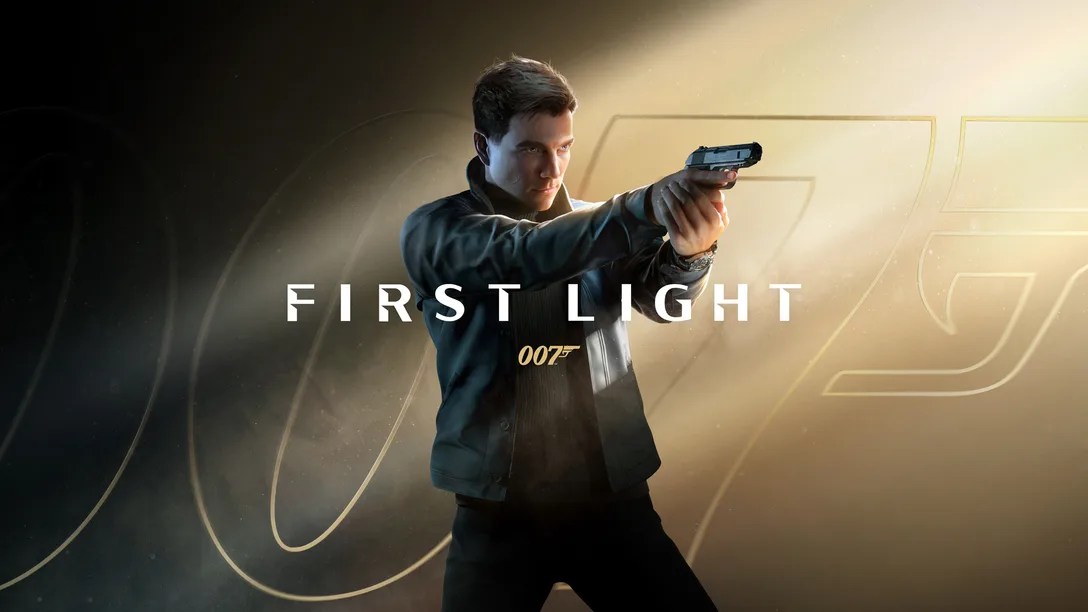
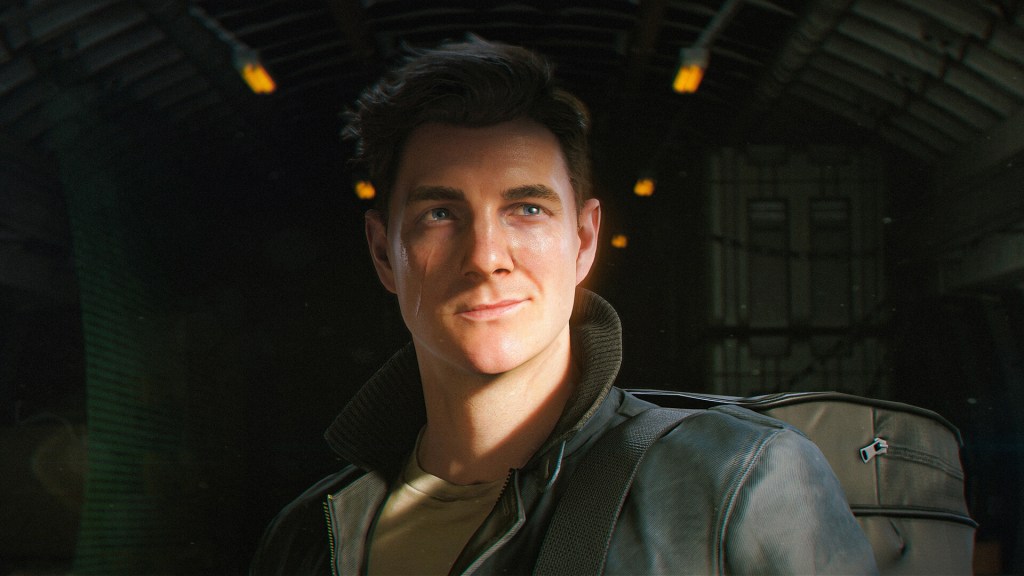
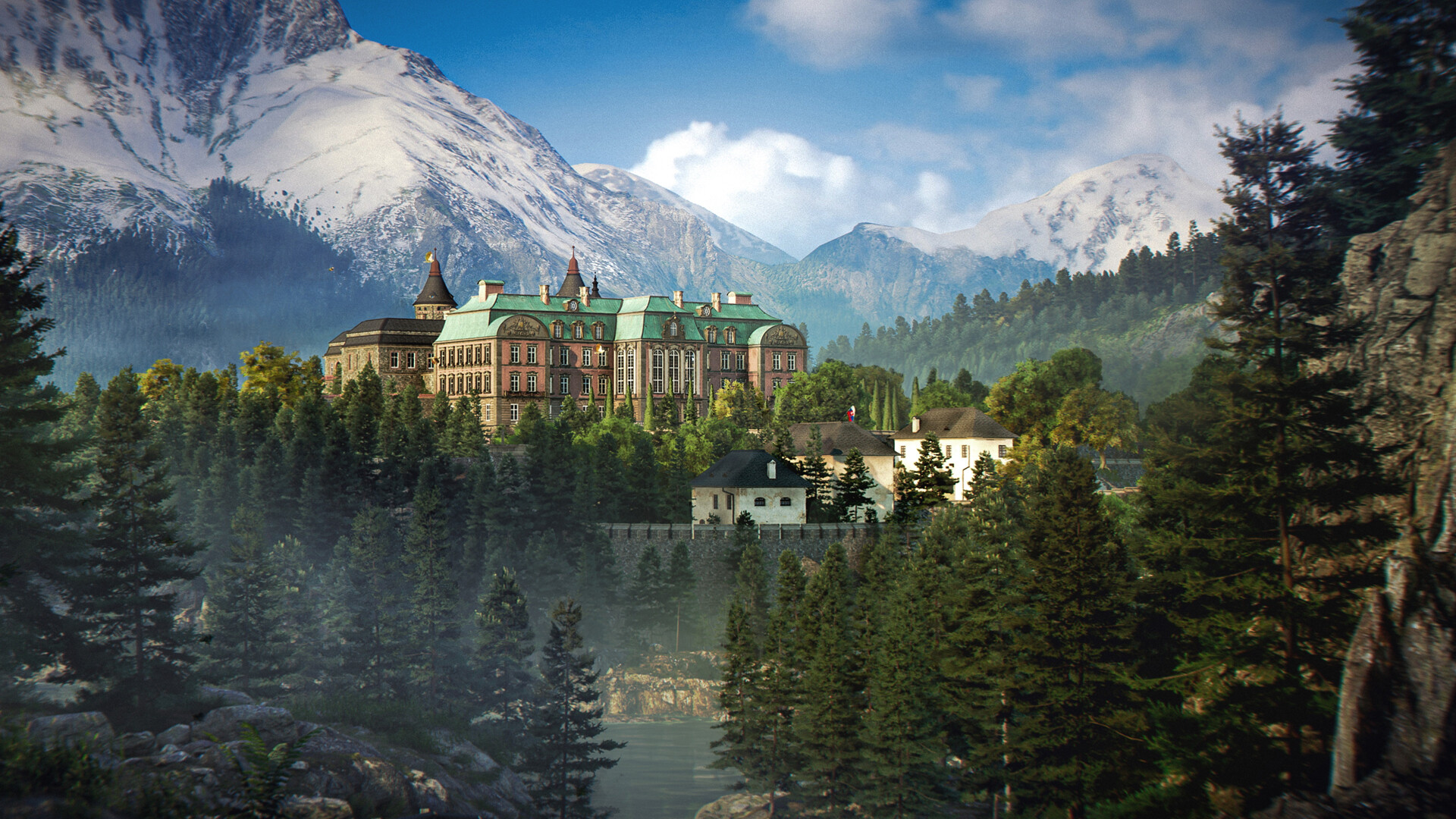
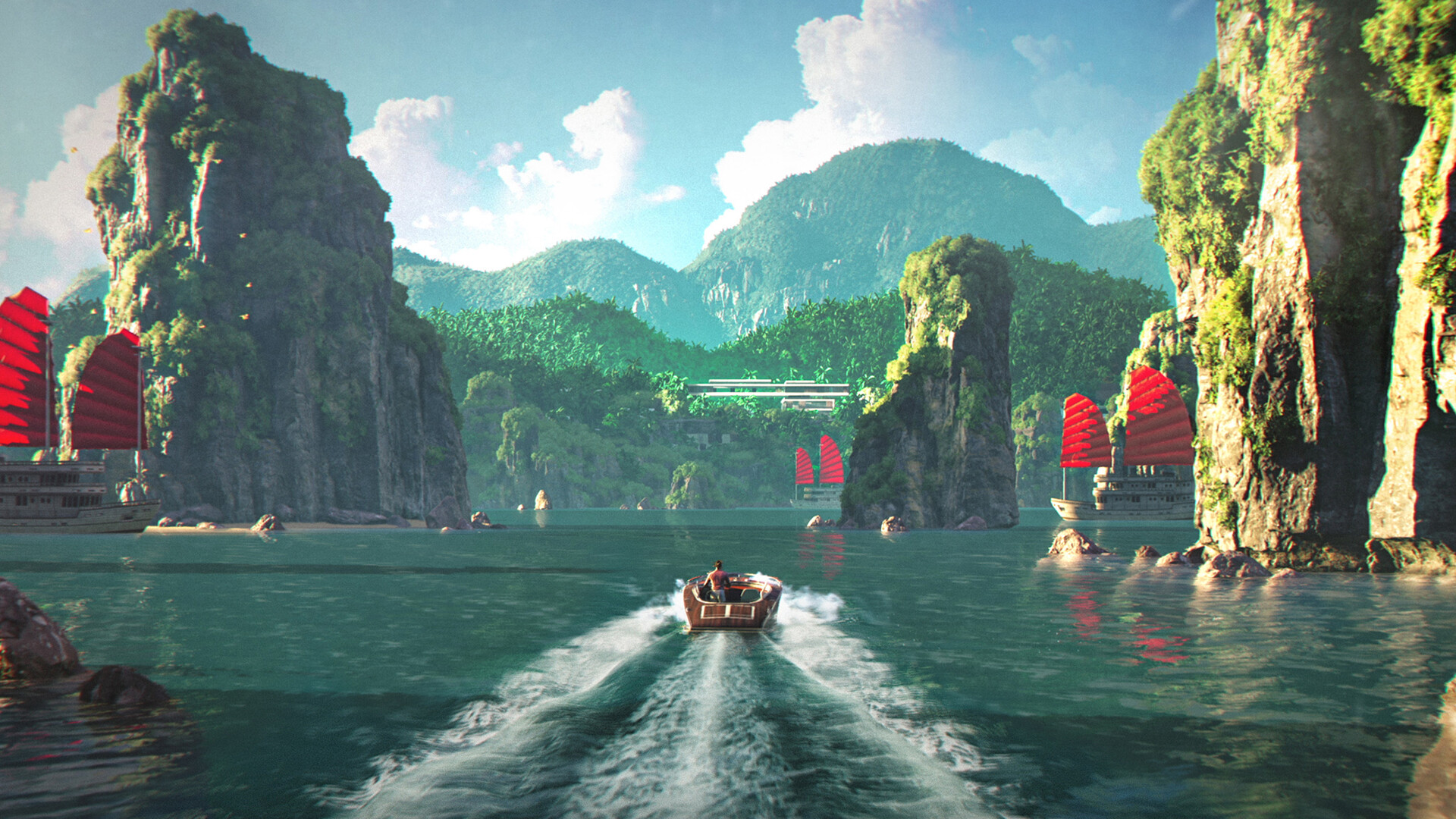
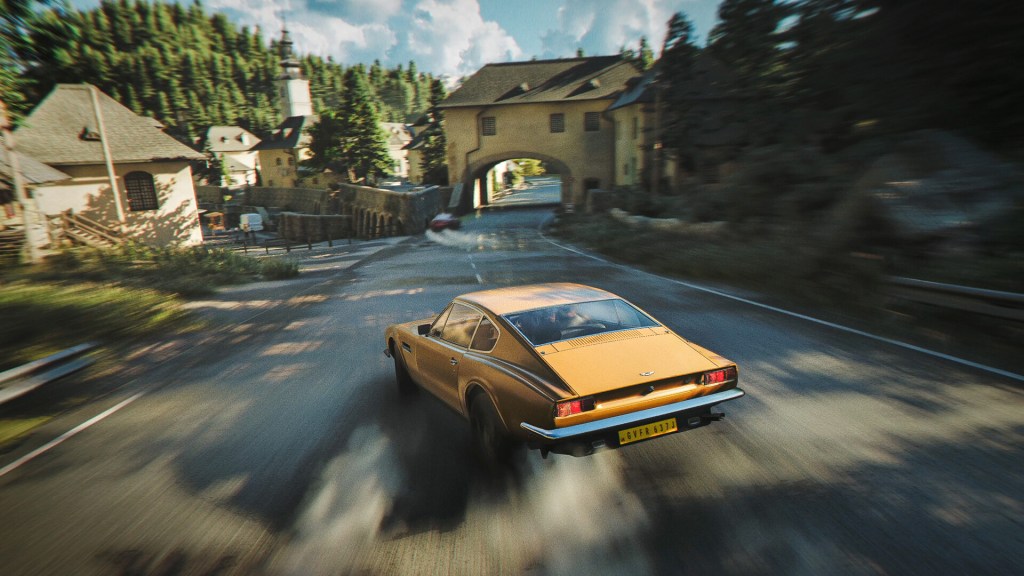
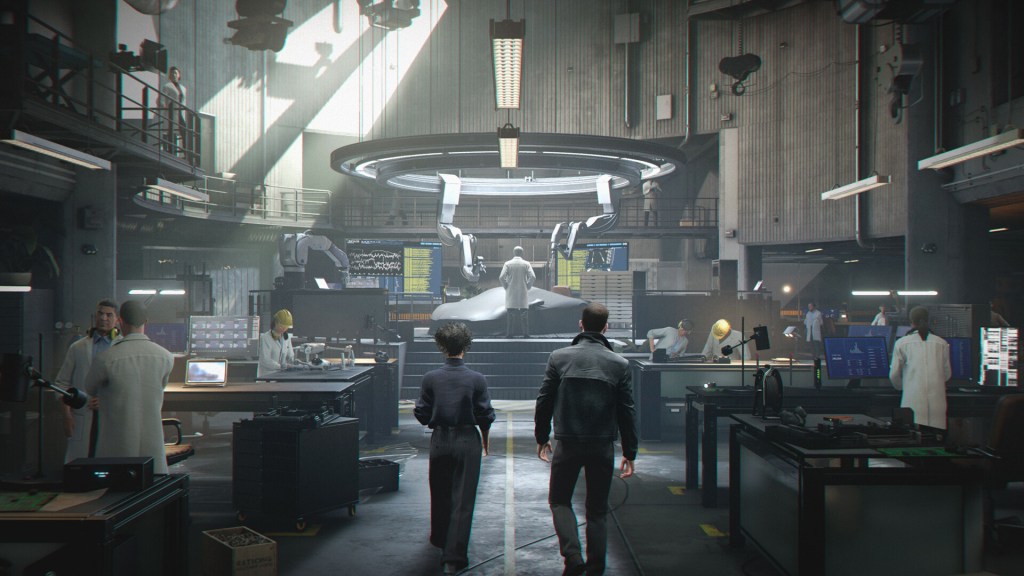
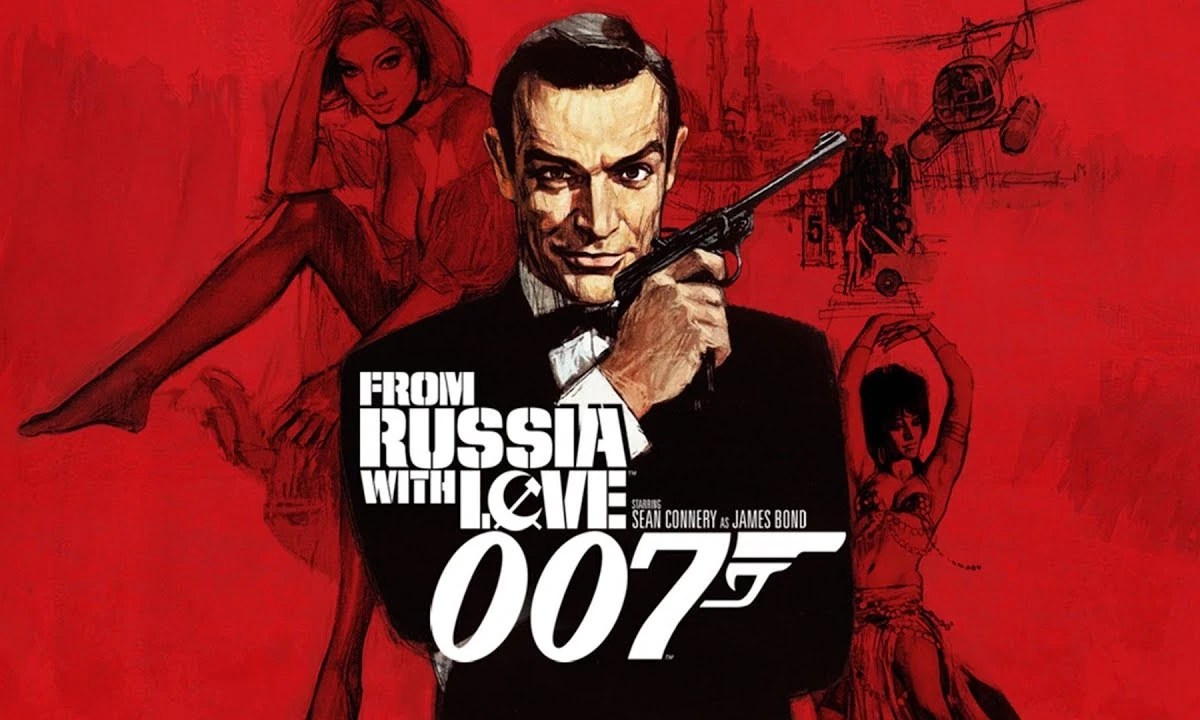
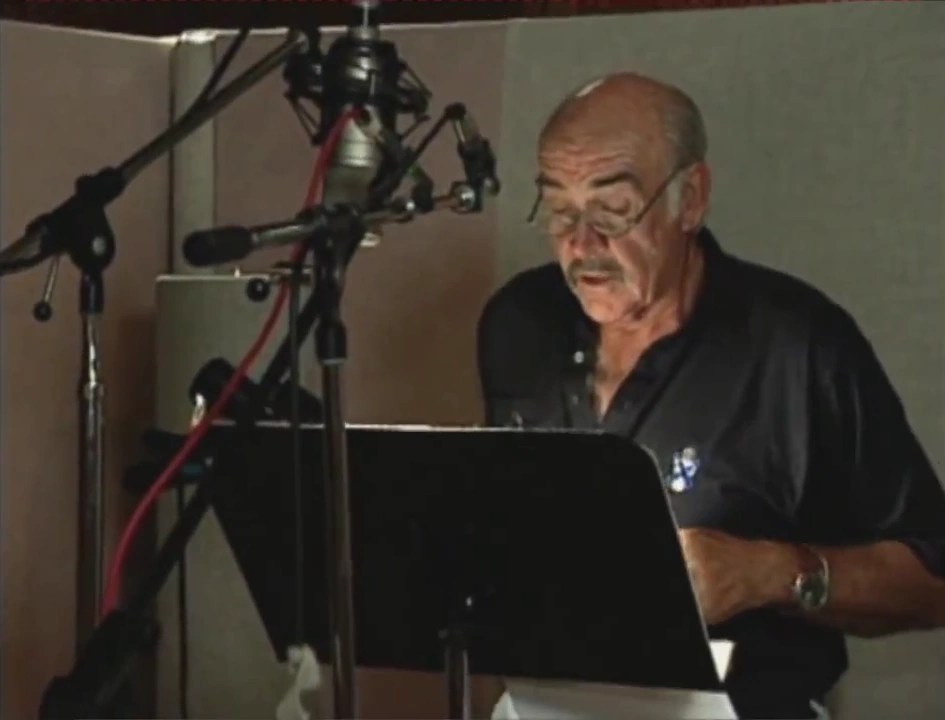
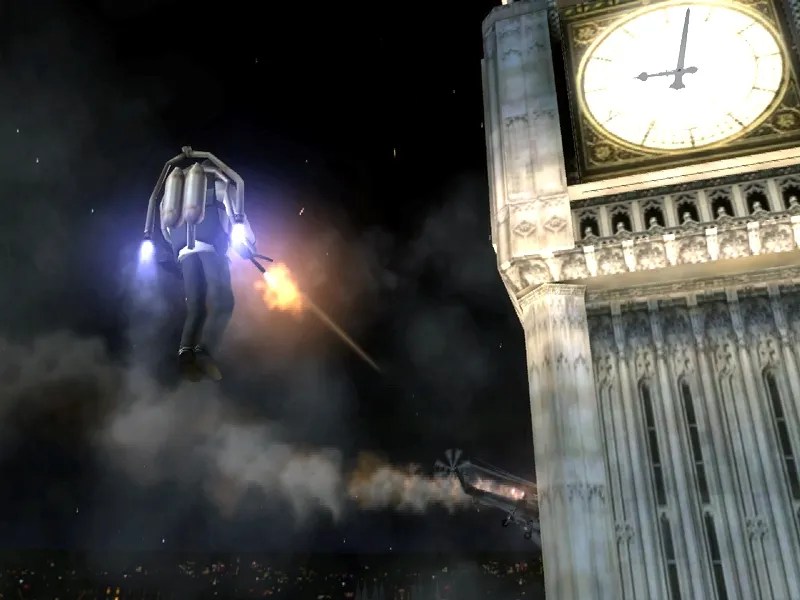
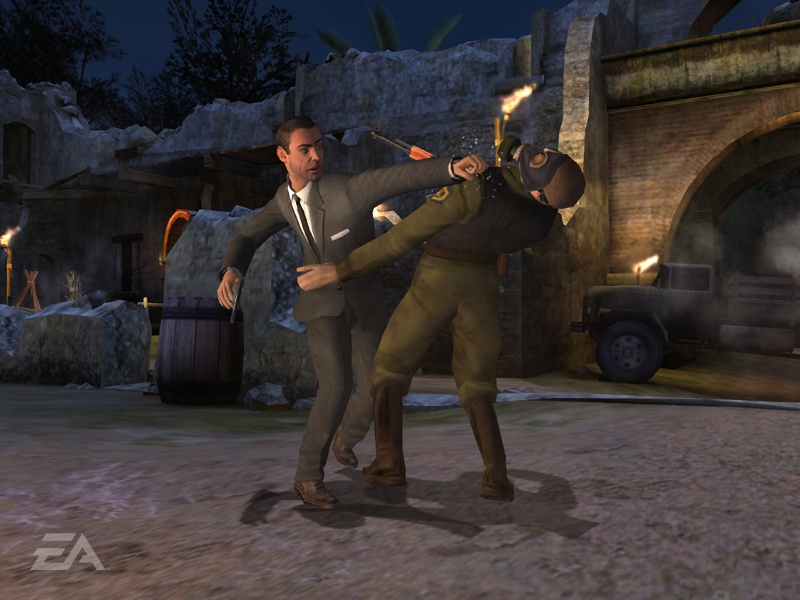
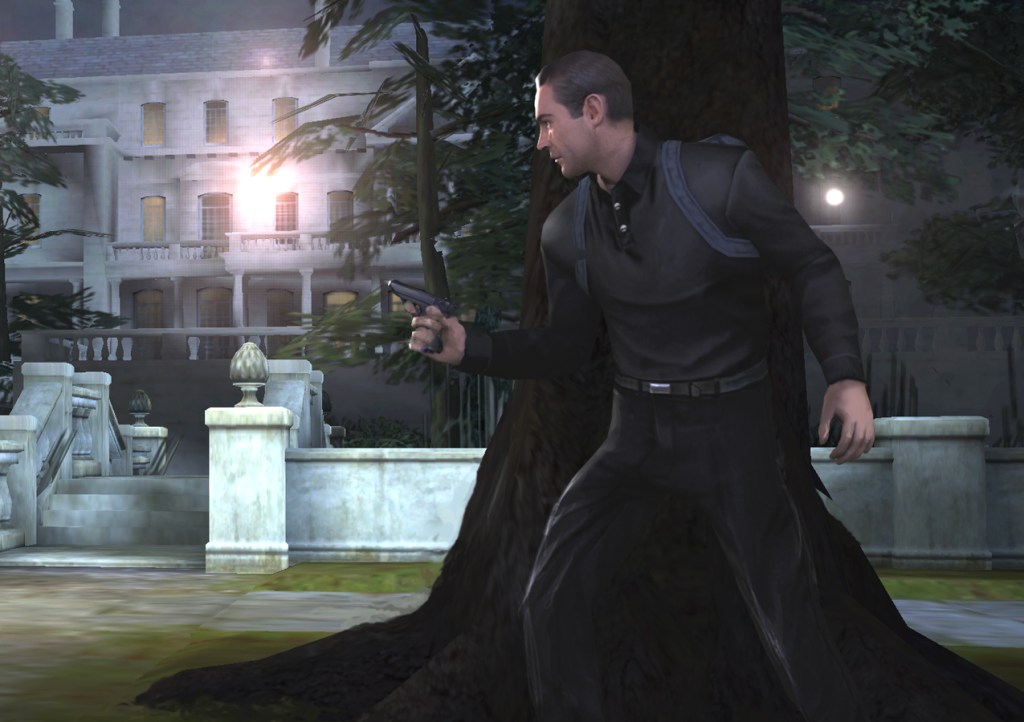
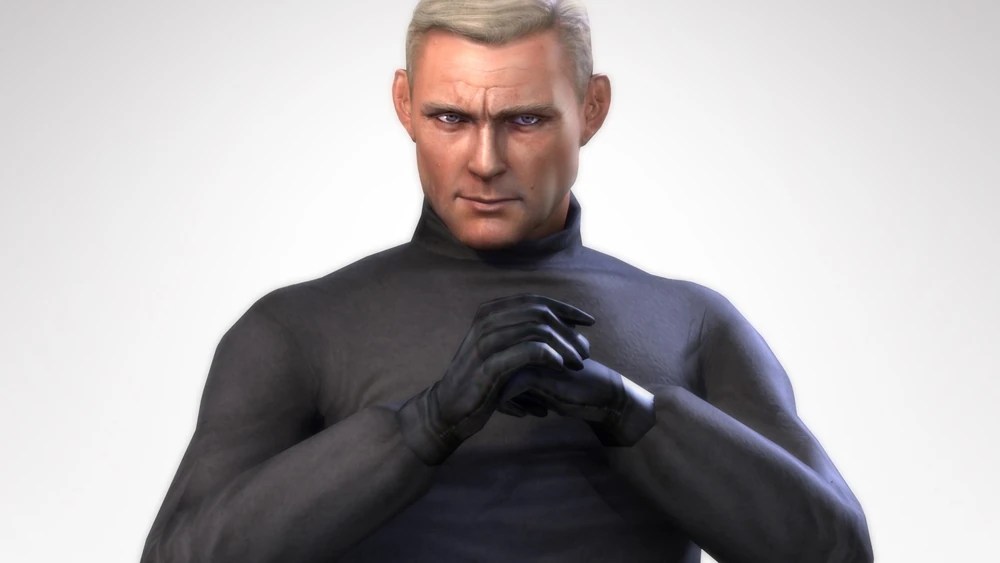
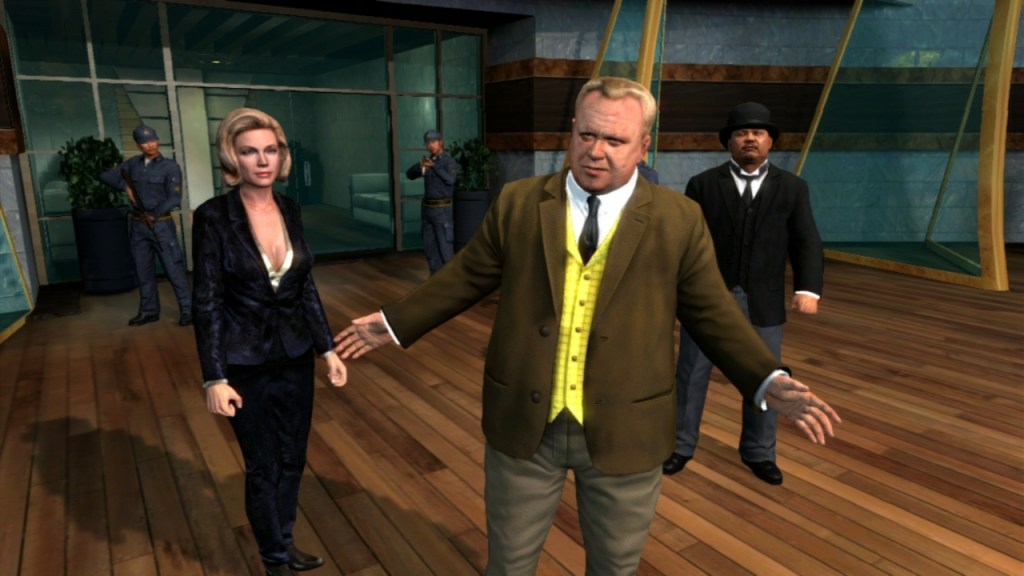

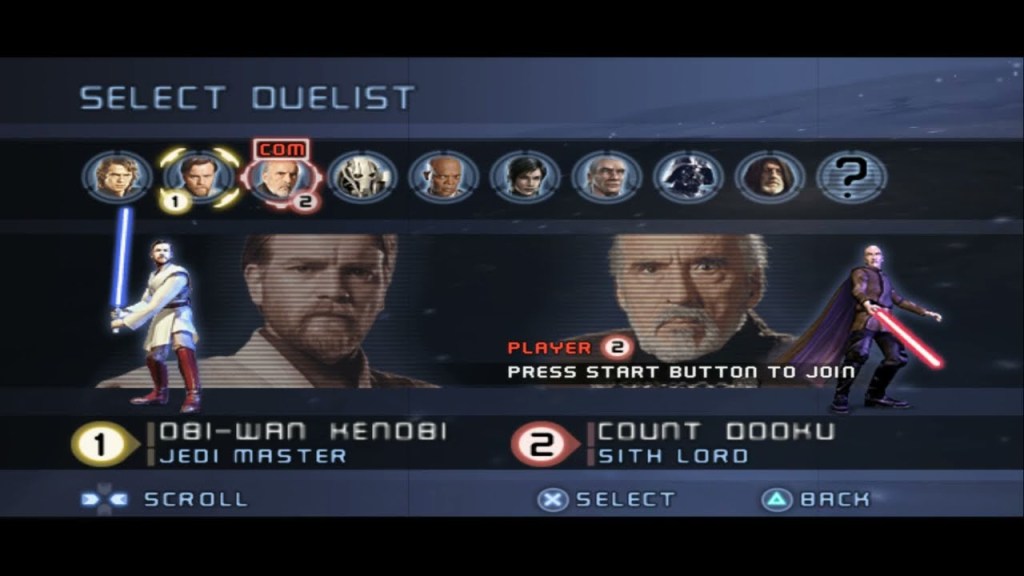
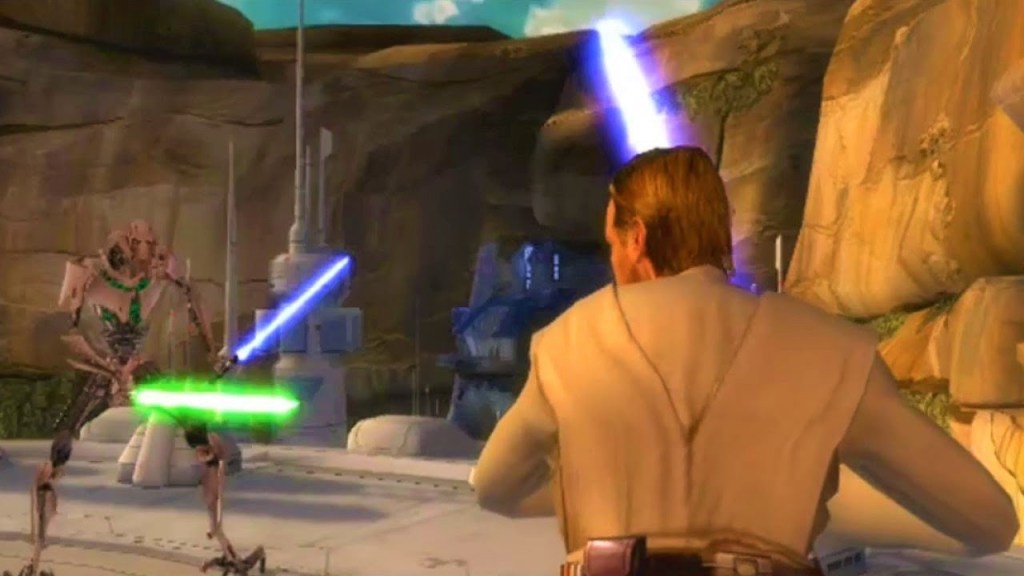
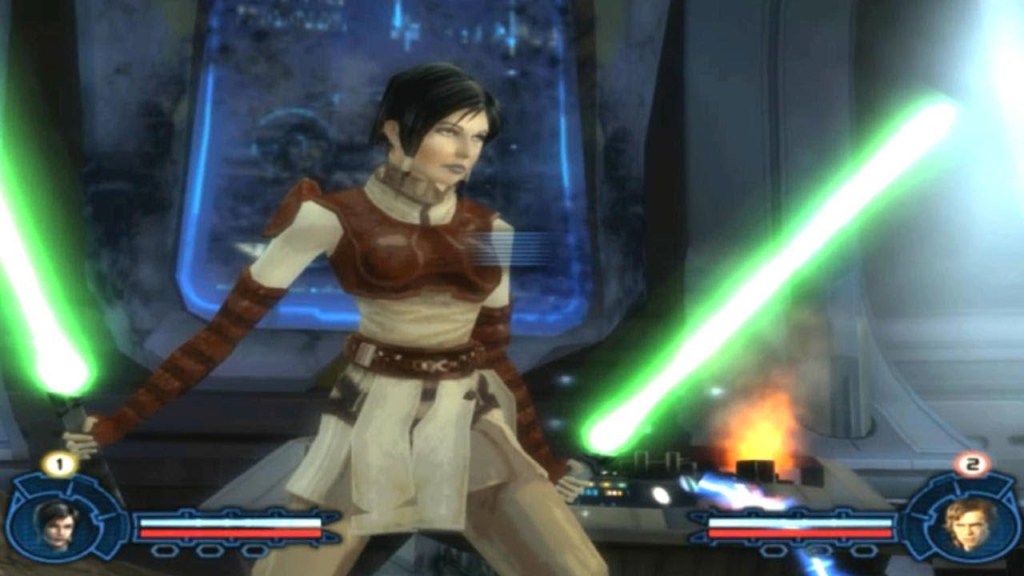
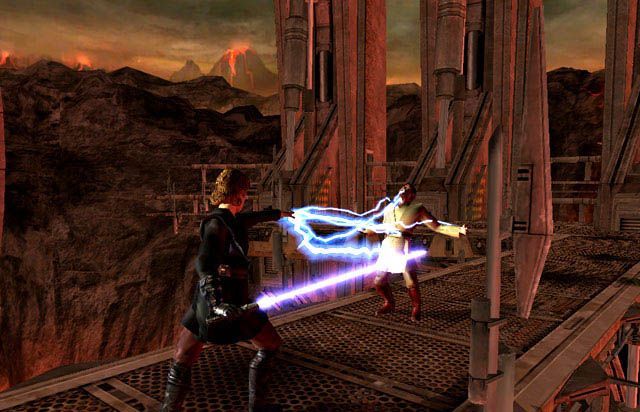


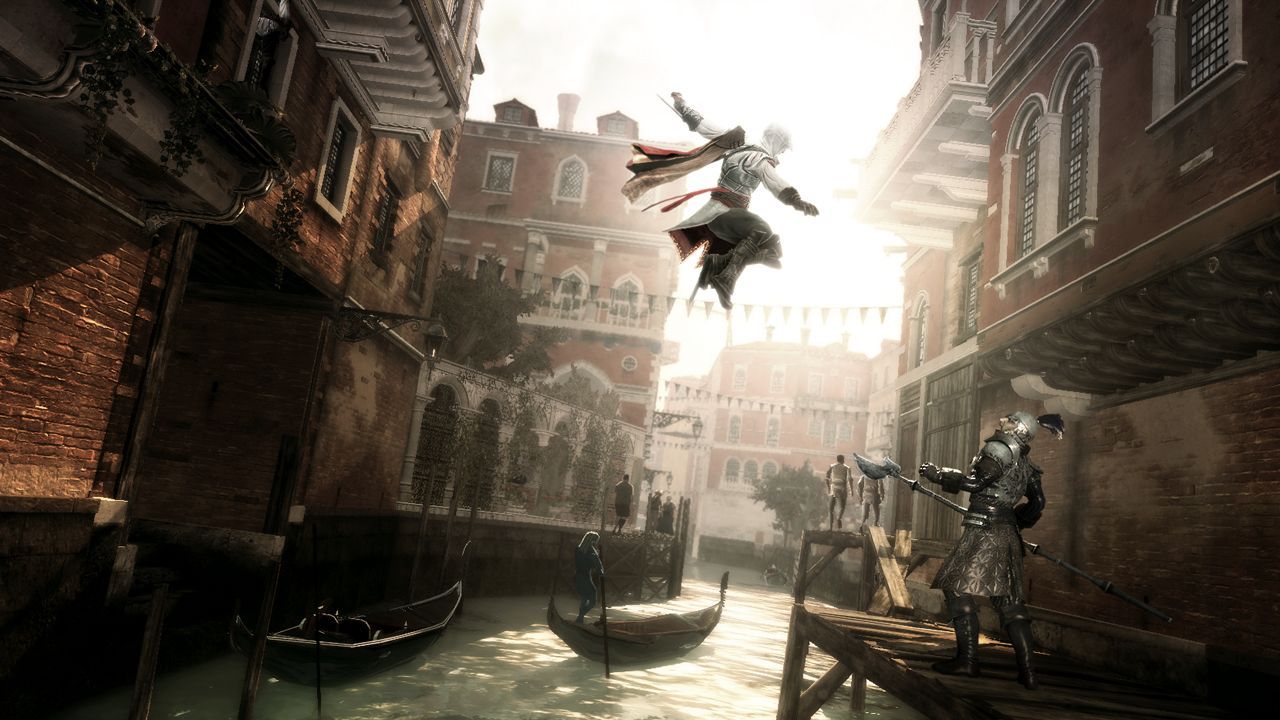
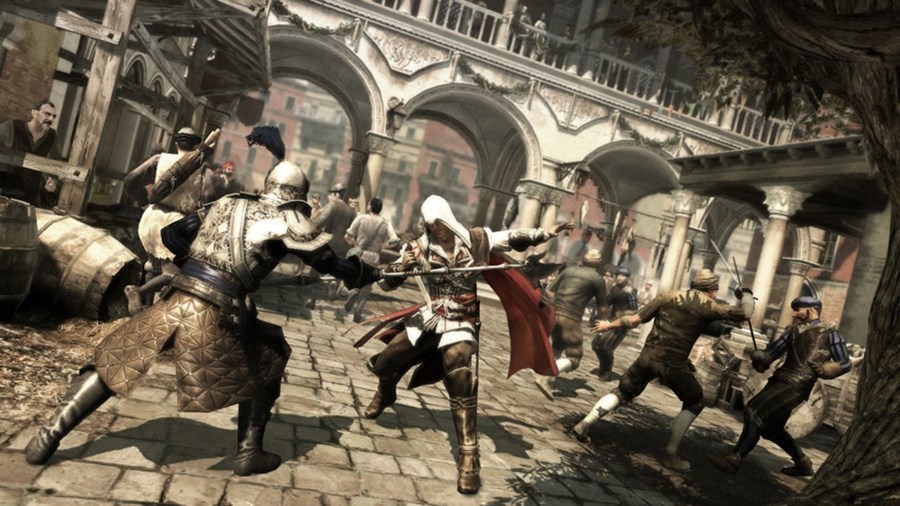
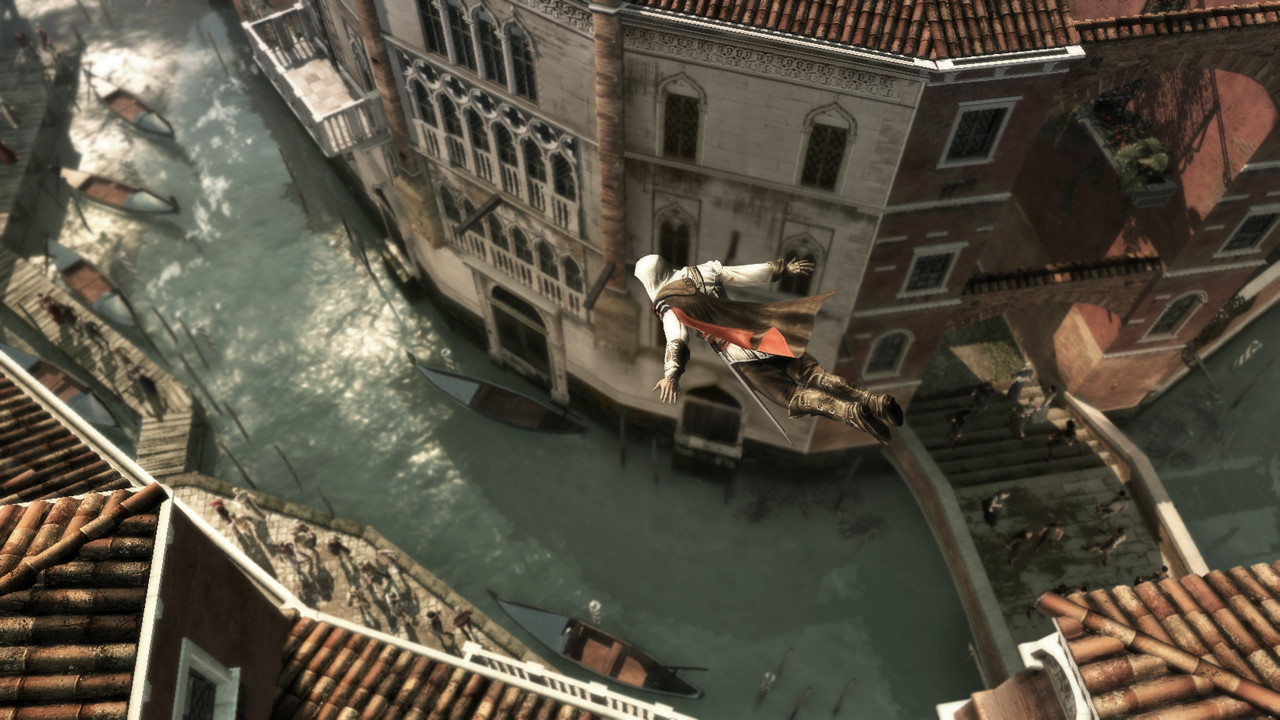
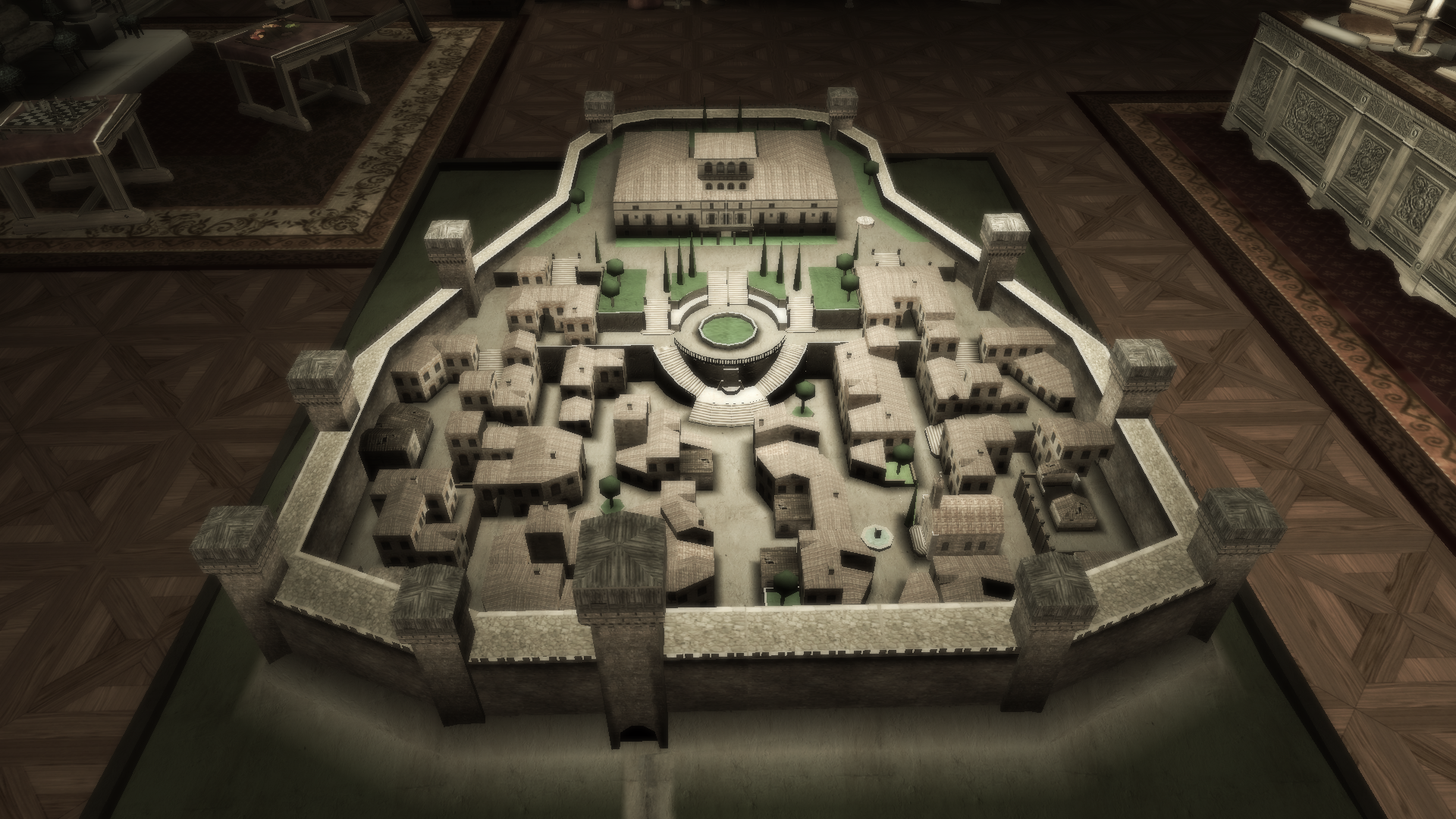
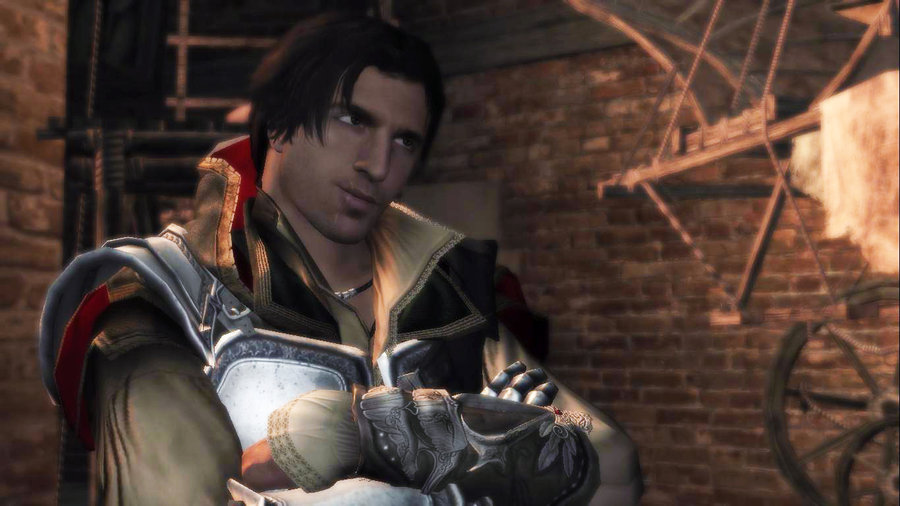


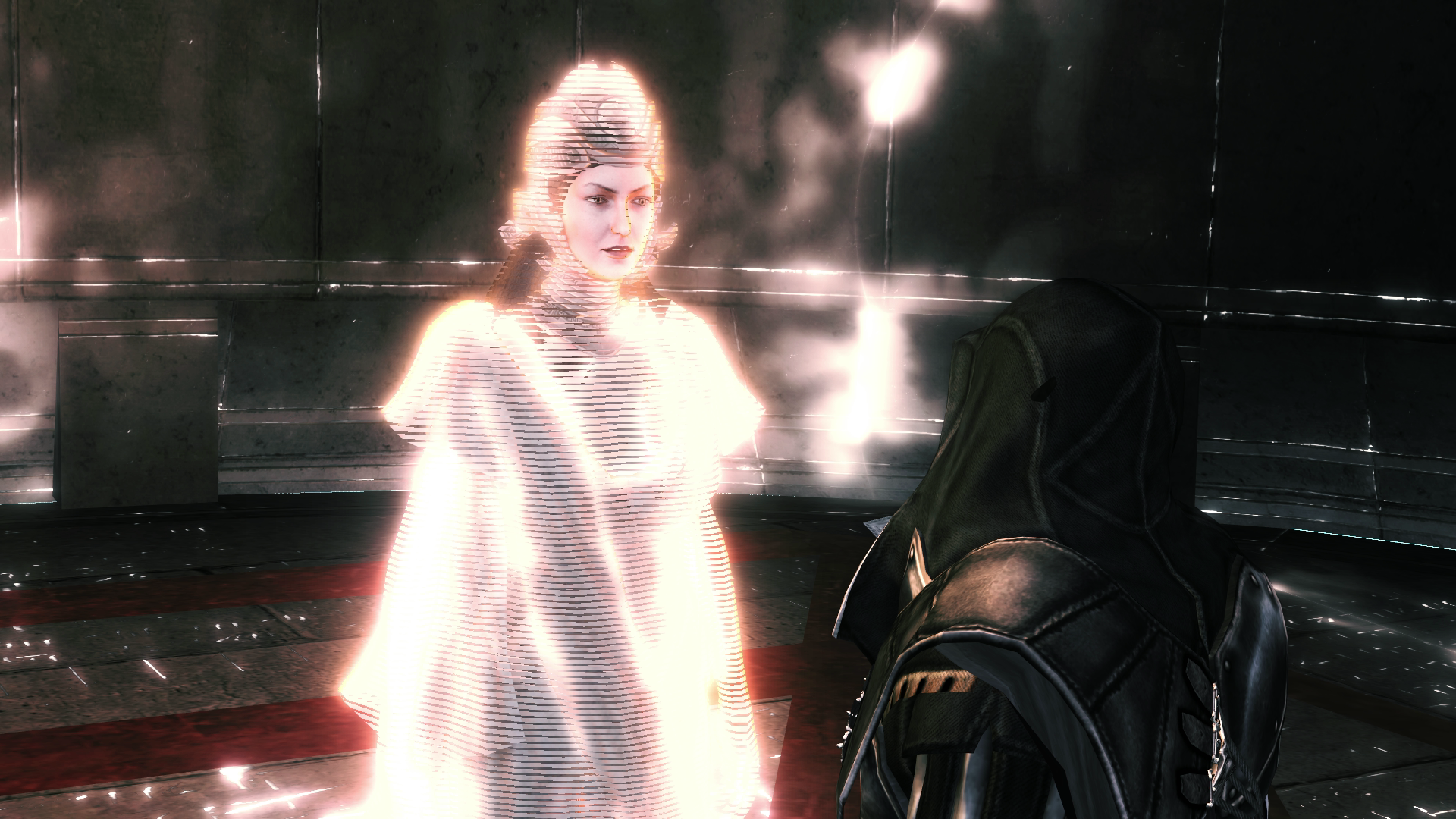


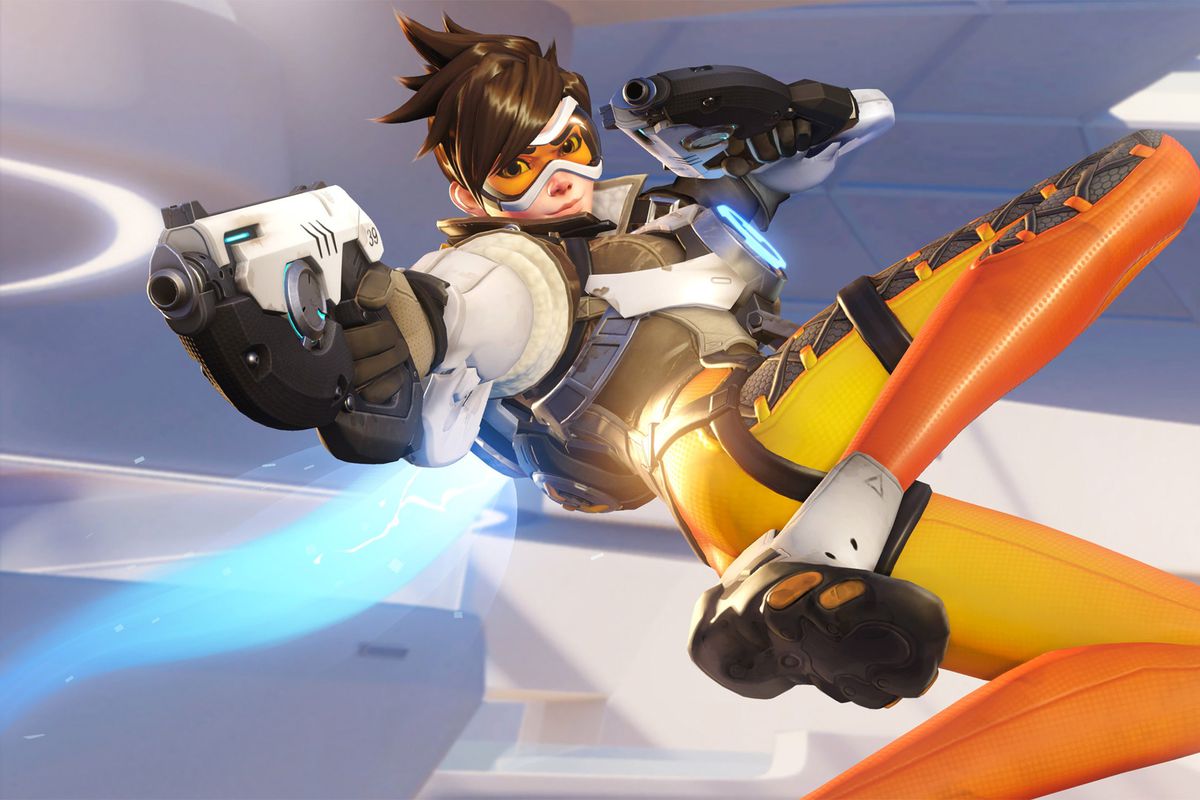


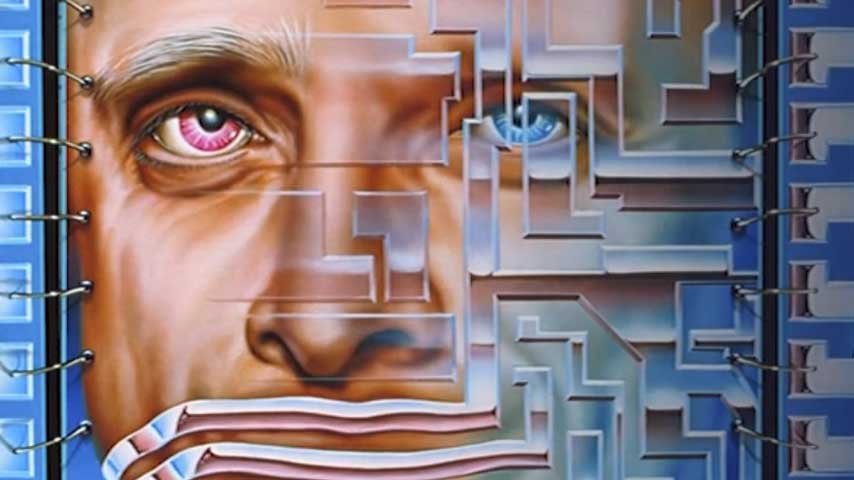
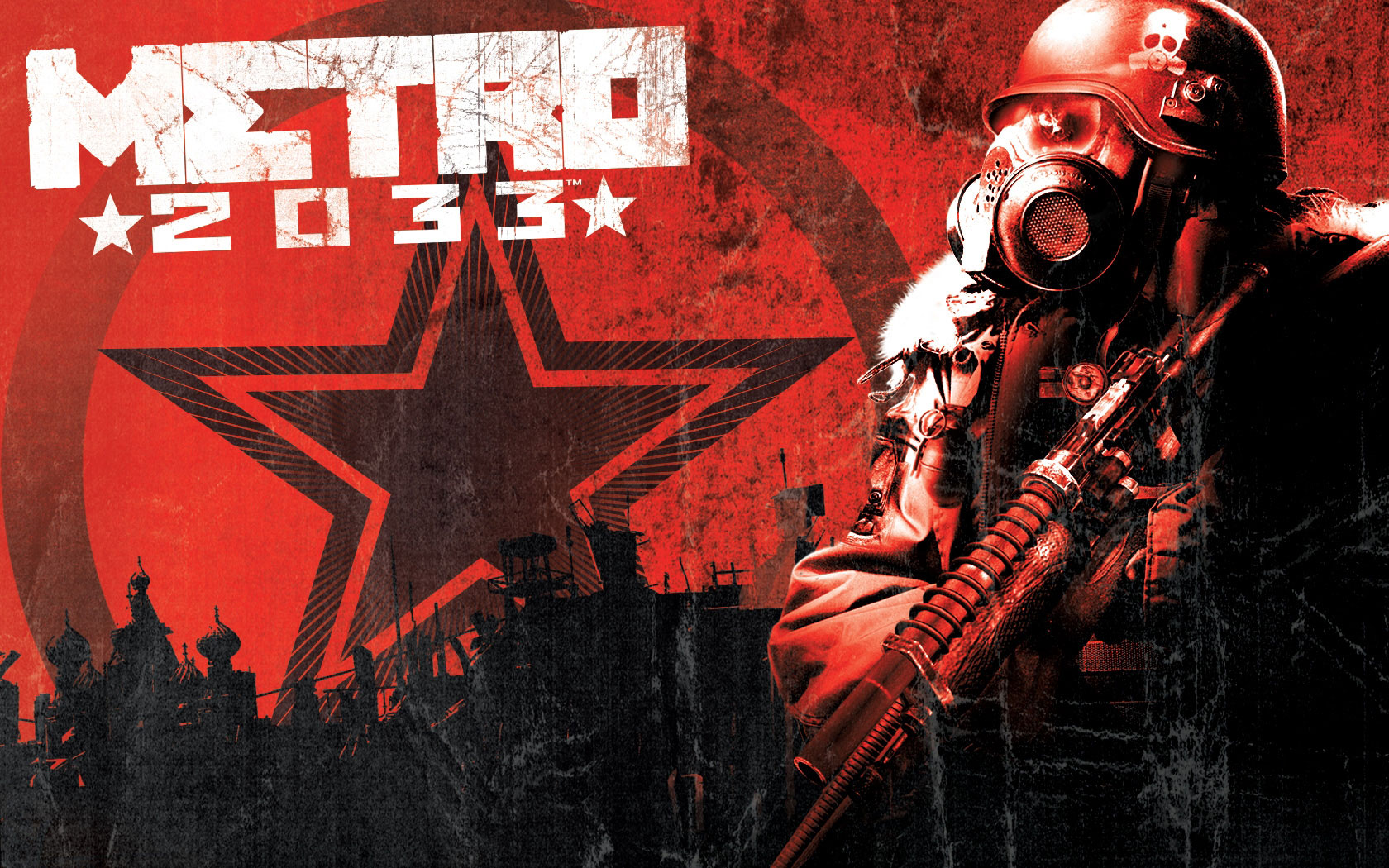


 TOM CLEMENT | GAME PRODUCER | NARRATIVE DESIGNER