Medal of Honor: 15 Years Later

As someone who played games in the late 2000s and early 2010s, I have played Call of Duty.

Much has been written about the revolution Call of Duty 4: Modern Warfare was to the gaming landscape, catapulting creators Infinity Ward and publisher Activision to great heights, but also changing the way games are made and played even to this day.

For a few years it was the gaming king. There were a other major hits around the same time, with Halo 3 for the Xbox 360 selling over 14 million copies in 2007 and Battlefield: Bad Company releasing one year later.

Battlefield and Halo are big series in their own right, but Activision and the teams of Infinity Ward and Treyarch started a tag-team trend of releasing a bestseller game every year.

Two years after CoD4 and the monster smash-hit release of Modern Warfare 2, other developers took the sign that the modern military shooter boom was here to stay and so planned their own “Call of Duty Killer” games.

Electronic Arts, once the leader of the military first person shooter market with Medal of Honor, had been seeing moderate review scores and sales, but nothing compared to CoD. There most recent title at the time, Medal of Honor: Airborne, released a few months before CoD4.

But when ‘modern warfare’ became the genre du jour, EA looked like they were literally stuck in the past, only releasing games set in World War II. So after a three year hiatus they decided to bring Medal of Honor out of the past and challenge Call of Duty in a modern war.

And now over fifteen years later I want to look at this game, what succeeded, what failed, and what it tried to do.

Heroes Aboard: A Look Back at Medal of Honor (2010)

While Call of Duty wasn’t the first game set in the modern day, it was the first to make a big impression and be accessible to a wide range of gamers.

Part of CoD4’s cultural mass adoption is both its time and place. Releasing in 2007, making a note on two recent hazy military conflicts that had seemingly outlived their welcome, it took the imagery of modern warfare yet left the political wrangling to the side.

It’s clear even when looking at the shift from the first Modern Warfare to Modern Warfare 2. MW2’s first mission, “S.S.D.D.”, lists the location as Afghanistan. In Modern Warfare, despite other locations such as the Bering Strait and Western Russia being listed in their opening cards, the ‘Middle Eastern’ locations are never named.

It’s a small distinction, but a notable one; CoD did not want to tangle with ongoing conflicts.

For the majority of World War II games, a lot of the gameplay was inspired by real life locations and events. So when CoD decided for Modern Warfare it would stay quiet on the current wars, Medal of Honor played an interesting card and set their game during the invasion of Afghanistan.

The story would be based around “Operation Anaconda” in March 2002, the second largest operation to that point in the War in Afghanistan. The game retold the events surrounding a two-day operation, playing off multiple angles and operators.

While names had to be changed and events streamlined, the plot sticks close enough that anyone reading the documentation of the operation can match the real operators to the characters.

It’s an interesting hook, an eye-catching and novel move, yet many believed it was disrespectful to play a depiction of an ongoing conflict.

Controversy was further highlighted when Amanda Taggart, senior PR manager for EA commented, “Most of us having been doing this since we were 7 – if someone’s the cop, someone’s gotta be the robber, someone’s gotta be the pirate and someone’s gotta be the alien…In Medal of Honor multiplayer, someone’s gotta be the Taliban.”

Immediately bans were called for across the world and eventually the Taliban were renamed to Opposing Force in-game, but the vibe had been set, MoH was going to stay in the real world. There hadn’t been many like it before, the only high-profile game that tackled a similar aspect was Six Days in Fallujah set in the Iraq War, which was ultimately cancelled in 2009.

So with the context set up, let’s have a look at the gameplay and plot.
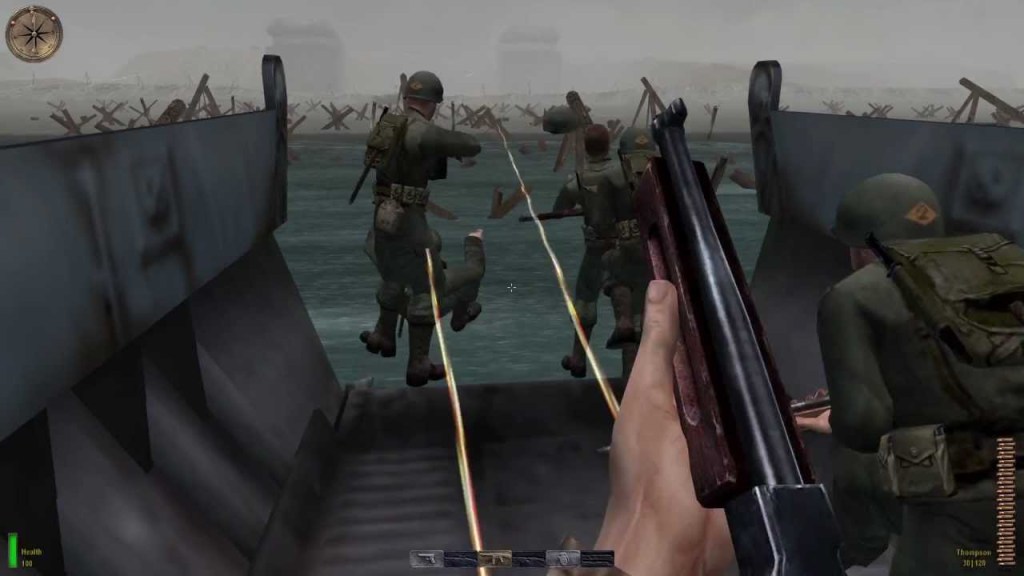
Medal of Honor was influential in the WW2 shooter space, but by the 2000s the setting was stale. (Source: YouTube, ViruZ A.G.)

To discuss how Medal of Honor plays and presents its story we must continue to talk about Call of Duty 4: Modern Warfare.

But why am I still comparing MoH to CoD4? MW2 had come out the year before MoH. Even comparing it to Black Ops would be a more balanced argument, as both came out the same year and faced a similar uphill battle as the “new” face of the franchise.

It’s because for all intents and purposes, Medal of Honor’s reference is Call of Duty 4. The grounded setting (with a dash of real-world politics) and a mixture of both regular infantry and special forces; that combination catapulted CoD into the mainstream.

MW2 and Black Ops moved the series into a larger-than-life action movie; thrilling for sure, but for those looking for a more realistic depiction of war, CoD was slowly slipping away. So there was a prime spot of gaming real estate for Medal of Honor to quickly step into by catering directly to CoD4 fans.

CoD4 has a total of twenty levels, including both non-combat missions (“The Coup” and “Aftermath”) and discounting “Mile High Club” (as it is not connected with the story).

Medal of Honor has only ten levels, yet they are significantly longer and both games take around the same time to beat (around 5-6 hour mark).

I’ve written previously about CoD4’s excellent pacing, placing the player first in the boots of a Special Forces team member and executing stealthy and surgical engagements before ratcheting up the ante for regular infantry roles. It is the perfect balance of the scalpel and the sledgehammer.

Medal of Honor for the first time in its history was going to have several playable characters. Previous games had been focussed on a single character. The multiple characters approach feels like a direct response to Call of Duty, which had been doing character swaps since their first game.

Those character swaps allow for the excellent pace development and so just like CoD4, MoH starts with a surgical strike by a team of special forces before moving to Big Military engagements.

After an ominous opening where we listen to newscasters and street-level civilians reacting to the 9/11 attack on the World Trade Center we flash-forward to an airborne insertion that goes horribly wrong (copying Black Hawk Down) to then a night-time silent rendezvous in Afghanistan two days prior.

It’s a little jarring, but a standard enough opening and echoes CoD4’s first mission, “Crew Expendable”, where a top special forces team readies for an infiltration.

The mission opening also gives us the first bit of chemistry between our Navy SEAL (Neptune) teammates; Mother, Voodoo, Preacher, and player character Rabbit. The codenames are cute and obviously inspired by Soap, Gaz, Roach, and Ghost from the Modern Warfare trilogy.

As Neptune drive into the town in separate vehicles, Voodoo turns off Rabbit’s music on the stereo and makes some jokes with Mother over the radio. The nighttime drive becomes intense as they weave slowly through tight-knit streets and are momentarily stopped by a shepherd and his flock (who Voodoo berates in about three different languages).

But suddenly, bang, whizz, flash, gunfire and explosions come from all angles as Neptune gets split up and Voodoo rams his car through a couple of roadblocks until he and Rabbit can get out safely.

While the mission starts okay with the nighttime drive it quickly loses any tension or build up just by how LONG it is. The mission, titled “First In” from start to full control to the player is OVER SIX MINUTES. It is painful to sit through.

“Crew Expendable” from CoD4 goes from setup cutscene to weapons free in just over a minute.
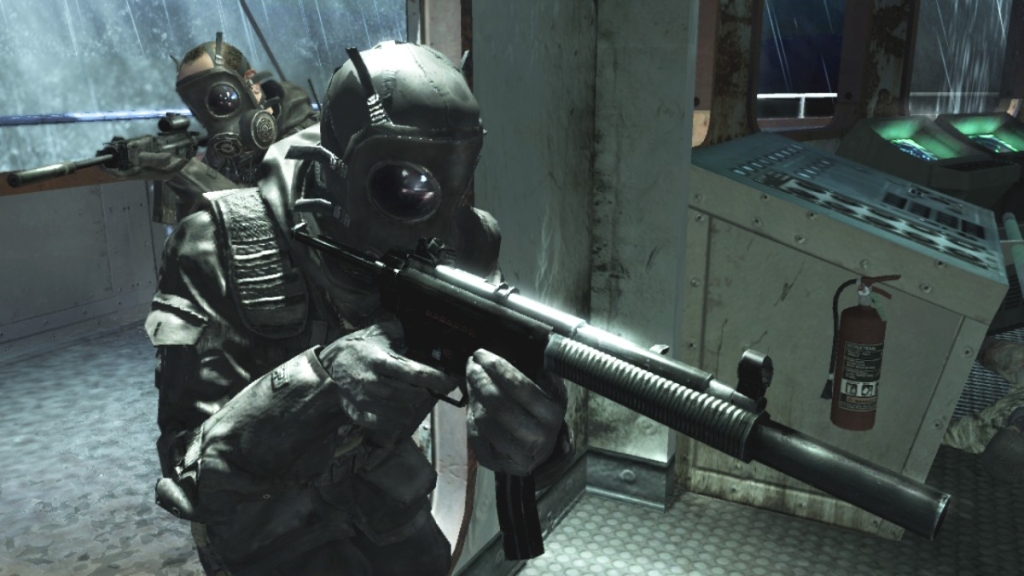
CoD4 cooly and confidently brought modern warfare to the FPS market. (Source: nerdreactor.com)

It’s also not the best start to the game. It’s a lot of explosions, gunfire, dark pathways and corners. Even with cool night-vision goggles the level seems so devoid of fun; the most generic corridors and streets with the most stereotypical of enemies. It reminded me more of the first mission of Black Ops that released the same year; gunshots, grenades, hysterical shouting, screeching cars, but nothing that would tie it all together. In the end it becomes exhausting.

So the player goes through the standard FPS starter lines; point-click shooting, waiting for friendlies to open doors, primary, secondary, melee, all that good stuff. Players can kick in doors, which is a new feature, but is nothing more than an extra animation.

The truly new feature that Medal of Honor brings to the 2010-FPS landscape is movement. If players sprint they can slide when holding the crouch button ostensibly to get into cover. While in cover (or general gameplay) players can use the lean button to peek out and shoot in any direction they want.

These are two great mechanics, perfectly complementing each other and changing the way I would play the game. All FPS players are used to waiting behind cover before either playing a game of whack-a-mole or having the sacrifice their health in an effort to push forward.

With Medal of Honor the slide encourages pushing forward as well as evasive manoeuvres. Sliding between degradable cover from oncoming fire or out of the splash range of a grenade feels great, evoking third-person-shooters in their style but maintaining the traditional FPS. The slide also drops players into a crouch or prone, ensuring player health instead of getting shot while finding cover.

If the slide is for aggression, the lean is for defence. While at first you will use it to quickly snap over or around cover, its true usage comes when taking enemy fire. While using the lean button the movement stick becomes your axis, keeping you still but allowing you lean in every direction.

This can be exploited to great effect; say your degradable cover is chipped away until you are visible if you are crouching. But if you use the lean button and lean “downwards” the player can effectively still use the remaining cover. When a player realises this it then compounds the slide as you start to see new possible cover places that can be used with the lean.

It’s a great tool for enemy placement as well. You can quickly lean out of cover and see where the enemy are and get ready to counter instead of having to continually stand and crouch like other FPSes. Lean and aim are bound to different keys allowing for quick battlefield surveillance and response with a snap of the fingers. It’s also nice that that you hold the lean button rather than tap it to engage and release. It feels much more responsive and allows for fast-paced fighting.
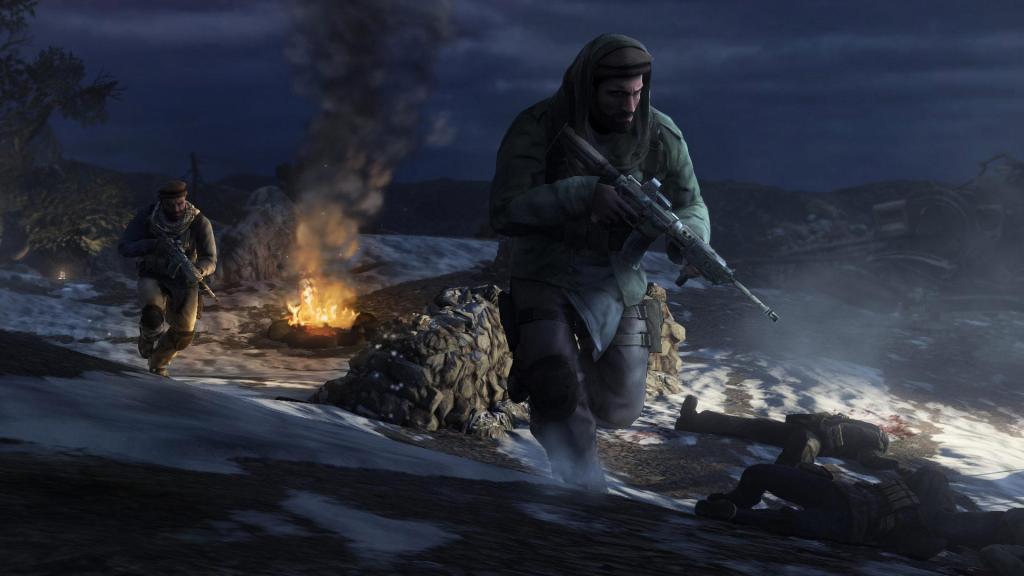
The SEALs wear traditional Afghan attire to blend in with their surroundings. (Source: store.steampowered)

Back to the first mission. Gameplay livens up a little bit once the four members of your squad rally together and head onto the rooftops of a little fort, eventually doing battle across a town square and playground. It’s an interesting location; a nice solid arena for gameplay while giving a hint of life before the war and also highlights the great landscape of Afghanistan in the background.

If you ask people what is the landscape of Afghanistan most people would probably say deserts and sand-blasted cities. While we do get to trek through some wadis and battle in ancient desert forts, the game does a tremendous job of showcasing the wide-ranging beauty of the “Graveyard of Empires”.

Snow-capped mountains, wide gorges, dense forests, it’s stuff that isn’t immediately associated with Afghanistan, but is 100% true to the location. The little things in said landscape too; goat trails, pilgrimage posts, Soviet wreckages, concealed nests and doors, they give the space a sense of real life, of centuries of warfare and people learning to exist in the harshest of landscapes.

After surviving a booby-trapped explosive corpse the team find their contact Tariq and begin debriefing him. During the debrief we also get a slight injection of politics into the story. When Voodoo starts to interrogate Tariq about the ambush and whether Tariq is on the side of the Taliban or not, Tariq responds;

“Please. I have a daughter. I want her to go to school. I want her to be a person, to have a life. Do you not understand?”

It’s a far cry from Call of Duty and Battlefield whose reasoning for going to war is not even some vague notion of “freedom” or “security”, just head to a vaguely Middle Eastern/Eastern Europe looking area and shoot everyone that you see.

It’s a small moment, not even 10 seconds long, yet it makes a case for why we are here and what is sacrificed if the US leaves. Then BANG, straight into the second mission, “Breaking Bagram”, a more high-intensity mission about retaking a Taliban-held airfield that will be the main base for the invading force.

I wanted to also take a moment here to mention the tags at the beginning of each level. Obviously plucked from CoD, each levels starts with the “name” of the character, their team, the local time and the location. However they are so bland, simple white text on top of the screen that they almost feels like placeholders.

They are in the same position on-screen as the CoD text, but they don’t have any animation, no cool SFX or visual design, they just appear and then get immediately lost among the visuals when the gameplay picks up.
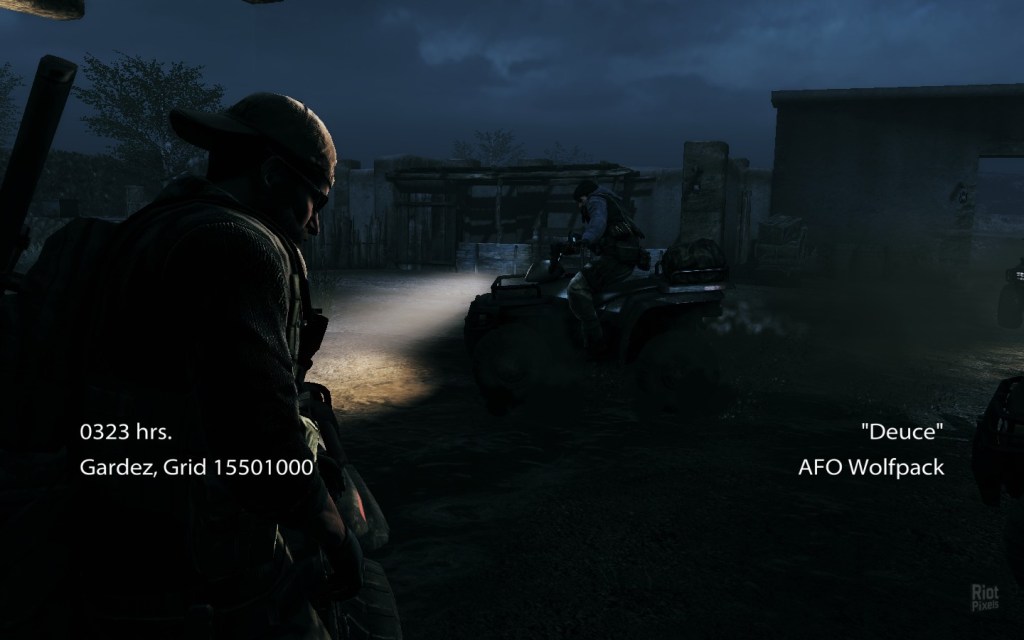
The mission details could have been a place to add some character to the game. (Source: riotpixels.com)

The second mission starts explosively with a daybreak siege on the airport with Rabbit riding shotgun in a pickup truck and spraying at enemies with a huge light machine gun. Arriving at the gate of the airport the calvary splits up. While the Western-backed Afghan National Army storm the front gate the Neptune boys circle around and work through the mortar fields and sniper nests.

The opening is fun and gets the blood pumping, but after getting out of the truck and heading out on foot the level falls back into that generic hallways and spaces like the first mission.

Even something like a missile strike; where MW2 would have you rain down Predator missiles yourself here in Medal of Honor you just point a laser pointer at a single building and then an explosion happens. It feels so anticlimactic.

But after sliding and shooting we finally get to a nice open arena style again, with the radio tower as our goal. Sniper and rockets keep raining down if you stay still for too long or out in the open so it encourages pushes and slides so that you can reach the tower. It’s a cool set-piece and again a great ending to a somewhat drab mission.

The next cutscene shows the Big Military landing and setting up in the airfield and becoming the Command Center for AFO Neptune. We get some back and forth between the young colonel in the base and an older general safe in his office in the USA. I don’t know if these are based on real people, but it’s the most Hollywood-cliche “young buck/old-hand” story and a serious weak point in the narrative.

Onto the third mission, “Running With Wolves…”, and our first character swap, stepping into the boots of Delta operative “Deuce” and the team AFO Wolfpack.

I did research for this piece to see the difference between Delta and SEALs; they are both top military teams, SEALs seem sledgehammer-style and Delta are more scalpel. While it’s interesting to see so many different facets of the giant machine that is the US Military there really isn’t much of a big distinction at this moment of the different tasks the teams will be performing.

We first meet Delta during Tariq’s debrief at the end of the first mission. It’s cool to see these top teams working together on a bigger goal even if it just via radio commlink.

The Delta boys are actually the poster boys for the reboot game. Deuce’s team mate, Dusty, is the guy on the cover of the box, he got all the marketing, he’s the only character in the game that actually has a distinct character all from that glorious beard (an alumi of the Captain Price School for Military Facial Hair I see). He’s obviously modelled of the real-life Delta operatives that were photographed during the battle of Tora Bora, the two-day event that the story is retelling.
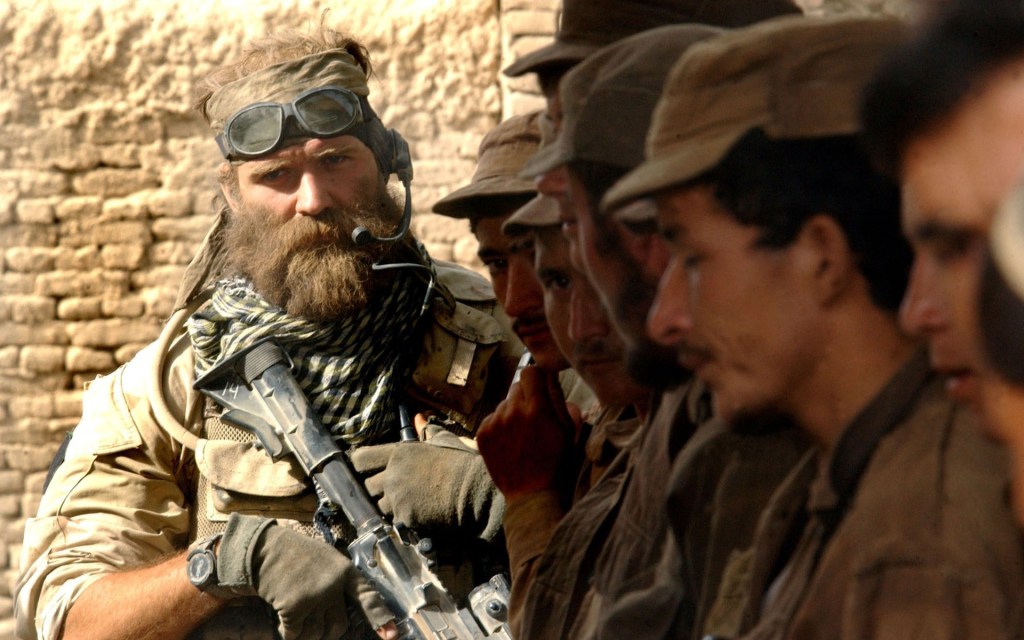
A real-life Delta operative training recruits. (Source: reddit.com)

Deuce along with team members Dusty, Panther, and Vegas are outfitted with stealth ATVs and are tasked with monitoring Taliban shipments. The ATVs is our first real new mechanic, driving across the rocky terrain at night…and yet it’s not fun.

Even when having to stop and douse the headlamps so a patrolling group don’t see you, it never feels tense enough. I would say that stealth missions work best as a solo operative and not being hampered by other soldiers.

But CoD4 and MW2 had great stealth missions with a similar objectives, “Cliffhanger”, and “All Ghillied Up”, often highlighted as two of the best levels in the entire series. “Running With Wolves…” should feel the same; sneaking through the dead of night with hundreds of fighters in the surrounding area and having to use speed and silenced weapons to keep ahead and undetected.

Well, we drive around, shoot up some towns here, snipe a couple far-away enemies there and plant trackers on a few trucks. It was here where I was starting to think this is a boring game. CoD is often lambasted for its railroading approach to its campaign, but at least every stop is a fun little excursion. This just felt bland.

Onto the next mission though and back to the Navy SEALs as they begin to push into the mountains. The opening is cool, sneaking through the tall grass near a goat herder, who Voodoo quietly puts to sleep and revealing he has a radio to inform the Taliban of approaching US forces.

It’s in this mission where the real and overwhelming size of the Taliban fighting force facing the US is revealed. Neptune encounter scouts (using fires and smoke plumes to communicate) before finding AAA guns that intelligence missed. This missions is quite fun; moving from small sharp encounters to then longer more protracted battles, having to use cunning and stealth to thin out forces before charging headlong into battle. It mixes up the style of gameplay, which is refreshing.

The scenery is also stunning, looking over the mountain ranges and wide valleys, snow and pine trees litter the landscape, entering small caves and nooks that have the previously mentioned fire stoves, starting the mission in the dead of night and seeing the day break as you reach the final battles, it is something rather special.
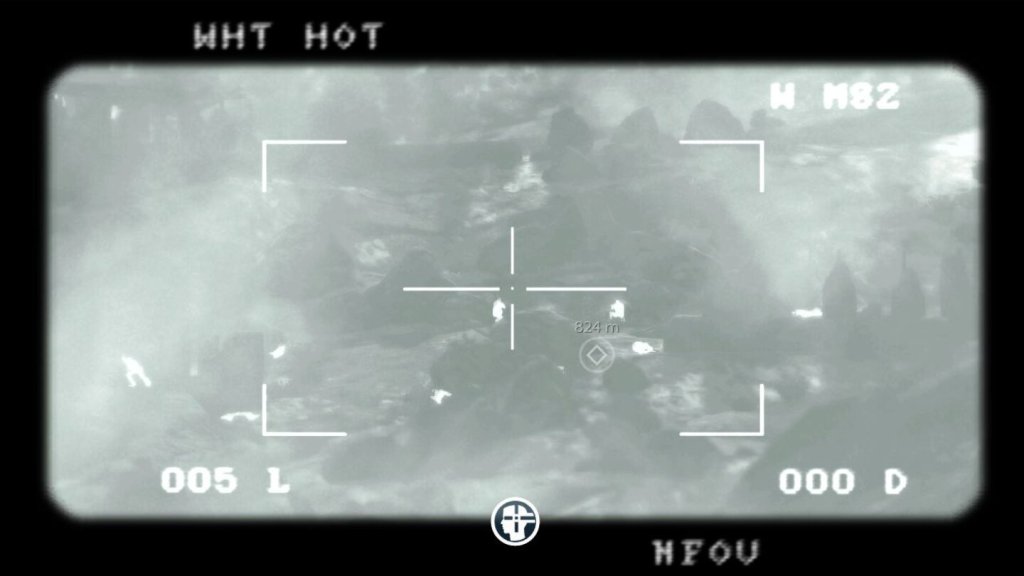
The heat vision in Delta missions is very reminiscent of footage later shown on television news screens (Source: gamestar.de)

It also features a nice little connection to the previous Delta mission. Deuce and Dusty put trackers on vehicles in that mission and Neptune are able to call in airstrikes on those said vehicles during their battle. It’s small and we don’t get to shoot the missile, but it’s something.

Back at the airbase, communication errors lead to the US firing on friendly Afghan troops and opening a hole for the Taliban and Al Qaeda to exploit. Again, it’s highly-stylised, probably fictionalised and is the worst part about the game. To plug the gap in their forces the US deploys the Rangers, the closest thing to regular boots-on-the-ground soldiers in the story in their first level “Belly of the Beast”.

This is the best mission of the game, hands down. I felt this way when I first played the game, when I replayed it for this retrospective, and it seems to be the general consensus of the YouTube review crowd too.

The mission starts with a fleet of Chinook helicopters flying into the zone and the crass captain making clichéd remarks like he is an air stewardess and calling the men in his platoon “ladies”. The music ramps up as the helicopter lands and the troops rush out into defensive positions.

The privates rattle off calls of “clear” and the whole thing looks like a damp squib. As the soldiers resign themselves to the long walk to the OP, a rocket streaks across the sky and hits one of the departing Chinooks, sending the bird tumbling down right on top of the recently departed soldiers.

Gunfire erupts and mortar shells start flying as the troops realise they have already been marked in a kill zone and so run for cover to the walls of a nearby wadi. For the first time it feels like you’re on the back foot, having to shift cover to cover and take shots when you can.

The troops start making their way into the wadi to reach the OP, where the game blossoms into one of the most intense gun battles I’ve ever played through. The US are heavily outmanned and outmanoeuvred with enemies streaming down the mountains into the wadi, just visible by their silhouette through the midday sun haze.
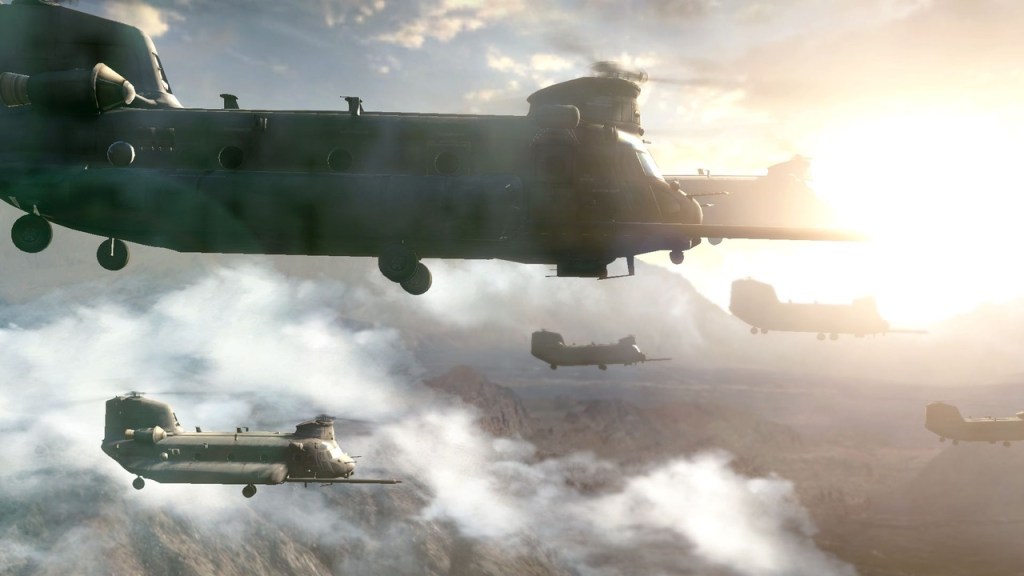
The Rangers enter the story and show a different facet of the war. (Source: neoseeker.com)

The only trump card the US have is the bigger weaponry. The player character is the light machine gunner of the squad, carrying a scoped machine gun with 200 rounds ready to fire. While it can pick off headshots of far away enemies its main purpose is suppressive fire, halting the enemy from gaining ground and allowing your own squad to push forward.

Talking of that machine gun, Medal of Honor has some of the most powerful sounding guns I’ve heard in an FPS. Every gun from the silenced pistols to the snipers, shotguns, and rifles, nearly every gun has an excellent “pew” to it. The machine gun is no different with a nice hefty bass giving the the constant ratta-tat-tat a visceral quality. Compared to the Call of Duty of the same time, Black Ops, in which every gun sounded like a toy pop-gun, Medal of Honor really has quality sound effects.

So the troops starting making their way to the OP clearing small villages of fighters and finding old relics of the Soviet invasion. It’s a nice nod to the real historical and political aspects of the location and possibly a history that players may not have known about.

I didn’t know much about the Soviet invasion into Afghanistan, but this throwaway line made me interested in learning more. Anyone interested should read Boys in Zinc by Svetlana Alexeivich as a great non-fiction work focussing on the soldiers and their families.
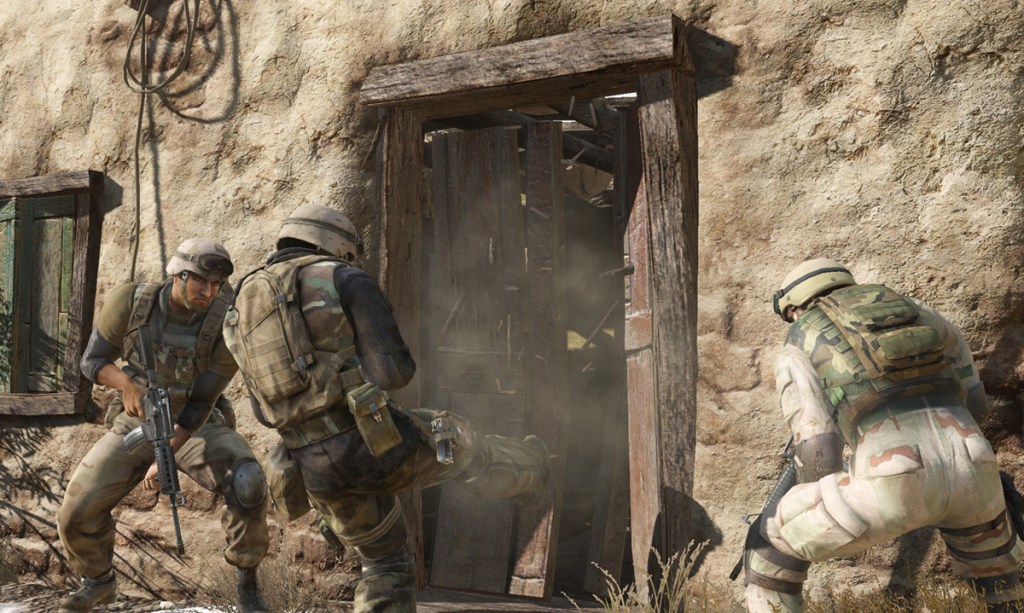
Door breaching was a new mechanic, developed further in the sequel.(Source: neoseeker.com)

The level peaks in two locations; first is a mounted heavy gun encampment that is keeping other US troops from securing their objective. The squad is tasked with storming the placement, but the player is told to hang back. Being the light machine gunner we must lay down suppressive fire so the other teammates can get close and mark it for an airstrike.

It’s a unique premise after the years and years of both Call of Duty and Medal of Honor making the player character be the sole warrior to defeat the enemy. Now you’re just working as a cog in a machine and is refreshing to see these different facets be included in the game.

Not to mention the gun placement sometimes turns on the player and can quickly degrade the cover you’re hiding behind meaning we have to continually move while trying to deliver suppressive fire.

When the gun placement is finally marked and the rockets rain down, earth is kicked up and the entire screen goes dark for a few seconds before the sun breaks through and all that is left is the haze of debris and dirt. It’s a fantastic close-range look at the destructive capabilities of modern artillery, but while the squad members marvel at the explosion they don’t cheer or whoop like frat boys seen in the previous year’s Modern Warfare 2.

The second peak is the end of the mission. While securing a landing spot for medical transport, the squad are rocked by an IED, an improvised explosive device. Surprisingly the entire squad survives, but the explosion draws the Taliban’s attention and quickly the four-man squad are facing overwhelming odds.

The squad taking refuge in the only cover at the location, a mud hut that slowly deteriorates with each bullet. The player is tasked with aiming just at the enemies with rockets, but soon Taliban fighters try to enter the hut and so the player has to switch between long range precision shots and short range reactive bursts.
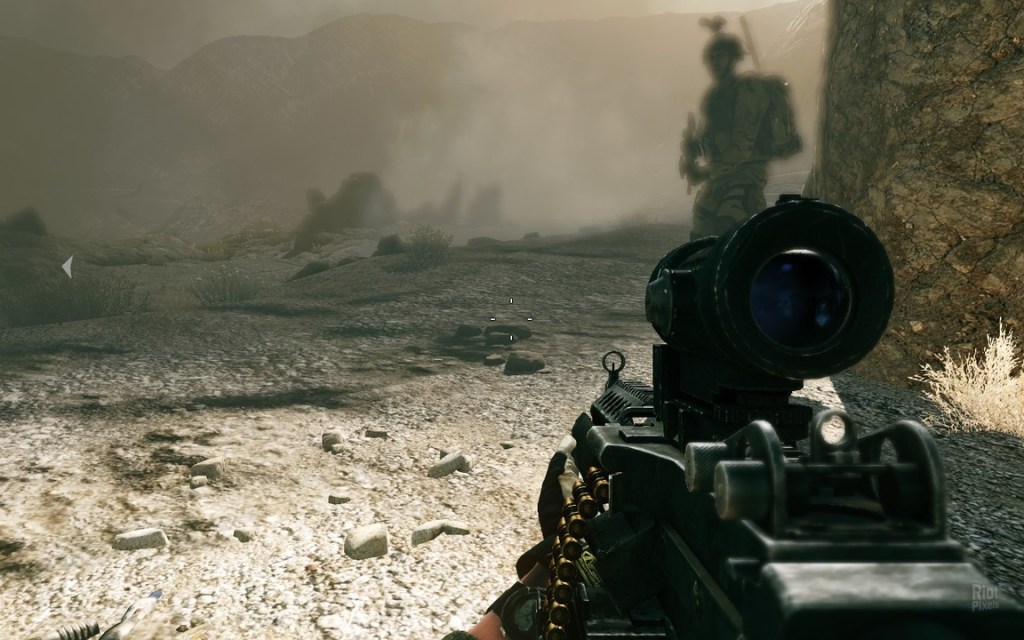
The haze kicked up from the air support. MoH does a great job at creating atmosphere (Source: riotpixels.com)

Over time your ammo stocks start to dwindle yet the onslaught never stops. You switch to your pistol and pick up random AKs from fighters that got too close and keep the wave back as long as you can. Your radio man is trying in vain to call for assistance, but eventually your squad leader tells him to stop. There is no way that help will get there in time.

Player characters have died before with Modern Warfare 2 featuring three iconic death scenes in gaming. Yet all were in “cutscene” mode, no agency from the player. Halo: Reach, released in the same year as Medal of Honor also had the player facing overwhelming odds and finally succumbing to their wounds.

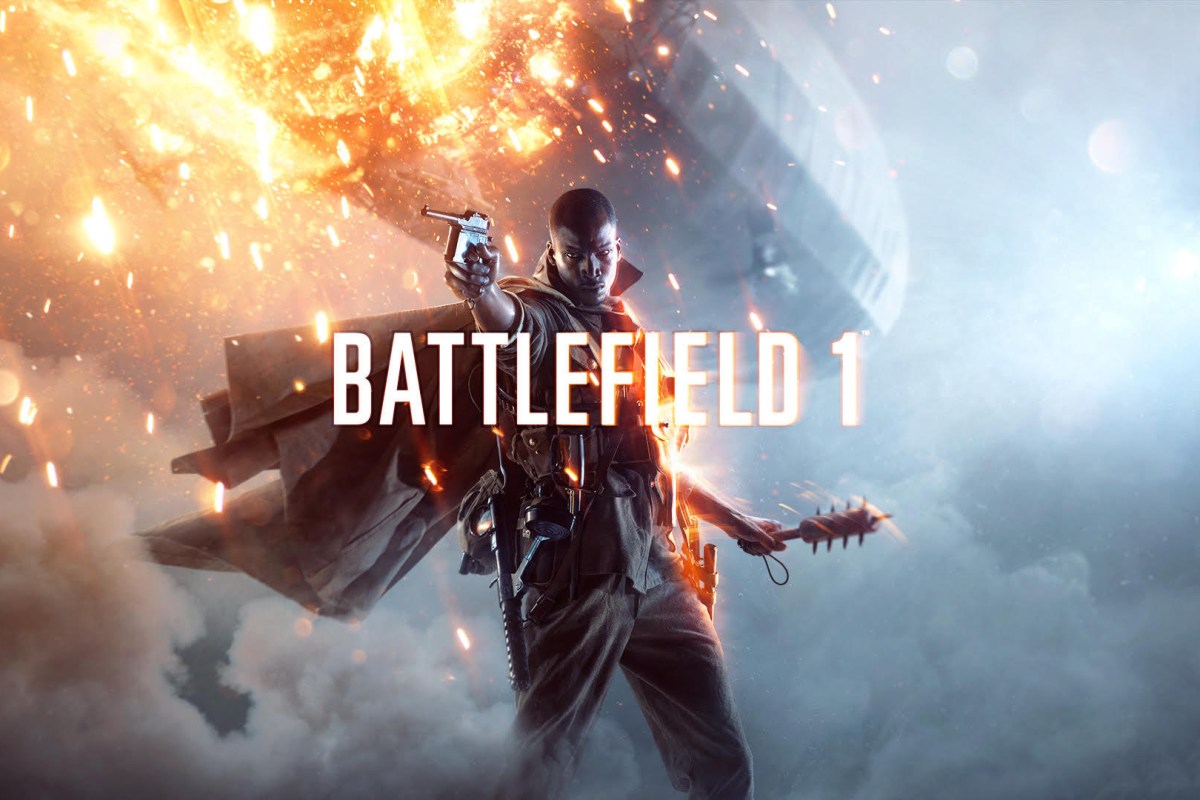
Another EA staple, Battlefield, would try something similar with its opening for Battlefield 1 (which I also wrote about).

The moment hangs there for a good few seconds, letting the player’s imagination fill in how the end will look like, how it will feel.

Then a rocket sails overhead and hits the oncoming Taliban fighters. More rockets fire off followed by heavy machine gun fire. Two Apache helicopters come in at the last moment to save your life and forcing the Taliban fighters to retreat.

It’s a great moment, holding long enough to think that all is lost to then see the helicopters in gameplay come overhead and seeing the Taliban chased off. The squad are more than entitled to cheer and whoop at this moment as we shift into the next mission…and into the seat of one of the Apaches.

The Apache mission is a great break from the on-foot sections. We only control the weapons system for the helicopter, but that allows the computer to perform some beautiful low-flying sweeps inches from the canyon floors, or breaking over a peak into a stunning landscape. You can feel the crisp air and the direct sun heat beating down on Afghanistan and from the air the geography looks amazing.
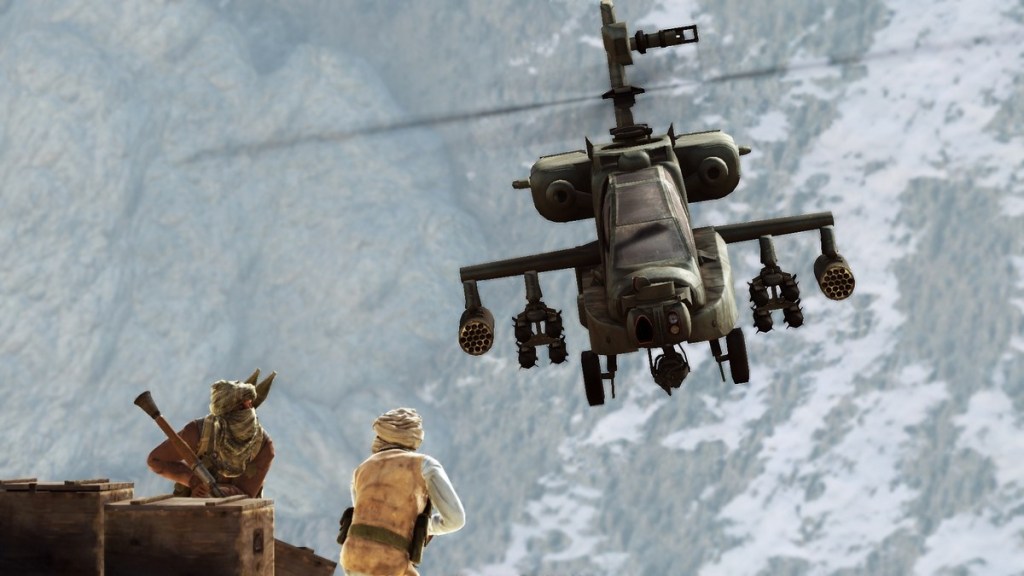
The Apache mission is a fun and action-packed sprint between the FPS missions. (Source: neoseeker.com)

CoD: Black Ops also had a helicopter mission giving the player complete control. Having played both of them for this retrospective I actually have to give it to Medal of Honor. The Black Ops helicopter run while fun at the start devolves into a comical amount of destruction. Medal of Honor’s Apache run is fast and fluid, striking at a few targets then moving on. They know they are outnumbered so they move quickly and strike hard, which is what an on-rails shooting segment should be.

As the Apaches finish up their mission and cross back over a ridge they notice just too late that there is an anti-aircraft gun aiming at them. As they brace for impact a shot rings out across the valley hitting the anti-aircraft gunner in the head and disabling the system.

The Apaches say thanks to whoever it was as we switch back to the Delta boys of Dusty and Deuce, sniper rifle smoking from their shot. I really like these level transitions, they give this sense of a fighting force who each have unique skills and being able to click together on the battlefield. Nearly every mission until the end includes these transitions and they really add something to the narrative.

Back to Dusty and Deuce who are slowly and methodically taking out mortar encampments and foxholes. It’s alright, but there is not really any skill to it, no holding of the breath and only slight wind movement to factor in.

The mission does heighten up though when nearby claymores go off, indicating to Dusty and Deuce that enemies are closing in around them. Switching to your sub-machine gun, Dusty tells you to strike when the time is right. You choose when you starting firing, letting enemies get closer for easier shots or far away for better cover.

Dusty realises the forces are going in a different direction so Deuce pulls out the sniper again and sees Mother, Voodoo, Preacher, and Rabbit also being overrun by Taliban fighters. Deuce begins to pick off enemies and this time the sniping is relatively fun. It’s moving targets, covering our allies, it feels urgent and conveys it well.
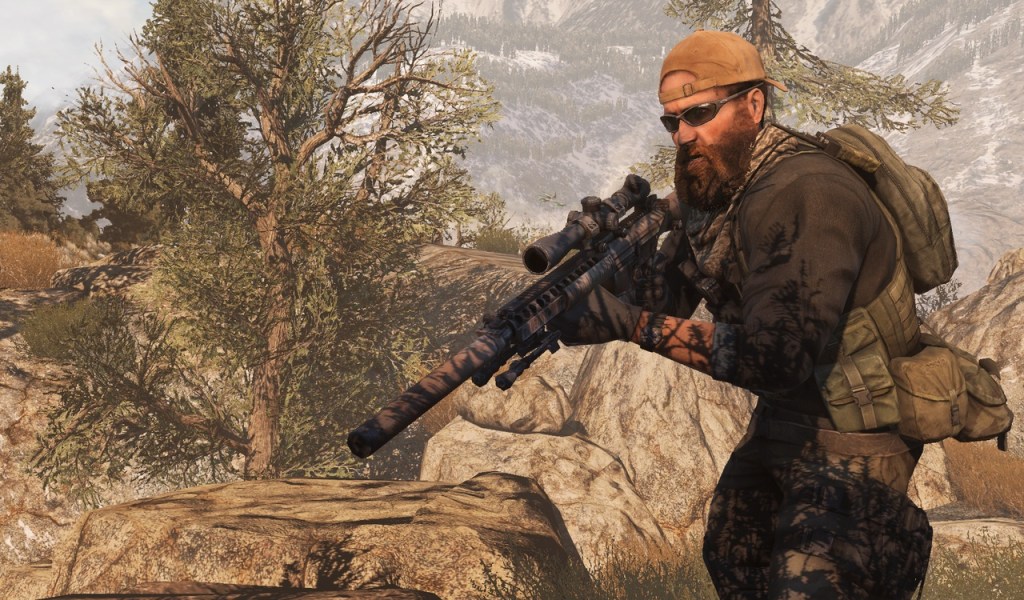
Dusty and Deuce get ready to ambush patrolling enemies. (Source: neoseeker.com)

Another excellent transition into the next mission, where we travel across the canyon into the shoes of Rabbit as the rest of the team make their controlled retreat.

As there are only four member of the team, the squad has to “pepper-pot”; lay down suppressive fire and wait until their teammate is in a position to take over, then turn around and sprint down the mountain until they can take over again. It’s a great sequence, all player driven, either the enemy overwhelms you or the NPCs say you’re ready to move and I would be happy seeing it replicated in other games.

The team continue to retreat down the hill, while helicopters and bombing runs try to keep the Taliban at bay. Yet the Taliban have brought RPGs with them, so repeat runs are called off, leaving Neptune at their mercy.

Voodoo dislocates his shoulder in a fall so he and Rabbit swaps weapons, Rabbit taking the M60 machine gun. The new gun changes the rules of engagement; with the previous rifle it was tight shot placement, but the M60 allows for more liberal covering, similar to the Rangers a few missions ago.

A Chinook lands to collect the team before they are overrun. While Mother and Rabbit make their way onto the helicopter, it is struck by RPG fire and takes off early leaving Voodoo and Preacher behind.

It’s a great scene, all done in-engine, watching the two small dots of Voodoo and Preacher retreating while seeing the never-ending stream of Taliban fighters following after them, Mother shouting at the pilot to turn around.
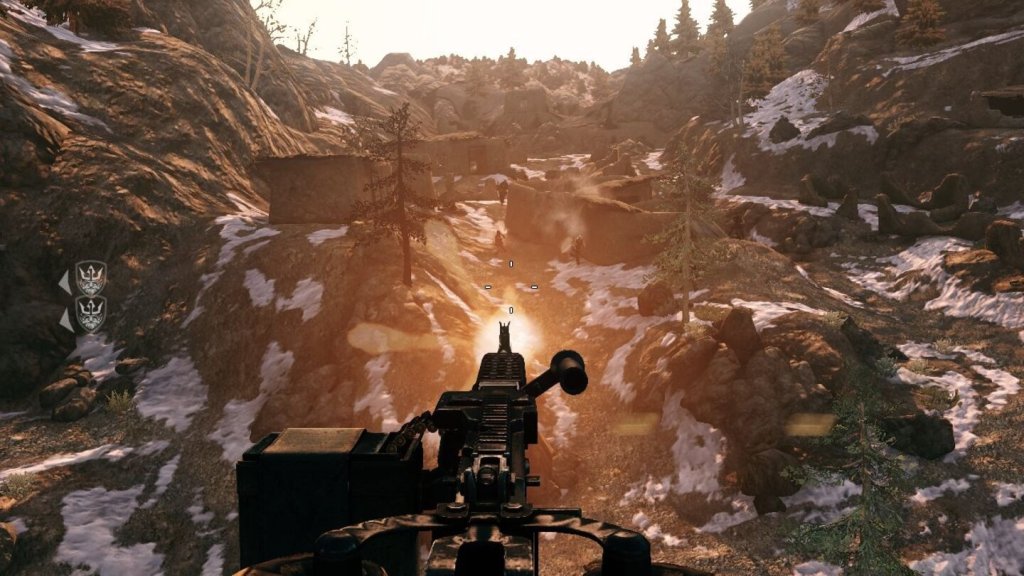
Rabbit keeps the enemy pinned down to give Voodoo and Preacher (left) enough time to escape (Source: gamestar.de)

Mother and Rabbit are ordered back to base by the General but the two disregard and reinsert at the top of the mountain side, playing the same cutscene from the opening.

The screen flashes up “Day 2”, a little reminder that the team has been on-the-go for over 24 hours at this point. It harkens back to the numbered days in CoD campaigns, but if the timestamps at the beginning of levels had also included the day, it might have worked. The fact it only says “Day 2” now, two levels before the end, it feels like an afterthought, needing to place it somewhere in the story but not actually placing it with purpose.

Back to the gameplay, the helicopter starts taking fire and Mother and Rabbit have to jump out while the Chinook goes down. Jumping from the helicopter takes its toll on Rabbit though. He coughs up some blood as he stumbles into cover with only his knife and pistol as his weapons, his night-vision goggles damaged and displaying static every few seconds.

The stumble of Rabbit, which I thought to be part of the cutscene is actually the movement speed of the level, changing how players react. It’s novel and interesting playing a wounded solider having to continue into a firefight.

Atmosphere in this level is top-notch. The howling wind, the dark rock formations, the stuck-solid snow and ice on the ground with limited weapons and poor visibility, the game does a tremendous job of making the player feel totally isolated and alone. CoD at the time had never really done a mission like this; being hunted yet sticking to slow movement and silence, so props to MoH for giving us a unique level.
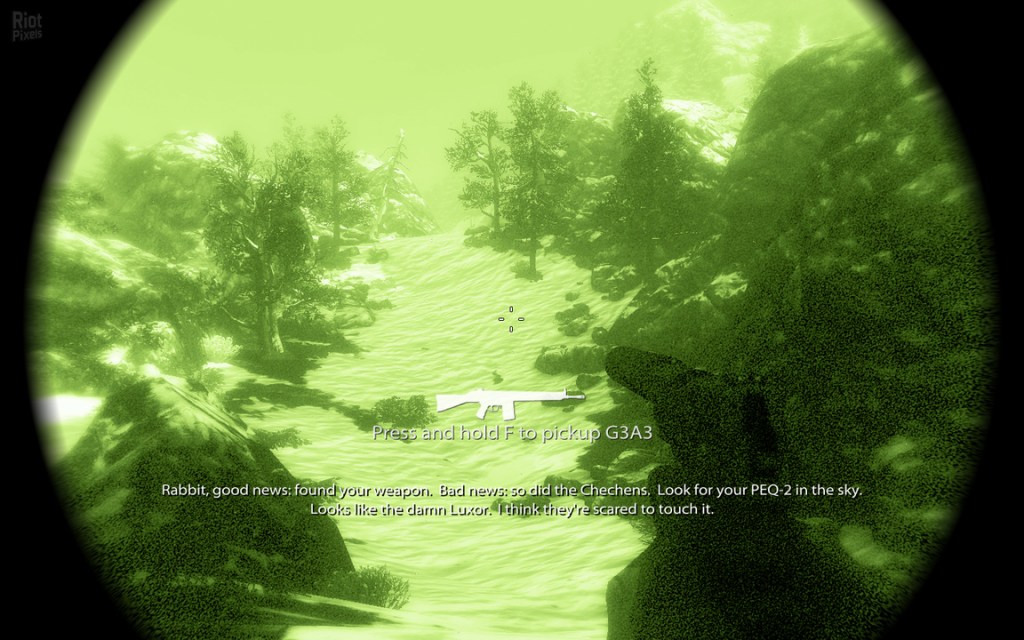
MoH makes great use of night vision throughout the game. (Source: riotpixels.com)

Rabbit starts to make his way towards the summit, knifing people here, silently shooting others there. He soon regroups with Mother and the two sneak by squads of fighters. They eventually get spotted and Rabbit has to resort to taking enemy weapons to keep himself stocked on ammo. Again, something new, having depleted ammo stocks and having to keep your eyes open for new weapons all while taking fire.

Rabbit accidentally sets off an IED, leading Mother to drag him away to cover while Rabbit gives covering fire. Obviously inspired by the chaotic ending of MW2’s “Loose Ends” mission, this one manages to keep pace with the more bombastic CoD. Small fires dot the landscape, seeing enemy silhouettes breaking through the smoke, only using the pistol, it’s all great stuff.

The two members of Neptune have to retreat, dropping their weapons and sprinting down a mountain path. They reach a dead-end, and decide to trade “broken bones for bullets”, jumping off the mountain in the hopes of escaping the Taliban. The two throw themselves into the air, tumbling down and sadly being quickly surrounded by Taliban fighters and taken away.

As the duo are led away the base can only watch on video link via a drone. We see one more call with the US-based General, who is mad that Neptune disobeyed orders despite the Colonel at the base trying to explain their actions.

The Colonel wants to send in the Rangers as back-up, but the General is adamant that no other forces head up there. The argument gets heated until a communications officer hangs up the video call with the General (claiming “network interference”), leaving the Colonel to order the Rangers up the mountain after Rabbit and Mother.

It’s all very Hollywood and I’m sure if anyone actually did this in real-life they would be court-martialled within a second, but as a way to get us into the mood of saving our boys, I’ll let it pass.

Back in the boots of Ranger Dante Adams for the final mission and our infiltration to the top of the mountain goes as well as our drop off into the wadi. The Chinook takes on fire, bullets shredding the inside of the aircraft and killing several team members.

The helicopter crashes and we are dragged to our feet by our Sergeant, telling us to man the door-mounted chaingun. It’s a short but fun segment blasting away the enemy forces, the gunfire actually felling trees due to the power and rate of bullets being fired.

We are soon told to move and continue the fight outside. It’s very reminiscent of the previous Ranger mission, of being hopelessly outmanned and hoping that tactics and weaponry can solve the imbalance.
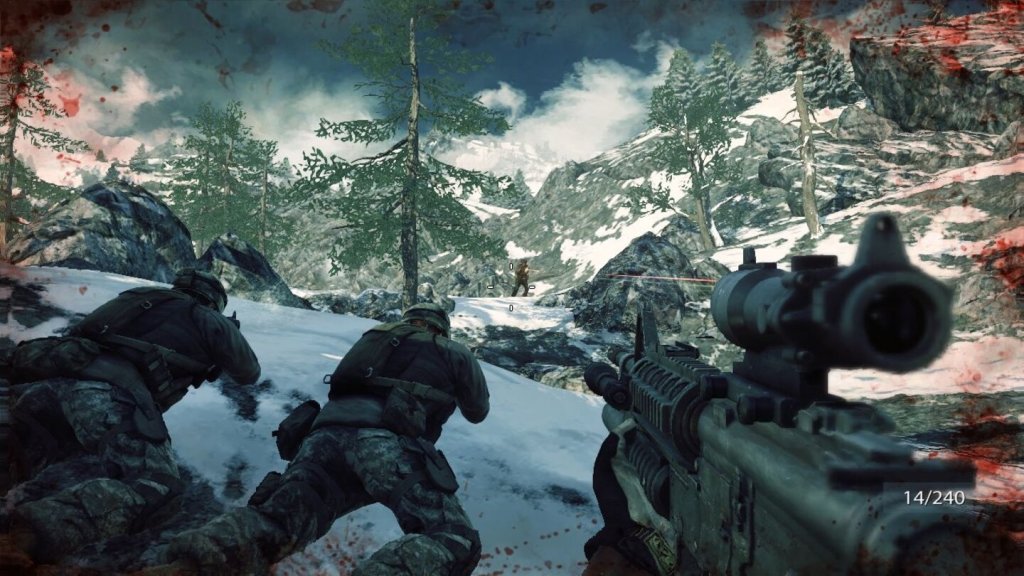
The Rangers facing near-overwhelming opposition in final level of the game. (Source: gamestar.de)

One of the other soldiers asks about the SEALs and the Sergeant responds, “We need to unfuck this situation first.” The dialogue for the game hasn’t been terrible, nothing meme-worthy nor truly memorable, but this line is great; it’s believable and shows the differences between the calculated SEALs and the reactionary Rangers.

As we are escorted out the helicopter, the music begins a slow and mournful violin melody underscored by sad cellos and dark double bass’. The music is composed by Ramin Djawadi, composer for System Shock 2, Thief II, Gears of War 4 and 5, and most famously Game of Thrones, for which he won two Emmys.

Early Medal of Honor and Call of Duty games usually had great orchestral ensembles, military-style brass and drums with evocative strings and woodwind emulating the soundtrack to Steven Spielberg’s Saving Private Ryan (the film that inspired the whole genre as Spielberg and his game company, Dreamworks Interactive, created Medal of Honor with Spielberg writing the storyline. Danger Close, the developer of MoH 2010, is a rebranded Dreamworks Interactive).

CoD’s soundtracks became very modern with heavy use of synths, drums, and in the case of World at War, anachronistic electric guitars and voice modulation.

It could have been easy for Medal of Honor to also take this approach but Djawadi goes mainly with the classic orchestral style instead. The score’s best moments are these sporadic yet beautiful violins solos like the one that accompanies us up the mountain. Another one plays during the previous Ranger mission before the Apaches come to the rescue.

It perfectly envisions the lone soldier; enduring battles and injuries, the rise and fall of combat, the thin air at the mountain top, and is a wonderful touch as the mission continues.
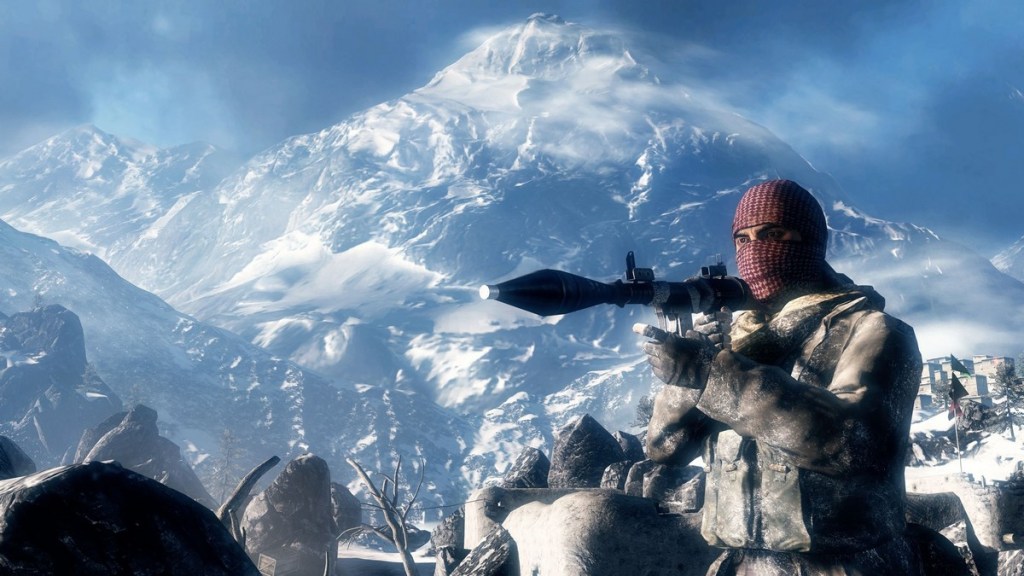
As the mission continues the Taliban’s fiercest fighters come to stop the Rangers. (Source: neoseeker.com)

As the team make their way up the mountain they find a foxhole and split up. The radio man and another private head back to the helicopter for more reinforcements and the sergeant and Adams decide to head into the foxhole.

Despite this being the final level and having made my way through all sorts of different landscapes in the game, entering the foxhole actually made me anxious and I think its all down to playing as the Rangers.

When you play as a member of the SEALs you know they are the best of the best. They run towards danger and and experts at flushing out enemies and putting them down quickly.

Rangers, or at least general boots-on-the-ground soldiers, it’s always felt more like a general securing-the-area/mass invasion force, using sheer numbers rather than skill to overwhelm the opposition. An example would be the mission “Charlie Don’t Surf” from CoD4. The US force is not the highly trained SAS, but it doesn’t matter because they use their hundreds of members to pacify their objectives.

So back to Medal of Honor, clearing these foxholes should be a job for the SEALs. Actually, we have cleared cave systems with them in an earlier mission. But since all we have at the present moment are the Rangers, they ready themselves to go in and clear it out.

The sergeant, Patterson (a nod to the playable character in the original Medal of Honor) is constantly telling Adams to keep up, repeating commands about shot placement and movement. It made me think that the Rangers know they are out of their depth and so fall back on their basic training to get through.

And Dante Adams, our player character, is only a Private rank. He’s probably had a few missions, but this could literally be his second time in combat. He could be an eighteen-year-old kid from Kansas who joined up to “put a boot in Bin Laden” and here he is going into a possible death trap.

It was a great and emotive feeling and I wish the game had done more of it. Have some down time in the base, meet your comrades, read a letter from home, something else to make these characters come alive.

Back to the actual gameplay, Patterson and Adams clear out the cave and find an exit on the other side where they meet Voodoo and Preacher also following the trail of Mother and Rabbit. Again, it’s a great scene with nice details being the different language used, (Patterson calls out “friendlies” and Voodoo calls out “blue” to indicate not to shoot).
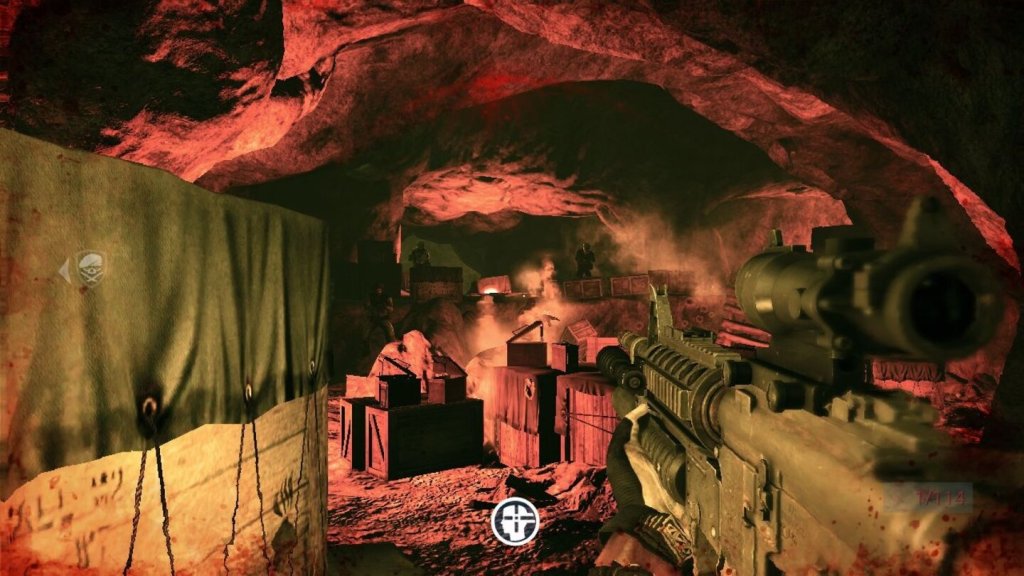
Dante Adams in the cave system, one of the top highlights in the game. (Source: gamestar.de)

The four make a impromptu team to head towards Mother and Rabbit and it’s a highlight of the game. It’s a multi-pathed trek up the mountain top, the sun glistening off the snow, Voodoo becomes interim team leader, he and Preacher calling out targets for Patterson and Adams.

A minute ago we were relying on Patterson to get us through tough times (the cave system), now he can rely on Voodoo and Preacher to protect him. Another nice bit of character is Voodoo calling them “sergeant” and “specialist”. It would have been easy to use their names or even slightly insulting languages like the other Rangers did; “ladies”, “losers”, “you two”. Instead, he falls back to the rank and role, a mark of respect despite he and Preacher obviously being the leaders of the operation.

The team finishes the campaign by finding Mother and Rabbit in another cave system with the final cutscene playing from Rabbit’s first-person perspective.

The team carries Rabbit back down the mountain to the downed helicopter that the Rangers arrived in. The Rangers mill about; they know they are out of their depth and the SEALs will say nothing, so they stand around remarking on Rabbit’s condition (“this carbon is really tough” says Pvt. Hernandez). Even Dante Adams leans in to say, “Hang in there, we got you.”

The SEALs try and stabilise Rabbit with Voodoo displaying uncharacteristic softness and tender care, repeatedly telling Rabbit he’s “gonna be okay”. It’s a great scene to show Voodoo’s range. Most of the campaign he’s very into killing people (sometimes brutally with his tomahawk) so it’s refreshing to see the manly SEALs displaying some emotional vulnerability.

Despite calling for a quick extraction the air force doesn’t have any transport standing by for the team, having to wait for birds to come from further away. Both Mother and Voodoo voice their issues explaining that Rabbit is going to die if he doesn’t get care soon as Rabbit slips in and out of consciousness.

As the birds finally fly overhead, Rabbit’s vision blurs and we transition to the inside of the helicopter. The radio call says “eight heroes aboard”, but there are only three SEALs sat at the back of the helicopter. Their brother-in-arms lies at their feet.

They watch on as fast jets bomb the mountain hideout to kingdom come, before Preacher reaches down and fishes out Rabbit’s lucky charm (obviously a rabbit’s foot, but the first time we ever see it), before agreeing with Mother that “this isn’t how it ends.”

And then the game ends.

Well, not immediately. There is a six paragraph endnote thanking servicemen and women of past and present for defending freedom and highlighting the secretive and violent work of the Special Forces. It then cuts to a short teaser for the next game (an out-of-context scene two guys sitting at a cafe and nothing else) and then credits roll.
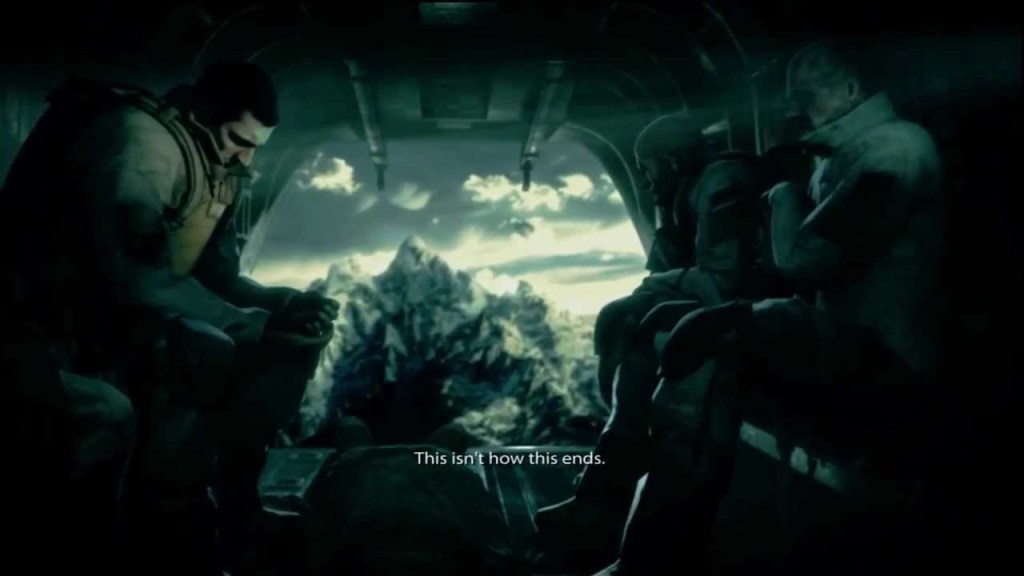
“This isn’t how this ends.” I assure you it does. (Source: YouTube, MichaelXboxEvolved)

The first time I played Call of Duty 4: Modern Warfare I distinctly remember getting weirded out by its depiction of war and how cool it thought it all was. Was it disrespectful in reflecting very real and recent events or was it just cold?

With age I see it is the latter and the graphics, sound, and content give it high-quality verisimilitude, confidently depicting the war some had experienced or at least seen nightly on the news screens. It highlighted the intensity yet never stepped into overblown outlandishness.

Medal of Honor carries that torch. It’s what suckered me into giving it a go. I was never an online gamer, so a single-player story was all I had to look forward to. That initial elevator pitch of real-life stories in Afghanistan, of authenticity, it sold the concept to me. Fifteen years on, it’ll still be the first thing that comes to mind when thinking of the game.

MoH follows CoD4’s blueprints throughout the game; its heroes are soft-spoken and rarely depicted as frat-bro stereotypes. Tasking players as part of the team, sometimes point-man, sometimes support. Giving players overpowered weapons to destroy their enemies, but then making them fearful of ambushes and having to crawl around the opposition.

MoH is calmer than Call of Duty: Black Ops or Battlefield: Bad Company 2, its direct competitors at the time. But I think that calmness, a lot of players felt it was lacking exciting gameplay. CoD4 spawned an entire genre that in turn cannibalised it. So when Medal of Honor appeared three years after the hype train it felt like the most generic of all FPSes from the seventh generation.

And to be honest when I first started replaying, that was my thought. There was a moment where I asked myself “was this worth it?” Would going through this game give me anything new that I hadn’t seen before? And luckily that’s when the Rangers came in. It’s a shame that the best missions are towards the end because any player who is not 100% wanting to see the credits will probably give up before then.
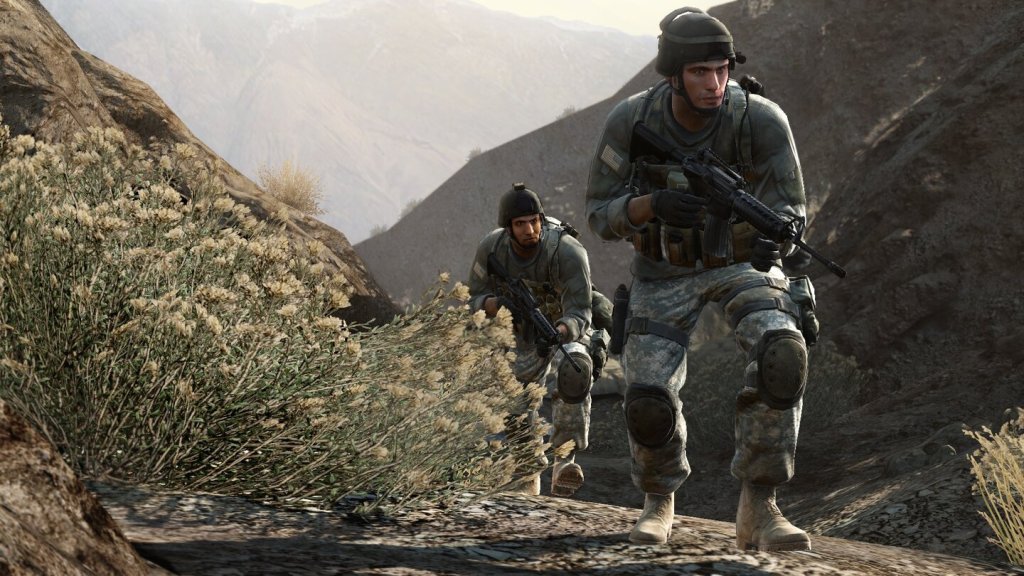
A full game of the Rangers with new recruits experiencing combat for the first time could be great and very unique story in the genre. (Source: gamestar.de)

Beyond 2010, Medal of Honor only released two games in the following ten years. 2012 saw the release of a direct sequel, Medal of Honor: Warfighter, a name that has been memed to hell and back and a game that really doesn’t have much going for it.

Players take control of Preacher (the only member of Neptune without any characterisation in 2010) and weaves a tale of both the personal struggles of married life with a convoluted “follow-the-trail” storyline.

It looks stunning with photorealistic models (apart from Preacher’s daughter, who has a weird haze around her face) and features locations such as a flooded city in the Philippines, abandoned Winter Olympics arenas in Sarajevo, and the bustling streets of Pakistan, all powered by Frostbite 2.0.  

But the story…I will give it props that actual active Navy SEALs were brought it to lend it authenticity (for which they were later disciplined for revealing classified information), but it’s a non-linear mess with the most tenuous of links between locations and missions.

The second game, Medal of Honor: Above and Beyond, was released in 2020 for VR devices by Respawn Entertainment, being a major seller according to Steam and one of the most expensive VR productions according to Oculus, but mixed critical reception.

Danger Close were the developers of Medal of Honor and its sequel Warfighter. Previously named Dreamworks Interactive and EA Los Angeles, Medal of Honor was only their second game as the new outfit.

Then three months after the release of Warfighter, EA pulled Medal of Honor “out of rotation” and closed Danger Close, a sad end to a genre-defining studio. Once a market and creative leader, Medal of Honor had fallen and didn’t make its way back into the mainstream.
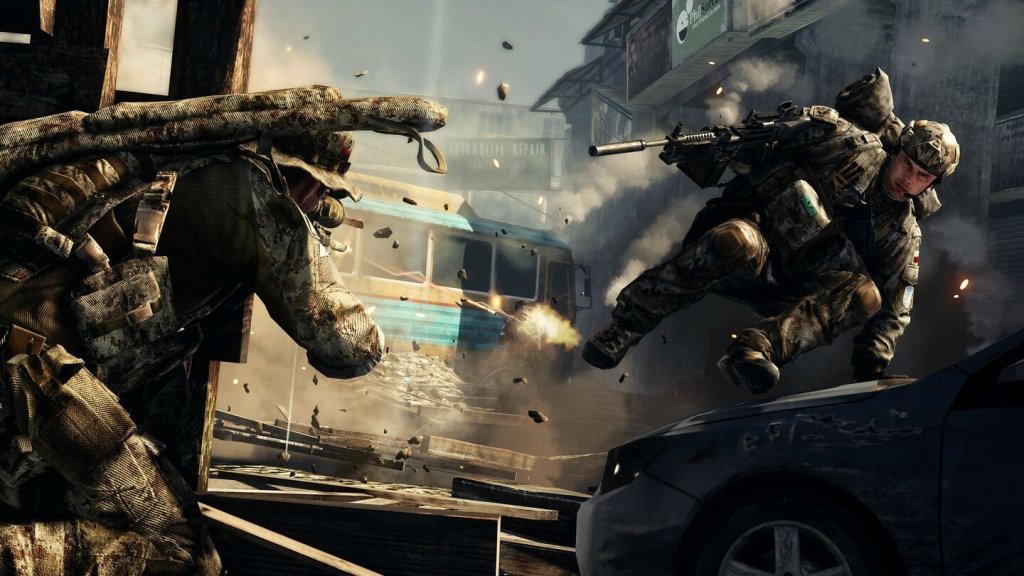
Gunfire, explosions, and intrigue, yet none of it gels well in Warfighter. (Source: gamepro.de)

One wonders if it will ever come back. CoD has kept reinventing itself with titles that could be described as high-budget sci-fi epics, avant-garde Cold War thrillers, and buddy-cop-feminist-alt-history gems.

Battlefield has run the gamut from beloved to boycotted within one sequel (Battlefield 1 to Battlefield V).

Medal of Honor released at the wrong time. A few years earlier, it might have caught the wave. A few years later it could have taken both CoD and Battlefield as they were languishing in creative mires. But in 2010, CoD was king and MoH couldn’t stand toe-to-toe.

It’s sad to not see Medal of Honor around. Modern Warfare CoD has been mocked for its stories, all four-dimensional chess battles between Captain Price and Makarov. Battlefield’s single player is always too short and sometimes neglected all together in service to the multiplayer.

There is space there for a strong narrative-driven shooter, and Medal of Honor with its focus on true stories and real-life events could corner a section of the market that looks for something a little deeper in a shooter.

I respect Medal of Honor 2010. It did something new and creative in one of the most saturated genres at the time and that second half has some of the best levels I’ve played in a military FPS.

If you decide to pick it up, give it a chance, and it might surprise you into enjoyment too.

Banner Photo Source: YouTube, “The Virtual Commute”
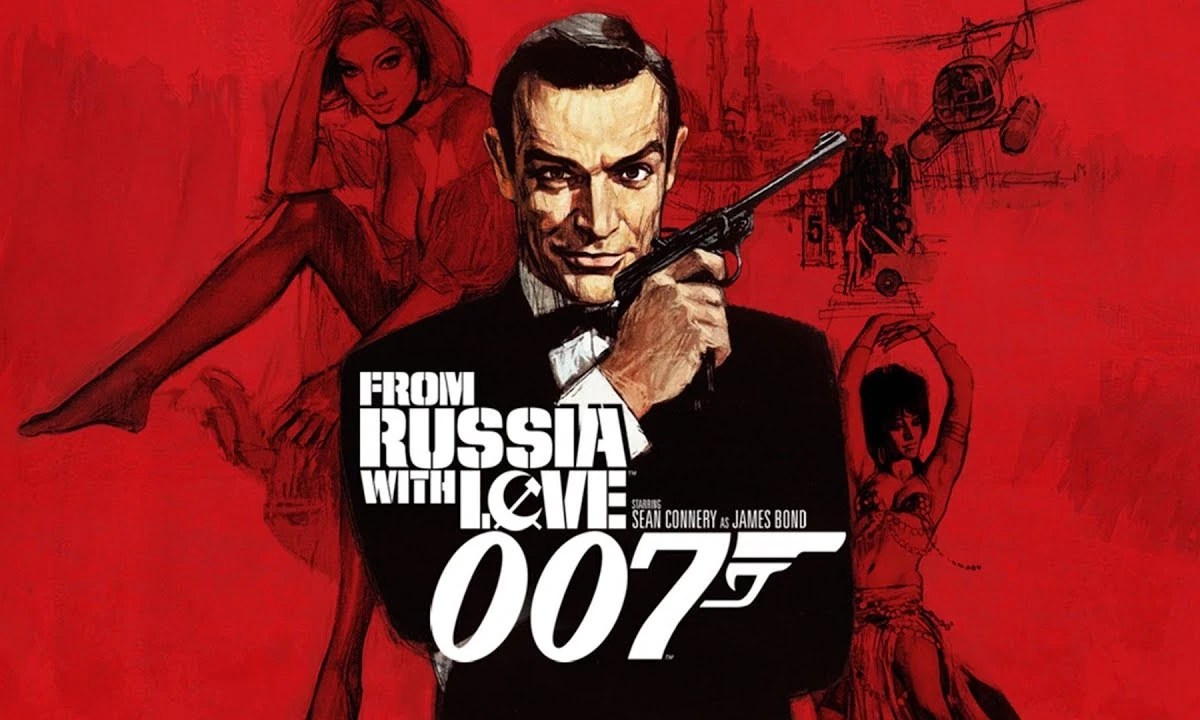
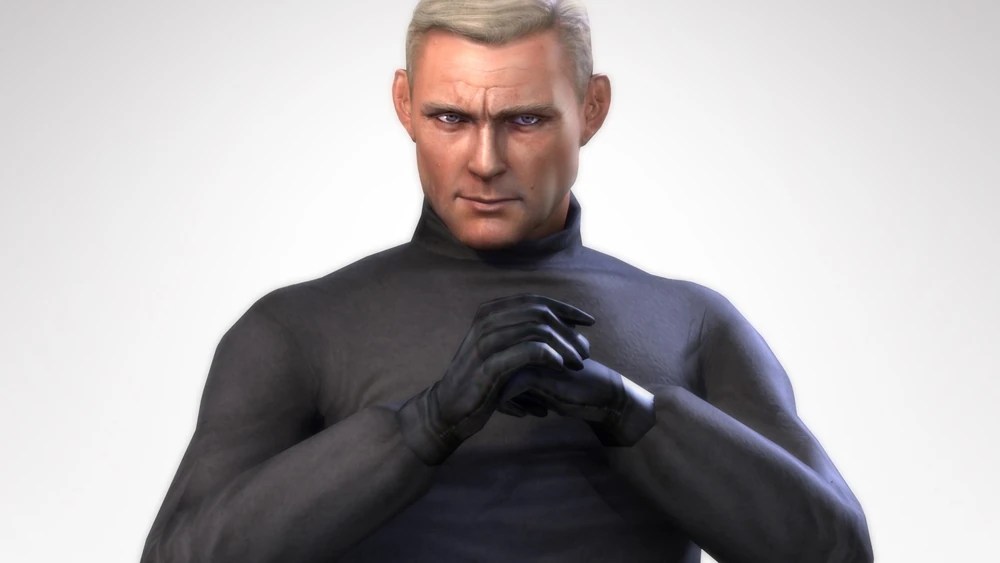
The Sean Connery 007 Game

With the announcement in 2020 that IO Interactive (makers of Hitman) were working on a James Bond video game, I became curious about the past games of 007.

A lot of these games, Nightfire, Everything or Nothing, even the poorly received Goldeneye: Rogue Agent, were staples of my gaming childhood.

I hadn’t played these games in fifteen to twenty years and there was a dual sense of familiarity and moments lost to memory when I went back to play them.

But one game in the back catalogue of James Bond really took me by surprise. Even now, looking back at the games that come before and after, it seems like the odd-one-out, a possible start to an entirely new franchise.

In 2005, Electronic Arts, creators of the 007 games, were in a bit of a jam. Pierce Brosnan, the main lead in the past four Bond films and of the game Everything or Nothing, had been let go from the role. EA still had a license to develop 007 games but they had no 007.

While one of their efforts in 2004 put the player in the role of a Bond villain (Goldeneye: Rogue Agent), in 2005 they took a remarkable leap of courage and got another actor for the role of James Bond…Sean Connery.

Yes, 2005 saw the release of Sean Connery’s video game debut, From Russia With Love.

Red Wine with Fish – From Russia with Love: The Game

It’s very strange looking at the entire filmography of James Bond and thinking From Russia with Love would be chosen to be a video game. Even Sean Connery’s later 007 films, Goldfinger, Thunderball and You Only Live Twice are much stronger on the action and could deliver bigger set pieces.

From Russia with Love, while being an excellent film (usually ranked high in fan ratings and being Sean Connery’s favourite) is much more of a slow-burn thriller than an action film, with large parts of the film being set on smoky Istanbul streets and Bond using stealth and subterfuge rather than blasting baddies away with a gun.

According to Executive Producer at EA, Glen Schofield, the film was chosen because “it’s one of the more popular films”. It makes sense, and as a name, From Russia with Love has the same association as Casino Royale or The Spy Who Loved Me, so ingrained in culture that even if you have never seen a Bond film you could probably associate the title with him.

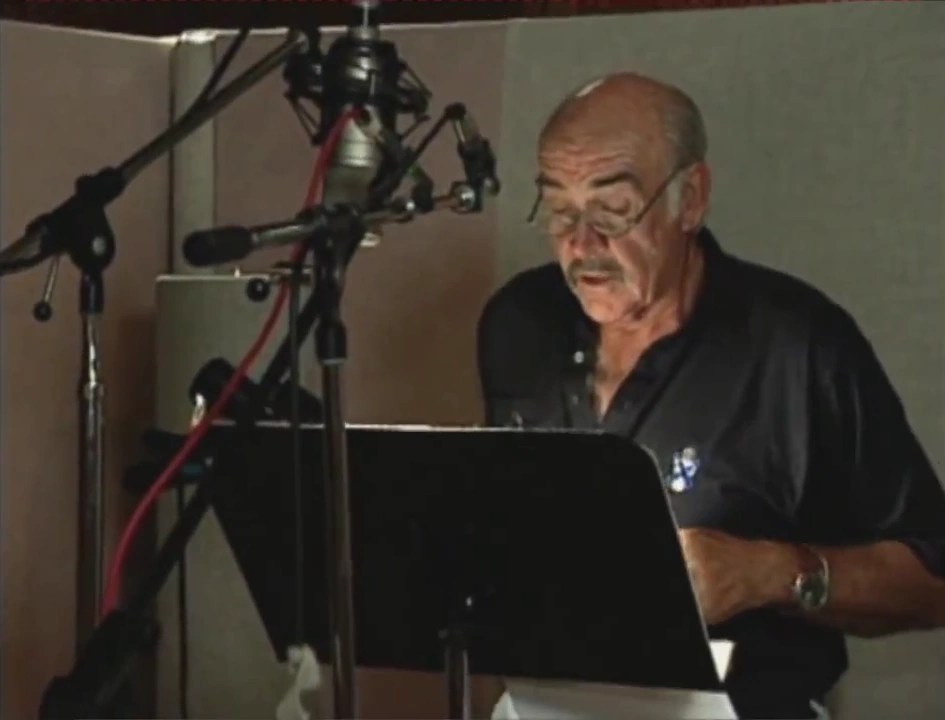
And yes, the other strange thing being Sir Sean Connery is on voice acting duties for 007. These aren’t clips from the film or a soundalike, it’s the man who got so fed up with the role he once said, “I have always hated that damned James Bond, I’d like to kill him.”

Sean Connery, recording his lines from his home in the Bahamas. (Source: jamesbond.fandom)

But Sean Connery decided to return, partly because of his love of the film, partly because his grandkids were big fans of video games, and that it was a whole new and interesting creative vision.

In the lead up to the game, Connery said, “As an artist, I see this as another way to explore the creative process. Video games are an extremely popular form of entertainment today, and I am looking forward to seeing how it all fits together”.

And in fact, it was a bit of a different creative process than the film. EA described the project as a “director’s cut”, expanding on the action and story of the film. Only eight of the fourteen levels can be tied directly to the original and nearly every action set piece ramps up the enemies and explosions.

I understand From Russia with Love was chosen for name recognition, but there is enough new material here that could have been a wholly original Bond story.

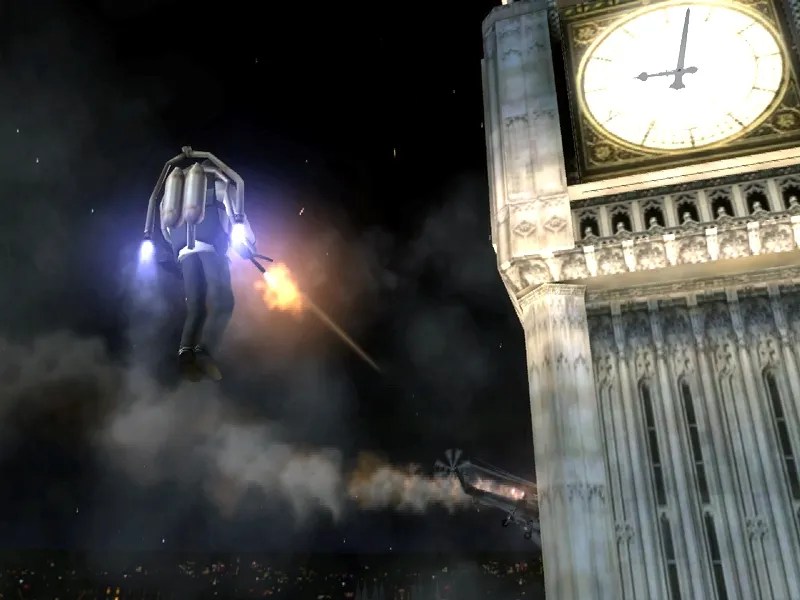
The game delivers its own pre-title sequence, of 007 fighting terrorists at the UK Parliament and protecting the Prime Minister’s daughter (surprisingly portrayed by pop star Natasha Bedingfield). It’s an exciting and explosive start to the game, watching Connery take down baddies with his classic silenced pistol, leaping across chandeliers, and finally climbing onto the roof, where he commandeers a jetpack and fights enemy helicopters around Big Ben.

The first if many jetpack rides in the game, with huge arenas for destruction (Source: eurogamer.net)

Speaking of the jetpack, a few of the non-FRWL levels are based on later Connery films, and fan-favourite vehicles such as the gadget-filled Aston Martin DB5 from Goldfinger and jetpack from Thunderball appear throughout. The final mission is Bond dismantling the villain’s base inside an island volcano, taking the setting from his fifth film, You Only Live Twice.

Alongside the items and design choices taken from the 1960s, a lot of Connery’s acting quirks make it into the game.

There is a quote attributed to Dana Broccoli, wife of the 007 film producer Cubby Broccoli. When they were first casting for the role of James Bond, after Sean Connery left the audition the producers weren’t too sure on him. But Cubby’s wife Dana convinced them, saying that Connery, “moves like a panther”. He’s confident, measured, quietly powerful. I feel the animators really went to great lengths to capture that essence.

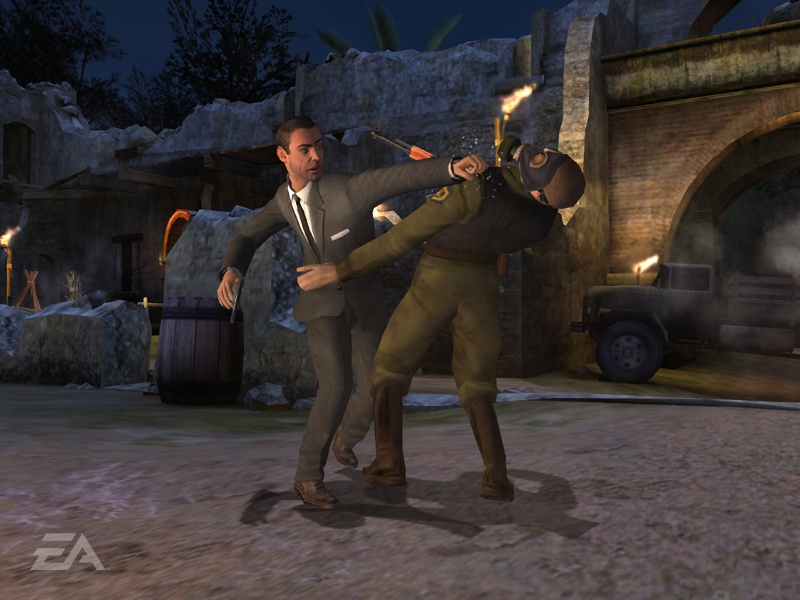
They way the character runs at a constant beat, the slight body tilt while strafing, holding a machine gun in one hand and braced against his hip, the judo roll to cover ground quickly or dodge incoming fire, it’s all fluid and conveys the idea that this is man who is confident in his abilities as a secret agent.

The designers also talked about much detail they went into their animations, such as modelling how Connery would hold his gun in the films, as well as in his fighting style. Connery’s Bond was more of a grappler, throwing enemies to the ground or dealing them a swift Judo chop, which was added to the game.

Each move is mo-capped excellently, with Connery using several Judo throws (Source: imdb.com)

The game takes the standard third-person shooter conventions of the time. Cover mechanics, lock-on shooting, it’s smooth in animation and snappy in its combat, putting greater emphasis on character movement that on shot placement. One article I read in research compared gameplay to the film series John Wick and I definitely see the comparison.

One facet of the combat I really like is creating cover. If Bond is in a room with a table, he can knock it over and automatically ducks behind it. It’s a nice touch and feels very Bond-like.

And since the game is primarily a third-person-shooter, we get to enjoy the highly detailed model of Sean Connery throughout the game.

The model is a tremendous feat of artistic wizardry, incredibly detailed and expressive, all on the sixth console generation, machines not known for their technical power. It’s the perfect balance of facial scanning and artistic license.

One aspect of the game that I unexpectedly loved is the fashion of Bond. When exploring the levels, players can find outfits that Bond can wear.

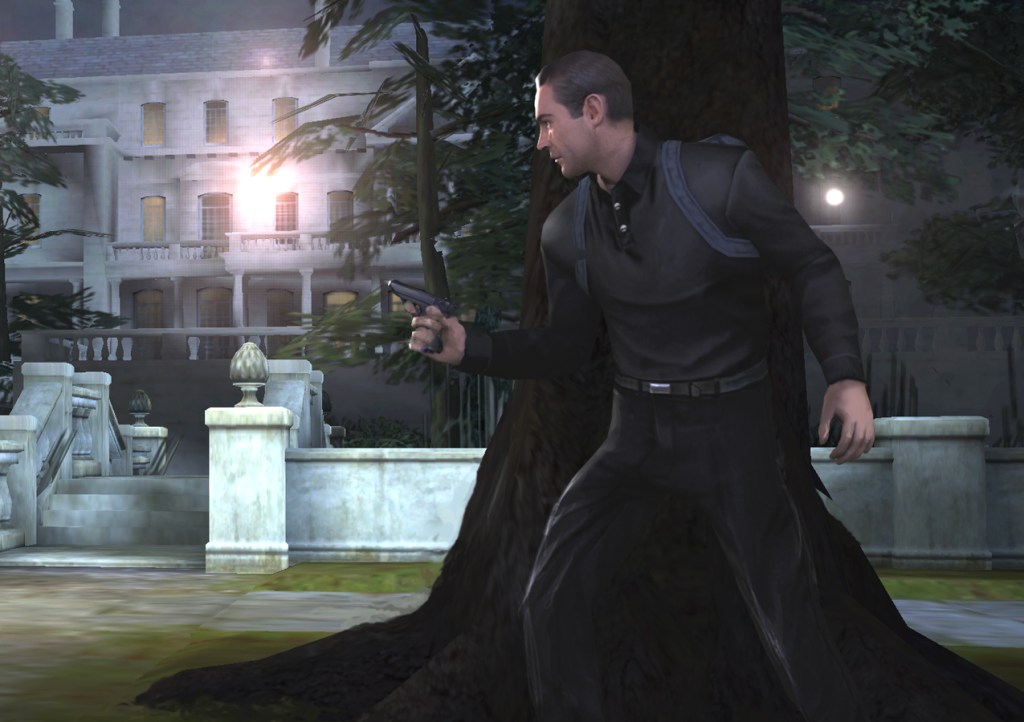
These are all outfits that Bond has worn at some point; his Black Tuxedo and Grey Suit from FRWL, his White Tuxedo and Stealth Suit from Goldfinger, and a Snow Suit (a possible reference to On Her Majesty’s Secret Service). At one point Bond has to wear an enemy uniform to sneak past patrols undetected.

None of these outfits give bonuses like a certain tuxedo giving more armour or whatever, but it’s a taste of role-playing, of getting to play our version of Bond.

A secret infiltration, the perfect opportunity for a stealth suit…or white tuxedo, you choose. (Source: denofgeek.com)

The role-playing aspects are further exemplified by the Upgrade Shop, ostensibly Q’s Workshop in MI6.

Earning points throughout the game, the player can invest in technology for their weapons and gadgets, improving their abilities as they go. As the player collects and keeps weapons and gadgets over the course of the entire game, the investments work almost like an RPG, finding your preferred way to play and upgrading with your favourite weapons.

It’s not a full RPG character builder such as putting skill points into being stealthy or non-lethal, but for the time this was new territory for Bond games.

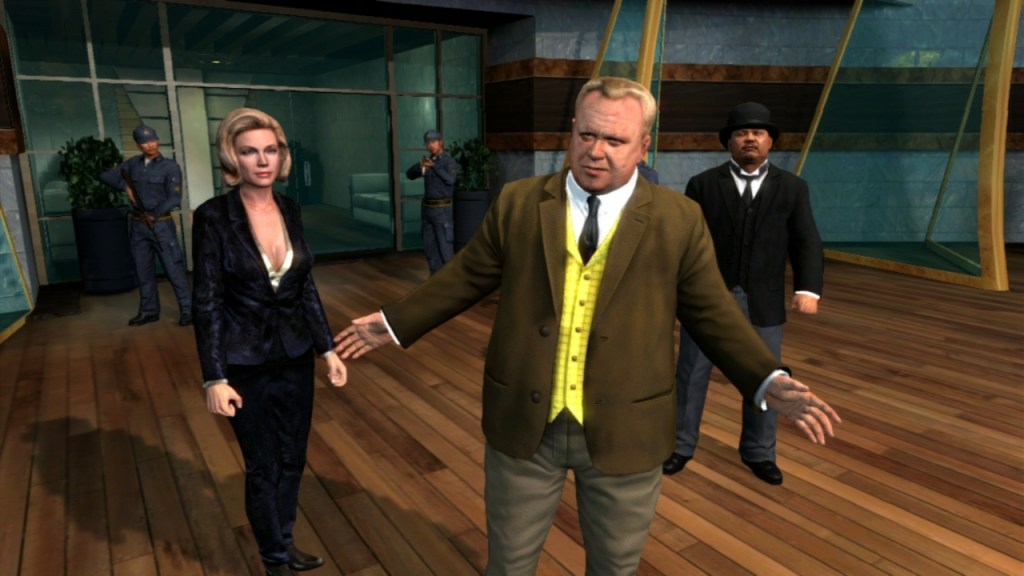
The upgrade points can also be used to unlock new characters in multiplayer. The multiplayer here is solely bad guys, almost like a SPECTRE civil war (seen in the previous game Goldeneye: Rogue Agent). It’s here where the the “director’s cut” approach to the film is full realised. Characters like Kronsteen and Morenzy, who are major players in the film but are absent from the game, are playable characters and modelled on the actors.

The cast of the film return in digital form, including Bond’s nemesis Red Grant, modelled on actor Robert Shaw, (Source: jamesbond.fandom)

Dr. No and Goldfinger show up (the villains in the previous and following films in the series), along with a few normal enemy soldiers, but there are three characters that only exist in multiplayer and do not appear in any media form, be it the film, original book, or the game story.

Three female characters, Leyla Karistarin (an exotic mercenary), Portia Lovejoy (a mercenary from the English upper class) and Zora Casonovic (a volatile Russian enforcer), each are given a simple one-line description and nothing more.

I’ve been obsessed with these characters for fifteen years; where did they come from? Were they meant for the game and never got added? Are they just to boost the male/female ratio in the multiplayer?

They have so much character to them just in their designs, I’m captivated with finding out more. I’ve been searching for images of them to show here, and I can’t. These character have no presence outside of the game. That is fascinating, that these visually striking characters are just there, it speaks to a care and dedication for the creative work.

Really, that care and dedication is emblematic of the entire game. Based on a film over forty years old, tweaking aspects, adding dashes of modernity, yet staying true to the basic beats and themes of the story, I’m beguiled by the fact that this thing actually got MADE.

As I mentioned at the beginning, you could almost see it at the start of another franchise. After Connery could be Lazenby and a retelling of On Her Majesty’s Secret Service. Next would be Roger Moore with Moonraker (come on, you know it would have to be that film). And after that would be Timothy Dalton and License to Kill. Think of an expanded version of the 007: Legends game, where key movies from each Bond were adapted and the lead Bond actors returned, instead of Daniel Craig standing in for all of them.

007: Legends re-created several films from the series, but was met with critical and commercial failure (Source: demonews.de)

But sadly, From Russia with Love was a one-and-done, marking the end of Electronic Arts’ work on the franchise.

Speaking of, that run of EA 007 games will probably never be bettered. Mixing different gameplay elements and styles, enthusiasm and care to representing the series, by talented teams at the height of their creative output, EA managed to knock out nearly one game a year for half a decade and all of them (even Rogue Agent), deserve to be remembered for what they brought to the genre.

And From Russia with Love, while it might not be the best of the bunch, deserves to be remembered for its artistic and technical feats, its fast and frenetic gunplay, and the creative confidence to adapt a story from nearly half a century ago. It’s weird and wonderful and a game I will continue to treasure, pining that one day it will be backwards compatible.

Banner Photo Source: siivagunner.fandom.com

Learning to Drive a Formula 1 Car

Formula 1: Drive to Survive, ridiculous subtitle aside, brought millions of new fans to F1, myself included.

The now multi-season Netflix series is sometimes mocked for its hyping of minor incidents and selective storytelling, but it is a thrilling look into the high speed and high drama that comes with the sport.

So naturally, I went and bought an F1 game.

Surviving the Drive – What 1000+ Hours with Guenther Steiner Looks Like

Racing games have always been a part of my gaming life.

I distinctly remember some of the first games I ever played were Gran Turismo 2 and Lego Racers on a PlayStation 1 (quite the opposite ends of the spectrum I must admit).

On the Nintendo 64, my days were spent switching from Mario Kart to Star Wars: Pod Racer (which recently got a remaster, which I thoroughly enjoyed).

As I graduated up to an Xbox 360 I had stints in Forza, Split/Second: Velocity and Pure.

And even amongst the PlayStation 4, I dabbled in Steep and the Crash Team Racing remaster.

So I had a background in racing from all genres and was looking for something to scratch that itch once more. And originally, I wasn’t going to go for F1.

I wanted the high speed and the iconic tracks, and I originally was going to go for the Wipeout Collection for PS4. I had played Wipeout before and had fun zooming around the courses and firing off rockets at other players.

But there was one thing missing that I was really yearning for…characters and a story.

Drive to Survive does an amazing job of creating a storyline each episode, focussing on different drivers, teams, and race courses, weaving them together into a satisfying narrative.

That’s what I was looking for in my racing game, a constant and emergent story that would develop as I would play.

Another weekend, another race. Slowly building up a story with your wins, losses, and everything in between. (Source: twinfinite.net)

Pod Racer and Split/Second had something similar with its ever-growing cast of characters that you could choose from, with drivers having ‘favourite’ courses, but aside from their vehicle stats there wasn’t much to separate them from each other.

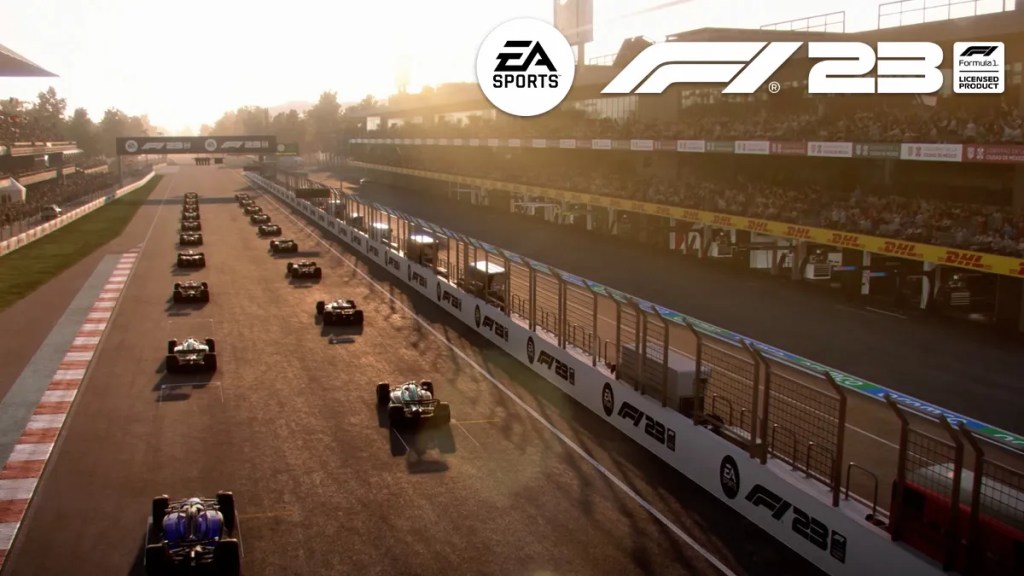
While I am bringing my knowledge from DtS with me, we as players get to see every driver multiple times in a single session. Through free practice, qualifying, then the starting grid where everyone’s faces are front and centre, and then finally seeing their abbreviated names on top of their cars, you get the sense that these are actual drivers, rather than just a name.

Depending on what car you are in and where you are on the grid, you will see the same names popping up around you, developing mini-rivalries as the races go on. People that I would support when watching races I became bitter enemies as they overtook me, and for the rest of the race I would be determined to beat them.

On top of these self-made rivalries, the game at certain points (in the guise of journalistic interviews) asks who you consider to be your rival. Points are given after every race, which your rival also gets.

Finishing on the podium obviously nets you more points, but also driving penalty free, getting the fastest lap in free practice, and so on allows you or your rival to advance quicker. It creates tense moments where you might not have the pace on track to beat them, but you can make up lost points in the aggregate. It’s a simple yet effective and I always had a thrill trying to beat my rivals.

Your rivals and your teammate for the season. Those two aren’t always mutually exclusive. (Source: total-motorpsort.com)

And beating them is quite hard. Accessibility is low on the game’s priorities, meaning you need to tweak and tinker to find the perfect set up. You have only just customised your driver avatar and chosen your team when the game throws a spreadsheet nightmare in your face of settings.

To be fair to the developers, nearly EVERYTHING is customisable.

Not just the aggressiveness of the other drivers, but the surface type, car damage, the damage rate, tyre temperature, pit lane entrance, pit lane exit…and that’s just the simulation settings.

In Assists, there is steering and braking assists, anti-lock brakes and traction control, along with a whole myriad of changes. You can even adjust the dynamic racing line (where the game tells you where to brake and how hard), either in 3D or 2D, and having it only appear in the corners.

I admit I was a little daunted at first, so I set most things on and brought the difficulty down to “Easy” and entered Bahrain. I ended up winning by a good thirty seconds and knew I had to switch to a harder difficulty.

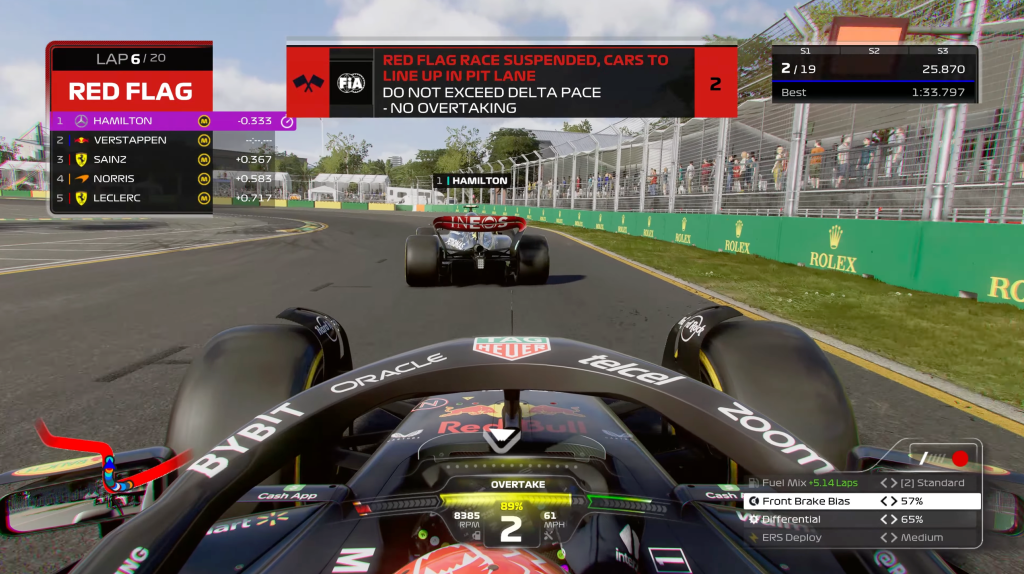
Notice the menu in the right corner, allowing for car customisations during the race. (Source: operationsports.com)

While other racing games I was always wanting to finish in 1st place, here I was fine with not always winning each race, partly because of the car I chose. Being a DtS fan, I went with the underdog, Haas.

The cars work on a tier system; the Red Bull and Ferraris can take corners better and reach faster speeds respectively, whereas teams like Williams and Haas usually fight for the bottom of the points, if not the bottom of the leaderboard.

But that comes at a cost. In Haas, the only requirement in the race is to beat my teammate. In Red Bull or Mercedes, they will expect a high points finish, with demotion or firing if you can’t deliver the team requirements.

But even in a slower, lesser powered car like Haas, the circuits are the main draw, and they are amazing.

These tracks are iconic, some having been used for over one hundred years for races, but each one does feel distinctly different, leading to a thrilling challenge each time the next race weekend comes around.

The game follows the actual race calendar of the season, starting in Bahrain and ending in Abu Dhabi. And while Bahrain is listed as “Easy” in the course selection, the second track, Jeddah, is listed as “Hard”.

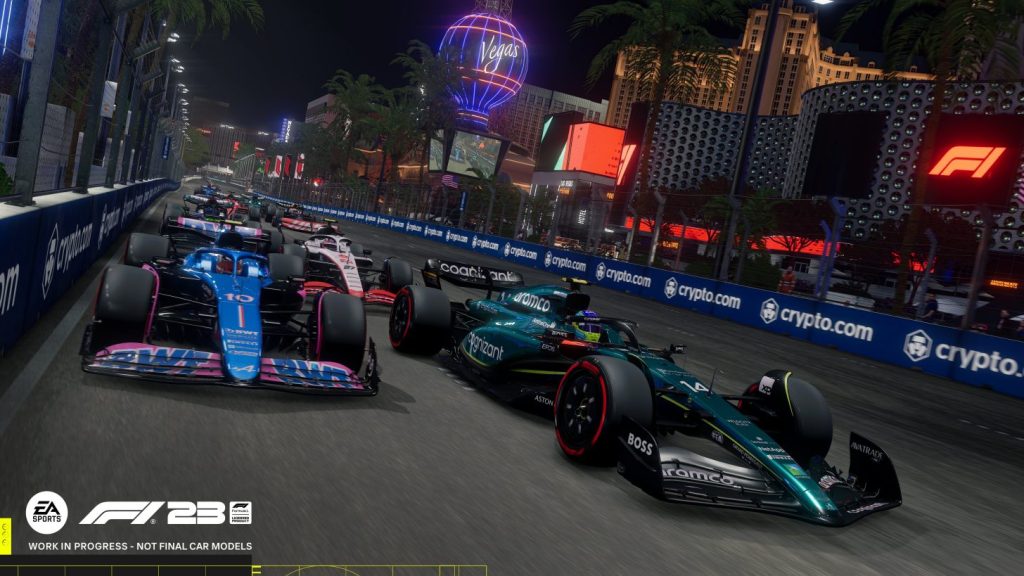
The Las Vegas course, new for 2023 and known for being one of the harder courses. (Source: insider-gaming.com)

The game boots you from one end of the difficulty ranking to the other (including “Very Easy” and “Very Hard”), requiring even more time spent in the settings to make certain races bearable. I had to turn off damage completely at Monaco otherwise I wouldn’t have been able to finish the race!

But while the tracks can sometimes be intimidating, the game actually gives the player plenty of chances to get used to the next race.

First comes the Pirelli Hot Lap, a small challenge that actually takes place each race weekend. Using a souped-up sports car rather than an formula car, the challenge will be something like get the highest speed in one particular section of the course or pass through every gate within the time limit. It’s still low stakes, but it gets the player used to some of the corners.

Next comes free practice, allowing teams to test out certain builds or styles, seeing which gets them the best times. Then after is qualifying, and then finally the race. Depending on the length of the session, free practice and qualifying can be up to an hour.

And while there are mini-challenges to work on in practice such as driving to conserve fuel or tire management, it all serves in learning the corners and straights, until you feel ready enough to go for the race.

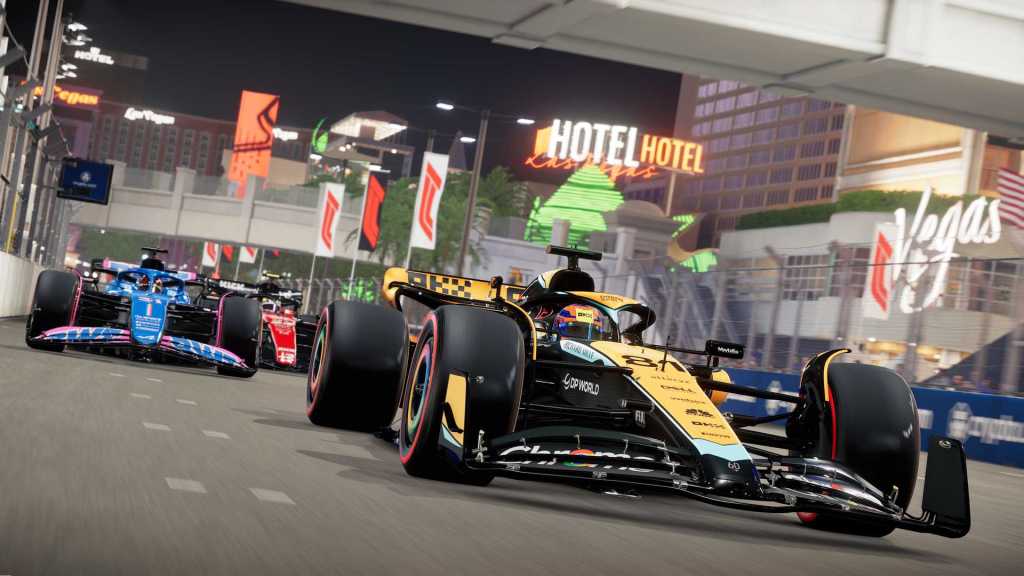
The game is gorgeous to look at, especially during night races. (Source: racefans.net)

And racing has me hooked. Driving a car that can reaches nearly two hundred miles an hour on a straight, sliding round corners with ease, fighting for places amongst the grid, it just has a magical quality that can’t be matched.

Also, no need to worry if you crash, spin out, or even just take the corner a little off the line, the game has a very nifty instant replay editor, going back to around the last five or so seconds, allowing you to start again from anywhere within that five seconds so you can try that corner again and again until you get it right.

I will admit I am a frequent user of the instant replay, but nothing does beat getting around the course or that one tricky corner without using it, leaving that section of the course with a giant smile on my face.

And then you get used to the track, you remember the sequence of corners, what comes next, enjoying certain parts of the track, dreading others…and then it’s done and onto the next one.

It’s thrilling yet fleeting, ever-changing yet the same, and that’s why I’ve fallen in love with F1 22 and will continue long after my first season is over.

Banner Photo Source: motorsport.com

The Best Star Wars Game?

One of the first games I ever played was Star Wars Episode I: Racer. As a defender and fan of the Star Wars prequel trilogy, having a racing game based on the high-octane drag racing sequence was a formative gaming experience, and one of the main reasons I play games today.

While the original game was on the Nintendo 64, the game recently got an re-release for the PlayStation 4, Xbox One, and Nintendo Switch. The update was a simple polish and shine, updating the graphics and the frame rate so the game would run smoothly (sometimes the N64 would play like a powerpoint) and that was it.

It was kind of refreshing to see a game of a very particular time be brought to a modern console. The early 3D graphics where every shape needs a right angle, the stripped-down story, and sometimes odd animations, it has a retro charm that goes a long way to papering over its failings. Being a Star Wars game it would have been so easy for the Game Overlords that run the SW brand to force micro-transactions or some daft online ranking to the game, but it’s thankfully been kept as pure to its original form.

So, as a defining game of my childhood, I decided to pick it up and blasted through it over a lazy weekend. Despite the rather short lifespan of the game, I loved every moment, so I wanted to list a few reasons why it is one of my favourite games of all time.

Start your Engines! Why I Love Star Wars Episode I: Racer

1. The Universe

While we’ve only seen pod racing once in the entire cinematic Star Wars canon (in one of the best sequences of the entire saga) the game builds upon the work the film did with new tracks and worlds that are not even seen in the other movies.

I think a lot of SW films are kind of boring when it comes to their landscapes, mainly just reusing the same sand/snow/forest landscapes, but in Racer we have a whole host of planets and racetracks.

While the game has the sands of Tatooine and the snowy mountains of Ando Prime, it also has the methane lakes and geysers of Malastare, the smoky quarries of Mon Gazza, and the modern architecture and rocky cliffs of Aquilaris. Those are just the tame ones.

The game also features some standout tracks such as the abandoned gas stations of Ord Ibanna, suspended in low orbit, just like Cloud City from The Empire Strikes Back. Another is Oovo IV, which is a space prison situated on an asteroid belt, complete with cells and airlocks. My favourite tracks are on Baroonda, a planet of tropical jungles, swamps, and beaches, complete with Moai-inspired statues as well as the odd volcano.

While the locations are a high point, the are pushed even further by their individual quirks that helps bring them to life. Ando Prime is inhabited by monk-like aliens, with statues and flags reminiscent of temples in Nepal and Tibet. The race course on the asteroid Oovo IV has several sections without gravity and rogue asteroids. The spice mines of Mon Gazza feature everything from massive diggers to transports that litter the courses. The machines slowly move backwards and forwards so that they are not in the same place as each tracks progresses.

Each planet has its own look and feel, which leads onto…

2. The Tracks

While the game only has eight planets, it manages to keep each one rather fresh, even while refusing certain sections of a map. When attempting a new course it’s a fun mixture of certainty and fear, knowing how to tackle some corners and sections, while at the same time having to pick up on the fly how to navigate other sections of the map.

While the earlier tracks are definitely the easier and less interesting with wide open spaces and flat plains, there are always a few little extras to spice up runs, be they secret areas obscured by vines or waterfalls as well as branching paths that take you to completely different areas of the track than your competitors, or just really big jumps that let you glide effortlessly above the other racers.

Later tracks becoming increasingly difficult with sequential hairpin bends (with nothing to stop you flying of the side of the rocky cliff face that you’re racing on) or erupting volcanos that change the layout of the course.

Even in some of the earlier tracks there are hazards. Pod racers are good on solid terrain, but when going across the ice lakes of Ando Prime, the swamps of Baroonda, or the methane rivers of Malastare, pods can start to drift, sending them careening off course, usually to an explosive end.

The Boonta Classic, the track that is featured in The Phantom Menace and the last track of the game, also features sharpshooting Tusken Raiders and moisture pockets, both are severe dangers to weave through. These little features are great, as it throws a curveball into racing so even if you’re ahead of the pack, one wrong move could have them catching up to you.

3. The Podracers

Podracing to me is so cool. Taking the high speed of Formula 1/drag racing, place them on dangerous terrain, and just boost everything to as much as it could be. The idea of a small pod that by the sheer speed and force of the massive engines makes it float is such a novel and interesting concept, and Racer replicates that dangerous sense of speed perfectly.

While we only saw a fraction of the racers in the film, the game goes all out, adding all the racers that were included in the deleted scenes, each with different strengths and weaknesses. And while some racing games’ vehicles would be simple re-skins or little tweaks, here every pod racer is unique. You have the monster truck equivalents of Sebulba and Mars Guo, to the dainty butterflies like Anakin Skywalker and ‘Bullseye’ Navoir. My favourite is Neva Kee, who is unique in the fact that his pod has no cables (that purple energy bar that connects the engines), and is essentially just a tiny cockpit glued to two giant rockets.

As you complete each race you usually unlock a new pod racer which can be useful considering the different tracks layouts as you aren’t stuck with one machine. If you’re on a course that has a lot of tight corners, you can choose a racer that is more suited to turning. On a course with long straights, you can pick someone with a fast boost and high acceleration. Size and weight also plays a factor in choosing a podracer. Smaller pods are generally faster, but can’t take as much damage as the larger, slower, pods.

The pods do everything they do in the film, which is something unique in the racing genre. While they have the standard boost, the pods can also flip sideways to fit through narrow gaps and have air brakes that allow you to float over jumps and gaps. It’s thrilling on tracks like Ando Prime where you can boost off the top of a mountain peak and then just gently float across ice gorges and alien monasteries of that planet.

Each pod can be customised, either through buying from Watto’s Shop or by exploring for parts in the junkyard. While these custom options are more for building stats than changing the look of your pod, it’s still great fun to max out your speed and boost stats, leaving you on the edge between ‘in control’ and ‘totally lost it’.

The sounds design helps sell the illusion of the pods with every single engine having a beautiful hum and rev. Even the small things like shutting down an engine to repair it or put out a fire, to the whistling air as you fly across a gap, to the hiss of the air brakes, each one is solid, sounding exactly like what would you think these gigantic machines would sound like, and mixing perfectly with the ‘vroom’ of the pods around you.

And it doesn’t hurt to having the excellent John Williams score layered over the top. Nothing beats hearing the boost of a pod over the pulsing strings of ‘Duel Of The Fates’ our soaring through the air to the blaring trumpets of ‘Battle of Naboo’, and making you want to shout, “NOW THIS IS PODRACING!”

Conclusion

Despite being over twenty years old, I had a so much fun with Episode I: Racer. And while there was a sequel by the same studio for the PlayStation 2 called Racer Revenge, it was met with mixed reviews.

Episode I: Racer is still fondly remembered by many, featuring highly on several ‘Best Star Wars’ game lists, and was happily received with its re-release. It took a sequence that was only about fifteen minutes of the first film, and delivered all the promise that it offered.

I was partly raised on racers, with things like Gran Turismo, Forza, and Mario Kart being pretty much constants throughout my gaming life. And while each of those is fun in their own right…there is just something better about Racer.

I could be biased, but there is just something about the sense of speed, trying to control two full force engines, flying through impressive vistas and winding corridors that no other game has replicated.

The only other game that really worked in the same way is Split/Second: Velocity, a beautifully daft arcade racer, also published by Disney. Split/Second is filled to the brim with powerful looking and sounding cars, interesting and unique locations, and explosive gameplay. It too, like Racer, has been left behind by Disney, a one-and-done game that deserved a sequel.

Despite Disney breathing life back into the Star Wars property, the games have been few and far between, with only two controversial Battlefront games, one action adventure (Jedi: Fallen Order) and one flight sim (Squadrons) being released. With the new trilogy finished, now would be the time for games to fill the space between new films and television shows being created.

If we were to ever get more Star Wars games, I hope that one is based on pod racing. With today machines, Disney could push it further and farther than before. New tracks from planets across the saga, new racers, more customisable options, a strong story, and even the option to build your own pod racer from scratch.

There is so much that could be created and improved…and with a name like Star Wars, it’s all but guaranteed to make money.

Banner Photo Source: nintendo-insider.com

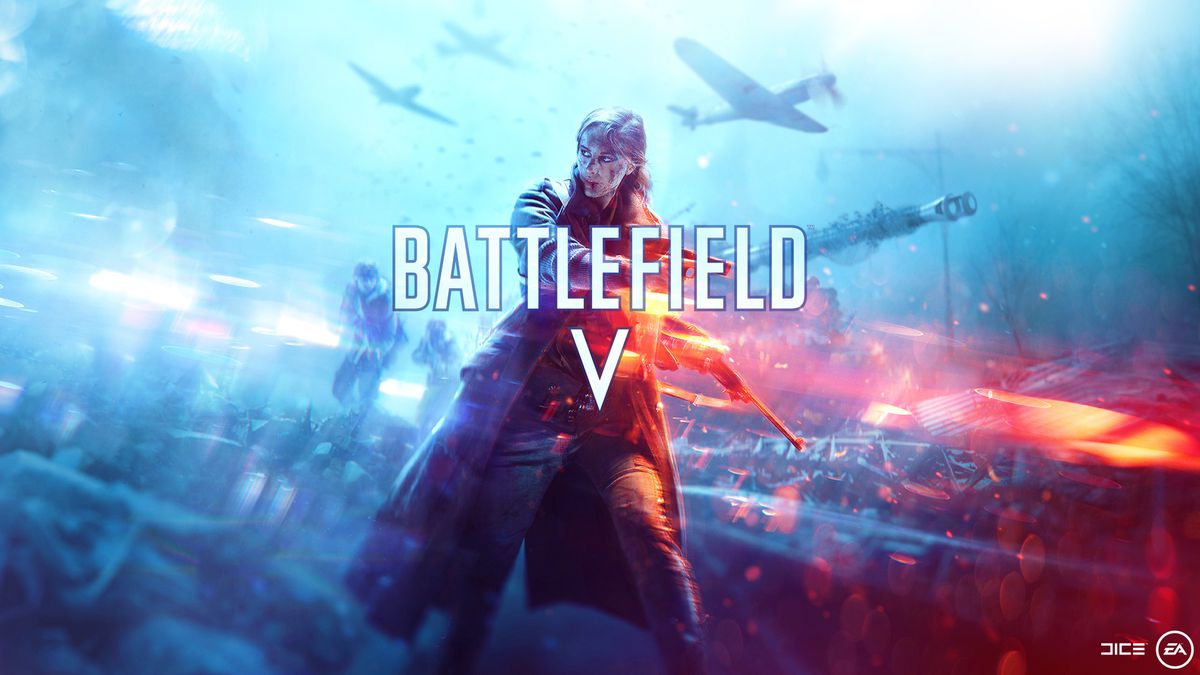
Battlefield V’s Campaign: A Follow-Up

In my last article I wrote about the opening of Battlefield V. I hadn’t completed the campaign at the time of publishing, just wanting a first snapshot of my feelings. I was a little unimpressed, feeling that BFV had lost the spark that BF1 had due to the latter’s setting and time period.

So with a hint more apprehension I booted up the narrative proper.

And damn, I was hooked. I had missed out on an excellent addition to the opening. So I needed to follow up.

I adore Battlefield V’s campaign and it fixes the small problems I had with Battlefield 1’s (also stellar) campaign. My fears of the War Stories not comparing to BF1 were completely unfounded. The dialogue, performance, and design are of the highest quality (DICE always makes things looks pretty), with each story having a different tone yet all to feeding into one another.

BFV continues where BF1 started (quite literally with the still that opens the game). It features the lesser-known stories filled with misfits and malcontents, the people usually not remembered in sanitised history books. I was particularly looking forward to story featuring the young female resistance fighter in Norway, echoing the story of the female Bedouin fighter from BF1.

bfv nordlys
With throwing knives and hit-and-run tactics (courtesy of a handy set of skis), The Norway section of the game carves its own niche in WW2-set games. (Source: junkee.com)

It was nice that after the bombastic opening that the game settled back into a groove, allowing the player to approach how they wanted. It can be easy to guide the player through a linear story progression and keep up that cinematic edge (I love Remember Me), but having the player tackle each task how they want fits for a series like Battlefield (obviously gearing up for the multiplayer). Compared to the limited open-ended sections in BF1, nearly every story in BFV has a degree of player choice, allowing players to tackle objectives in any order.

While the gameplay is open, the story is a little more guided. The main issue I had with BF1 was the lack of narrative cohesion. Each story was self-contained and focused on a different aspect of the war. While getting to play the levels in any order is great for individual personalisation it means that you can’t effectively have a difficulty curve or sense of progression.

BFV now has that through line yet the story is still free form. You can play the story in any order, but if you play the game chronologically (as they are listed in the menu) starting with “Under No Flag” and ending with “The Last Tiger”, the game builds with each new step adding on from the last one.

“Under No Flag” starts as a stealth mission with an AI buddy and enemy squads far apart. “Nordlys” continues the stealth aspect but with you alone and with enemies in closer proximity to each other. “Tirailleur” puts you as a member of a squad of soldiers pushing through German lines, before “The Last Tiger” casts you against overwhelming odds and fighting alone. Each level builds on the last by putting you in familiar territory yet changing a small aspect each time. This slowly but surely ratchets up the difficulty curve without any immersion-breaking spikes.

Due to “The Last Tiger” not being available at launch a lot of players (including myself) would have played that chapter last. It is a fitting end and not just for having the word “last” in the title (other games such as Timesplitters Future Perfect, Halo 3, and Tomb Raider all follow this model with level names referencing their place within the story).

I had railed against the cinematic introduction to BFV, but “The Last Tiger” pulled the game into morally dark territory (and not just because we’re playing as the Nazis), ending the game on a perfect note. With the surrounding landscape wreathed in flames and the framed Nazi banner on the final bridge burning up, it paints a perfect metaphor for the tank crew and player character Müller’s unravelling allegiance to the Swastika. The darker edge fits better as an ending in general, having the player reminded at the end of the game of the destruction of war.

2002758
“The Last Tiger” is the high point of not just BFV but most campaigns in the franchise. (Source: eurogamer.net)

I also really liked how “The Last Tiger” broke tropes. When the radio in the tank is busted, Müller goes out in search of one. At first I believed we were going to go on an extended on-foot section to find several radios to repair, but it turns out there is a radio right next to the tank. Having a large map to explore would have killed the tension that the final section was building up and it was nice that pacing was chosen over an extended gameplay segment.

After hearing the broadcast on said radio, enemy tanks and soldiers roll in during gameplay. From the POV of the Tiger tank, the following sequence is setup like a stage; there is a slight border (mimicking curtains) and a raised section where the Allies appear. It is a beautiful tableau (in a game full of awe-inspiring vistas) and the fact that it is during gameplay makes it that more memorable.

In the end it almost felt like the opening was a bait-and-switch, aiming for a broader audience by being a bit more “intense” instead of mournful like the opening to BF1. Whether it was deliberate or accidental, I still love this campaign and look on it more fondly than I did when I started.

Photo Banner Source: digitalcentralmedia.co.uk

Why Battlefield V’s Opening Lacks Pace

It was with a mix of trepidation and eagerness that I picked up Battlefield V. I had enjoyed the excellent War Stories in the previous game, Battlefield 1, and wished to see what creators DICE had followed up with. Yet I remained cautious. The previous War Stories had been a high point of my gaming experience of recent times and I didn’t want to raise my hopes too high in case they were dashed.

The sequence started beautifully, reusing the iconic shot from BF1 of the two opposing troops levelling their weapons at each other as the sun breaks through to the battlefield. That was one of the defining moments of BF1; it is abrupt from the carnage that we have been a part of and distinct in its imagery.

I had previously written about how even though I liked the War Stories of BF1 and the opening, it could have toyed with player expectations a little more with its use of death. BFV’s opening reuses this defeatist attitude and makes it work. We aren’t told that are characters are destined to die yet most of them do. But unlike BF1 we do not see their names upon death, an aspect that is sorely missing. While I am happy that DICE isn’t directly lifting from BF1 for the semi-sequel, the inclusion of character names added a sense of humanity that can usually get lost in the larger stories of a world war.

battlefield-ed
A shot from the opening of BF1. It is an excellent and artistically significant image that helped set DICE’s new tone for the series. Source: fraghero.com.

BFV also switches characters through its opening, circling around the locations that appear in the later War Stories. On the surface this is good. The major problem with the shorter stories in BF1 was the lack of narrative cohesion. With each story lasting around an hour, the overall arc falls flat with predictable peaks and troughs, leaving the game without a strong climax and resolution. The opening of BFV helps aid the previous lack of narrative structure by having the opening focus on the locations, but not always on the playable characters.

The paratroopers dropping into Norway, the German tank crew driving forward in the desert, the Senegalese troops providing covering sniper fire, and the German planes flying overhead, they give us a taster of what is to come and also help set up the story. For example, the paratroopers in Norway get slaughtered in the first few minutes of gameplay, with the playable character in the Norway section being the resistance member they were meant to rendezvous with.

The opening is also a beautiful example of editing within gaming. Each scene leads into one another and connected with excellent scene transitions. The tank in the Norway section rolls out into Libya, the plane flying overhead in the Kasserine Pass moves into dogfights over Germany, before said plane crashes into the Netherlands right in front of our new character. It is a nice flow of scenes and heightens that feeling of a world consumed by war.

However, while the changing characters help create that crux for the larger narrative, it means it loses something of its previous identity. BF1’s opening was set entirely on a singular battlefield. The fight was contained to one narrative with sweeping long shots taking us across the lines to the next solider after one had died. It told a solid story on its own and helped set that “anything goes” precedent of that game.

Swapping between five different fronts and fighting styles in the BFV opening feels disjointed and uneven and it is partly because of the change of scenery. The stakes change on a dime and the enemy we were previously charging is now half a valley away. It loses that excellent pace and momentum that the opening of BF1 had. This isn’t helped by the gameplay. In BF1 you could fight for as long as you wanted, but eventually you were going to be brought down by the enemy soldiers. In BFV the onus is on you to continue the story. This was especially evident in the Senegalese sniping and the German dogfight sections.

As I was getting to grips with the controls, my sniper aim lacked finesse, with shots widely missing the enemy targets. Only when all the targets are down will the prologue continue. In the German dogfight section I managed to shoot down several Allied bombers, but was unable to see the tiny red marker that indicated the ONE plane I was meant to shoot to continue the sequence.

BFV_RevealScreenshot_07_wLogo.png
With gameplay swapping every few minutes, BFV assaults us with a flurry of imagery. It is just sad that none of it feels connected. Source: VGR.com.

The whole pacing is off. Each section starts the same; the player slowly moves forward before being presented with a few enemies and then ends with explosions. At least BF1 kept the explosions as a constant, throwing the players into disarray and keeping them on edge. It feels like there is a distinct lull in BFV’s opening and feels antithesis to the tone that it seems to be aiming for.

This comes to a head at the final playable section. After shooting some soldiers on a turret, you turn said turret around and direct the fire back. Your squad is bombed and you are paralysed, trying to hold off the oncoming enemies with only your pistol. It feels so odd to go from the excellent Remarquism of BF1 to this Hollywood-ised, last-man-standing depiction of battle.

I understand why it was done. This is the final scene, the gameplay needs to end at the same time as the narration for the pacing, but it doesn’t have that brutal edge that worked wonders in BF1. This final scene could have worked if we had control of our movement, if we were allowed to charge, retreat, anything other that having to sit still, playing out a sequence ripped straight out of Call Of Duty 4.

It is also a context problem. BF1 worked because it wasn’t about the grand ideas, rather focusing on the little person caught in the whirlwind of history. It was a pointless war with both sides fighting for pretty much the same reason and therefore could focus on the personal stories.

While there are flourishes of these individual stories in BFV’s campaign, the grand ideas can’t help but push through. Every fight (bar the Tiger tank story) is about pushing back the forces of darkness from enveloping the world. Every fight is about how to weaken and dismantle the Nazi war machine. It can’t help but BE that.

That’s not to say that grander stories are bad. Grand ideas work well in several games; Civilization, various CoDs, the first Assassin’s Creed, but the smaller stories are what gave BF1 a bit of bite and it is sad that BFV is without it. It means the characters in BFV don’t get a chance to shine since we don’t focus on them.

Characters like Zara Ghufran and Frederick Bishop in BF1 get small moments in between all the fighting, giving us hints of their personality and time outside the war. This makes them richer, making them more than the “stoic badass” or “stealthy assassin” archetypes. And I haven’t got that from a single lead in BFV yet.

Either way, I’m still enjoying BFV. I’m blazing through the campaign and will hopefully look fondly on my time spent with it. And while the opening fixes a lot of the issues I had with BF1’s, it can’t help but produce a few of its own.

Edit: Now that I have finished the campaign my feelings on BFV have changed. I started to really like the story and have written a follow up. You can read it here.

Banner Photo Source: wccftech.com

Another Top Five Dialogue Scenes in Gaming

After my first post on my top dialogues in gaming I got thinking about other games that I thought had great dialogue sequences. I started to move away from just my favourite scenes instead looking at the different ways that dialogue is used.

I still like all of the scenes that are listed below, but I’ve tried to pick some dialogues that are special in the ways that they use character interaction especially those that work within adaptations or use factors outside of a simple back-and-forth.

So, let’s skip this preamble and jump right in, this is Another Top Five Dialogue Scenes In Gaming.

  1. Lara Croft and Pierre Dupont meet in Tomb Raider Anniversary

Tomb Raider Anniversary is a remake of the first Tomb Raider game. With a fantastic blueprint to work from in terms of level design, the creators, Crystal Dynamics, decided to focus on updating the story and fleshing out the characters who were mere cardboard cutouts in the first game.

While at this point we’ve already had a few verbal sparring matches with the morally-grey mercenary Larson, it’s Lara Croft’s interaction with fellow treasure hunter Pierre Dupont that takes the number five spot.

In the original game Pierre wasn’t much of a character. He would turn up during points of the Greece section of the game and shoot at Lara before running off and vanishing into thin air as soon he was out of line of sight.

Here in TRA we see two people who seem to have prior knowledge of each other. This can be seen by the fact that they are both on first name terms with each other, discussing each other’s personal philosophy that informs how they go about their work. This adds up to create a backstory for these two characters that will probably never see a gaming screen (although Pierre and Larson did come back for Tomb Raider Chronicles which was set before TR1). This gives all the characters a few different shades and facets rather than just “bad guy” and “good girl”.

The way that the cutscene plays also informs us about Pierre as a character. We only see his character model once during the sequence, instead following his voice as it reverberates around the room. This was meant to be a callback to his vanishing act from TR1, (1:50) but I read it as Pierre toying with Lara and messing with her head since she can’t find him.

When we finally see Pierre, he is in the shadows hidden from Lara and pointing both of his guns at her. He has a clear shot, ready to kill her, but backs off and disappears. This adds another layer to his character; he likes a challenge rather than eliminating his competition.

This continues through the game, as we hear his voice throughout the next levels, taunting us and finally ambushing us at the end, where once again, he and Lara’s conflicting worldviews clash.

All this makes him a much more interesting character rather than a simple shoot-first character like he was in the original.

(Cutscene starts at 10:32)

  1. The Confrontations with Red Grant in From Russia with Love

This one is quite different as it is an adaptation/remake of a film, but the subtle changes make it a good one to look at.

From Russia With Love came out during a period in the James Bond series between Pierce Brosnan being let go and Daniel Craig being signed on to play 007. EA wanted to keep making James Bond games so got Sean Connery to come back to play the iconic spy and took one of his films, From Russia With Love (an odd choice due to the film not being action heavy like Goldfinger or Thunderball) and adapted it to a game.

While the game takes several liberties with the original story it also remakes scenes shot-for-shot, word-for-word. The scene I’ve chosen is a mixture between the two.

The two characters, Red Grant (the bad guy pretending to be an MI6 agent) and James Bond meet on a smoky Turkish train platform, each providing their part of the secret code to each other to identify themselves. Red Grant is rather jovial, coming across as naive as he plays sidekick to Bond.

But as soon as they get to the dining car, Grant’s jovialness twists on a dime. His smile becomes a frown. His light-hearted phrase, “old man” takes on a sarcastic touch. Bond catches on when Grant orders red wine with their grilled sole (which adds to a funny line later when Grant hits Bond over the head with a bottle and says “There’s your white wine, old man!”). After pulling into the train station, Grant and Bond trade words lifted straight from the film. It is a cool scene, seeing dialogue that was originally in a tense interrogation repurposed as the start of an action sequence.

The connections made through Bond and Grant’s dialogue adds to up to their final confrontation at the very end of the game. After destroying the multi-appendage contraption that Grant is piloting, Bond finds him lying on the floor, defeated. Bond levels his gun and Grant starts to mock him.

“Are you going to shoot me in cold blood, old man? You don’t have the guts. It’s not the ‘English’ way. It’s just like red wine with fish.”

The way Grant delivers the line is perfect. The sneering disapproval of ‘English’, the reoccurrence of “old man” as an insult, and the final hint of their previous encounter with the mention of red wine and fish. Grant and the organisation Octopus set up the murder of Bond in the story because they misread the “British mentality”, which is stated at the beginning of the game (and the film). That’s why it hits much harder when Bond blows Grant away before he even finishes the word ‘fish’.

Bond’s final line of “That was for Kerim” also adds a somber tone to proceedings. Throughout the game, Kerim Bey has been by your side, helping you out along the way. Grant kills Kerim just before you meet in the dining car, and we see no hint of emotion from Bond when he first learns of Kerim’s death during gameplay.

Adding it here adds a nice little pathos to the end of the game and cements the fact that these two characters had a friendship rather than Kerim being just a helpful NPC.

(19:29-21:58 and 29:13)

  1. Sam Fisher in Ghost Recon: Wildlands

I put another Splinter Cell moment on my first list because the writing in Splinter Cell is top notch and Sam Fisher is one of the best-written characters in the entirety of gaming. Michael Ironside, the original voice of Sam Fisher, worked with the developers to create a more three-dimensional character, giving Sam not just a great voice but something more on a deeper level.

Ironside explains that originally Sam was going to be a G.I. Joe-esque, two-dimensional, flat, gung-ho type character. Ironside wasn’t interested in playing a character like that. He saw Fisher as, “…a weapon that the government has used too many times.” (0:52). The character is not a gruff, macho one-man army (who do have their place in gaming), Fisher is instead imbued with cynicism, dark humour and genuine moments of tenderness (such as when Sam is asked to tap phone lines for his former field handler Frances Coen, he says, “For Frances…of course I can” (2:30)).

But the moment I want to talk about it the character’s most recent appearance, as an NPC in the game Ghost Recon Wildlands. The Ghosts help Fisher with a mission (again voiced by Ironside rather than Eric Johnson, who took over for Splinter Cell Blacklist), before they help extract him and bring him back to their field handler, Karen.

The two characters of them have some nice banter (with Sam calling her Linda, to which she replies that she’s “Karen nowadays”). Karen notices that Sam has gotten old and he responds, “I’ve heard they don’t make them [spies] like me anymore” (14:44) before mentioning one guy that used to be like him. Most fans got a kick out of the scene because Fisher starts to describe Solid Snake. Karen cuts him off with, “I heard he finally retired.” (15:04).

Whether this was a reference to David Hayder being passed over for Keifer Sutherland or a wider swipe at Metal Gear Solid being shut down by Konami, Sam replies with a quiet, “Then it’s only me.” (15:09).

The beauty of this line is that it has so many different layers. The initial reaction is one of smug superiority; after many years of the two competing franchises Sam Fisher has outlived his greatest rival. But then it’s a sad dawning. Sam’s line of “they don’t make them like me anymore” has extra metatextual meaning; they don’t make spy/stealth games like Splinter Cell or Metal Gear Solid anymore.

Looking at it from a character perspective, what has Sam got? He’s outlived every other rival, and what does he have to show for it? He’s pushing sixty, in a job that he will never get any recognition or respect for, all of his friends have either betrayed him or died, he’s lost countless lovers, and he hardly knows his only daughter.

It’s a sad realisation and as Sam thinks through his place in the world, Karen snaps him out of his pondering, saying that he has a new mission and he’s shipping out in one hour. This adds even greater sadness to the scene and character. Just as he looks at his life from a different perspective and starts to have doubts, he gets pulled back in.

(Cutscene starts at 14:44).

  1. The Cristina Memories from Assassin’s Creed: Brotherhood

I am not a fan of Assassin’s Creed Brotherhood. I feel that it was a step down from Assassin’s Creed II and negates the entire downer ending of that game (although Revelations did bring it back round for the finale).

The only thing that kept me remotely interested in the game were the Cristina Memories. Cristina Vespucci was a minor character in the opening of Assassin’s Creed II and is one of Ezio’s many conquests throughout the game. She’s rather important because they are childhood sweethearts. It is safe to assume they were each other’s first relationship. While we hardly see any of that in AC2, their relationship is explored during the “Cristina Memories”, little vignettes of their relationship in Brotherhood.

These scenes are interesting because we get to see what being an Assassin does to a relationship. All of Ezio’s other ladies; Caterina Sforza, Rosa The Thief, Lucrezia Borgia, countless courtesans, they are all mainly one-offs or “distractions”, sex just for the hell of it. Cristina is so much more, and it can be seen during the dialogue.

Their first meeting is beautifully awkward with Cristina initially being dismissive but then intrigued by her would-be suitor (with his plea for a “second chance” to woo her (1:12)). The second memory has so much in what isn’t said. When Ezio asks Cristina to come with him, she simply says, “I want to…but I can’t…my family,” (9:55) reflecting Cristina’s conflicting priorities between her life and her love for Ezio.

My favourites of the Cristina Memories are the third and fourth. In the third scene Ezio returns to his belle only to find she is betrothed. His previous playful banter with Cristina is diminished as he learns that while he has been gallivanting around Tuscany sticking Templars and collecting feathers, Cristina has been living her life in quiet desperation. She has had to move on with her life while he is still chasing people that took away his former happy existence.

While Ezio has had to mature beyond his years to care for his mother and sister, but when he sees Cristina again he regresses back to being 17 years of age and hoping that pure love she had for him hasn’t waned. It hasn’t, but he sees that his life isn’t compatible with hers, and his final line of, “He’ll make a good husband, I made sure of it,” (13:55) is gently tender yet painful as he must accept that she can’t wait for him forever.

The fourth scene is especially heart wrenching, as Ezio tries to recapture that spark of what should have been, if only the couple had time and history had been different. When the two meet in a dark Venetian alley Cristina is understandably pissed at him. He pretended to be her husband and he says he, “…was afraid that you [she] wouldn’t come if I [he] just asked.” (17:00). Cristina confirms this, and it’s here that we see the pain of loving and losing someone.

Cristina stills loves Ezio, but she had to change. He was forever teasing her, reappearing every few years, tempting her with a life and a love that was true and innocent, but with him racing off faster than he arrived, leaving her alone again. And she couldn’t do it anymore.

She loves him too much, and to paraprhase a line from Professor Layton and the Unwound Future (and another great romance scene), “ she doesn’t want to say goodbye again. She can’t, she won’t.” (1:00). Because it hurts her every time when he leaves. She tells him that she loved him but she has to end their connection. He had his “second chance” and she leaves, telling him to never find her again.

For the finale we see that Cristina still carried a torch for Ezio after all the time spent apart, hoping that one day he might return to her. She whispers, “I wish we could have had a second chance,” before passing away in Ezio’s arms.

What hurts more is that Ezio never truly recovered. Despite having endless flings and floozies throughout the subsequent games, no one ever comes close to Cristina until Sofia Sartor arrives, when Ezio is well into his fifties.

And in a similar way he originally doesn’t want to get Sofia tangled up in his messed up life and endless struggle against the Templars, but she stays anyway. In a letter to his sister Claudia, Ezio says, “When Cristina died, something withered in me,” (15:55) showing that even with time, some wounds never truly heal.

  1. Elena and Nathan and “Are you happy?” in Uncharted 4.

I know I mentioned in my first post that the Grosvenor McCaffrey interview in L.A. Noire is my favourite dialogue in all of gaming, but this one takes a close second.

After Uncharted 3 many people thought the series was over. Most games go for trilogies rather than quadrilogies, but Naughty Dog came back to tell one last hurrah.

The scene in Uncharted 4 shows life in the Drake household now that the two treasure hunters have “settled down”. Elena still has a little bit of adventure, travelling all around the world for travel magazines, while Nathan is relegated to menial cleaning jobs.

The two eat dinner and Nathan starts to zone out while Elena goes on about her current assignment. She can tell that he is dissatisfied with his job, but even when she tries to push him in a direction that would make him happy, he refuses.

Elena goes to wash up but Nathan says he wants to do it. He says he’ll play her for it on her “TV game thing” (a lovely jaunt through Naughty Dog’s Crash Banidcoot). One short game session later Nathan has lost and Elena starts to sweetly trash talk him, “You can give it another shot. C’mon double or nothing, my car could really use a good cleaning…there’s this mode called “easy mode”, I just switch it. It’s way easier on easy mode.” (12:37).

The two start to bicker like the cute married couple they are until Nate snaps and grabs Elena, tickling her into submission on the couch. The two stop and stare lovingly into each other’s eyes, until Elena says one of my favourite lines in all of gaming,

“Hey, are you happy?”

Nate’s unsteady reply of, “Yeah…course,” says so much about the two’s relationship, of settling down and moving away from hopes and dreams so they could have a shot at a safer and normal life.

The scene ends beautifully too with Nate asking, “You?” Elena puts on a mock thinking face and says “Um,” before the two laugh and kiss.

I would call the scene verisimilitudinous, but that would be a disservice to the scene, because it isn’t a simulation of the real, it is real. I’ve had this conversation in real life and similar ones like it as I assume many other people have. This isn’t just a sweet scene with some heartfelt emotion and some beautifully understated lines, this is a perfect representation of real life with all of its mundanity and shows of affection. And that’s why it tops my list as one of the best dialogue scenes in all of gaming.

(Start at 5:49).

Conclusion

Rounding out the list are some honourable mentions as well as a few single lines not from dialogues that I like. In terms of dialogues pretty much all of 2008’s Prince Of Persia  is excellent with the main characters of the Prince and Elika seamlessly morphing from vaguely antagonistic to potential lovers over time (and all in optional dialogue, which is interesting).

In the Hitman series Agent 47 and Diana Burnwood’s interactions are fascinating dialogues mainly because of their working relationship. Diana is the only person that is “close” to 47, and even then he doesn’t see her face whenever they are together. Like the Prince and Elika their relationship has changed as the games have gone on, developing as the stories have got more intricate and personal.

For single lines (disqualified from the numbered entries because I wanted more than one character in the scene), the Max Payne series always has good lines. While I and my housemates have fun shouting lines from Max Payne 3  at each other (especially the over-the-top ones where Max’s voice cracks), my favourite line from the series is the last line of Max Payne 2;

“I had a dream of my wife. She was dead, but it was all right.”

That line sums up the pain of Max and his redemption over the first two games, quietly bringing the second chapter of his life to a close.

And lastly a funny one (warning, phonetically-spelt swear words ahead). From Rainbow Six Siege, the SAS Operator Thatcher has a hatred of all electrical gadgets, listing them, “GPS Satellites, Unmanned drones…” and my favourite, “…fookin lazeh soights…” (as it is phonetically pronounced). The delivery of the line sealed my appreciation of it, and much like Max Payne 3, this line became a staple of my university house, with much hilarity ensuing when a barely audible “fookin lazeh soights” would be heard when passing each other on the stairs.

Photo Banner Source: gamesradar.com.

Why Battlefield 1’s “You Are Not Expected To Survive” Does Not Work

I recently upgraded my console to the newest gen (PS4) after a good near decade of time with my Xbox 360. I bought a few games for the new console; Assassin’s Creed Unity (so I could pretend I was in an Alexandre Dumas novel), Mafia 3 (so I could drive around New Orleans), and finally Battlefield 1.

I’d never played a Battlefield game before apart from a few matches on a friend’s console of Bad Company 2. I always thought of Battlefield as a multiplayer-focused title so my interest was immediately turned off (local co-op is more my thing). Add to the fact that it was a continuation of a gritty, modern war aspect; nothing about the series got me hooked enough to play.

But with the announcement of Battlefield 1 being set in the First World War my interest was piqued. So I picked up the game and its probably the best thing I’ve played so far on my new system.

I was in love with time period (although annoyingly the game was focused on the latter part of the war to add as many machine guns as possible) and happy that the developers looked beyond the trenches of Western Europe. I was especially excited to see Gallipoli and Arabia make an appearance with a female Bedouin playable character in the latter section.

From a narrative perspective the change from sprawling epics to individual vignettes of War Stories is a stroke of genius, allowing the developers to move from battle to battle without having to tie it into each other. While the smaller stories mean you lose larger narrative structure making the ending feel flat, the end coda is a nice wrap up.

I just wish they had added more in connection with the DLCs, with battles on the Russian Front, or even better some from the Central Powers point of view (Germany, Austria-Hungary, Ottomans, and Bulgaria). This isn’t the Second World War with a clear bad guy on one side (so we are not playing as Nazis). If we want to talk about crappy stuff on the Allies side in WWI, Gallipoli and Arabia have you covered. Even the game acknowledges this with the final coda in the Arabian section (13:17).

But today I wanted to write about the opening of the game and how even though I like the start of Battlefield 1, the game bungles its hand and for me loses some impact. I am of course talking about, “You Are Not Expected To Survive.”

Battlefield 1 and Death as Inevitability

Many people hold up Battlefield 1’s opening as one of the most engaging bits of interactive media of the generation. As the game starts you are dropped into the boots of a member of the Harlem Hellfighters.

After a few lines telling us how many people fought and how world changing the “War To End All Wars” another line flashes up;

“What follows is frontline combat. You are not expected to survive.”

It’s an effective opening and conveys the game’s darker theme than other shooters as well as portraying the brutality and futility of some battles. BF1 carries this tone throughout the rest of the game with No Man’s Land during “Fall From Grace” being littered with soldiers (and rats), or the final push on “Cape Helles” showing the amount of deaths it took to take the hill.

However, I feel that telling the player that death is inevitable makes the prologue lose its shocking quality. Most players were probably the same as me, trying to fight for as long as they could, but eventually falling to a hail of bullets before quickly moving onto the next character.

The expectation of death (for me anyway) made me feel a little defeatist. What was the point of playing if I was just going to die anyway?

So, What Would be Better?

I did some research into WWI deaths for this article, but nobody can really give a definitive answer to deaths in WWI due to the huge amounts of missing and unnamed soldiers.

History On The Net ranks it collectively as 2/3 soliders died. The official statistics are 6 million for the Entente Powers, and 4 million for the Central Powers.

But let’s take 2/3 as our number just for conveniences sake.

“What follows is frontline combat. Two out of every three soldiers in WWI died.”

Now, what that does is give a glimmer of hope to a player. As players we are conditioned to not dying in-game. That third, that 1/3, we think it will be us. So when we die and your character’s name flashes on screen it would hit much harder. This is a concept known as defamiliarization (breaking away from traditional forms to allow us to view things differently, such as being killed again and again in what should be a fun shooting game), and interestingly here is an academic dissection of the scene by Stuart Marshall Baker which discusses the idea in relation to the prologue. If we even wanted to go further the game could pit us in a battle where entire squads were wiped out such as The Somme or Passchendaele.

“What follows is frontline combat. Entire squads were wiped out in a single day.”

That still delivers a grim mood, but isn’t an absolute. You could still make it through and be one of the lucky ones.

I believe that giving us that inch of hope only to snatch it away would make for an effective and memorable opening. Obviously some of the gameplay would need to be changed. It would lose some effectiveness if players were allowed to pause and restart immediately after dying thinking that they could win the fight. Something similar happened with the “corrupted” section of Batman: Arkham Asylum when you meet Scarecrow (00:05-00:14). Anecdotal evidence aside, I know friends who went to go get their discs fixed because they thought it was a bug.

At the moment this seems like a bit of a pipedream, more theory without a real-world example. So let me show you a similar game (from the EA stable) that conveys a similar theme and makes it work.

Lets talk Medal Of Honor (2010).

Comparison: Medal Of Honor and the Looming Horror of Death

I really liked the two Medal of Honor reboots, Warfighter and all. Part of it was the “Based On True Events” aspect; I found that to be an interesting and unique selling point.

Medal Of Honor in 2010 was set all during the first few days of the Invasion of Afghanistan in 2001, with the player switching between a behind-enemy-lines secret operative and a Ranger who was part of the larger invasion force.

In our first mission as the latter character, “Belly of The Beast”, our transport helicopter drops us into a firefight and we must make our way to another drop zone and set up a perimeter for a medical transport. We move through the hills and encounter enemies and old relics of the Russian invasion.

Another reason why I love this game is also highlighted in this mission; you are not always the pointman. Your character carries a massive machine gun, better for suppressive fire than leading the charge. It was a little change from the one-man-army approach of Call Of Duty and I really liked it. But I digress…

We get to end of the level where the drop zone is to be located; a large, flat plain. You are ambushed from the hills and you cower with your comrades in the only cover there is, a small hut in the middle of the plain. Your radio messenger tries to call in support as you try and keep enemies at bay.

This is the end of the level. If you haven’t been stocking up on ammo (by requesting ammo from your teammates, which destroys some of the tension) then you will be running dangerously low just like the rest of your team. As you pick up stray rifles from dead enemies and are forced to use your pistol you realise that there are too many enemies and that reinforcements won’t get there in time.

Your commander tells the radioman to call off reinforcements and you start to contemplate the end, fighting until every last bullet is gone.

Around ten seconds later rockets fly across the sky as a pair of Apache helicopters come to help you out by scaring away the enemies. You end up surviving by the skin of your teeth and go on to fight another day.

This scene works because instead of subverting our ideas of death at the start like Battlefield 1, it waits until the end to make that shock and reflection closer together.

We were not thinking that we were going to die (inside the story rather than dying as a “game over”) and having that few moments to allow that idea to sink in was a chilling and horrifying feeling, something that Battlefield 1’s opening line extinguished by making us aware of the inevitability of the situation.

Conclusion

Protagonist deaths have started to become a wider theme in gaming nowadays although many of them won’t have it during gameplay. One of the memorable ones is Call Of Duty, with Modern Warfare 2’s Roach being killed at the end of a level. But Roach’s death is during a cutscene with control taken away from the player, lessening the impact. The same happens with playable character Pvt. Allen during the infamous “No Russian” level, where he dies at the end during a cutscene.

Red Dead Redemption had a similar scene with player character John Marston being shot down during a last stand during the finale. However, there isn’t much lead into the scene, with the death/shooting being moved to a cutscene rather than during gameplay.

The closest scene that I can think of is Halo: Reach’s ending. Again, you know that death is unavoidable, all the ships have taken off without you and you are left to fight an endless wave of Covenant troops. But just before you die you take off your helmet and it fades to cutscene again just like all the other games I’ve mentioned.

Battlefield 1 is an improvement over these scenes by having death come at you during gameplay. But by telling us that it is coming I feel that it loses some of that punch it could have had.

I still love Battlefield 1 and I still think its probably my favourite game on my new system, but that opening, while still impactful may have reached greater heights by toying with us a little more.

Banner Photo Source: http://www.dice.se

Three Stories from Star Wars Battlefront

I love Star Wars Battlefront I and II. I should qualify that; by SWBI and SWBII I mean the original games, created by Pandemic Studios in 2004 and 2005 respectively.

They were my introduction to large-scale warfare games and the fact it was also Star Wars themed was a bonus (and so many prequel levels!). What made it even better was the splitscreen capabilities, allowing for endless co-op and counter-op matches with friends and siblings. I loved the series so much that I rebought both games for the original Xbox, as they were backwards compatible with the 360.

I didn’t play the original Battlefront when I was younger, skipping straight to Battlefront II. I had wanted to see the difference between the two games (as well as the “new” maps) so picked up a copy. As soon as I booted up the game, it instantly came back to me; that rush at the start of a map, trying to score a tactical position, aggressively pushing for the vacant capture points or maybe taking to the skies to knock out support vehicles. No other game I’ve played feels just like it.

Each level and each match has its own stories, the little differences that you talk with friends about. And after having so much fun going back to SWBI, I thought I would share three recent stories of my time playing. These stories are all from a co-op perspective with my friend, Alex, being the other player.

I hope you enjoy reading this little experiment in content. I’ve been wanting to stretch my creative writing muscles since graduating from university and this seemed like an excellent opportunity to do so. The three stories are below, just click on either name or the accompanying picture to read the story.

Rhen var

naboo__plains_1234_0

Bespin

Banner Photo Source: polygon.com.

“The Rebel Hare” Photo Source: battlefront.wikia.com

“Ride of The Kaadus” Photo Source: gamemaps.com

“Knight (Of The Galactic Empire’s) Skies” Photo Source: youtube.com (Channel: repinscourge)

“Knight (of the Galactic Empire’s) Skies” – A Star Wars Story

Bespin Platforms

Local Time – 1100 hrs.

Team – Rebel Alliance

***

Alex and I spawn in late, with only one X-Wing left for the taking.

“Mine!” we both shout as we race towards the cockpit. I reach the ship a millisecond before Alex and engage the engine, taking to the skies as he fires angry blaster shots towards the craft.

“Even all the Y-Wings are taken!” he moans over the commlink.

“You could always take the center command post,” I suggest. I look towards my wrist-mounted computer and tap the screen, bringing up the map, just to see the previously white icon turn green. “Ah, scratch that, we’ve already taken it.”

“I’m hopping in an Ion Cannon,” Alex says, “Maybe I’ll shoot you out of the sky!”

I’m about the reply when I hear the unmistakable SKREEE! of a TIE Fighter’s engines. I swing around the X-Wing and realise that the sky is full of Imperial ships. I pass a Rebel platform and look on, pained, as a X-Wing tries to take to the skies but is immediately blown apart by a TIE bombing run.

I pull the joystick as far back as possible and put the thrusters on full, flying high into the atmosphere. As I reach the edge of the combat area, I dampen the engines and pull the ship around. I can now see the entire map below me, locking on to the closest TIE Fighter and fire three shots, hitting the craft right in the cockpit, blowing the ship apart.

I continue to descend at a snail’s pace, firing shots and missiles at any TIE craft that comes close. As I enter the high orbit of the platforms, I see a fellow X-Wing get blown apart by an enemy Ion Cannon, which promptly sets its sights on me. I try to swing around, but the cannon hits me square in the body, cutting my fighter’s health in half.

I can’t wait for the cannon to cool down; I’ve got to destroy it before it has a chance for another shot. I push the thrusters forward, flying straight at the cannon before reversing them completely and firing a missile. It was a tactic of “pressing”, getting as close to an enemy as I could get, so that there is a 99.9% chance of a hit. The missile streaks forward and hits the cannon at the base, completely destroying the machine.

I turn the X-Wing around and fly high again, but my computer starts to beep.

“Missile Lock, Missile Lock”.

A missile strikes me in the back, cutting my health down even further. I engage the thrusters to get away from my attacker, but they’ve seen I have low health and come in for the easy kill. I’m trying to do a quick repair and regenerate my ship’s health, but the TIE Fighter who hit me keeps firing blaster shots, and each third one hits my craft, diminishing any work I do.

“Alex, can I get some help?” I ask.

“What can I do? I’m just sitting here waiting for a craft to spawn in. I’d take a Cloud Car if I had to.” Alex replies.

‘You can have my X-Wing, if I don’t crash it.”

“Fine, where are you coming from?”

“South-west, coming straight for you.”

Alex turns the cannon and see me, full thrusters, flying straight at him.

“Watch your descent, you’re coming in too fast!”

“That’s the point, when I cut the engines, shoot.”

I fly closer and closer to the cannon, counting down the distance.

Hundred metres.

Fifty metres.

Twenty Metres.

Ten.

Five.

Two.

I cut the engine fully, dropping the X-Wing vertically, lining up the pursuing TIE Fighter with Alex’s cannon.

“Fire!” I shout.

From my cockpit view I see the TIE Fighter pilot finally realise what is going on. The pilot tries to veer to the side, out of the range of the cannon. But Alex’s shot rings straight and true, hitting the craft in the front of the cockpit, splitting the craft in two.

I clamber out of the cockpit and head up to the platform.

“Nice shot,” I say, “The X-Wing is yours.” We both look at the craft, balanced awkwardly off the edge of the landing platform.

“You could of landed it a bit better,” Alex says, climbing in, “but I’ll take it.” He boots up the machine, putting the engines on their lowest setting and slowly turning it so that it drops off the platform and engages flight.

“Hey, this X-Wing is nearly dead!” he shouts.

I laugh.

“I said I’d bring an X-Wing Alex, not a brand new one!”

“Knight (Of The Galactic Empire’s) Skies” Photo Source: youtube.com (Channel: repinscourge)