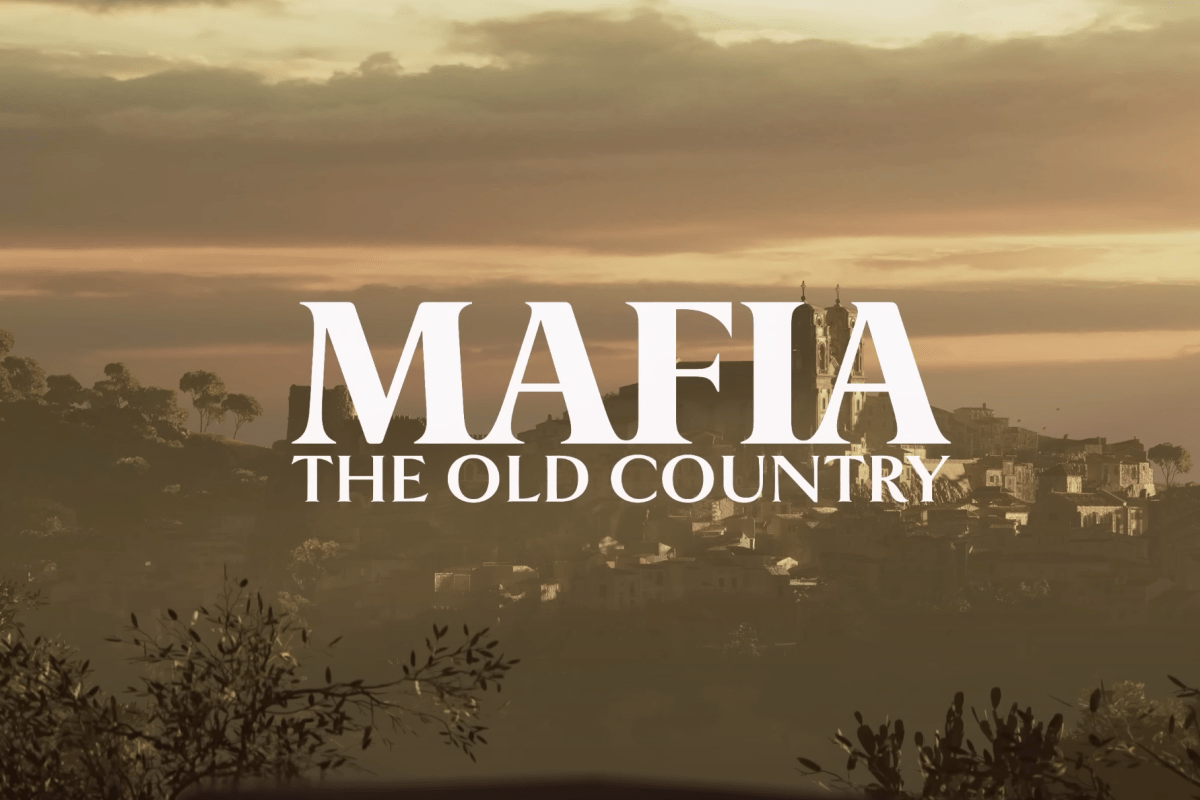
Thoughts on Mafia: The Old Country

I love Mafia.

The three titles spanning from the first game released in 2002 to the New Orleans-inspired third setting from 2016 is one of my favourite gaming series, up there with the Ezio Auditore and the Hitman trilogy.

The whole package was remastered recently, with a remake of the first Mafia released in 2020. There has been speculation over the next game and setting, with many tidbits indicating the next release would be set in the 1970s in Las Vegas.

But this year at Gamescom, developer Hangar 13 released a trailer for the newest title in the series, titled Mafia: The Old Country. The trailer is just over a minute in length, but it has set the Mafia fanbase abuzz with excitement.

And as a proud Mafia fan, I thought I could speculate too on what we might find in the game. Let’s start!

An Offer You Can’t Refuse – Speculating over Mafia: The Old Country

1. The Location and Setting

Both the title and the trailer give clues as to where and when the game is set.

“The Old Country” as a phrase is in reference to first-generation immigrants, usually to the United States of America. So for Italian immigrants, Italy is the “Old Country”.

“The Old Country” was even used as a chapter title in Mafia II, where during WW2, protagonist Vito Scaletta was part of the US Army invading his home island, Sicily.

We can hone in on Sicily as the exact location through the trailer. The first is an image of Saint Rosalia, covered in blood droplets. When members join the mafia, the go through an initiation process where they drop their own blood onto a chosen saint. Saint Rosalia is the patron saint of Sicily, which would indicate that this would be the location.

Another image from the trailer is the final landscape shot, with a distinct building with two towers. A building very much of this likeness was also a key location during Mafia II’s Sicily chapter, so it’s plausible that these could be the same location.
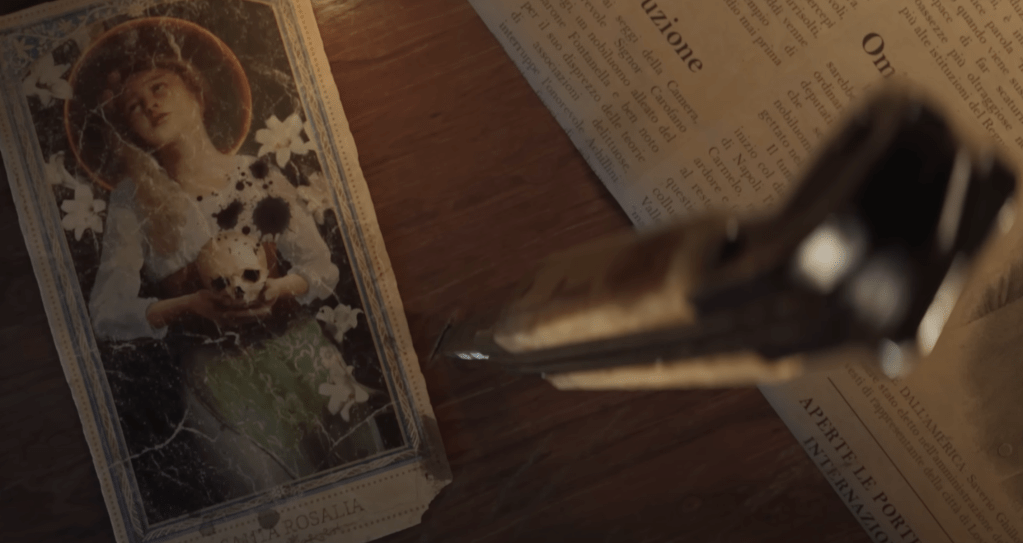
Saint Rosalia in the trailer. She is frequently depicted holding a skull. (Source: YouTube, Mafia Game)

The unnamed narrator’s first line in the trailer speaks of “This Thing of Ours.” This is also a veiled reference to the Sicilian Mafia, also known as “Cosa Nostra”. “Cosa Nostra” literally translates to “This Thing of Ours”, a way to obfuscate any officials listening in on the activities usually associated with the mafia, but indicates again that Sicily will be the location.

It will be interesting to see how the landscape is laid out in the game. Sicily is a mix of mountain ranges, dense cities, dry landscapes, and clear blue sea. The original Mafia included a countryside, but later entries just focused on cities.

The series has also always used fictional cities such as Lost Heaven, Empire Bay, and New Bordeaux (Chicago, New York, and New Orleans respectively). Palermo (Sicily’s main city) is heavily tied in with the lore of Mafia, so I wonder whether they keep their trend of a fictional city or will finally base it in a real city.

While the trailer doesn’t give a concrete indication of the time period, the fact it is called “The Old Country”, a rotary telephone can be seen in one frame, and a figure is seen wearing an old-style waistcoat would indicates the early 1900s, the earliest time period the series has ever been based in.
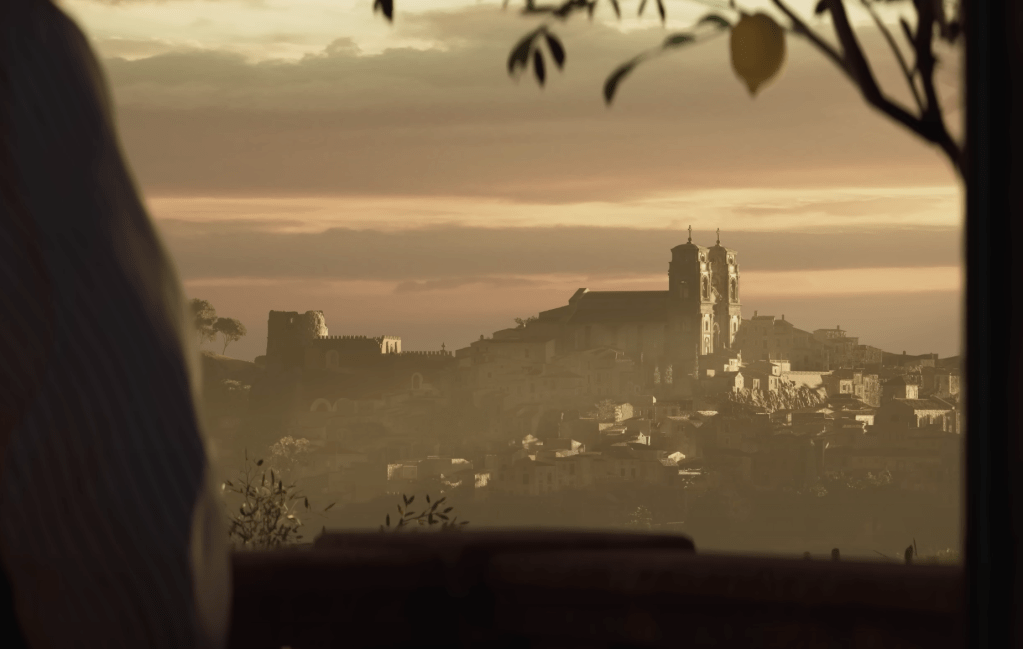
Sicily would be a new and interesting location for games in general, moving away from the standard US setting (Source: Youtube, Mafia Game).

2. Characters

While we only got a brief glimpse of one character in the trailer, we can infer possible cameos, ancestors, and families from looking ahead to the other Mafia games.

To be made a full member of the mafia, a man must prove that he is from Sicily or is a descended from Sicilian roots. People from other nations can work for the mafia, but can never join as full members.

Several important characters in the series started their criminal life in Sicily before moving to the USA. From the first game, Don Ennio Salieri and his consigliere Frank Colletti grew up together, setting up dog races as children and winning bullet casings and other trinkets. Another Don from the same game is Marcu Morello, who also moved across from Sicily as a child.
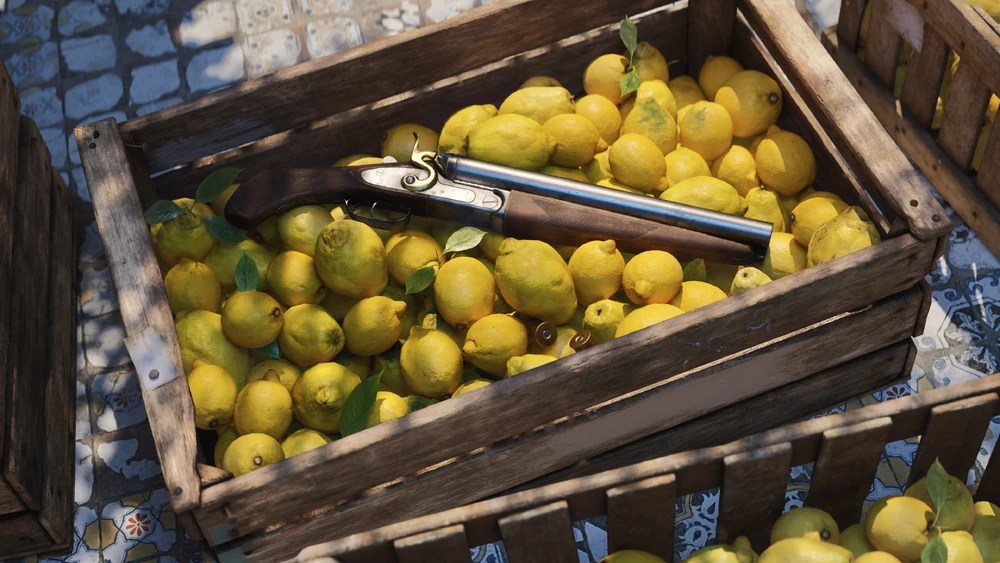
Official artwork showing a Lupara amongst the lemons, imagery associated with the Sicilian Mafia. (Source: mafiagame.fandom)

In Mafia II it is the same, with major characters like Leo Galante, Frank Vinci, and Carlo Falcone, all emigrating in the early 1900s. Alberto Clemente, another Don from Mafia II, had to flee Sicily after killing a police captain in Palermo. One of Clemente’s lieutenants, Henry Tomasino, was also born in Sicily, fleeing at his father’s request after Mussolini took power.

With all these characters being born somewhere between the 1880s and the 1900s before moving across the Atlantic Ocean and setting up business there, we could see a few of these family members making their start in organised crime. As mentioned above with Saint Rosalia, the image of the saint is used during an initiation, so it’s highly likely that that same imagery will be in the game.

I don’t really want any previous characters to be the playable protagonist (I would rather it be someone new to keep some mystery as to their life story), but those character could be featured as cameos for a few chapters. With so many leaving for the United States, it could be a nice bittersweet moment. When we think of people leaving for a better life, we rarely remember those they have to leave behind.
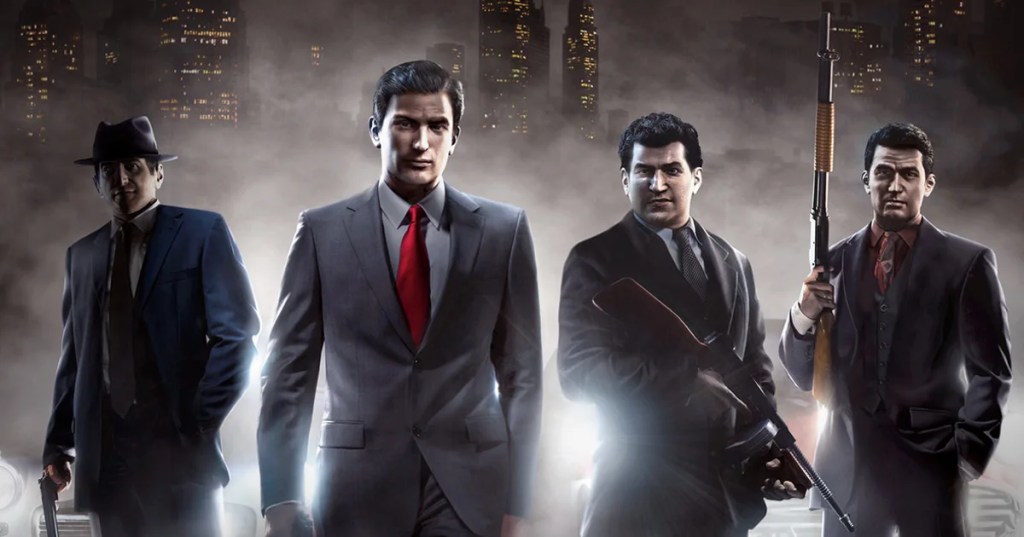
From L to R: Eddie, Vito, Joe, and Henry from Mafia II. Maybe we’ll see their ancestors in The Old Country. (Source: vg247.om)

3. Story

This won’t be a general outline, but more ideas that I think may turn up in The Old Country.

The series as a whole is heavily influenced by cinema and cinematic presentation, usually taking situations and themes from films such as The Godfather and GoodFellas and replicating them in the game.

Portions of both The Godfather Part I and Part II are set in Sicily, with families taking revenge during funerals and shipping their children off to America when it becomes too dangerous for them to stay. With all the characters that left Sicily to move to America, this is probably a major story point in the game.

Artwork in the trailer includes Jesus Christ on the cross as well as the Greek myth Acis and Galatea, with common themes about love, jealousy, and eventual death. They would be easy story points to add into the game.
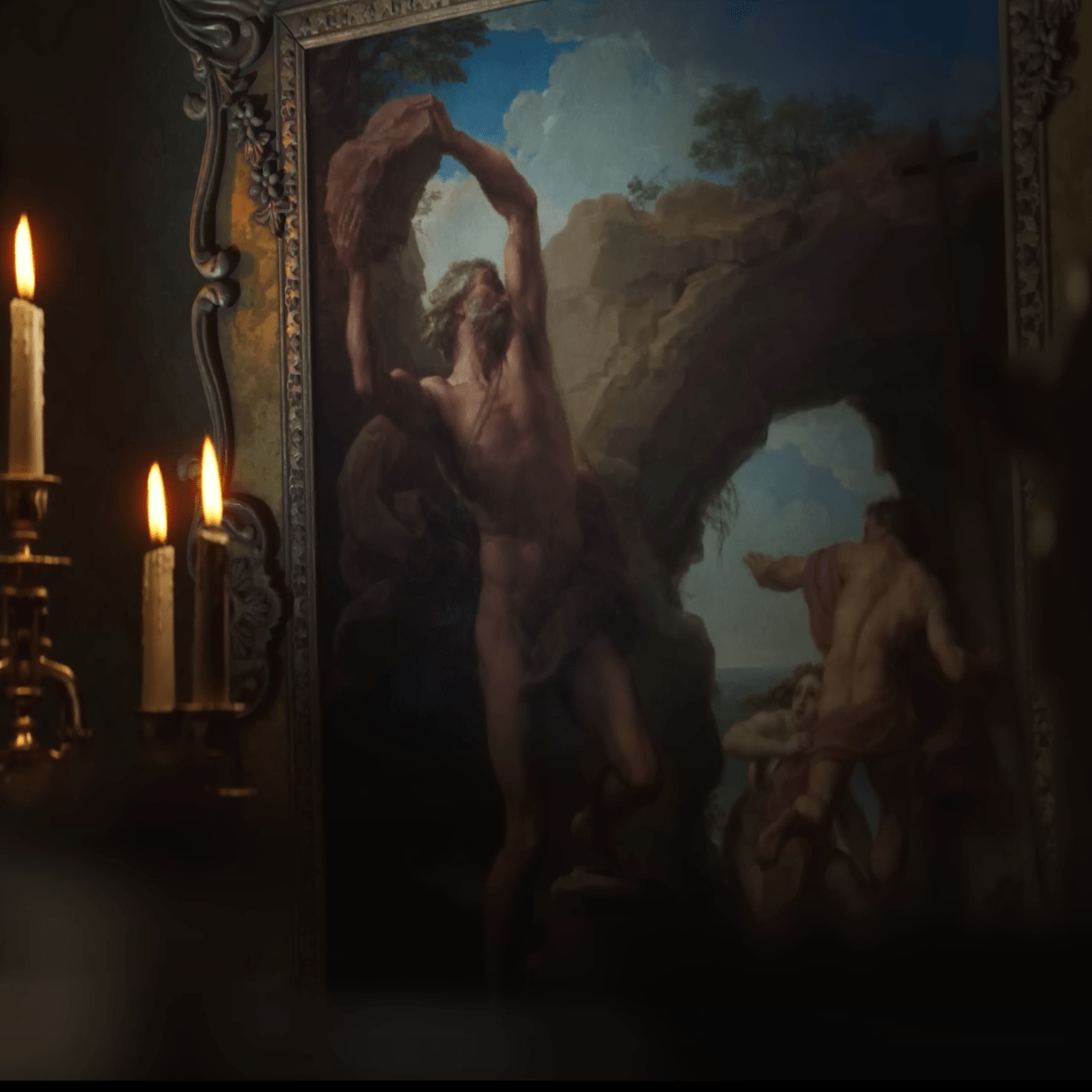
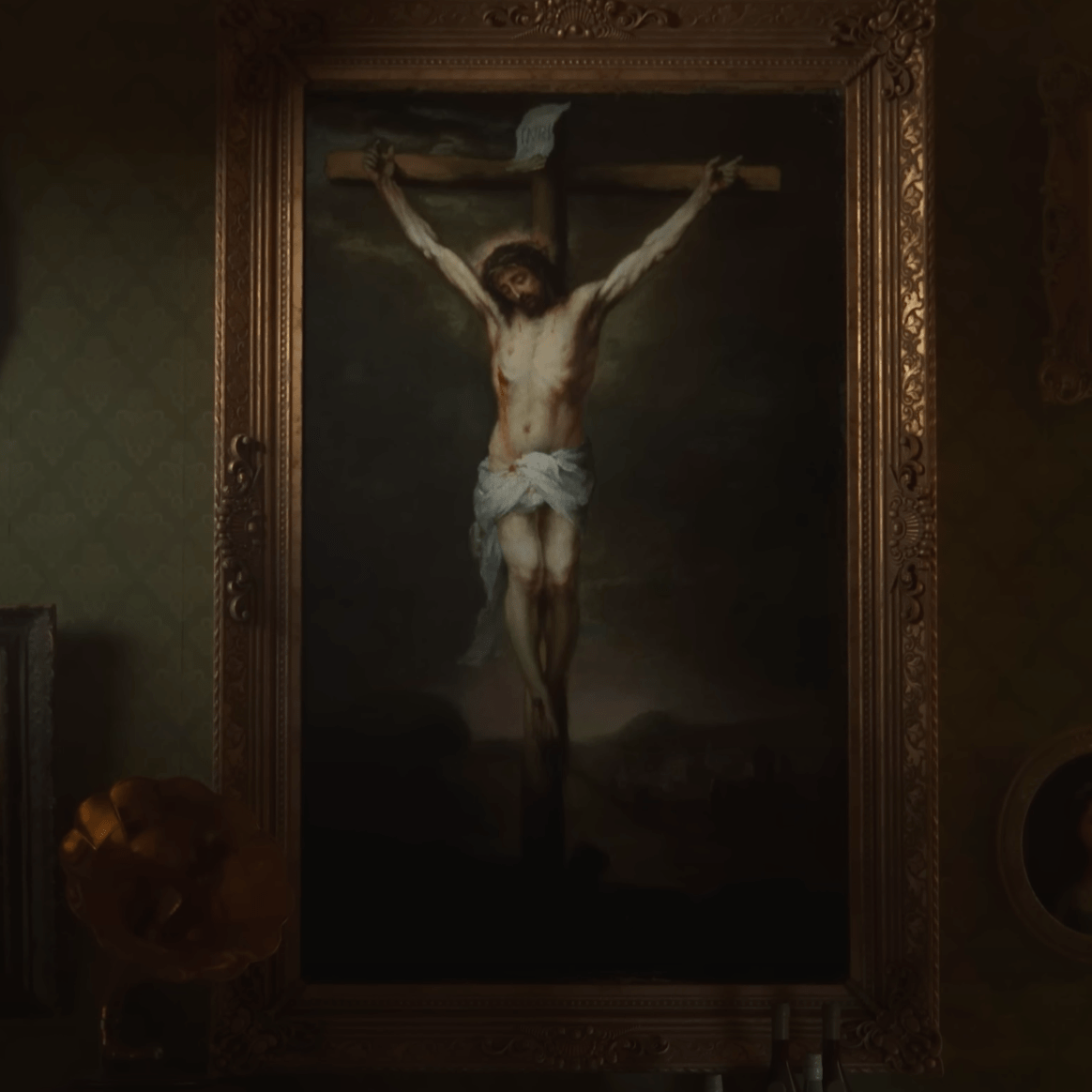
The 1900s was a tumultuous time for Europe, so it has to come up at some point in the game. With WWI from 1914 to 1918 and Italy being a major force fighting against Austria-Hungary, the war setting could easily be a way to have the player character have a general knowledge of how guns work.

1918 also was the year that the Spanish Flu was widely recognised across Europe. While I don’t think it would be a major part, it’s an interesting fact that Saint Rosalia is also the patron saint invoked during plagues. Maybe it will be a background theme or giving a character a death scene much like Arthur Morgan in Red Dead Redemption II.

The main historical point in Italy in the early 1900s is the fascist Benito Mussolini’s rise to power in 1922. There was a very public and concerted effort by Mussolini to destroy the mafia, with special prosecutors sent to root out criminals in Sicily and elsewhere in Italy.

I think this will be the main crux of the game, seeing the Sicilian Mafia be built up and then crumble as more and more flee to the safety of America and Mussolini cracks down hard on organised crime. We probably won’t be fighting old Benito ourselves, but maybe a special prosecutor who is brought in.
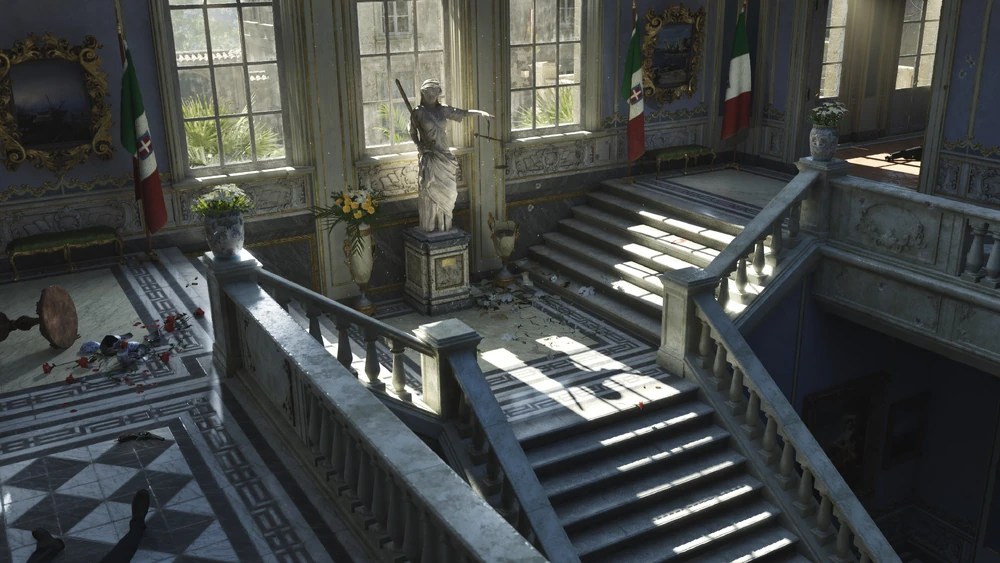
Some of the artwork for The Old Country looks very reminiscent of Mafia 2‘s Sicily level. (Source: mafiagame.fandom).

It’s also of interest to note that in Mafia II, the Italian Blackshirts surrender due to the local Don, Don Calò, who is a real life person and supposedly helped the Allies invade Sicily. Just a little something to think about, as a neat way to keep the tradition of seeing Vito Scaletta in every game.

So those are my thoughts on Mafia: The Old Country. We won’t be waiting long until we see more of the game, as Hangar 13 promised more in December of 2024. I for one can’t wait to see more!

Photo Banner Source: YouTube (Mafia Game)

Mafia: Definitive Edition and Tommy Angelo’s Lost Personality

I’ve recently been playing Mafia: Definitive Edition and been having a blast. I love the Mafia series, even dusting off the old Playstation 2 a few years ago to experience the original game for the first time. The first Mafia came out nearly twenty years ago, but still has a charm and identity not found in more modern games.

It feels odd and comforting to play the remake so soon after the original game. Despite the remake built from the ground-up, developer Hangar 13 did a spectacular job of bringing the essence and locations of the first game to life. Their craftsmanship is so good that I can use my half-remembered map knowledge of the first game and it translates perfectly to the remake.

I was really excited to play the remake partly due to the story. The original Mafia is a collage of old gangster movie and literary tropes, but always tried to put a unique spin or add a thoughtful aspect into the narrative. This extends to the characters.

While most of the cast are Godfather or Soprano’s stock types, lead character Tommy Angelo is an interesting reflection and critique of not just characters in gangster films, but also gangster-based video games like Grand Theft Auto.

One mission that reflects Tommy’s personality and uniqueness in the original game is the chapter called “The Whore”. Don Salieri, Tommy’s boss, learns that a woman in a brothel, Michelle, has been spilling secrets to a rival gang who have taken over said establishment. Tommy is tasked with killing the manager of the brothel and Michelle, before blowing the building up to send a message to any else wanting to switch to protection to the rival gang.

Tommy carries out his task dutifully, killing the manager in front of the paying customers before heading towards Michelle’s room, but as he enters he realises he knows her; she is one of the friends of Tommy’s girlfriend, Sarah. Tommy feels sorry for Michelle and tells her to run and to never come back.

The definitive edition changes the scene…and in my opinion, for the worse.

In the remake, Tommy is asked by one of his friends, Sam, to spare Michelle. It turns out Sam is one of Michelle’s regulars, and he was the one that accidentally told her secrets that she inadvertently spilled to the rival gang. This completely changes the scene and takes away a large part of Tommy’s personality, I’ll explain why.

Here are the two clips from both games. Here’s the first from the original game (start at 5:04).

And here is the second from the remake.

With that set-up, let’s dive in.

Booze, Bullets, Broads and Bums – How Michelle Gives Tommy Angelo Character

I previously said that nearly all the characters are stock types. This can easily be seen with Tommy and his two friends, Paulie and Sam.

Paulie is a bruiser with not much going on between his ears. When doing a first shake-down with the gang, Paulie enters a shop alone, and Tommy can hear the crashing and banging from outside in his car. Frank, the consigliere of the Saleri family, remarks about Paulie, “Paulie has hit his ceiling…he’s not smart enough to run anything.” (1:32:03).

Sam is the more serious of the two, always stony-faced and not a big talker. When Tommy escorts Paulie back from the race track in Chapter 6, Paulie talks about all the ‘bad shit’ he’s done, and says that Sam is able to blank out all the crime in his head. Frank also says, “Sam is loyal, but has no vision.” (see above link). In the end, it is Sam wanting to move up in the crime world that sees him betray Tommy to the Don.

Tommy in the original is very quiet and unassuming. While many game protagonists are like this because they fall prey of Tabula Rasa Syndrome (a blank slate so anyone can project what they want onto them), Tommy’s personality is hammered home by the game script from the start.

Even after saving Paulie and Sam from a rival gang and being offered a place in the mob at the start of the game, Tommy initially refuses, saying, “I didn’t want to join some criminals, even if they had all the money in the world. It’s better to be poor and alive than rich and dead…I was going to get my cab repaired and try to forget it as soon as possible.” (11:06).

When Tommy heads back to the Salieri Family for protection after he is jumped by a rival gang for helping Paulie and Sam, the Don points him the direction for the people who attacked him and sends Tommy and Paulie to exact revenge. Frank muses to the Don, “I wouldn’t trust him so much. He seemed hesitant. He’s just accepted now because he has no choice.” (15:49).

Up until the chapter with Michelle, Tommy hasn’t done anything too crazy. He’s been in a few chases, some fistfights and shootouts, but he could always moralise killing other people by thinking it’s the other person or himself on the line.

When he breaks into Michelle’s room and she tries to make excuses, saying she didn’t mean to hurt anyone, Tommy starts thinking, “I knew it. This could only happen to me, a total screw-up. I can’t just kill a young girl. A young naive fool…on the other hand, is it worth getting killed over it?”

Tommy decides to risk the Don not finding out and tells Michelle to leave and never come back. It’s a perfect example of Tommy’s worldview. He isn’t blinded by faith to the Don, only really becoming a gangster out of fear for his life, rather than any ambition.

It adds so much personality to him and reflects in later character moments such as sparing Frank’s life and attempting a botched bank robbery with Paulie.

It also helps that Michael Sorvino, the original voice of Tommy, has a very soft voice. He isn’t a gravely or baritone voice like Sam or Paulie, and he rarely if ever raises his voice in the story. He always sounds like an average joe, rather than a hardened criminal.

In the remake, it’s the complete opposite. While the new actor for Tommy, Andrew Bongiorno, is tremendous throughout, in the Michelle scene, he is very aggressive, pushing the barrel of his gun right up against her head and shouting at her. Overall in the remake, Tommy warms to the gangster life much more than he did at this story point in the original game.

The fact Tommy comes to the decision to let Michelle go because of Sam cuts away at that great character he had in the original game, and in doing so makes him seem more like a general goon rather than someone who was inadvertently roped into the gangster life.

It’s obvious that the Michelle’s connection with Sam was to give Sam some extra spark. In the original game, Sam essentially becomes a tertiary character, with Paulie taking centre stage with Tommy for most of the game.

But everyone gets more to play in the remake. Tommy’s wife, Sarah, gets one chapter appearance and then a handful of mentions in the original, but gets upgraded to a main cast member in the remake. Paulie gets more shades with his drinking issue and loose mouth, and Sam gets Michelle as a love interest. I would have been happier for them to just add a completely new narrative arc for Sam, rather than fall back on this one story thread.

At the end of the original game, Sam tells Tommy the Don has ordered Tommy’s execution partly because of letting Michelle live. It’s the same in the remake, with only a passing remark about Sam being sweet on Michelle.

I guess it makes Sam even more snake-like than he was in the original, that he’s willing to throw a girl he was very much infatuated with under the bus to get ahead in the mob, but it’s at the detriment of the main character.

In conclusion, I still love Mafia: Defintive Edition. And on its own, I actually really love the Michelle section. The emotions are raw, the dialogue is believable, and the actors sell the hell out of the scene.

But as part of a story, I think it undermines Tommy so much. It’s amazing how one scene, with just a small tweak, can totally change how we look at a character and their arc.

I knew Tommy Angelo would change in the remake, but I didn’t know that I wouldn’t find him as compelling as I once did.

If you would like to read more on the Mafia series, I’ve written both on Mafia 2‘s protagonist, Vito Scaletta, and also my love for Mafia III.

Banner Photo Source: epicgames.com