I have been on-and-off learning German for five years now.
Through online classes, a dash of Duolingo, and general real-world-exposure, I am able to get by in most situations and conversations, only struggling with speed and specialised words.
General linguistic wisdom tells a student to immersive themselves in a language, such as reading books and watching films and TV in the target language. But as gaming fought with TV time, I decided I was should start playing games in German to increase my vocabulary.
While I had pondered whether to play a game I knew the dialogue of for a fun challenge, I also had a behemoth of a game on my “to-play” pile, and decided to go for that.
The first game I would play in German would be Assassin’s Creed: Valhalla.
So, let me have an indulgence as I write about my time in Viking England, with a German valkyrie as my avatar guide (because who plays Valhalla as male Eivor? Female Eivor forever!)
“Ich bin Eivor vom Raben-Clan!” – Learning German With Assassin’s Creed: Valhalla
I have written before about the use of other languages in games, even using Assassin’s Creed as an example.
When I had played AC: Unity and Liberation, I set the language for both to French, as Unity is set in Paris and Liberation in colonial-era New Orleans. However, these switches were for immersion rather than to learn, but they had started an interest in me to search for language settings in games.
And actually, Ubisoft, creators of Assassin’s Creed, have a great track record for doing languages in games. So many games, even AAA ones, don’t make a distinction between language audio, subtitles, and game text.
You may want a different language for dialogue, but keep the text and subtitles in another, and most games won’t let you. It’s a luxury in development time and extra tech logic to separate them. But Ubisoft separates the individual components, so players can customise how they would like.
AC: Unity was one of the first games I changed the language, making Paris much more immersive (Source: ign.com).
***
One of the main reasons I chose AC: Valhalla for my start in German is for the story. Not the narrative per se, but the nuts-and-bolts dialogue and missions.
If I had played something like Call of Duty in German, I might learn the words for “missile”, “tango” and “terrorist”. Interesting for sure, but not words I would be able to use every day.
A big part of Valhalla is the role-playing aspect, dialogue trees and quest-based design. It would give ample opportunities and for every day words to be used in-game.
So whenever I would play, I would sit down with my pen and paper and when I would hear a word that I could use, I would note the English from the subtitle and write down a phonetic sound-by-sound version of the word.
After playing I would go through and edit my notes to be the correct spelling or straighten up any mis-aligned phonetics. When I started, my focus was on singular words, meaning I could easily match subtitle to phonetic, something like “sofort”, meaning “exactly”. I eventually graduated to full sentences and questions.
And after marauding across the English hills for many hours, I had an eye-opening moment. I heard Eivor ask, “Habe ich eine Wahl?” (“Do I have a choice?”) and I could understand each and every word without even glancing at the subtitles.
It was a true light-bulb moment, of words I had learned through classes, exposure, or TV, and my brain made the snap translation almost immediately.
“Was siehst du, Synin?” – Eivor’s pet raven, and one of my first noted phrases (Source: reddit.com).
***
Something that I learnt about while playing was German dubbing culture in film, TV, and games.
While a lot of films and TV made in the US or UK are shown in Germany and Europe as a whole, that can be two different ways it is presented.
Many if,ms and TV shows are shown in their original language, but with subtitles (this is how a lot of non-English speakers learn English, and why sometimes they come away with specific accents because of a show they watched).
The second is dubbing, where voiceover actors are attached to one or two real-world actors. For example, Maria Koschny, female Eivor’s German dub, also dubs for Jennifer Lawrence, and does all the films that Jennifer Lawrence has starred in.
Being voiceover specialists, these voice actors are usually brought in for games and anime dubbing, even if the real-world actor they are attached to is not present. This led to a great moment where my partner, in earshot of me playing, asked “Why is Julia Roberts playing a Viking princess?”
I have to praise Maria Koschny’s excellent performance, whose voice I now solely associate with Eivor (Source: ign.com).
***
One of the great things about such a deep narrative game as Valhalla is it’s interpersonal connections. Eivor has several deep discussions with allies, enemies, and everyone in-between.
Valhalla has a sprawling 300+ hours of content with main story missions, as well as a variety of in-world encounters and side-quests.
The people that Eivor encounters in each mission life to talk about a whole range of topics such as life, history, politics, and philosophy, mainly advancing character development rather than advancing a plot point.
It was here where I found the most advantageous words and phrases, rehearsed their sounds and how to use them in a sentence, and then brought them out into the world.
And still, when I think of those specific words, my memory returns to those exact moments in the game. Eivor walking through a night-time market, celebrating with friends after a successful siege, arguing with ice giants in Jotenheim, and returning relics to the Saxon king Alfred.
When the end credits came, I was a little emotional. Not only for the countless hours and months I put into the story, but also something deeper. A learning experience, personalised to not feel like memorisation of key words. And so I will continue to change languages where I can and adding to my word list.
But AC: Valhalla has a soft spot in my heart, for being the first and being a great introduction to learning through play.
He started a franchise, was a standout for the start of the seventh generation, and defined an entire series…yet he’s only appeared in one game.
Over a decade and half after his first and only major role in video games, Altaïr Ibn-La’Ahad is still referenced and idolised in the Assassin’s Creed series.
Yet as I mentioned above, he only got one major game to himself, with only short extra chapters in Assassin’s Creed: Revelations tying him in with the more famous Assassin, Ezio Auditore.
So who is this man? How did he start this franchise, and does he deserve more accolades for his action? I want to study him.
“Nothing is True. Everything Is Permitted” – What Makes Altaïr a Great Character
As with any character study, there are points of contention that must be addressed. Firstly, the game is not just about Altaïr during the Third Crusade in 1191, but about his descendant Desmond Miles in the modern day.
Not all memories available to the player (and Desmond) flow in a sequential order. At many points the Animus, the machine Desmond is using to relive his ancestor’s memories, skips forward to a more recent one.
For the most part the skip ahead is during travel or resting periods at the Assassin Bureau, it is something to keep in mind as it leaves sections of Altaïr’s life out of the picture.
Second, at the start of the game Altaïr loses all of his Assassin abilities and gear, having to earn his rank back over the course of the game. While this is to facilitate the gameplay loop, it is something to keep in mind, no matter how silly it is.
Finally, the Animus adapts speech for Desmond and the player to aid communication. The first AC is set during the Crusades in the Levant, comprising of modern day Syria, Israel, Palestine, Lebanon, and Jordan, meaning that Arabic, English, German, and French would have been spoken.
Not only are translations to be made, but also updating the language from 12th Century to modern day, as the Animus is known to do. Some languages don’t have exact word-for-word translations, so it’s something to keep in mind when thinking of meaning.
But with that out of the way, let’s begin.
The first thing to come to mind when discussing characters is their names. Names can tell us so much about a character from their meaning to their social status to the etymology, it’s quite fascinating.
For example, from Assassin’s Creed Valhalla, the main character, Eivor, last name changes depending on the gender picked by the player, between Varinsson or Varinsdottir, based on Icelandic and Viking tradition.
Altaïr Ibn-La’Ahad, translated from Arabic means, “The Bird, Son of No-One”. Birds are a well-known trope in Assassin’s Creed. “Altaïr” is the name of the brightest star in the Aquila constellation, which means “eagle” in Latin. Despite being Latin, a lot of stars have Arabic names, with one of them being Altaïr.
I believe though that Altaïr is not a given name, but rather a nickname that has been given to him by the Assassins around him. As mentioned in his Revelations database entry, the other Assassins knew of his “sixth sense” and had dubbed it “Eagle Vision”.
It would seem serendipitous that Altaïr’s name literally matches up with the name that his fellow Assassin’s would name it, but I believe the clue to “Altaïr” being a nickname or chosen name can be found in his last name.
“Ibn-La’Ahad”, literally translated as “Son of No-One”. Altaïr’s parents are only briefly mentioned in-game, during his Codex pages. But in the companion book, The Secret Crusade, we learn more about Altaïr’s life before and after the events of the first AC.
His mother, Maud, an English Assassin, died after childbirth, leading Altaïr to be raised solely by his father, but this was short-lived.
Maud, Altaïr’s mother, in one of only a few images of her, in Assassin’s Creed Initiates. (Source: assassinscreed.fandom)
***
When Altaïr was only eleven years old, the Saracen leader Salah Al’din laid a siege on the Assassin stronghold of Masyaf. Umar, Altaïr’s father, was sent to deliver a threat stealthily to Salah Al’din, but was spotted and had to kill a nobleman to escape.
Salah Al’din’s uncle, Šihab, was sent to broker peace, demanding the Assassin that killed the nobleman to be executed. Umar agreed and was beheaded in front of the Assassin stronghold, with Altaïr watching on.
While Al Mualim in the first game says that Assassins “do not fear death, they welcome it!” (3:12), it could be still thought that some sort of honour system exists during the time period or location. When Altaïr is stripped of his rank, Al Muslim refers to it as “lost honour” (18:40).
Other instances of honour include when Altaïr flees Masyaf thirty years after liberating it from Al-Mualim. His Assassin rival, Abbas scream after him, “I will have your head for the dishonour you brought upon my family.” (25:00). Altaïr comments later that Abbas feels, “shamed by his family’s legacy.” (26:23)
Even so, if it wasn’t a strict hierarchical honour system, the fact Umar had to kill to escape rather than slip into shadows may have made others think that he wasn’t a gifted Assassin, and had to die to restore his honour.
As one Assassin says to Altaïr in the memory “The Mentor’s Keeper”, “He was a fine man your father. He lived just as he died, with honour.” (0:38).
Concept art with Altaïr and eagle imagery. (Source: assassinscreed.fandom.com)
***
If others made callous remarks about Umar, these jabs would have eventually comes to rest on Altaïr. So with the death of both his parents and trying to escape his disgraced father’s shadow, a name which translates to “Son of No-One” would make sense.
There is another theory however, as according to Altaïr’s Codex Entires found in ACII, his parents weren’t the most caring. He writes in #24,
“Some days I miss my family… Or at least the thought of them. I never knew my parents well, despite them both having lived within these walls. It was our way. Perhaps they were sad, though they showed no sign—it was not allowed.”
So “Son of No-One” could just be a reflection on his parents distance to him, biologically his parents but in no way crossing into social parentage. In the same Codex entry, Altaïr muses,
“Some day I will have a child—such is the way of our Order,” which also makes it sound as if there used to be no real love or companionship when deciding to become a parent, just having a child so they too can be inducted into the Order.
This is further compounded by Altaïr in AC: Revelations, when Al Mualim compares his excellent skills to his father, Altaïr responds, “I did not know him as a father…he was an Assassin above all.” (9:32).
Just before his death, Umar calls out to Al Mualim to take guard over Altaïr and induct him into the Brotherhood. Al Mualim accepts and guides Altaïr into adulthood and it is hinted that Altaïr sees Al Mualim as the father figure that is always there for him when he needed him most.
Indeed, twice in his Codex from ACII, Altaïr refers to Al Mualim as his “father”(#24) or “like a father” (#1).
It’s a hope of a father figure, but even at a young age knowing the boundaries of the Order does not allow anything, leading to a coldness later on.
Even when Al Mualim asks if Altaïr regrest living as an Assassin, Altaïr shrugs it off saying, “How can I regret the only life I’ve ever known?” (9:40). He response is nonchalant, not bitter at a possible other life, resigned that his skills are suited to being an Assassin.
Wise and powerful, Al Mualim is a cunning adversary, whose treachery is found only too late. (Source: assassinscreed.fandom.com)
***
Altaïr grows into a gifted fighter and Assassin, the youngest person in the Order to reach the rank of Master, and proves himself worthy time and time again to wear the hood and hidden blade.
By the start of the first gamethough, he is cold, arrogant, and foolish. The earliest memory in-game that we see of Altaïr is “The Mentor’s Keeper” (set in 1189, two years before the start of the first AC) where he directs other Assassin’s to drive the Templars back and saves Al Mualim’s life.
However, during his talk with Al Mualim after the siege, Altaïr doesn’t strike me as arrogant or aloof. When directing the other Assassins, sure he is brash, but not the “my way is better” approach in the original AC. What changed?
Answers can be found in the Nintendo DS game, Altaïr’s Chronicles. Set a year before the original game, Altaïr is sent by Al-Mualim to retrieve another fabled artifact, this one called The Chalice, before the Templars reach it first.
Altaïr’s investigation leads him to find that the Chalice is not an object, but in fact a woman called Adha. After freeing her from the Templars and escaping together, the two fell in love and planned to run away together. Altaïr even assassinated an Assassin spy to safeguard their flight, even though he knew it would mean being outcast by the brotherhood.
This did not go to plan however. Adha was once again captured by the Templars and taken aboard a ship, sailing away from Altaïr even as he called out to her that he would find her. He pursued the Templars across the sea, but Adha was executed not long afterwards.
As mentioned in #7 his Codex in ACII, Altaïr writes;
“I had thought Adha would be the one to lead me to rest, that I might lay down my blade and live as a normal man. But now I know such dreams are best left to sleep…
…I hunted each man—one by one—until all responsible were gone from the world. But there was joy in this. No satisfaction or release. Their deaths did not bring her back. Did not heal my wounds. After that I was certain I would never again feel for a woman as I had for her.”
Adha (in the middle) as she is shipped away at the end of Altaïr’s Chronicles. (Source: YouTube, Assassin’s Creed Series).
***
Up until meeting Adha, Altaïr would have been the model Assassin student, but on encountering love and romance for the first time, his resolve in the Creed fails. He finds it limits him, denying him a true and powerful feeling.
Coupled with the knowledge of his parents’ relationship, he obviously believed that being in love and being an Assassin are antithetical.
So at the sight of a new and exciting life ahead that was snatched away, you can see Altaïr becoming disillusioned with the Creed, leading him to break all the tenets during the raid on Solomon’s Temple. It’s not a rebellion in an edgy “I-don’t-play-by-the-rules” way, but cynicism and almost a nihilistic approach to life.
And so after fleeing Solomon’s Temple, Altaïr head back to Masyaf and inadvertently leads the Templars straight to the gates. Despite this, Altaïr is one of the Assassins tasked with trapping the Templars after performing a Leap of Faith.
Just as a sidenote, it’s interesting that Altaïr is placed almost in the same way as his father was twenty years previously. Both lead a foreign army to their door and both symbolically die to drive the forces back, the only difference being Altaïr physically survives his ‘fall from grace’.
After stopping the Templars, Altaïr is sentenced to death and Al Mualim stabs him with a dagger, only later to be revelled as a ruse to warn other wayward Assassins. Again, it’s another marker of Altaïr being symbolically cutting him off from his old life, allowing him to be reborn, with Al Muslim literally saying, “…you slept the sleep of the dead, of the womb.” (6:24).
And it really does seem like this wakes Altaïr from his nihilism. Reduced to a novice rank and given a list of nine targets across the Holy Land, Altaïr throws himself into his assignment, systematically taking down those that profit from the war without a hint of the arrogance or nihilism of before.
However, in being ‘reborn’, it is almost as if this has washed away the mental supports of the Creed, leaving a belief system that only needs a few choice pressures to fall apart, but also freed Altaïr from its confines as well.
After every assassination, Altaïr extracts a last confession from his targets. And while they try and moralise their work to Altaïr, they also begin to sow the seeds of doubt within his mind. About why these particular men and their intentions, so much that Altaïr begins to ask Al Mualim about it.
Altaïr extracting a confession from Sibrand in the “Memory Corridor” (Source: assassinscreed.fandom.com).
***
“I am fortunate to have been wrong.”
Despite these invasive thoughts, Altaïr does seem to develop as a character, and it can be seen in the confessions. At the start of nearly every assassination Altaïr tells the target to be at peace, laying them down and letting them slip without judgement into the void.
In “The Mentor’s Keeper” he relfected with Al Mulaim that, “No man should pass from this world without knowing some kindess.” (9:07), and he seems to have found it within himself again.
With Abul Nu’qoud, scarred and deformed, and who killed other nobles for their cruel mockery of him, Altaïr says, “Be at peace now. Their words can no longer do harm.”
When talking with Sibrand, Altaïr tries to connect on a spiritual level during the dialogue;
Sibrand: Please, don't do this.
Altaïr: You are afraid.
Sibrand: Of course I am afraid!
Altaïr: But you'll be safe now. Held in the arms of your God.
When speaking with Majd Addin, Altaïr finally seems to have developed a conscience, reflecting on his former viewpoint;
Addin: I killed because I could, because it was fun! Do you know what it feels like, to determine another man's fate? And did you see the way the people cheered? The way they feared me? I was like a God! You'd have done the same if you could. Such power!
Altaïr: Once perhaps. But then I learned what becomes of those who lift themselves above others.
And when Altaïr learns of the Templar Grand Master Robert de Sablé’s plan to unite the Holy Land against the Assassins, he argues the case to strike before permission with Bureau Leader Malik.
Malik: Look, Brother. Things have changed. You must return to Masyaf. We cannot act without our Master’s permission. It could compromise the Brotherhood. I thought... I thought you had learned this.
Altaïr: Stop hiding behind word, Malik! You wield the Creed and its tenets like some shield. He's keeping things from us, important things!
Malik is another integral character to Altaïr’s story, with Malik losing an arm and his brother due to Altaïr’s mistakes. (Source: assassinscreed.fandom.com)
***
Alongside the development of skepticism on Assassin ritual, Altaïr has learned to take a moment with his targets, seeing them not as enemies but as humans, with their own fears and ambitions.
All of this develops into a greater understanding of the world, which then brings Altaïr into direct conflict with Al Mualim.
While the master and student do finally face-off, the downward spiral can be seen throughout their interactions with every Templar Altaïr hunts.
At first Altaïr comes back to Al Mualim with curiosity of the seeds of doubt the Templars sowed, but towards the end he begins to demand answers, confronting Al Mualim for speaking cryptically.
In the end, when the two meet for the last time in the Masyaf Garden, Al Mualim chastises Altaïr, demeaning him for his supposed failures as an Assassin, of being blind to the bigger picture, and falling to emotion rather than logic.
Al Mualim then reveals the Piece of Eden’s power and explains that he tried to force Altaïr to bend to his will, yet couldn’t.
‘Who you are and what you do are twined too tight together. To rob you of one would have deprived me of the other.”
Altaïr strikes back with words every time Al Mulaim tries to lecture him and I believe this is how he eventually bests his former Master.
Al Mualim could have easily stabbed Altaïr as he did at the start of the game, but Altaïr goads him into a fight, and Altaïr, now quietly confident in his reaquired abilities, quickly dispatches his teacher.
He fights both with steel and his wits, learning that a closer emotional resonance with the world around him will lead to greater things, and so takes this facet with him from the garden and applies it now that he is Grand Master of the Assassin Order.
“…and he that increaseth knowledge, increaseth sorrow.” Altaïr sees through his master’s hypocrisy cynicism and vows to undo the damage caused. (Source: assassinscreed.fandom.com).
***
This development of a greater pastoral care can also be seen in his Codex. First in #4, Altaïr tries to break down the Creed and the Order on a moral level, but every time he thinks he has found justification, there is always one nagging doubt at the back of his head that they cause more chaos than peace.
Later on in #14, Altaïr resolves himself that they must continue to do violence, but only when the time is right. He views domestic abuse and children sold in war and slavery and writes;
“…On these days, I do not think that dialogue will make a difference. On these days, I can think only of how the perpetrators need to die.”
And in #6, Altaïr resolves to remake the Order, abandoning the rituals but not the Creed, seeking ways previously thought unwise, and in his own words, “We will be born anew…”
In #27 he realises that the Order is growing, and to teach those that seek understanding. He writes;
“More make their way to our fortresses every day…Each tells a similar story—of having discovered the first part of our creed: that nothing is true.
Too often, though, the revelation undoes them. They lose their morality, certainty, security. Many are driven mad. We must guide them. Help them heal.”
It is a development of mellowing and maturing with age, very similar to Ezio in Revelations compared to Brotherhood.
And while some of it comes from Altaïr’s self-discovery over the course of the first game, I believe two people helped him on this course.
One was Malik, the previously mentioned Bureau Leader in Jerusalem. Malik and his brother Kadar were alongside Altaïr in Solomon’s Temple. During the ensuing battle Malik lost an arm and Kadar was killed, leading Malik to foster a grudge against Altaïr.
As Altaïr rises through the ranks again duringthe story, the connection between him and Malik softens. Malik helps Altaïr infiltrate Masyaf to assassinate Al Mualim, and becomes Altaïr’s right-hand-man as Mentor, and is mentioned many times in the Codex.
The other person that helps Altaïr develop his inner self is the “templar Tomboy” Maria Thorpe. Their first interaction lasts no more than a minute, yet it sends ripples throughout Altaïr’s life and the Order of Assassins.
“I sense you expected someone else…” Maria acts as a decoy for Altaïr’s true target. (Source: assassinscreed.fandom.com)
***
The pair meet when Altaïr is sent to kill the Templar Grand Master Robert de Sablé, who is attending a funeral for the Saracen Regent Majid Addin (a nice connection between a previous target).
When Altaïr finally defeats Robert, the Assassin demands to see the latter’s face before striking the killer blow but he is shocked to see a woman underneath the helmet. Maria taunts him and explains Robert’s plan to unite the Holy Land, before Altaïr lets her go.
Maria is confused at this, she thought he would take her life as he had done to the last eight targets. He says she was never a target, so she is allowed to go.
It’s a long way from Altaïr at the beginning of the game, killing an innocent without a second thought, or even Altaïr during his Hunt for the Nine, who would kill any street preacher that he interrogated.
The two meet not long after though, in the PlayStation Portable game, Altaïr’s Chronicles. Set one month after the main game, the Templars have been weakened after Altaïr’s assassinations and flee Acre. They leave to Cyprus, so Altaïr follows them to eradicate them and uncover the Templar Archive rumoured to exist on the island.
Maria is with the Templars at the start, but without Robert vouching for her, she is now at their mercy. She is not trusted, thought to be a trickster and harlot, with the new Templar Grand Master saying that, “…it is through women that the Devil weaves his strongest web.”
As the Templars begin to turn on Maria, Altaïr repeatedly rescues her. And over time, Maria slowly warms to him as they make and break alliances against the Templars.
WhenMaria and Altaïr travel to Cyprus together, the first hints of romance begin to blossom (Source: assassinscreed.fandom.com)
***
During their first conversation in Altaïr’s Chronicles, Maria remarks, “the man who spared my neck but ruined my life”. It could be a sense of honour that binds Maria to not strike back against Altaïr, despite many chances to do so, instead fleeing each time.
Maria tries to make it back into the Templar’s favour, but when she Altaïr discusses the philosophy of the Assassins and Templars, Maria starts to become disillusioned.
When she confronts the twin ruling Templars of Kyrenia, Shalim and Shahar about their oppressive methods, she asks;
Maria: But our Order was created to protect the people, not rob them of their liberty.
Shahar: The Templars put no stock in liberty, Maria. We seek order, nothing more.
Maria: Liberty? Or enslavement?
Shahar: You can call it whatever you like, my dear.
Shahar went to subdue Maria, but Altaïr rescued her again, and she dispatched two of Altaïr’s pursuers before fleeing again. This was the turning point for the duo, as Maria now began to actively fight against the Templars, with and without Altaïr.
Once the duo had defeated the Templars upon Cyprus and buried the Archive, the two reflect with each other on the docks, preparing to leave the island.
Maria says, “Everything I worked for in the Holy Land, I no longer want. And everything I have up to join the Templars…I wonder where all that went, and if I should try to find it again.”
It’s the same revelations that the people coming to the Masyaf fortress discovered, the first line of the creed, that “nothing is true.”
Altaïr bonds with Maria, telling her that;
“For a long time under Al Mualim, I thought my life had reached its limit, and that my sole duty was to show others the same precipice I had discovered.”
Altaïr asks what she will do now, and Maria says she wants to travel, possibly to the East. She returns the question and Altaïr ponders while looking at the Apple of Eden. He too wants to travel to satiate his newly developed curiosity.
And when Maria asks where he wants to go first, Altaïr thinks for a second before saying, “East”. As the final cutscene plays with Altaïr writing in his journal, Maria moves close to his shoulder, reading over his notes.
It’s such a tiny detail, one word and a closeness that wasn’t there before, but it implies the start of a romance. And in the Codex page relating to the story of his love for Adha, Altaïr finishes writing;
“After [Adha’s death] I was certain I would never again feel for a woman as I had for her. I am fortunate to have been wrong.”
Again, it’s a small touch, both his previous mentions of Adha and not even mentioning Maria by name. Maria doesn’t even get named until ACII, by Desmond when he experiences the Bleeding Effect outside the Animus.
Speaking of, the vision Desmond has is the first indication of Maria and Altaïr together in the main games.
The vision starts with Altair chasing after a hooded “target” across the rooftops of Acre. Only when the target is cornered at the top of a tower that she pulls down her hood, revealing her face, and beckoning Altaïr towards her. It hints at a playfulness that has developed between the two, followed by a night of passionate lovemaking beneath the stars.
Altaïr and Maria, having just conceived Sef. The player perspective enters Maria’s womb when the scene ends. (Source: assassinscreed.fandom.com).
***
In the novelisation The Secret Crusade, the narrator Niccolò Polo says to his brother,
“This [time with Maria] represented a mainly peaceful and fruitful period for the Master. He talks of it little, as though it is too precious to bring out into the light.”
It could be read as a continuation of Altaïr’s parents, something which isn’t discussed or important to the Order, something to be held inside. It could also be Maria’s background. Being the first Templar to switch sides to the Assassins, a lot of the Order would have held her in suspicion.
But Maria proves herself, helping Altaïr and their two sons Darim and Sef in learning the ways of the Assassins, aiding Darim in his assassination of Genghis Khan, mentioned in #29 of Altaïr’s Codex.
However, tragedy strikes when they arrive back to Masyaf after the family’s time working in the field. When Altaïr and Maria come back through the gates, they find Abbas, another Assassin Master having taken over the Order, killing Malik and Altaïr’s son Sef.
Abbas wants the Apple and sends the other Assassin’s to take it, but in the struggle Maria is killed and Altaïr has to flee for his life. In the novelisation of the events, Altaïr leaps once again from the platform that allowed him to defeat Robert, another “fall from grace”.
We do not see or hear of Altaïr for another twenty years. Nothing has been even speculated as to what he has been doing, only that he returns to Masyaf first to talk with Abbas, and leading a full-on revolt as more Assassin’s join his side.
There are whispers in the village of an old man saving a merchant in the next valley over, and using a hidden blade. Even at over 80 years old, Altaïr is still protecting the innocent, but in the novelisation, he is almost killed, his age slowly his reflexes. At first I thought this was a relapse of his nihilism drawn from losing his lover again, but its actually Maria’s memory that keeps him going.
Before Altaïr fled Masyaf, Maria tells him, “Resist your desire for revenge…speak truth and they will see their error…speak reasonably, and reasonable men will listen.” As they continue into the Masyaf Garden, Altaïr says they may be walking to their doom, and Maria replies. “We may. But we walk together.”
When Altaïr returns it is this message that emboldens him, to fight the honourable fight and if it is his time to die then he will face it.
As the Assassins turn to his side and face off against their former brothers, Altaïr shows that pastoral care that he developed when he took over as Mentor. He says only those that have, “…raised their blade against an innocent,” should die for they have comprised the Order and the creed.
When fighting against Abbas’ minions, he orders the Assassins to, “…spill no blood if [they] can help it,” calling back to Maria’s final words to him.
Many in the Assassin Order do not trust Maria, no matter her actions for the Brotherhood. (Source: assassinscreed.fandom.com)
***
Once he frees Masyaf from Abbas’ grip, Altaïr disbands the entire Order in its current form. He sends the townspeople away and empties the castle. Ezio remarks when he visit the castle with Sofia Sartor, “[Altaïr] built us up, then set us free. He saw the folly of keeping a castle like this. It had become a symbol of arrogance and a beacon for all our enemies.”
Altaïr alone stays in Masyaf with the Apple. As opposed to Ezio who earned comfort in leaving the Piece of Eden, Altaïr still yearns to seek truth even in his dying days.
He says to his son Darim, “When I was very young, I was foolish enough to believe that our Creed would bring an end to all these conflicts. If only I had possessed the humility to say to myself, I have seen enough for one life. I have done my part. Then again, there is no greater glory than fighting to find truth.” (36:23).
In his final Codex entry, Altaïr ponders about what will happen to him once he dies, what of his consciousness and identity. He thinks back on his time with the Apple and there was no greater force stopping him from abusing its power. He is even tempted to look back into it to see if there is some way to extend his time on Earth.
These two sections are a perfect distillation of Altaïr’s entire persona; a life of contradictions and internal struggle, a journey of finding the secrets of the world, yet conflicted by his connection to the Order and his life.
And so he looks one last time into the Apple, before heading to his library vault, cleared out of all his possessions. He douses the fire in the brackets, and hears Maria’s voice calling out to him, telling him to abandon the Apple, and him regretting not listening to her. (38:25).
A man once known for his cold and calculating air, with his final thoughts, remembering those he loved, a departure from the Creed he grew up with.
“No books. No wisdom. Only you…fratello mio.” (Source: assassinscreed.fandom.com)
Conclusion
It’s been interesting to look back on Altaïr, especially for the shadow he has cast long after his one game.
I think he got forgotten quite quickly due to his follow-up, Ezio (who I’ve also written a character study about).
And I get it. Ezio is a lot of players’ entry point to the series. He’s fun, he’s cool, his story is better. There were a few nods to Altaïr in ACII but they could be brushed aside if you hadn’t played it.
I remember at the time of Revelations that there was a sense of fatigue in the air surrounding the game. It was another Ezio game, another Desmond game…and then also partly an Altaïr game.
I think he got lost again, a call back to something players had already forgotten about too, with the audience ready for Edward to sweep them off their feet again like Ezio had done at the beginning of his trilogy.
Yet I feel Altaïr has made his way back into the pantheon. His outfit has been an unlock able in Unity, Syndicate, Origins and Mirage. There have even been talks about a remake of the first game.
And while Ezio may have the accolades and the high praise, it doesn’t take away the fact that an entire franchise started around this quiet and unassuming man in a white hood.
Altaïr is still one of the prominent figures of Assassin’s Creed, influencing countless others along the way, and that’s why he deserves to be remembered.
I’ve just finished playing Assassin’s Creed: Liberation, originally a PlayStation Vita exclusive, now bundled with the recent Assassin’s Creed III remaster.
It feels refreshing and fun to go back to a game that uses the old AC formula, but with a new location, story and character.
And even after a short time playing it, Liberation is probably one of my favourite AC games, easily passing III and Black Flag in my ranking of the series.
So I thought a little breakdown of what I loved about it, and hoped to spread the good word to some AC fans that may want to return to something with a classic feel.
Ragin’ Cajun: Why I love Assassin’s Creed: Liberation
Scope
As mentioned previously, AC: Liberation was originally released on the PS Vita in 2012, to tie-in with the mainline entry ACIII. With the smaller hardware, reductions were needed to be made, but every change seems to benefit the game.
Instead of an intensely expansive world, Ubiosft Sofia (creators of the Prince of Persia HD release as well as the AC spinoff, Rogue) decided to keep things small and contained.
New Orleans and the Bayou, the two main areas of the game, are comparable to AC2’s Florence or Venice than the sprawling maps in ACIII (here is a forum thread of players calculating the size of the cities).
Smaller design leads to more intimate and detailed sections of the map, and allows players to get quickly attuned to their surroundings.
The churches of New Orleans, with their towering spires, become waypoints, allowing players to orient themselves to the location without having to pull the map out every few seconds.
It’s similar to the original Assassin’s Creed in that regard; a small contained map with distinct areas and easily identifiable landmarks. It helps the city feel rich and unique, directly because it is smaller.
This direction of scope is even found in the story and characters. While ACIII spends almost five whole sequences setting up the tragic backstory and family dynamic of its lead, Liberation does it in less than thirty seconds, with only around ten lines of dialogue.
It’s a masterstroke of character and lore-building and gets you right into the story. So let’s talk about that next.
Despite its smaller scale, New Orleans feels as detailed, polished, and“living” as later games in the series. (Source: ign.com)
2. The Story
Written by veteran narrative designers Richard Faresee (who worked on Revelations and III) and Jill Murray (who worked on Black Flag, its expansion Freedom Cry, and recently Shadow of the Tomb Raider), Liberation is one of the more unique narratives of the AC franchise, with it winning the Writer’s Guild of America Award for game writing for 2012.
After the Ezio Trilogy, Assassin’s Creed started to play with the formula for its stories. During AC2, Brotherhood and Revelations, the Templars were moustache-twirling bad guys worthy of a Saturday morning cartoon.
From ACIII to Unity, the mood shifted to portraying the Templars and Assassins as two side of the same coin, with more in common than what separates them.
Liberation follows this theme, but takes it even further, having a fun meta narrative within the story. Liberation is in fact a game created by Abstergo Entertainment, a video game branch of the Templar company, wanting to push their propaganda onto the public.
Your game signal is ‘hacked’ by an Assassin, who tells you the Templars are hiding the truth. The Templars doctor the events to suit their purposes, so you have to hunt down a ‘glitch’ known as ‘Citizen E’, who then reveals the truth behind each edited scene.
It’s a cool idea, echoing the interrogations and glitches from the first Assassin’s Creed, of a world beyond the one we are perceiving, of secrets and subterfuge that some of the other games have lacked (looking at you, Unity, where nearly every NPC knew who the Assassins were).
The ‘Citizen E’ missions add an air of mystery and suspicion to the narrative, making the player question Aveline, her allies, and her enemies. (Source: assassinscreedwiki.com)
The “Full Synchronisation” elements (where players can complete extra challenges during missions) are well thought out and aren’t just added difficulty. Ever since the concept was introduced in Brotherhood, I’ve felt that this was the most ‘game-y’ aspect of the series and didn’t fit either with the mission or the previous freedom of gameplay choice.
Here the Full Syncs add to the narrative, giving hints to the main character, Aveline’s, backstory. For example, the first assassination of the game (and possibly Aveline’s first assassination) isn’t with a hidden blade but with a musket stolen from an enemy.
It’s such a small detail but adds a ton of information to Aveline’s first recorded kill just by what weapon was used.
The story, like all ACs, twists and turns, threading the role of women, race, and indigenous people, something powerful and note-worthy in a major franchise like AC.
Another franchise staple, the First Civilisation, is present, but it isn’t treated with the same world-shattering aspects like previous games.
It’s a small thing in the grand scheme of the game (and has a nice twist at the end), so I’m happy that this series thread is kept to the background.
Liberation takes short detours to Chitzen Itza and Mexico, adding First Civilization temples and items, and uses them as standout platforming sequences (Source: assassinscreed.fandom.com)
But the high point of the story is it never loses sight of its lead. The story is squarely on the Assassin, Aveline de Grandpré. We see her triumphs and defeats, and turning from naive freedom fighter, into stalwart Assassin, and finally someone who can see from all sides, and carves out a path of her own.
Speaking of which…
3. Aveline
Aveline is such a cool character. While it would take another three years until a female protagonist became a lead character (Evie Frye sharing with her brother Jacob in Syndicate), Aveline is no slouch when it comes to characterisation.
Aveline is constantly torn between two worlds, playing all sides, creating an interesting dynamic not only in story but also gameplay.
The most on-the-nose is her status in New Orleans. Born to a white wealthy merchant and a slave mother, Aveline has known both the stuffy aristocratic life afforded to her by her father, but also the hardships of slave life, even having nightmares of being snatched with her mother by traders right off the street.
Throughout the game Aveline switches outfits, from her Assassin ‘robes’ to ball gowns to slave attire, each one with their own abilities and quirks.
Her Assassin outfit is the one suited for combat, allowing for all her weapons and tactics, and also shows some cool details on her personality. For instance, instead of the trademark hood, Aveline uses a tricorn hat, allowing her braided hair to flow freely.
It’s a small detail but something that gives her an edge, of defining herself by her own skills and attire, not standing by the tradition of the Assassins.
When in her ‘lady’ outfit, Aveline can ‘charm’ guards away from their post and has lower notoriety, but is only limited to her hidden blade and can’t freerun.
When dressed as a slave, Aveline also only has her hidden blade, but can blend with other slaves and free-run, while gaining higher notoriety when doing ‘high profile’ actions.
While incredibly gendered, it adds a small layer of choice and tactics to the game, using Aveline’s duality as part of gameplay, with Aveline even altering her speech when wearing different outfits. It’s a great mechanical example of one of the tenets of the creed, “hide in plain sight”.
Aveline uses a variety of disguises to achieve her goals. I love this aspect and wish it would make a return in the series. (Source: siliconera.com)
Storywise, Aveline’s status as an Assassin also rides the dual aspect. Neither her father or mother are Assassins, a far cry from the rest of the series where it is usually a family tradition.
She may be inexperienced, but Aveline has already earned her hidden blades, allowing the narrative to skip the ‘origin’ story and get right into the main events without showing us her discovering the Brotherhood.
The only person who ‘knows’ about her rooftop exploits is Gérald, an employee of Aveline’s father, who holds down Aveline’s base of operations in New Orleans. Gérald gives Aveline information and equipment and knows of the Assassin/Templar conflict, but he is not immersed in the Assassin life.
Aveline is alone in her pursuit, not chasing down her family’s murderers or looking to gain back her family’s honour like other AC leads, but just watching over New Orleans, leaving only when needs must.
She helps free slaves and guides them to the bayou, she disrupts over-zealous colonial rulers and greedy merchants, and kills any Templar that sets foot in her town.
Late in the game Aveline leaves New Orleans for Boston to hunt down a spy and enlists Connor Kenway’s aid. They fight side-by-side in a knockout cameo sequence (Source: assassinscreed.wikia.com)
Aveline’s actions sometimes bring her into conflict with her mentor as she goes against Assassin dogma, not in a ‘trying-to-be-edgy/I-don’t-play-by-the-rules’ way, but as Aveline’s internal struggle with the tenets of the Creed and wanting to act.
It’s such a departure from the rest of the series, but every other attempt at ideas like this in later games has come across as being contrarian for the sake of it (mostly in AC: Unity).
While Aveline is cool and calm under pressure, smart and resourceful, she isn’t afraid to lose her temper or her composure.
There are several stand-out scenes near the end of the game which top any other moment in the series with their levels of emotion, pathos, and engagement.
One other major section that helps build Aveline’s character is…
4. The Combat
Liberation uses the same combat as ACIII and Black Flag, but has its own quirks that for me add to Aveline’s characterisation and to the game as a whole.
Aveline has the regular assortment of swords, daggers, hidden blades, and accessories, but the animations and their usage are so powerful.
Take the sword for instance. While other Assassins are usually hacking and slashing (such as Connor), Aveline’s sword-work is based more on cut and thrusts, disengages and parries.
It’s more intricate and indicates some formal training, indicative of her childhood in one of the more affluent families of New Orleans.
Her short blade is at the complete opposite end of the social scale. In the first mission of the game Aveline frees a slave and then fights off the enraged owner with his own sugarcane machete.
In another slave encampment, she wrestles away a slaver’s whip before turning it on him, and uses it to hang her enemies from tree branches.
It’s a powerful image of a young black woman using the tools of her oppressors against them, similar to Lincoln Clay’s rampages in Mafia III, a game which similarly stars a bi-racial main character fighting against the systemic racial prejudice of the time, also set in Louisiana.
Aveline strangling an enemy with her whip, getting ready to equip her machete to deliver the killing blow (Source: gamerstemple.net)
In the same camp where Aveline gains the whip, she builds her own hidden blades. Pickpocketing materials from around the camp; a small plank of wood here, a kitchen knife there, and finally a few soldier’s belts, Aveline lashes them all together to re-arm herself.
It’s a cool moment after a long section of having to work around enemies rather than face them head-on, now being able to break free and take on the rulers of the camp.
For many missions Aveline has to use her fists, which adds another layer to her characterisation. It’s mentioned in dialogue and appears in-game when she wears the slave disguise, Aveline is attacked by thugs that roam New Orleans.
In direct opposition to her bladework, Aveline’s hand-to-hand combat is brutal and lacks formal training. She swings wide haymakers, incorporates stomps and flying knees, it is the exact type of combat I would expect someone who had to fend for themselves on the street would have.
And since the game is based off the updated ACIII engine, there is less of the stop/start counter combat from the earlier AC games.
Aveline has all the tools of the trade at her disposal and can easily go toe-to-toe with any Templar that gets in her way. (Source: spieltipps.de)
Conclusion
I did’t have much hope for Liberation when I first booted it up.
I wasn’t a major fan of either ACIII or Black Flag when I first played them, only really feeling the series had won me back when I played Syndicate.
And as the game was a PlayStation Vita exclusive when it first came out, it gave the impression Liberation was an also-ran, a stop-gap that played safe and didn’t offer anything of value.
But I gave it a chance and found myself relaxing into it, feeling comfortable in my controls and abilities, challenged by new locales and events and spirited away by an unspoiled story, but having a sense of familiarity, old yet new.
It’s been almost five years since AC has leapt from action-adventure to the RPG crowd, and I don’t fault it. Sale numbers and audience reception to Origins, Odyssey and Valhalla have been phenomenal.
But if you a looking for a change of pace, a palette cleanser between the big, bombastic games, something that tells a small story in a larger frame, or is just a nice reminder of a time and gameplay styling that has been absent, then AC Liberation might just be right for you.
It’s been a pleasure to play as Aveline, and my only wish is that I wanted more.
I recently finished Assassin’s Creed: Syndicate’s Jack The Ripper downloadable add-on. It was a fun little side story featuring some stand out moments and mechanics, but what really sucked me into the story was the change to the playable character, Evie Frye.
Evie and her twin brother Jacob, the two playable characters in Syndicate, are in their mid-to-late twenties during the course of the main story. The Jack the Ripper DLC is set twenty years after the conclusion of the Fryes’ narrative, making the twins both over forty in the game. Jacob is missing from the story, having being kidnapped by Jack, meaning the entire narrative is played from Evie’s point of view.
And that struck me as something quite unique. When was the last time I had played as a female character over forty years old? Heck, when had I ever played as a female character that made a point of them being over thirty?
The gaming landscape is becoming more diverse with each game that comes out. Characters that are male or female (or in some cases neither), black, brown, or white-skinned, and LGBT+ are increasingly common on our screens. The only outlier is age, I can’t remember a playable character with graying hair or a few wrinkles.
Well, apart from male characters.
Some of the biggest characters in gaming are men in their later years, such as Ezio Auditore in Assassin’s Creed and Sam Fisher from Splinter Cell/Rainbow Six (around fifty years old), Max Payne in Max Payne 3 (forty-eight years old), Joel from The Last of Us (late forties), Geralt in The Witcher (late forties), and Solid Snake in Metal Gear Solid 4 (who even though is canonically forty-two years old, looks closer to eighty), yet I couldn’t think of a single female character that could fit the same age bracket.
So I went for a look.
More than a Number? – A Search for Older Female Characters
First, some people might take umbrage at my liberal use of the phrase ‘older female characters’. One person’s idea of old might be another’s thought of coming into the best years of their life. I’m going to use the phrase ‘older female characters’ just as a catch-all term, but I’m trying to match male for female characters, like the male characters listed before.
And secondly, this is only for PLAYABLE characters.
The first older female character that came to mind was Iden Verso, the lead character of EA’s Star Wars: Battlefront II. Iden is a member of Inferno Squad, the special forces of the Sith Empire, and her story plays out from the end of Return of the Jedi, as she slowly changes sides from the Empire to the Rebels.
Iden’s story comes to close a few months after the destruction of the second Death Star when she is still in her thirties, but the rest of her story continues in a downloadable epilogue, dubbed Resurrection. Here, Iden, now with graying hair, brings herself back into the fight against the First Order. However, these final levels amount to three playable sections out of thirteen overall levels.
Iden as she appears in SW: Resurrection. Iden was one of the only older female characters I could remember playing (source: reddit.com).
Evie and Iden are of the same cloth; the most elite warriors of their day, brought out of retirement to bring the fight to enemies once again (funnily enough they almost mirror each other, being brought away from familial duties by the disappearance/death of a loved one, to do battle against a former friend turned enemy).
And after Iden and Evie, I had to do a deep dive to find some more older female characters, which was much harder to do that I previously thought it would be.
First was Selene, the main character of the recent sci-fi-Souls-like Returnal. Selene is middle-aged in the game, but is just as smart, capable, and agile as any of the thousands of playable white men in her same age category. Without giving much away, Returnal is all about the passage of time, and so an older character with skills and knowledge that a younger person does not possess factors in pretty well.
Another character is the ‘Crime Granny’, Helen Dashwood, from Watch Dogs: Legion. This character, despite being nearly eighty years old, became the stand-out character of the E3 Reveal Trailer, and when she became freely playable in-game, we found she was just as capable as any of the other resistance fighters. However, Helen must come with a caveat; she is an optional character to play as, as all characters in Legion are, and so doesn’t carry the same weight as Evie, Iden, or Selene.
Helen fights to free London and isn’t afraid to pull out the big guns to get the job done (source: tweaktown.com).
Rainbow Six: Siege has twenty-five out of its sixty-one operators identifying as female. Most of these characters are actually in their thirties, with only a few outliers in their late twenties. The oldest is the Peruvian operator Amaru, who is forty-eight, but the oldest male operator is Zero (Sam Fisher under a different codename), who is sixty-three in the game.
One place I didn’t think would have older female characters were fighting games. While all fighting games have at least one old man archetype (usually doing some powerful ancient martial art), I didn’t realise that Chun-Li from Street Fighter is fifty-three in the most recent game. The same goes for Sonya Blade from Mortal Kombat, who in MK11 is now well into her fifties. But while these are both kicakss older characters, would we ever see Chun-Li reach the same age as Gen, one of the older men of Street Fighter, who is believed to be in his seventies?
***
So from everything above you could say there are quite a few older female characters. But all of these characters come with asterisks; most are character selections, or if they are the main character then they are relegated to a downloadable extra or an epilogue. Why is that? Why have older female characters not taken centre stage like older males?
Plausibility is out of the window. Iden and Evie are raised from birth to be fighters. Selene is an accomplished astronaut. Helen is a retired police engineer. All of Rainbow’s operators are hand-picked due to their combat skills. Chun-Li and Sonya have dedicated themselves to perfecting martial arts. Each of these women have learnt the skills to be competent and capable video game protagonists.
Is is just…the ‘M’ word? Possibly. But I would also posit that age factors into that discussion as well, as a younger woman on the cover is an easier sell than an old-age pensioner in the same position.
But then I have to think, are people coming to these games for the female characters, and not say the frenetic multiplayer, or the fact it’s another Souls-like game, or high review scores, or the myriad reasons that people chose to play their games?
Again, possibly. But somewhere there is someone playing the game because there is a woman in the main role. Anecdotal evidence aside…it’s me. I was drawn to Evie Frye for being the first female Assassin in the series, in the same way as I’m drawn to Kassandra and female Eivor. And upon learning that Evie was approaching middle-age in Jack the Ripper, I was hooked.
Time has changed Evie, both inside and out, and it was cool to see how she had developed into a different role and personality (source: steamcommunity.com).
An older character can give us something unique, bringing up questions that have rarely been explored in gaming like ageing and the concept of change. Losing skills that were once easy, a defiance against advanced/unemotional responses in war and peace…or even just to see a character grow and mould over time.
Not to mention, women are going to have different responses and issues to grapple with than their male counterparts, would this not also be something new and interesting for the industry to show?
And even if a game doesn’t tackle personal drama and age is relegated to cosmetics, just making the character look older would be something special.
I want to see Lara Croft raiding tombs in her 50s.
I want to see Chun-Li with graying hair still being able to go toe-to-toe with Ryu.
I want to see Ellie in TLoU3 be older than Joel was in TLoU2.
It’s possible and there is no real reason why it can’t be so.
He is undoubtedly the face of a franchise, a mascot of the seventh generation, the most famous fictional assassin to come across a computer screen…and yet only the second-most-famous Italian in gaming.
Ten years after his debut, Ezio Auditore da Firenze is still held in high regard as the best protagonist of the Assassin’s Creed series. He’s many people’s introduction to the series, appearing in three top-selling games of the time, reinvigorating the series and pushing it in new directions.
His connection over three games allows us as players to see new dimensions and sides to Ezio as he begins to age and his body begins to fail him. We see Ezio grow in stature, from noble child to Master, then Mentor and eventually Assassin General.
We grew up with Ezio, just as main character and descendant Desmond Miles grew as well. It’s a fascinating character, both from what he brought to gaming and to real life.
So let’s dive in, here is why Ezio Auditore is such a great character.
“You are the man I long to meet…” – (Yusuf Tazimto Ezio, AC: Revelations) -What Makes Ezio Auditore a Great Character
There are three major factors when looking at not just Ezio, but any AC character, that need to be addressed. Firstly, the game is not just the story of Ezio Auditore. The player actually controls Desmond Miles, Ezio’s descendant, and through Desmond we play Ezio.
As seen in the first Assassin’s Creed, not all memories flow in a sequential order. At many points the Animus, the machine that allows Desmond to relive his ancestors’ memories, skips forward to a more recent one.
In the orignal AC this time-hopping happens in travel or resting periods, but when it happens in the Ezio Trilogy, it cuts significant story points out of the game. We see more than the vague snapshots of Altair, but we also miss out on important points and character turns that Ezio has.
Concurrently, in comparison to Altair, Ezio is a new Assassin. Altair knows most of the acrobatic and combat skills to be an Assassin, while Ezio learns them as he goes. While this is mainly a gameplay loop, it undoubtedly affects the story and character.
Finally, the Animus adapts speech for Desmond and therefore the player to aid understanding. In the first game it was 12th Century Arabic and English into modern vernacular, and in the Ezio Trilogyit is 15th-16th Century Italian, Turkish and Greek. Words don’t always have exact translations, not just through different languages but also time periods. These are factors to keep in mind when thinking about the game.
So with those arguments out of the way, let’s begin.
We are introduced to Ezio twice within the first five minutes of ACII, with both scenes reflecting importantly on him as a character. The first is his literal birth. Yet when he is born he is not moving, not breathing. His father urges him to hang on to life,
“You are an Auditore. You are a fighter. So fight!” (1:09).
The scene is taken over by the player making Ezio kicks his legs, punch his fists, and scream the roof down, but for a moment we nearly lost him. This is such a small scene but reverberates through to the end of the trilogy and how he ‘connects’ with Desmond.
The game then jumps seventeen years into the future to the city of Florence. We get a build-up of shots, teenage nobles congregating on a bridge, one steps out of the crowd, his back to the camera. It tracks up this mysterious man’s back before he turns and is revealed as Ezio, giving off the first of his trademark smiles.
The ‘Ezio Smile’. Cheeky yet subdued. Even the box art for the first two games in the trilogy incorporate it. (Source: theshortgamer.wordpress.com).
It’s instantly iconic, a real character defining moment. We don’t need the previous seventeen years, as we learn everything we need to know about Ezio in these opening moments, from his mannerisms, to his tone of voice, his friendships and infamy.
In a developer diary of the first game, Project Manager Jean-Francois Boivin described Ezio’s personality,
“…he’s a carefree guy, he does what he has to do, he’s got lots of money, he’s got lots of friends and in regards to the women he is very charming…he always says the right thing to surprise them, to make him stand out from the crowd.” (1:17).
It’s an easy and almost archetypal creation, evoking pop culture staples like the Three Musketeers. We get a basis of the character and from there it helps create an interesting portrait when he moves from that basis.
In a retrospective when the Ezio Trilogy was re-released, Producer Sebastien Puel said in an interview,
“Ezio grows as a warrior, he’s an Assassin, he has that in his blood. He is very gifted and along the game he learns to become a better warrior. But what is really important for us as a development team is he becomes a better human.” (0:31).
Puel continues saying that at the start of ACII, Ezio is a very ‘callous’ young man. As seen during the first sequence he believes in the social hierarchy. Ezio looks down on the thieves and courtesans (such as when he delivers a message in “Special Delivery” (1:09)), and putting faith in the nobles that betray his family.
Over time he begins to respect and find family in society’s outcasts, leading them to take over not just Florence and Venice, but Rome and then Constantinople, liberating the districts from the Templar’s control.
ACB started the trend of liberating districts from the Templars, something which carried on throughout the entire series. (Source: assassinscreed.fandom.com)
The change in his character is thrust upon him by circumstance. After the death of his father and brothers, Ezio is the head of the Auditore household, trying to care for his mother and sister. As seen when the family flees Florence in Sequence 2, Ezio tries to keep his voice low and commanding, but is noticeably agitated and worried (2:50).
Once they are safe in Monteriggioni, Ezio returns to his old carefree self, with only one major break in Sequence 3, when he kills Vieri De Pazzi. Ezio tries to pull a confession from Vieri, but he dies before Ezio can learn anything.
Ezio begins to berate Vieri’s corpse until his Uncle Mario tells him to not disrespect the dead, saying, “You are not Vieri, do not become him.” (2:15). Ezio takes this to heart and for the rest of the series he gives all his targets their last rites.
Another significant moment is in Sequence 13 of ACII, the Bonfire of the Vanities. The city has been taken over by a puritanical friar named Savonarola, aided by the Apple of Eden.
Ezio takes out the friar’s lieutenants to cause havoc in the city and as usual gives them their last rites. However, during this sequence his manner changes from the emotionless blessings he gives the main Templars.
The first target is an artist that was bewitched by the Apple (4:08) and Ezio feels remorse at felling a man in the prime of his life. There is a similar feeling when Ezio kills a street preacher, who when bewitched led his flock astray. Yet when Ezio kills those who would have profited from the rioting or starved the innocent, he is noticeably angry (13:20).
By the end of the sequence, Savonarola is tied to a stake and left to burn by the enraged citizens. Ezio believes that it is too cruel a death and leaps onto the pyre and killing the monk with his Hidden Blade. He turns to crowd and delivers a speech,
“Twenty-two years ago, I stood where I stand now and watched my loved ones die, betrayed by those I called friends. Vengeance clouded my mind. It would have consumed me, were it not for the wisdom of a few strangers, who taught me to look past my instincts. They never preached answers, but guided me to learn from myself…there is no book or teacher to give you the answers, to show you the path! Choose your own way. Do not follow me. Or anyone else.”
It’s a special moment in ACII that shows Ezio’s growth as he enters the final sequence, only let down by the fact this wasn’t in the original product. Sequences 12 and 13 were DLC, yet hold vital clues as to see Ezio’s growth as a character.
With the death of his Uncle Mario at the beginning of Assassin’s Creed: Brotherhood, Ezio takes on the mantle of Mentor Assassin. While he is light and humorous in ACII,he is stoic and commanding when interacting with his new recruits in ACB. His voice booms, telling them that the liberation of Roma has begun.
Every person he saves swears allegiance to him and the Assassins, offering their life in debt (for example, 18:54). It’s an odd contradiction to Ezio’s speech in the Bonfire of the Vanities, but could be said that Ezio is giving these people the option to follow him rather than forcing them into servitude.
Scriptwriter of the series, Jeffery Yohalem said in the Developer Diary for Brotherhood that one of the aspects of Ezio’s journey is learning that he “…truly can lead [the Assassin Order].” (3:09). In the final act of ACB, Ezio finally realises his purpose as the leader of the Assassins, telling Cesare Borgia that,
“A true leader empowers the people he rules.” (9:57).
Ezio continues to bolster the ranks of the Brotherhood in Assassin’s Creed: Revelations, but his manner of talking to these new recruits is different than in ACB. Ezio’s voice is softer, as if he is only imparting words for their ears to catch.
Instead of declaring war on the city and its rulers, Ezio focuses on the internal struggles of the person, telling them they need not be afraid or that they should better themselves, telling them the Assassins will welcome any and all (3:12, 7:47, 9:14, 10:18).
It’s an indication that with age, Ezio has seen past the black vs. white morality shown in ACIIand ACB and if people do not want to follow him then they can leave, but are always welcome back.
The shift into old age and the change to Ezio’s outlook on life is a great theme for the series. While we’ve seen characters change over games, the span over an entire trilogy helps aid that change from naive teen to world-weary man.
“I did not choose this path. It was chosen for me.”
In Sequence 11 of ACII, it is revealed that all the Thieves, Courtesans and Mercenaries that Ezio has met along the way have been guiding Ezio into becoming a true Assassin. Under the guidance of Niccolo Machiavelli, the Order believes Ezio is the Prophet, the Chosen One to open the vault beneath the Vatican and bring peace to the world.
The burden of godhood doesn’t mesh well with Ezio though. Much like Desmond at the end of Assassin’s Creed III, Ezio rejects anything that is special about him. His speech in Sequence 13 explicitly states that he is not the leader they seek, but he still enters the vault.
Once Minerva has used him to deliver her message to Desmond, she leaves, leaving Ezio literally and metaphorically in the dark, with him calling out to her saying he has, “so many questions.”
It is a cruel awakening for Ezio, at that moment he believes for a second he may be the Chosen One, but he is shown to be nothing but a conduit, an anchor for his descendants.
Ezio’s discovery of the Ones Who Came Before only raises more questions for him. (Source: eskipaper.com).
Ezio only confides to a handful of his most trusted confidantes about what happened between him and Rodrigo Borgia down in the vault, knowing that others would not understand and would try to rediscover the power. Even his mentor Machiavelli is doubtful over Ezio’s story.
So Ezio relegates the image of the Chosen One to the back of his mind, instead taking up the mantle of Mentor and putting the Brotherhood before all else. When he sees his oldest friend, Leonardo Da Vinci, for the final time in ACB, Ezio tells him,
“I built this Brotherhood to last, with or without me.” (3:40).
He’s had the idea of his destiny, the thing he was made for, the thing he fought to stay alive for when he had just been born, completed as soon as he stepped into the Vatican. He was given a glimpse at a world beyond the one he knew, but he had no claim to it.
I believe this is why he throws himself into the Brotherhood, into building the systems, dismantling the Templars in an effect to be remembered, to be forgiven for not achieving what everyone believed he could. By the beginning of Revelations he is resigned to meet his maker, stating in the launch trailer,
“Fate may command I die before the answers are discovered.” (1:22).
He is hardly a member of the Brotherhood anymore, only establishing connections with the Ottoman Assassins as more of a courtesy. Ezio finds purpose outside of the Brotherhood, directing the teenage Prince Sueliman into adulthood, settling down with the Venetian merchant Sofia Sartor, and discussing his disillusionment of the Creed with the Assassin contact Piri Reis.
It feels like the game and story were meant as a deconstruction of what had come before. Indeed, the final scenes of Ezio and Sofia at Masyaf are punctuated with Ezio breaking down the famous creed, identifying its faults and compromises.
When he finally makes it Altair’s Library, Ezio is greeted by another Piece of Eden, but leaves it, now content with not knowing what lays beyond, saying,
“I have seen enough for one life.”
But just before he leaves Masyaf and the Assassins behind, he calls out to Desmond again. Throughout the series Ezio has been a pragmatist, finding realistic solutions to the problems of the Brotherhood and creating guidelines for his followers to live by. This is the first time he has had to take a metaphorical ‘Leap of Faith’, unsure of how his message will be received, but just that it will.
Conclusion
I’m trying to think of another character we get to see change over such a span of games.
The only other character that comes to mind is Solid Snake from the Metal Gear series, with character duties swapping to other protagonists after his death in Metal Gear Solid 4. Even then, MGS is a pretty niche series in comparison, and we learnt of Snake’s eventual demise in the first Metal Gear Solid, so it was always on the cards. The same cannot be said for Ezio.
The closest I can think is possibly Vito Scaletta in the Mafia series, but he is only a playable character in one game. Ezio is playable across his entire life, from his birth to him leaving the Brotherhood, with his death featured in the animated film Assassin’s Creed: Embers. The sequence and change that is noticeable in gaming is something new and remarkable for a mainstream AAA series.
Ezio came to the series when it was hitting its stride. The seventh console cycle inducted a whole new generation to gaming, with Assassin’s Creed being one of the tentpole games every Holiday Season. It was possible that he was one of the first characters that gamers were introduced to on their new console.
Being the most recognisable face of a new series, having three games to himself, and being the lead of a solely single-player, narrative heavy story would endear him to a willing and waiting audience.
What did I see in him? The story and character is definitely there, playing as a noble in 1500s Italy, scaling rooftops and getting embroiled in conspiracies is a fun product. But I think it comes down to that I was a part of that generation that grew up with him.
I had played games all my life and already had a favourite character, Lara Croft. But I think the seventh generation is when I really became a ‘gamer’, for want of a better word. Yet I played the original AC, and while I like Altair…there is just something else about Ezio, that mystical ideal of ‘people want to be him or people want to be with him’.
He is still undoubtedly the mascot of the franchise and he deserves it. It has been a pleasure to play through his life, to see him rise, fall, and rise again, to continue on even after his time in the limelight has long faded.
***
If you enjoyed this post, then please have a look at another Assassin’s Creed character study I have written, this time focussing on Altaïr Ibn-La’Ahad. You can read it here.
The first Assassin’s Creed broke all sorts of records. What started as a spin-off of the then still popular Prince Of Persia series sold over eight million copies in 2007-2008, an impressive feat for a new IP even at a major AAA studio.
According to MCV, it debuted at No.1 in the UK charts, snatching the position from under probably the most influential game of the 2000s, Call Of Duty 4: Modern Warfare.
With Assassin’s Creed being one of the biggest-selling new IPs in history (it is currently 18th of all time), Ubisoft knew they needed to have a sure-fire hit follow-up. This seems to have been the intention from the beginning, with AC1’s producer Jade Raymond stating in an interview,
“We did ask ourselves the question, you know if we do create a game that is successful, how do we make sure there is a structure, an overarching kind of meta-story that can continue to play out…that was one of our aspirations…” (2:03)
Tripling the size of the team in Ubisoft Montreal, with 75% of the original creators working on the sequel, Ubisoft sure had the pedigree. And with so many features that were missing in AC1 due to development times, the team now had the ability to implement them. Raymond mentioned this in the same interview,
“…we didn’t succeed on all of the fronts and we realised some of the things some of the ideas we tried turned out great and some of the ideas we tried didn’t turn out, and because we were trying to innovate so much we kind of ran out of time to do some of the things we wanted to do.” (4:16)
You have to remember, Assassin’s Creed 1 was built with an entirely new engine, and Raymond said Ubisoft were looking to, “…redefine gameplay…” (1:43). Possibly overly ambitious, but that’s why a sequel seems perfect. Ubisoft wanted a sequel soon, with only two years of development time given compared to the four that the original had got. The first major change would be started with Assassin’s Creed 3, whose production ran concurrently with a second team in Montreal.
But the developers didn’t need a grand vision. They had the perfect base, and now the time and the resources to nail the formula down.
Gameplay and Missions
Even though I just said Ubisoft had the perfect base to create a sequel from, all of it pretty much went out the window from the start. Creative Director Patrice Désilets said in an interview that,
“…we got rid of the entire structure of the first one where we had the investigation part and then the assassination parts. That’s gone.” (0:57).
The missions were scrapped and revamped for the sequel (Source: mobygames.com).
What the team kept were the missions. The five or six different missions types in AC1 were taken and expanded upon, with Désilets saying there would be around sixteen different mission types for the sequel (0:39). He expanded upon this by saying that missions would be knitted together to create unique scenarios, such as starting with an escort, then a chase, followed by an assassination.
What helped was that in theory they were working from scratch again. Ezio at the start is not an Assassin. Desmond is the exact same. When Lucy breaks him out of Abstergo and takes him to the Assassin hideout, she says,
“We’re going to train you. Turn you into one of us…if you can follow in [Ezio’s] footsteps, you’ll learn everything he did…years of training absorbed in a matter of days. (8:30).
Instead of starting with a Master Assassin like with AC1 before having all your powers taken away, this time the gameplay and the story would work in tandem. The missions evolve as the game goes on.
In Sequence 1 we have a bit of fighting, a bit of chasing, hiding, and climbing. Each mission is self-contained, focusing on a single aspect of gameplay, maybe two. Most of the missions in Sequence 1 are also in service to the narrative. The gameplay is wrapped around either setting up the wider narrative or adding something to the supporting cast e.g. delivering a letter to disguised Assassin spies, or beating up your sister’s unfaithful fiancée.
The first three sequences follow this learning template, only opening up until Sequence 4. The world is shrunk, but not distilled. Sequence 2 (the first sequence with an assassination mission) gives you everything you would need; weapons training, social stealth, traversal, and lets you play. Even if you muck up your inaugural assassination the target does not flee or fight back, allowing you to take the kill without being overwhelmed like if you messed up the first assassination in AC1.
As the game goes on we find more and more intricate missions, just like Désilets mentioned, with several styles of play weaving between each other.
One of Venice’s memorable missions; flying into the Doge’s Palace, followed by an assassination, then having to flee. Three unique structures to create a greater whole. (Source: wandering free.co.za).
Along with these new mission types, AC2 has added several new moves to the assassin’s repertoire. I believed that AC1’s gameplay state was one of flow, using timing and precision to effectively play the game. AC2’s mission statement has changed to one of speed.
Most of the new moves are directed at making Ezio as nimble as possible. In low profile mode, the previous ‘blend’ button became a fast walk, allowing Ezio to gain ground without sacrificing exposure. In a similar vein, the crowd systems were overhauled, allowing Ezio to blend with any gathering of NPCs and not just specific groups.
Climbing and traversal were also beefed up with Ezio now able to sprint across beams and scale walls quicker with a jump grab ability.
During combat, the A button, previously the dodge button, now allows Ezio to pirouette around his adversaries, allowing him to stab them in the back for a one-hit kill.
The biggest change was to combat, speaking of which…
Combat
AC1 had five weapons, four of which were of any use (what was the point of using fists aside from the occasional interrogation?). AC2 expanded with not just new weapons but new fighting styles.
Using the R1/RB button would bring up the weapon wheel, with the four directions of the D-Pad allowing for quick selection. The throwing knives, previously a sub category of the dagger, were given their own slots, as well as new additions of smoke bombs (useful for escaping sticky situations) and a moneybag (for drawing crowds and stalling enemies).
The fists became useful during earlier missions, where Ezio was without a sword or blade. Using a similar counter to the first game, Ezio could now disarm enemies, using their own weapons against them. This extended out to all weapons, allowing Ezio to pick up battleaxes, lances, and, err…sweeping brooms. Any of these larger weapons could be bought from stores across the land, each one with stats making them quicker or more deadly.
The lance and battle-axe came with their now unique finishers (Source: wikinut.com).
The former battleaxes and lances could also be upgraded, allowing Ezio to throw the axe or sweep enemy legs with the lances. Throwing knives were also given a boost, allowing three knives to be thrown simultaneously to disperse crowds of enemies. In a similar vein the fists can be upgraded to throw sand.
More ranged options were developed, with one of the later sequences giving Ezio a hidden gun. While a little preposterous, the dev team balanced it well. It takes a long time to aim a shot, with a long reload time and loud gunshot. This meant it could only be used at the most important moments, rather than a squad-devouring machine like it became in ACB.
The signature Hidden Blades were buffed for the sequel (the most noticeable being that they are now plural). Gone was the counter-only method, allowing the blades to counter, parry and combo into gruesome kills. A poison blade was also added as a distraction method.
But the greatest change were the opportunities now offered to the player. Air assassinations (now helpfully explained in a tutorial), haystack drags, bench reversals, they gave players a large opportunity to experiment and play stealthily.
But with the Hidden Blades becoming top dog, everything else felt like an afterthought. Swords and daggers, so important in the first game, became useless. Hidden Blades could counter kill in one hit whereas other weapons could take two or three counter hits to kill an enemy.
There were times in AC1 where you had to run. In certain sections of the city such as Acre’s Arsenal, it was nearly impossible to clear all enemies from your sight (that’s why the Sibrand assassination mission in the Arsenal was great). AC2 has the opposite issue; it is easier to kill everyone before moving on. Even in the only mission where it is encouraged to flee (Sequence 1, Memory 12), when you are disarmed and cornered after your family have been murdered, you can still fight back using your fists and actually win.
With new weapons came new enemies. While AC1 had different rankings and skills (such as Captains being able to grab the player and throw them), AC2 made these changes more distinct. Agile guards who could out-run Ezio, Brutes with heavy weapons and would not retreat, seekers with the lances and checked haystacks for Ezio hiding in them, these would throw some x-factor into the sequence, making a carefully laid plan have to adapt.
In response to the enemies, Ezio had helpers in the cities he visited. Courtesans who could act as mobile cover and distract guards, thieves that could follow him across roofs and distract guards, and mercenaries that could remove unwanted guards, these became valuable assets that could aid in granting greater access to a target. In the sequel the factions were added to with the Brotherhood coming to assist Ezio in battle, but it is cool to see the germ of an idea here in only the second game.
Overall, the combat was buffed enough to make combat a little more forward. It would be for another game, the next one, where combat went from an advantage to an absurdity.
Ezio could even call upon some mercenaries, thieves, or courtesans to assist him in combat or stealth, obviously gearing up for Brotherhood. (Source: true achievements.com)
The Cities
The setting of Renaissance Italy was a stroke of genius.
Similar to AC1, the game takes place in several cities the player can travel between. These include big cities like Florence and Venice, smaller outposts like Forli and Monteriggioni, and the countryside such as Tuscany, San Gimignano and the Apennine Mountains.
I have previously written about how each place in AC1 has a different tone to them, such as Damascus being bright and cheerful and Acre being grey and depressing. A few of the cities do have this feeling, with Florence (the opening city of the game) having a sense of warmth to it, and Forli looking like Acre 2.0. But I think the cities have moved beyond tone and focus more on player traversal.
While each city in AC1 was distinct, their traversal was very similar. In AC2, each city feels unique in how the player works their way through it. Venice has many tight-knit alleyways. Tuscany and San Gimignano focus on extreme verticality. Forli is flat and low. Florence is the only one that seems so generic, but in a good way. It has a bit of everything, teaching us the mechanics before sending us out into the world.
Venice’s verticality and abundance of canals was something unique in the open-world genre. (Source: archdaily.com).
“Unsurprisingly, the design team talk of long field trips to each location, with artists taking thousands of photos and hours of video footage.”
The designers were so dedicated to representing the cities that they hired Maria Elisa Navarro, a Professor of Architectural History and Theory, as a historical consultant. In a great interview with architect Manuel Saga, Navarro explains how she was brought on board to help not only with architectural inaccuracies, but also with wardrobe and hair styling.
In AC1 the narrative had Altair heading between the three cities and his base in Masyaf, with new parts of the city unlocked as the game progressed. This was to aid non-mini-map design (read the ‘Visual Signifiers and the Mini Map’ section in the AC1 retrospective for more details). From the start of the game, the entire map of the city is open to the player.
While AC2 still included the mini map, the want for accuracy feeds back into the original idea for AC1 to be played without the need for a mini-map. Now with recognisible landmarks such as St. Mark’s Square in Venice or the Santa Maria del Fiore (Duomo) and Giotto’s Campanile in Florence (along with the brilliant database that lists buildings, people and documents), players were able to guide themselves around the city without needing a map.
One of the odd map’s inclusions of AC1 was the Kingdom, a crossroad between the four main cities. AC2 has some countryside, but it is linked with the main cities. It becomes an integral part of the locations (such as the assassination mission of Jacapo De’ Pazzi at the isolated Anitco Teatro Romano, a Roman theatre in the Tuscan countryside), rather than feeling like a timewasting slog during the previous game.
Monteriggioni would take the place of Masyaf, owned by Ezio’s uncle Mario, (yes, they did make a “It’s-a me, Mario!” joke). A safe place outside of Florence, the villa and surrounding town has a few nooks and crannies for curious players, whereas ones who just want to get back to the stabbing can spend as little time there as possible.
Monteriggioni started the series mini-game of buying and upgrading property, creating a unique outpost for the player (Source: assassins creed.fandom.com).
The cities were magnificent, each with their own unique quirks and feels. But one thing made them feel extra special…Jepser Kyd. And so it is probably time to turn to his contribution to Assassin’s Creed.
The Music
Eight minim notes in 4/4 time in F Major. D, F, G, A, D, F, G, F.
That sequence is imprinted on thousands of gamer’s minds.
Jesper Kyd had worked on quite a few games, notably the Hitman series by IO Interactive. He worked on the soundtrack for first Assassin’s Creed, creating music that evoked the location, using Middle Eastern instruments, percussion, and singing styles, with a hint of synthesizers and reverb to hint at the modern aspect of the game.
With Assassin’s Creed II, he emboldened the score with sweeping strings and operatic style vocals, meshed in with electric guitars and remixes…and in the process created one of the most iconic (real iconic, not Ubisoft iconic) musical scores in gaming.
Just like with the architectural styles are different, each city has its own soundtrack. Florence’s soundtrack is usually light and melodic (reflecting the warm notes in the level design). Even with tracks such as ‘Darkness Falls in Florence,’ it still uses richer instruments that the rest of the OST.
Tuscany is stripped back, with fewer instruments and focusing on small bursts of melody, which feels reminiscent of how the location is wide-open spaces with a few noteworthy constructions dotted in between. Forli is heavy on percussion and deeper notes, evoking the drab and grey surroundings of the wetlands and industry.
And Venice likes to focus on minor keys, starting small in stature before building up with more instruments and higher notes, very much like starting a climb in the city. And ‘Venice Rooftops’ is a kicker of a track, effortlessly rising and falling, feeling almost like the ups and downs of parkour.
But there is one track that stands above them all.
Even now, ten years after AC2 came out, ‘Ezio’s Family’, the track I alluded to at the beginning of the section, is the de-facto theme for the entire series. It is continually referenced in later games in the series, such as Rogue’s ‘Main Theme’, Unity’s ‘Le Roi Est Mort’, Syndicate’s “Frye’s Family” or Origins’ aptly titled ‘Ezio’s Family (Origins Version)’. It’s a beautiful canon style track, effortlessly building, adding anachronistic instruments, getting higher and louder until it quietly returns to the opening notes, simultaneously changing and unchanging at the same time.
Just…if you have never heard this piece before, here it is. Have a listen. And if you are an AC fan, prepare to fall in love again.
This piece opened up the game. Ezio and his brother Frederico admiring the night-sky of Florence from the top of a church, then the camera pulls back, the music swells and the logo indents itself. I think this also started the trend of the series indenting the title with the characters perched somewhere high. Seriously, every game up until Syndicate had the characters looking out over the landscape as the logo popped up.
Anyway, back to ‘Ezio’s Family’…it’s perfect. And while AC1 had some good tracks, none of them have stuck with me like AC2. Every subsequent game’s OST, created by talented composers like Lorne Balfe, Elitsa Alexandrova, Brian Tyler, Austin Wintory, Sarah Schachner, and most recently the composing duo The Flight, is compared to Kyd and his revolutionary work.
I realise writing this section, it is pretty short, but I feel it doesn’t need any more discussion. This is one of the greatest soundtracks that gaming has ever and will ever produce and Jesper Kyd is such a talent.
The Story & The Characters
The story of AC2 is still considered one of the best narratives of the seventh generation and of the series as a whole. Part of that comes down to the main character, Ezio Auditore.
Where previous main character Altair was sour and serious, Ezio was fun and playful. Where we were thrown straight into Altair’s story, we followed Ezio from birth to middle age, filled with both victories and losses. And while Altair’s motives were understandable, Ezio’s connected on a deeper emotional channel.
Aside from an odd birth scene where we control Ezio as he is brought naked and screaming into the world, the narrative really starts on the Ponte Vecchio, with a now 17-year old Ezio before he becomes an Assassin. He is a privileged noble kid, getting into fistfights, boasting of nights spent with wine and women. It’s been thirty seconds and we have learnt the basics of the character; he is charming, he likes a laugh, and when it gets violent he can hold his own.
He is a pastiche of classical literature, part Zorro, part Casanova, and part Monte Cristo, containing all the endearing qualities why we love those characters without any of the downsides.
Ezio giving one of his trademark smirks (Source: theshortgamer.wordpress.com).
The narrative drives like a bullet, none of the fluff or side-quests of a latter day Ubisoft game, and I think that’s another reason why the game is loved. Even with fourteen sequences (two as DLC), Ezio only takes until the finale of Sequence 1 to get his hood and Hidden Blade, and is driven to make the men who killed his father and brothers pay. Even though Ezio starts the narrative worried and alone, facing off against a threat too big to comprehend, he gains friends and allies; mercenaries, thieves, and courtesans, who all believe the same creed. The scene at the end of Sequence 11 where all previous allies come to Ezio’s aid and fight alongside him is one of the high points for the level of fan service.
Another of Ezio’s friends is Leonardo Da Vinci. While later games would sometimes bash the player of the head with historical figures here it feels restrained, using the name but not having Ezio comment on the Mona Lisa or reference certain codes involving Jesus’ descendants. Leonardo starts as a lowly painter who Ezio’s mother is patroning, but eventually he turns into something like a quartermaster by supplying our hero with weapons and equipment. He even takes Ezio in when the Auditores are fugitives, seeing it as a sense of duty to help out the lost and scared Ezio. His ever-jovial nature and wide-eyed wonder is always endearing, giving a lot of the early story points levity, and many of the late-game plot points a sense of satisfied contentment.
With Ezio doing most of the heavy lifting narratively, the modern day plot and Desmond got to grow a litter more. Gone are the sterile hallways of Abstergo and monologues of bad guy Warren Vidic, here Desmond is supported by a relatively warm cast of Abstergo turncoat Lucy, tech support Rebecca, and historical consultant and professional sarcasm champion Shaun Hastings, the latter voiced impeccably by Danny Wallace. Apart from one scene halfway through the game showing that Desmond has started to learn the skills passed through the Animus, we don’t really get much else on the main man. Yet the moments where he gets to interact with his Mystery Machine assortment of chums, either in person or through voicemail in the Animus, never fail to bring a smile to my face.
Another modern day addition were the Glyphs. Hidden around the architecture of Italy were symbols (much like those on Desmond’s floor in Abstergo), left in the Animus by a previous Abstergo test subject, #16. Finding all of these Glyphs and deciphering their codes focusing on everything from Tesla to Milton, unlocked a hidden video featuring the Apple and the Ones That Came Before, adding more to the modern day plot line before it became a main thread in the sequel Brotherhood.
From L to R: Rebecca, Desmond, Shaun, and Lucy. Rebecca and Shaun have almost become secondary mascots for the series, turning up in subsequent titles. (Source: cityboygeekiness.com)
While the baddies of AC1 are varied and well-acted during their scenes on screen, many are simple outlines, with stories hinted at in their mannerisms and through half-told whispers in the investigation leading up to the assassination. Most are kept to their occupations; a Slave Trader, a Doctor, a Scribe, a Merchant King. In AC2 we get to spend time with the new bad guys, both in cutscenes well before their assassinations and through the database entries voiced by Danny Wallace. It helps keep us involved by knowing who we are killing and why, a problem that I feel has plagued my enjoyment of other AC games. Here you learn about these characters, how they conduct themselves, how they got to their positions of power, which makes it all the more satisfying to finally take them down.
Speaking of the assassinations, I previously praised the first game’s assassination sequences and said AC2’s are as linear as possible. Nearly every major assassination up until Sequence 7 (when Ezio arrives in Venice) has Ezio chasing his target rather than waiting for the right moment. Even later missions like Sequence 9, set during Carnevale, has only one way to complete it. But I forgive the game because of its uniqueness; having you kill a target during Carnevale using a handcannon, throwing a monk from the tallest tower in San Gimignano, jumping onto a bonfire to ease a target’s suffering, using a hang-glider to enter a target’s palace, these are all completely original ideas that help make the sometimes standard and linear assassinations feel grand in scope and spectacle.
Legacy
Ezio has had the longest run of all AC series leads, fronting two/three major release (Revelations is different in that he shares it with Altair) as well as featuring in smaller titles like Discovery on Nintendo DS and Rebellion for mobile devices. His legacy spans not just across games, but books and animated short films. As Associate Producer Julien Laferrière said in an interview with Eurogamer,
“We made three games with Ezio because people loved Ezio.”
It was nice to see the Renaissance hunk return after AC2 to stalk his way around Rome and then Constantinople, and during that time see a marked change on the man. We’ve had characters get older as games have gone on, Joel from The Last Of Us and Solid Snake in Metal Gear Solid are two that come to mind, but I think AC was different in showing Ezio before and after the change into the hooded killer. He starts as simple spoilt noble kid having to mature beyond his years before becoming an Assassin, then graduating to Master and Mentor, and achieving the rank of Assassin General in Revelations.
Looking back at AC2’s ending, before we knew if we would ever see Ezio again, the final moments in the Vatican Vault are oddly chilling. The Assassins have told Ezio that he is the Prophet, the Chosen One, yet when he enters the First Civilization Vault the goddess Minerva greets him then dismisses him, talking instead to Desmond. Here is a man who has spent his whole life dismantling corruption and evil in the name of a higher cause, finding out that he is merely a pawn, with no greater significance.
The finale follows AC1‘s formula, reinforcing Demond’s story to the detriment of the historical assassin (Source: definition.co.uk).
Imagine if Ezio’s story stopped here, and the next entry was Connor in AC3. We’ve spent 20+ hours with this character, only to find at the end that he isn’t destined for greatness. At the same time this realisation dawns on him we are pulled away, leaving him in the dark. He has spent over twenty years with one goal in mind and now at what should be the apotheosis of his life, he is scared and alone, just as he was in Sequence 1. That image is haunting.
Altair’s ending in AC1 was much the same, realising there was a world and a story greater than his own. This can be seen by reading in his Codex, unlockable text files hidden throughout AC2. Yet Altair understood his ending, Ezio does not, literally saying to Minerva that he has “so many questions.”
I hated this ending when I first played it, only seeing it as a cliffhanger, rather than the gut-punch existential dread I now see it as ten years on. Many of the games in the series follow this thread, with Connor and the Temple, Edward and the Observatory, Arno and the Sage and the Fryes with the Shroud. These men and women, spanning centuries, who glimpse a story bigger than heaven itself, only to realise that their goal in the grand scheme is to procreate enough so that hopefully one of their descendants becomes the mythical ‘Desmond’. It is only by Revelations, when Ezio is into his fifties that he finally understands that he is nothing but a conduit, a lightning rod that allows Minerva to speak to Desmond.
The last media appearance of Ezio is in Assassin’s Creed: Embers, a short animated film detailing the last days of Ezio’s life. In the film it shows a man withered by old age, trying to aid both his family and Chinese Assassin Shao Jun, who has come to speak with the famous Italian Batman. The ending reinforces Ezio’s final words in Revelations, showing that with time he has settled as a man who knows too much but can never do enough.
Minerva’s introduction was a new direction for the series, bringing the Ones Who Came Before a major part of the canon after AC1 (Source: eskipaper.com).
One other aspect must be mentioned when it comes to the legacy of AC2, one that still lives to this day. The original run on PC is ‘protected’ by DRM software (digital rights management), an attempt to stop people pirating the game. In an effort to stop this, AC2 was only playable when connected online. No internet connection…you won’t be able to play the product you bought (leading to many frustrated consumers when the company servers go down). Ubisoft still uses these practices today, with AC: Origins doubling-up with two different DRM products. I thankfully never came across these with the console version, but it still needs to be mentioned as it is a very important point of the game’s history.
Conclusion
I will admit, coming back to this game was hard. I had fallen in love with game series before, most notably Timesplitters and the early Lego games. Assassin’s Creed was one of the first major series I played on the seventh generation, and I saw the remarkable jump from AC1 to AC2 in the span of switching out one disc for the other. When I returned after ten years to the first game there was an odd feeling of comfort, settling back in with ease.
I was a little worried that with AC2 I was going to have the reverse. Several games I loved when I was younger have not got better with time. And while I noticed a lot more hand-holding and linearity with the recent playthrough, it still has that charm almost ten years later.
Ezio is one of the biggest draws to replay. I think he is one of the best examples of “people want be him, or people want to be with him”, an all-round top lad whose sense of honour and personal drive keeps us engaged. Another highlight to returning are the locations. The cities are also so much fun to move through and completely different to the Holy Land Of AC1, or the other big-budget open world games like GTAIV‘s Liberty City the previous year, or war-torn Paris in The Saboteur the same year.
The villains are fun, the soundtrack is awe-inspiring, and even poor old Desmond gets to flex his protagonist muscles both in and outside of the Animus. Most of my grumbles are nitpicks; DLC disrupting narrative flow, overpowered attacks, and only a few instances of linear design. None of these spoil the game to any large degree, they can even be a benefit for those more casually inclined, with DLC only being an issue for those that played it in chronological order (I’ve written more about that here).
When I played AC1 for a retrospective I said it felt a lot like a blueprint of games to come. AC2 could almost be the opposite side of the coin, refinement while also laying foundations for later games. While we still have the upgrades and items available for purchase, they don’t swamp out the gameplay.
Assassin’s Creed II took what worked in the first, added its own flavours and tone, and became one of the most adored games of the seventh generation and the series as a whole. It’s a beautiful game and still deserves to be played today.
I recently completed Assassin’s Creed: Syndicate and loved the entire experience. While I have enjoyed certain aspects of each Assassin’s Creed since the exquisite original, none of them have really captivated me as a whole.
While I enjoyed the majority of the predecessor, Unity, Syndicate really felt like a step up. The setting of Victorian London was a great location, and the constant liberation missions through the boroughs were on the right side of grinding for me. But the major selling point that got me interested in the game were the dual playable characters, twins Jacob and Evie Frye.
I was excited at playing as Evie due to her being the first playable female Assassin in the main series and loved her no-nonsense attitude and bubbling chemistry with fellow Assassin Henry Green. I at first neglected Jacob for his more charming sister, but became intrigued at reading online that he was confirmed as bisexual. Jeffrey Yohalem, lead writer for the game, confirmed Jacob’s identity on The Assassin’s Denpodcast, and the official Assassin’s Creed Tumblr posted,
“Jacob Frye is bisexual. This is canon. The end.”
AC as a series has always tried tackling serious topics in the games. Religion and hypocrisy managed to fuel four games, but the series has also turned an eye towards colonialism, slavery, and the idea of ends justifying the means.
Even Syndicate manages to debate imperialism, with Evie trying to convince Queen Victoria to retreat from India after the end credits. Syndicate also includes the series’ first openly trans character, so if the game wanted to focus on one of its lead’s sexuality, I was all for it.
Jacob’s sexuality is brought to the fore in Sequence 8, where a vaguely flirtatious relationship is developed with bad guy Maxwell Roth, culminating in Roth kissing Jacob as the former dies. It was a small moment, and Jacob’s reaction can be read in numerous ways.
Despite being an avid gamer, I can only name a few game characters that are bisexual. Compared to the gay and lesbian characters (both open and can be read as) that I could rattle off with ease, it was a struggle. So,in a bid to both better myself and hopefully learn something new, I decided to go for a look.
“Of course, people do go both ways”– (Scarecrow, The Wizard of Oz) – Researching Bisexual Characters in Games
There is one place that bisexuality does come to the front in gaming spheres; role-playing games. The houses of Bethesda and Bioware have an amazing hold on one subsection of games because they cater to gamers who want to explore a different identity or play as someone similar to themselves.
As Keza McDonald says in the documentary How Video Games Changed the World,
“In Mass Effect your character is basically bisexual by default. You can flirt with whoever you want and pursue a relationship with whoever you want…” (1:02:26)
Games like Mass Effect, Dragon Age, Elder Scrolls and Fallout start off players in the middle and then allow them to move in any direction they want.
While there are characters like Steve Cortez in Mass Effect that will only romance you if you are the same gender, most characters can be romanced by both genders. There was even some fan backlash when character Kaidan Alenko, who had been a heterosexual character, became a romantic possibility for a male main character in Mass Effect 3.
However, my issue with RPGs like the ones listed above stems from that openness to player choice. While Mass Effect has been thoroughly mocked for its “input-gifts-output-sex” approach to sex and sexuality, it is entirely player driven, and not part of the default character of Shepard.
Games that use the Marvel properties give a massive boost to LGBT representation. Characters like Mystique, Prodigy, Deadpool and Lightspeed are either bi or pan, and have appeared in everything from Ultimate Alliance to Lego Marvel, games catering to all ages and players. Yet these characters are from another medium, they aren’t solely bi/pan within their games. And that is even if the topic of their sexuality comes up during the experience.
In a similar vein, games of other properties have confirmed bisexual characters like Ramona Flowers in Scott Pilgrim Vs. The World and Korra in The Legend Of Korra. But again, does it count toward representation if their sexuality doesn’t come into the game? According to the LGBTQ Video Game Archive, the character of Asami from The Legend Of Korra (and girlfriend of the eponymous bisexual heroine) is omitted from the game, taking away a large amount of bi visibility from the franchise.
And what of people from history that would have identified as bi or pan? In AC: Unity, Marquis De Sade is one of main character Arno’s contacts, and embraces his relationships with both genders. While it is only really found in side-missions rather than the main game, it is nice that it is included.
***
Before doing some research into the topic, I could only name two other bisexual characters besides Jacob Frye. Those two were Juri Han from the Street Fighter series and Trevor Phillips from Grand Theft Auto V.
I like Juri, she’s a fun character and her crazy fighting style in StreetFighter IV drew me to her. All of her dialogue in the games points to her attraction to other characters or being sexually aggressive. When she squares off against Chun-Li in the latter’s Rival Fight, Juri ponders whether Chun-Li has “a schoolgirl crush” on her. However, none of Juri’s flirting is confirmed within game, so it could just be Juri’s way of mentally screwing with her opponents.
With Trevor, the game is explicitly up front about his sexual preferences, with his LifeInvader profile stating that, “any hole’s a goal”. When asked by his friend Franklin if he is gay, Trevor responds,
“No. Yeah. Whatever. Labels, bro…”
He seems indifferent to who his partners are, just going along for the ride and propositioning several members of the cast. That makes a debate on whether Trevor is bisexual or pansexual, but he can be easily identified as ‘not straight’.
With Jacob, it is more layered when it comes to his sexuality. I’ll link here to an excellent article on New Normative by Susana Valdes, which goes into more detail than I ever could. Valdes breaks down all the subtext and personality traits of Jacob, highlighting how his sexuality is foreshadowed throughout the game.
Conclusion
There is one genre that I have neglected to talk about in this post; dating sims. A notable one in recent years was Dream Daddy, a dating simulator game where all the characters that can be romanced are fathers, with the player character being gay or bi, cis or transgender.
And sure, dating sims are a great way to have that diversity, it is inherent to the product. But Jacob’s story is one that I wish we could see more of. Something different to the ‘bisexual-as-sadist/psychopath’ trope that has been perpetuated for years in media (highlighted by Trevor and Juri), or not just as someone to bed like in Mass Effect.
There has been a massive boost to diversity with games like Overwatch and Apex Legends, where characters preferences and sexualities are highlighted, but are never more than a bark or backstory, one that we may never see.
I’ve only really scratched the surface in this short post, and there are much smarter and more qualified people to really dig into the stuff I’ve mentioned. But there is a reason I wanted to write about this topic. While I wholeheartedly approve and promote for more representation and inclusivity, I want to add to it. It was an important first step to show LGBT characters, now I would like to see mainstream games tackle issues around it.
Some of the best books (Giovanni’sRoom), television shows (TheSopranos Seasons 5-6), and films (Call Me By Your Name) have been about coming out, homophobia (internal and external), and civil rights, why not games? The only game I can think of that has broached these subjects is Persona 4. In that game, punk biker dude Kanji Tatsumi struggles between his outward masculinity and his sexual identity, which he feels are incompatible with each other. His internal battle is something rarely seen in games and it helps develop a compelling character in the process.
It doesn’t have to be for a whole game, but have it as a continual thing in the background, waiting for its chance to come into the limelight, rather than being thrown out for a level or two. I want to move the focus to the main character, where their relationships are part of the main story. Player and avatar don’t always have to be in sync, and I feel that’s where the best stories are found, where the player lives in another’s shoes.
Let us step into those stories, experience a character’s world, and who knows, we may find ourselves identifying with them more than we could have ever known. That can only be a good thing.
A sense of character is one of the things that I look for when playing a game. I play games mainly for the story and a large part of that is the character. If we can’t get emotionally attached to the protagonist, it can create a disconnect between them and us. I have stopped playing games because I can’t see or connect to the main character’s motivation.
Games are an interesting medium to view characters due to player input. Can a character be labeled a badass secret agent if he has trouble navigating tables? In this feature I wanted to zone in on an aspect that can highlight character traits, that being the animation.
Small animations can help fill a character backstory or tell us something about their personality, usually without an ounce of dialogue. To modify an old saying, “A picture paints a thousands words. And an animation at 60FPS conveys a book.”
The inspiration behind this post was the animation of Doom Guy from 2016’s Doom. His animations are intentional. The way he nonchalantly pushes computer screens with vital intelligence on them aside or smashes scientifically important power sources in direct violation of orders shows so much of his personality, all without ever seeing his reactions (here is a video by critic Jim Sterling highlighting these points).
An example of an accidental animation could be how Ned Luke, the actor who plays Michael De Santa in Grand Theft Auto V, moves during gameplay. Luke is deaf in his right ear and in cutscenes he will move to his right if someone is talking to him. This can be seen as a happy accident as it fills in Michael’s backstory. Being partially deaf could be an indication of him being close to guns for a portion of his life (for example, the entire opening of GTAV). Michael was also meant to be slower than the other playable characters Trevor and Franklin, so Luke put on weight for his motion-capture.
So here are five animations that give us a peek at a character’s personality. These aren’t in any ranking, but just five from my some of my favorite games.
Cortez’s gun spin in Timesplitters: Future Perfect
When a character picked up a gun in the first two Timesplitters games it would simply pop up on screen. That changed in the third entry, where each weapon had an equipping animation.
The animation I want to highlight is in the third game, at the very start of the second level. Main character Sgt. Cortez is sent back in time to 1924 and teams up with WW1 veteran Captain Ash to retake a Scottish island from some vaguely foreign types. After landing on the shores of the island, Ash gives Cortez a Luger and the duo head off.
When control is given back to the player, Cortez equips the gun and spins it like a Wild West gunslinger.
We’ve seen in the previous mission that Cortez is kind of a super soldier; crashing his spaceship in the middle of a battle zone, holding off Splitter charges singlehandedly, and sniping enemies from impossible distances. But throughout the story he shows a goofier side; fan-boying over his future self, dancing with the R110 war robot, and constantly saying his catchphrase, “Time to Split!” which everyone but him thinks is incredibly uncool.
The gun spin is a distillation of these two traits. It shows his “cool factor” off by being able to pull off the move, but also shows his incredible dorky side that he would do it, instead of just lock and load the gun like very other pistol in the game.
(Start at 2:11)
Haytham Moving Through the Audience in Assassin’s Creed 3
We start AC3 playing as Templar Agent Haytham Kenway on a mission in the Theatre Royal in London. He has to assassinate a British Assassin and steal the First Civilization Medallion that said target keeps around his neck.
It is a great opening to the game and gets us invested in the character. Haytham sits down in the auditorium with Templar Master Reginald Birch as they talk about the performance that night. During his dialogue with Birch, as well as with the Assassin Miko, Haytham displays a veneer of civility, a quintessential Britishness.
After receiving his mission to kill Miko, Haytham starts to make his way past the audience in the auditorium row. As he goes, Haytham whispers out apologies, “A thousand pardons…my apologies…”
One audience member decides to stand up to allow Haytham to pass by. WHAM! Haytham roughly pushes the man back down into his seat and continues moving through the audience. It is such a small animation, but the ferocity and power behind the gesture shows there is much more behind the warm front that Haytham puts on when speaking.
(Start at 2:00)
The Scarecrow’s Running Animation in Lego Batman: The Videogame
The great thing about the Lego games in their infancy is they had to communicate plot points entirely through gestures. While I’m not bashing the later games in the series, it was hilarious to see them riff on Indiana Jones and Star Wars in the vein of Charlie Chaplin or Laurel and Hardy (especially in Episodes IV-VI, with scenes like this 3:54-4:25).
When creating the first Lego Batman game, the folks over at Travellers Tales created their own plots. These stories made allusions to the films, television shows, and comics, but were mainly their own thing. While they have the building blocks (aha!) of the characters, they need to transpose them to the Lego world. So let’s look at Scarecrow.
The major factor in Scarecrow’s run is his arms. When Batman runs, his arms pump up and down to indicate his strength and stamina. When Poison Ivy runs, her arms sway, demonstrating a delicate side. When Scarecrow runs, he holds his arms out in front of him, as if he were a frightening monster chasing someone.
His shoulders bunch up as he runs and there is a definite swing to his movements. The former is indicative of his desire to reach forward and catch whoever he may be chasing, the latter shows that he having fun and delighted that he is chasing some poor, frightened citizen.
Scarecrow doesn’t have a single line of dialogue in the entire game, yet he manages to portray a multi-faceted personality through his over-acted run.
(Start at 3:34)
Larson Conway in Tomb Raider: Anniversary
Switching up the structure here, as this is an enemy rather than a playable character. Yet the animations portray a very layered individual.
We can tell from the start of TR: Anniversary that heroine Lara Croft and anti-hero Larson Conway know each other. The two are on first name terms and have some flirtatious banter (1:34). This banter is important because it feeds into Larson’s later fight animations.
When the two square up against each other, Larson declares he “…prefers a more hands-on approach.” He leaps at Lara and she fends him off using her fists. As Lara continues to best him, Larson becomes more irate until he finally pulls out his gun. The fight takes place during a quick time event and Larson only draws his gun on the final button press.
During another quick time event involving all of the scheming bad guys, Larson doesn’t shoot at Lara, instead trying to strike her with his gun (18:27).
Designer Toby Gard revealed in the developer commentary that Larson has a soft spot for Lara (56:13). You can see this in the animation. He never tries to kill her, instead going for non-lethal attacks and only pulling out a gun when she does the same to him. When she flees during the aforementioned quick time event, he intentionally pushes away other bad guys and aims his shot wayward (18:42).
They are small tweaks but create a character that isn’t a straight-up bad guy, which gives his death at Lara’s hands later in the game a sense of pathos.
Captain Walker’s Changing Animations in Spec Ops: The Line
I love Spec Ops: The Line partly because it is a great deconstruction of the art form as well as being a fun “tactical” shooter.
I’ve talked about how the visual design of Walker changes through the course of the narrative with his design becoming less and less human with each important moment within the story. But this decline is also featured in the audio clips and the animations.
At the start Walker and his team are professional; knocking people unconscious with either the butt of their rifle or with a swift punch/karate chop. But as Walker’s mind slowly descends into insanity, his animations become more violent.
His rifle strikes become longer and more sadistic. He jumps on fallen enemies and gouges at their eyes with his fingernails. He starts breaking necks with ferocity but also indifference, doing so without a second’s hesitation. And when he has finally snapped, Walker drops all pretence of professionalism and starts executing unarmed soldiers with a gunshot to the head.
The cool thing is that most of these are hidden due to player choice. While the player will have to take on close range enemies it is entirely possible that a player could shoot them and not have to engage in hand-to-hand combat. The developers could have just had one or two repeated animations, but decided to have a variety with the possibility that a player would never see their hard work.
Despite the optional aspect, there is one “mandatory” execution in the twelfth chapter (5:28). This helps show the descent into primitive violence without taking control away from the player. In the sequence, Walker ziplines between buildings and lands on a soldier. While it is possible to shoot him, the “execute” button flashes up. If the player chooses execute then Walker goes crazy, smashing the soldier’s head in with his rifle, much to the shock of his sidekicks Adams and Lugo.
And just like the character design and voice barks, the change in animation is seamless. This slow but steady change makes the game that much richer and expresses Walker’s character excellently.
(Start at 3:13)
Conclusion
There are a series of smaller animations that are also great examples of character backstory. Silent Hill 2 is a great example of a variety of animations. The main character James Sunderland has the habit of looking down when people are talking to him, indicative of a feeling of shame or embarrassment. He also has the habit of touching his head when remembering, as pointed out by the YouTube channel The Gaming Muse; I’ll let them explain the reason behind the animation.
Silent Hill 2’s creature animations are also fascinating. Art Director Masahiro Ito said his, “…basic idea for creating the monsters…was to give them a human aspect…then I proceeded to undermine this human aspect.” (16:24). He based the movements on, “…drunk people or the tentative walk of a young child.” (17:19). This is reflective of the idea of the “Unheimlich”, a Freudian concept of something being both familiar and unknown, and is used constantly in horror games and films to create a sense of unease.
The recent Splinter Cell games also have some small animations that lent to the character. In the fifth entry, Conviction, secret agent Sam Fisher has gone rogue, trying to find his daughter’s killer. His hand-to-hand animations are incredibly violent, using pianos, urinals, and even flag poles to interrogate enemies. Much like Walker in Spec Ops, this shows how far the former spy has fallen, but also shows how far he would go to find out what happened to his family.
Another small set of animations that caught my eye were the idle animations of Marvel: Ultimate Alliance. Part of the appeal of MUA is creating your own four-person squad of heroes from Marvel Comics. When you choose one from the Heroes Gallery, the hero has a ‘move’. Iron Man powers up his suit, Captain America salutes, Human Torch fixes his hair, Luke Cage cracks his knuckles, Spiderman does the “Spider-Man Crouch”, Deadpool spins his guns like Cortez, it goes on and on. Each tiny move tells us all we need to know to get a general idea on the character without learning their backstory.
Talking about how animations feed into characters is a simple idea and I’m definitely not the first to talk about it. I just find it fascinating that entire characters can be found in the smallest movements. That we can find meaning in a wave of a hand, the twinge of a smile, or the placement of a foot.
When players of the future will look back on games that could be part of the ludo-canon there will be a whole host of different styles and genres, from indie games to AAA releases.
Some games, such as Grand Theft Auto III, won’t be the best in their series, but will indicate the start of something bigger. Some, like Bioshock, show a more thoughtful, provocative, and literate attempt at the art form. And some, like Minecraft, are, well…revolutionary.
The list will go on and on as more games and platforms are released, but today I want to focus on one game. This game, much like GTAIII before it, was the start of not just a best-selling franchise, but managed to blend genres, brought a completely revolutionary idea of multiplayer to our screens, and kick-started a whole slew of imitators. Today, I’ll be talking about Assassin’s Creed, all the way back from 2007.
At the time of writing the series has been going for eleven years with nine games so far. Its most recent release, Origins, came out in late 2017, ten years after the first game. So, with over a decade of gaming to look back over let’s dive in.
This isn’t going to be a simple re-review of the game, but more a sort of breakdown and rethinking of the game. Enjoy!
Nothing is True, Everything is Permitted – A Look Back at Assassin’s Creed (2007)
Origins (no, not that Origins)
At the tale end of 2003, Ubisoft Montreal had just released Prince Of Persia: The Sands Of Time. Sands Of Time was the reboot of the series and would go on to spawn two sequels, Warrior Within in 2004, and Two Thrones in 2005. It was from this creative team that Assassin’s Creed would be born.
In a surprisingly detailed feature in Edge Magazine(Note: This is a second-hand account of the work, as all links to the original revert back to GamesRadar’s homepage), Creative Director Patrice Désilets talked about how the idea grew from the PoP series, where the player would be an assassin bodyguard protecting the child version of the Prince. Long after the game was released, this test footage of the game was leaked. (Source: Felipe Orion).
You can see the building blocks of the series; the crowd mechanics, the ominous white hoods, and hidden blades. There is a lot of stuff in that trailer that would take several games to be brought back into the series, with the main ones being co-op and bows and arrows being used.
You can easily see how PoP was the precursor. The free-running mechanics are obviously the key influence, but in a much larger way. The fun of a PoP game, even the more open ended-style like the 2008 reboot, the free running is in more of a linear sequence. The game world is an assault course; you see the path and you have to hit the buttons at the correct time to move through the land. It’s not experimental or improvisational; the path forward is set. Assassin’s Creed is more open with a world full of opportunities and pathways. In the feature Désilets remarks the freerunning was meant to be similar to the use of vehicles in GTA, “The pleasure of driving a car in Liberty City should be the same as a main character in Assassin’s Creed.” (para. 19).
The Arabian aesthetic would be another key factor. While PoP would feature expansive areas, the game is limited mostly to palaces and corridors to feature the prince’s wall-hopping acrobatics. Assassin’s Creed builds on that by opening up the world, not just into outdoor areas, but three different cities and a huge countryside to explore.
So with the building blocks of the game set let’s look into how Assassin’s Creed actually works.
“The World is a Stage” – The City and Lands of Assassin’s Creed
Assassin’s Creed is set in the Holy Land and the bulk of gameplay is divided between three cities in the region; Damascus, Jerusalem, and Acre. Despite all being in relative proximity to each other they all have different design and artwork.
Damascus is bright and tan, with minarets and spires stretching high into the sky. Jerusalem is has muted shades of brown, with mosques sitting beside churches and synagogues. And Acre, well, Acre is a warzone; cold, dark, and grey, with most houses reduced to smouldering ash and rubble.
This slideshow requires JavaScript.
The three cities are distinct and each tell a different facet of the Crusades. For example, the Teutonic Crusaders were the invaders of Acre, so while they want to be seen as the saviours of the city’s Christian inhabitants, the scars of war show them to also be invaders and destroyers. The cities are split between three districts; poor, middle and rich. While this helps design variety, it’s also meant to be a visual signifier for player interaction and gameplay (which we will talk about later in this retrospective).
The only part of the world that seems a bit pointless is the Kingdom. It boils down to a really big set of crossroads with a single path leading to each city and to the Assassin’s mountain top castle, Masyaf. There is nothing to do here, apart from collect flags (for no benefit besides 100% completion) and annoy roaming Saracens and Templars (although according to Désilets, this was an effort for an “improv” sense of gameplay, where each player’s story is different (para. 24-26)).
Masyaf is, again, different to any of the other cities. Having the game unceremoniously start there in a weird dream sequence and also end there with the fight against the shape-shifting Al Mualim has a nice cyclical nature to it. Again, like the Kingdom, there isn’t really a need to explore aside from flag collecting, so they majority of the gameplay will be spent in the targets hometowns.
I mentioned that visual significance of the districts allowing for greater player clarity in traversing the city, so let’s explore that idea. The problem of the city comes down to the inclusion of the mini map.
“In the Kingdom of the Blind, The Man with Eagle Vision is King” – Visual Signifiers and the Mini Map (and also the side missions)
One of the biggest faults many people find with Assassin’s Creed is its repetitive nature. Receive a target, go to the city, talk to the Assassin Bureau, do three tasks such as eavesdrop, pickpocket, or beat up a public speaker, return to the Bureau and then assassinate your target. Rinse and repeat nine times, game over. But that is a shallow experience of the game, and I would expect 98% of that comes from the mini-map.
Back in May 2017 on Twitter I got into a conversation with Stanislav Costiuc, a developer at Ubisoft, who wrote a fantastic essay on how Assassin’s Creed was designed for HUD-less gameplay and no mini-map. Costiuc explains that the levels and districts were designed in such a way to aid player exploration but also player interaction with the world.
Going back and playing Assassin’s Creed without the HUD makes playing the game a much different experience. You have to be in tune with your surroundings and recognise patterns. Costiuc shows this with a running commentary of how he played through one of the assassinations without the HUD.
Without the map telling him where to go, Costiuc had to find markers in the world that would help him find the Bureau and his targets. Each Bureau leader tells the player where to start their investigations; the north markets, the west gardens, the south gates, each one filling in the world. All these dialogues are meant to help the player rather than just fill for time. That’s why the different sections of the maps and specific locations are needed in AC1 because they were originally used for player education, without the mini-map as a crutch.
This is one thing I wish had been carried over to the rest of the games. With the more detailed world and the inclusion of a database helping identify actual buildings, this type of landmark guidance would have worked wonders. For example, after getting back one holiday from Florence I booted up AC2 and was able to find my hotel just by going to the buildings I recognised.
This makes me think the original game was meant to be much slower paced, almost similar to IO-Interactive’s Hitman, with the player finding pieces of information that could help or hinder them with their assassination attempt.
For those assassination attempts the player needs to get close to the target and then attack them with a weapon. So, let’s talk about traversal and combat.
“He’s Going to Hurt Himself” – Freerunning, Movement, and Killing Targets
I previously talked about the freerunning aspect in comparison with Prince Of Persia, but Assassin’s Creed has a more dynamic movement system than its ancestor. Each of the face buttons is a part of the body; A/X is legs, B/Circle is empty hand, X/Square is weapon hand, and Y/Triangle is for the head. All of these are then modified with the use of RT/R2 into high-profile moves. In the Edge feature Désilets mentioned how it was based on puppets (para. 21), and the system is simple enough that you don’t have to spend several hours getting to grips with the control layout.
Again, AC1 is slower than its sequels; there is no jump climb ability and you can’t sprint across beams, but the central mechanics are solid. Swimming is also absent (there is a debate over whether it’s historical accuracy since we are covered in armour, or a technical feat since swimming mechanics were still in their infancy, only appearing a few years prior in Rockstar’s GTA: San Andreas), but this is offset by only having a few water sections in the game. This does come to the fore during the assassination of Sibrand in Acre, where the stealthiest way to his ship is via jumping precariously around the harbour.
Still from Jerusalem of Altair in “flight”. Source: AC Wikia
Freerunning is especially well defined for such an early game. Apart from PoP I can’t think of many games before the first Assassin’s Creed that had a smooth freerunning mechanic. It also feels like there is small amount of auto-guiding in terms of chasing targets. Many times in AC sequels I would find myself chasing a target and instead of following them through an archway, Ezio or Connor would instead get stuck to the doorframe or run up a wall. I’ve never had that problem during my playthroughs with Altair.
The combat of AC1 is my favourite of the entire series. I’ve written previously about the feeling of the combat, how the sword has weight behind it, but there is so much more than that. It feels like a multi-tiered system with different moves for skill levels and play-styles. For those just wanting to kill enemies with brute strength there is the charge up sword. For those with patience there is the counter mechanic. And for those with good timing there is the combo kill and the break defence, which are rewarding for being the quickest kills.
None of the skill-based attacks have the same depth as in later games and merely reduced to a single button presses (AC2 was concered more on movement, but because the Hidden Blades were perfect counters and the sword/short blade took two or three counters and are slower in general, there is no reason to use them).
The revamped combat in the sequels was due to the supposed stalling enemies, crowding around you and staring you down for several seconds before attacking. But that is simply not true in AC1. Sure, if all you are using are counters then yes there is a lot of dead air when it comes to battles. But using the break defence and combo kills, or the Short Blade and Throwing Knives, and again, recognising the visual signifiers of scared/taunting soldiers (which leaves them open to a quick hidden blade or throwing knife kill) the combat is far from static.
You get these moves through the game so you are meant to up your strategy. The problem is that the counter is way too powerful leading to players defaulting to that, making the battles seems stilted. These was “rectified” in later games by having enemies that could stop counters (here is a video by Extra Credits talking about this problem, calling them FOO strategies), but made combat even more stilted by having to perform these actions several times to defeat one enemy.
The weapons feed into the aspect of upping strategy alongside the moveset. The sword is good for defence and strong attacks but is slow. The short blade/knives are faster, and the hidden blade (which we will get onto next) is a one-hit kill. They allow for a sense of personalisation when it comes to combat.
The Hidden Blade is the best weapon in the game. The blade only kills in low profile situations (or as a counter), otherwise the target can block your attack and force you into open combat. Knowing this feeds back into the world and those visual signifiers, trying to find a way to get close to your target without raising the alarm.
For example, the assassination of Majd Addin in Jerusalem has the target on a platform surrounded by guards. There is no way to break through the guards and get a clean kill with the hidden blade. You have to look at your surroundings; should you take the ladder to the side of you to climb up and around to the platform, or should you hide among the scholars to try and pass through the crowds? The limits of the blade make you work for the best kills, but then the sequels turned them into insta-kill spree-delivering devices.
The only problems with combat in Assassin’s Creed are in hindsight of the sequels. Things like Air Assassinations and Haystack Drags that debuted in AC2 are sorely missing. And while the throwing knives are a good ranged weapon, certain guards seem invincible to them which breaks immersion. AC1 also has the odd habit of making you a wanted man just for locking onto a guard.
Now that I’ve talked about most of the design and gameplay aspects that I wanted to mention, let’s move onto the story and narrative.
“Sit Down and I Will Tell you a Tale Like None You Have Ever Heard!” – The Dual Narrative
I remember when I first played Assassin’s Creed I thought, “This is so cool, I get to run around fighting medieval knights, run across rooftops like a high-wire trapeze artist, and there is even some conspiracies and intrigue. I love this!” Then the game would wrench me out the experience, taking me away from the badass Altair and replacing him with bland bartender Desmond Miles.
The “very special boy” Desmond Miles, who seems to be a descendant of EVERY single Assassin ever. Source: giantbomb.com.
I think the overarching, modern day narrative was the part that lost a lot of players. Because we don’t spend enough time with dear old Desmond we have no reason to care about him or his trials. Even when the games tried to jazz up his role such as learning the skills of the Assassin’s in Brotherhood, learning about his past in Revelations, or making him the most super special person in the world in III, Desmond still felt like an afterthought. Even next to Connor “What-Would-You-Have-Me-Do” Kenway (honestly the worst protagonist I’ve ever played as), Desmond was a poorly defined character. Another problem with the wider narrative is that it never got a satisfying ending. Every game would end with Desmond and his posse running from the Templars to another safe haven, meaning we would have to buy the next instalment to get a follow up.
I’m not sure how I feel about Desmond’s departure after III and Abstergo basically turning into Ubisoft and selling genetic memories as games, but it seems a rather silly hold over. The modern aspect is only in there for the game to have overt gamey-aspects not break narrative cohesion by saying “we’re in the Animus”. It should just be ditched; I think gamers would understand that their game has to have some anachronisms. The fact that both Subject 16 and Desmond both started hallucinating outside of Animus shows that humans can experience genetic memories without a wacky machine. Why not focus on that; a character that has learnt to go into a zen-like trance to relive their memories?
The reveals of the wider story, especially the surprise ending where the Apple Of Eden presents us with several Precursor Temple sites, would have worked a lot better without the pre-knowledge of technology and conspiracy. That reveal of a story much wider than the one being presented to you would have been a gut-punch of a reveal, possibly similar to the world of Columbia and “swimming in different oceans but landing on the same shores”. It still sets up the possibility of other Assassins around the globe and without Desmond’s genes limiting the range of Assassins for sequels to mostly European white guys.
One thing I do like about the Holy Land story of Assassin’s Creed is that it takes some risks. It brings ideas about religion, secularism, hypocrisy, and violence to the table, and explores them with each target during the confessions sequences. It’s interesting and I can’t think of another game bar the AC sequels that tries to shine a torch on some of the not-too-pleasant aspects of mankind. While the splash screen at the front of the game, with the now infamous “various different religions and cultures” was meant to be a failsafe against typecasting most of the Arab characters as cutthroat murderers, I think the Templars are portrayed much worse. They are already the invaders, destroying Acre pre-game, and just from my own play sessions, they are always seem more aggressive.
Legacy (no, not that Legacy)
The first Assassin’s Creed is seen as an important stepping-stone in the way open-world games are developed nowadays. While more people find AC2 to be the high point of the series (including me until this final play session, where I think AC1 just pips it), AC1 is remarkable in how if you updated the graphics it could still stand somewhat with its contemporaries.
Let’s count them off;
Open world, check.
Collectables that are pretty meaningless, check.
Map that opens up when you scale towers, even Ubisoft made a joke about how much of a trope it had become in their games.
This idea of AC1 as being more of a proof-of-concept is so ingrained that it has become shorthand for other similarly repetitive games. Mafia 3 was unfavourably compared to AC1 by it being a mostly empty map with the same few side missions.
Looking at Assassin’s Creed nowadays, you can see how it influenced the later games. Characters like Ezio, Edward, and the Frye twins were obviously created in response to Altair and his other sour brothers, Connor and Arno. The setting influenced later games locations, with Revelations obviously taking inspiration from AC1 with its Eastern location and design after having two games of classical European architecture in the form of AC2 and Brotherhood.
In my experience though I feel the later games fall prey to trying to compensate for the somewhat spartan presentation of AC1. This came to the forefront when I recently played AC: Unity. When I first brought the map up I said to myself, “What is this?!” The map was full of stuff, juststuff, that had very little bearing on the main narrative; chests, cockades, underground systems, side quests, murder mysteries, cryptic puzzles, hours upon hours of nebulous content. For the longest time I didn’t synchronise viewpoints and turned all the collectables off, because I knew the game was screwing with my completionist tendencies.
This is a picture from a forum post called “Is Assassin’s Creed Unity Just A Bit Too Much?” Seems that a lot of people have been thinking the same idea. Source: gamespot.com
Altair is also a major factor in AC2. Thinking back to 2009 before we knew that he would come back in Revelations, Altair does share brief moments with us again. First and most notably, Altair returns in the Codex pages. As we read his notes we see an older and more cynical Altair, testing out the Apple of Eden, creating new mechanics for the Assassins such as the Poison Blade, and writing about the upcoming Mongol threat. Then we see him in a flashback getting busy with Maria Thorpe, with the player staying with Maria and entering her womb once Altair has deposited his seed. While the descendant aspect of the series had been explained at this point in the series this was the first time it was “shown” to an extent.
And just talking numbers, Assassin’s Creed was a hit. In Ubisoft’s own words it, “greatly outstripped” their expectations. It became the fastest-selling new IP at the time, projected to sell five million copies for 2007-2008. This was enough to send what was originally a spinoff of Ubisoft’s popular wall-crawler into a multi-million dollar franchising spanning books, comics, and even films.
Conclusion
After going back to the first Assassin’s Creed my views on it have changed quite a bit. I played AC1 and AC2 back-to-back, with only a few hours between finishing AC1 and starting AC2. And now having played all the way up until AC: Unity, what I used to see as a nice blueprint feels much more like a refined experience.
The brilliant open-ended assassinations are obviously a high point especially as soon as AC2, the assassinations were distilled and streamlined (mainly for narrative sense). For reference even now in Unity I play the “levantine” approach to combat; sneak until within a few metres, high-profile assassination, then flee into the crowds. It’s a classic set of moves that AC1 instilled into me, highlighted with its “Chase Cam”.
The repetitive grinding of missions is the takeaway most people get from the gameplay with the assassinations only being a sliver of the content on offer. That obviously wasn’t the intention, with the side quests meaning to be information on how to approach your target, but the mini-map turns them into chores.
The combat suffers from the same aspect of having good intentions, but it not being found when first playing. The combat arena where you learn new moves doesn’t do a great job at telling you how to fight and so we revert to what we know; hold RT/R2, pressing X/Square when hit.
The open world, especially the Kingdom, feels like needless padding and is only really there for the first feeling of odyssey-like wonder at riding off into unknown lands. The cities though are a fantastic if not realistic portrayal, having rooftops close enough that endless running is a delight. This is where the freerunning in III didn’t work, with cities that might be historically accurate but aren’t fun to parkour around due to the wide gaps between buildings.
Looking at it eleven years later, it’s obvious that Assassin’s Creed grabbed people because it was fresh and exciting. We had seen open-worlds before and we had seen historical action combat before. But together they were a match made in heaven, a license to go to whatever historical setting Ubisoft wanted and print money to set up new IPs with.
That same sense of freshness is why I think we all got on board for the modern day aspect. While Desmond’s story did get little payoff in the grand scheme of things, that new blend for gaming was novel. While we had seen the same beats in media such as The Matrix or Ghost In The Shell, in gaming it hadn’t really been explored before apart from maybe David Cage’s debut, Omnikron: The Nomad Soul.
With the new game AC: Origins, the series seemed to be travelling back to its roots. With a revamped modern day aspect that is moving away from the memories-as-games plot thread as well as bringing back a more branching style to combat, Origins was seen as a return to form to what many thought to be a dying and withered franchise.
Many have been quick to dismiss the new Assassin’s Creeds as not true AC experiences. I understand their criticisms, but don’t necessarily agree with them. Assassin’s Creed 1 shows us that you can pretty much take a whole new spin on a well known trope and make it its own thing, and that’s pretty much the defining theme of the series;
After my first post on my top dialogues in gaming I got thinking about other games that I thought had great dialogue sequences. I started to move away from just my favourite scenes instead looking at the different ways that dialogue is used.
I still like all of the scenes that are listed below, but I’ve tried to pick some dialogues that are special in the ways that they use character interaction especially those that work within adaptations or use factors outside of a simple back-and-forth.
So, let’s skip this preamble and jump right in, this is Another Top Five Dialogue Scenes In Gaming.
Lara Croft and Pierre Dupont meet in Tomb Raider Anniversary
Tomb Raider Anniversary is a remake of the first Tomb Raider game. With a fantastic blueprint to work from in terms of level design, the creators, Crystal Dynamics, decided to focus on updating the story and fleshing out the characters who were mere cardboard cutouts in the first game.
While at this point we’ve already had a few verbal sparring matches with the morally-grey mercenary Larson, it’s Lara Croft’s interaction with fellow treasure hunter Pierre Dupont that takes the number five spot.
In the original game Pierre wasn’t much of a character. He would turn up during points of the Greece section of the game and shoot at Lara before running off and vanishing into thin air as soon he was out of line of sight.
Here in TRA we see two people who seem to have prior knowledge of each other. This can be seen by the fact that they are both on first name terms with each other, discussing each other’s personal philosophy that informs how they go about their work. This adds up to create a backstory for these two characters that will probably never see a gaming screen (although Pierre and Larson did come back for Tomb Raider Chronicles which was set before TR1). This gives all the characters a few different shades and facets rather than just “bad guy” and “good girl”.
The way that the cutscene plays also informs us about Pierre as a character. We only see his character model once during the sequence, instead following his voice as it reverberates around the room. This was meant to be a callback to his vanishing act from TR1, (1:50) but I read it as Pierre toying with Lara and messing with her head since she can’t find him.
When we finally see Pierre, he is in the shadows hidden from Lara and pointing both of his guns at her. He has a clear shot, ready to kill her, but backs off and disappears. This adds another layer to his character; he likes a challenge rather than eliminating his competition.
This continues through the game, as we hear his voice throughout the next levels, taunting us and finally ambushing us at the end, where once again, he and Lara’s conflicting worldviews clash.
All this makes him a much more interesting character rather than a simple shoot-first character like he was in the original.
(Cutscene starts at 10:32)
The Confrontations with Red Grant in From Russia with Love
This one is quite different as it is an adaptation/remake of a film, but the subtle changes make it a good one to look at.
From Russia With Love came out during a period in the James Bond series between Pierce Brosnan being let go and Daniel Craig being signed on to play 007. EA wanted to keep making James Bond games so got Sean Connery to come back to play the iconic spy and took one of his films, From Russia With Love (an odd choice due to the film not being action heavy like Goldfinger or Thunderball) and adapted it to a game.
While the game takes several liberties with the original story it also remakes scenes shot-for-shot, word-for-word. The scene I’ve chosen is a mixture between the two.
The two characters, Red Grant (the bad guy pretending to be an MI6 agent) and James Bond meet on a smoky Turkish train platform, each providing their part of the secret code to each other to identify themselves. Red Grant is rather jovial, coming across as naive as he plays sidekick to Bond.
But as soon as they get to the dining car, Grant’s jovialness twists on a dime. His smile becomes a frown. His light-hearted phrase, “old man” takes on a sarcastic touch. Bond catches on when Grant orders red wine with their grilled sole (which adds to a funny line later when Grant hits Bond over the head with a bottle and says “There’s your white wine, old man!”). After pulling into the train station, Grant and Bond trade words lifted straight from the film. It is a cool scene, seeing dialogue that was originally in a tense interrogation repurposed as the start of an action sequence.
The connections made through Bond and Grant’s dialogue adds to up to their final confrontation at the very end of the game. After destroying the multi-appendage contraption that Grant is piloting, Bond finds him lying on the floor, defeated. Bond levels his gun and Grant starts to mock him.
“Are you going to shoot me in cold blood, old man? You don’t have the guts. It’s not the ‘English’ way. It’s just like red wine with fish.”
The way Grant delivers the line is perfect. The sneering disapproval of ‘English’, the reoccurrence of “old man” as an insult, and the final hint of their previous encounter with the mention of red wine and fish. Grant and the organisation Octopus set up the murder of Bond in the story because they misread the “British mentality”, which is stated at the beginning of the game (and the film). That’s why it hits much harder when Bond blows Grant away before he even finishes the word ‘fish’.
Bond’s final line of “That was for Kerim” also adds a somber tone to proceedings. Throughout the game, Kerim Bey has been by your side, helping you out along the way. Grant kills Kerim just before you meet in the dining car, and we see no hint of emotion from Bond when he first learns of Kerim’s death during gameplay.
Adding it here adds a nice little pathos to the end of the game and cements the fact that these two characters had a friendship rather than Kerim being just a helpful NPC.
(19:29-21:58 and 29:13)
Sam Fisher in Ghost Recon: Wildlands
I put another Splinter Cell moment on my first list because the writing in Splinter Cell is top notch and Sam Fisher is one of the best-written characters in the entirety of gaming. Michael Ironside, the original voice of Sam Fisher, worked with the developers to create a more three-dimensional character, giving Sam not just a great voice but something more on a deeper level.
Ironside explains that originally Sam was going to be a G.I. Joe-esque, two-dimensional, flat, gung-ho type character. Ironside wasn’t interested in playing a character like that. He saw Fisher as, “…a weapon that the government has used too many times.” (0:52). The character is not a gruff, macho one-man army (who do have their place in gaming), Fisher is instead imbued with cynicism, dark humour and genuine moments of tenderness (such as when Sam is asked to tap phone lines for his former field handler Frances Coen, he says, “For Frances…of course I can” (2:30)).
But the moment I want to talk about it the character’s most recent appearance, as an NPC in the game Ghost Recon Wildlands. The Ghosts help Fisher with a mission (again voiced by Ironside rather than Eric Johnson, who took over for Splinter Cell Blacklist), before they help extract him and bring him back to their field handler, Karen.
The two characters of them have some nice banter (with Sam calling her Linda, to which she replies that she’s “Karen nowadays”). Karen notices that Sam has gotten old and he responds, “I’ve heard they don’t make them [spies] like me anymore” (14:44) before mentioning one guy that used to be like him. Most fans got a kick out of the scene because Fisher starts to describe Solid Snake. Karen cuts him off with, “I heard he finally retired.” (15:04).
Whether this was a reference to David Hayder being passed over for Keifer Sutherland or a wider swipe at Metal Gear Solid being shut down by Konami, Sam replies with a quiet, “Then it’s only me.” (15:09).
The beauty of this line is that it has so many different layers. The initial reaction is one of smug superiority; after many years of the two competing franchises Sam Fisher has outlived his greatest rival. But then it’s a sad dawning. Sam’s line of “they don’t make them like me anymore” has extra metatextual meaning; they don’t make spy/stealth games like Splinter Cell or Metal Gear Solid anymore.
Looking at it from a character perspective, what has Sam got? He’s outlived every other rival, and what does he have to show for it? He’s pushing sixty, in a job that he will never get any recognition or respect for, all of his friends have either betrayed him or died, he’s lost countless lovers, and he hardly knows his only daughter.
It’s a sad realisation and as Sam thinks through his place in the world, Karen snaps him out of his pondering, saying that he has a new mission and he’s shipping out in one hour. This adds even greater sadness to the scene and character. Just as he looks at his life from a different perspective and starts to have doubts, he gets pulled back in.
(Cutscene starts at 14:44).
The Cristina Memories from Assassin’s Creed: Brotherhood
I am not a fan of Assassin’s Creed Brotherhood. I feel that it was a step down from Assassin’s Creed II and negates the entire downer ending of that game (although Revelations did bring it back round for the finale).
The only thing that kept me remotely interested in the game were the Cristina Memories. Cristina Vespucci was a minor character in the opening of Assassin’s Creed II and is one of Ezio’s many conquests throughout the game. She’s rather important because they are childhood sweethearts. It is safe to assume they were each other’s first relationship. While we hardly see any of that in AC2, their relationship is explored during the “Cristina Memories”, little vignettes of their relationship in Brotherhood.
These scenes are interesting because we get to see what being an Assassin does to a relationship. All of Ezio’s other ladies; Caterina Sforza, Rosa The Thief, Lucrezia Borgia, countless courtesans, they are all mainly one-offs or “distractions”, sex just for the hell of it. Cristina is so much more, and it can be seen during the dialogue.
Their first meeting is beautifully awkward with Cristina initially being dismissive but then intrigued by her would-be suitor (with his plea for a “second chance” to woo her (1:12)). The second memory has so much in what isn’t said. When Ezio asks Cristina to come with him, she simply says, “I want to…but I can’t…my family,” (9:55) reflecting Cristina’s conflicting priorities between her life and her love for Ezio.
My favourites of the Cristina Memories are the third and fourth. In the third scene Ezio returns to his belle only to find she is betrothed. His previous playful banter with Cristina is diminished as he learns that while he has been gallivanting around Tuscany sticking Templars and collecting feathers, Cristina has been living her life in quiet desperation. She has had to move on with her life while he is still chasing people that took away his former happy existence.
While Ezio has had to mature beyond his years to care for his mother and sister, but when he sees Cristina again he regresses back to being 17 years of age and hoping that pure love she had for him hasn’t waned. It hasn’t, but he sees that his life isn’t compatible with hers, and his final line of, “He’ll make a good husband, I made sure of it,” (13:55) is gently tender yet painful as he must accept that she can’t wait for him forever.
The fourth scene is especially heart wrenching, as Ezio tries to recapture that spark of what should have been, if only the couple had time and history had been different. When the two meet in a dark Venetian alley Cristina is understandably pissed at him. He pretended to be her husband and he says he, “…was afraid that you [she] wouldn’t come if I [he] just asked.” (17:00). Cristina confirms this, and it’s here that we see the pain of loving and losing someone.
Cristina stills loves Ezio, but she had to change. He was forever teasing her, reappearing every few years, tempting her with a life and a love that was true and innocent, but with him racing off faster than he arrived, leaving her alone again. And she couldn’t do it anymore.
She loves him too much, and to paraprhase a line from Professor Laytonand the Unwound Future (and another great romance scene), “ she doesn’t want to say goodbye again. She can’t, she won’t.” (1:00). Because it hurts her every time when he leaves. She tells him that she loved him but she has to end their connection. He had his “second chance” and she leaves, telling him to never find her again.
For the finale we see that Cristina still carried a torch for Ezio after all the time spent apart, hoping that one day he might return to her. She whispers, “I wish we could have had a second chance,” before passing away in Ezio’s arms.
What hurts more is that Ezio never truly recovered. Despite having endless flings and floozies throughout the subsequent games, no one ever comes close to Cristina until Sofia Sartor arrives, when Ezio is well into his fifties.
And in a similar way he originally doesn’t want to get Sofia tangled up in his messed up life and endless struggle against the Templars, but she stays anyway. In a letter to his sister Claudia, Ezio says, “When Cristina died, something withered in me,” (15:55) showing that even with time, some wounds never truly heal.
Elena and Nathan and “Are you happy?” in Uncharted 4.
I know I mentioned in my first post that the Grosvenor McCaffrey interview in L.A. Noire is my favourite dialogue in all of gaming, but this one takes a close second.
After Uncharted 3 many people thought the series was over. Most games go for trilogies rather than quadrilogies, but Naughty Dog came back to tell one last hurrah.
The scene in Uncharted 4 shows life in the Drake household now that the two treasure hunters have “settled down”. Elena still has a little bit of adventure, travelling all around the world for travel magazines, while Nathan is relegated to menial cleaning jobs.
The two eat dinner and Nathan starts to zone out while Elena goes on about her current assignment. She can tell that he is dissatisfied with his job, but even when she tries to push him in a direction that would make him happy, he refuses.
Elena goes to wash up but Nathan says he wants to do it. He says he’ll play her for it on her “TV game thing” (a lovely jaunt through Naughty Dog’s Crash Banidcoot). One short game session later Nathan has lost and Elena starts to sweetly trash talk him, “You can give it another shot. C’mon double or nothing, my car could really use a good cleaning…there’s this mode called “easy mode”, I just switch it. It’s way easier on easy mode.” (12:37).
The two start to bicker like the cute married couple they are until Nate snaps and grabs Elena, tickling her into submission on the couch. The two stop and stare lovingly into each other’s eyes, until Elena says one of my favourite lines in all of gaming,
“Hey, are you happy?”
Nate’s unsteady reply of, “Yeah…course,” says so much about the two’s relationship, of settling down and moving away from hopes and dreams so they could have a shot at a safer and normal life.
The scene ends beautifully too with Nate asking, “You?” Elena puts on a mock thinking face and says “Um,” before the two laugh and kiss.
I would call the scene verisimilitudinous, but that would be a disservice to the scene, because it isn’t a simulation of the real, it is real. I’ve had this conversation in real life and similar ones like it as I assume many other people have. This isn’t just a sweet scene with some heartfelt emotion and some beautifully understated lines, this is a perfect representation of real life with all of its mundanity and shows of affection. And that’s why it tops my list as one of the best dialogue scenes in all of gaming.
(Start at 5:49).
Conclusion
Rounding out the list are some honourable mentions as well as a few single lines not from dialogues that I like. In terms of dialogues pretty much all of 2008’s Prince Of Persia is excellent with the main characters of the Prince and Elika seamlessly morphing from vaguely antagonistic to potential lovers over time (and all in optional dialogue, which is interesting).
In the Hitman series Agent 47 and Diana Burnwood’s interactions are fascinating dialogues mainly because of their working relationship. Diana is the only person that is “close” to 47, and even then he doesn’t see her face whenever they are together. Like the Prince and Elika their relationship has changed as the games have gone on, developing as the stories have got more intricate and personal.
For single lines (disqualified from the numbered entries because I wanted more than one character in the scene), the Max Payne series always has good lines. While I and my housemates have fun shouting lines from Max Payne 3 at each other (especially the over-the-top ones where Max’s voice cracks), my favourite line from the series is the last line of Max Payne 2;
“I had a dream of my wife. She was dead, but it was all right.”
That line sums up the pain of Max and his redemption over the first two games, quietly bringing the second chapter of his life to a close.
And lastly a funny one (warning, phonetically-spelt swear words ahead). From Rainbow Six Siege, the SAS Operator Thatcher has a hatred of all electrical gadgets, listing them, “GPS Satellites, Unmanned drones…” and my favourite, “…fookin lazeh soights…” (as it is phonetically pronounced). The delivery of the line sealed my appreciation of it, and much like Max Payne 3, this line became a staple of my university house, with much hilarity ensuing when a barely audible “fookin lazeh soights” would be heard when passing each other on the stairs.
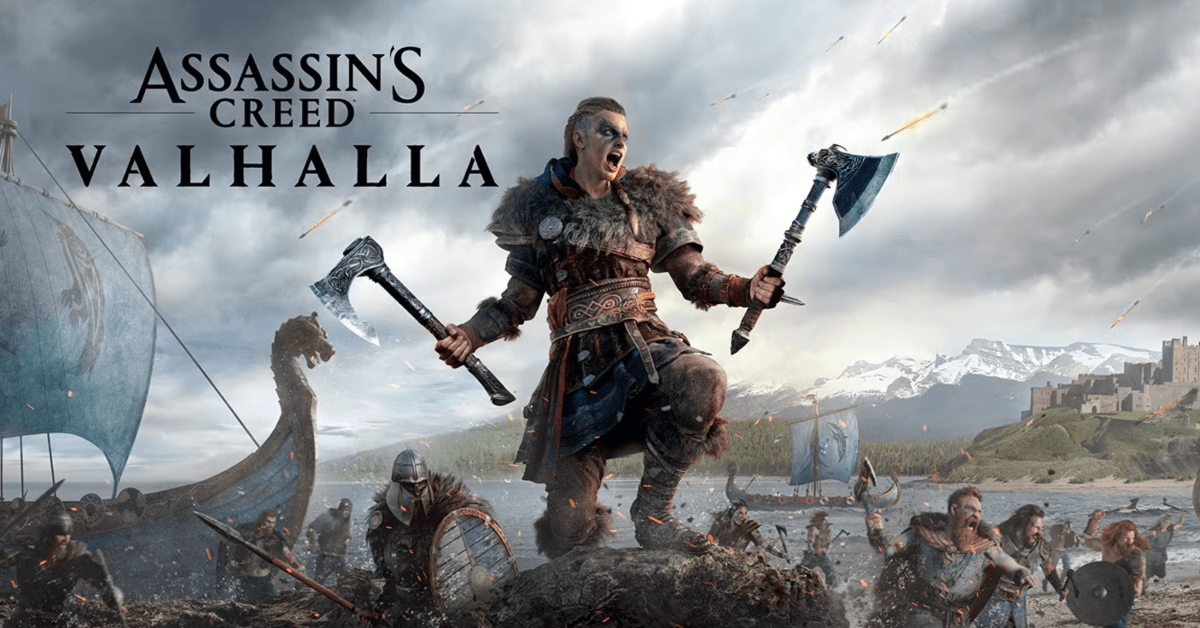
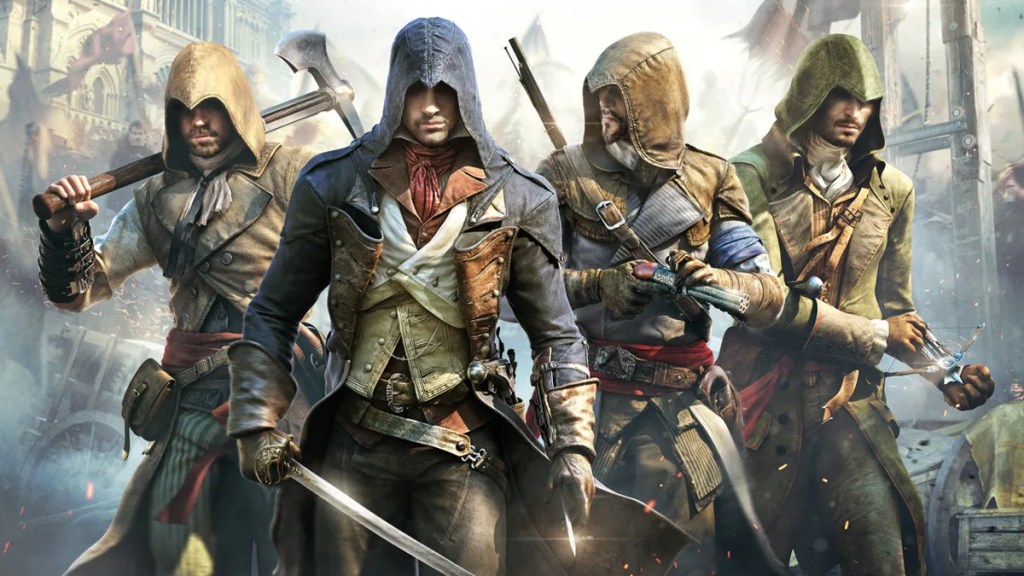
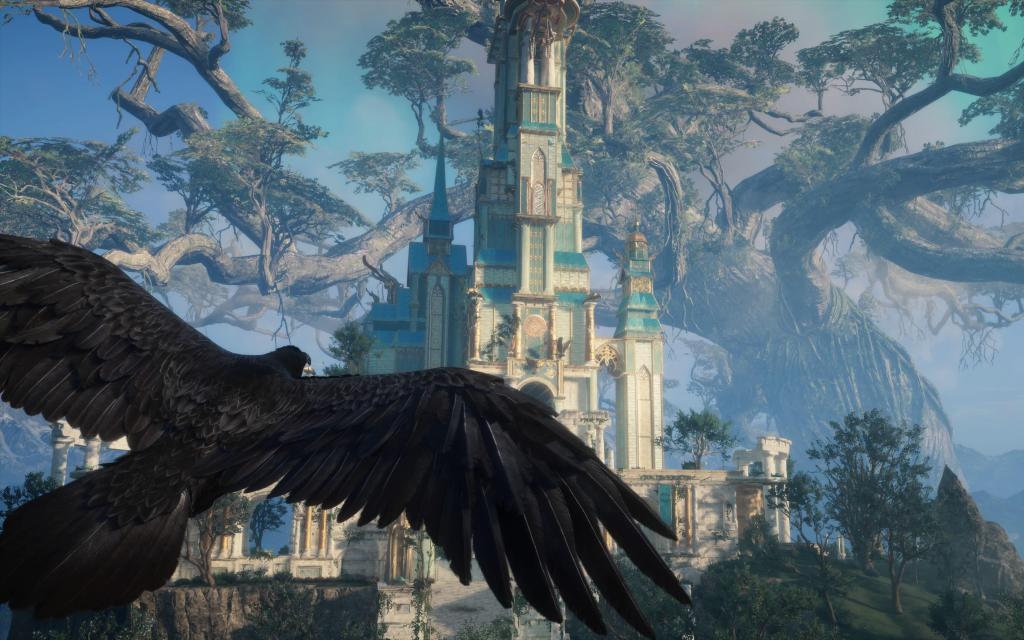
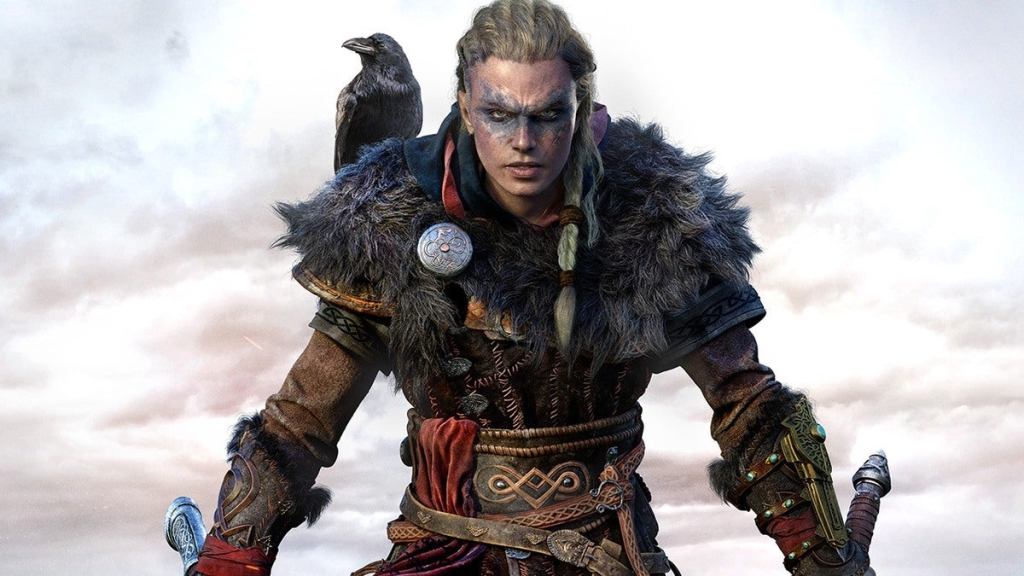
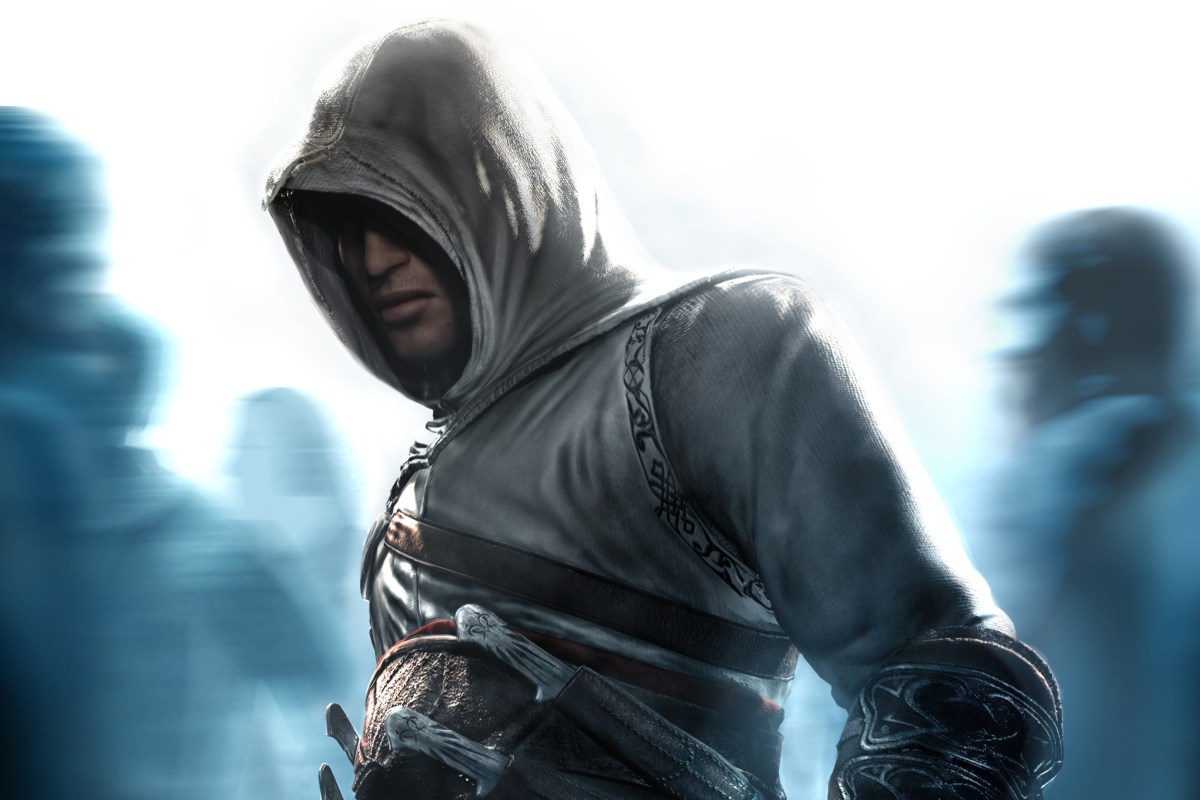
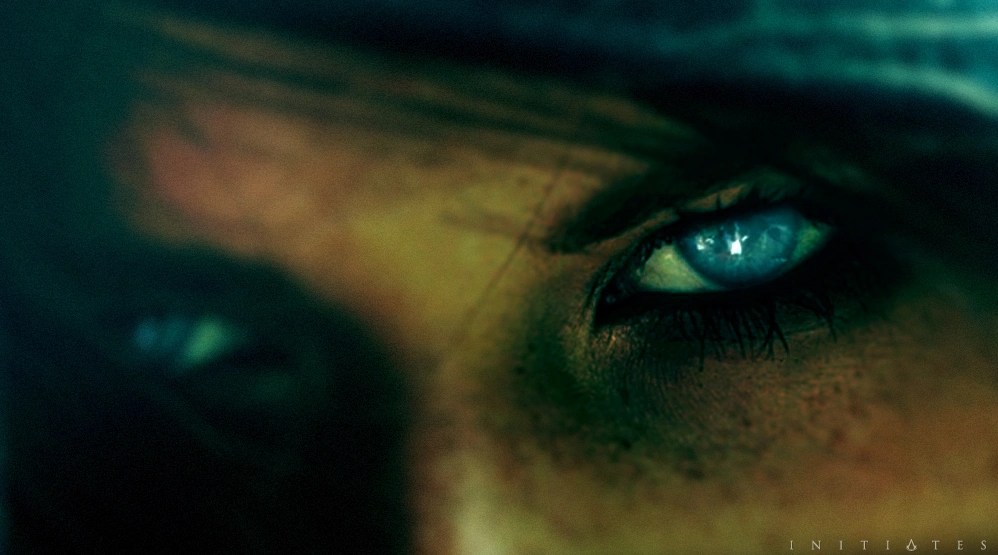
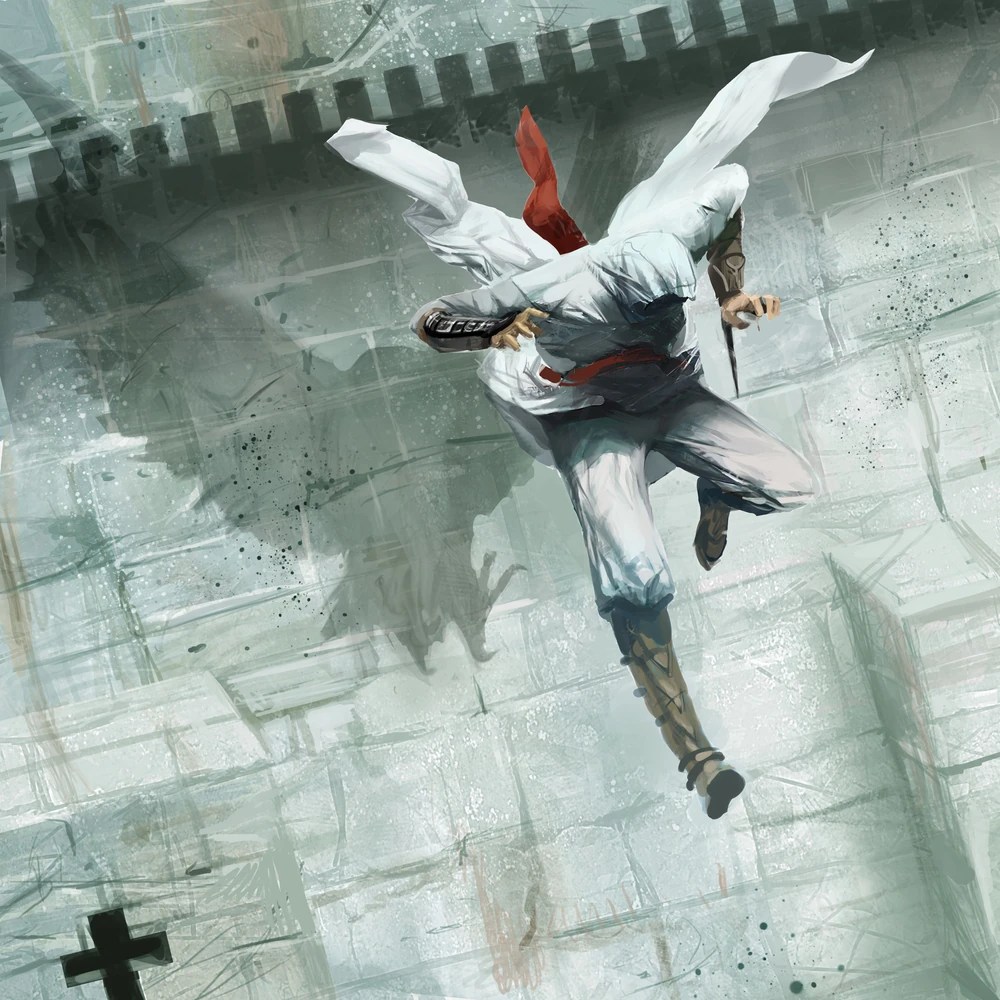
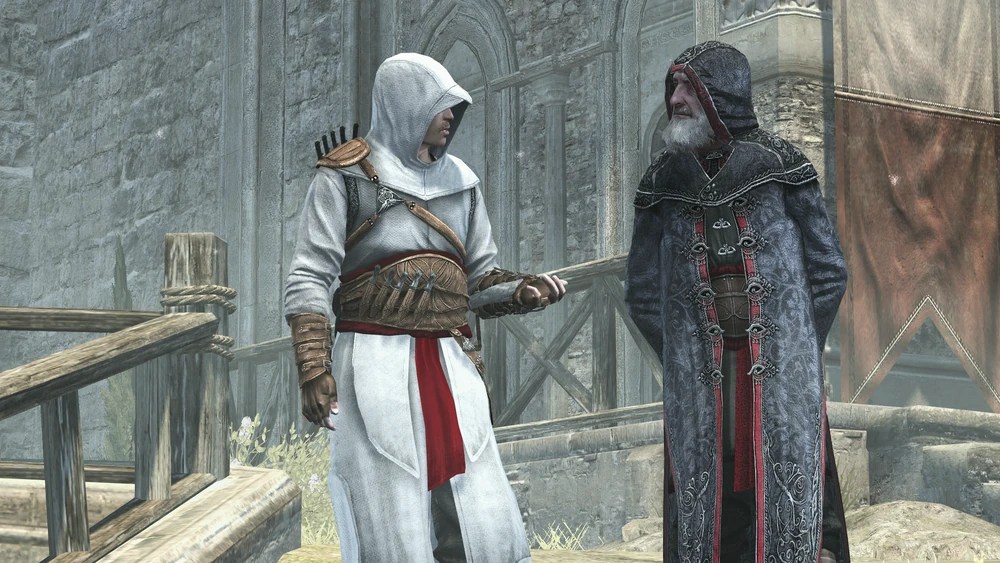
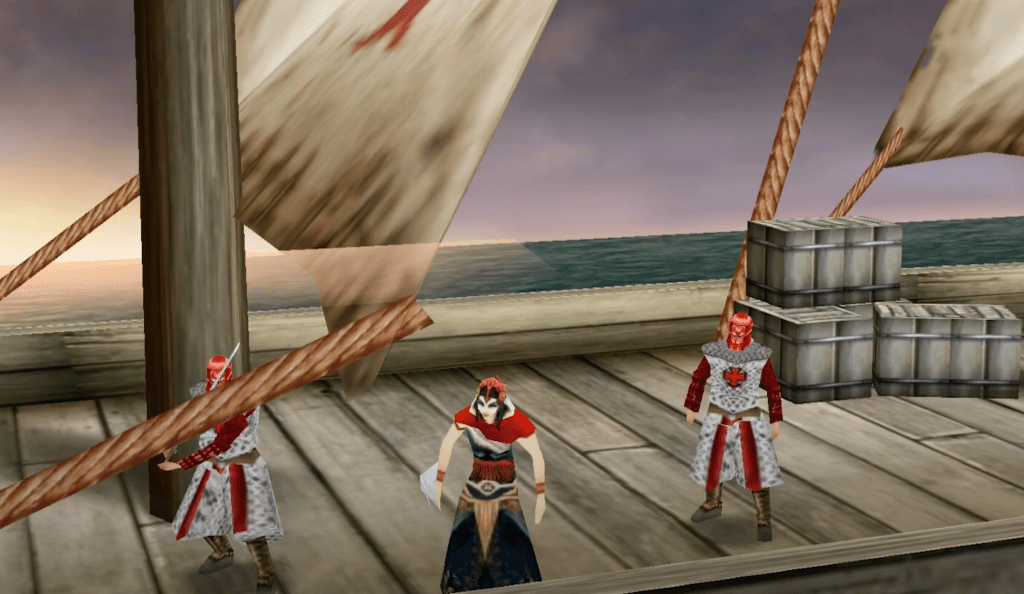
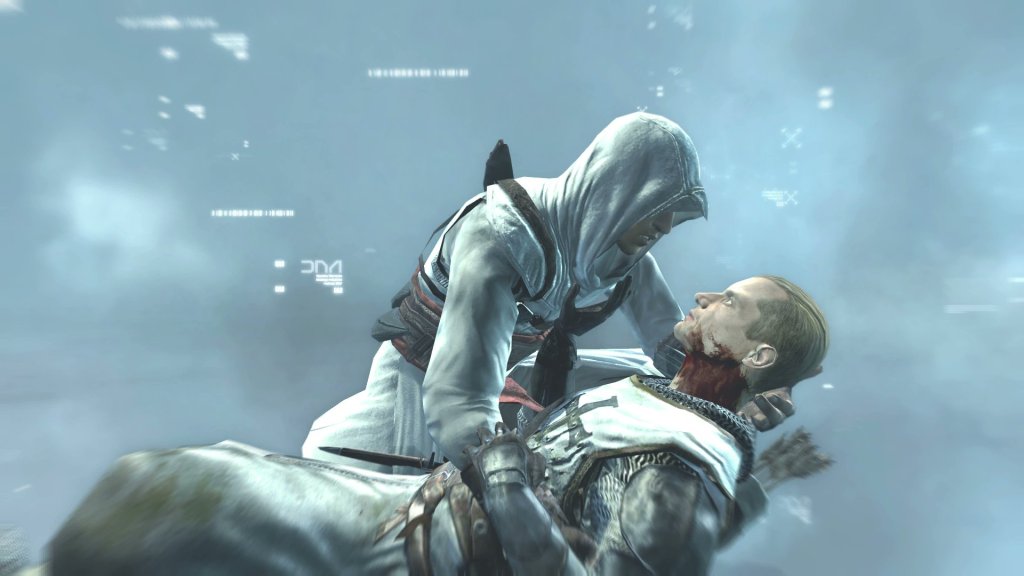
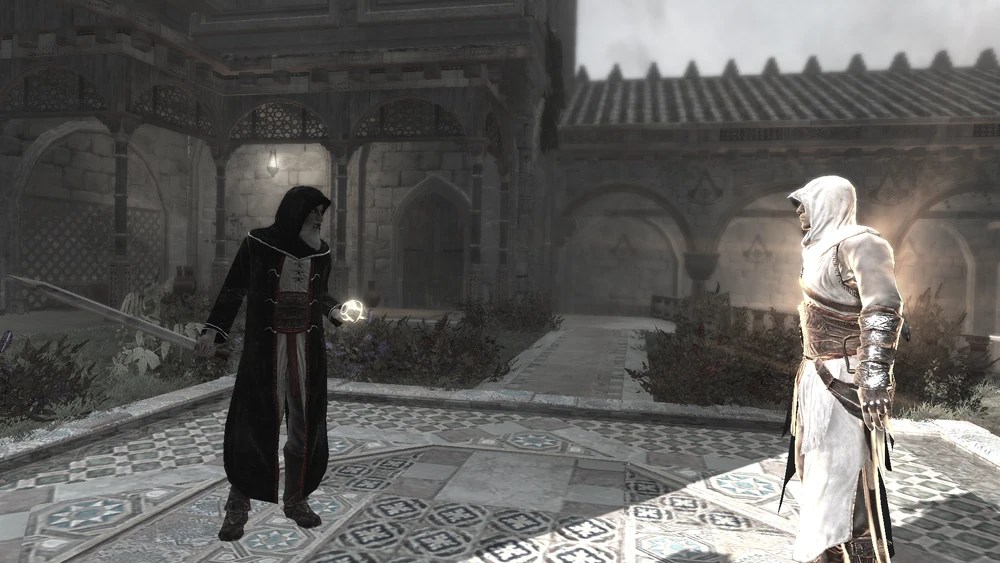
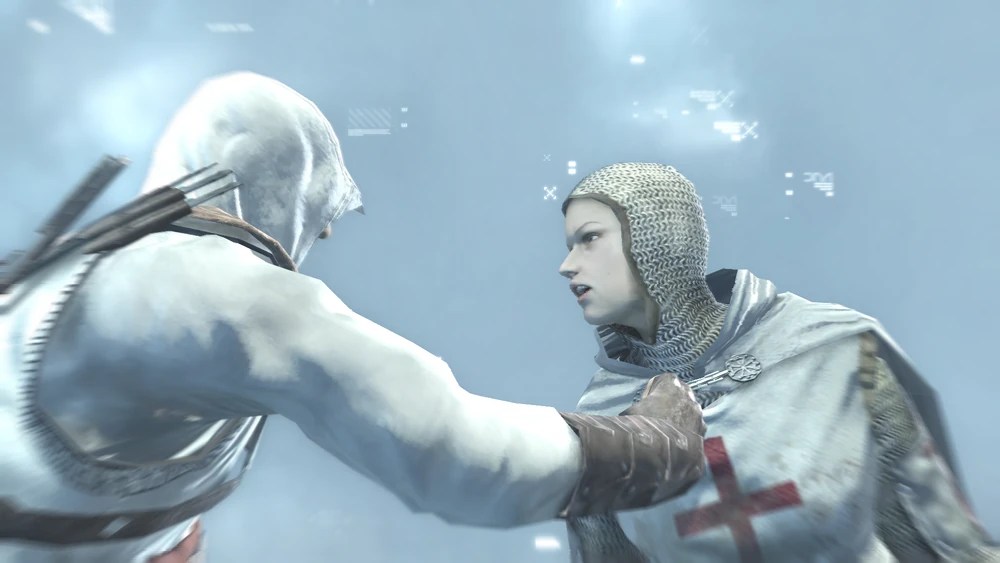
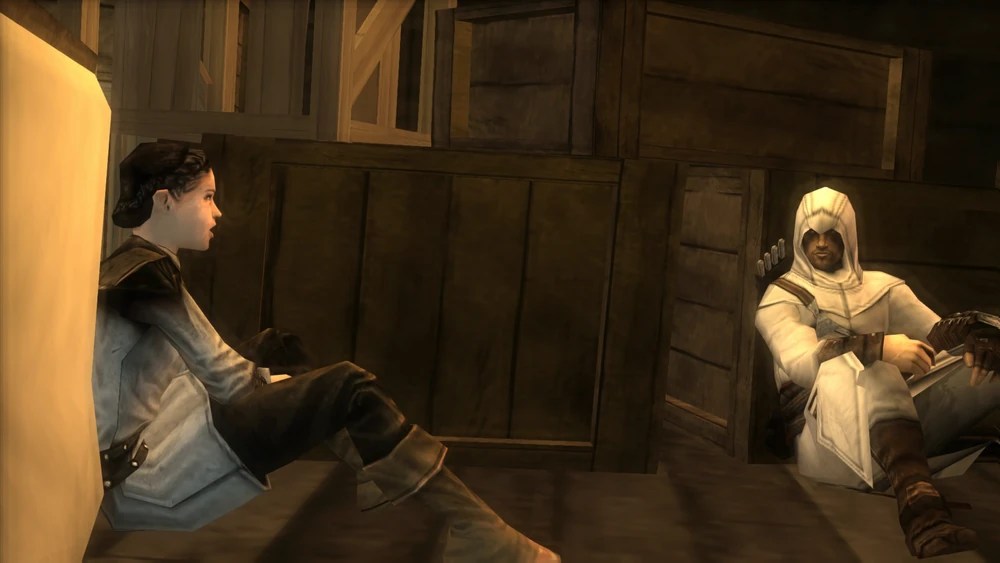
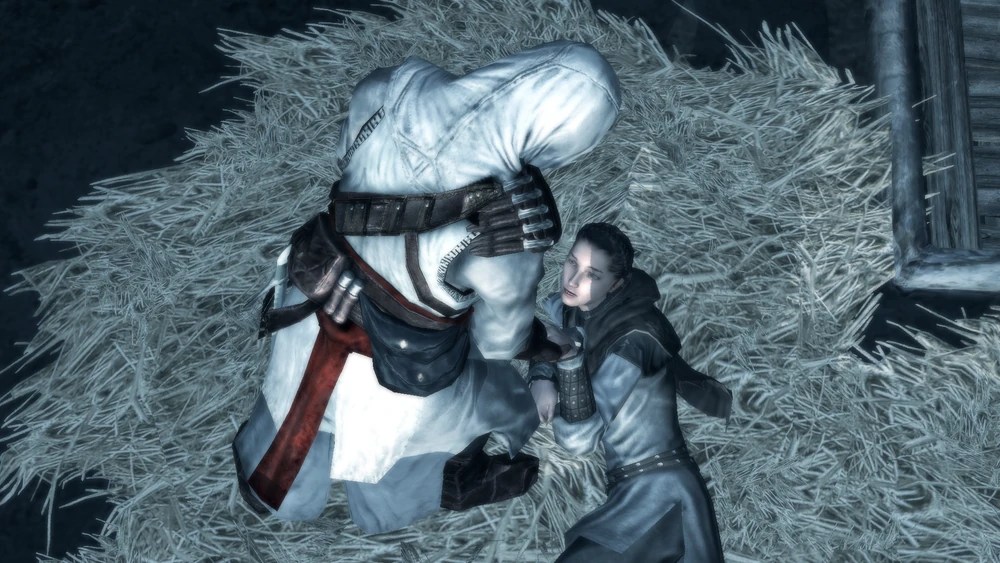
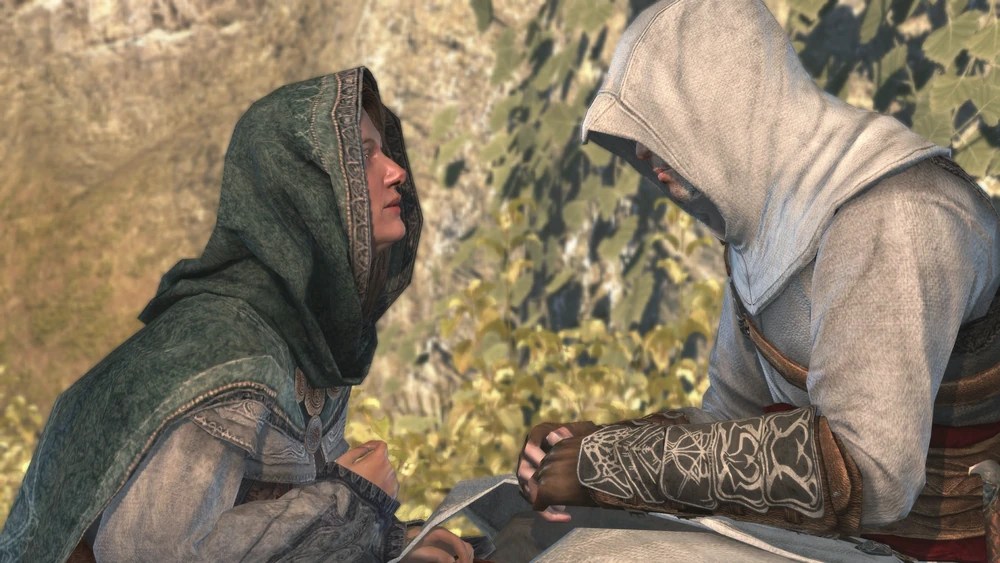
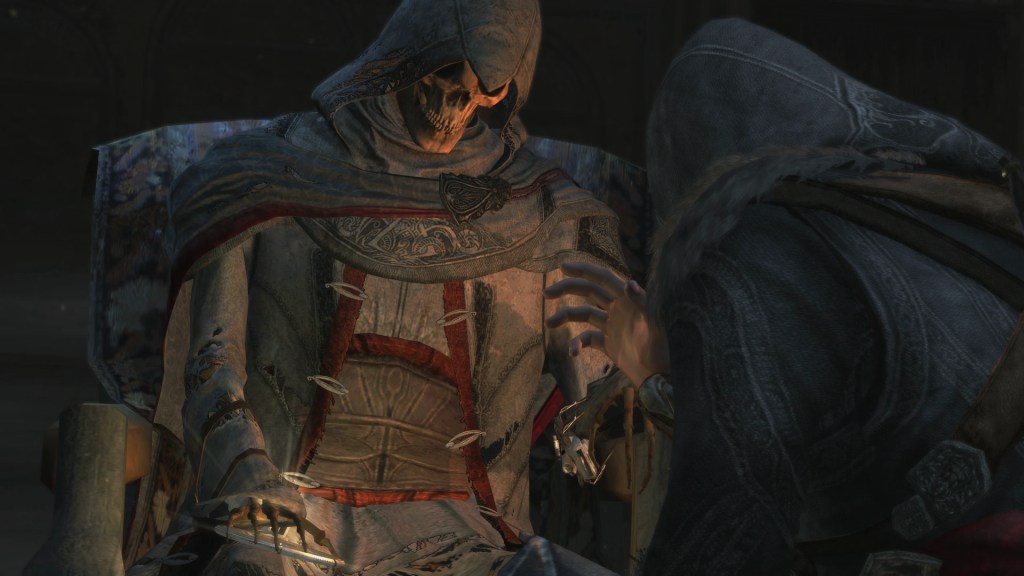

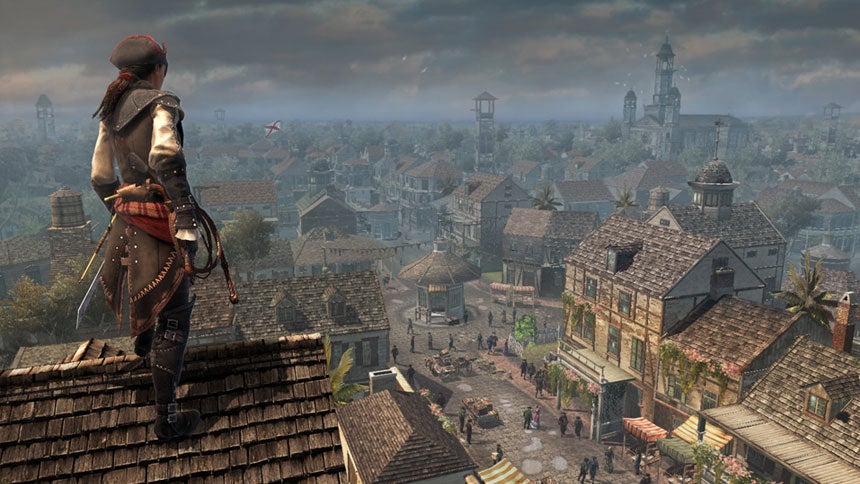
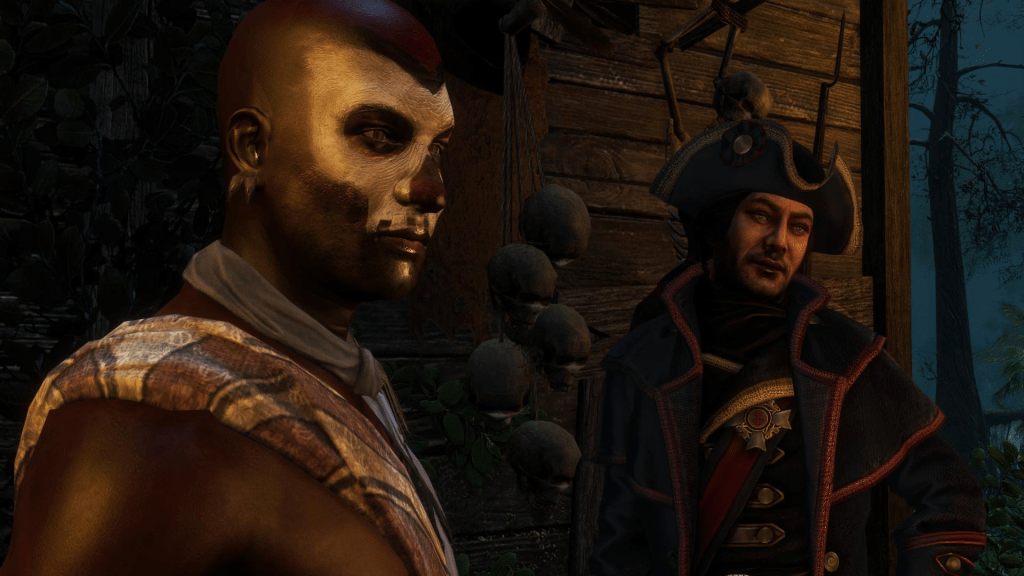
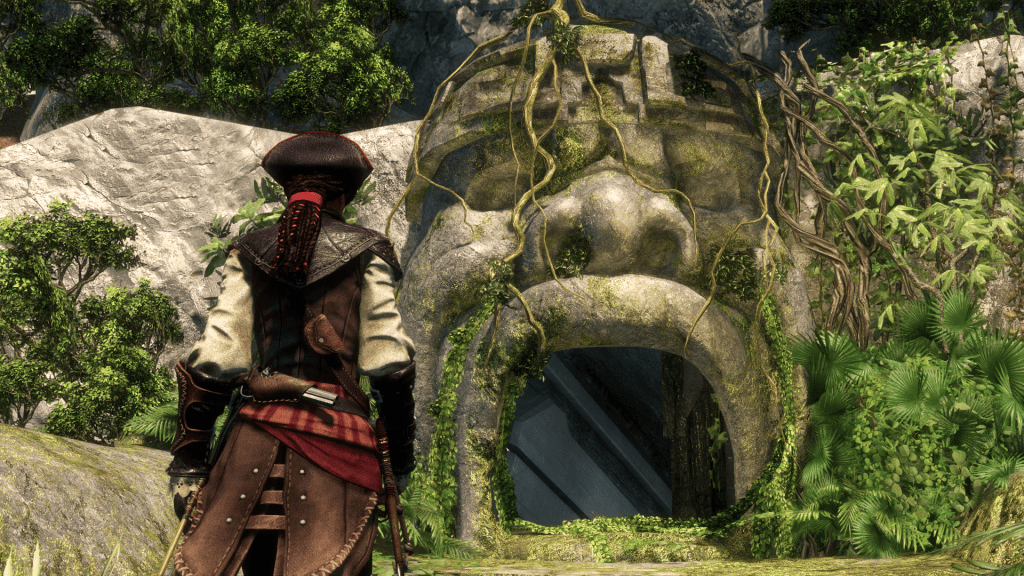


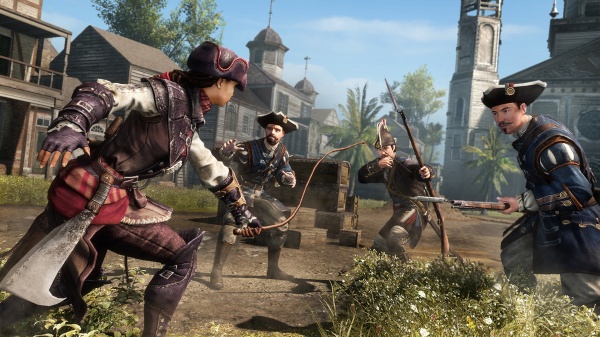


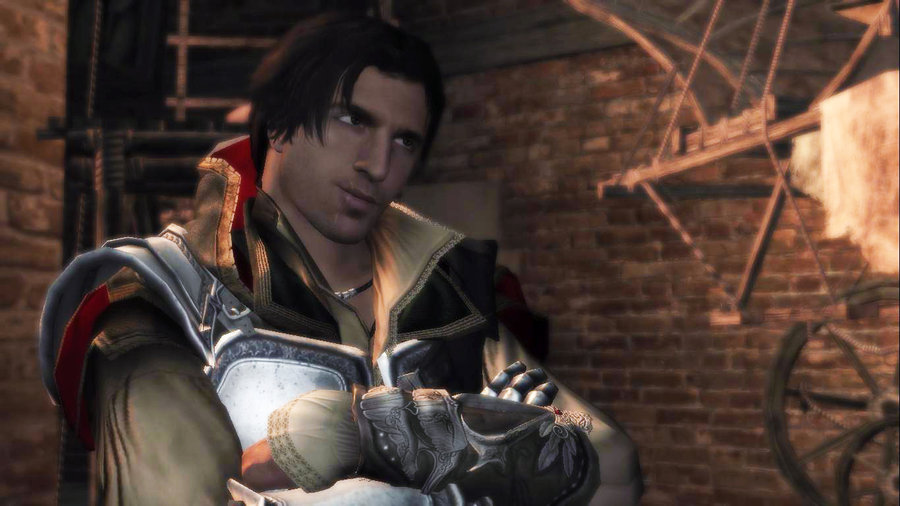
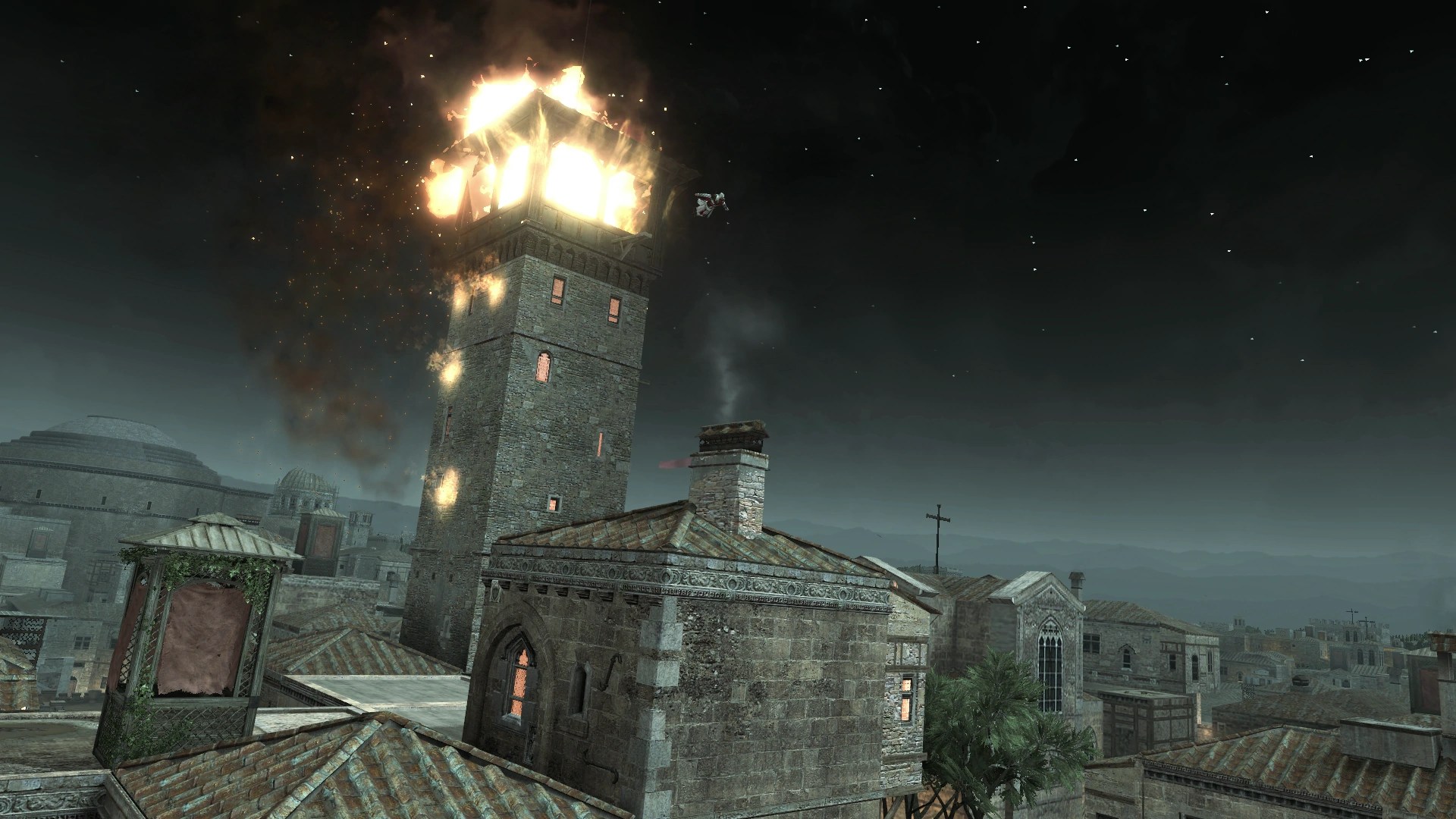
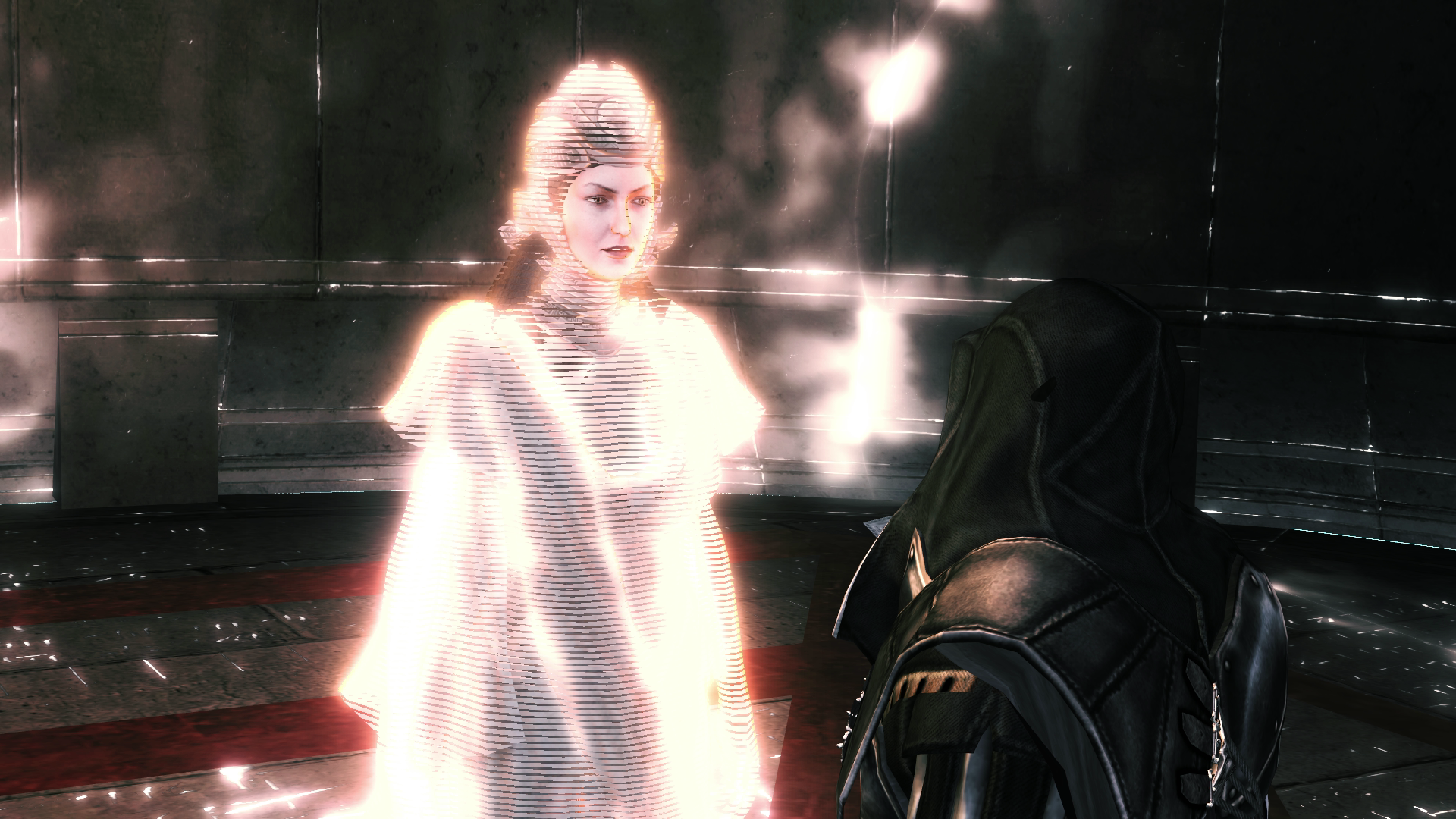


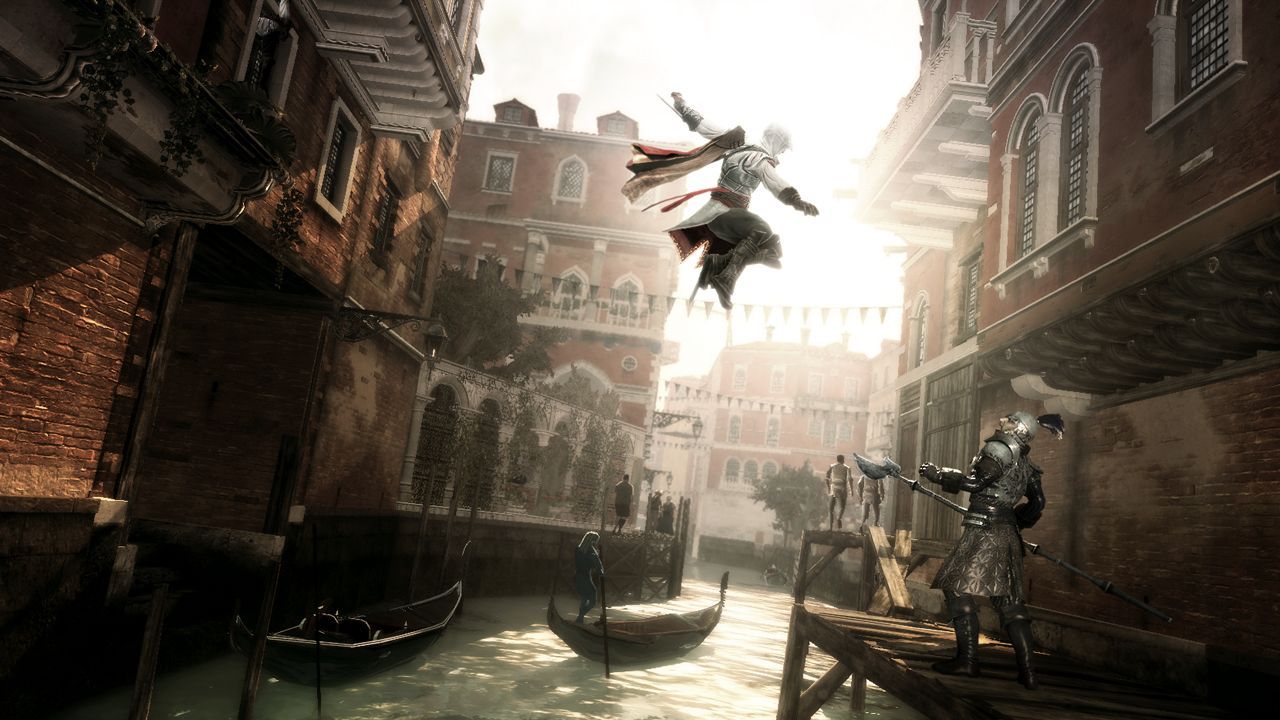
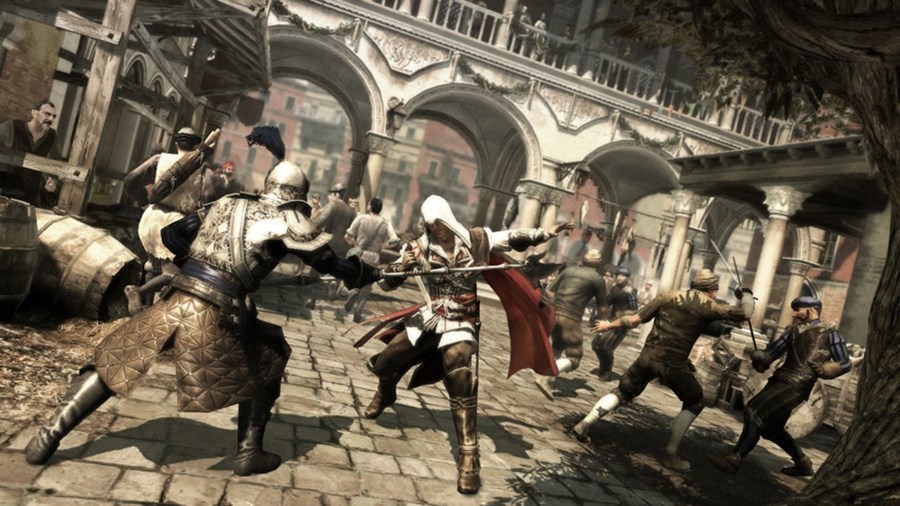
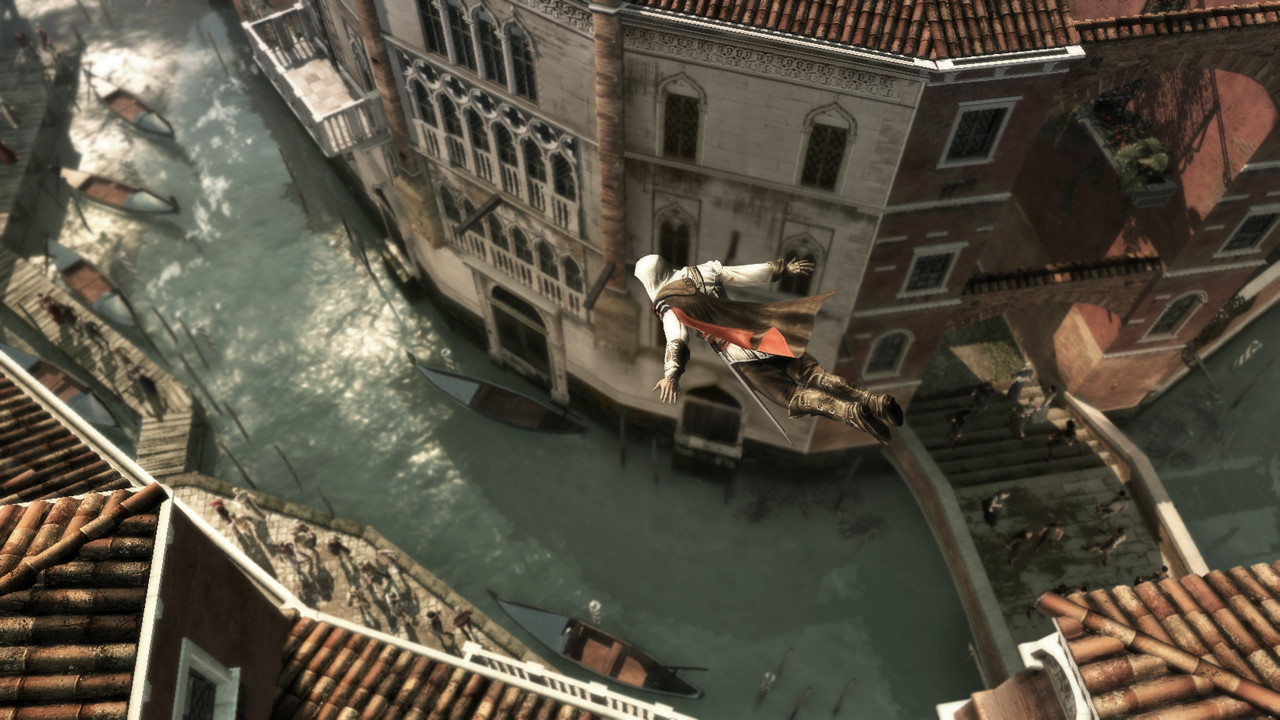
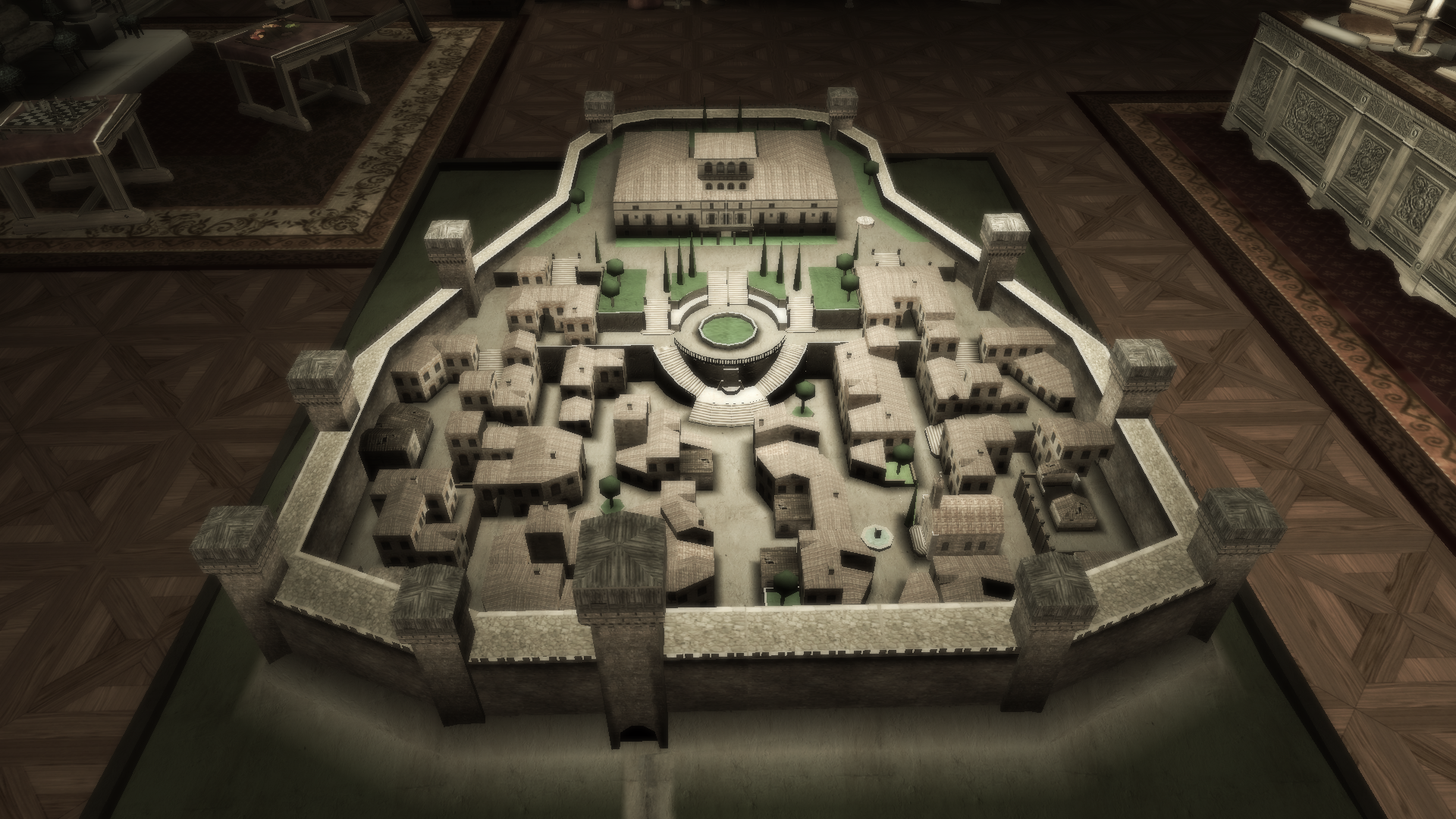


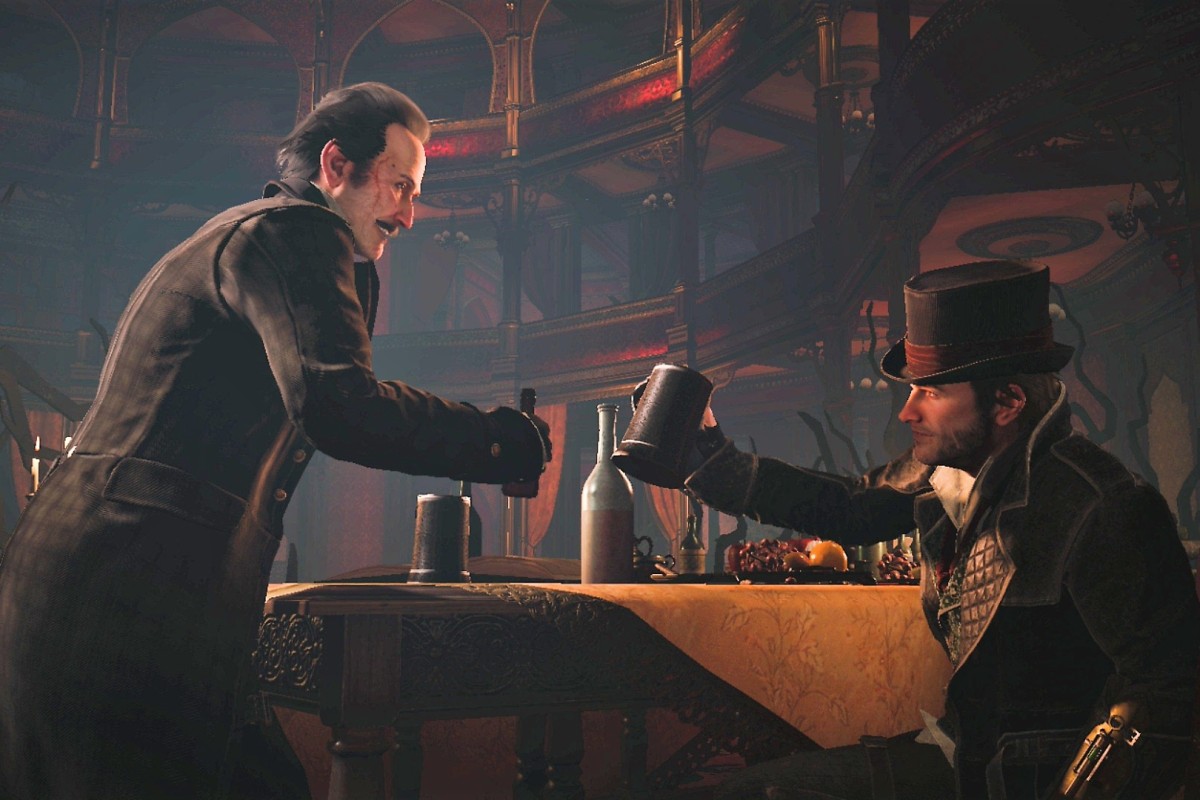


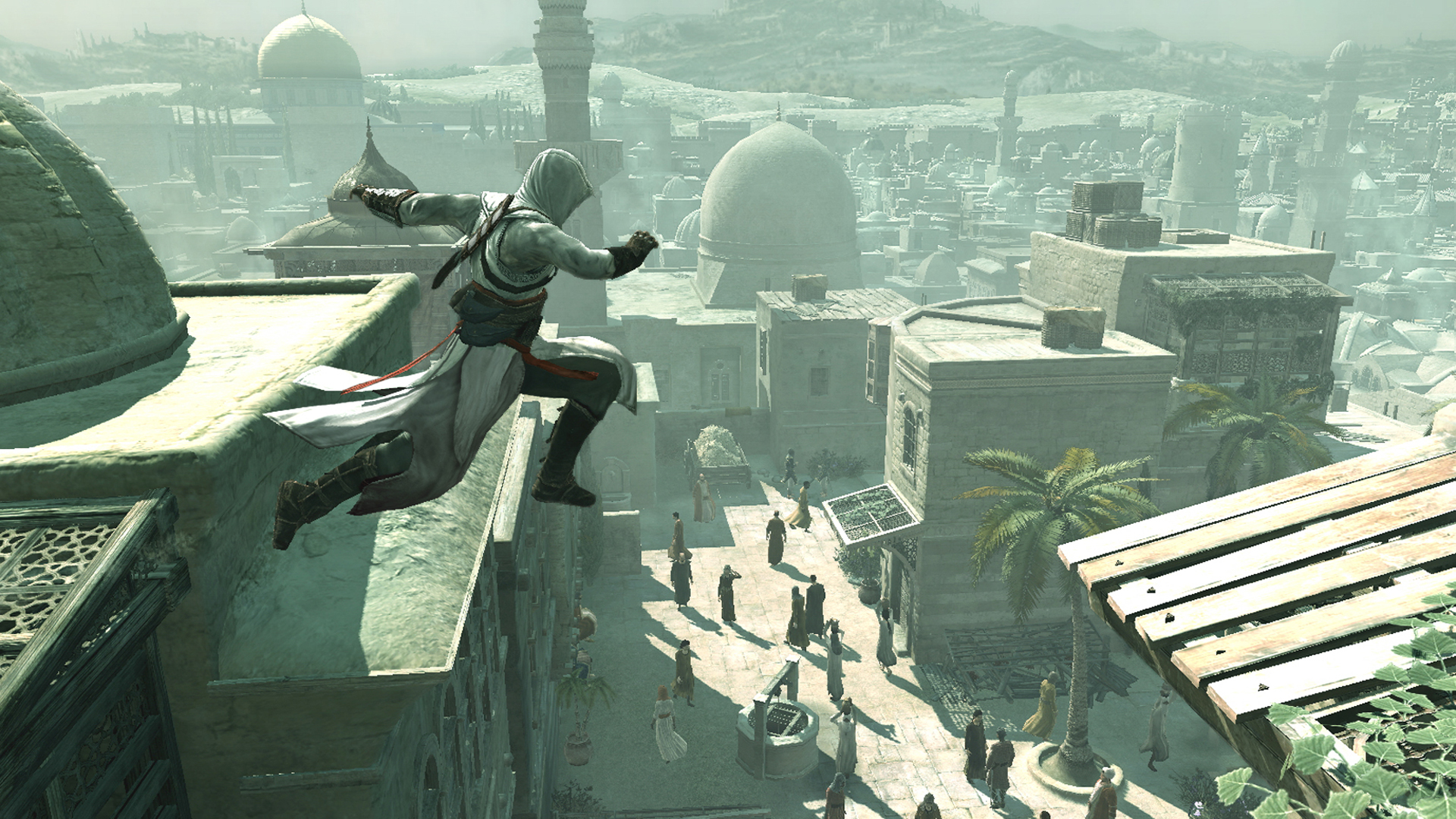
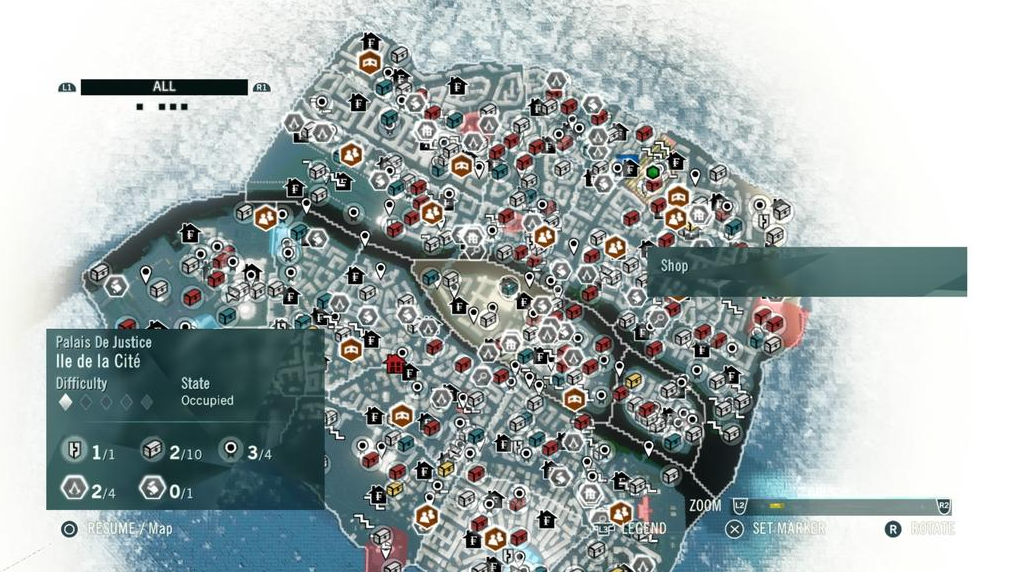

 TOM CLEMENT | GAME PRODUCER | NARRATIVE DESIGNER