Learning German with Assassin’s Creed: Valhalla

I have been on-and-off learning German for five years now.

Through online classes, a dash of Duolingo, and general world-exposure, I am able to get by in most situations and conversations, only struggling with speed and specialised words.

General linguistic wisdom tells a student to immersive themselves in a language, such as reading books and watching films and TV in the target language. But as gaming fought with TV time, I decided I was should start playing games in German to increase my vocabulary.

While I had pondered whether to play a game I knew the dialogue of for a fun challenge, I also had a behemoth of a game on my “to-play” pile, and decided to go for that.

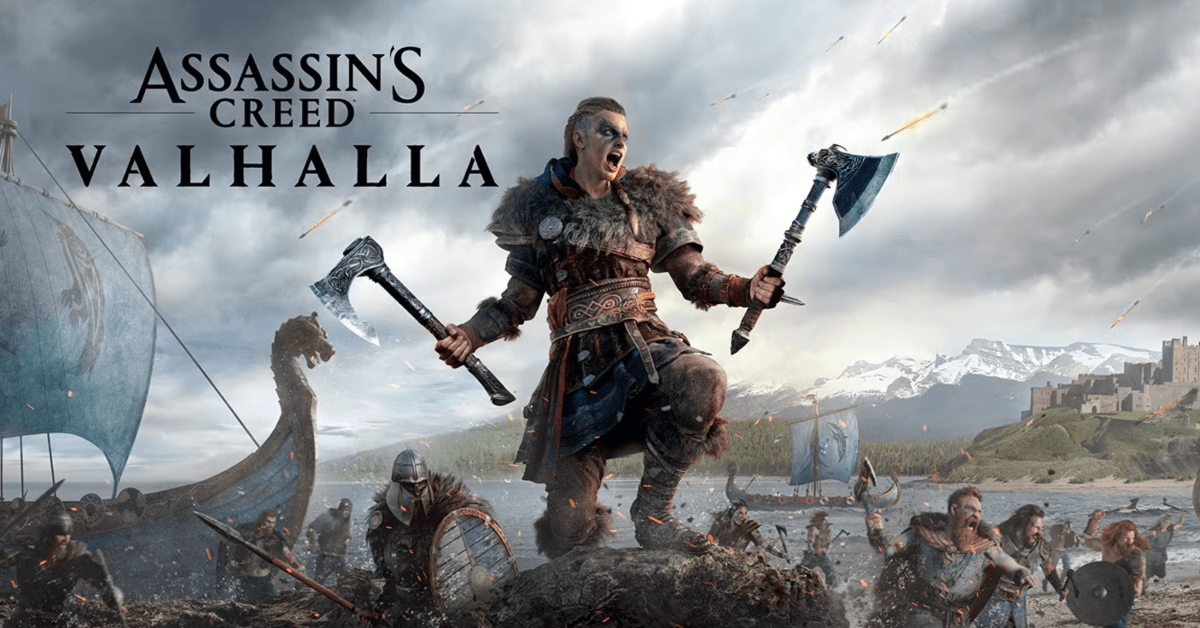
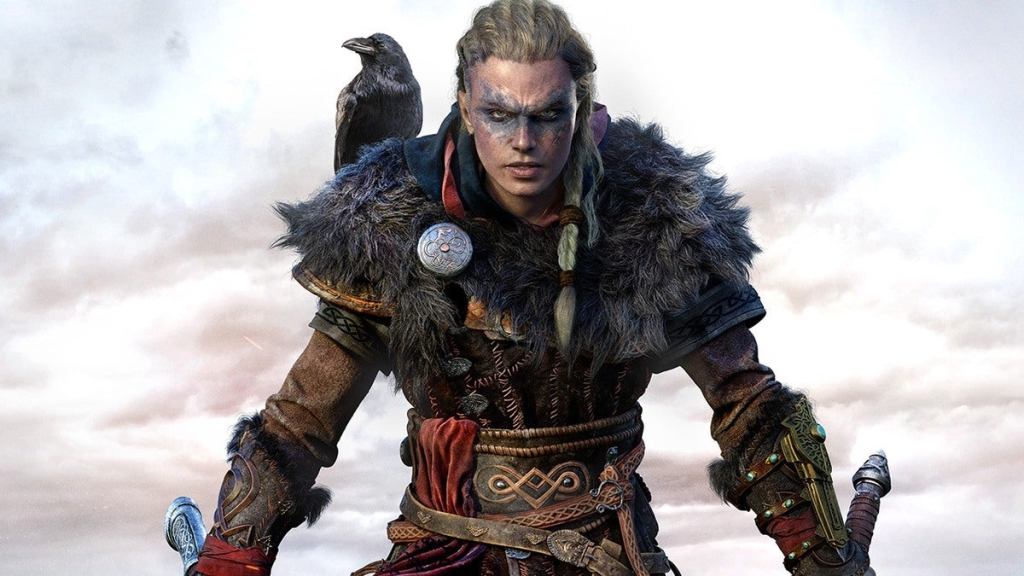
The first game I would play in German would be Assassin’s Creed: Valhalla.

So, let me have an indulgence as I write about my time in Viking England, with a German valkyrie as my avatar guide (because who plays Valhalla as male Eivor? Female Eivor forever!)

“Ich bin Eivor vom Raben-Clan!” – Learning German With Assassin’s Creed: Valhalla

I have written before about the use of other languages in games, even using Assassin’s Creed as an example.

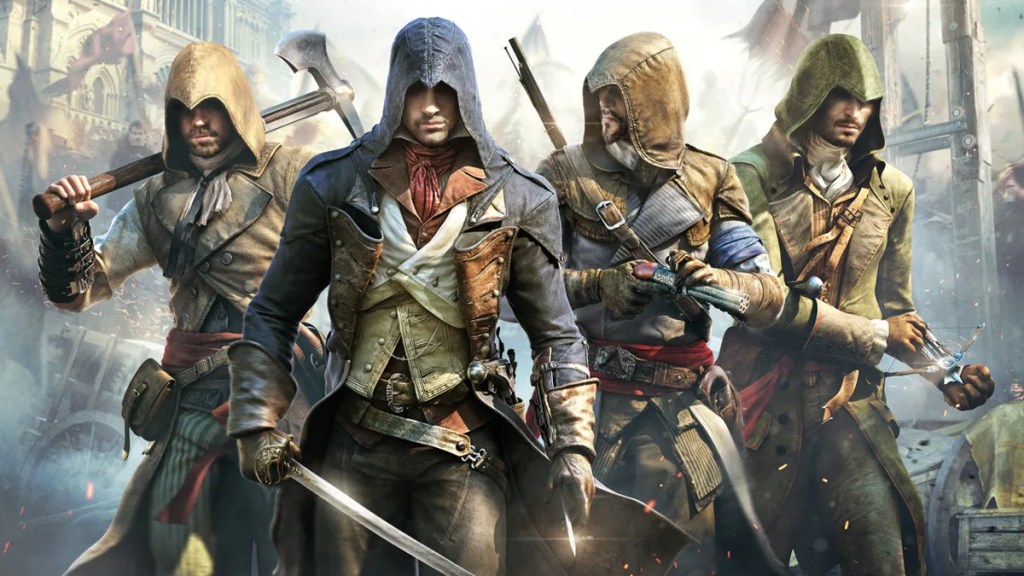
When I had played AC: Unity and Liberation, I set the language for both to French, as Unity is set in Paris and Liberation in colonial-era New Orleans. However, these switches were for immersion rather than to learn, but they had started an interest in me to search for language settings in games.

And actually, Ubisoft, creators of Assassin’s Creed, have a great track record for doing languages in games. So many games, even AAA ones, don’t make a distinction between language audio, subtitles, and game text.

You may want a different language for dialogue, but keep the text and subtitles in another, and most games won’t let you. It’s a luxury in development time and extra tech logic to separate them. But Ubisoft separates the individual components, so players can customise how they would like.

AC: Unity was one of the first games I changed the language, making Paris much more immersive (Source: ign.com).

***

One of the main reasons I chose AC: Valhalla for my start in German is for the story. Not the narrative per se, but the nuts-and-bolts dialogue and missions.

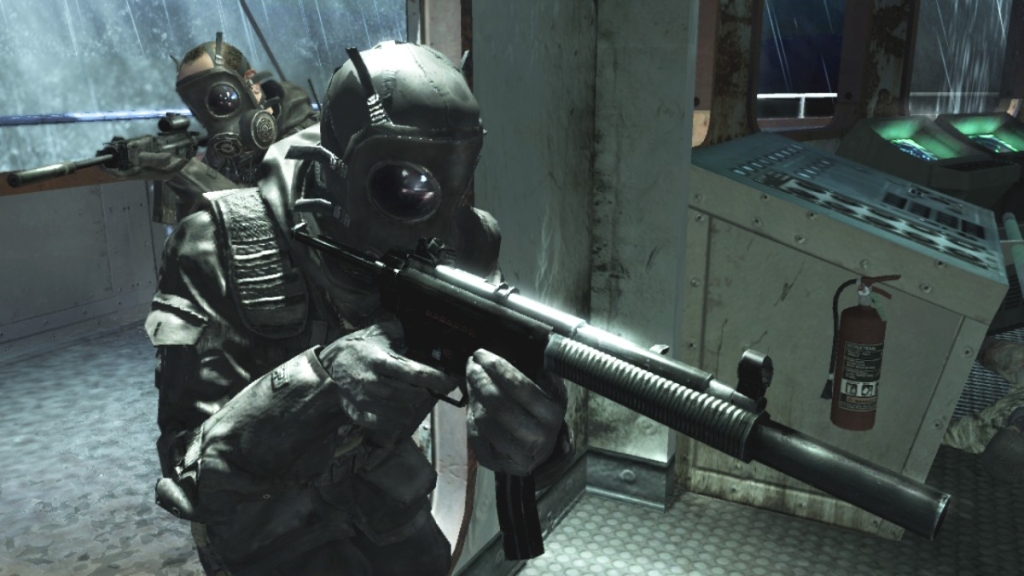
If I had played something like Call of Duty in German, I might learn the words for “missile”, “tango” and “terrorist”. Interesting for sure, but not words I would be able to use every day.

A big part of Valhalla is the role-playing aspect, dialogue trees and quest-based design. It would give ample opportunities and for every day words to be used in-game.

So whenever I would play, I would sit down with my pen and paper and when I would hear a word that I could use, I would note the English from the subtitle and write down a phonetic sound-by-sound version of the word..

After playing I would go through and edit my notes to be the correct spelling or straighten up any mis-aligned phonetics.When I started, my focus was on singular words, meaning I could easily match subtitle to phonetic something like “sofort”, meaning “exactly”. I eventually graduated to full sentences and questions.

And after marauding across the English hills for many hours, I had an eye-opening moment. I heard Eivor ask, “Habe ich eine Wahl?” (“Do I have a choice?”) and I could understand each and every word without even glancing at the subtitles.

It was a true light-bulb moment, of words I had learned through classes, exposure, or TV, and my brain made the snap translation almost immediately.

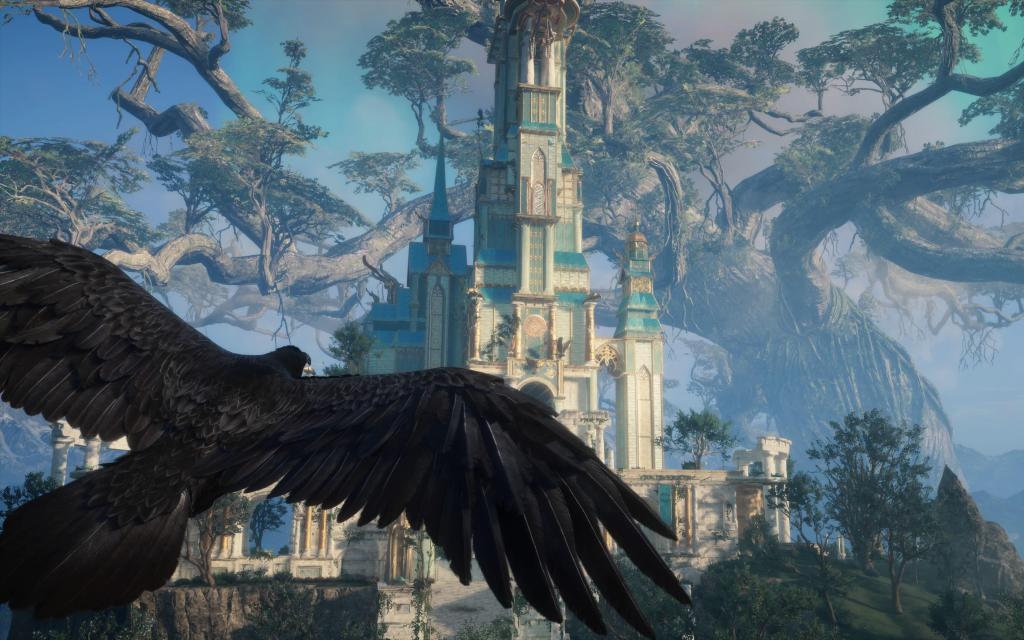
“Was siehst du, Synin?” – Eivor’s pet raven, and one of my first noted phrases (Source: reddit.com).

***

Something that I learnt about while playing was German dubbing culture in film, TV, and games.

While a lot of films and TV made in the US or UK are shown in Germany and Europe as a whole, that can be two different ways it is presented.

First is showing the original, but with subtitles (this is how a lot of non-English speakers learn English, and why sometimes they come away with specific accents because of a show they watched).

The second is dubbing, where certain dub actors are attached to one or two actors. For example, Maria Koschny, female Eivor’s German dub, also dubs for Jennifer Lawrence, and does all the films that Jennifer Lawrence has starred in.

Being dub specialists, these voice actors are usually brought in for games and anime dubbing, even if their original voice actor is not present. This led to a great moment where my partner, in earshot of me playing, asked “Why is Julia Roberts playing a Viking princess?”

I have to praise Maria Koschny’s excellent performance, whose voice I now solely associate with Eivor (Source: ign.com).

***

One of the great things about such a deep narrative game as Valhalla is it’s interpersonal connections. Eivor has several deep discussions with allies, enemies, and everyone in-between.

Valhalla has a sprawling 300+ hours of content with main story missions, as well as a variety of in-world encounters and side-quests.

The people that Eivor encounters in each mission life to talk about a whole range of topics such as life, history, politics, and philosophy, mainly advancing character development rather than advancing a plot point.

It was here where I found the most advantageous words and phrases, rehearsed their sounds and how to use them in a sentence, and then brought them out into the world.

And still, when I think of those specific words, my memory returns to those exact moments in the game. Eivor walking through a night-time market, celebrating with friends after a successful siege, arguing with ice giants in Jotenheim, and returning relics to the Saxon king Alfred.

When the end credits came, I was a little emotional. Not only for the countless hours and months I put into the story, but also something deeper. A learning experience, personalised to not feel like memorisation of key words. And so I will continue to change languages where I can and adding to my word list.

But AC: Valhalla has a soft spot in my heart, for being the first and being a great introduction to learning through play.

Photo Banner Source: gamerant.com

Star Wars: The Fighting Game

I am a big fighting game fan.

One-on-one combat is such a thrilling experience, knowing that through reading your opponent you clutch a win or deliver a flawless victory…it can’t be topped.

I’ve dabbled in all types of fighting games; the traditional martial arts of Street Fighter, Tekken, and  Virtua Fighter, to the sword fights of Soul Calibur, and the magical fantasy of Fantasy Strike.

My first proper fighting game though has been a single release, never got a sequel or a re-release, but is still one of the most fun games I played as a child. It is the movie tie-in game for Star Wars Episode III: Revenge of the Sith.

The mid-2000s were a goldmine for licensed games, being some of most fondly remembered gems of their generation.

Spiderman 2 from 2004 brought physics-based web-swinging into gaming.

King Kong brought one of the best first-person immersive survival games ever.

And X Men Origins: Wolverine brought a level of gore and violence hardly seen in any previous or following incarnation of the character.

And then on top of those greats, Star Wars comes out with one of the best sword-fighting simulations of all time. So today I want to talk about it.

An Elegant Weapon, A More Civilised Age Star Wars and Lightsaber Duels

Episode III is for the majority of the time a brawling game. Playing as either Anakin Skywalker or Obi-Wan Kenobi, you fight droids, clones, and a few low-level Jedi through the locations of the film.

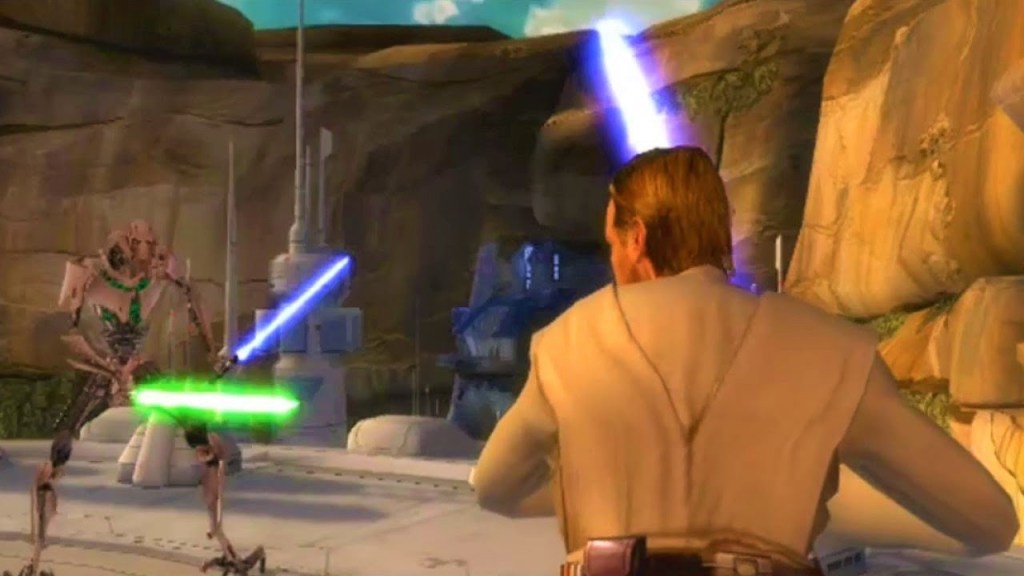
But every so often, these two will enter a duel with other fighters such as Count Dooku, General Grievous, Mace Windu, other Jedi Masters, and eventually each other in spectacular one-on-one fights.

Alongside the game’s storyline, you can participate in one-on-one fights either against an AI opponent, or in couch co-op.

While you only start out with Anakin and Obi-Wan and one location (the Jedi Temple), with each duel in the game’s storyline unlocks a character and the location.

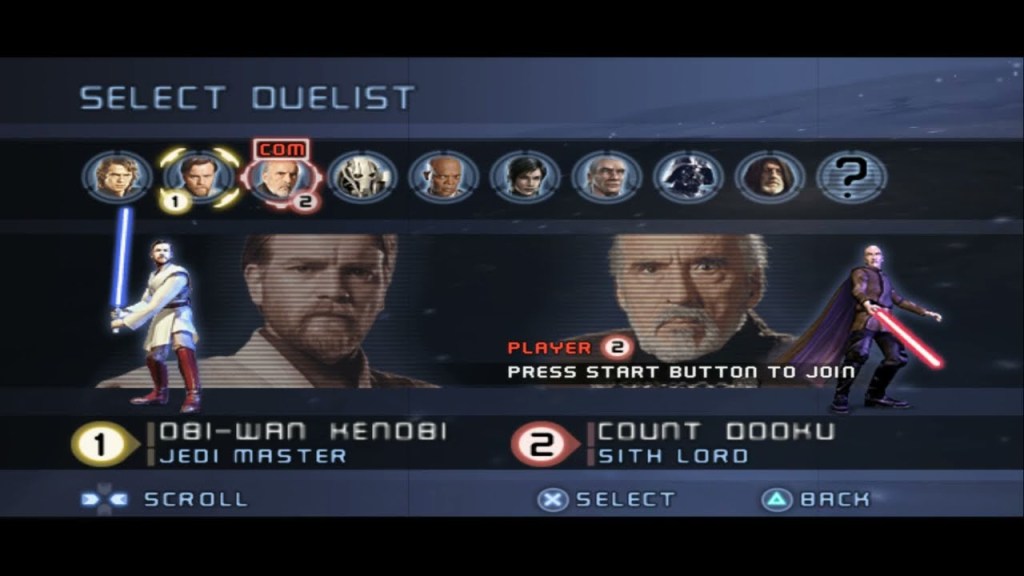
By the final credits there are nine fighters to choose from: Anakin, Obi-Wan, Count Dooku, Mace Windu, General Grevious, Jedi Masters Cin Drallig and Serra Keto, and finally Ben Kenobi and Darth Vader from Episode IV.

The duellists that you can choose from. For mirror matches each character has an alternate skin. (Source: Youtube – mrnygren2)

While it would have been easy to give all of these characters the same general moves and only a few signature moves, each one plays totally differently, giving players a proper choice in regards to playstyle.

Anakin is fast and powerful whereas Obi-Wan is slower but has the better defensive option. Count Dooku is based more on parries and thrusts, similar to a fencer.

Mace Windu is slower but has good reach and strong attacks, while General Grievous can overwhelm opponents with his four lightsabers and get a few cheap shots in with his concealed blaster.

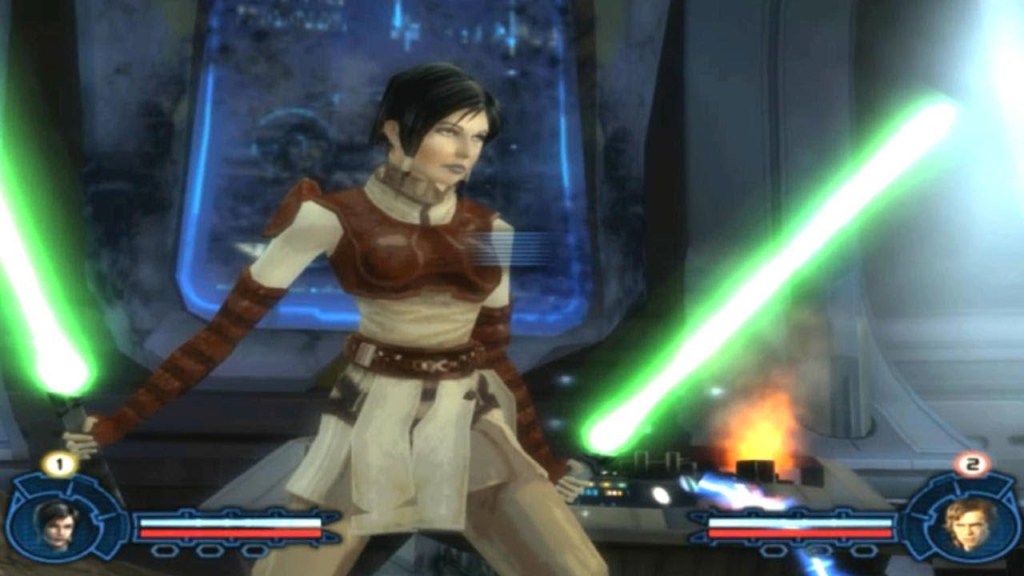
Non-canon Jedi Serra Keto and Cin Drallig (the latter being SW combat choreographer Nic Gillard, his name reversed) are two unique styles, with Keto employing two lightsabers and multiple acrobatic moves, and Drallig being able to literally blur himself during combat.

And finally, Darth Vader is the strongest but one of the slowest fighters in the game, and Ben sacrifices some speed with stronger attacks and Force powers.

One of the strongest characters versus the best defensive option…who will win? (Source: Youtube – CJR Gaming)

The combat is similar to your standard string-based fighting game like Tekken or Guilty Gear, meaning that inputting the attack buttons in specific orders will net you different attacks and sequences. As I said previously, each string gives a unique animation, which elevates the game higher than a standard movie tie-in.

Attacks are broken into light and heavy varieties, but what gives Star Wars a bit of flair is the Force, which adds a whole new system of control and power into the combat.

Despite eight of the nine characters being able to use the Force, it’s actually the thing which is most standardised across the fighters.

Every fighter has two variants of Force Push, one as a general move any objects around you, but then a more controlled version where they pick up a singular object and throw it, which can also be used on opponents.

All fighters can throw their lightsaber like a boomerang and can even heal themselves using the Force. The only main difference is the Force Stun (for the Jedi) and Force Lightning (for the Sith).

Force Stun…well, stuns the player, leaving them vulnerable for a few seconds to be attacked or for the opponent to heal, whereas Force Lightning is purely offensive, draining the health of the opponent. It’s an interesting trade off, going with a more offensive option or one that can be both offensive or defensive.

Anakin in the Duel Mode actually changes between the two as you progress in the story mode, using Force Stun until he falls to the Dark Side, where he will then start using Force Lightning.

Serra Keto is unqiue for her two lightsabers and her slow but unblockable Force-infused attacks. (Source: Youtube – RGLD Gamer)

General Grevious is the only outlier being a non-Force User, but he gets some additional help, with a rapid fire blaster replacing his Force Push and a charged-up shot replacing Force Lightning. His signature four-armed attack takes the spot over the Saber Throw.

The stages are all taken from the story mode, being unlocked at the same time as the other characters.

Since they are all focussed on Episode III, the locations span space-stations, landing platforms, the Jedi Temple, and the impressive vistas of both the sinkholes of Utapau and the volcanic rivers of Mustafar.

The locations in the game are broken up by area into smaller chunks as well. Take Mustafar for instance.

The first section is the landing platform that Anakin and Obi-Wan first clash sabers. It’s a wide area with several explosive crates to throw at your opponent.

The second area is the control room, with command tables splitting the room, allowing a player to be out of range of lightsaber attacks, and either regain some health or use a long range attack to keep their opponent back.

Out from the control room onto the third section, the balcony. It’s cramped and linear, the complete opposite of where the fight started. To add even more to the mix, the explosive crates are back, but since the area is so small any explosion could impact you as well.

Dropping down from the balcony onto the “Control Arm”, again a linear section, but extremely long, not the cramped quarters of the balcony.

And while there are no more explosive canisters, the control arm is constantly getting rained down on by lava, stopping players from either retreating or advancing, having to riskily jump towards their opponent or wait until the magma has cooled.

Finally, the fight culminates on the Lava Platform, the smallest map in the game, barely big enough for the two fighters to deliver their most devastating moves.

That’s just one planet and it gives such a variety of locations that either compliment or hinder certain styles of combat, with every other location also containing environmental hazards, barriers, or extremely linear or cramped fighting halls.

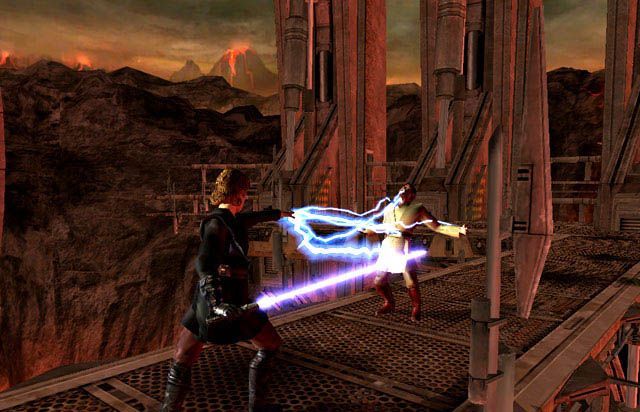
Darth Vader unleashes force lightning on his former master on Mustafar. (Source: ign.com)

In research for this piece I wanted to look at other players and see how they related to the game and found a small but thriving community that still plays the game competitively today.

Using a PlayStation 2 emulator, players have been continually hosting tournaments even up until a few months ago, with rulesets to keep things interesting (the main ones being no Force Heal and no Mustafar Lava Platform stage).

The fighting game tech has gotten so meta that players will use a particular save state that allows them to choose Anakin with Force Stun instead of Force Lightning.

It’s amazing to watch, with clutch matches and spectacular finishes, and the added bonus that it is a Star Wars game, with the characters, fighting styles, weapons, locations, and music that we all know and love.

***

When I wrote about my brief but fun time playing Star Wars Ep. I Racer recently, I lamented the lack of Star Wars games in recent memory. Since that post the only new game was Jedi Survivor, the sequel to 2019’s Fallen Order.

There has been a brief upsurge in announcements, with names such as Quantic Dream, Zynga, Ubisoft, and Skydance all developing some sort of game and a wide range of genres including strategy and interactive drama.

And while there were Star Wars games dedicated to duelling before (Masters of Teräs Käsi for PS1) and after (The Clone Wars – Lightsaber Duels for the Wii) neither have had the impact and staying power of Episode III.

Just like with Ep.I Racer, you can see the outline of a game that would sell great today. Having duellists from all three eras, different and expansive locations, selectable force powers and fighting styles, customisable lightsabers, and of course online play. But sadly I think the time has passed.

In my research I found several players reminiscing on playing the duel mode and wishing for more. Even I bought the game nearly fifteen years after it released because I hadn’t found anything that simulated lightsaber combat so well.

It was the duelling game that did Star Wars well, and it deserves to be remembered and played to this day.

Banner Photo Source: moddb.com

Learning to Drive a Formula 1 Car

Formula 1: Drive to Survive, ridiculous subtitle aside, brought millions of new fans to F1, myself included.

The now multi-season Netflix series is sometimes mocked for its hyping of minor incidents and selective storytelling, but it is a thrilling look into the high speed and high drama that comes with the sport.

So naturally, I went and bought an F1 game.

Surviving the Drive – What 1000+ Hours with Guenther Steiner Looks Like

Racing games have always been a part of my gaming life.

I distinctly remember some of the first games I ever played were Gran Turismo 2 and Lego Racers on a PlayStation 1 (quite the opposite ends of the spectrum I must admit).

On the Nintendo 64, my days were spent switching from Mario Kart to Star Wars: Pod Racer (which recently got a remaster, which I thoroughly enjoyed).
As I graduated up to an Xbox 360 I had stints in Forza, Split/Second: Velocity and Pure.

And even amongst the PlayStation 4, I dabbled in Steep and the Crash Team Racing remaster.

So I had a background in racing from all genres and was looking for something to scratch that itch once more. And originally, I wasn’t going to go for F1.

I wanted the high speed and the iconic tracks, and I originally was going to go for the Wipeout Collection for PS4. I had played Wipeout before and had fun zooming around the courses and firing off rockets at other players.

But there was one thing missing that I was really yearning for…characters and a story.

Drive to Survive does an amazing job of creating a storyline each episode, focussing on different drivers, teams, and race courses, weaving them together into a satisfying narrative.

That’s what I was looking for in my racing game, a constant and emergent story that would develop as I would play.

Another weekend, another race. Slowly building up a story with your wins, losses, and everything in between. (Source: twinfinite.net)

Pod Racer and Split/Second had something similar with its ever-growing cast of characters that you could choose from, with drivers having ‘favourite’ courses, but aside from their vehicle stats there wasn’t much to separate them from each other.

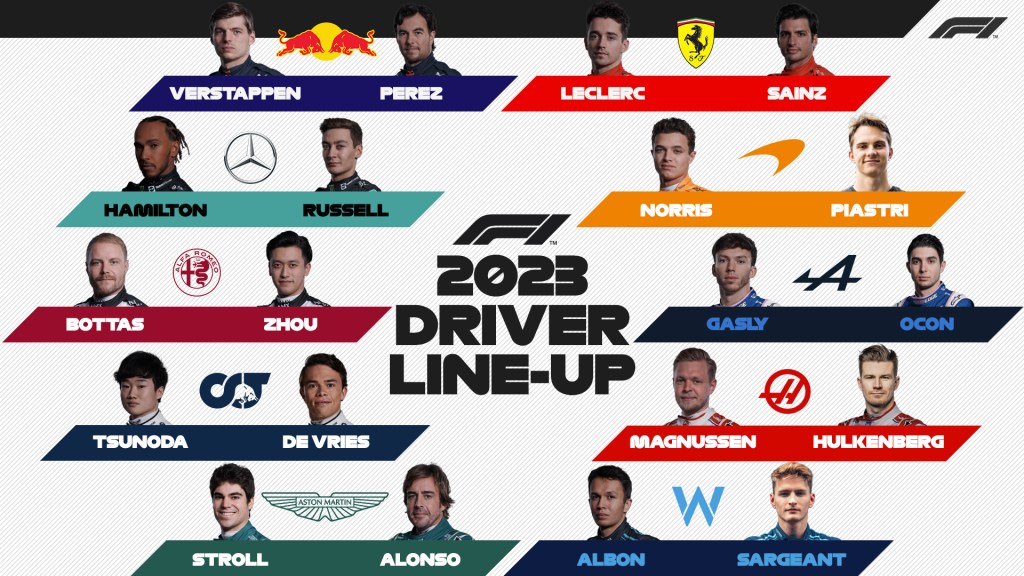
While I am bringing my knowledge from DtS with me, we as players get to see every driver multiple times in a single session. Through free practice, qualifying, then the starting grid where everyone’s faces are front and centre, and then finally seeing their abbreviated names on top of their cars, you get the sense that these are actual drivers, rather than just a name.

Depending on what car you are in and where you are on the grid, you will see the same names popping up around you, developing mini-rivalries as the races go on. People that I would support when watching races I became bitter enemies as they overtook me, and for the rest of the race I would be determined to beat them.

On top of these self-made rivalries, the game at certain points (in the guise of journalistic interviews) asks who you consider to be your rival. Points are given after every race, which your rival also gets.

Finishing on the podium obviously nets you more points, but also driving penalty free, getting the fastest lap in free practice, and so on allows you or your rival to advance quicker. It creates tense moments where you might not have the pace on track to beat them, but you can make up lost points in the aggregate. It’s a simple yet effective and I always had a thrill trying to beat my rivals.

Your rivals and your teammate for the season. Those two aren’t always mutually exclusive. (Source: total-motorpsort.com)

And beating them is quite hard. Accessibility is low on the game’s priorities, meaning you need to tweak and tinker to find the perfect set up. You have only just customised your driver avatar and chosen your team when the game throws a spreadsheet nightmare in your face of settings.

To be fair to the developers, nearly EVERYTHING is customisable.

Not just the aggressiveness of the other drivers, but the surface type, car damage, the damage rate, tyre temperature, pit lane entrance, pit lane exit…and that’s just the simulation settings.

In Assists, there is steering and braking assists, anti-lock brakes and traction control, along with a whole myriad of changes. You can even adjust the dynamic racing line (where the game tells you where to brake and how hard), either in 3D or 2D, and having it only appear in the corners.

I admit I was a little daunted at first, so I set most things on and brought the difficulty down to “Easy” and entered Bahrain. I ended up winning by a good thirty seconds and knew I had to switch to a harder difficulty.

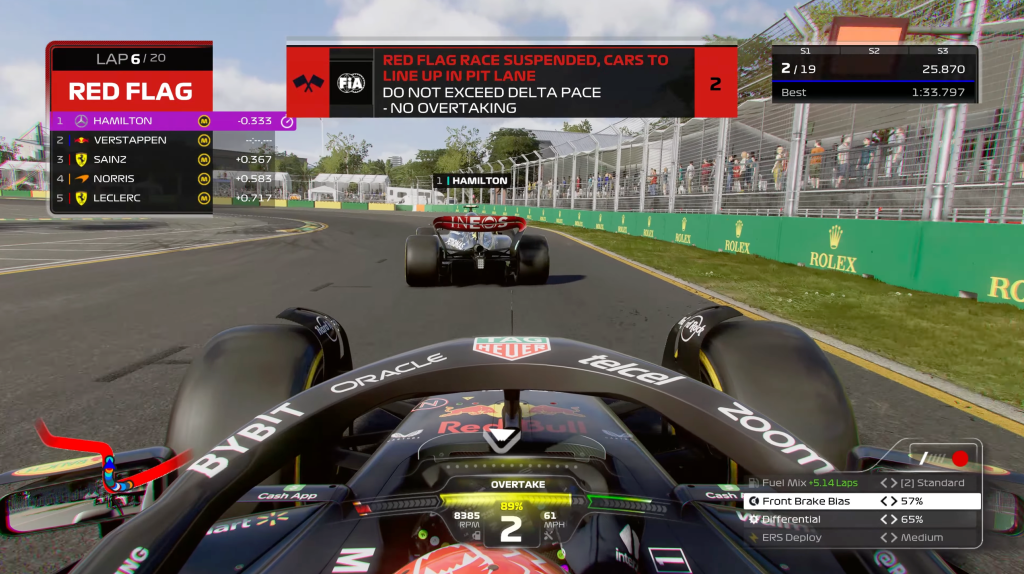
Notice the menu in the right corner, allowing for car customisations during the race. (Source: operationsports.com)

While other racing games I was always wanting to finish in 1st place, here I was fine with not always winning each race, partly because of the car I chose. Being a DtS fan, I went with the underdog, Haas.

The cars work on a tier system; the Red Bull and Ferraris can take corners better and reach faster speeds respectively, whereas teams like Williams and Haas usually fight for the bottom of the points, if not the bottom of the leaderboard.

But that comes at a cost. In Haas, the only requirement in the race is to beat my teammate. In Red Bull or Mercedes, they will expect a high points finish, with demotion or firing if you can’t deliver the team requirements.

But even in a slower, lesser powered car like Haas, the circuits are the main draw, and they are amazing.

These tracks are iconic, some having been used for over one hundred years for races, but each one does feel distinctly different, leading to a thrilling challenge each time the next race weekend comes around.

The game follows the actual race calendar of the season, starting in Bahrain and ending in Abu Dhabi. And while Bahrain is listed as “Easy” in the course selection, the second track, Jeddah, is listed as “Hard”.

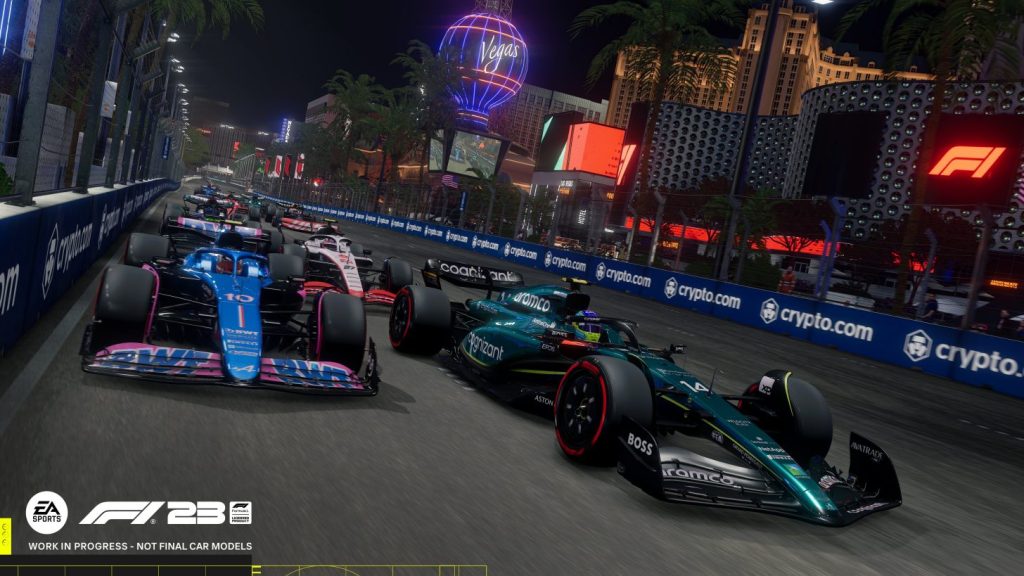
The Las Vegas course, new for 2023 and known for being one of the harder courses. (Source: insider-gaming.com)

The game boots you from one end of the difficulty ranking to the other (including “Very Easy” and “Very Hard”), requiring even more time spent in the settings to make certain races bearable. I had to turn off damage completely at Monaco otherwise I wouldn’t have been able to finish the race!

But while the tracks can sometimes be intimidating, the game actually gives the player plenty of chances to get used to the next race.

First comes the Pirelli Hot Lap, a small challenge that actually takes place each race weekend. Using a souped-up sports car rather than an formula car, the challenge will be something like get the highest speed in one particular section of the course or pass through every gate within the time limit. It’s still low stakes, but it gets the player used to some of the corners.

Next comes free practice, allowing teams to test out certain builds or styles, seeing which gets them the best times. Then after is qualifying, and then finally the race. Depending on the length of the session, free practice and qualifying can be up to an hour.

And while there are mini-challenges to work on in practice such as driving to conserve fuel or tire management, it all serves in learning the corners and straights, until you feel ready enough to go for the race.

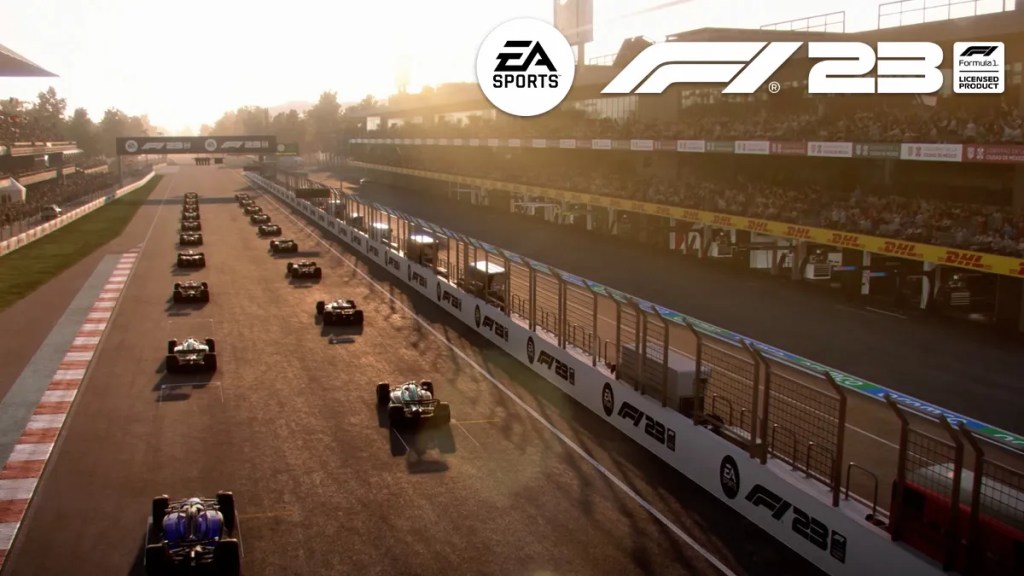
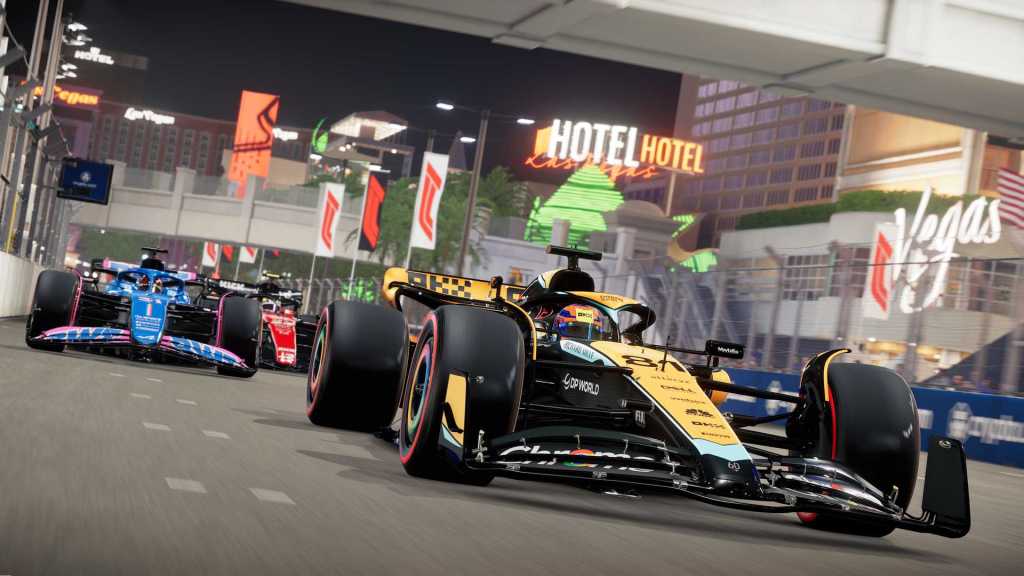
The game is gorgeous to look at, especially during night races. (Source: racefans.net)

And racing has me hooked. Driving a car that can reaches nearly two hundred miles an hour on a straight, sliding round corners with ease, fighting for places amongst the grid, it just has a magical quality that can’t be matched.

Also, no need to worry if you crash, spin out, or even just take the corner a little off the line, the game has a very nifty instant replay editor, going back to around the last five or so seconds, allowing you to start again from anywhere within that five seconds so you can try that corner again and again until you get it right.

I will admit I am a frequent user of the instant replay, but nothing does beat getting around the course or that one tricky corner without using it, leaving that section of the course with a giant smile on my face.

And then you get used to the track, you remember the sequence of corners, what comes next, enjoying certain parts of the track, dreading others…and then it’s done and onto the next one.

It’s thrilling yet fleeting, ever-changing yet the same, and that’s why I’ve fallen in love with F1 22 and will continue long after my first season is over.

Banner Photo Source: motorsport.com

Why You Should Play – The Pillars of the Earth

As the Playstation 5 and Xbox Series X finally cement their place as ‘current-gen’, we should take a look back at some of the games that defined the eighth generation of consoles.

We’ve seen multiplayer greats like Call of Duty and Battlefield reinvent themselves with both the old and the new (WW1 for Battlefield and CoD with Modern Warfare).

We’ve watched CD Projekt RED go from critical darling with The Witcher III: Wild Hunt to an out-and-out failure with Cyberpunk 2077.

And narrative behemoths have graced our screens like Red Dead Redemption 2 as well as smaller indie hits such as Firewatch and What Remains of Edith Finch.

Today I wanted to talk about one of my favourite games from the last generation and hopefully turn a few players onto the gem that is The Pillars of the Earth.

Based on a 1000+ page historical novel by Ken Follett and set over forty years in 12th century England, The Pillars of the Earth is about three characters, Phillip, a monk, Jack, an outcast, and Aliena, a former noblewoman.

The story sees the three cross paths as they try to grow their town of Kingsbridge, fend off rival noble families and vengeful bishops, and build a cathedral the likes the world has never seen before.

Jack and Aliena meet when both are still children and we get to see them change with age and experience. It’s an interesting scenario that hasn’t been explored much in gaming. (Source: amazon.de).

It’s not the first book to be translated to gaming. The most famous examples are the aforementioned The Witcher and the excellent Metro series.

But in comparison to those two franchises, The Pillars of the Earth doesn’t sound like it would be a blood-pumping adventure full of swords and shields. It’s a historical novel, not fantasy, so there are no mages or sorcerers to liven up the mostly downbeat and dark mood.

But it’s the moments where the characters cross paths, the battle of wits and scriptures, and the twists and turns as the lead characters sow the wind and reap the whirlwind that make The Pillars of the Earth one of the best narrative games of its generation, and why I want to talk about today.

By God and the Devil – Why The Pillars of the Earth is Great

The Pillars of the Earth is one of those games where everything perfectly comes together to build something remarkable. The artwork, the music, the 40+ hours of performance, and the story, each one is a singular piece that makes the whole that much more enjoyable.

The game is a point-and-click adventure that uses a large canvas as the background, scrolling left and right when the player character moves. The scaling is incredible, with entire cathedrals, estates, and even towns explorable, but still retaining exquisite details.

Due to the ‘static’ backgrounds, the game camera works almost like a film camera, highlighting points it wants to draw attention to but without taking control away from the player. This allows the player to feel like they are naturally discovering each location and the secrets they hold.

One repeated location, the crypt at the bottom of the cathedral, is one of my favourite spots in the entire game just from its atmosphere. The use of light and darkness in this one small room is played with so well that it can evoke fear or fascination, just with a simple change of lighting.

The crypt merges from dark and disturbing to a place of comfort and solitude, all through the lighting and camera focus of the stage. (Source: mathlidesound.de)

Part of the excellent atmosphere comes from the music by Tilo Alpermann. Since the game is primarily about religion, the majority of the music is ecclesiastical, mixing male choirs with strings and woodwind instruments with heavy brass approaching in Book 2 and 3. However, it’s in the less traditional aspects where the music shines.

Tracks like ‘Hell’, which incorporates faint chimes and cymbals into its rolling strings, or ‘Bishop Waleran’s Wrath’ which uses an electric guitar for its main beat and what sounds like reversed strings or brass on the second beat give this strange sense of foreboding, of power beyond the characters we control.

The tracks ‘Hell’ and ‘He That Committeth Sin’ blend in one of the darkest and disturbing moments of Book Two. (Source: gamingcypher.com)

While I love the graphics and the soundtrack, the story is the high-point of the game for me, and anyone wanting to experience a deeply engaging and philosophical narrative from the last generation should seek it out.

Set over three ‘books’, each with seven chapters, the story is expansive and slow-build, moving at an almost glacial pace at the start to set the major conflicts, but also the tone of those chapters.

Even the main menu helps establish the feeling of each book. Book One is dark and cold, with many thinking the Devil walks amongst them. Book Two is lighter, showing the characters and their town starting the rebuild. Book Three is shrouded in dust and debris as chaos reigns down once again. It’s a masterclass in simple yet effective narrative design.

The start of Book Three: “Eye of the Storm”, sees death and war come to England, with the landscape in every chapter shrouded in dark fog. (Source: cosmocover.com)

The game switches perspectives throughout, from Phillip, to Jack, then to Aliena, and back again, each character adding a tiny piece of the narrative puzzle until it all comes together for the final couple of chapters of each book.

You could in fact play each book as a standalone story as they build, climax, and resolve like a standard plot structure, but the fun is watching characters in Chapter Twenty-one reference decisions you made in Chapter Four.

At the end of every chapter you get a itemised list of what you did, what actions you took and who you spoke with. A lot of nouveau point-and-clicks like Detroit: Become Human, Life Is Strange, and Telltale’s The Walking Dead have these similar lists.

With The Pillars of the Earth there isn’t always the reference to something that didn’t happen like other games, it’s solely on what did happen, which I feel make it seem more personal, rather than a somewhat A/B approach to narrative.

The main gameplay loop is through dialogue, with your words and tone carving a pathway through the story. While it does have set story beats throughout, there are small paths of deviation that lead to gigantic turns later on, sometimes even in a different ‘book’, so far removed that you might have even forgot what your previous actions were.

Dialogue choices and quick-time-events from the main crux of the gameplay loop, yet from simple premises your choices can destroy families, lead countries to war, and even cause the optional deaths of central characters. (Source: daedlic.com)

While the story is mainly character-based, a major point that dragged me into wanting to see the next chapter are the themes the narrative plays with. Ideas like religion and devotion, sin and violence, even love and sex are explored deeply in The Pillars of the Earth.

Each book features powerful moments that make the story come alive with meaning and emotion. Scenes where characters find or lose their faith while others see the Divine and the Devil amongst them are seared into my mind due to the way they shake the very foundations of the cast, and how there hasn’t been many games that tried to do something similar.

The game also spans the entire development of a romantic relationship, from shy smiles and holding hands to spending passionate nights together (this game actually has my favourite sex scene in all of gaming), and eventually settling down and starting a family, something that up until recently games haven’t tried to depict with any meaningful, long-term effects.

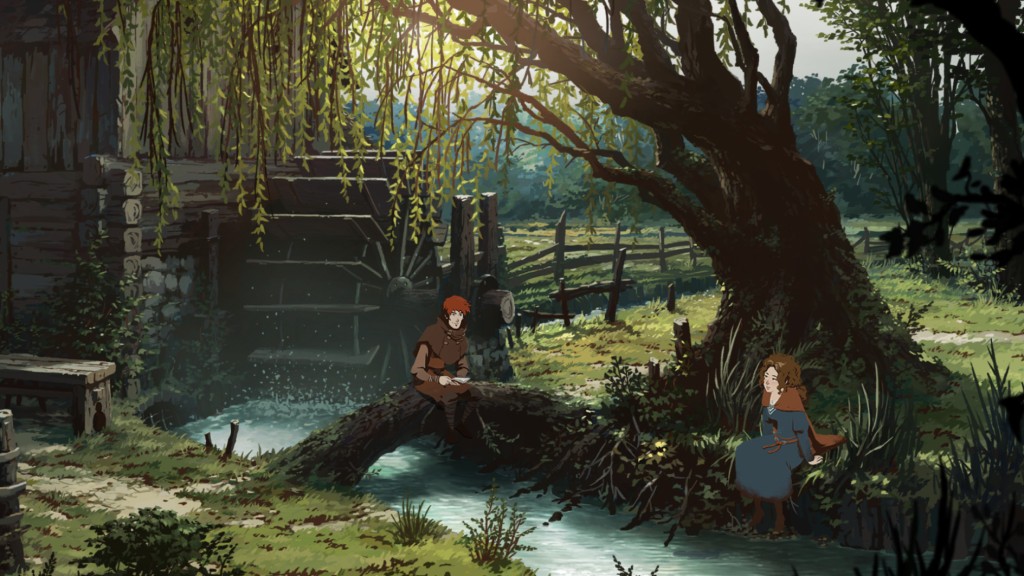
The water mill, where Jack and Aliena’s romance begins to flourish. (Source: steampowered.com)

It’s a mature story, not with depictions of violence and nudity but with its ideas and implications, and that’s why I absolutely loved every moment.

I hope that this short post has teased your appetite to experience this incredible game. The Pillars of the Earth was an absolute delight and I can’t wait to dive back in again to one of the best games of the last generation.

Banner Photo Source: iphonelife.com

The Best Levels from the Entire Hitman Series

I recently finished Hitman 3 and absolutely loved it. The game, no, the entire World of Assassination trilogy, starting in 2016, has been one of the greatest gaming experiences I have ever had.

IO Interactive really pulled out all the stops for this trilogy, with stunning locations, unique scenarios, and one of the most personal and human stories in the AAA gaming scene. The reboot, which is now over five years old, still looks beautiful even when running off an ageing PS4.

Today I wanted to talk more about the locations Agent 47 visits in his grand tours around the world. The series is known for creating some of the most breath-taking and intricate levels in gaming, so I wanted to rank the best locations from every single game, starting with Codename 47 from 2000 up until the most recent game from 2021. Let’s start!

Hitman: Codename 47 – “Traditions of the Trade

Despite being over twenty years old, the original Hitman has one of the best levels the series has ever devised, containing a perfect blend of location and eliminations.

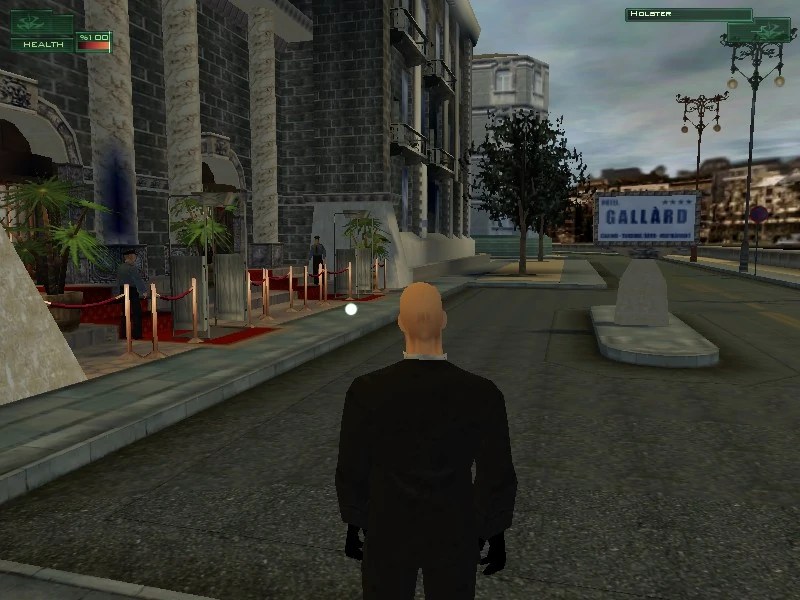
“Traditions of the Trade” sees 47 head to the Hotel Galar in Budapest (based on the famous Hotel Gellért) to take out Austrian terrorists Frantz and Fritz Fuchs and collect a chemical bomb Frantz has planted in the hotel.

The level is absolutely stunning, giving the players an entire hotel to explore. In comparison to the other levels in the original Hitman, this one values player freedom and non-linear gameplay as the highest priority. There are zero waypoints to your targets, but the game gives you clues to where to start searching.

For example, what would be the first thing to do in a hotel? Maybe check-in at the front desk. When you sign the guest book, you see one of the target’s room numbers. It’s so simple but perfectly logical, and the entire series has made a habit of including details like these.

The hotel is a nice and calm setting, you’re not immediately being hunted or needing to be stealthy. But that doesn’t mean the level is easy to beat. Security is tight (the hotel is about to host the UN, hence the threat of a terrorist event) so players have to work within the limitations set.

Metal detectors are placed at the entrance of the hotel, meaning you can’t bring any weapons with you. That’s something quite revolutionary for the series, you can complete the level without firing a single shot.

Some unique kills and scenarios (staples of the series) are present here, such as trapping Fritz in a sauna and turning up the heat, and jumping from balcony to balcony to reached Frantz’s bathroom, the only place he isn’t surrounded by guards.

Despite its simple premise, “Traditions of the Trade” is a quintessential Hitman level, with it being the template for many locations throughout the series.

“Traditions of the Trade” is so iconic it was remastered for the 2004 game, Hitman: Contracts, almost unchanged in terms of gameplay. (Source: hitman.fandom.com)

Hitman 2: Silent Assassin – “The Jacuzzi Job

A short level, but a fun one due to the location alone. “The Jacuzzi Job” is the final section of three missions that see 47 head to Kuala Lumpur in Malaysia, chasing a hacker who has stolen a valuable missile software programme.

I absolutely love this set of missions purely due to the setting, the Petronas Towers, which at the time were the tallest structures in the world. And while the first mission set in the towers takes 47 to the basement, “The Jacuzzi Job” takes place in the penthouse suite.

To reach his target, 47 first has to traverse the roof of the skybridge between the two structures, before using a window-cleaning platform to reach what is, essentially, the top of the world. Taking place during a horrendous thunder storm, with rain lashing down the windows, the location is dark and creepy.

47 must make his way through a series of work offices before the penthouse, with the soft glow of the computers casting shadows across the smart yet mundane work spaces. This is then contrasted with the penthouse suite with its dark-red lighting fixtures, ostentatious architecture, and tacky signs of luxury.

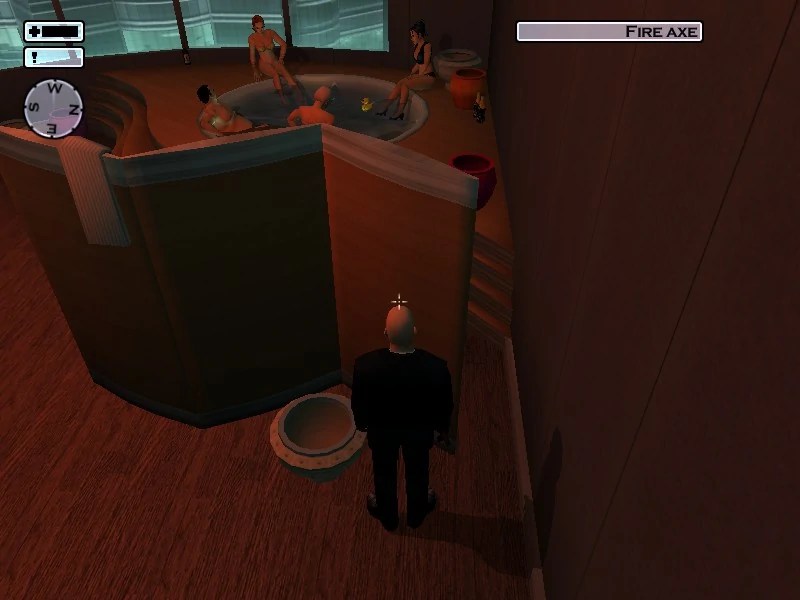
The target, Charlie Sidjan, is surrounded by his female bodyguards (you could call them is ‘Angels’?), chilling in the jacuzzi as the level implies.

To not arouse suspicion from the authorities following Sidjan’s death, 47 has to make his hit look like a robbery gone wrong by stealing some tasteless yet expensive art. It’s an interesting inversion of the standard Hitman trope of being a ‘silent assassin’, leaving no evidence you were even there, making it stand out amongst the rest of the series.

Charlie with his ‘Angels’, with 47 waiting for the right moment to strike. (Source: hitman.fandom.com)

Hitman: Contracts – “The Meat King’s Party

Hitman: Contracts took a series already known for its dark tone and turned it up to eleven. While some fans think the mission “Beldingford Manor” is the better level, I think the “The Meat King’s Party” is the more iconic.

Set in Romania, 47 is tasked with killing slaughterhouse entrepreneur Campbell Sturrock, and his lawyer, Andrei Puscus.

Sturrock was accused of kidnapping the daughter of an ICA cilent (the International Contracts Agency, 47’s employers), but because of legal technicalities and a few bribes, Sturrock got away scott-free. 47 infiltrates the celebratory freedom party being hosted at one of Sturrock’s slaughterhouses to rescue the daughter and eliminate his targets.

The party is absolutely wild. A BDSM-inspired rave with leather-clad guests fuelled by opium pipes and dancing to a dark techno beat, strobe lights dancing off the clinical white walls and machinery, the location alone would be enough to grant its place on this list.

The main target is another highlight. Campbell Sturrock is absolutely grotesque. Morbidly obese, unable to leave his bed due to his size, and eating entire roast chickens with his hands, he is disgusting and vulgar, and one of the stand out targets of the entire series.

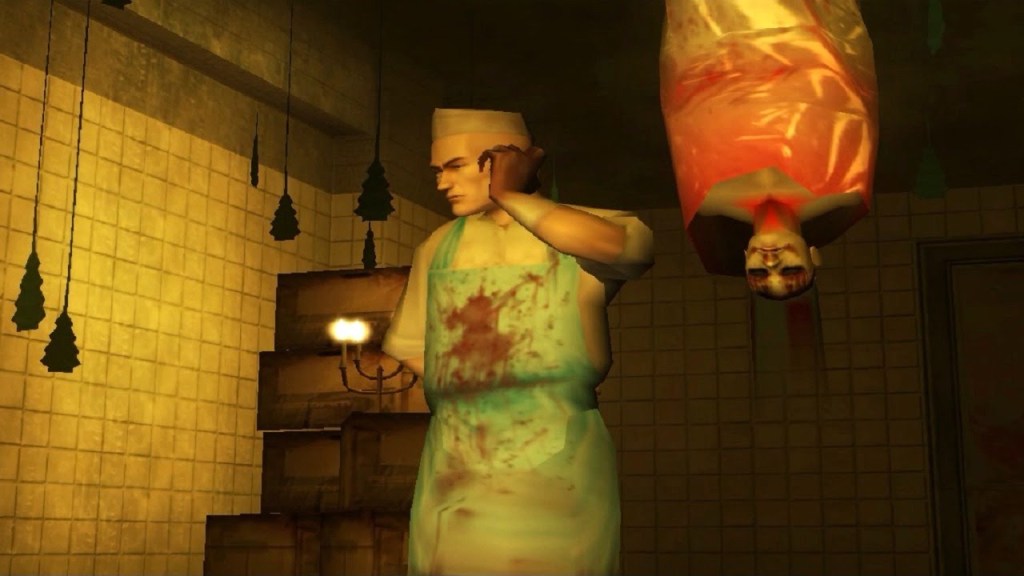
But the detail that makes “The Meat King’s Party” stick in the mind is The Girl. Kidnapped by Campbell before being handed over to his psychotic brother Malcolm, 47 finds the girl hanging upside down, her eyes gouged out and her severed arm on the floor under her. Car tree air fresheners hang from the ceiling with her. To one side is a shrine of sorts, and to another is a gramophone playing Paul Anka’s “Put Your Head On My Shoulder”.

And the most chilling part…despite Malcolm being the girl’s killer, Diana, 47’s handler, tells him the mission hasn’t changed. To get the perfect rating, Malcolm must survive. Even in Hitman’s twisted world, sometimes the bad guys still escape justice.

47 collecting ‘evidence’ of The Girl, truly ones of the most chilling moments in a series known for its dark tone. (Source: YouTube, Willzyyy)

Hitman: Blood Money – “A House of Cards

Hitman: Blood Money is widely considered to be the best game of the series. With improved AI, greater flexibility with kills, and a story that takes 47 all across America, it is still the benchmark for every subsequent game to compare itself against.

With levels such as “A Dance With The Devil” (a Heaven/Hell themed party filled with rival assassins) “Curtains Down” (killing the lead tenor during an opera house rehearsal) or “Amendment XXV” (killing the US Vice-President INSIDE the White House), it takes something special to stand out in Blood Money. For me, “A House of Cards” reaches that peak.

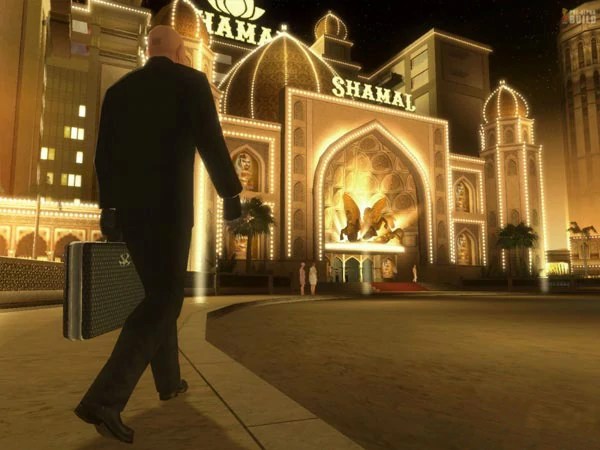
Set in a giant, Arabic-inspired hotel and casino, “A House of Cards” has three targets for 47 to eliminate, each one working on a different schedule, but crossing paths at set times. It creates a tense atmosphere when trying to juggle all the moving parts and manipulating events, making it that much more rewarding when the plan goes right.

It’s also remarkable how many ways you can take out your targets; catching them alone in their hotel suite, sniping them from the roof, strangling them in the elevator shaft, or even impersonating one of the targets and heading to a secret meeting with the others. With everywhere from the casino floor to the penthouse suites being available, it is truly one of the greatest of Blood Money’s stellar levels.

The Shamal Hotel & Casino sets the stage for one of the most intricate and layered missions in all of Hitman. (Source: hitman.fandom.com)

Hitman: Absolution – “Attack of the Saints

While Absolution is seen as a lesser game in comparison to its franchise, it still has a few stand-out levels.

Some favorites include “Run For Your Life”, with 47 on the run from the police, ending with him having to wait in a crowded metro station without being spotted, hiding amongst the civilians, before slipping away onto an incoming train.

Another is “One of a Kind”, where 47 visits his blind tailor, Tommy Clemenza, to fix him a new suit. It’s a small level, but adds so much to 47 and his world.

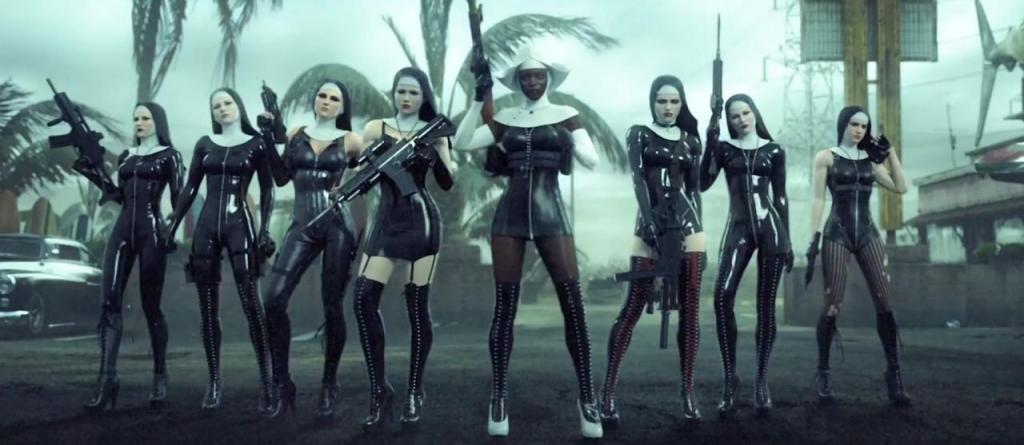
But the one I chose for this list is the big one, “Attack of the Saints”. First seen in a promotional teaser trailer, the Saints are a team of female assassins who are dressed in BDSM-inspired nun outfits. It’s a little out-there, but it fits into the grindhouse aesthetic Absolution goes with.

The Saints hunt 47 down to a seedy motel he’s laying low in, and proceed to blow up the entire complex. It’s the first time 47 has ever been caught completely off-guard, dressed in nothing but a skimpy bathrobe and having none of his gear, as the Saints close in to make sure the job is done.

The setting of the motel and surrounding landscape including Tiki bars, a mini-golf course, and cornfields, are the perfect variety of locations, giving us everything from tight hallways to open plains. The cornfield especially, it’s so much fun stalking through the long grass, silently taking out one Saint after another, with bonus points for dressing up as a scarecrow in the cornfield and hanging from his post.

It’s one of the few levels in Absolution that reaches to Blood Money’s success, giving us a variety of targets spread across the map and lets us get on with it, taking them out how we see fit. The Saints are touted as the best agents below 47 and are all heavily armed, so it does feel suitably badass to see 47 take down the people gunning for his job as top of the ICA.

The Saints in their debut appearance, the E3 ‘Attack of the Saints’ trailer, gearing up to take down 47. (Source: gamezone.de)

Hitman (2016) – “World of Tomorrow

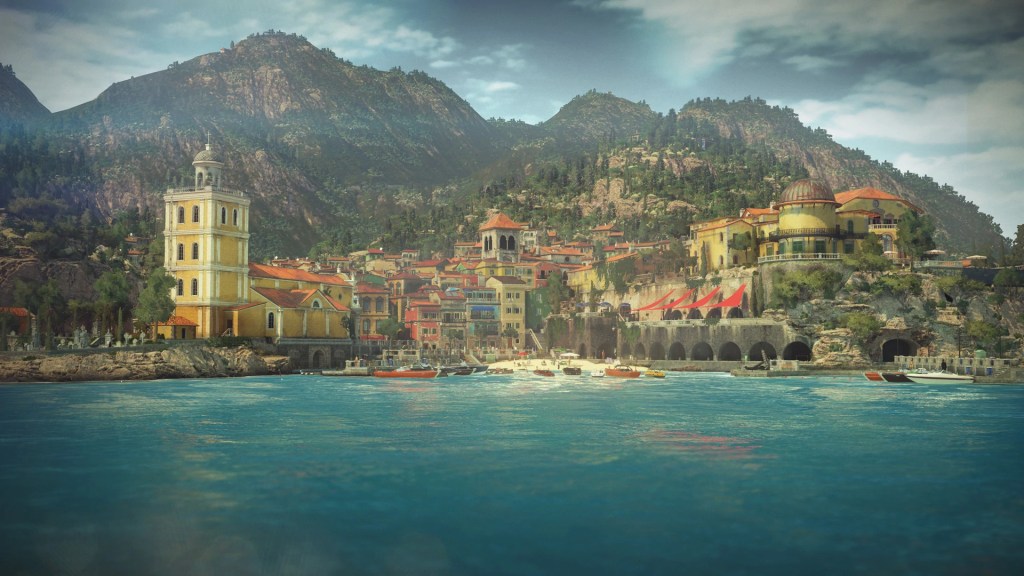
To anyone that has played through Hitman (2016) the choice of this level is no surprise and for good reason. The second level of the World of Assassination trilogy takes 47 to Sapienza, a small fishing town in Italy, which hides a dark secret. 

While the first mission of the reboot, “The Showstopper” (set in Paris), was an excellent first step for the game, “World of Tomorrow” was the perfect follow-up. The location is amazing; a beautiful sea-side town, complete with cafes, winding narrow streets, and even beaches.

The targets, two bio-engineers, are housed in an impressive manor built amongst ancient castle ruins, with spectacular gardens and walkways and even an observatory dome complete with giant telescope.

But the location that makes “World of Tomorrow” such a memorable level is the almost sci-fi chemical weapons laboratory underneath the small town. Hitman has always had a little dash of sci-fi (I mean, 47 is a result of a Cold War cloning experiment), but this feels like something straight out of a James Bond film (funnily enough, IOI are now working on a 007 game, which I have previously written about).

Along with the two targets, 47 is tasked with destroying the virus they had been working on. It’s always fun when the levels ask us to do more than just kill targets, such as crack safes or even destroying organs ready for transplant surgery. What’s even better, there is more than one way to destroy the virus, one remotely and one more up-close and personal, catering to different play styles.

Player freedom is at an all-time high in “World of Tomorrow”, with several ways of killing the targets, anything from shooting down a plane using a cannon (from the castle walls), to using an explosive golf ball when a target practices their drive.

The location, tied with the signature eliminations, makes it one of the best levels the series has to offer.

Death and destruction are always an inch away in Sapienza, where 47 hunts down the greatest minds of their generation. (Source: hitman.fandom.com)

Hitman 2 (2018) – “The Ark Society”

Hitman 2 expanded on its predecessor’s work with more intricate level design, distinctive scenarios for each location, and more unique ways to eliminate a target.

Levels such as “The Finish Line”, set at a Miami racing event (with one target driving their prototype vehicle), “Chasing a Ghost”, set in the Mumbai slums (where 47 has to deduce who one of his targets is), and “The Last Resort”, set in the Maldives (with targets hiring you mid-mission to enact their own schemes) are absolutely stunning and worthy of taking 2nd place on this list. But for me, the top place has to go to “The Ark Society”.

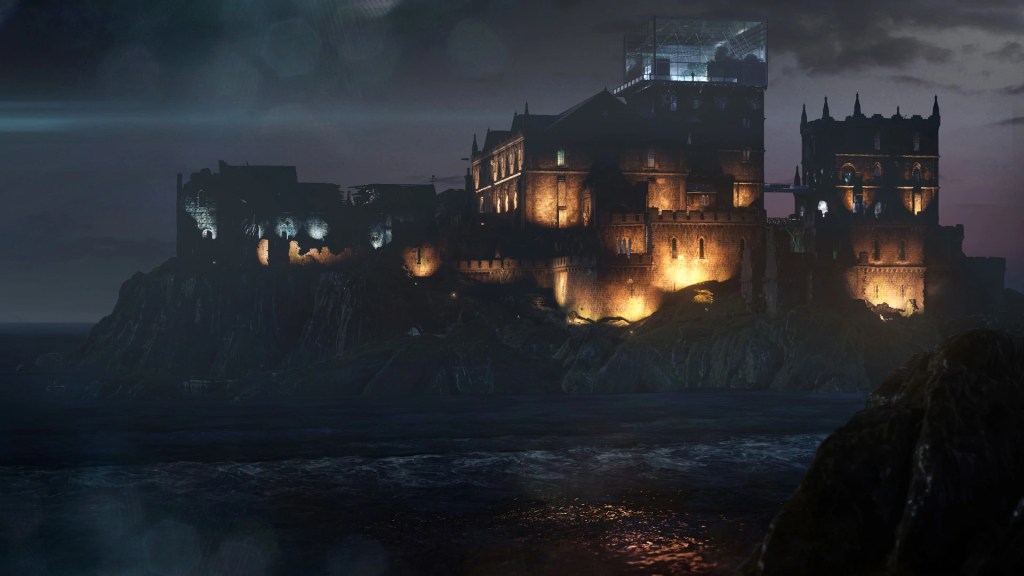
Set on a remote North Atlantic island off the coast of Scotland, “The Ark Society” is mesmerising as a location. The main complex is a medieval castle with burial sites, chapels, and a maze of sewer tunnels underneath, yet has a giant glass meeting box perched atop the keep, a dash of modernity clashing with the ancient.

The Ark Society are a collection of wealthy elites, plotting how they will survive the apocalypse, designing remote cities to flee to, researching new ways to extend their lives, and checking out the newest and most lucrative tech companies to invest in.

And because it’s a party, everyone is donned in formal wear and domino masks, aside from the higher level members, who have ceremonial robes.

It’s all pomp and circus, pageantry and playing at running the world, yet it is the perfect hunting ground for 47.

The two targets, the leaders of The Ark Society, are twin sisters coming from a nouveau riche family. To prove they belong with the old money members, they enact crazy schemes like placing themselves inside a phoenix effigy or putting prospective members through a polygraph test and electroshock torture.

The great twist on this level is the VIP, The Constant. 47 wants to extract him for later interrogation, but the twins are under strict orders that if The Constant becomes compromised then they have authority to use a “kill switch”. Inside The Constant’s head is a poison chip, and each twin has a detonator on them to use at any point. Before 47 can secure The Constant, he needs to be in possession of both switches.

It’s a cool theme, taking away a small amount of freedom to make players feel tense, having to ‘protect’ someone from the other targets has been done before but not to this extreme.

“The Ark Society” is an amazing level and the perfect crescendo to Hitman 2.

The blend of the old and the new makes The Isle of Sgàil one of the most memorable and unique locations of the entire series. (Source: hitman.fandom.com)

Hitman 3 – “Apex Predator”

Some fans of Hitman 3 will say that “Death In The Family” is the best mission of the game. It’s a good candidate; set in an old country manor in Dartmoor, England, and featuring a Knives Out-inspired murder mystery that the player can solve…but for me “Apex Predator” takes the top honour.

The set up; 47 is on the run from his own people and the shadowy Providence faction. It’s not the first time that 47 has been hunted, but after being possibly betrayed by his long-time handler and friend, Diana, 47 is at rock-bottom. He plans to meet his only other contact, Olivia, in Berlin, but just as he zeroes in on her location she tells him to abort their mission.

47’s employer, the ICA, has found the duo, with agents having orders to shoot on sight. Olivia is ready to cut and run, but 47 calmly tells her to keep her head down, signing off with, “I’ll take care of this.”

“Apex Predator” has one of the best locations of the entire series. IO Interactive love setting missions in clubs. We’ve had “The Meat King’s Party” in Contracts, “A Dance With The Devil” in Blood Money, and “Hunter and Hunted” in Absolution.

“Apex Predator” builds upon Blood Money‘s club setting, even keeping the Hell motif, with the name of the nightclub being Club Hölle, and expanding the rival agents from two in Blood Money to twelve in Hitman 3.

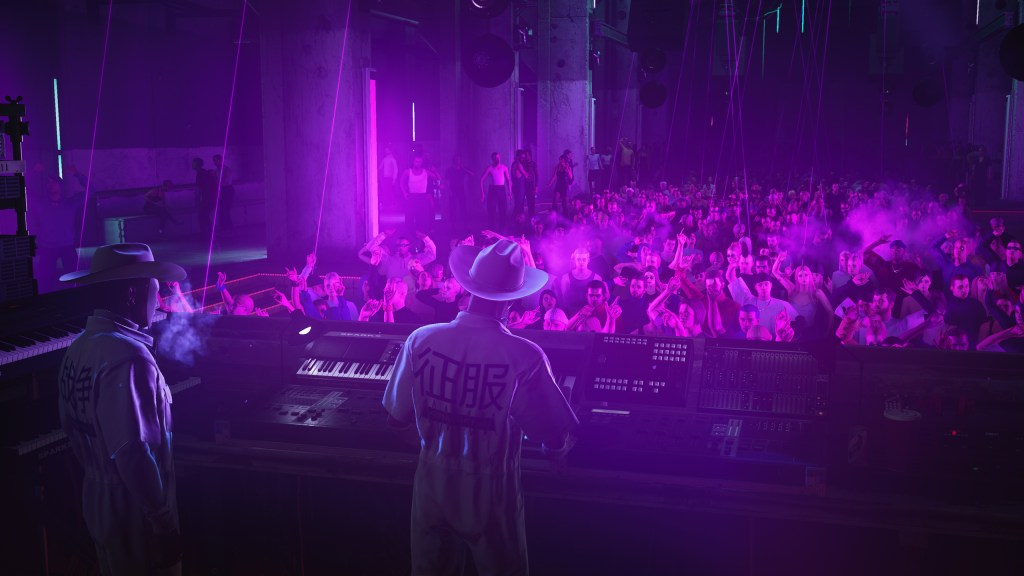
Set in a disused nuclear power plant and based on the infamous and iconic Berghain nightclub, it is disorientating and imposing. Between the three separate dance floors, coat rooms, smoking areas, juice bars, back rooms filled with gun-toting bikers, and even the DJ booth, it is an excellent sandbox for the player.

The best part though, the player has no idea who the enemy agents are. Disguised amongst the party goers, club security, bar staff, and more, it is a real unique and discomforting experience, not knowing if the next person you bump into is one of your hunters.

As the level goes on, 47 gets hold of an earpiece and listens in on the handler controlling the operation and the cocky agents who don’t realise they are in way over their heads.

As 47 picks off each agent, the handler, Jiao, becomes more and more panicked, eventually calling off the mission once enough agents are dispatched. If the player manages to kill all twelve, Jiao remarks, “Expertly done, 47. Expertly fucking done.”

It’s a small moment, but paired with 47’s line, “I’ll take care of this”, it elevates the level into iconic territory. Despite being hunted by some of the ICA’s most accomplished and battle-hardened assets, 47 is…well, the apex predator.

The variety of kills is astonishing, with everything from dropping lighting fixtures onto the dance floor, to arranging a closed door meeting with several assassins, where 47 reveals his identity before getting into a raging gun fight.

The location, paired with the excellent set up and loop of hunting and being hunted, make it quite possibly my favourite level of the entire series.

Death awaits 47 on the dance floor of Club Hölle, the main location of “Apex Predator”. Source: pcgamer.com.

Banner Photo Source: playstationlifestyle.com

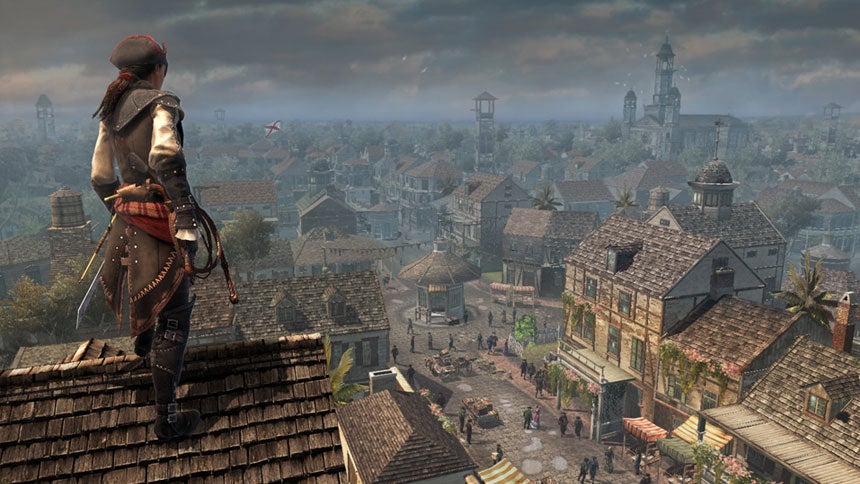
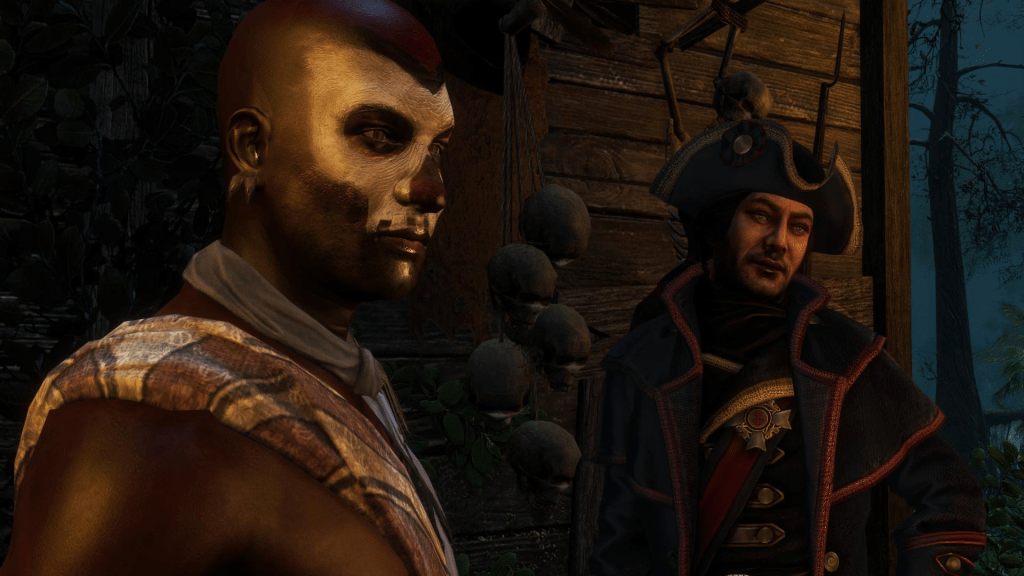
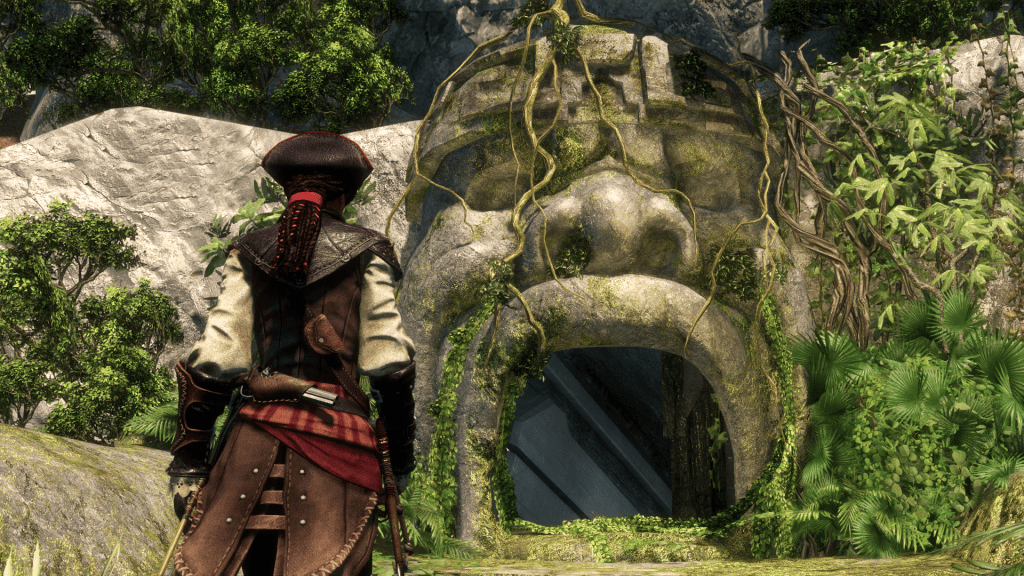
Assassin’s Creed: Liberation – Discovering a Classic

I’ve just finished playing Assassin’s Creed: Liberation, originally a PlayStation Vita exclusive, now bundled with the recent Assassin’s Creed III remaster.

It feels refreshing and fun to go back to a game that uses the old AC formula, but with a new location, story and character.

And even after a short time playing it, Liberation is probably one of my favourite AC games, easily passing III and Black Flag in my ranking of the series.

So I thought a little breakdown of what I loved about it, and hoped to spread the good word to some AC fans that may want to return to something with a classic feel.

Ragin’ Cajun: Why I love Assassin’s Creed: Liberation

  1. Scope

As mentioned previously, AC: Liberation was originally released on the PS Vita in 2012, to tie-in with the mainline entry ACIII. With the smaller hardware, reductions were needed to be made, but every change seems to benefit the game.

Instead of an intensely expansive world, Ubiosft Sofia (creators of the Prince of Persia HD release as well as the AC spinoff, Rogue) decided to keep things small and contained.

New Orleans and the Bayou, the two main areas of the game, are comparable to AC2’s Florence or Venice than the sprawling maps in ACIII (here is a forum thread of players calculating the size of the cities).

Smaller design leads to more intimate and detailed sections of the map, and allows players to get quickly attuned to their surroundings.

The churches of New Orleans, with their towering spires, become waypoints, allowing players to orient themselves to the location without having to pull the map out every few seconds.

It’s similar to the original Assassin’s Creed in that regard; a small contained map with distinct areas and easily identifiable landmarks. It helps the city feel rich and unique, directly because it is smaller.

This direction of scope is even found in the story and characters. While ACIII spends almost five whole sequences setting up the tragic backstory and family dynamic of its lead, Liberation does it in less than thirty seconds, with only around ten lines of dialogue.

It’s a masterstroke of character and lore-building and gets you right into the story. So let’s talk about that next.

Despite its smaller scale, New Orleans feels as detailed, polished, and “living” as later games in the series. (Source: ign.com)

2. The Story

Written by veteran narrative designers Richard Faresee (who worked on Revelations and III) and Jill Murray (who worked on Black Flag, its expansion Freedom Cry, and recently Shadow of the Tomb Raider), Liberation is one of the more unique narratives of the AC franchise, with it winning the Writer’s Guild of America Award for game writing for 2012.

After the Ezio Trilogy, Assassin’s Creed started to play with the formula for its stories. During AC2, Brotherhood and Revelations, the Templars were moustache-twirling bad guys worthy of a Saturday morning cartoon.

From ACIII to Unity, the mood shifted to portraying the Templars and Assassins as two side of the same coin, with more in common than what separates them.

Liberation follows this theme, but takes it even further, having a fun meta narrative within the story.  Liberation is in fact a game created by Abstergo Entertainment, a video game branch of the Templar company, wanting to push their propaganda onto the public.

Your game signal is ‘hacked’ by an Assassin, who tells you the Templars are hiding the truth. The Templars doctor the events to suit their purposes, so you have to hunt down a ‘glitch’ known as ‘Citizen E’, who then reveals the truth behind each edited scene.

It’s a cool idea, echoing the interrogations and glitches from the first Assassin’s Creed, of a world beyond the one we are perceiving, of secrets and subterfuge that some of the other games have lacked (looking at you, Unity, where nearly every NPC knew who the Assassins were).

The ‘Citizen E’ missions add an air of mystery and suspicion to the narrative, making the player question Aveline, her allies, and her enemies. (Source: assassinscreedwiki.com)

The “Full Synchronisation” elements (where players can complete extra challenges during missions) are well thought out and aren’t just added difficulty. Ever since the concept was introduced in Brotherhood, I’ve felt that this was the most ‘game-y’ aspect of the series and didn’t  fit either with the mission or the previous freedom of gameplay choice.

Here the Full Syncs add to the narrative, giving hints to the main character, Aveline’s, backstory. For example, the first assassination of the game (and possibly Aveline’s first assassination) isn’t with a hidden blade but with a musket stolen from an enemy.

It’s such a small detail but adds a ton of information to Aveline’s first recorded kill just by what weapon was used.

The story, like all ACs, twists and turns, threading the role of women, race, and indigenous people, something powerful and note-worthy in a major franchise like AC.

Another franchise staple, the First Civilisation, is present, but it isn’t treated with the same world-shattering aspects like previous games.

It’s a small thing in the grand scheme of the game (and has a nice twist at the end), so I’m happy that this series thread is kept to the background.

Liberation takes short detours to Chitzen Itza and Mexico, adding First Civilization temples and items, and uses them as standout platforming sequences (Source: assassinscreed.fandom.com)

But the high point of the story is it never loses sight of its lead. The story is squarely on the Assassin, Aveline de Grandpré. We see her triumphs and defeats, and turning from naive freedom fighter, into stalwart Assassin, and finally someone who can see from all sides, and carves out a path of her own. 

Speaking of which…

3. Aveline

Aveline is such a cool character. While it would take another three years until a female protagonist became a lead character (Evie Frye sharing with her brother Jacob in Syndicate), Aveline is no slouch when it comes to characterisation.

Aveline is constantly torn between two worlds, playing all sides, creating an interesting dynamic not only in story but also gameplay.

The most on-the-nose is her status in New Orleans. Born to a white wealthy merchant and a slave mother, Aveline has known both the stuffy aristocratic life afforded to her by her father, but also the hardships of slave life, even having nightmares of being snatched with her mother by traders right off the street.

Throughout the game Aveline switches outfits, from her Assassin ‘robes’ to ball gowns to slave attire, each one with their own abilities and quirks.

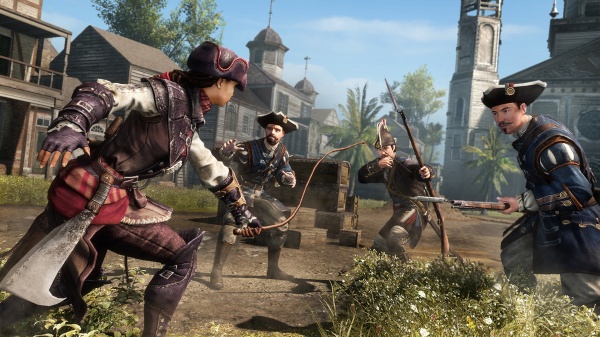
Her Assassin outfit is the one suited for combat, allowing for all her weapons and tactics, and also shows some cool details on her personality. For instance, instead of the trademark hood, Aveline uses a tricorn hat, allowing her braided hair to flow freely.

It’s a small detail but something that gives her an edge, of defining herself by her own skills and attire, not standing by the tradition of the Assassins.

When in her ‘lady’ outfit, Aveline can ‘charm’ guards away from their post and has lower notoriety, but is only limited to her hidden blade and can’t freerun.

When dressed as a slave, Aveline also only has her hidden blade, but can blend with other slaves and free-run, while gaining higher notoriety when doing ‘high profile’ actions.

While incredibly gendered, it adds a small layer of choice and tactics to the game, using Aveline’s duality as part of gameplay, with Aveline even altering her speech when wearing different outfits. It’s a great mechanical example of one of the tenets of the creed, “hide in plain sight”.

Aveline uses a variety of disguises to achieve her goals. I love this aspect and wish it would make a return in the series. (Source: siliconera.com)

Storywise, Aveline’s status as an Assassin also rides the dual aspect. Neither her father or mother are Assassins, a far cry from the rest of the series where it is usually a family tradition.

She may be inexperienced, but Aveline has already earned her hidden blades, allowing the narrative to skip the ‘origin’ story and get right into the main events without showing us her discovering the Brotherhood.

The only person who ‘knows’ about her rooftop exploits is Gérald, an employee of Aveline’s father, who holds down Aveline’s base of operations in New Orleans. Gérald gives Aveline information and equipment and knows of the Assassin/Templar conflict, but he is not immersed in the Assassin life.

Aveline is alone in her pursuit, not chasing down her family’s murderers or looking to gain back her family’s honour like other AC leads, but just watching over New Orleans, leaving only when needs must.

She helps free slaves and guides them to the bayou, she disrupts over-zealous colonial rulers and greedy merchants, and kills any Templar that sets foot in her town.

Late in the game Aveline leaves New Orleans for Boston to hunt down a spy and enlists Connor Kenway’s aid. They fight side-by-side in a knockout cameo sequence (Source: assassinscreed.wikia.com)

Aveline’s actions sometimes bring her into conflict with her mentor as she goes against Assassin dogma, not in a ‘trying-to-be-edgy/I-don’t-play-by-the-rules’ way, but as Aveline’s internal struggle with the tenets of the Creed and wanting to act.

It’s such a departure from the rest of the series, but every other attempt at ideas like this in later games has come across as being contrarian for the sake of it (mostly in AC: Unity).

While Aveline is cool and calm under pressure, smart and resourceful, she isn’t afraid to lose her temper or her composure.

There are several stand-out scenes near the end of the game which top any other moment in the series with their levels of emotion, pathos, and engagement.

One other major section that helps build Aveline’s character is…

4. The Combat

Liberation uses the same combat as ACIII and Black Flag, but has its own quirks that for me add to Aveline’s characterisation and to the game as a whole.

Aveline has the regular assortment of swords, daggers, hidden blades, and accessories, but the animations and their usage are so powerful.

Take the sword for instance. While other Assassins are usually hacking and slashing (such as Connor), Aveline’s sword-work is based more on cut and thrusts, disengages and parries.

It’s more intricate and indicates some formal training, indicative of her childhood in one of the more affluent families of New Orleans.

Her short blade is at the complete opposite end of the social scale. In the first mission of the game Aveline frees a slave and then fights off the enraged owner with his own sugarcane machete.

In another slave encampment, she wrestles away a slaver’s whip before turning it on him, and uses it to hang her enemies from tree branches.

It’s a powerful image of a young black woman using the tools of her oppressors against them, similar to Lincoln Clay’s rampages in Mafia III, a game which similarly stars a bi-racial main character fighting against the systemic racial prejudice of the time, also set in Louisiana.

Aveline strangling an enemy with her whip, getting ready to equip her machete to deliver the killing blow (Source: gamerstemple.net)

In the same camp where Aveline gains the whip, she builds her own hidden blades. Pickpocketing materials from around the camp; a small plank of wood here, a kitchen knife there, and finally a few soldier’s belts, Aveline lashes them all together to re-arm herself.

It’s a cool moment after a long section of having to work around enemies rather than face them head-on, now being able to break free and take on the rulers of the camp.

For many missions Aveline has to use her fists, which adds another layer to her characterisation. It’s mentioned in dialogue and appears in-game when she wears the slave disguise, Aveline is attacked by thugs that roam New Orleans.

In direct opposition to her bladework, Aveline’s hand-to-hand combat is brutal and lacks formal training. She swings wide haymakers, incorporates stomps and flying knees, it is the exact type of combat I would expect someone who had to fend for themselves on the street would have. 

And since the game is based off the updated ACIII engine, there is less of the stop/start counter combat from the earlier AC games.

Aveline has all the tools of the trade at her disposal and can easily go toe-to-toe with any Templar that gets in her way. (Source: spieltipps.de)

Conclusion

I did’t have much hope for Liberation when I first booted it up.

I wasn’t a major fan of either ACIII or Black Flag when I first played them, only really feeling the series had won me back when I played Syndicate.

And as the game was a PlayStation Vita exclusive when it first came out, it gave the impression Liberation was an also-ran, a stop-gap that played safe and didn’t offer anything of value.

But I gave it a chance and found myself relaxing into it, feeling comfortable in my controls and abilities, challenged by new locales and events and spirited away by an unspoiled story, but having a sense of familiarity, old yet new.

It’s been almost five years since AC has leapt from action-adventure to the RPG crowd, and I don’t fault it. Sale numbers and audience reception to Origins, Odyssey and Valhalla have been phenomenal.

But if you a looking for a change of pace, a palette cleanser between the big, bombastic games, something that tells a small story in a larger frame, or is just a nice reminder of a time and gameplay styling that has been absent, then AC Liberation might just be right for you.

It’s been a pleasure to play as Aveline, and my only wish is that I wanted more.

Banner Photo Source: gamestar.de

Tomb Raider’s Unified Timeline: Explained

2021 marks the twenty-fifth anniversary of the Tomb Raider franchise.

While there is no new game on the horizon, Crystal Dynamics, the main studio that has been creating Tomb Raider since 2006, did announce something big, something to change the landscape of the franchise.

Up until now there have been three separate timelines of Lara Croft; the original Core Design era, the first reboot by Crystal Dynamics (often referred to as LAU, the letters of the three games of said reboot), and most recently the trilogy known as the Survivor timeline, starting with TR: 2013.

While these separate timelines have had crossover characters and reimagined scenes, they are mostly thought of as three interpretations of the character…until now.

In a video celebrating the anniversary, it was revealed that whenever the new game will be revealed, it will incorporate every single Tomb Raider game before it, creating the newly-dubbed Unified timeline.

While the Unified timeline has been announced, there have been zero hints as the chronology or where the series will pick up afterwards. But as someone has more than a passing interest in the last twenty-five years of Tomb Raider, I thought I would give a go at laying out a possible timeline, trying to knit it all together in one continuous line with as little breaks as possible.

Oh, and I would just like to say I called the Unified timeline two years ago when I wrote a post outlining what I would want to see in the next Tomb Raider game (in Section Four).

Tempus FugitTomb Raider’s Unified Timeline (in what I have to admit amounts to fan-fiction)

Early Lara

We start with the plane crash over the Himalayas. This was the backstory for Lara in both Classic and LAU timelines, with the only differences being age of Lara (21 in the original, 8 in LAU) and Lara’s mother, Amelia being present in the latter.

I think the new series will keep the LAU ideas but age Lara up, maybe into her early teens. This allows them to neatly tie up the mother/father storylines of the new games into the Classic games.

Trekking through the snow after the disappearance of her mother, Lara finds a need to be on the edge of life (as laid out in the Classic timeline), and she starts to head to all sorts of places with her father, Richard Croft, alongside his friends Conrad Roth, Werner Von Croy and Charles Kane.

One of the expeditions is a fateful trip to the Angkor Wat in Cambodia with only Werner and Lara present (as seen in Tomb Raider IV). Werner is injured by a trap Lara told him about but he dismissed as ‘hocus-pocus’, and as the tomb starts to collapse, Lara escapes, leaving Werner behind.

A search and rescue is ordered (maybe even led by Roth and Papa Croft) but they find Werner has already escaped using the magical artefact, the Iris (that Werner was searching for in Cambodia in TR4, and which it is shown has teleportation powers in Tomb Raider: Chronicles). Despite escaping, Werner now has a permanent limp (even being wheelchair bound for a while) and has a grudge against Lara for leaving him.

Richard Croft is unsure of putting his daughter in danger and tries to stamp out her need to experience the wild, sending her to Ireland with the butler Winston. Lara still manages to get into scrapes as she explores the haunted Black Isle (as seen by the Ireland levels in Tomb Raider: Chronicles).

Richard Croft is now invested in the mysterious and magical, inspired by Werner’s experience with the Iris. He starts neglecting Lara to do more search into immortality and items to bring back the dead, or finding where his wife vanished. This leads Lara to become increasingly reliant on Conrad Roth.

Roth, seeing that Lara will continue to travel the world, starts to train her in some skills like trekking, rock climbing, and even archery.

At around this time, Richard Croft exits the story. In the Survivor timeline he is murdered in his office, but I believe they will have him disappear while working in the field (as seen in the LAU timeline).

This leads into…

First Expeditions

There’s no getting around it, the Survivor games are seen as Lara’s introduction to being the ‘Tomb Raider’ so this bit has to go first.

Everything in the 2013 reboot, Rise of the Tomb Raider, and Shadow of the Tomb Raider, as well as little bit of the comics happens in the Unified timeline. Roth goes with Lara, hoping to mentor her better than Werner all of those years ago.

The only caveat I will make is that by the end of Shadow of the Tomb Raider, Trinity, the nefarious organisation that Lara has been battling with since the reboot began (and was instrumental in the death of her father) are wiped out, or are brought down enough that they will never return.

With the death of many of their high-ranking operatives at her hands, Trinity goes away, and Lara starts to enjoy life again, even starting to do some archeology (ya know, the thing she got a degree in).

She leads an archeological dig to Paraiso in Peru, but soon tragedy strikes when the dig site is attacked by a monstrous shadow being (as seen in TR: Legend, the first of the LAU games) and kills nearly everyone else on the dig.

After all these expeditions and seeing the countless deaths of her friends and colleagues, Lara decides it is time to head out into the world alone. She also vows to keep as many powerful artefacts in her possession, lest Trinity or another similar force gets their hands on them first.

Seasoned Raider

As time has gone on, Lara has encountered many treasure hunters and explorers, searching for the same artefacts as she does.

Some notable ones are Pierre Dupont and Larson Conway (from the Classic series) and Carter Bell (from the side game Temple of Osiris and the comic books) as well as her old mentor Werner Von Croy.

As seen in Tomb Raider: Chronicles (and the first expedition of Lara being alone) she battles against Pierre and Larson for the Philospher’s Stone. She meets them again later when Lara is hired by Jacqueline Natla to find the pieces of the mythical Scion and uncovers the remains of Atlantis (as seen in TR1/Anniversary).

Next, Tomb Raider II, sending Lara all the way from Venice, to the Indian Ocean, Tibet and finally China.

Soon after she heads to Russia after hearing about an underwater reconnaissance for a mysterious artefact. She calls one of her father’s old friends, Charles Kane, for assistance, due to his knowledge of countries that used to be behind the Iron Curtain (as seen in Chronicles and referenced in Anniversary).

When Kane tells her she will be going up against the Russia mob, Lara replies, “Dealt with mafiaoso before, unpleasant memories,” showing that this section happens after TR2.

After Russia, Lara learns that Werner Von Croy has been doing tests on the Iris that he escaped with in Cambodia.

From the cutscene at the beginning of TR4, Lara knows that this artefact is dangerous, so breaks into Von Croy’s HQ in New York (as seen in Chronicles) and steals the Iris (as the Iris can be seen in Lara’s treasure vault in TR3, showing she came into possession before the events of TR3).

Lara stealing the Iris widens the rift between Werner and Lara, but also ends Lara’s insistence on being alone during her expeditions. To break into Von Croy’s building, she needs help from a man called Zip, a former employee of Von Croy’s.

Using his knowledge of the building was instrumental for Lara, and so she hires him as a general tech advisor and aide. While she is out in the field, he stays behind at Croft Manor.

Before fully hiring him though, she has one last trip by herself in the form of Tomb Raider III. It is here though where she realises that she’ll need some extra help.

The amount of high-tech security she had to bypass in TRIII, not to mention the many hours of research to find her next destination have obviously taken a toll on Lara. She wants to be out in the world, not be in her manor doing thousands of hours of research.

So, alongside hiring Zip as her tech expert, she also hires Alistair, an old history colleague who helps research the places she needs to go to find her next artefact.

This leads into the Legend storyline, which then leads into Underworld (part of the LAU timeline). In Underworld Croft Manor is destroyed, Alistair is killed, and Lara does battle with Natla for the final time.

Lara once again is reminded that everyone around her is unsafe because of her, and so she severs ties with Zip, with only Winston staying with her.

Final Years (Death and Resurrection)

Leaving Winston to manage the rebuilding of Croft Manor, Lara heads back out into the world, alone, and into the story of The Last Revelation.

Learning that Von Croy is doing an excavation in Egypt for the fabled Tomb of Set, Lara sets out to beat him to the punch and steal whatever artefacts are buried in the tomb.

She does so, and inadvertently unlocks the Egyptian god of chaos from his prison. So begins a race against time between her and Von Croy, with him unaware of the larger implications of Set coming to destroy the world.

Von Croy is possessed by Set, but Lara manages to seal the evil god away beneath the Pyramids of Giza. As she exits the tomb, she sees Von Croy standing before her. The tomb starts to collapse and Von Croy offers his hand, seeing Lara in the same position as he was all those years ago.

Lara is still unsure whether Von Croy is under the influence of Set though, and so sadly falls into the tomb, presumed to be dead (all seen in TR4).

A memorial service is held for her (as seen at the beginning of Chronicles) at the recently rebuilt Croft Manor. While everyone else left her for dead, Von Croy is busy digging through the pyramid, eventually finding her.

It’s never actually explained how long Lara is buried underneath the pyramid for, but for the Unified Timeline, I’m going to say it was anywhere from a couple of weeks to a full month, with Lara barely surviving.

Having been buried alive, Lara is no longer the seasoned raider she once was. This can be seen in the next and final game in the Unified Timeline, Angel of Darkness. She does not have the strength, stamina, or reserve she was once known for, now she is cold, ruthless, and angry.

At the end of the game, where she once again saves the world but at the cost of Von Croy and her new friend Kurtis, she walks off into the darkness…

Where to go now?

Let’s do a bit of a time scale. TR 2013 to Shadow is approximately five years. That puts Lara at 26 years old.

After a few more years of archeology with groups, ending with the massacre at Paraiso, Lara is now into her thirties.

Everything from Paraiso to the destruction of Croft Manor is would estimate to be another five to six years, meaning Lara starts her trip in Egypt at around 35 years old.

After the events of The Last Revelation, she takes a few years before Angel of Darkness starts. So in my approximation of the Unified timeline, Lara is nearing her forties.

I think this is where the Unified timeline will pick up. Keeley Hawes (voice actress for Lara during the LAU reboot and the ‘Lara Croft’ spin offs games) is returning to the series for the new Tomb Raider: Reloaded mobile game.

Could this mean she is coming back for the mainline series? It would fit age-wise, with Lara and Keeley Hawes being within the same range.

I also think the Angel of Darkness ending leaves the door open to a new game. I don’t think Crystal Dynamics will make a sequel to Angel of Darkness (two were planned, but when AoD was a commercial and critical failure, all future sequels were scrapped), but they might take aspects of the Lara we last saw in that game.

Lara was a lot colder in AoD than she had been before, jaded by her experiences and not being able to climb and jump as well as she used to. I’m not saying the next game has to be about building Lara up again into the Tomb Raider, but maybe showing a harder, colder edge.

But then we also have all the returning characters from all the timelines; Jonah, Zip, Charles Kane maybe, Winston obviously. These character will allow our heroine to take a breather, to smile, to be happy. That would be the best compromise between Core and Crystal’s two sides of Lara.

Fans should rejoice. Everyone is getting their Lara back. And I for one can’t wait to she where she takes us next.

Banner Photo Source: “Evolution of Tomb Raider (Lara Croft) 1996 – 2014” by blazeofmind.

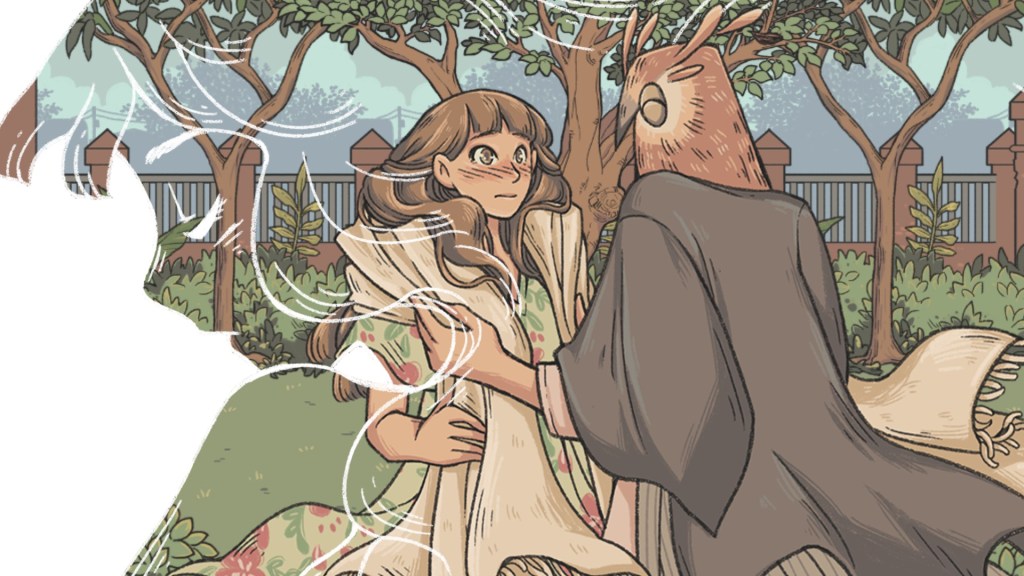
When The Past Was Around and Grief as Gameplay

Death and mourning aren’t explored much in gaming.

Sure, every now and again you’ll get some big budget, AAA video game where the main hero or heroine will lose someone close to them. The main character will shout, scream, maybe even cry, before they steel themselves and return to their gameplay activities.

You may get a little scene at the end of the game where they look longingly into the sunset and think of their lost friend or companion, but for the majority of games, the grief is tied solely to the moment.

It just so happens that I played a game earlier this year, When The Past Was Around, a point-and-click puzzle game, that tackles the issues around grief and death; the empty space, the silence now they are gone…and succeeds in perfectly evoking those feelings.

I wanted to share this game with you, its beautiful hand-drawn art, its excellent musical score, and small yet powerful story, and how it manages to capture the idea of grief into a way only games could do.

Mild spoilers ahead.

When The Past Was Around Dealing with Love, Loss, and Death

When The Past Was Around follows a young girl called Eda. She’s in her mid-twenties, recently moved into her own place, and is in a bit of a funk. We learn through her photos that she was once a violinist, but gave up when she was younger, and is now trying to get back into it.

It’s a simple scene, with only four photos chronicling Eda’s childhood, yet gives us so much on her mental state and her personality; talented, passionate, yet prone to criticism and overwhelming anxiety, all conveyed through through single snapshots of her previous performances.

Eda keeps a music box with an owl as the centre piece. One afternoon she hears the same tune the music box used to play (the one that inspired her to learn violin) being played on the street. She follows the sound, almost floating towards the music, and finds the violinist playing to patients in the child hospital.

The she sneezes, interrupting the performance, but coming face-to-face with Owl.

Yes, a man-sized owl, named, well…Owl. The game follows Eda and Owl’s time as a couple, until tragedy strikes, with Owl dying, and Eda being heartbroken.

Many stories that deal with grief usually personify it; a shadow, an item of clothing, something that ties the present to the past. So here, Eda’s lost love is an owl, and ties well into concept of grief and loss.

One of the main narrative signifiers is fallen feathers. The end of every chapter is signalled with one, such as in Eda’s finding one in a cardboard box when she’s unpacking, or when she is wearing Owl’s old scarf. Collecting these feathers are what unlock the next memory as she gets closer to Owl’s departure from the story, and that’s their real meaning.

The feathers are tokens of the memories that Eda and Owl have together, and as she collects them, more are taken away from him, until there can be none left. It’s and excellent metaphor for the passage of time, and yet cruelly bittersweet.

With each feather the story moves forward, bringing Eda closer and closer to tragedy. (Source: gonintendo.com)

The game switches between the memories of Eda and Owl together, and Eda at the graveyard at the ‘end’ of their story. During her time at the graveyard she is seemingly haunted by a shadowy silhouette of a man, enclosed in a giant bird cage.

When Eda finally reaches the silhouette after reliving all of her memories and collecting Owl’s feathers, the feathers attach themselves to the shadow man, revealing that he is Owl. It’s a great moment, showing how Eda’s memory of Owl had changed over time, and how he effectively became ‘entombed’ inside her head, only being set free once she looked back over her time with him. 

There is zero dialogue in the game, which I think is to its benefit. While it would have been easy to add voices to the characters, the silence of the protagonists allows the story to reach a broader audience and speak to more people. It’s that old adage of actions speaking louder than words, as Owl and Eda mentally and physically get closer (literally, they move closer to each other as the game progresses).

Some people may not be able to relate to Eda and Owl’s if they had talked about their love of the violin or the name of the stars in the night sky, but they can relate much more to a feeling or an emotion that the characters are going through, which the game captures perfectly.

Part of that excellent communication of emotion comes from the fantastic artwork by Indonesian artist Brigitta Rena. The character models have a stunningly simplicity to them, yet are incredibly expressive. The animations are through a standard fade effect between each character stance, bringing a dream-like quality to most scenes, but also capturing incredible immediate snapshots as there will be many moments of stillness, highlighting the emotion of the scene.

Eda and Owl’s first meeting. The character’s faces and style is so simple yet has layers of emotion. (Source: heypoorplayer.com)

While the characters are simple, the backgrounds are incredibly detailed, and given the feeling of being ‘lived-in’. 

Those backgrounds are a key part of the game’s core loop, as the player must find hidden objects to progress in the story by moving objects around. The game presents it as being constructive or destructive, clean vs. cluttered.

The cleaning and constructive might task you with tidying up Eda’s bedroom, putting posters on her walls, or hanging the washing up.

Construction is the main engagement when Eda and Owl are dating, including coffee and tea at Owl’s home, going to the beach together, or camping out overnight and looking at the stars.

In each of these scenarios the player has to ‘build’ the setting around them; collecting seaweed and shells to go in a glass bottle (which the couple keep in their apartment), setting up the campsite and building paper windmills, or even fixing Owl and Eda’s drink of choice at his house.

These little constructions exaggerate the fact that we are essentially going through Eda’s memories of Owl, and so she would focus on all the small things that she remembers from those times, the things that make it ‘her’ memory.

A date at the beach. Through these moments you feel the promise of two strangers growing closer together. (Source: taminggaming.com)

When the gameplay switches to destruction, you might find yourself smashing countless plant pots, throwing books off shelves, or pulling down curtains.

These aspects perfectly match up in the order of the story, with Eda being tidier when she is with Owl, but messier both before she met him and after he is gone, for different yet obvious reasons. Her final scene with Owl where Eda searches for his pills uses the clean vs. cluttered to great effect, as players have to frantically search the apartment, pulling books off shelves and knocking over chairs in a desperate bid to find them.

Music also plays a strong part of the story, with both Owl and Eda playing the violin, and music being the thing that brings them closer together. There is a leitmotif that runs through the entire game (the same one played by Eda’s music box), which subtly changes with each chapter.

At the start when Eda has given up on playing the violin, the stringed instrument is removed from the soundtrack, instead a mournful piano plays in the background. As soon as Owl enters the story, the violin features again, playing a much more cheerful tone. As their relationship grows more instruments and accents are added.

By the final scene when Eda is alone once again, the piano has returned, but her memory of Owl is so strong that the violin jumps in, with the entire song picking up speed as it reaches the climax.

The story is not just of love between Eda and Owl, but of Eda and herself, highlighted by her learning the violin again. (Source: indie-hive.com)

Even the title references music, with a stylised repeat sign incorporated into it. This sign in sheet music indicates a section to be played more than once, referencing Eda’s journey back through her life.

When The Past Was Around is a whole package of a game wrapped up in around an hour, maybe little over if you are intent on finding all the hidden clues that inform more about Eda and Owl’s relationship.

For anyone looking for a short game with fantastic visuals, a great sense of gameplay as narrative, or just something a little different than anything else on the market, When The Past Was Around is heartily recommended.

Banner Photo Source: nintendo.de

L.A. Noire and Pacing in Games

It is weird to think that L.A. Noire came out eight years ago, back in the good old days of 2011. And being in development of some kind for nearly six years, we are fast coming up on fifteen years of L.A. Noire being a “thing”.

And in the past few years the game got somewhat of a new lease on life, being released for the PlayStation 4, Xbox One and Nintendo Switch in November 2017, with enhancements to accommodate for new features such as the touch screen on the Switch and VR abilities for the PlayStation.

With these new enhancements came the “complete” story, compiling all of the cases that had previously been DLC (short for downloadable content) into the experience. For me however, these “new” cases being placed into the story has made the game feel a little disjointed.

La Noire VR
L.A. Noire VR allowed to players to step into the (gum)shoes of Cole Phelps in specific cases made for the system. (Source: dualshockers.com)

Let’s have a look at the cases, because while I love nearly all of them, the fact that they are DLC makes me view them differently. And part of it is to do with pacing.

This isn’t me railing against the fact that these are cases that should have been in the original retail experience. The game is already 20+ hours long, five cases of varying length is hardly going to up the playtime.

I can also understand why DLC cases work for something like L.A. Noire. L.A. Noire is designed almost like a TV serial, with each new case being a new episode. It will have scenarios that link between cases such as the Black Dahlia in Homicide and morphine in Vice, but each case is mainly self-contained. And yet these new cases seem to alter the balance of the pacing of the game.

From Snails to Speeding Bullets – A Quick Look at Pacing

Pacing is something that never gets much attention when it comes to games. Similar to editing in film, it is a phenomenon that you don’t know is there until it is not there. For example, pacing is only really brought up when it is a detriment to the game, with many walking simulators or opening hours in open-world games being criticised for their slower pace.

Open-world games are probably the hardest to do; how can you have a character-driven story if the player can decide to head off and not focus on the narrative (see Bethesda’s games). Pacing can also affect a sense of time, feeling like scenes are shunted together. I felt this in AC: Unity, where a moody European white boy became an Assassin and then due to the breakneck presentation felt like he attained the rank of Grand Master within a week.

Talking of assassins, AC: Syndicate’s pacing is better than many of the previous games by virtue of one screen; the shot of Big Ben ticking by. Any time the game wanted to move forward in time the screen cut to sped-up footage of Big Ben cycling through the hours. That at least gives us a sense of progression rather than the Frye Twins seemingly dissolving the criminal underbelly of London over a weekend.

AC Syndicate Big Ben
This one aspect of presentation helped Syndicate’s narrative feel more expansive than previous entries. (Source: steamcommunity.com)

I’ll hold up Spec Ops: The Line as a game with excellent pace and flow. While the twist doesn’t fully work as it shows new material, the pacing goes a long way to help play up the insanity that fuels the twist. Each new chapter from the very start to the very end, starts slow before methodically upping the action, drawing you into the experience and mimicking Walker’s slow descent into brutality and madness. You have your peaks and troughs, intense action with stealth.

That’s why CoD4: Modern Warfare works well too. The game starts slow with the SAS in Russia before becoming an all out action game with the Americans in the Middle East. Once the nuke has gone off, the SAS take over the main action, but the game starts with a distinct “medium” in between stealth and OTT action in the level “Safehouse”.

This works wonders because after the two stealth levels of “All Ghillied Up” and “One Shot, One Kill”, we have the level “Heat”, which uses the same map as “Safehouse”, but has the action on full. CoD4 gives us the stealth to get to grips with the level before ramping up the action. This is seen in the micro in levels such as “Crew Expendable” and “Sins Of The Father”, as well as the macro in how the acts are structured and levels follow on from each other.

CoD4 Crew Expendable
CoD4 starts with stealth to ease players into the controls, before slowly ratcheting up the action. (Source: nerdreactor.com)

Call Of Duty: World at War has some interesting pacing issues. Since the campaign of WaW can be played co-op, certain levels had to be left out. This means that the excellent stealth level “Vendetta” is cut. The following level, “Their Land, Their Blood” works because of the juxtaposition and slower pace of the preceding level, going from being on the back foot to charging at the enemy.

Going straight from “Hard Landing” to “Their Land, Their Blood” feels exhausting. It could be argued that the change of character may add to this jarring tone, however we hardly get any character introduction in “Vendetta” or even at the start of the game, so it feels more to do with the unrelenting gameplay.

This is the same reason I had real trouble with the original Black Ops. My favourite level of the game is “U.S.D.D.”, a level without any shooting and is one big cutscene. I love it because it allows a break after the all-out action of “Operation 40” and “Vorkuta”. And while there are stealth sections in Black Ops, they aren’t mandatory or last an entire level (such as WMD and Rebirth). This can get instill a sense of weariness when explosions end each level.

Now you see how pacing can make a good game turn into a great game. So, back to L.A. Noire.

Back on the Beat – L.A. Noire and Pacing

As previously mentioned, while nearly each case in L.A. Noire is its own story, some cases add together to form a larger picture. These mostly happen on the Vice desk. There is a running B story throughout the whole of L.A. Noire about gangster Mickey Cohen staging a heist of army surplus morphine, which the majority of the Vice desk is spent dealing with.

These cases then lead into the Arson desk that has its own mini arc. Another B story is about property land developers in a building scam, pretending to build homes for returning GIs before burning them and then collecting the insurance. But the man they have sent to burn down the houses (a mentally scarred flamethrower from WW2) has started targeting any and all houses rather than the ones they told him to.

The Arson desk follows this plotline all the way to the conclusion, with every case about the arson attacks and the development fund.

The DLC cases slide into each desk and end the steady pace that the game has because of these running B stories.

LA Noire Gunfight
The DLC is at least thrilling, with several action sequences and memorable investigations. (Source: geforce.com).

Traffic seems to get away pretty unscathed. Each case of Traffic features new suspects and scenarios and has no overarching narrative like the other desks. The new case, A Slip Of The Tongue, slots easily into Traffic, following the same one-off pattern as the previous crimes.

In Vice, things start to get a little tricky. In the original edition, there are only three cases (the same as Traffic), compared to six of Homicide and five of Arson.

The new cases add more variety meaning the Vice desk isn’t all about morphine. One of the new cases, The Naked City, also sets up that Det. Bekowsky, the partner on the Traffic Desk, eventually moved up to Homicide and was partnered with Rusty Galloway, the partner from the Homicide desk.

It is strange how this case was cut, especially as it introduces Bekowksy as part of Homicide before he appears in the final Vice case, Manifest Destiny.

Another reason why it is strange that these cases were cut is that they actually foreshadow Cole’s later infidelity. During driving sequences, Roy mentions Cole’s regular visits to the Blue Room and Bekowsky asking what Cole looks for in a woman. But these lines should have been in the original experience to make that character turn actually feel plausible instead of bizarre.

Arson is the “worst” offender when it comes to pacing. I like the Nicholson Electroplating case and I think it is the best of the DLCs, but when looking at the game as a whole it feels out of place.

First, some background.

Elsa Lichtmann, jazz singer and mistress of lead character Cole Phelps, receives the life insurance payment of her friend, Lou Buchwalter.

Lou was working as carpenter on one of the doomed housing projects, but the timbre he was working on gave way and he fell to his death. The house fires that Cole has been investigating are on the land that the property developers want to build on.

After putting two and two together (the house fires are perpetrated by the developers so they can build shoddy houses), Cole gets threatened by his higher-ups and told to close his investigation.

To keep pressure on the situation outside of the police force, Cole enlists comrade-now-turned insurance investigator Jack Kelso to inspect Elsa’s friend’s death, thus exposing the racket. Jack’s cases play one after the other in the original experience (including the final level), but the DLC case Nicholson Electroplating slots in right before the final level.

LA Noire Nicholson
Nicholson Electroplating starts with a bang…and puts a stop to the Kelso-centric cases. (Source: dsogaming.com).

This completely upends the narrative, with a case that has no bearing on the story while said story is hurtling towards its conclusion.

But that is why they work perfectly as DLC.

Instead of just ANOTHER case in a long line of cases, the DLC is a reminder of that appealing central core of the game. Seeing these old friends again, Bekowsky, Rusty, Roy, and Biggs, and getting to do the old “crack the case” thing one last time (which could get tiring after having several in a row), it feels comfortable, safe even.

So while these new additions can feel out of place, seemingly halting the steady pace of the game, the episodic nature of L.A. Noire allows them to work as individual cases, unmoored to the extravagant length of the base game.

Remasters and definitive editions are becoming a bigger draw in the industry than ever before. Games like Dark Souls and Resident Evil 2 have been remade and changed aspects like bonfire warping and enemy introductions. So that is why we must remember and catalogue the original way that games were played and delivered.

The way L.A. Noire was originally published must be remembered for posterity, a testament to excellent story pacing within the art form, as well as the power in how a narrative can be structured.

Banner Photo Source: ign.com.

Why Battlefield V’s Opening Lacks Pace

It was with a mix of trepidation and eagerness that I picked up Battlefield V. I had enjoyed the excellent War Stories in the previous game, Battlefield 1, and wished to see what creators DICE had followed up with. Yet I remained cautious. The previous War Stories had been a high point of my gaming experience of recent times and I didn’t want to raise my hopes too high in case they were dashed.

The sequence started beautifully, reusing the iconic shot from BF1 of the two opposing troops levelling their weapons at each other as the sun breaks through to the battlefield. That was one of the defining moments of BF1; it is abrupt from the carnage that we have been a part of and distinct in its imagery.

I had previously written about how even though I liked the War Stories of BF1 and the opening, it could have toyed with player expectations a little more with its use of death. BFV’s opening reuses this defeatist attitude and makes it work. We aren’t told that are characters are destined to die yet most of them do. But unlike BF1 we do not see their names upon death, an aspect that is sorely missing. While I am happy that DICE isn’t directly lifting from BF1 for the semi-sequel, the inclusion of character names added a sense of humanity that can usually get lost in the larger stories of a world war.

battlefield-ed
A shot from the opening of BF1. It is an excellent and artistically significant image that helped set DICE’s new tone for the series. Source: fraghero.com.

BFV also switches characters through its opening, circling around the locations that appear in the later War Stories. On the surface this is good. The major problem with the shorter stories in BF1 was the lack of narrative cohesion. With each story lasting around an hour, the overall arc falls flat with predictable peaks and troughs, leaving the game without a strong climax and resolution. The opening of BFV helps aid the previous lack of narrative structure by having the opening focus on the locations, but not always on the playable characters.

The paratroopers dropping into Norway, the German tank crew driving forward in the desert, the Senegalese troops providing covering sniper fire, and the German planes flying overhead, they give us a taster of what is to come and also help set up the story. For example, the paratroopers in Norway get slaughtered in the first few minutes of gameplay, with the playable character in the Norway section being the resistance member they were meant to rendezvous with.

The opening is also a beautiful example of editing within gaming. Each scene leads into one another and connected with excellent scene transitions. The tank in the Norway section rolls out into Libya, the plane flying overhead in the Kasserine Pass moves into dogfights over Germany, before said plane crashes into the Netherlands right in front of our new character. It is a nice flow of scenes and heightens that feeling of a world consumed by war.

However, while the changing characters help create that crux for the larger narrative, it means it loses something of its previous identity. BF1’s opening was set entirely on a singular battlefield. The fight was contained to one narrative with sweeping long shots taking us across the lines to the next solider after one had died. It told a solid story on its own and helped set that “anything goes” precedent of that game.

Swapping between five different fronts and fighting styles in the BFV opening feels disjointed and uneven and it is partly because of the change of scenery. The stakes change on a dime and the enemy we were previously charging is now half a valley away. It loses that excellent pace and momentum that the opening of BF1 had. This isn’t helped by the gameplay. In BF1 you could fight for as long as you wanted, but eventually you were going to be brought down by the enemy soldiers. In BFV the onus is on you to continue the story. This was especially evident in the Senegalese sniping and the German dogfight sections.

As I was getting to grips with the controls, my sniper aim lacked finesse, with shots widely missing the enemy targets. Only when all the targets are down will the prologue continue. In the German dogfight section I managed to shoot down several Allied bombers, but was unable to see the tiny red marker that indicated the ONE plane I was meant to shoot to continue the sequence.

BFV_RevealScreenshot_07_wLogo.png
With gameplay swapping every few minutes, BFV assaults us with a flurry of imagery. It is just sad that none of it feels connected. Source: VGR.com.

The whole pacing is off. Each section starts the same; the player slowly moves forward before being presented with a few enemies and then ends with explosions. At least BF1 kept the explosions as a constant, throwing the players into disarray and keeping them on edge. It feels like there is a distinct lull in BFV’s opening and feels antithesis to the tone that it seems to be aiming for.

This comes to a head at the final playable section. After shooting some soldiers on a turret, you turn said turret around and direct the fire back. Your squad is bombed and you are paralysed, trying to hold off the oncoming enemies with only your pistol. It feels so odd to go from the excellent Remarquism of BF1 to this Hollywood-ised, last-man-standing depiction of battle.

I understand why it was done. This is the final scene, the gameplay needs to end at the same time as the narration for the pacing, but it doesn’t have that brutal edge that worked wonders in BF1. This final scene could have worked if we had control of our movement, if we were allowed to charge, retreat, anything other that having to sit still, playing out a sequence ripped straight out of Call Of Duty 4.

It is also a context problem. BF1 worked because it wasn’t about the grand ideas, rather focusing on the little person caught in the whirlwind of history. It was a pointless war with both sides fighting for pretty much the same reason and therefore could focus on the personal stories.

While there are flourishes of these individual stories in BFV’s campaign, the grand ideas can’t help but push through. Every fight (bar the Tiger tank story) is about pushing back the forces of darkness from enveloping the world. Every fight is about how to weaken and dismantle the Nazi war machine. It can’t help but BE that.

That’s not to say that grander stories are bad. Grand ideas work well in several games; Civilization, various CoDs, the first Assassin’s Creed, but the smaller stories are what gave BF1 a bit of bite and it is sad that BFV is without it. It means the characters in BFV don’t get a chance to shine since we don’t focus on them.

Characters like Zara Ghufran and Frederick Bishop in BF1 get small moments in between all the fighting, giving us hints of their personality and time outside the war. This makes them richer, making them more than the “stoic badass” or “stealthy assassin” archetypes. And I haven’t got that from a single lead in BFV yet.

Either way, I’m still enjoying BFV. I’m blazing through the campaign and will hopefully look fondly on my time spent with it. And while the opening fixes a lot of the issues I had with BF1’s, it can’t help but produce a few of its own.

Edit: Now that I have finished the campaign my feelings on BFV have changed. I started to really like the story and have written a follow up. You can read it here.

Banner Photo Source: wccftech.com