Why You Should Play – The Pillars of the Earth

As the Playstation 5 and Xbox Series X finally cement their place as ‘current-gen’, we should take a look back at some of the games that defined the eighth generation of consoles.

We’ve seen multiplayer greats like Call of Duty and Battlefield reinvent themselves with both the old and the new (WW1 for Battlefield and CoD with Modern Warfare).

We’ve watched CD Projekt RED go from critical darling with The Witcher III: Wild Hunt to an out-and-out failure with Cyberpunk 2077.

And narrative behemoths have graced our screens like Red Dead Redemption 2 as well as smaller indie hits such as Firewatch and What Remains of Edith Finch.

Today I wanted to talk about one of my favourite games from the last generation and hopefully turn a few players onto the gem that is The Pillars of the Earth.

Based on a 1000+ page historical novel by Ken Follett and set over forty years in 12th century England, The Pillars of the Earth is about three characters, Phillip, a monk, Jack, an outcast, and Aliena, a former noblewoman.

The story sees the three cross paths as they try to grow their town of Kingsbridge, fend off rival noble families and vengeful bishops, and build a cathedral the likes the world has never seen before.

Jack and Aliena meet when both are still children and we get to see them change with age and experience. It’s an interesting scenario that hasn’t been explored much in gaming. (Source: amazon.de).

It’s not the first book to be translated to gaming. The most famous examples are the aforementioned The Witcher and the excellent Metro series.

But in comparison to those two franchises, The Pillars of the Earth doesn’t sound like it would be a blood-pumping adventure full of swords and shields. It’s a historical novel, not fantasy, so there are no mages or sorcerers to liven up the mostly downbeat and dark mood.

But it’s the moments where the characters cross paths, the battle of wits and scriptures, and the twists and turns as the lead characters sow the wind and reap the whirlwind that make The Pillars of the Earth one of the best narrative games of its generation, and why I want to talk about today.

By God and the Devil – Why The Pillars of the Earth is Great

The Pillars of the Earth is one of those games where everything perfectly comes together to build something remarkable. The artwork, the music, the 40+ hours of performance, and the story, each one is a singular piece that makes the whole that much more enjoyable.

The game is a point-and-click adventure that uses a large canvas as the background, scrolling left and right when the player character moves. The scaling is incredible, with entire cathedrals, estates, and even towns explorable, but still retaining exquisite details.

Due to the ‘static’ backgrounds, the game camera works almost like a film camera, highlighting points it wants to draw attention to but without taking control away from the player. This allows the player to feel like they are naturally discovering each location and the secrets they hold.

One repeated location, the crypt at the bottom of the cathedral, is one of my favourite spots in the entire game just from its atmosphere. The use of light and darkness in this one small room is played with so well that it can evoke fear or fascination, just with a simple change of lighting.

The crypt merges from dark and disturbing to a place of comfort and solitude, all through the lighting and camera focus of the stage. (Source: mathlidesound.de)

Part of the excellent atmosphere comes from the music by Tilo Alpermann. Since the game is primarily about religion, the majority of the music is ecclesiastical, mixing male choirs with strings and woodwind instruments with heavy brass approaching in Book 2 and 3. However, it’s in the less traditional aspects where the music shines.

Tracks like ‘Hell’, which incorporates faint chimes and cymbals into its rolling strings, or ‘Bishop Waleran’s Wrath’ which uses an electric guitar for its main beat and what sounds like reversed strings or brass on the second beat give this strange sense of foreboding, of power beyond the characters we control.

The tracks ‘Hell’ and ‘He That Committeth Sin’ blend in one of the darkest and disturbing moments of Book Two. (Source: gamingcypher.com)

While I love the graphics and the soundtrack, the story is the high-point of the game for me, and anyone wanting to experience a deeply engaging and philosophical narrative from the last generation should seek it out.

Set over three ‘books’, each with seven chapters, the story is expansive and slow-build, moving at an almost glacial pace at the start to set the major conflicts, but also the tone of those chapters.

Even the main menu helps establish the feeling of each book. Book One is dark and cold, with many thinking the Devil walks amongst them. Book Two is lighter, showing the characters and their town starting the rebuild. Book Three is shrouded in dust and debris as chaos reigns down once again. It’s a masterclass in simple yet effective narrative design.

The start of Book Three: “Eye of the Storm”, sees death and war come to England, with the landscape in every chapter shrouded in dark fog. (Source: cosmocover.com)

The game switches perspectives throughout, from Phillip, to Jack, then to Aliena, and back again, each character adding a tiny piece of the narrative puzzle until it all comes together for the final couple of chapters of each book.

You could in fact play each book as a standalone story as they build, climax, and resolve like a standard plot structure, but the fun is watching characters in Chapter Twenty-one reference decisions you made in Chapter Four.

At the end of every chapter you get a itemised list of what you did, what actions you took and who you spoke with. A lot of nouveau point-and-clicks like Detroit: Become Human, Life Is Strange, and Telltale’s The Walking Dead have these similar lists.

With The Pillars of the Earth there isn’t always the reference to something that didn’t happen like other games, it’s solely on what did happen, which I feel make it seem more personal, rather than a somewhat A/B approach to narrative.

The main gameplay loop is through dialogue, with your words and tone carving a pathway through the story. While it does have set story beats throughout, there are small paths of deviation that lead to gigantic turns later on, sometimes even in a different ‘book’, so far removed that you might have even forgot what your previous actions were.
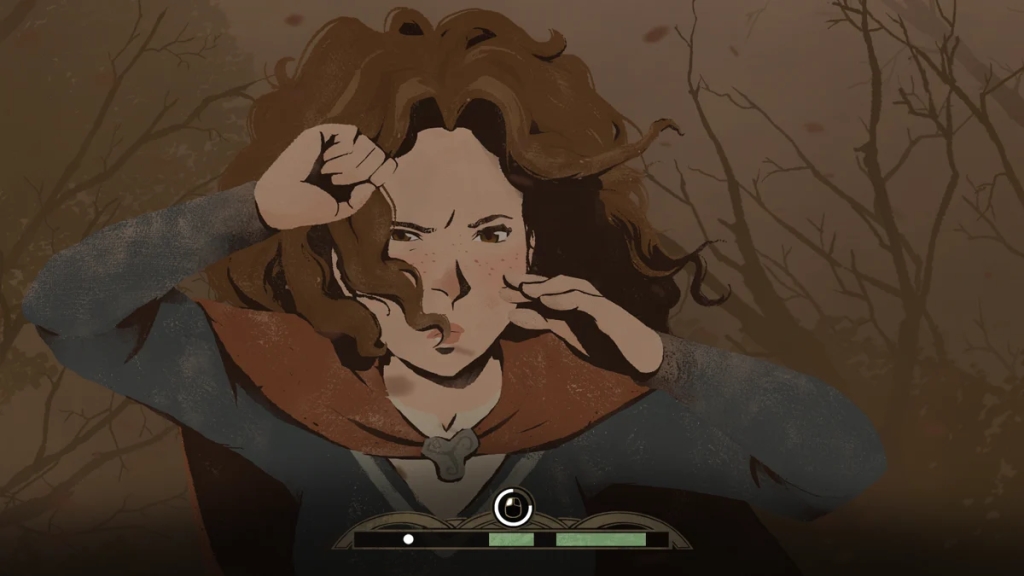
Dialogue choices and quick-time-events from the main crux of the gameplay loop, yet from simple premises your choices can destroy families, lead countries to war, and even cause the optional deaths of central characters. (Source: daedlic.com)

While the story is mainly character-based, a major point that dragged me into wanting to see the next chapter are the themes the narrative plays with. Ideas like religion and devotion, sin and violence, even love and sex are explored deeply in The Pillars of the Earth.

Each book features powerful moments that make the story come alive with meaning and emotion. Scenes where characters find or lose their faith while others see the Divine and the Devil amongst them are seared into my mind due to the way they shake the very foundations of the cast, and how there hasn’t been many games that tried to do something similar.

The game also spans the entire development of a romantic relationship, from shy smiles and holding hands to spending passionate nights together (this game actually has my favourite sex scene in all of gaming), and eventually settling down and starting a family, something that up until recently games haven’t tried to depict with any meaningful, long-term effects.
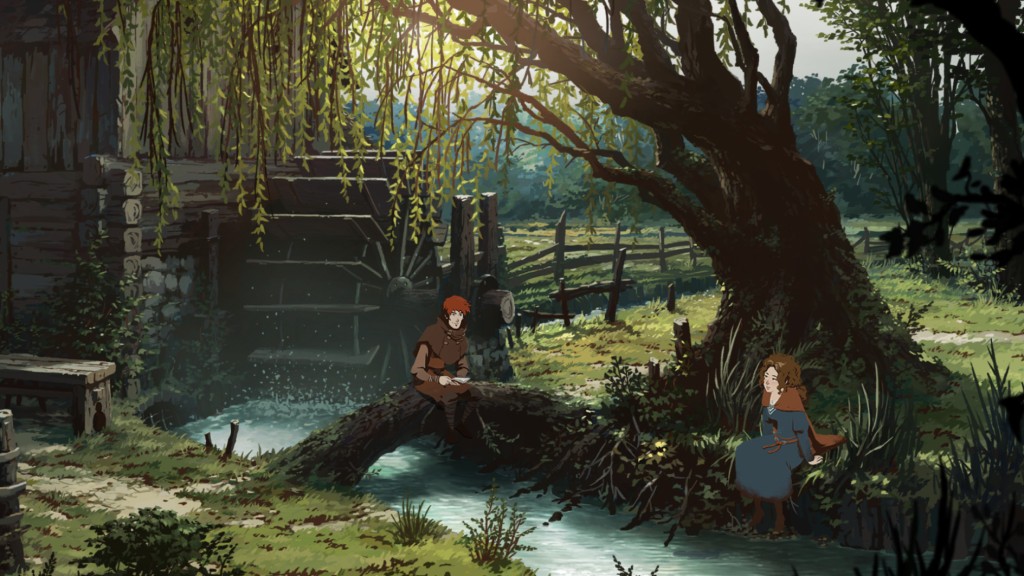
The water mill, where Jack and Aliena’s romance begins to flourish. (Source: steampowered.com)

It’s a mature story, not with depictions of violence and nudity but with its ideas and implications, and that’s why I absolutely loved every moment.

I hope that this short post has teased your appetite to experience this incredible game. The Pillars of the Earth was an absolute delight and I can’t wait to dive back in again to one of the best games of the last generation.

Banner Photo Source: iphonelife.com
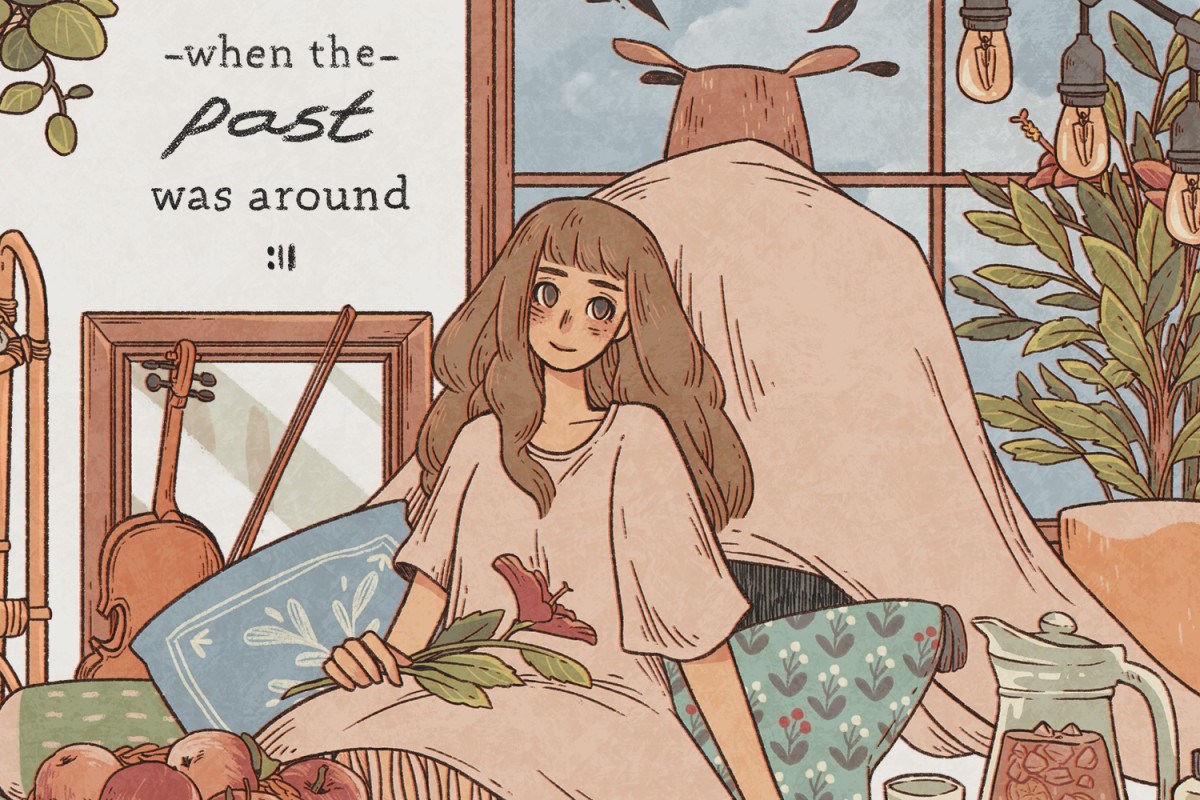
When The Past Was Around and Grief as Gameplay

Death and mourning aren’t explored much in gaming.

Sure, every now and again you’ll get some big budget, AAA video game where the main hero or heroine will lose someone close to them. The main character will shout, scream, maybe even cry, before they steel themselves and return to their gameplay activities.

You may get a little scene at the end of the game where they look longingly into the sunset and think of their lost friend or companion, but for the majority of games, the grief is tied solely to the moment.

It just so happens that I played a game earlier this year, When The Past Was Around, a point-and-click puzzle game, that tackles the issues around grief and death; the empty space, the silence now they are gone…and succeeds in perfectly evoking those feelings.

I wanted to share this game with you, its beautiful hand-drawn art, its excellent musical score, and small yet powerful story, and how it manages to capture the idea of grief into a way only games could do.

Mild spoilers ahead.

When The Past Was Around Dealing with Love, Loss, and Death

When The Past Was Around follows a young girl called Eda. She’s in her mid-twenties, recently moved into her own place, and is in a bit of a funk. We learn through her photos that she was once a violinist, but gave up when she was younger, and is now trying to get back into it.

It’s a simple scene, with only four photos chronicling Eda’s childhood, yet gives us so much on her mental state and her personality; talented, passionate, yet prone to criticism and overwhelming anxiety, all conveyed through through single snapshots of her previous performances.

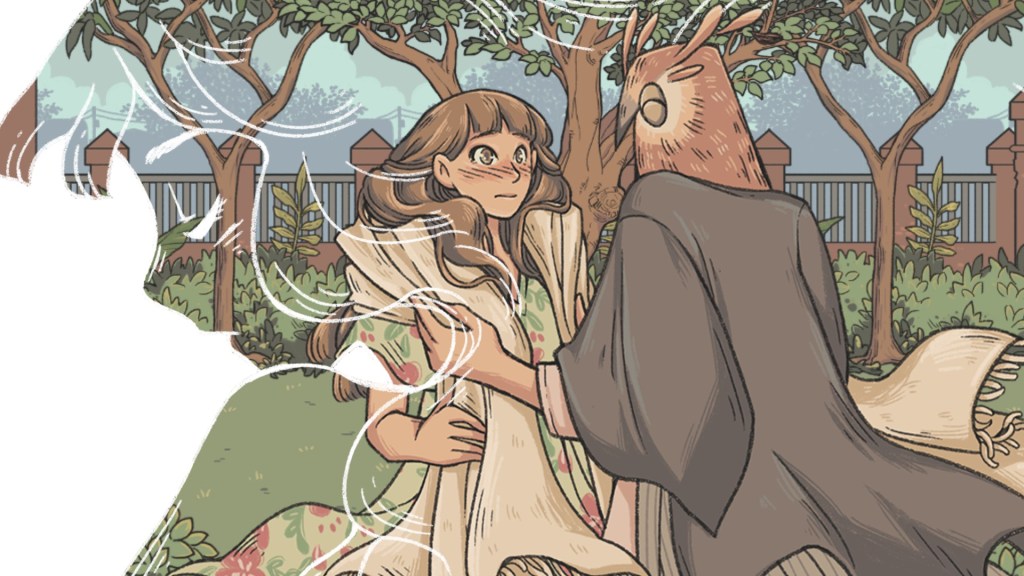
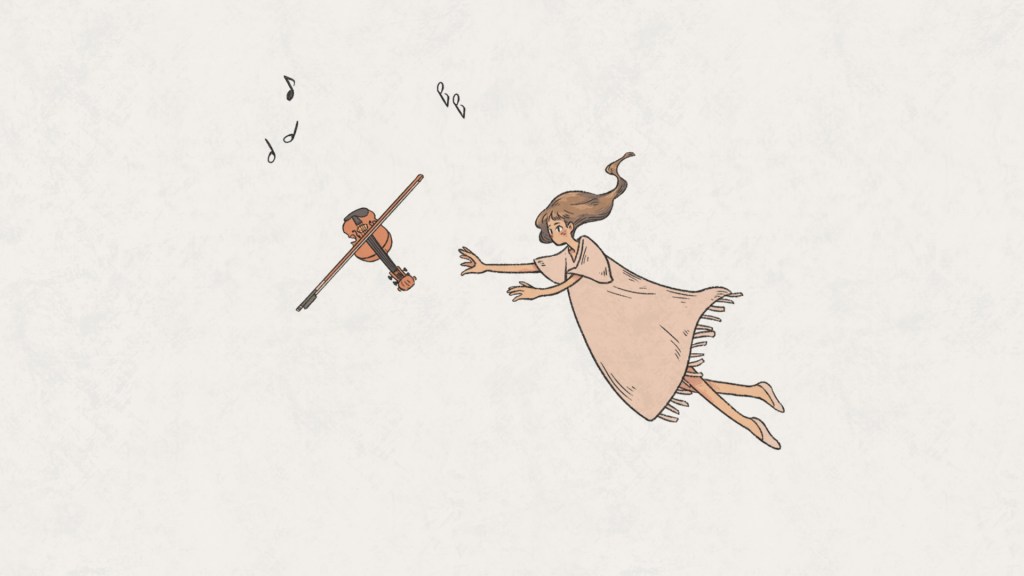
Eda keeps a music box with an owl as the centre piece. One afternoon she hears the same tune the music box used to play (the one that inspired her to learn violin) being played on the street. She follows the sound, almost floating towards the music, and finds the violinist playing to patients in the child hospital.

The she sneezes, interrupting the performance, but coming face-to-face with Owl.

Yes, a man-sized owl, named, well…Owl. The game follows Eda and Owl’s time as a couple, until tragedy strikes, with Owl dying, and Eda being heartbroken.

Many stories that deal with grief usually personify it; a shadow, an item of clothing, something that ties the present to the past. So here, Eda’s lost love is an owl, and ties well into concept of grief and loss.

One of the main narrative signifiers is fallen feathers. The end of every chapter is signalled with one, such as in Eda’s finding one in a cardboard box when she’s unpacking, or when she is wearing Owl’s old scarf. Collecting these feathers are what unlock the next memory as she gets closer to Owl’s departure from the story, and that’s their real meaning.

The feathers are tokens of the memories that Eda and Owl have together, and as she collects them, more are taken away from him, until there can be none left. It’s and excellent metaphor for the passage of time, and yet cruelly bittersweet.

With each feather the story moves forward, bringing Eda closer and closer to tragedy. (Source: gonintendo.com)

The game switches between the memories of Eda and Owl together, and Eda at the graveyard at the ‘end’ of their story. During her time at the graveyard she is seemingly haunted by a shadowy silhouette of a man, enclosed in a giant bird cage.

When Eda finally reaches the silhouette after reliving all of her memories and collecting Owl’s feathers, the feathers attach themselves to the shadow man, revealing that he is Owl. It’s a great moment, showing how Eda’s memory of Owl had changed over time, and how he effectively became ‘entombed’ inside her head, only being set free once she looked back over her time with him. 

There is zero dialogue in the game, which I think is to its benefit. While it would have been easy to add voices to the characters, the silence of the protagonists allows the story to reach a broader audience and speak to more people. It’s that old adage of actions speaking louder than words, as Owl and Eda mentally and physically get closer (literally, they move closer to each other as the game progresses).

Some people may not be able to relate to Eda and Owl’s if they had talked about their love of the violin or the name of the stars in the night sky, but they can relate much more to a feeling or an emotion that the characters are going through, which the game captures perfectly.

Part of that excellent communication of emotion comes from the fantastic artwork by Indonesian artist Brigitta Rena. The character models have a stunningly simplicity to them, yet are incredibly expressive. The animations are through a standard fade effect between each character stance, bringing a dream-like quality to most scenes, but also capturing incredible immediate snapshots as there will be many moments of stillness, highlighting the emotion of the scene.

Eda and Owl’s first meeting. The character’s faces and style is so simple yet has layers of emotion. (Source: heypoorplayer.com)

While the characters are simple, the backgrounds are incredibly detailed, and given the feeling of being ‘lived-in’. 

Those backgrounds are a key part of the game’s core loop, as the player must find hidden objects to progress in the story by moving objects around. The game presents it as being constructive or destructive, clean vs. cluttered.

The cleaning and constructive might task you with tidying up Eda’s bedroom, putting posters on her walls, or hanging the washing up.

Construction is the main engagement when Eda and Owl are dating, including coffee and tea at Owl’s home, going to the beach together, or camping out overnight and looking at the stars.

In each of these scenarios the player has to ‘build’ the setting around them; collecting seaweed and shells to go in a glass bottle (which the couple keep in their apartment), setting up the campsite and building paper windmills, or even fixing Owl and Eda’s drink of choice at his house.

These little constructions exaggerate the fact that we are essentially going through Eda’s memories of Owl, and so she would focus on all the small things that she remembers from those times, the things that make it ‘her’ memory.

A date at the beach. Through these moments you feel the promise of two strangers growing closer together. (Source: taminggaming.com)

When the gameplay switches to destruction, you might find yourself smashing countless plant pots, throwing books off shelves, or pulling down curtains.

These aspects perfectly match up in the order of the story, with Eda being tidier when she is with Owl, but messier both before she met him and after he is gone, for different yet obvious reasons. Her final scene with Owl where Eda searches for his pills uses the clean vs. cluttered to great effect, as players have to frantically search the apartment, pulling books off shelves and knocking over chairs in a desperate bid to find them.

Music also plays a strong part of the story, with both Owl and Eda playing the violin, and music being the thing that brings them closer together. There is a leitmotif that runs through the entire game (the same one played by Eda’s music box), which subtly changes with each chapter.

At the start when Eda has given up on playing the violin, the stringed instrument is removed from the soundtrack, instead a mournful piano plays in the background. As soon as Owl enters the story, the violin features again, playing a much more cheerful tone. As their relationship grows more instruments and accents are added.

By the final scene when Eda is alone once again, the piano has returned, but her memory of Owl is so strong that the violin jumps in, with the entire song picking up speed as it reaches the climax.

The story is not just of love between Eda and Owl, but of Eda and herself, highlighted by her learning the violin again. (Source: indie-hive.com)

Even the title references music, with a stylised repeat sign incorporated into it. This sign in sheet music indicates a section to be played more than once, referencing Eda’s journey back through her life.

When The Past Was Around is a whole package of a game wrapped up in around an hour, maybe little over if you are intent on finding all the hidden clues that inform more about Eda and Owl’s relationship.

For anyone looking for a short game with fantastic visuals, a great sense of gameplay as narrative, or just something a little different than anything else on the market, When The Past Was Around is heartily recommended.

Banner Photo Source: nintendo.de