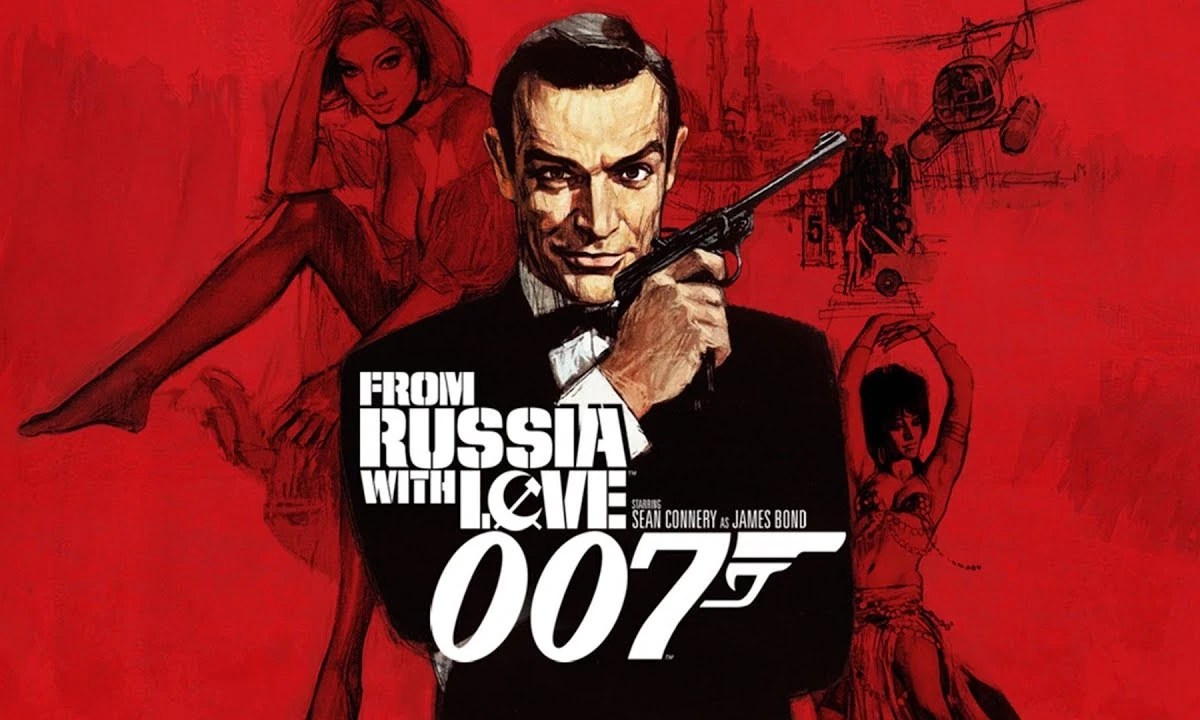
With the announcement in 2020 that IO Interactive (makers of Hitman) were working on a James Bond video game, I became curious about the past games of 007.
A lot of these games, Nightfire, Everything or Nothing, even the poorly received Goldeneye: Rogue Agent, were staples of my gaming childhood.
I hadn’t played these games in fifteen to twenty years and there was a dual sense of familiarity and moments lost to memory when I went back to play them.
But one game in the back catalogue of James Bond really took me by surprise. Even now, looking back at the games that come before and after, it seems like the odd-one-out, a possible start to an entirely new franchise.
In 2005, Electronic Arts, creators of the 007 games, were in a bit of a jam. Pierce Brosnan, the main lead in the past four Bond films and of the game Everything or Nothing, had been let go from the role. EA still had a license to develop 007 games but they had no 007.
While one of their efforts in 2004 put the player in the role of a Bond villain (Goldeneye: Rogue Agent), in 2005 they took a remarkable leap of courage and got another actor for the role of James Bond…Sean Connery.
Yes, 2005 saw the release of Sean Connery’s video game debut, From Russia With Love.
Red Wine with Fish – From Russia with Love: The Game
It’s very strange looking at the entire filmography of James Bond and thinking From Russia with Love would be chosen to be a video game. Even Sean Connery’s later 007 films, Goldfinger, Thunderball and You Only Live Twice are much stronger on the action and could deliver bigger set pieces.
From Russia with Love, while being an excellent film (usually ranked high in fan ratings and being Sean Connery’s favourite) is much more of a slow-burn thriller than an action film, with large parts of the film being set on smoky Istanbul streets and Bond using stealth and subterfuge rather than blasting baddies away with a gun.
According to Executive Producer at EA, Glen Schofield, the film was chosen because “it’s one of the more popular films”. It makes sense, and as a name, From Russia with Love has the same association as Casino Royale or The Spy Who Loved Me, so ingrained in culture that even if you have never seen a Bond film you could probably associate the title with him.
And yes, the other strange thing being Sir Sean Connery is on voice acting duties for 007. These aren’t clips from the film or a soundalike, it’s the man who got so fed up with the role he once said, “I have always hated that damned James Bond, I’d like to kill him.”
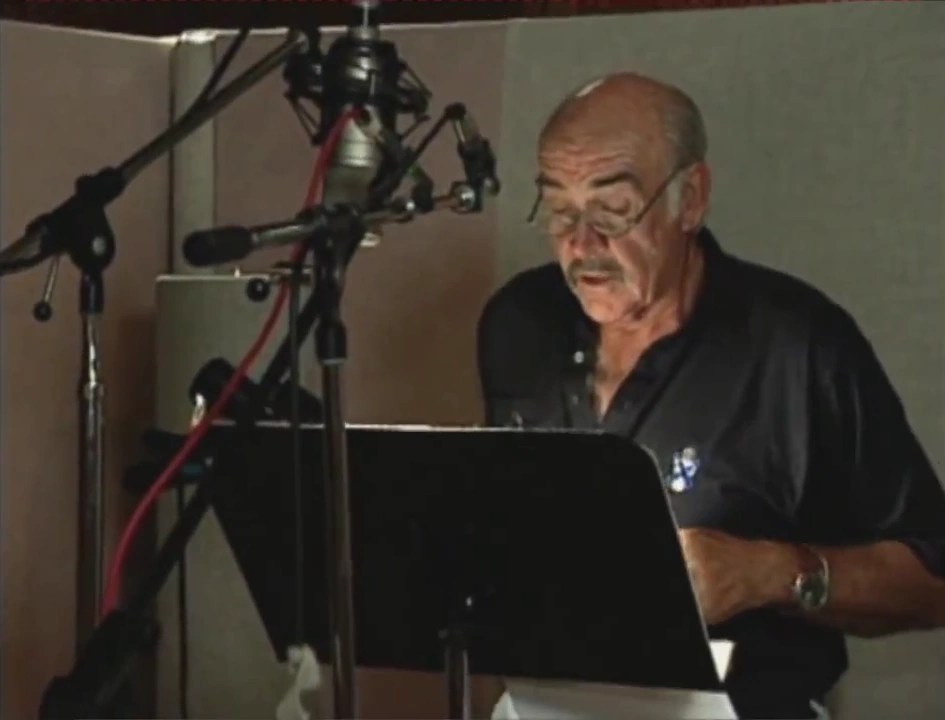
But Sean Connery decided to return, partly because of his love of the film, partly because his grandkids were big fans of video games, and that it was a whole new and interesting creative vision.
In the lead up to the game, Connery said, “As an artist, I see this as another way to explore the creative process. Video games are an extremely popular form of entertainment today, and I am looking forward to seeing how it all fits together”.
And in fact, it was a bit of a different creative process than the film. EA described the project as a “director’s cut”, expanding on the action and story of the film. Only eight of the fourteen levels can be tied directly to the original and nearly every action set piece ramps up the enemies and explosions.
I understand From Russia with Love was chosen for name recognition, but there is enough new material here that could have been a wholly original Bond story.
The game delivers its own pre-title sequence, of 007 fighting terrorists at the UK Parliament and protecting the Prime Minister’s daughter (surprisingly portrayed by pop star Natasha Bedingfield). It’s an exciting and explosive start to the game, watching Connery take down baddies with his classic silenced pistol, leaping across chandeliers, and finally climbing onto the roof, where he commandeers a jetpack and fights enemy helicopters around Big Ben.
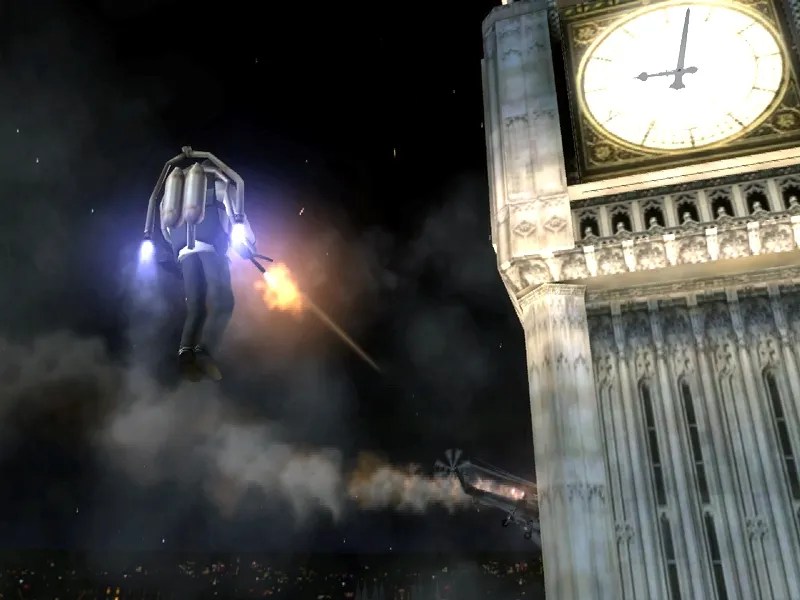
Speaking of the jetpack, a few of the non-FRWL levels are based on later Connery films, and fan-favourite vehicles such as the gadget-filled Aston Martin DB5 from Goldfinger and jetpack from Thunderball appear throughout. The final mission is Bond dismantling the villain’s base inside an island volcano, taking the setting from his fifth film, You Only Live Twice.
Alongside the items and design choices taken from the 1960s, a lot of Connery’s acting quirks make it into the game.
There is a quote attributed to Dana Broccoli, wife of the 007 film producer Cubby Broccoli. When they were first casting for the role of James Bond, after Sean Connery left the audition the producers weren’t too sure on him. But Cubby’s wife Dana convinced them, saying that Connery, “moves like a panther”. He’s confident, measured, quietly powerful. I feel the animators really went to great lengths to capture that essence.
They way the character runs at a constant beat, the slight body tilt while strafing, holding a machine gun in one hand and braced against his hip, the judo roll to cover ground quickly or dodge incoming fire, it’s all fluid and conveys the idea that this is man who is confident in his abilities as a secret agent.
The designers also talked about much detail they went into their animations, such as modelling how Connery would hold his gun in the films, as well as in his fighting style. Connery’s Bond was more of a grappler, throwing enemies to the ground or dealing them a swift Judo chop, which was added to the game.
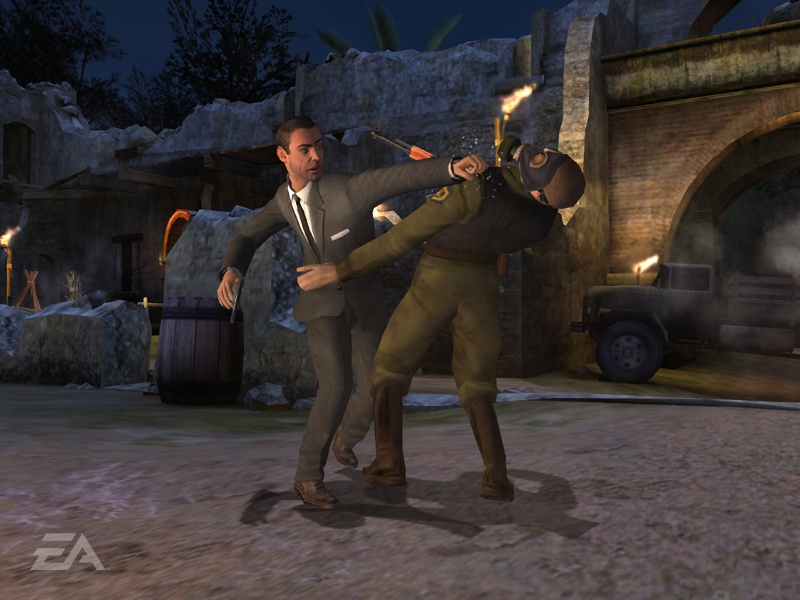
The game takes the standard third-person shooter conventions of the time. Cover mechanics, lock-on shooting, it’s smooth in animation and snappy in its combat, putting greater emphasis on character movement that on shot placement. One article I read in research compared gameplay to the film series John Wick and I definitely see the comparison.
One facet of the combat I really like is creating cover. If Bond is in a room with a table, he can knock it over and automatically ducks behind it. It’s a nice touch and feels very Bond-like.
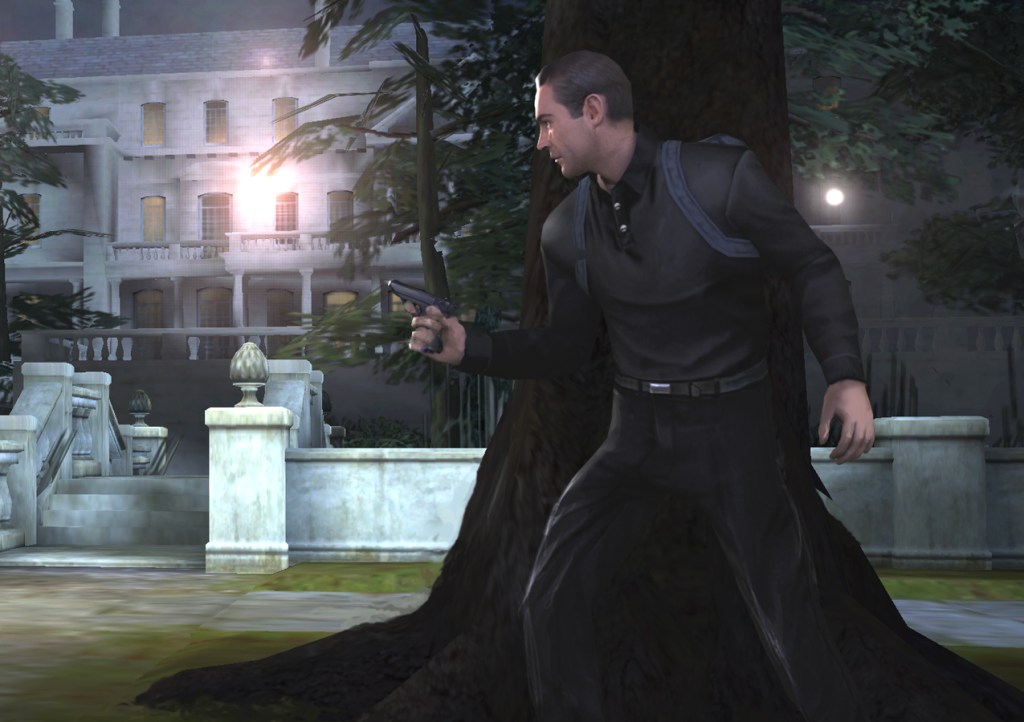
And since the game is primarily a third-person-shooter, we get to enjoy the highly detailed model of Sean Connery throughout the game.
The model is a tremendous feat of artistic wizardry, incredibly detailed and expressive, all on the sixth console generation, machines not known for their technical power. It’s the perfect balance of facial scanning and artistic license.
One aspect of the game that I unexpectedly loved is the fashion of Bond. When exploring the levels, players can find outfits that Bond can wear.
These are all outfits that Bond has worn at some point; his Black Tuxedo and Grey Suit from FRWL, his White Tuxedo and Stealth Suit from Goldfinger, and a Snow Suit (a possible reference to On Her Majesty’s Secret Service). At one point Bond has to wear an enemy uniform to sneak past patrols undetected.
None of these outfits give bonuses like a certain tuxedo giving more armour or whatever, but it’s a taste of role-playing, of getting to play our version of Bond.
The role-playing aspects are further exemplified by the Upgrade Shop, ostensibly Q’s Workshop in MI6.
Earning points throughout the game, the player can invest in technology for their weapons and gadgets, improving their abilities as they go. As the player collects and keeps weapons and gadgets over the course of the entire game, the investments work almost like an RPG, finding your preferred way to play and upgrading with your favourite weapons.
It’s not a full RPG character builder such as putting skill points into being stealthy or non-lethal, but for the time this was new territory for Bond games.
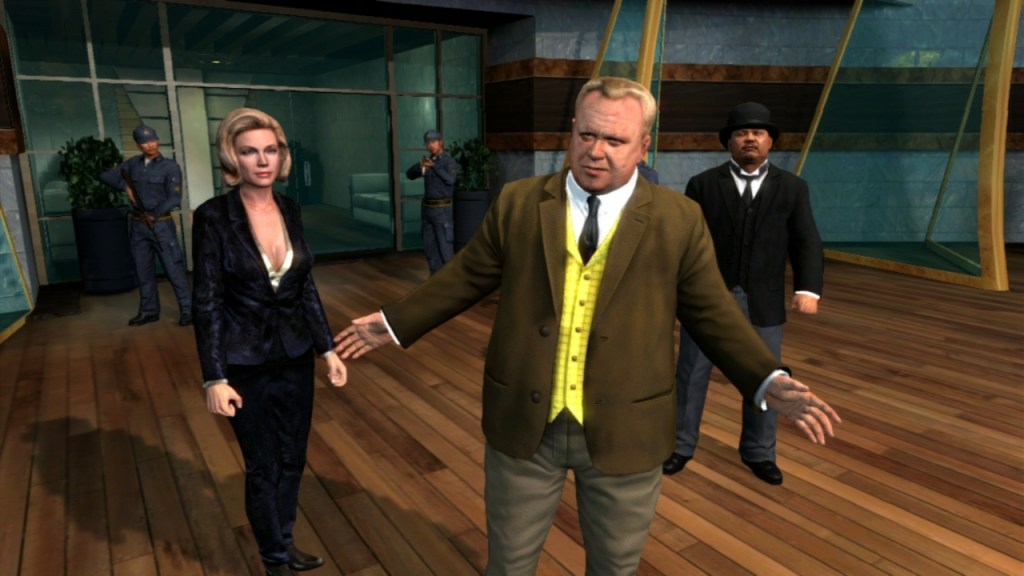
The upgrade points can also be used to unlock new characters in multiplayer. The multiplayer here is solely bad guys, almost like a SPECTRE civil war (seen in the previous game Goldeneye: Rogue Agent). It’s here where the the “director’s cut” approach to the film is full realised. Characters like Kronsteen and Morenzy, who are major players in the film but are absent from the game, are playable characters and modelled on the actors.
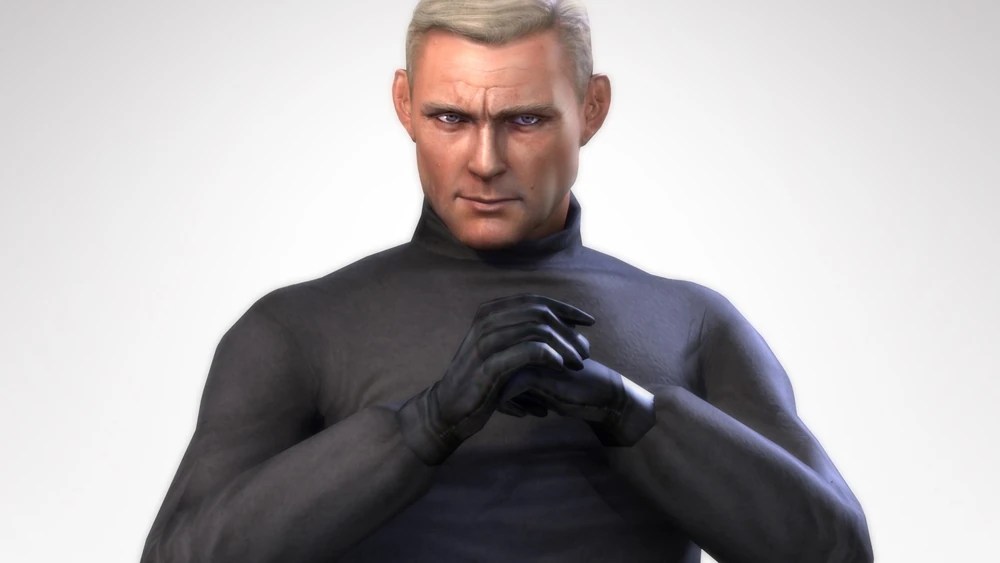
Dr. No and Goldfinger show up (the villains in the previous and following films in the series), along with a few normal enemy soldiers, but there are three characters that only exist in multiplayer and do not appear in any media form, be it the film, original book, or the game story.
Three female characters, Leyla Karistarin (an exotic mercenary), Portia Lovejoy (a mercenary from the English upper class) and Zora Casonovic (a volatile Russian enforcer), each are given a simple one-line description and nothing more.
I’ve been obsessed with these characters for fifteen years; where did they come from? Were they meant for the game and never got added? Are they just to boost the male/female ratio in the multiplayer?
They have so much character to them just in their designs, I’m captivated with finding out more. I’ve been searching for images of them to show here, and I can’t. These character have no presence outside of the game. That is fascinating, that these visually striking characters are just there, it speaks to a care and dedication for the creative work.
Really, that care and dedication is emblematic of the entire game. Based on a film over forty years old, tweaking aspects, adding dashes of modernity, yet staying true to the basic beats and themes of the story, I’m beguiled by the fact that this thing actually got MADE.
As I mentioned at the beginning, you could almost see it at the start of another franchise. After Connery could be Lazenby and a retelling of On Her Majesty’s Secret Service. Next would be Roger Moore with Moonraker (come on, you know it would have to be that film). And after that would be Timothy Dalton and License to Kill. Think of an expanded version of the 007: Legends game, where key movies from each Bond were adapted and the lead Bond actors returned, instead of Daniel Craig standing in for all of them.
But sadly, From Russia with Love was a one-and-done, marking the end of Electronic Arts’ work on the franchise.
Speaking of, that run of EA 007 games will probably never be bettered. Mixing different gameplay elements and styles, enthusiasm and care to representing the series, by talented teams at the height of their creative output, EA managed to knock out nearly one game a year for half a decade and all of them (even Rogue Agent), deserve to be remembered for what they brought to the genre.
And From Russia with Love, while it might not be the best of the bunch, deserves to be remembered for its artistic and technical feats, its fast and frenetic gunplay, and the creative confidence to adapt a story from nearly half a century ago. It’s weird and wonderful and a game I will continue to treasure, pining that one day it will be backwards compatible.
Banner Photo Source: siivagunner.fandom.com

 TOM CLEMENT | GAME PRODUCER | NARRATIVE DESIGNER