It’s one of the longest-running “conspiracies” around a game storyline that I’ve ever witnessed.
Fifteen years on from Mafia II, you will still see comments, blog posts, and videos about how Joe Barbaro is alive.
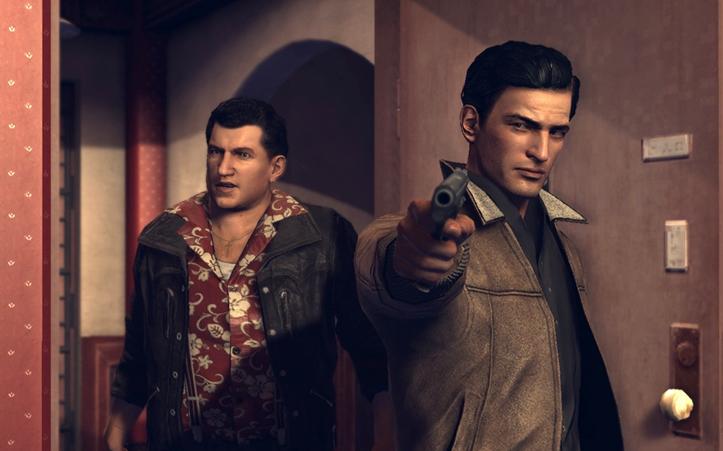
Joe is the secondary protagonist of Mafia II, best friend to player character Vito Scalleta. Despite only officially appearing in one game, Joe has been hovering on the outskirts of the entire series.
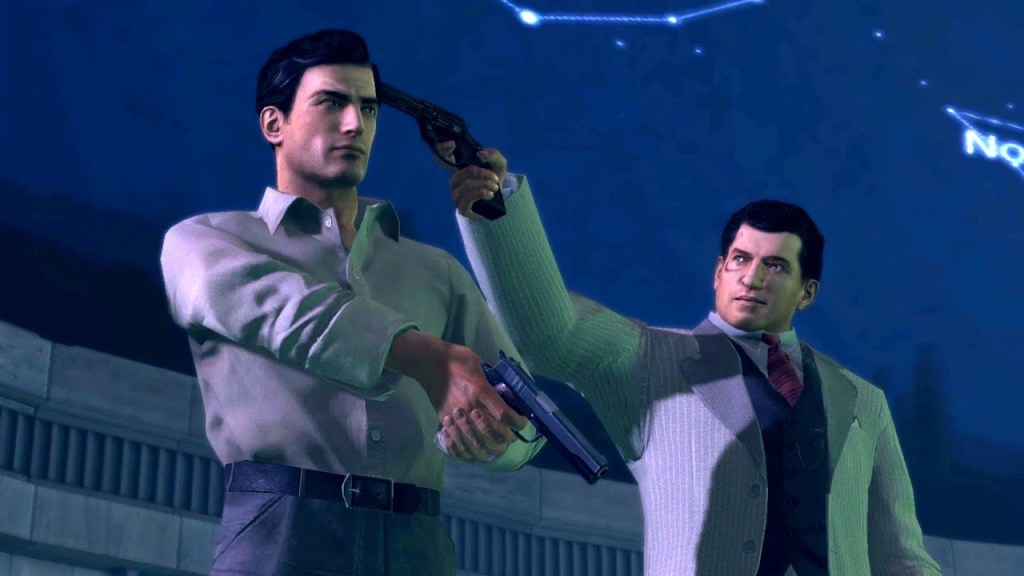
He, alongside Vito, conclude the original Mafia’s story by completing an assassination on Tommy Angelo, with Joe firing the gun that kills Tommy. And in Mafia III, Joe is supposedly chauffeur to Leo Galante, a high-ranking member of the Commission and character in Mafia II.
Supposedly.
Because I believe Joe Barbaro to be dead, as hinted at by the ending of Mafia II.
First, some context.
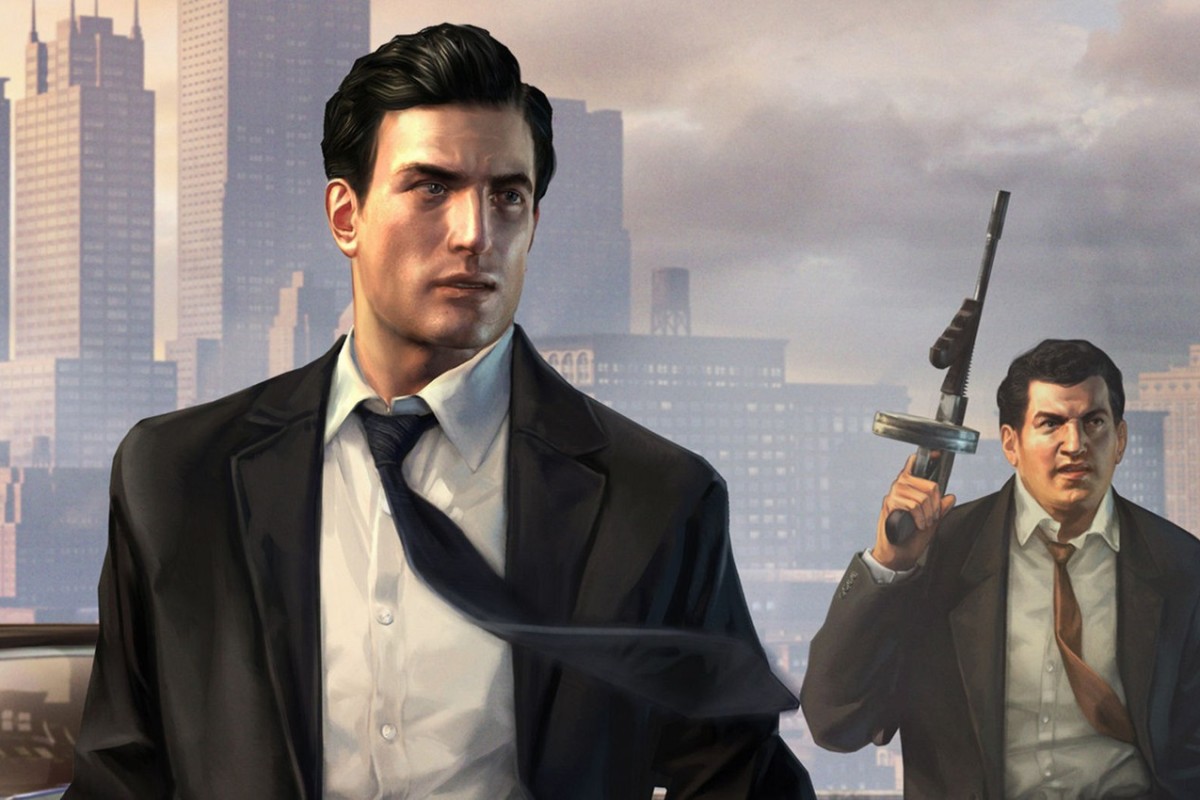
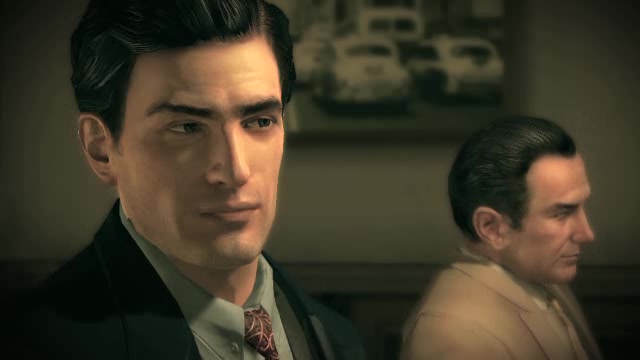
Joe’s enduring popularity stems from his best-friend status in Mafia II. (Source: greghorrorshow.wordpress.com)
***
In very, very broad strokes and major spoilers ahead;
The final third of Mafia II is about Vito and Joe going into the drug business with their friend Henry Tomasino.
They buy drugs from the Chinese Triads, but later Henry is killed by them for being an FBI informant.
Vito and Joe raid the Triad base of operations and kill their men and gang leader.
This kicks off a war between the two Italian families, the Vincis, (of which Leo Galante is a part of), the Falcones (which Vito and Joe are part of) and the Triads.
To calm tensions in the city, Leo instructs Vito to kill his boss, Carlo Falcone. Falcone tries pitting Joe against Vito, but the two friends take down Carlo together.
After Joe and Vito kill Carlo, they are whisked away by Leo in two separate cars.
When Joe’s car makes a sharp turn, Vito asks, “Where are they taking Joe?”
Leo replies with the now iconic line; “Sorry kid, Joe wasn’t part of our deal.”
Okay, now with context out of the way, let’s get onto why Joe Barbaro has to die.
Dead Man Walking – Why is Joe Barbaro dead?
Okay, let’s dig in a little deeper on the context that I laid out.
In Chapter 15, Vito looks over the destruction that he and Joe caused, them lying to their boss Carlo Falcone and his deputy Eddie Scarpa about their involvement, and Henry being revealed as a rat. Vito says;
“The truth was going to come out sooner or later, and then we were going to have Falcone after us along with the Chinese and Vinci…I ducked it for as long as I could, but it was finally catching up with me. It was all just a matter of time…”
And when Leo picks Vito up the next day and instructs him to kill Carlo, he says;
“Frank and the rest of the Commission want you dead. So does Mr. Chu. And to top it all off, you vouched for a rat. You think Carlo’s gonna let that slide? You’re a dead man walking.”
There needs to be repercussions for Vito and Joe’s actions. Mr. Chu of the Chinese wants revenge, and getting the man who killed their leader Mr. Wong would suit him fine. Frank and the Commission see Vito and Joe too deadly and destructive to keep alive. And Vito vouched for a rat, a death sentence within the real-life Cosa Nostra.
But Vito has Leo, his golden ticket to safety. Leo literally says, “…if it wasn’t for me, you would’ve already been taken care of.” Joe doesn’t have that same privilege. So Joe has to die on a weighted, transactional reading of the story.
In the final mission Joe gets the offer to kill Vito…but their friendship wins out. (Source: Youtube: CJake3)
***
Now to look at it thematically. When looking at its story structure, Mafia II is a tragedy. In basic terms, its about a young man trying to find a better life for himself and only when he has reached his peak, then realises he’s lost everything.
As Vito says when looking over his family album in Chapter 15;
“This wasn’t how I imagined it when we were startin’ out. I dreamed o’ money, cars, women respect, freedom…
“I guess I ended up gettin’ all of that more or less, but along with it came prison, living in constant fear, and the blood of my friends.”
Vito loses his house and possessions, loses his mother and sister, and by Mafia III he is old, grey, and seemingly tired of life, fuelled only by the last dying embers of his original dream of being a big shot.
The nature of narrative is to continue that thread. There is no redemption for Vito and so the story on a basic thematic level has to follow the thread of loss…which leads to Joe, the last piece of Vito’s life in the mafia that hasn’t already been taken away from him.
And when Joe’s car makes that turn, where does he turn to? The exact overlook that Vito, Joe, and Eddie dispose of Frankie Potts, another traitor in the Empire Bay Mafia (seen in Chapter 7). It’s a symbol, this location means death.
The final frame of Mafia II…and another shallow grave. (Source: YouTube,Thomas Cedric Kielsholm Wilson)
***
Finally, let’s look at the logical and logistical aspect of Joe being alive. Joe is wanted by not just the Commission and the Vincis, but also the remnants of the Falcone family (mainly Eddie Scarpa), the Chinese Triads. No city is going to be safe for him.
When finishing Vito’s “I Need a Favour” mission in Mafia III, Vito details how what he knows about the aftermath of Carlo’s death. Joe escaped his final car ride in Empire Bay and fled to Chicago, but the family granting him sanctuary turned on him. And while Joe might have got lucky during the course of Mafia II, there will come a point where that luck will run out.
The Mafia has a long memory. Tommy Angelo turned on his family and they hunted him down over thirteen years later. Joe caused untold damage to both the Commission and the Triads, there is no way they are letting him go…or letting him back into the fold.
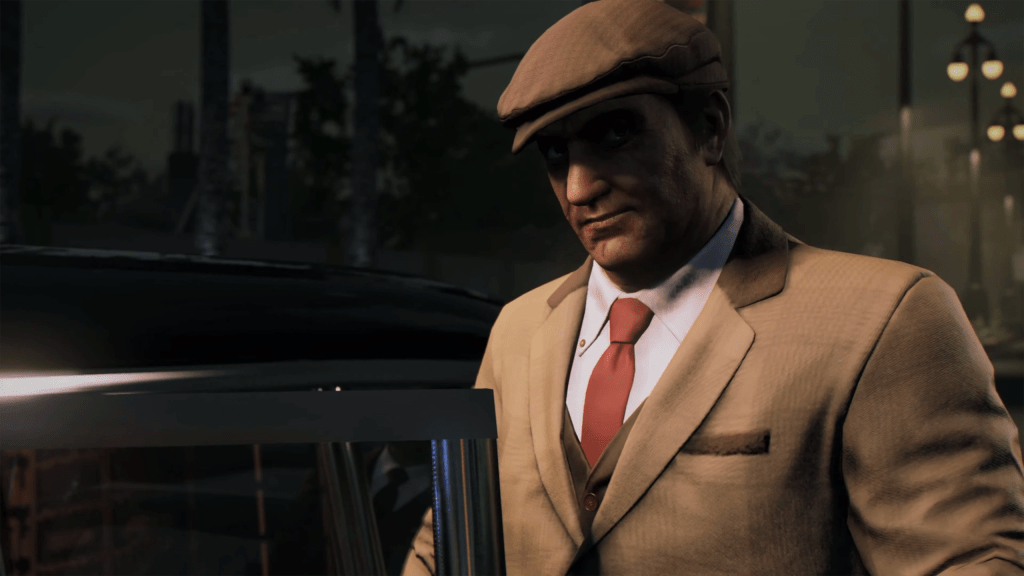
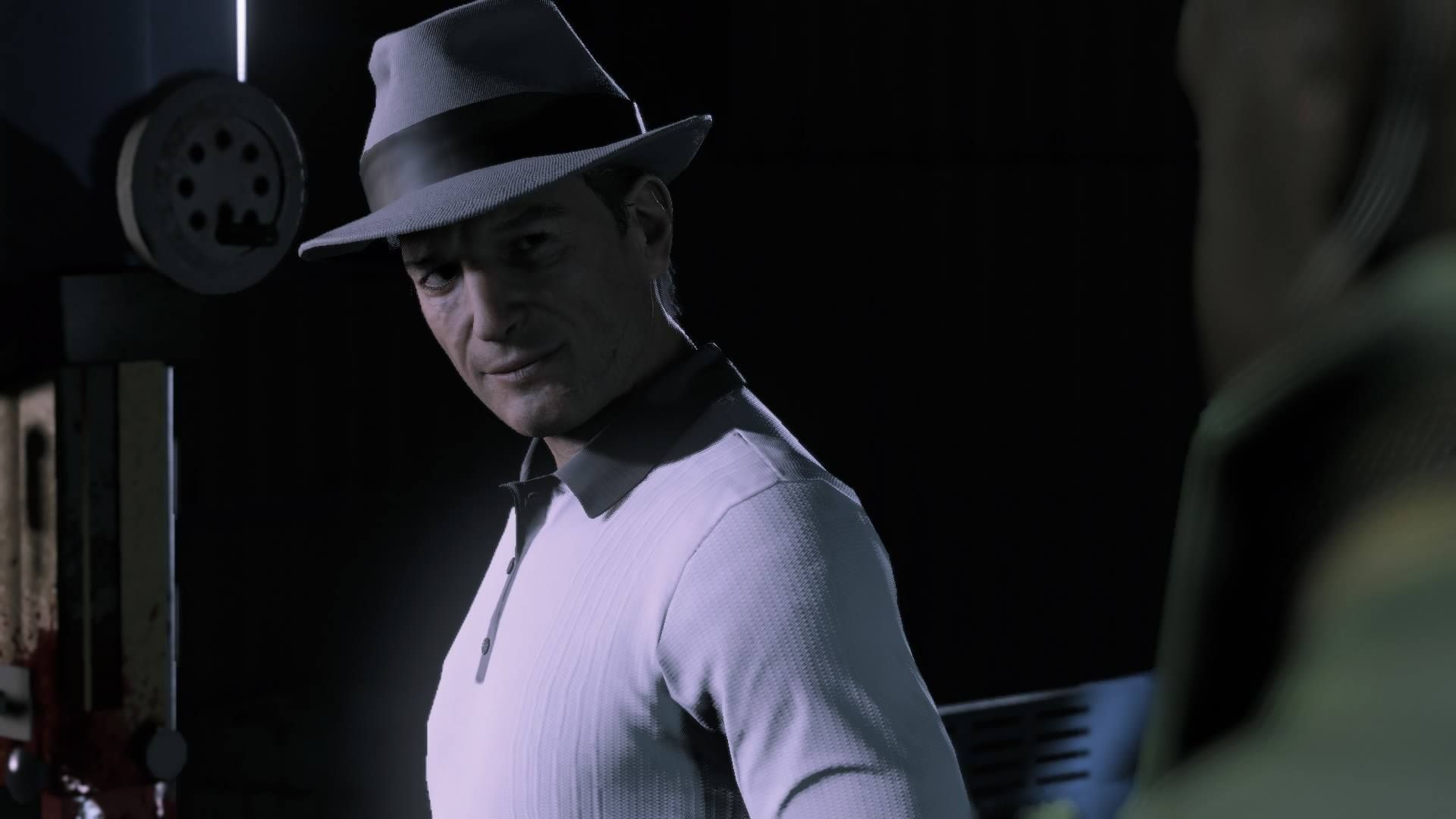
Because that is the prevailing theory. At the end of Mafia III, Leo Galante comes to visit Lincoln Clay after the death of Sal Marcano. When Leo leaves, the camera lingers on his driver. The frame, the baker-boy hat, the knowing stare straight into the camera, it gives the impression of Joe.
Delving into the game files, the model off Leo’s driver is named “ma_head_003_joe_”. And shortly after the release of Mafia III, the Mafia X (formerly Twitter) account responded to a fan asking “why did you kill Joe Barbaro?” with “Did you finish the game?”, hinting that the man at the end is Joe.
But WHY? Why would Leo risk the wrath of the Commission, the Triads, and Vito and Joe (who are both well known for going on rampages for revenge) just to have a chauffeur who is good in a fight? Would Joe, after fleeing destruction, come back and be fine relegated to a driving job, when we see throughout Mafia II he’s continually setting up new scores?
Vito says in his conversation with Lincoln that, “…if Joe was alive – he would have found me by now.” Joe would know, since Vito was sent down to New Bordeaux by the Commission, and as seen by his actions in Mafia II, he totally would contact Vito. Even if he was forbidden by Leo under pain of death, Joe would take that gamble.
I think the face and the tweet are just nods to fans, nothing concrete. Just a dedicated game artist and social media manager hyping up a game and story that most Mafia fans didn’t enjoy.
Leo Galante’s driver in Mafia III…supposedly Joe Barbaro. (Source: mafiagame.fandom)
***
So there, those are my thoughts on the Joe Barbaro conspiracy. Narratively, thematically, logically, and logistically, Joe Barbaro has to die and to deny that wrecks both his story and Vito’s arc throughout the Mafia series.
He is one of the most beloved characters of the seventh generation and possibly the face of an entire franchise. Even now, almost a decade on from his role in the spotlight, you can find a myriad of blog posts and forum messages detailing why Vito Scaletta is one of the greatest characters to ever grace a computer screen.
Vito Scaletta is a central character in the Mafia series. An Italian-American immigrant brought into the fold of the Cosa Nostra, we play as Vito in Mafia II through the 1940s and 50s as he rises through the ranks of organised crime. Despite only being a playable character in the second game, he has featured in the series from the start.
While not named in the original Mafia, a mission near the end of Mafia II retroactively inserts Vito into the story, being the hitman that kills previous main character Tommy Angelo. After playing through his story in Mafia II, he is brought back in Mafia III as an underboss.
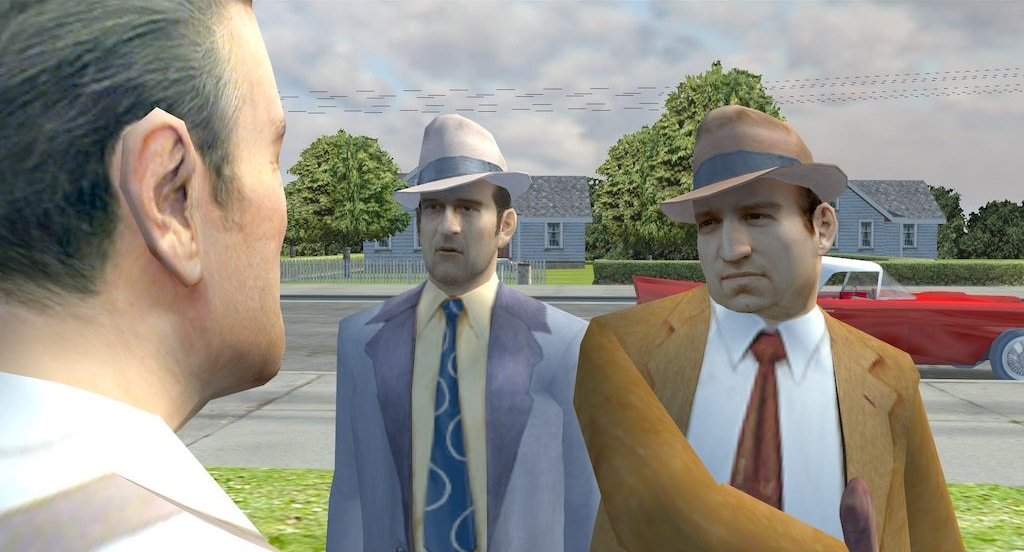
Vito (left) as he appears in the original Mafia, completing the hit on main character Tommy Angelo. (Source: stemacommunity.com).
It is cool having this unique connecting thread through the series, rather than a more standard sequel with a returning cast. Other series such as Assassin’s Creed and Timesplitters have had similar through-lines, but not as clear as Mafia’s (AC’s are usually just cameo appearances such as Charles Dorian in AC: Rogue, and TS had the Jones family featuring in the years 1853, 1965, and 2243).
So what made Vito such a compelling character? Well, I thought about doing a little character study. Let’s jump in.
Made Man – A Look Back at Vito Scalleta
The first thing we have to address in looking back at a character, any character, is how the story or text is framed. Context is important, how the creator presents it can affect how it is received. The entire Mafia series is presented by flashback format; Tommy tells his story to Det. Norman, Vito looks over his family album, and Lincoln’s story is told through interviews of other characters in a documentary format.
Characters retelling a story can lead to embellishment, skipping over points that may seem inconsequential to them, but would aid a greater understanding of their life. This is nothing new; games ranging from Battlefield to Silent Hill, Dragon Age to Monkey Island have used unreliable narrators for action set-pieces, antagonist reveals, or even just for a laugh.
It seems that the team at 2k Czech were aware of this aspect. Games Radar mentioned that the original Mafia,
“…centered on the most significant events in [Tommy Angelo’s] life while largely ignoring his day-to-day life as a mobster.” (Reparaz, M. 2008)
In response, writer/director of both games, Daniel Vavra said,
“The player is going to experience more of everything…those action sequences will always be in context to the story and the mafia theme…[but aren’t] mutually exclusive to the ‘nitty-gritty life of a mobster’”. (Reparaz, M. 2008).
We also have to keep in mind the aspect of the nature of the avatar. Depending on who is playing Vito, he could be a bloodthirsty psychopath or a pacifist, a road rageaholic or someone who never passes 30mph. It is both one of the great foibles and assets when trying to dissect a videogame, as there is never a “concrete” personality to a character when in gameplay.
Personally, I will be working off the idea of the only characters that the player is under obligation to kill die during the narrative, as it is a good medium.
So with those addendums given, let us start on the game proper.
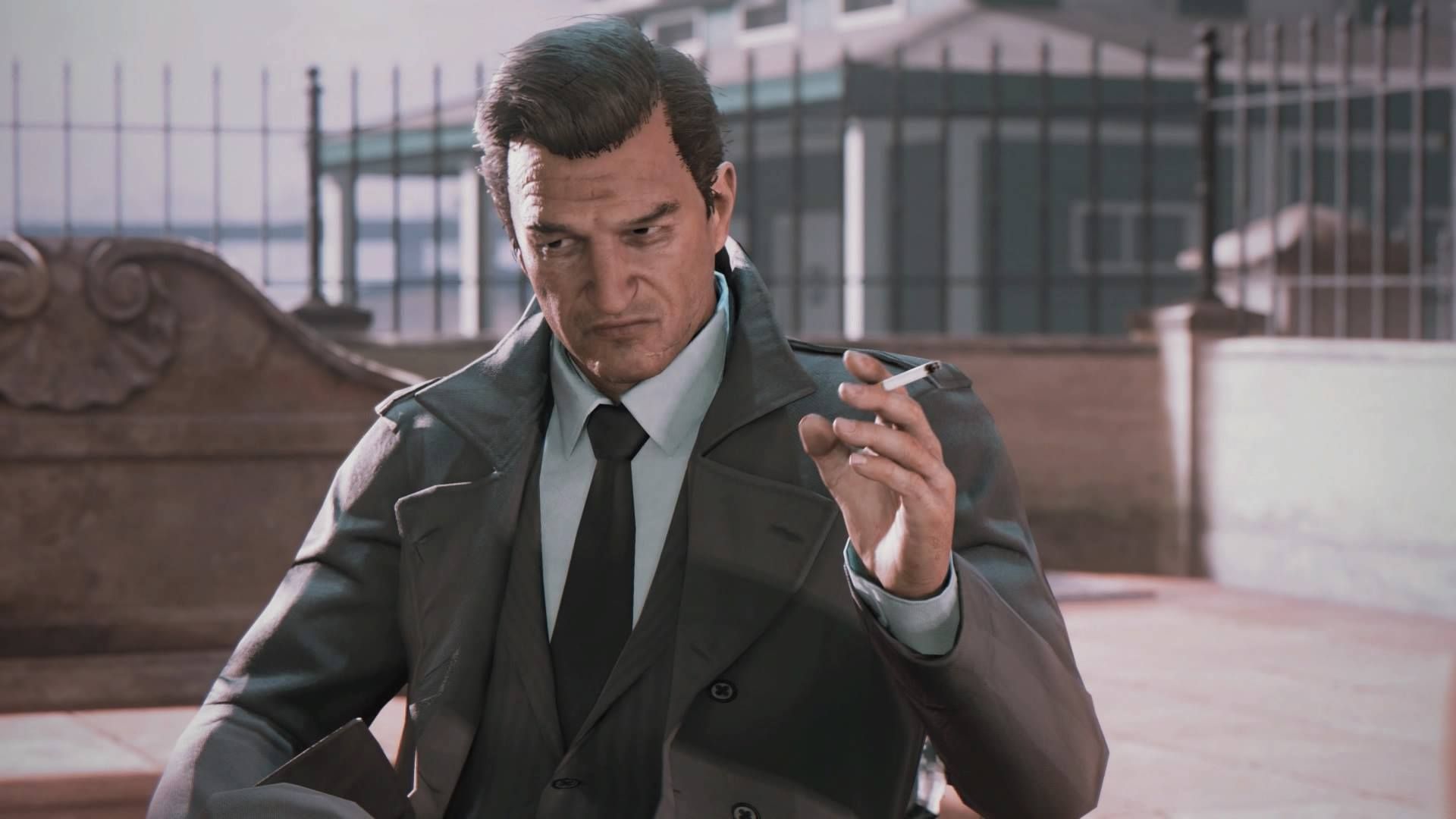
Vito’s first appearance in Mafia III. Soon after, he joins with Lincoln Clay to take down the Cosa Nostra. (Source: pinterest.com)
The first aspect ties in with the nature of the avatar, but from a designer point of view rather than a player. Jack Scalici, Director of Creative Production on Mafia II listed Vito’s character traits,
Scalici: “…he’s a nice guy. He has strong morals. He doesn’t kill people because he wants to, he kills because he has to.” (FAIR/PLAY, 2017).
I’ll add a few more; he is quiet, unassuming, and rational. He is the complete opposite of “shoot-first-ask-questions-later” Joe, that’s why they make a great pair. But all of these terms to describe Vito are rather nebulous. There is nothing standout about him, he is tabula rasa, a blank slate.
The technique of tabula rasa is used a lot in games, as it helps develop quick player identification. If there is no set personality, we can project whatever we want onto a character. Some of the most iconic and beloved characters are like this; Gordon Freeman, Link, Crash Bandicoot, Doom Guy, none of them have any notable character traits besides vague concepts like “brave’ or “wacky”, but they are often found at the top of ‘Favourite Game Character Lists’.
Tabula rasa can also lead to great narrative twists. Characters like James Sunderland in Silent Hill 2, Nilin in Remember Me, and Walker in Spec Ops, these characters are kept vague in the beginning, before their personality is revealed later into the narrative, leading to shame, shock, or abhorrence at their true colours.
Vito doesn’t have these quirks. He is kept elusive and quiet, possibly for player connection, but that unfortunately bleeds over into the game. It makes Vito look like someone who only takes orders and has no initiative. He’s constantly the fall guy, from start to finish, always kowtowing to his higher-ups. When Luca Gurino asks whether Vito is willing to “take the next step” by,
Luca: “…taking somebody out, just ‘cause someone points his finger at him and tells you to do it.”
Vito replies,
Vito: “I was in the war, Mr. Gurino. All I did was kill people I was told to kill…”
Luca laughs and responds,
Luca: “We need guys like you. Guys who can follow orders without asking questions.”
Throughout the two games that he prominently features in, Vito has this veneration for authority. When Cassandra and Vito square off, Vito falls back on his seniors,
Cassandra: “You can blame Marcano all you want, but it was your men who ambushed us.”
Vito: “My men were following orders. We got rules.”
When Lincoln breaks up the argument, Cassandra follows up,
Cassandra: “…do you know how many of my men this connard killed ‘cause Marcano ‘told him to’?”
It could be that Vito appeals to authority due to his absent father. Throughout Mafia II, Vito doesn’t look too kindly on his father’s memory. When Joe mentions him near the beginning, Vito quickly shoots in and calls him a “deadbeat”. And when Mama Scalletta says she wished Vito’s father could have seen him return from the war, Vito sarcastically replies, “Yeah, sure.”
This could be a reason why Vito jumps in with the mafia, to have a surrogate family. He obviously looks up to Leo Galante as a father figure (although Leo does not see Vito as a son). This could be why Vito goes along with things that are a detriment to him because he’s wanted a security of family.
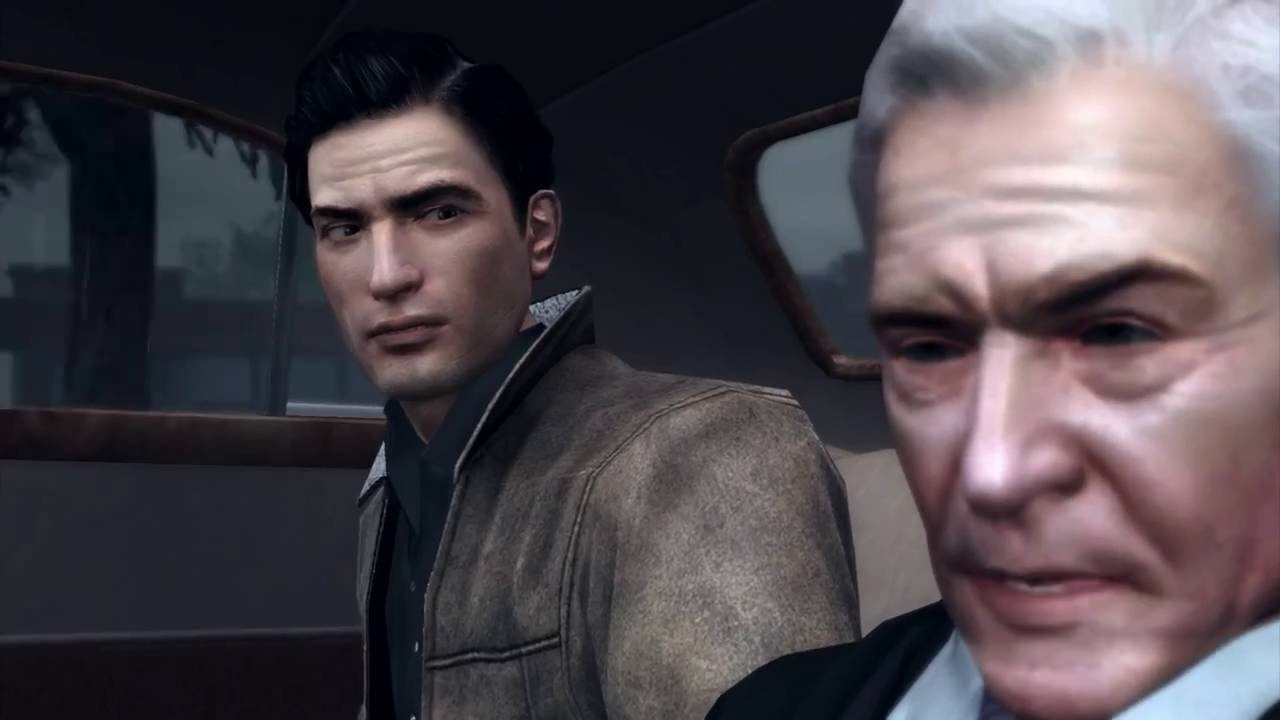
Vito Scaletta and Leo Galante at the end of Mafia II. Vito looks up to Leo, but the older man sees Vito as disposable by Mafia III. (Source: ‘LoudMouthZander’, YouTube.com)
There are only two times that Vito pushes back against other’s actions, both times weakly. When Vito returns from the war, Joe get him out of the service. Vito objects, saying that he will go to prison if caught. After Joe placates him, Vito never brings up the subject again, even after going to prison partly because he went AWOL.
The second is when he and Joe team up with Henry Tomasino after killing Alberto Clemente. Henry proposes the three go into the drugs business. Vito objects, saying,
Vito: “Drugs are bad. They kill people.”
On top of this, when swearing allegiance to the Cosa Nostra, Frank Vinci, one of the other bosses in the city, says,
Vinci: “Whatever you do gentlemen, stay away from the dope! No dope! That’s our policy.”
Yet, Vito goes along, swayed by the money Henry promises. He is greedy. When his house is burnt down by the Irish mob, Joe tries to console him with the fact that,
Joe: “…all that stuff that got burnt up, it’s just things Vito.”
However, Vito does not see it like that. He replies angrily,
Vito: “Just things? Hey, those were my things Joe. Why do you think I do the shit we do anyways? It’s to buy things, ya know, suits, cars, broads, houses.”
This thin motivation of material possessions is brought up again in Mafia III,
Lincoln: “Nobody forced you to get greedy. You could’ve sat back, been content, watched the money roll in. But no, that wasn’t enough.”
Once Vito is ‘made’, we get montages featuring him buying cars, a big house, and smart suits. Money seems to be Vito’s main motivating factor. (Source: tiltingatpixels.com).
So, other than a substitute family, it is a drive for the American Dream that pushes Vito forward. When thinking back on his arrival in Empire Bay, Vito remarks,
Vito: “Never in my life had I seen anything as fantastic as Empire Bay. It was beautiful…on the other hand, I’d never seen anything filthier or more disgusting than our new shithole of an apartment.”
He is always trying to better himself, motivated by an almost loathing of his parents for raising him in poverty. Maybe this is why Vito is notoriously work shy, throwing in the manual labour job at the port he gets at the beginning of the game, as it reminds him of his father. This aversion to the lower class is seen in dialogue with Joe near the beginning of the game.
Joe: “The working man is a sucker, that’s for damn sure.”
Vito: “You said it.”
And when talking to Joe after they exact revenge on the Irish mob for torching Vito’s house (therefore losing all of his accumulated wealth), Vito explains,
Vito: “I promised myself I’d never be poor again, end up a fucking wharf rat like my old man.”
Senior producer Denby Grace shed some light on Vito’s motivations during pre-release promotion of the game,
Grace: “He [Vito] just wants to get a bit of money, a bit of respect and a bit of power. Vito doesn’t aspire to be the Don.” (FAIR/PLAY, 2017).
Unlike Tommy who joined up for safety in the original Mafia, or Lincoln who was raised by the Black Mob in Mafia III, Vito just starts off as a delinquent and never wavers, even after a stint in prison.
The only acknowledgement that Vito wanted to be a gangster is an internal monologue during the scene where he becomes a made man.
Vito: “You might wonder why I’d take this risk again after spending almost seven years in the can. You see, where I grew up, the only guys who mattered were the ones who had the balls to take what they wanted…
…and after years of doing everybody else’s dirty work, I was willing to risk anything to finally be somebody.”
There is obviously a feeling that he always wanted to follow this path. In Mafia III, Vito’s death mission is literally called “I Deserved Better”. When he is beaten, Vito says,
Vito: “I gave up everything for this life. Everything! And look where I ended up!”
But Vito is wrong. He did not ‘give up’ everything. He lost everything. He lost his family, with his sister Frankie breaking ties with him. He lost his freedom when he went to jail. He lost his friend Joe and lost his way within the Cosa Nostra when he killed Carlo Falcone. As Tommy says in the epilogue of the original Mafia,
“…the guy who wants too much risks losing absolutely everything. Of course, the guy who wants too little from life might not get anything at all.”
Vito is at first sceptical of Lincoln’s help, fearing that he would be betrayed once again just like he was back in Empire Bay. (Source: pinterest.com)
Vito’s ‘death’ in Mafia III also sheds light on his character. If Lincoln kills the other two bosses, Cassandra and Burke, he is restrained and gentle in their final moments together. He sits with Burke while he drifts away, and returns Cassandra’s pendant with a picture of her dead daughter to her.
Vito is the only one that is holding a gun in his final cutscene, dropping it to the ground after realising it is empty. However, he pulls a switchblade out and rushes Lincoln, forcing the latter to shoot him dead. This can be seen as a continuation of his traits in Mafia II. As Vito says in his confrontation with Lincoln,
Vito: “There’s always been someone waitin’ to fuck me.”
The switchblade makes sense; he’s been around for too long and will take any chance he gets to bring some semblance of balance to his world. He’s turned grey with age and anger, only having dominion over a scrap of land given to him more out of loyalty than being an earner.
And once he is dead, his underboss Alma sadly refers to him as “a good little solider.” That is seemingly all he was, even after all this time.
Yet if he takes over when Lincoln leaves, Vito seemingly drags New Bordeaux out of dirt. Unlike Burke or Cassandra, Vito revitalises the city and lives into old age. He builds casinos, arenas, convention centres, turning the city into “the Las Vegas of the South” according to Jonathan Macguire. He finally ‘wins’. It is all material, nothing but bricks and mortar, but as mentioned previously, that is all Vito wants for.
Conclusion
As I said in the introduction, it is rare to find a character like Vito that develops with subsequent games. Even the other famous Italian gaming icon, (no, the OTHER one), Ezio Auditore, doesn’t change much over the thirty-five years we spend playing as him, only really changing in the first act of AC2 when his father and brothers are murdered. And that’s the main difference; Ezio starts with tragedy, Vito ends with it.
I think it is this beautifully melancholic arc, which is why Vito is so loved. Tommy in the original Mafia doesn’t get as much time to grow, and Lincoln is seemingly indifferent by the end of Mafia III. We see Vito through both the major moments and his everyday life, and it endears us to him.
Even now nearly a decade on, Vito and Joe’s story is fondly remembered by fans of the series. (Source: greghorrorshow.wordpress.com)
His nature as a protagonist also makes us look favorably on him. As an avatar, we have a slight bias towards him. I think a character, especially one in a story-driven game like this, digs into a psyche deeper than a general protagonist in an open-world crime sim.
Following on from that, the setting also helps aid our connection to Vito. For all the open-world games we have nowadays, there are very little that have a period setting. And while the original Mafia is a fun game, it is brutally unforgiving. There is an idolisation of the gangster trope, seen in Hollywood since the 30s. This was the intended goal by 2k Czech, as Cinematic Director Tomás Hrebícek said in an interview,
“We want to present the whole game in a Hollywood film like style…” (FAIR/PLAY, 2017).
Sat next to your best friend, both dressed in snazzy suits, wielding a classic Tommy gun, driving a sleek convertible, listening to classic rock-n-roll blaring out of the radio, it is hard not to see the draw. And being the guy we get to experience that with would make him stick in your mind.
And speaking of friends, what of Joe? Even when he kills innocent bystanders and causes havoc for Vito to clear up, it is never questioned, because of that bond. Joe is Vito’s friend, therefore by extension is ‘ours’. The company we keep can be just as enticing as the lead.
In the end I think I like Vito more in Mafia III. There is a history there that is interesting to ruminate on and more to play off. But the simple layers of Mafia II worked their magic, seeing this once promising young lad reach for the dream of something better, but lose everything in the process.
He may not have much to say, but he has a damn good story to tell. And a good story will be remembered and treasured.
***
If you’ve enjoyed this post, then please have a look at my newest article, where I attempt to disprove the myth that Joe Barbaro is alive!

 TOM CLEMENT | GAME PRODUCER | NARRATIVE DESIGNER