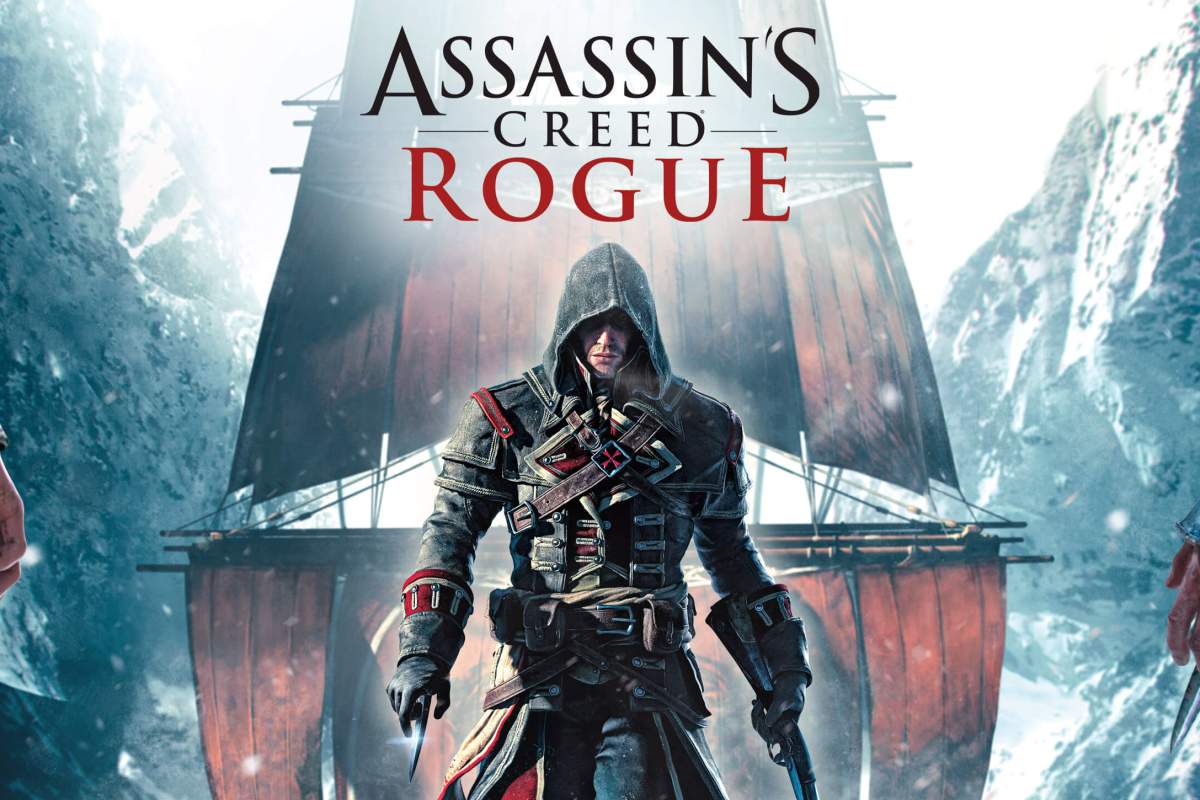
Assassin’s Creed: Rogue has been watching me stare at it on the PlayStationstore for at least the last six years.
An Assassin’s Creed game, one of my favourite series of all time, that I had never heard of before? What was this?
Well, that’s a little lie. I did know one thing about Rogue: the main character, Shay Patrick Cormac, was an Assassin-turned-Templar, hunting his former teammates and masters. I have to admit, that did pique my interest.
I had seen it go on and off sale as the years ticked by, while I moved onto newer games such as Origins and Valhalla, until I decided…let’s do it.
Jump in to an “old” Assassin’s Creed game that I had no inkling of and give it a go.
And…well, that’s what the the rest of this post will be.
The Craic and The Creed – My Time with Assassin’s Creed: Rogue
Now, the title of this post shows the general consensus of Assassin’s Creed: Rogue, mostly from the circumstances of how it came about.
AC: Rogue was released on November 11th 2014 onto the PlayStation 3 and Xbox 360.
But wait, why those consoles? The newest generation was already underway with both Sony and Microsoft releasing consoles in 2013.
And come to think, wasn’t there another Assassin’s Creed game that came out in 2014, Assassin’s Creed: Unity?
The answers to those questions are “yes” and “yes”. Ubisoft was aiming all of their development cost and marketing on their seventh generation baby, but thought, “why not try and get some money from the people that haven’t moved over to the new consoles yet?”
And so, Assassin’s Creed: Rogue was born. And literally in the same month that Unity dropped its first trailer, eight months out from its release, Assassin’s Creed: Rogue began production. EIGHT MONTHS!
But anyway, the prevailing theory is that since Rogue was overshadowed by its older sibling, not to mention relegated to the previous generation, that the game is underrated.
However, when people that actually play the game and experience its story, it seems it’s overrated.
So, I will try and set out and find the truth…which undoubtably will be somewhere in the middle.
***
When I first bought Rogue, I was actually quite excited. The main development team, Ubisoft Sofia, were the team behind Assassin’s Creed: Liberation, the PS Vita exclusive that was ported alongside the ACIII Remaster in 2019.
I played that thinking it was just be a throwaway little story with not too much expectation. Liberation turned out to be one of my favourite games of all time, easily surpassing ACIII and Black Flag in my ranking of the series.
So, with that pedigree, and that teaser of an Assassin-turned-Templar, I was interested to see where Rogue would take me.
The game is set during the Seven Years War, slotting nicely between ACIII and Black Flag in historical terms, and acts as a finale of sorts for the Kenway Saga.
And having come off the back of the resounding success that was Black Flag, Rogue takes everything from the previous game (including nearly all its assets), and crafts the tightest in terms of gameplay and visually one of the most striking games in the series.
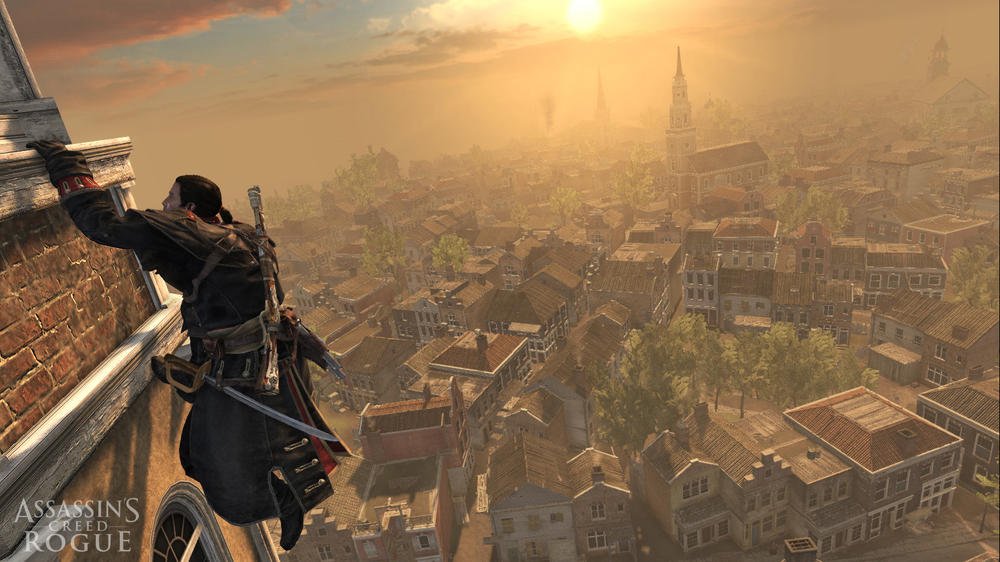
The game splits its map into three areas; New York (as the sole city), The River Valley, and the North Atlantic Ocean. New York was previously featured in ACIII, so while it is clearly based off the previous incarnation, Rogue‘s interpretation is geared towards greater player traversal.
Freerunning in ACIII isn’t fun because the rooftops are too far apart for seamless parkour and there are only a few washing lines per city block to use to sprint across the street.
In Rogue, buildings are more closely packed together, but also include a whole new set of traversal methods such as ziplines, fast ropes, and lifts, allowing players to easily move up, down, and across the rooftops at speed.
It also helps that the parkour is fast and fluid, getting rid of the stickiness of ACIII and empowering the vaulting animation (how many of you played through ACIII or Black Flag and didn’t know you could do some cool vaulting animations by holding the “drop” button?)
There is nothing more enjoyable that hitting a perfect freerun across an entire city without stopping, and Rogue has that locked down.
***
The River Valley and North Atlantic are the meat of Rogue’s maps, and also the thing that ties the game closely to Black Flag, as here the main course of traversal is using a ship called the Morrigan.
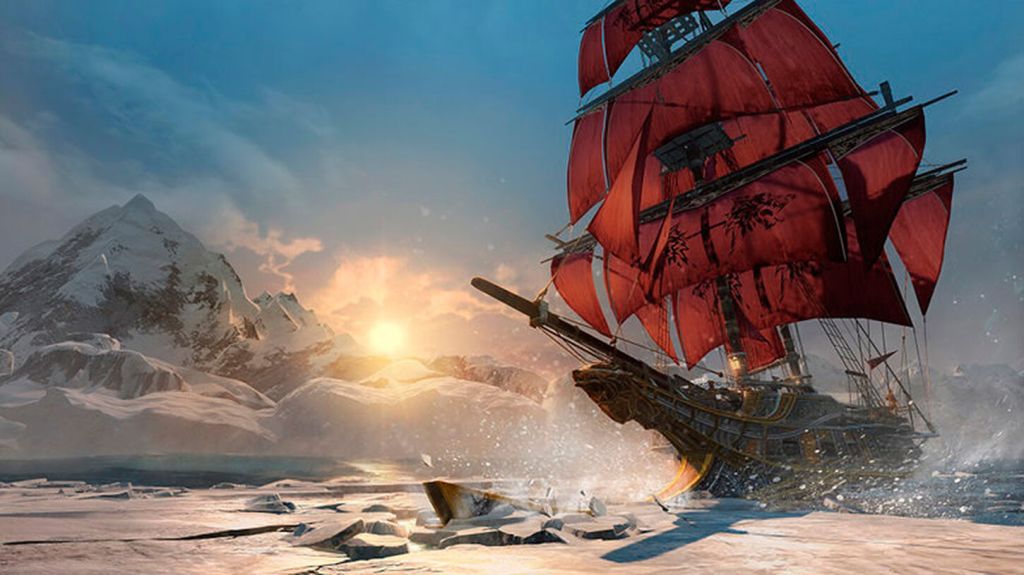
Rogue’s ship is smaller and more nimble than the Jackdaw, and houses better weapons such as puckle guns and burning oil, allowing for faster and more aggressive ship combat.
While the ocean isn’t as vast as Black Flag’s, I feel it’s actually an improvement over the previous game. Ship battles feel more active, you can get snuck up on from behind as passing ships form alliances and swarm you, and uniquely in this game, enemy ships can board the Morrigan.
Ubisoft have been trying to replicate the ship combat for over a decade now, both with an estimated $850 Million “AAAA” dumpster fire Skull and Bones, and eventually a complete remake of Black Flag, dubbed Resynced. Yet they literally have all the ingredients and fixes in here in a now twelve-year-old game!
One thing that I truly love about Rogue are the locations. Black Flag’s Caribbean setting was a beautiful blend of lush green, pure white sand, calm blue sea, and pastel-painted cities. It was a veritable rainbow of bright colours.
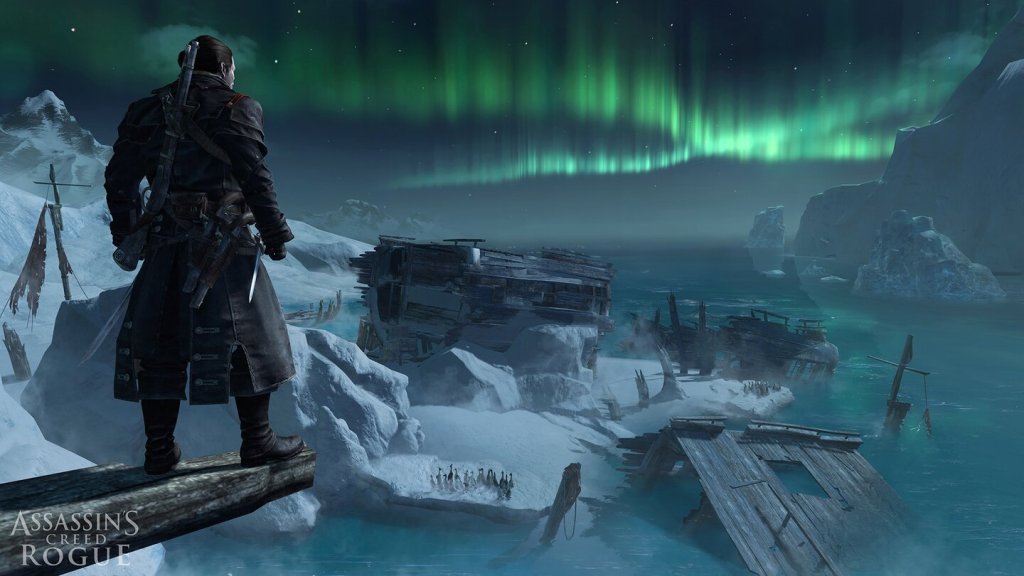
Rogue does the opposite. In the North Atlantic, pale icebergs stand tall against a churning grey sea, with a dark black sky and swirling Northern Lights above. Small settlements and shipwrecks dot the coast, grey marks jutting out against the harsh landscape.
In the River Valley, the twisting waterways makes great use of earthy greens and browns, making the location feel muddy and wet. And New York, while more colourful than in ACIII, features a pale-blue sky and heavier shadows.
If Black Flag was an explosion of colour, then Rogue is monochrome, using blacks, whites, and greys to make it one of the most visually distinct AC games of the entire series.
So, with fast and fluid traversal, the BEST ship combat of the series, and distinct locations that feel unique to series, I can say with confidence this game is underrated.
***
However…
I want to stress the development time again. From ACII up until Syndicate, there was an average development time of 1.5-2 years. From Origins to Shadows, each game had an average of 3-4 years of development time. And Ubisoft Sofia knocked this game out in EIGHT MONTHS!
So, when I moved into criticising this game, know that this is not a slight on the developers and creators, who did their best under incredibly tight deadlines.
Now, the story. AC: Rogue has one of the best set-ups that an Assassin’s Creed game could have; an Assassin who experiences a moral crisis and aligns himself with the Templars. It’s a great hook and twist on the usual Assassin/Templar story, and is a natural follow on from the morally ambiguous tales in ACIII and Black Flag.
Rogue only has six sequences with around four missions in each. That is ridiculously short, and so concessions had to be made in regards to the story. We get no introduction to our main character, Shay Patrick Cormac, other than that he is an Assassin.
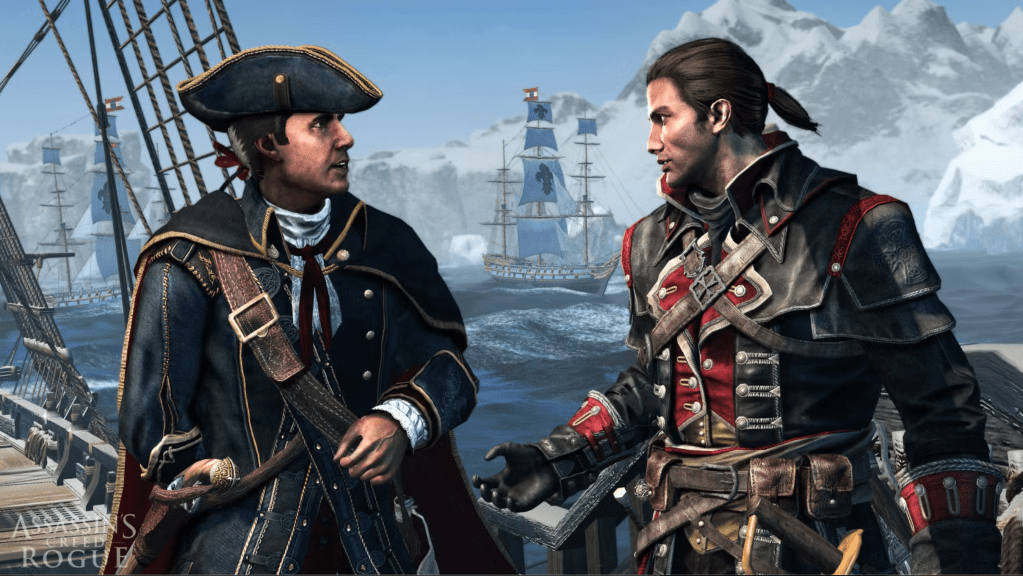
Shay’s big moment is when he is sent across the ocean to Portugal to uncover a mystical artefact buried under a church. After touching it, the artefact sets off an earthquake, destroying the city and killing thousands of innocent people.
When Shay arrives back in the New World and tells the Assassin Mentor Achilles what happened, his is dismissed and gaslit, as Achilles plans on finding more of these artefacts.
This pushes Shay to stop the Assassin’s from discovering these artefacts, with the other Assassin’s trying to kill him.
It’s a weak pivot, making the Assassin’s look ridiculously evil and arrogant, with Shay being the only one to see the full picture and everyone else acting so unreasonably that the Templars seem righteous by proxy.
***
Early on in the story there is a standard training sequence of shooting, being stealthy, and hunting, each taught by a member of the Assassin Brotherhood. It could have shown that Shay is the newest member of the Brotherhood but not fully inducted yet, so not as dogmatic as the rest of them.
The first two assassinations in the game, when Shay is still part of the Brotherhood, are on aging Templars, one who is dying of tuberculosis. Shay is unnerved by murdering these two men, killing them when they could have died in peace, but this thread doesn’t last long.
The Assassins have a hold over the New World, and are employing gangs to do their dirty work. They antagonise and threaten the residents of New York, they steal weapons and cause havoc with the Redcoats (with several civilian casualties), and eventually start producing nerve gas to use on enemies, but these are just little beats in the story.
I dream of a story where Shay sees the veneer of righteousness in the Colonial Brotherhood chipping away to exposing a rotten heart, corrupt, hypocritical, and straying from the tenets of the Creed. That would be the perfect reasoning to show a switch of allegiance.
Instead, Shay’s entire reasoning for turning his back on his brothers is that he made an earthquake happen and they didn’t believe him.
Once he escapes the Assassin Homestead and settles in New York, Shay just ends up falling in with the Templars. While there is a slight hint that they are manipulating him behind the scenes, the Templars that Shay interacts with (who all have cool character designs) never get enough time to develop personalities.
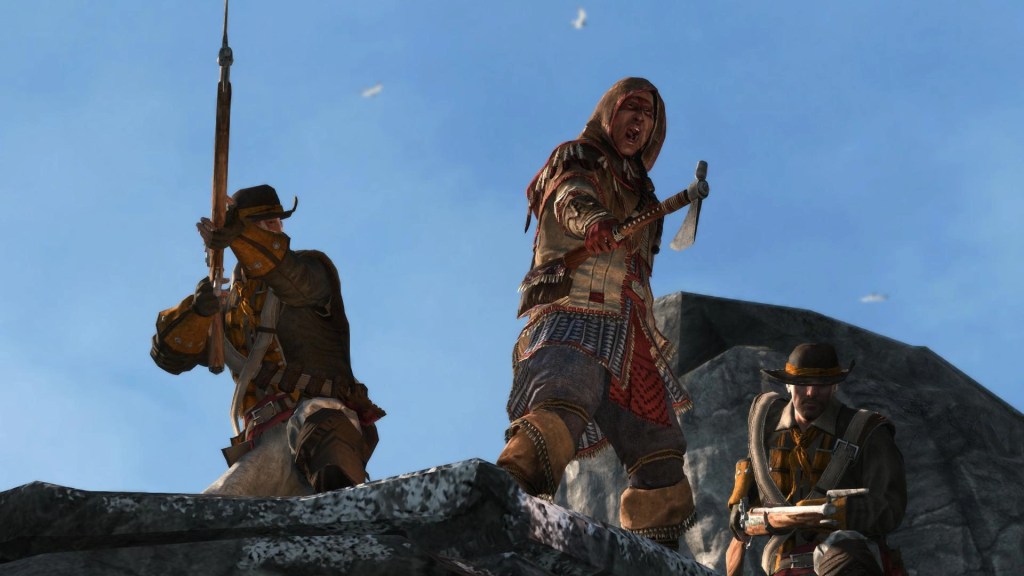
It’s the same with the Assassins. In that training sequence I mentioned before, it felt like they were setting up different skills or archetypes. Liam, Shay’s best friend, is a strong fighter and the best shot. Hope uses gadgets and stealth to get close to a target. Native American Kesegowaase is fast and uses the environment to his advantage. But that’s just in cutscenes, and never in gameplay.
***
They could have had Master Assassins hunting Shay just as Shay is hunting them, using his new-found Templar connections to force the Assassins into the open. Luckily, when Shay does square off against his former mentors, each mission is tight and focused, with a set-piece showdown.
One has you locked into a brutal sword fight in a bombed-out fort. Another has you leading a battalion of Redcoats against an Assassin raiding party. One has you dodging sniper fire amongst icebergs and rock formations.
My favourite is a street battle that morphs into a mansion infiltration, then into a midnight chase through the New York streets and up onto the rooftops.
That sequence shows the updated traversal at it’s best. It felt exhilarating to dodge gunfire and smoke bombs, getting dropped onto the street and see the Assassin leap over rooftops ahead of me, cutting through shortcuts and up lifts to get ahead of them, and finally getting close enough to perform an Air Assassination.
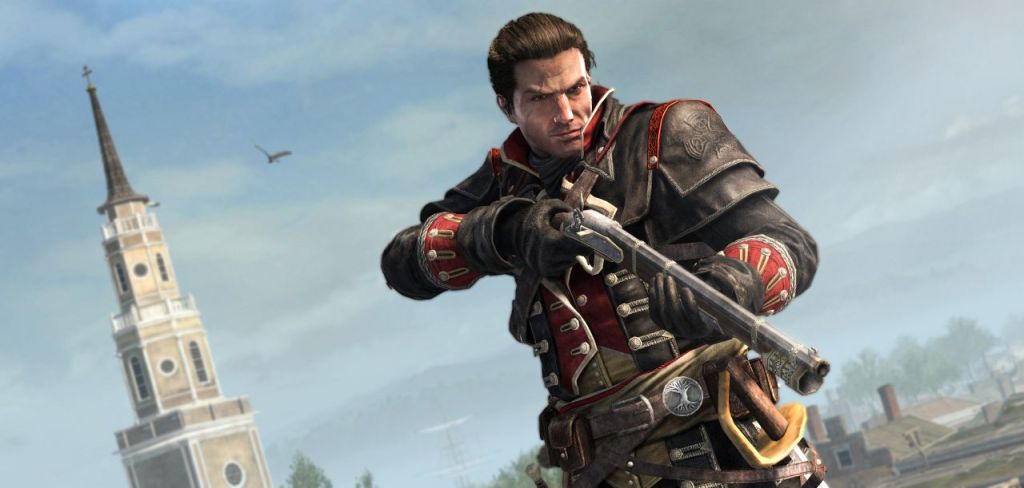
But these flourishes of greatness are let down by a story that is at the doorstep of great ideas, but never fully gets to show them or explore them. Shay becomes a Templar for no other reason than they are against the Assassins. There could have been more done with his worldview, shaped by what he has seen, and slowly coming around to the Templar cause. But no, it’s just the Templars are against the Assassins, so make an easy outfit to join.
For a long while, the Assassin’s don’t even realise that Shay is alive. He’s out destroying their infrastructure and their influence and they don’t even realise he’s doing it. Shay intervenes in Assassin contracts, destroys hideouts, is hunted by gang members (which are all interesting inversions of regular AC gameplay) but none of it matches to the story.
And that’s the main kicker. For all the greatness of the gameplay, the fighting, the ship combat, and the beautifully-designed world, the story just can’t match it. It’s short and shallow, with only vague gestures at greater points, and that’s why this game is overrated.
Wait, now I’m confused. Which is it? Underrated or overrated?
***
Looking back, it seems like such a weird reason to release Rogue when it did. Black Flag was a cross-generation release, why relegate a game solely to the previous generation?
Why go up for an ambitious new approach and open-world in Unity, when everyone is basically wanting Black Flag 2.0? Why not make a trilogy of the Kenway Saga, building on all of the feedback from ACIII and Black Flag?
But the timing of the next-generation of consoles forced Ubisoft’s hand, and therefore doomed Rogue. I wouldn’t actually be surprised if this started as a handheld exclusive, similar to the final Ezio game, Revelations, which was initially designed for the Nintendo 3DS, before being bumped up to mainline release.
And yet, for its shortness of length and disappointing character development, I enjoyed my time with Rogue. The interesting setting, the faster movement and combat, the return of ships, and some of the most unique missions in the entire series make me remember it fondly.
We get to see major characters from the previous two games, Achilles, Adewale, and Haytham, and get to see them all kicking ass one last time. We even get a little tie-in to Unity in the epilogue, with Shay assassinating Charles Dorian.
It’s a fun mini-adventure, similar to Liberation, not an epic era-spanning adventure of other main AC titles. If you’re looking for a must-play lost gem in the back catalogue, this is not it.
But if you have an itch to return to a classic AC game, re-experience the excellent ship combat, and have a few hours of fun, then I can heartily recommend Assassin’s Creed: Rogue.
Banner Photo Source: store.epicgames.com
 TOM CLEMENT | GAME PRODUCER | NARRATIVE DESIGNER