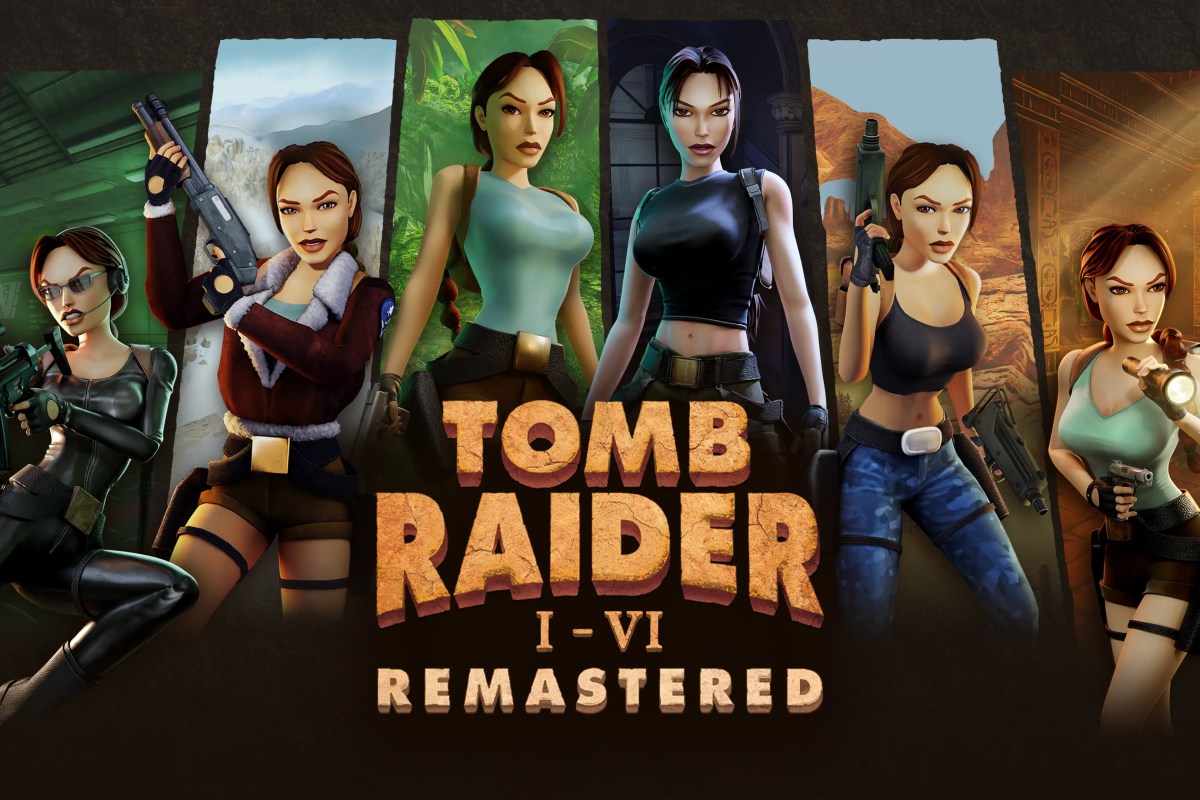
Two of my top-played games of the last year are Tomb Raider: Remastered I-III and IV-VI.
These are remasters of the first six games in the Tomb Raider series, originally released from 1996 to 2003.
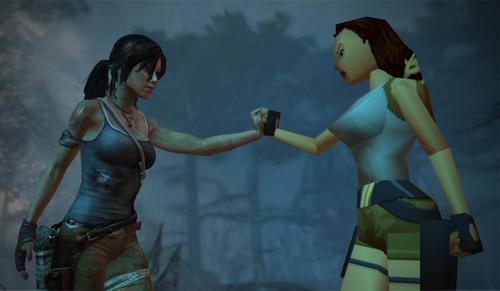
The releases have delighted both longtime fans and newcomers with improved graphics and updated technology, bringing some of Lara’s most iconic moments back into mainstream gaming culture.
Since I finished the remasters, I got curious on following up the later games in the series, and hope soon they are also remastered and packaged just like the rest of the series.
But now after a good few months of my life has been dedicated to Lady Lara Croft, I decided it was time for my rankings of the best levels in each game. The series has designed some great locations over nearly thirty years and so I wanted to celebrate them here today. Let’s start!
Tomb Raider (1996) – St Francis’ Folly
I’m already courting controversy with this pick. It’s widely accepted amongst the TR community and in gaming that the best level of the original game is the third level, “Lost Valley”. It’s the level where Lara comes face-to-face with a T-Rex.
And while yes, it’s quite amazing when the T-Rex theme kicks in and the dinosaur appears out of the pitch-black draw distance, the rest of the level is standard jungle/cave exploring. Instead, my level choice is both iconic and a technical marvel.
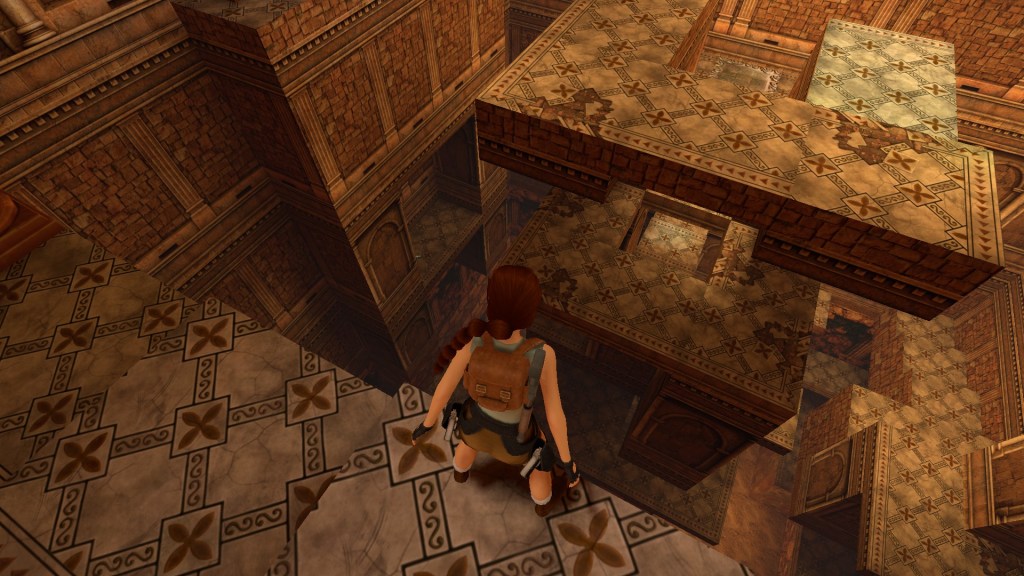
“St Francis’ Folly” is the 2nd most-famous level of the first game. A hidden complex underneath a Greek Monastery, “St Francis’ Folly”’s main structure is its high-point (metaphorically and literally); a broken central column where one mis-step will send Lara plummeting to the ground below.
Lara must traverse the central pillar and face devious challenges based on four Greek gods; Atlas, Damocles, Neptune, and Thor (I know none of these are either Greek or technically gods, I’m just going by the game).
Each of these challenges; escaping a boulder, slowly working through a room while swords drop towards you, being pulled down into a bottomless pool of water, and walking under a giant hammer, would have made the level iconic.
But pair all of those with the central column (which you can’t even see the bottom of from the top platform) makes this one of the best levels in the entire series.
Tomb Raider II – 40 Fathoms
Again, this will probably raise some eyebrows in the TR community.
TRII has some iconic levels, such as the opening sequence on the Great Wall of China or the final level where Lara seemingly slips into an alternate dimension of floating jade islands, flying statues, and walls of fire.
But for me, “40 Fathoms” is the best due to its starting location. Having stowed away on a bad guy airplane and landing at an oil rig, Lara learns a magical item is lying inside a sunken ship and the bad guys are sending divers down to collect it.
Lara hitches a ride on the outside of the submarine heading to the wreck, but sharks attack the submarine and cause it to crash, leaving Lara alone in the cold and dark water.
That’s where the level starts; The submarine’s lights flicker out and it begins to sink, sharks begin to circle, and Lara’s air supply begins to tick down.
There is a quote from Toby Gard, lead designer of the first Tomb Raider game, about the Neptune trial in “St. Francis’ Folly”.
“The moment you step into [the pool], it would suck you all the way down to the bottom and I wanted to get this feeling of that terror of being deep underwater and knowing you can hardly swim back.” (13:41)
That feeling, that idea, is beautifully replicated here in “40 Fathoms”; it is pure, undiluted terror. The dark void surrounding you, knowing there are monsters out there, your air supply running out, and having no clue where to go…that’s why it’s on the list and why it’s my favourite level in all of Tomb Raider.

Tomb Raider III – Nevada Desert
Okay, this is the first of my level choices that might be more widely accepted.
Actually, there are quite a few levels that might have been in this spot. TRIII has some great levels across four widely different biomes and any of the opening levels to these mini-adventures could have been in this spot.
“Antarctica” is cold and windy, “Jungle” in India feels muddy and damp, “Thames Wharf” in London is dark and rainy, and “Coastal Village” in the South Pacific feels tranquil and isolated. But I decided to go with “Nevada Desert” as my pick because it feels unique to the series.
The landscape is beautifully otherworldly, a mixture of open plains, quicksand, glacial canyons, and rivers, giving Lara the full aspect of climbing, jumping and swimming throughout the level. It feels like a proper extreme sports vibe that Lara would chase after.
Starting with Lara sliding down into the desert basin, the atmosphere is top-notch, giving a great sense of the dry and hot landscape we have to traverse through. Vultures circle ahead and snakes hide in the tall grass, waiting for Lara to stumble close enough to attack.
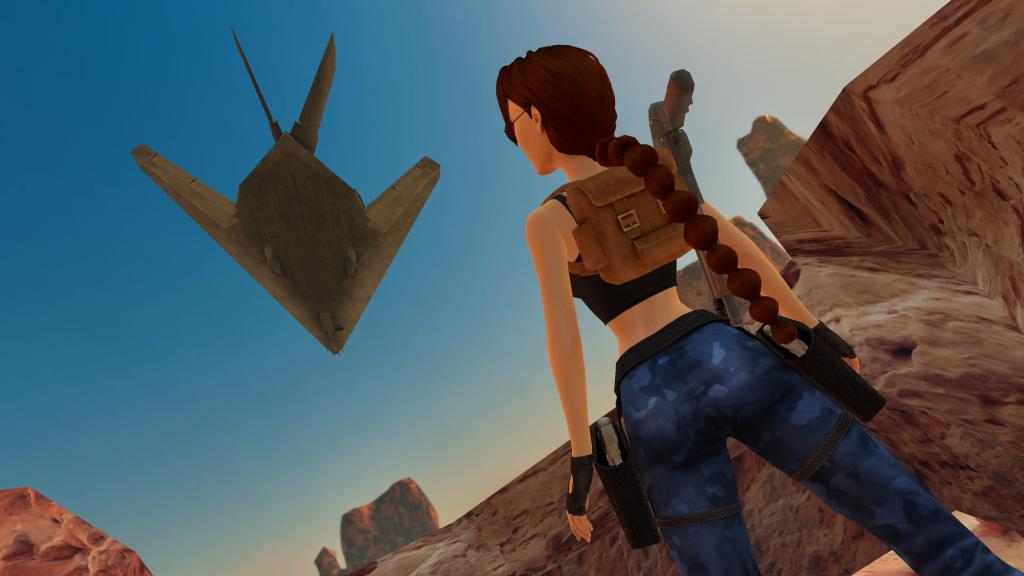
And then as we climb to the top of the rock formations, black stealth aircraft begin flying just over Lara’s head, showing us that we are not alone in this supposed wasteland. We soon find a water dam station and high security fences, leading to Lara stealing a quad bike to jump the barbed wire and land in…Area 51 (yeah, that happened).
Let’s not forget Lara’s outfit for the location as well, trading in the classic green top and shorts for a black crop top and baggy blue camo pants, showing how raiding tombs (or breaking into military bases) can still be done with style.
Tomb Raider IV: The Last Revelation – Desert Railroad
The Last Revelation, despite only being set in Egypt, has some excellent locations. Driving a jeep across the desert in “KV5”, climbing up “The Great Pyramid” during the apocalypse, or facing devious traps in “The Tomb of Seth”, The Last Revelation does deliver.
But one level stands out amongst the rest and is truly iconic.
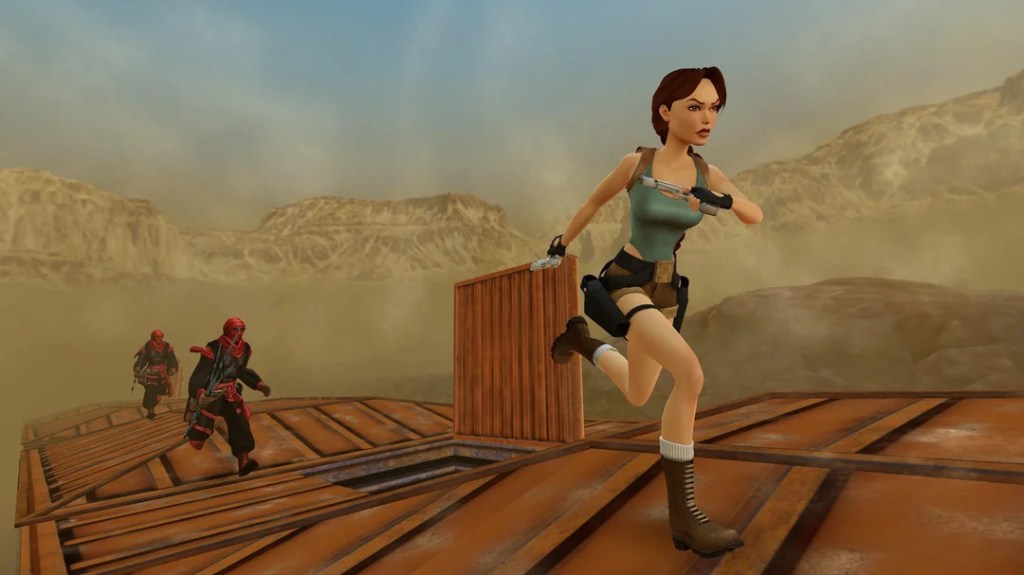
“Desert Railroad” might not feature temples or tombs, but facing bad guys on a moving train is the most cinematic level in all of classic TR. While it’s probably all very simple repeated graphics speeding past or under the train, just the fact we are on a moving object is great.
There isn’t much too the story or gameplay, just Lara needing to traverse over, under, and through the train to reach the back and collect a crowbar, to then go all the way back to the front and unhook the cars behind.
The level is very heavy on combat as bad guys pop out from hidden hatches or jump aboard from jeeps running alongside the train. Combat has never been TR’s strong point, but the spectacle of backflipping while on a speeding train will never get old. You can see where Naughty Dog got their idea for the train level in Uncharted 2.
And the final cherry, seeing Lara get caught under the train with a crunch if she misses a jump…oof it looks painful.
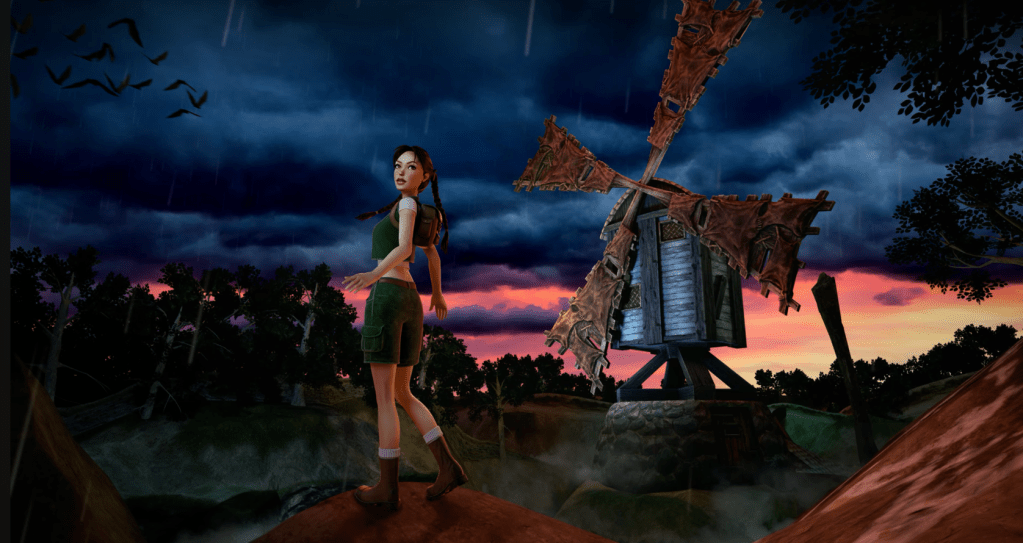
Tomb Raider: Chronicles – Old Mill
Tomb Raider: Chronicles took a different approach to storytelling than the other games, instead treating players to mini-missions throughout Lara’s life.
One section, set on an island off the coast of Ireland, sees teenage Lara sneak aboard a ship belonging to her family friend Father Patrick and comes face to face with the undead and demons that haunt the island.
After passing an undead man hanging from a Gallow’s Tree and being chased by a werewolf through a Labyrinth, Lara then has to save Father Patrick from an undead knight who has been trapped in an Old Mill.
The setting is creepy enough with musical stings and otherworldly sounds. Lara being a teenager means she doesn’t have any of her weapons yet, so combat is non-existent, meaning you have to run away or outwit every creature.
Old Mill has one standout monster, the Sea Hag. Lara is tasked by the knight to stop the water flow of the mill, and so she must journey into the nearby lake. The Sea Hag, like a mermaid without skin, lives in the lake and will attack Lara if she catches her.
Lara has to stealthy swim around the Hag, luring her into a cage so other demons can fish the Hag out of the water, allowing Lara to proceed into the underwater caves.
Outside of the lake there are several nasty traps of water that will pull Lara to her doom, as well as the rickety roof of the mill and surrounding houses, that Lara has to jump between.
It’s really cool to see this little level from such a height and a treat that the original TR theme is slowly interwoven into the music.
Tomb Raider: The Angel of Darkness – Louvre Galleries
The Angel of Darkness turned the series on its head when it was released, playing more into an occult murder mystery than a straight treasure seeking adventure.
While some of its levels were a bit too modern or hi-tech in my view (things like derelict apartment complexes in Paris or a sanitarium filled with monsters), one of Lara’s earlier goals requires breaking in to one of the most guarded buildings in the world; The Louvre Galleries.
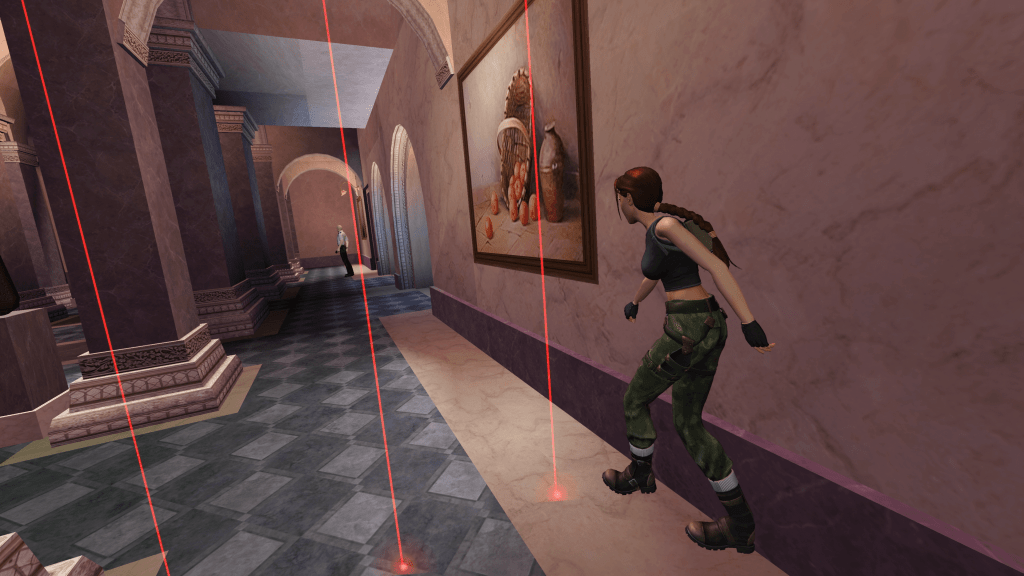
The Louvre is such a cool setting for a game and still fits with the general Tomb Raider aesthetic. Lara must slowly work her way through the galleries, stealthily taking out guards and slipping past laser trip wires, even climbing above the Mona Lisa to enter an air vent shaft.
Even from there it’s not smooth sailing for Lara, sneaking through tunnels and eventually outside and scaling the side of the building to reach locked off sections of the museum.
It recalls the style of The Da Vinci Code, of priceless relics giving clues to further adventures, the cunning grave robber effortlessly passing by security hazards to get to their goal. It’s such a standout level, echoed in games such as Uncharted 2, and I’m surprised the series hasn’t tried going back to a museum for a similar mission.
Tomb Raider: Legend – King Arthur’s Tomb?
Tomb Raider: Legend was the first game from Crystal Dynamics, who took over the series after the critical and commercial failure of The Angel of Darkness.
They brought Lara back to the tombs and exotic locales while also updating the controls for the modern day. The level “King Arthur’s Tomb?” Seems to have been designed from the ground up to be THE level to test the player’s mastery over Lara’s acrobatics.
Starting in a novelty King Arthur theme park before making our way underground into a crumbling and flooded tomb, The level focuses on precise jumping, evading, and climbing skills, with breakaway floors, fire pits and hidden blades in walls all waiting for Lara to slip up.
My favourite section is a large stairwell leading down into the tomb, the only issue being the stairs have fallen away to time, leading Lara to have to scale down using the small natural outcroppings in the walls and her handy grapple as a makeshift rope swing, flinging herself from wall to wall in order to not tumble down to the bottom.
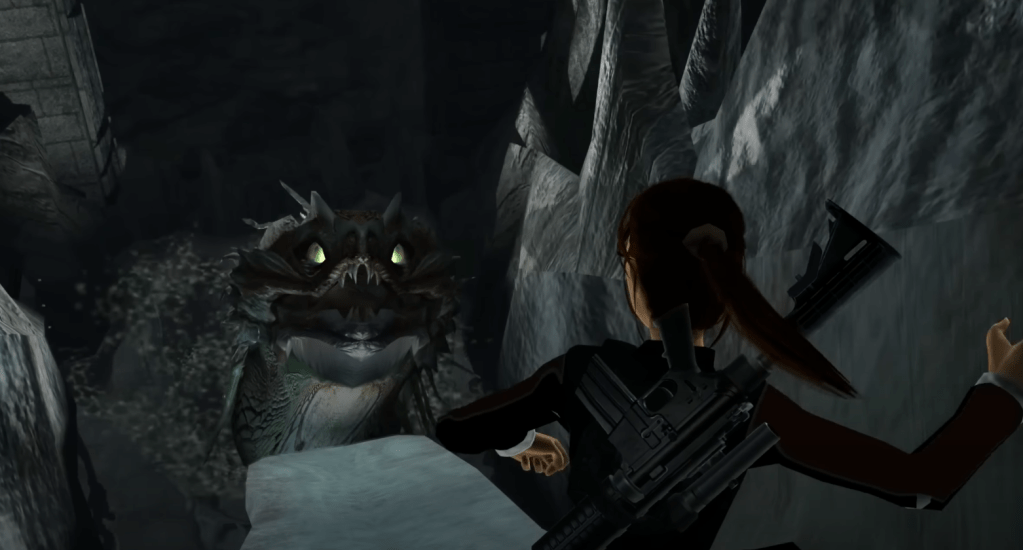
After navigating through several flooded chambers (using coffins to float along), Lara is deposited into a giant lake, with a beautiful and towering tomb built for King Arthur. The tomb is not unguarded though, with a giant serpent living below its depths. It can’t be killed by conventional means, so Lara must use the environment to defeat it.
Tomb Raider: Anniversary – Midas’ Palace
Tomb Raider: Anniversary is a remake of the first Tomb Raider game, updating the levels and visuals to fit with the new gameplay introduced in Legend.
Some levels like “St. Francis’ Folly” have hardly changed a bit, where some like “Tomb of Tihocan” have been radically changed (to the point of being cut). The level here is a bit of both, remaining faithful but adding its own unique twist, and it just so happens to be my favourite.
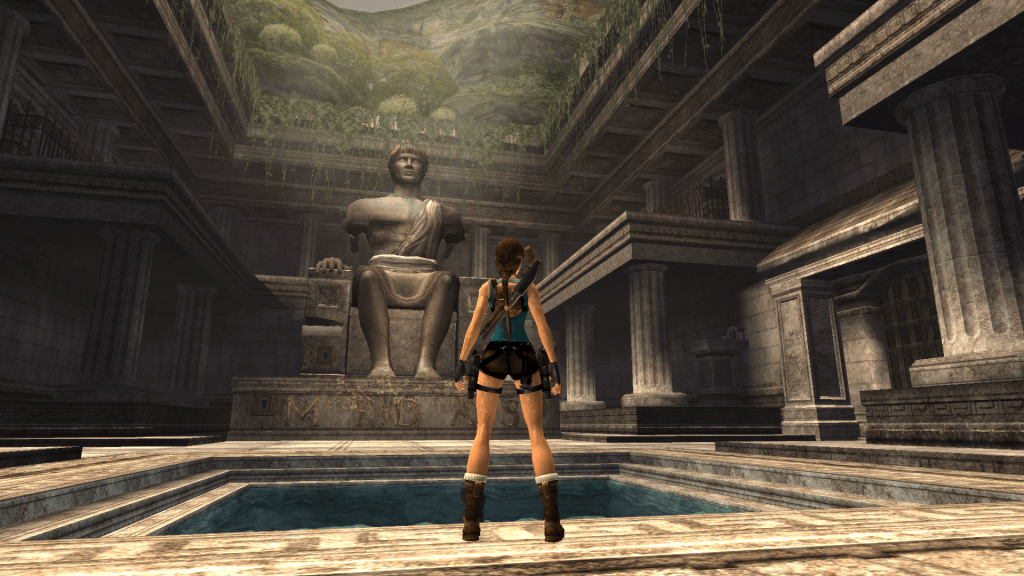
“Palace Midas” in the original game was a sprawling trek through multiple cave systems and rock formations, finding a palace that had gone through cave-ins and destruction, seeing the few remaining rooms and columns (and only the feet and hand of what would have been an impressive Midas statue).
Anniversary decides to give the players what the palace would have looked like in its time. The opening room is impressive enough with beautiful polished marble, hanging gardens, and small waterways on the balconies above.
The player in Anniversary enters the level through a large set of door at the other end of the main room, framing the complete Midas statue at the other end, allowing its space to dwarf Lara in comparison.
The side rooms, essentially mini-tests of agility and speed have been pushed to the extreme. No longer are they simple platform leaps around spikes or spits of fire, the platforms move up and down and the hazards are numerous.
And since it’s Midas’ Palace, I can’t not mention the optional death where Lara is turned to gold.
Tomb Raider: Underworld – Bhogovati
Tomb Raider: Underworld still has some of the best looking environments in gaming up to this day.
With locations ranging from hidden temples in both the Mediterranean and Arctic Sea, overgrown complexes in the Mexico jungle (and having to use a motorbike to quickly move between them), and even a fun delve into the undiscovered caverns of Croft Manor, they are some of my favourites in the entire series.
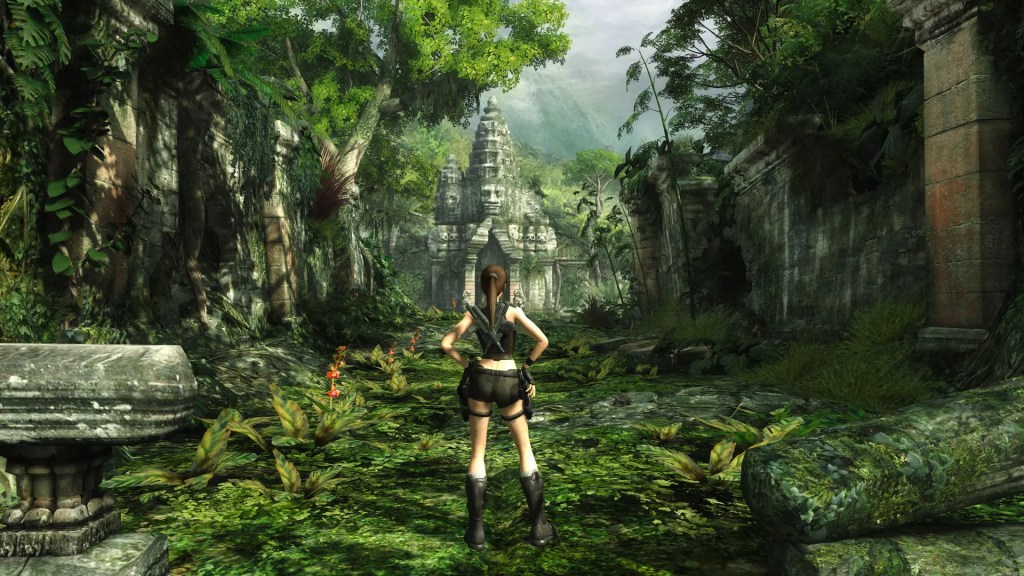
But “Bhogovati” is one of the highest rated levels in the whole Tomb Raider community. Set in a forgotten temple on the coast of Thailand, the level is a greatest hits of both old and new Tomb Raider.
We start by swimming through crystal clear blue waters of the Andaman Sea to then scaling the rocky cliffs overloaded with vines. Once player reach the top of the cliff, players are greeted with a beautiful sight; an undiscovered temple looming high in the distance, perfectly framed against the sky.
Once inside, the level keeps getting better, with a multilayered puzzle involving two huge statues that Lara must control using levers and pulleys, getting both in the correct position to move forward.
It’s pure and classic Tomb Raider, a perfect blend of platforming, puzzling, and excellent atmosphere.
Tomb Raider (2013) – Cry for Help/A Road Less Traveled
Tomb Raider (2013) was a major shake up to the Lara Croft formula. Gone was the cool and collected Ms. Croft and instead a younger and naive adventurer on her first of many expeditions.
The level design was also radically changed; instead of individual levels and tombs, now the game was set on one island with Lara being able to go anywhere she wanted.
With this nomination, I’m cheating a little as it is two “missions”, but they lead into each other perfectly.
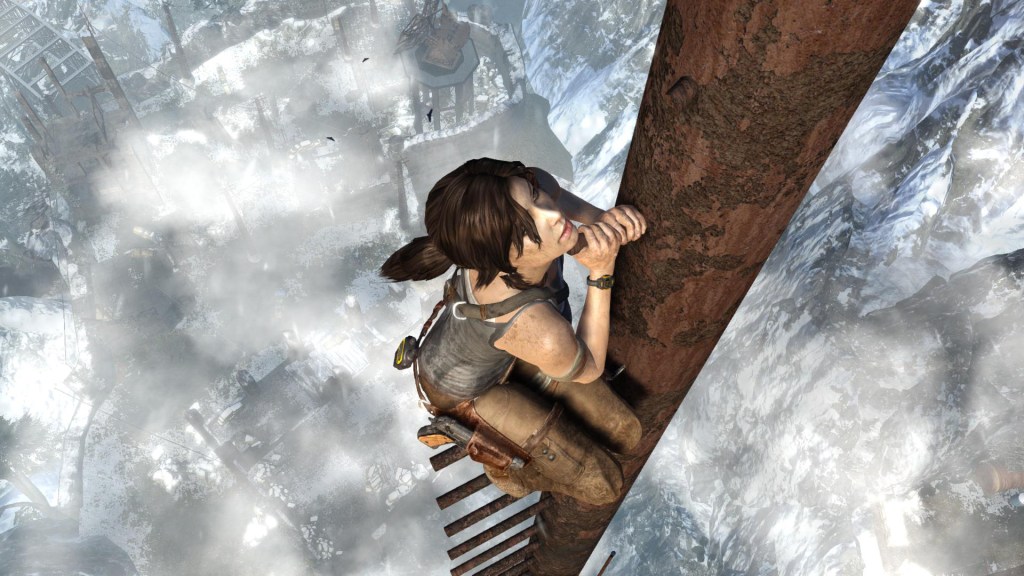
In “Cry for Help”, Lara is tasked with climbing a radio tower to send a distress signal. It’s a great character moment, of Lara having to stamp down her fear, the wind and snow whipping at her as she climbs higher and higher.
When Lara reaches the top and figures out how to send the signal, a radio message from a search and rescue plane comes through loud and clear. It’s a great moment of tension release, of knowing that help is on the way. The first time I played it, I remember I actually sighed with relief.
As the plane comes in to land, clouds begin to billow and lightning strikes, sending the aircraft plummeting towards Lara. She throws herself down the mountain side as the plane crashes, wings and turbines threatening to crush her.
Once Lara finally escapes from the plane’s downward trajectory, she begins to follow the distress signals of the two pilots through a cliffside village and the level “A Road Less Traveled”.
The setting is perfect for platforming and acrobatics, while also being a cool from a visual standpoint. The wooden houses and huts are attached to the cliff with nothing but a few beams and ropes, small stone pathways jut out from the cliff face like wayward teeth, and war banners (that Lara uses like a trapeze artist) flutter in the breeze.
Tomb Raider (2013) does a great job of making the player feel absolutely isolated in a dangerous world, and “Cry for Help” and “A Road Less Traveled” perfectly illustrates it.
Rise of the Tomb Raider – The Prophet’s Tomb
Rise of the Tomb Raider follows 2013’s level design principle by having only one location for the game, taking place in a magical valley in Siberia.
But the game does feature one extra location for its opening section, “The Prophet’s Tomb” in Syria.
Following clues to an apparent immortal being buried in a hidden oasis, Lara races against nefarious bad guys in order to uncover the secrets of the tomb before they do.
“The Prophet’s Tomb” is like “Bhogovati” before it, a great modern take on classic Tomb Raider. It switches mechanics from platforming and puzzling, juggling quieter tension-building moments with the usual break-neck destructive set-pieces.
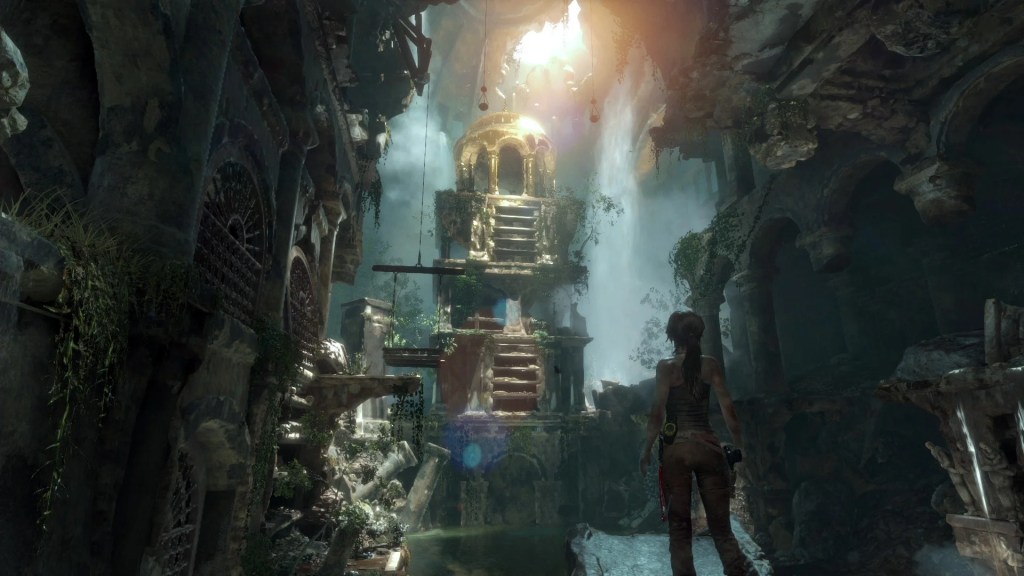
The setting is gorgeous; a huge desert mountain gorge lined with Greek columns and marble with the structure slowly deteriorating as both time and Lara make their mark.
Inside the first few ante-rooms are skeletal knights and spike traps. Christian murals cover the walls, telling a story of the Vatican hunting down the same prize Lara is after.
The central burial room is awe-inspiring, with flowing waterfalls and gilded structures, and a puzzle that throws back to the first Tomb Raider with having to flood areas to change the water level to proceed.
It’s a great mini-location and my only wish was that it lasted a bit longer.
Shadow of the Tomb Raider – Hunter’s Moon
Shadow of the Tomb Raider sets itself in Peru for the majority of the game. But just like Rise before it, Shadow has a mini-location of its opening, here being Mexico.
And once again I’m choosing one of the opening missions as the best level, because they are excellent updates to classic Tomb Raider.
Starting in the dead of night in Cozumel, a island off the coast of Mexico, Lara is hot on the heels of bad guys who think they know the entrance to a hidden temple.
Following close behind, “Hunter’s Moon” begins with Lara scaling around the rocky cliffs to the secret cave entrance with nothing bull rolling white water below her.
The landscape is awe-inspiring, especially when Lara gets to rappel down from the cliffs, admiring the scenery while being suspended in the air is something I’ll never get tired of.
Once inside the cave, Lara is forced to swim through a flooded cenote. While there are a few pockets of air to help along, there are hazards like eels that wrap themselves around Lara, choking out precious air supply.
The final swim harkens back to the Neptune Room and “40 Fathoms”, as Lara is having to squeeze through rock formations to reach the surface, getting stuck and having to force herself through. I remember I actually held my breath in anxiety until she surfaced.
Climbing out of the water leads straight to the underground temple, and when I say underground temple I mean there is a huge Mayan Pyramid built in the cave system.
The lighting and shadow look amazing here and I love the way puzzles circle the pyramid, getting us closer and closer as we figure out each one. Once there Lara steals the shiny object…and unwittingly sets off the apocalypse, a great inciting incident for the rest of the game.
It’s quintessential Tomb Raider, and that’s why it completes the list of the best levels in the Tomb Raider series.
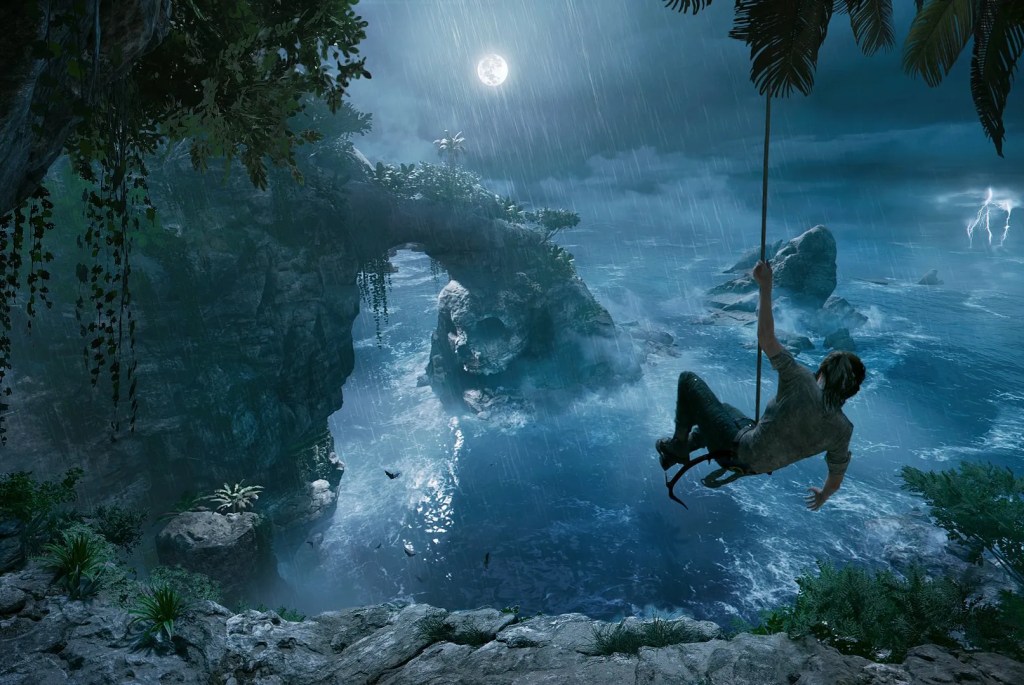
Photo Banner Source: tombraider.com





 TOM CLEMENT | GAME PRODUCER | NARRATIVE DESIGNER