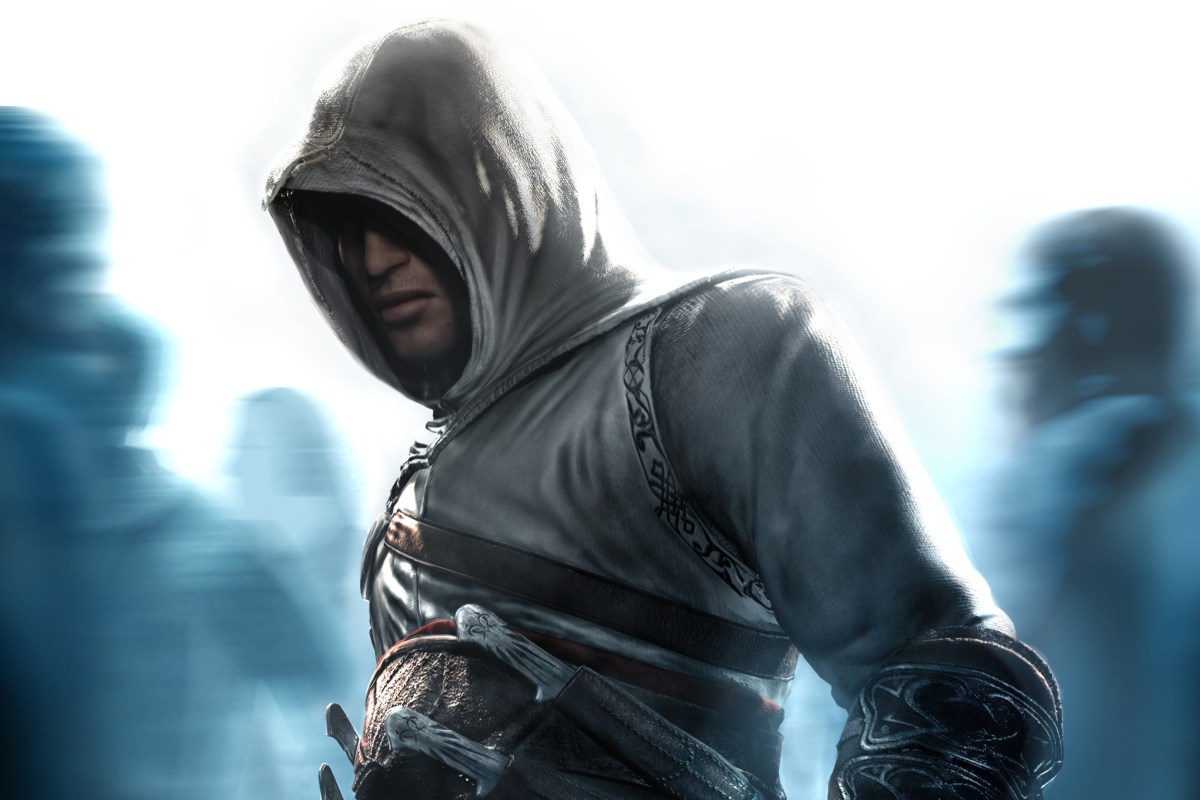
He started a franchise, was a standout for the start of the seventh generation, and defined an entire series…yet he’s only appeared in one game.
Over a decade and half after his first and only major role in video games, Altaïr Ibn-La’Ahad is still referenced and idolised in the Assassin’s Creed series.
Yet as I mentioned above, he only got one major game to himself, with only short extra chapters in Assassin’s Creed: Revelations tying him in with the more famous Assassin, Ezio Auditore.
So who is this man? How did he start this franchise, and does he deserve more accolades for his action? I want to study him.
“Nothing is True. Everything Is Permitted” – What Makes Altaïr a Great Character
As with any character study, there are points of contention that must be addressed. Firstly, the game is not just about Altaïr during the Third Crusade in 1191, but about his descendant Desmond Miles in the modern day.
Not all memories available to the player (and Desmond) flow in a sequential order. At many points the Animus, the machine Desmond is using to relive his ancestor’s memories, skips forward to a more recent one.
For the most part the skip ahead is during travel or resting periods at the Assassin Bureau, it is something to keep in mind as it leaves sections of Altaïr’s life out of the picture.
Second, at the start of the game Altaïr loses all of his Assassin abilities and gear, having to earn his rank back over the course of the game. While this is to facilitate the gameplay loop, it is something to keep in mind, no matter how silly it is.
Finally, the Animus adapts speech for Desmond and the player to aid communication. The first AC is set during the Crusades in the Levant, comprising of modern day Syria, Israel, Palestine, Lebanon, and Jordan, meaning that Arabic, English, German, and French would have been spoken.
Not only are translations to be made, but also updating the language from 12th Century to modern day, as the Animus is known to do. Some languages don’t have exact word-for-word translations, so it’s something to keep in mind when thinking of meaning.
But with that out of the way, let’s begin.
The first thing to come to mind when discussing characters is their names. Names can tell us so much about a character from their meaning to their social status to the etymology, it’s quite fascinating.
For example, from Assassin’s Creed Valhalla, the main character, Eivor, last name changes depending on the gender picked by the player, between Varinsson or Varinsdottir, based on Icelandic and Viking tradition.
Altaïr Ibn-La’Ahad, translated from Arabic means, “The Bird, Son of No-One”. Birds are a well-known trope in Assassin’s Creed. “Altaïr” is the name of the brightest star in the Aquila constellation, which means “eagle” in Latin. Despite being Latin, a lot of stars have Arabic names, with one of them being Altaïr.
I believe though that Altaïr is not a given name, but rather a nickname that has been given to him by the Assassins around him. As mentioned in his Revelations database entry, the other Assassins knew of his “sixth sense” and had dubbed it “Eagle Vision”.
It would seem serendipitous that Altaïr’s name literally matches up with the name that his fellow Assassin’s would name it, but I believe the clue to “Altaïr” being a nickname or chosen name can be found in his last name.
“Ibn-La’Ahad”, literally translated as “Son of No-One”. Altaïr’s parents are only briefly mentioned in-game, during his Codex pages. But in the companion book, The Secret Crusade, we learn more about Altaïr’s life before and after the events of the first AC.
His mother, Maud, an English Assassin, died after childbirth, leading Altaïr to be raised solely by his father, but this was short-lived.
***
When Altaïr was only eleven years old, the Saracen leader Salah Al’din laid a siege on the Assassin stronghold of Masyaf. Umar, Altaïr’s father, was sent to deliver a threat stealthily to Salah Al’din, but was spotted and had to kill a nobleman to escape.
Salah Al’din’s uncle, Šihab, was sent to broker peace, demanding the Assassin that killed the nobleman to be executed. Umar agreed and was beheaded in front of the Assassin stronghold, with Altaïr watching on.
While Al Mualim in the first game says that Assassins “do not fear death, they welcome it!” (3:12), it could be still thought that some sort of honour system exists during the time period or location. When Altaïr is stripped of his rank, Al Muslim refers to it as “lost honour” (18:40).
Other instances of honour include when Altaïr flees Masyaf thirty years after liberating it from Al-Mualim. His Assassin rival, Abbas scream after him, “I will have your head for the dishonour you brought upon my family.” (25:00). Altaïr comments later that Abbas feels, “shamed by his family’s legacy.” (26:23)
Even so, if it wasn’t a strict hierarchical honour system, the fact Umar had to kill to escape rather than slip into shadows may have made others think that he wasn’t a gifted Assassin, and had to die to restore his honour.
As one Assassin says to Altaïr in the memory “The Mentor’s Keeper”, “He was a fine man your father. He lived just as he died, with honour.” (0:38).
***
If others made callous remarks about Umar, these jabs would have eventually comes to rest on Altaïr. So with the death of both his parents and trying to escape his disgraced father’s shadow, a name which translates to “Son of No-One” would make sense.
There is another theory however, as according to Altaïr’s Codex Entires found in ACII, his parents weren’t the most caring. He writes in #24,
“Some days I miss my family… Or at least the thought of them. I never knew my parents well, despite them both having lived within these walls. It was our way. Perhaps they were sad, though they showed no sign—it was not allowed.”
So “Son of No-One” could just be a reflection on his parents distance to him, biologically his parents but in no way crossing into social parentage. In the same Codex entry, Altaïr muses,
“Some day I will have a child—such is the way of our Order,” which also makes it sound as if there used to be no real love or companionship when deciding to become a parent, just having a child so they too can be inducted into the Order.
This is further compounded by Altaïr in AC: Revelations, when Al Mualim compares his excellent skills to his father, Altaïr responds, “I did not know him as a father…he was an Assassin above all.” (9:32).
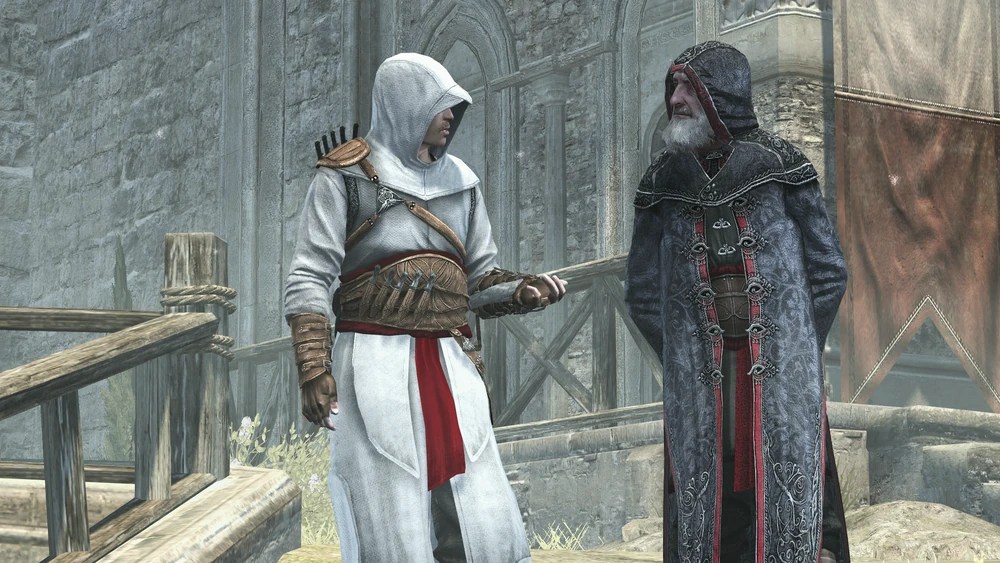
Just before his death, Umar calls out to Al Mualim to take guard over Altaïr and induct him into the Brotherhood. Al Mualim accepts and guides Altaïr into adulthood and it is hinted that Altaïr sees Al Mualim as the father figure that is always there for him when he needed him most.
Indeed, twice in his Codex from ACII, Altaïr refers to Al Mualim as his “father”(#24) or “like a father” (#1).
It’s a hope of a father figure, but even at a young age knowing the boundaries of the Order does not allow anything, leading to a coldness later on.
Even when Al Mualim asks if Altaïr regrest living as an Assassin, Altaïr shrugs it off saying, “How can I regret the only life I’ve ever known?” (9:40). He response is nonchalant, not bitter at a possible other life, resigned that his skills are suited to being an Assassin.
***
Altaïr grows into a gifted fighter and Assassin, the youngest person in the Order to reach the rank of Master, and proves himself worthy time and time again to wear the hood and hidden blade.
By the start of the first game though, he is cold, arrogant, and foolish. The earliest memory in-game that we see of Altaïr is “The Mentor’s Keeper” (set in 1189, two years before the start of the first AC) where he directs other Assassin’s to drive the Templars back and saves Al Mualim’s life.
However, during his talk with Al Mualim after the siege, Altaïr doesn’t strike me as arrogant or aloof. When directing the other Assassins, sure he is brash, but not the “my way is better” approach in the original AC. What changed?
Answers can be found in the Nintendo DS game, Altaïr’s Chronicles. Set a year before the original game, Altaïr is sent by Al-Mualim to retrieve another fabled artifact, this one called The Chalice, before the Templars reach it first.
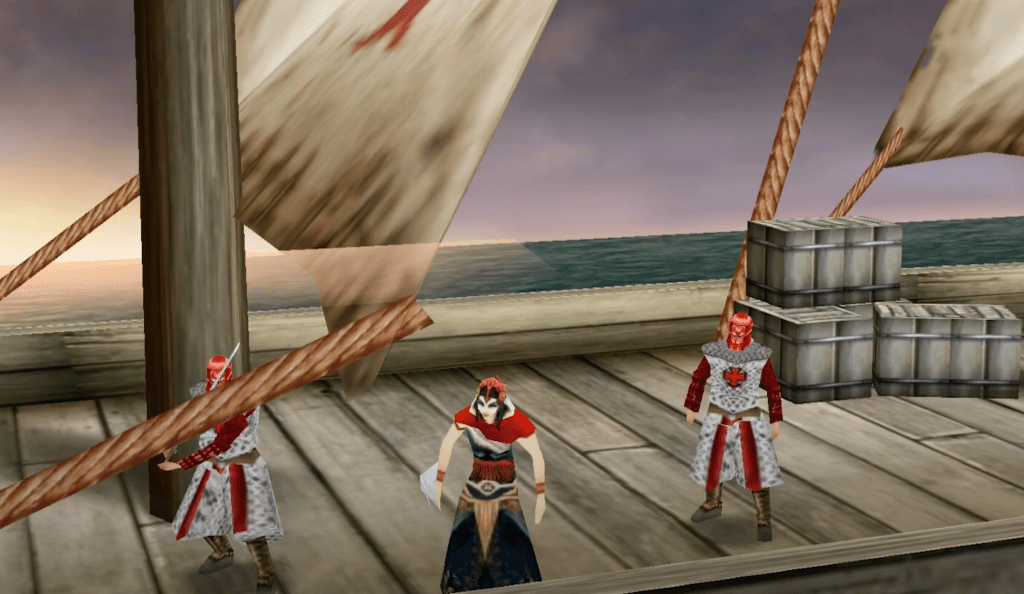
Altaïr’s investigation leads him to find that the Chalice is not an object, but in fact a woman called Adha. After freeing her from the Templars and escaping together, the two fell in love and planned to run away together. Altaïr even assassinated an Assassin spy to safeguard their flight, even though he knew it would mean being outcast by the brotherhood.
This did not go to plan however. Adha was once again captured by the Templars and taken aboard a ship, sailing away from Altaïr even as he called out to her that he would find her. He pursued the Templars across the sea, but Adha was executed not long afterwards.
As mentioned in #7 his Codex in ACII, Altaïr writes;
“I had thought Adha would be the one to lead me to rest, that I might lay down my blade and live as a normal man. But now I know such dreams are best left to sleep…
…I hunted each man—one by one—until all responsible were gone from the world. But there was joy in this. No satisfaction or release. Their deaths did not bring her back. Did not heal my wounds. After that I was certain I would never again feel for a woman as I had for her.”
***
Up until meeting Adha, Altaïr would have been the model Assassin student, but on encountering love and romance for the first time, his resolve in the Creed fails. He finds it limits him, denying him a true and powerful feeling.
Coupled with the knowledge of his parents’ relationship, he obviously believed that being in love and being an Assassin are antithetical.
So at the sight of a new and exciting life ahead that was snatched away, you can see Altaïr becoming disillusioned with the Creed, leading him to break all the tenets during the raid on Solomon’s Temple. It’s not a rebellion in an edgy “I-don’t-play-by-the-rules” way, but cynicism and almost a nihilistic approach to life.
And so after fleeing Solomon’s Temple, Altaïr head back to Masyaf and inadvertently leads the Templars straight to the gates. Despite this, Altaïr is one of the Assassins tasked with trapping the Templars after performing a Leap of Faith.
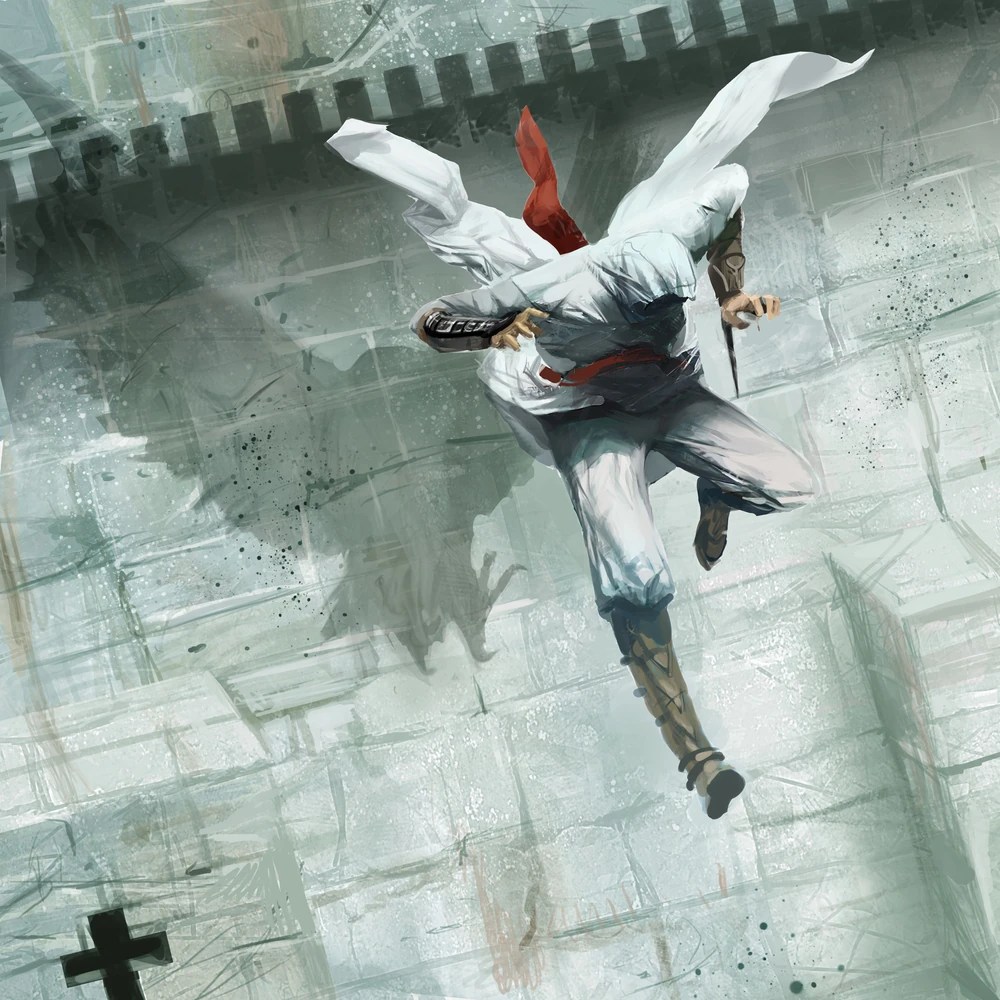
Just as a sidenote, it’s interesting that Altaïr is placed almost in the same way as his father was twenty years previously. Both lead a foreign army to their door and both symbolically die to drive the forces back, the only difference being Altaïr physically survives his ‘fall from grace’.
After stopping the Templars, Altaïr is sentenced to death and Al Mualim stabs him with a dagger, only later to be revelled as a ruse to warn other wayward Assassins. Again, it’s another marker of Altaïr being symbolically cutting him off from his old life, allowing him to be reborn, with Al Muslim literally saying, “…you slept the sleep of the dead, of the womb.” (6:24).
And it really does seem like this wakes Altaïr from his nihilism. Reduced to a novice rank and given a list of nine targets across the Holy Land, Altaïr throws himself into his assignment, systematically taking down those that profit from the war without a hint of the arrogance or nihilism of before.
However, in being ‘reborn’, it is almost as if this has washed away the mental supports of the Creed, leaving a belief system that only needs a few choice pressures to fall apart, but also freed Altaïr from its confines as well.
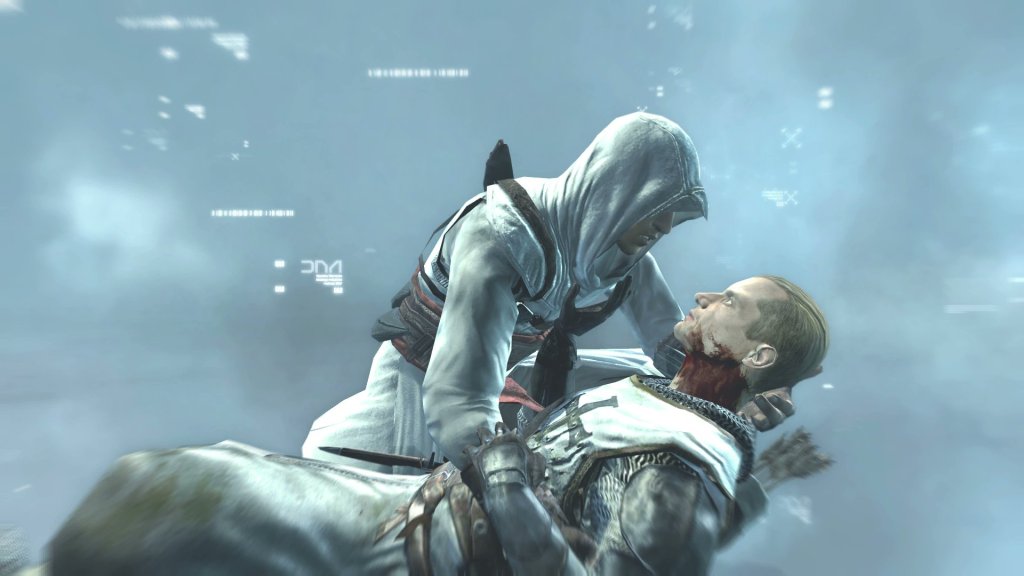
After every assassination, Altaïr extracts a last confession from his targets. And while they try and moralise their work to Altaïr, they also begin to sow the seeds of doubt within his mind. About why these particular men and their intentions, so much that Altaïr begins to ask Al Mualim about it.
***
“I am fortunate to have been wrong.”
Despite these invasive thoughts, Altaïr does seem to develop as a character, and it can be seen in the confessions. At the start of nearly every assassination Altaïr tells the target to be at peace, laying them down and letting them slip without judgement into the void.
In “The Mentor’s Keeper” he relfected with Al Mulaim that, “No man should pass from this world without knowing some kindess.” (9:07), and he seems to have found it within himself again.
With Abul Nu’qoud, scarred and deformed, and who killed other nobles for their cruel mockery of him, Altaïr says, “Be at peace now. Their words can no longer do harm.”
When talking with Sibrand, Altaïr tries to connect on a spiritual level during the dialogue;
Sibrand: Please, don't do this.Altaïr: You are afraid.Sibrand: Of course I am afraid! Altaïr: But you'll be safe now. Held in the arms of your God.When speaking with Majd Addin, Altaïr finally seems to have developed a conscience, reflecting on his former viewpoint;
Addin: I killed because I could, because it was fun! Do you know what it feels like, to determine another man's fate? And did you see the way the people cheered? The way they feared me? I was like a God! You'd have done the same if you could. Such power!Altaïr: Once perhaps. But then I learned what becomes of those who lift themselves above others.And when Altaïr learns of the Templar Grand Master Robert de Sablé’s plan to unite the Holy Land against the Assassins, he argues the case to strike before permission with Bureau Leader Malik.
Malik: Look, Brother. Things have changed. You must return to Masyaf. We cannot act without our Master’s permission. It could compromise the Brotherhood. I thought... I thought you had learned this.Altaïr: Stop hiding behind word, Malik! You wield the Creed and its tenets like some shield. He's keeping things from us, important things!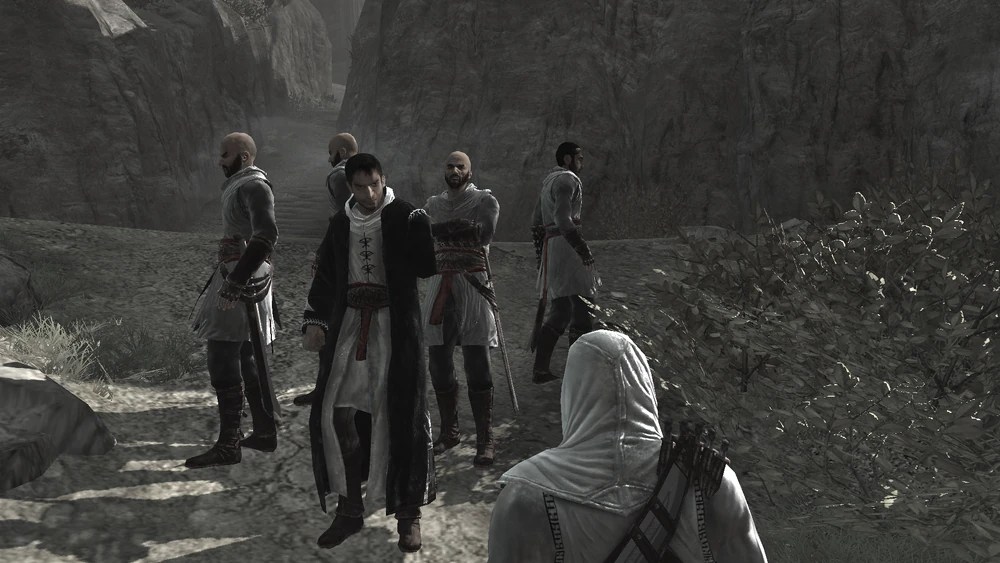
***
Alongside the development of skepticism on Assassin ritual, Altaïr has learned to take a moment with his targets, seeing them not as enemies but as humans, with their own fears and ambitions.
All of this develops into a greater understanding of the world, which then brings Altaïr into direct conflict with Al Mualim.
While the master and student do finally face-off, the downward spiral can be seen throughout their interactions with every Templar Altaïr hunts.
At first Altaïr comes back to Al Mualim with curiosity of the seeds of doubt the Templars sowed, but towards the end he begins to demand answers, confronting Al Mualim for speaking cryptically.
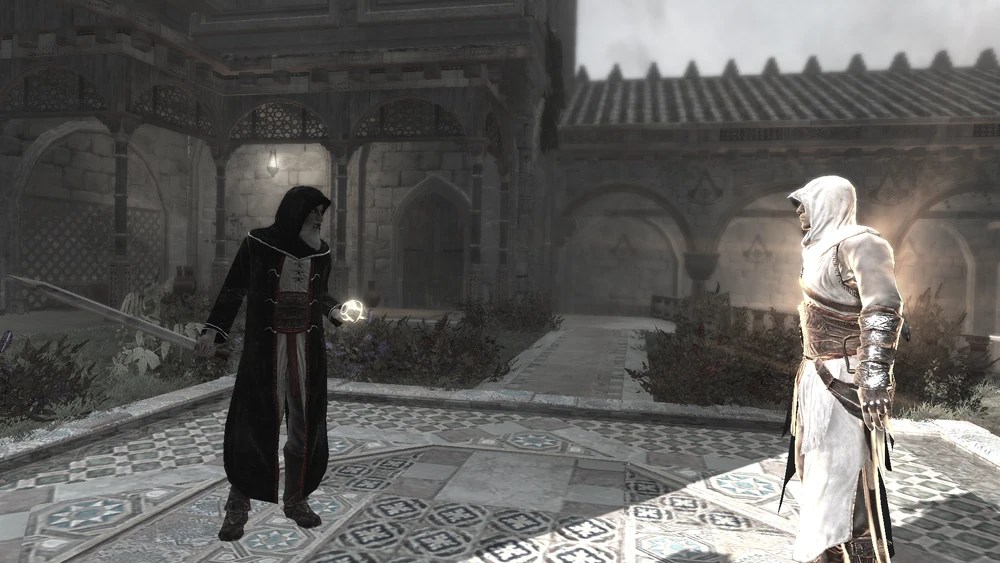
In the end, when the two meet for the last time in the Masyaf Garden, Al Mualim chastises Altaïr, demeaning him for his supposed failures as an Assassin, of being blind to the bigger picture, and falling to emotion rather than logic.
Al Mualim then reveals the Piece of Eden’s power and explains that he tried to force Altaïr to bend to his will, yet couldn’t.
‘Who you are and what you do are twined too tight together. To rob you of one would have deprived me of the other.”
Altaïr strikes back with words every time Al Mulaim tries to lecture him and I believe this is how he eventually bests his former Master.
Al Mualim could have easily stabbed Altaïr as he did at the start of the game, but Altaïr goads him into a fight, and Altaïr, now quietly confident in his reaquired abilities, quickly dispatches his teacher.
He fights both with steel and his wits, learning that a closer emotional resonance with the world around him will lead to greater things, and so takes this facet with him from the garden and applies it now that he is Grand Master of the Assassin Order.
***
This development of a greater pastoral care can also be seen in his Codex. First in #4, Altaïr tries to break down the Creed and the Order on a moral level, but every time he thinks he has found justification, there is always one nagging doubt at the back of his head that they cause more chaos than peace.
Later on in #14, Altaïr resolves himself that they must continue to do violence, but only when the time is right. He views domestic abuse and children sold in war and slavery and writes;
“…On these days, I do not think that dialogue will make a difference. On these days, I can think only of how the perpetrators need to die.”
And in #6, Altaïr resolves to remake the Order, abandoning the rituals but not the Creed, seeking ways previously thought unwise, and in his own words, “We will be born anew…”
In #27 he realises that the Order is growing, and to teach those that seek understanding. He writes;
“More make their way to our fortresses every day…Each tells a similar story—of having discovered the first part of our creed: that nothing is true.
Too often, though, the revelation undoes them. They lose their morality, certainty, security. Many are driven mad. We must guide them. Help them heal.”
It is a development of mellowing and maturing with age, very similar to Ezio in Revelations compared to Brotherhood.
And while some of it comes from Altaïr’s self-discovery over the course of the first game, I believe two people helped him on this course.
One was Malik, the previously mentioned Bureau Leader in Jerusalem. Malik and his brother Kadar were alongside Altaïr in Solomon’s Temple. During the ensuing battle Malik lost an arm and Kadar was killed, leading Malik to foster a grudge against Altaïr.
As Altaïr rises through the ranks again during the story, the connection between him and Malik softens. Malik helps Altaïr infiltrate Masyaf to assassinate Al Mualim, and becomes Altaïr’s right-hand-man as Mentor, and is mentioned many times in the Codex.
The other person that helps Altaïr develop his inner self is the “templar Tomboy” Maria Thorpe. Their first interaction lasts no more than a minute, yet it sends ripples throughout Altaïr’s life and the Order of Assassins.
***
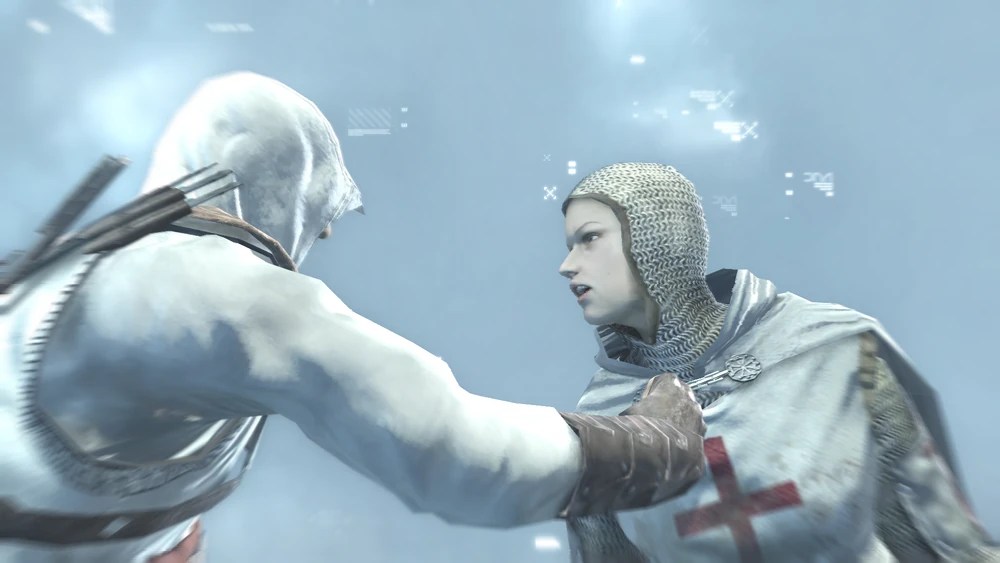
The pair meet when Altaïr is sent to kill the Templar Grand Master Robert de Sablé, who is attending a funeral for the Saracen Regent Majid Addin (a nice connection between a previous target).
When Altaïr finally defeats Robert, the Assassin demands to see the latter’s face before striking the killer blow but he is shocked to see a woman underneath the helmet. Maria taunts him and explains Robert’s plan to unite the Holy Land, before Altaïr lets her go.
Maria is confused at this, she thought he would take her life as he had done to the last eight targets. He says she was never a target, so she is allowed to go.
It’s a long way from Altaïr at the beginning of the game, killing an innocent without a second thought, or even Altaïr during his Hunt for the Nine, who would kill any street preacher that he interrogated.
The two meet not long after though, in the PlayStation Portable game, Altaïr’s Chronicles. Set one month after the main game, the Templars have been weakened after Altaïr’s assassinations and flee Acre. They leave to Cyprus, so Altaïr follows them to eradicate them and uncover the Templar Archive rumoured to exist on the island.
Maria is with the Templars at the start, but without Robert vouching for her, she is now at their mercy. She is not trusted, thought to be a trickster and harlot, with the new Templar Grand Master saying that, “…it is through women that the Devil weaves his strongest web.”
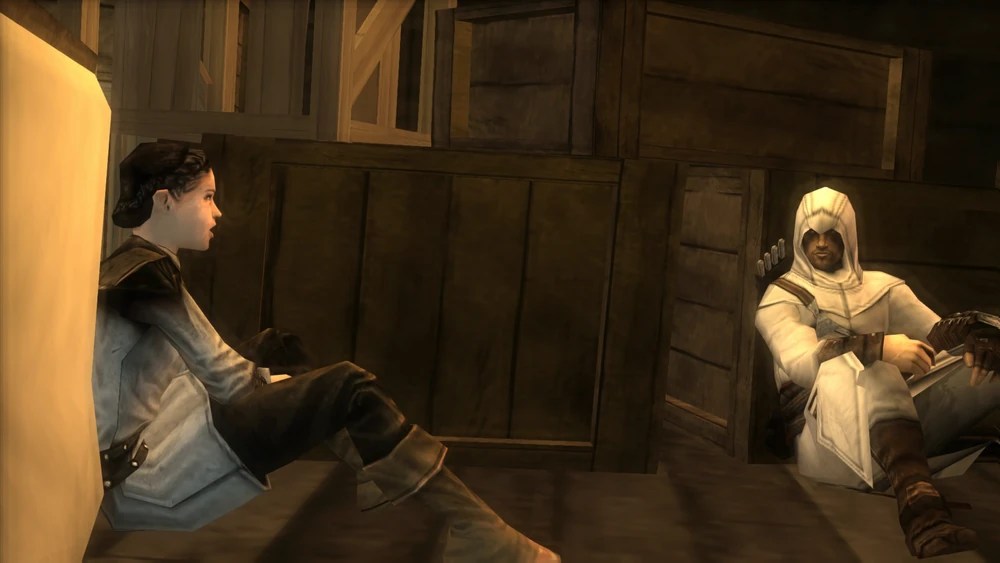
As the Templars begin to turn on Maria, Altaïr repeatedly rescues her. And over time, Maria slowly warms to him as they make and break alliances against the Templars.
***
During their first conversation in Altaïr’s Chronicles, Maria remarks, “the man who spared my neck but ruined my life”. It could be a sense of honour that binds Maria to not strike back against Altaïr, despite many chances to do so, instead fleeing each time.
Maria tries to make it back into the Templar’s favour, but when she Altaïr discusses the philosophy of the Assassins and Templars, Maria starts to become disillusioned.
When she confronts the twin ruling Templars of Kyrenia, Shalim and Shahar about their oppressive methods, she asks;
Maria: But our Order was created to protect the people, not rob them of their liberty.Shahar: The Templars put no stock in liberty, Maria. We seek order, nothing more.Maria: Liberty? Or enslavement?Shahar: You can call it whatever you like, my dear.Shahar went to subdue Maria, but Altaïr rescued her again, and she dispatched two of Altaïr’s pursuers before fleeing again. This was the turning point for the duo, as Maria now began to actively fight against the Templars, with and without Altaïr.
Once the duo had defeated the Templars upon Cyprus and buried the Archive, the two reflect with each other on the docks, preparing to leave the island.
Maria says, “Everything I worked for in the Holy Land, I no longer want. And everything I have up to join the Templars…I wonder where all that went, and if I should try to find it again.”
It’s the same revelations that the people coming to the Masyaf fortress discovered, the first line of the creed, that “nothing is true.”
Altaïr bonds with Maria, telling her that;
“For a long time under Al Mualim, I thought my life had reached its limit, and that my sole duty was to show others the same precipice I had discovered.”
Altaïr asks what she will do now, and Maria says she wants to travel, possibly to the East. She returns the question and Altaïr ponders while looking at the Apple of Eden. He too wants to travel to satiate his newly developed curiosity.
And when Maria asks where he wants to go first, Altaïr thinks for a second before saying, “East”. As the final cutscene plays with Altaïr writing in his journal, Maria moves close to his shoulder, reading over his notes.
It’s such a tiny detail, one word and a closeness that wasn’t there before, but it implies the start of a romance. And in the Codex page relating to the story of his love for Adha, Altaïr finishes writing;
“After [Adha’s death] I was certain I would never again feel for a woman as I had for her. I am fortunate to have been wrong.”
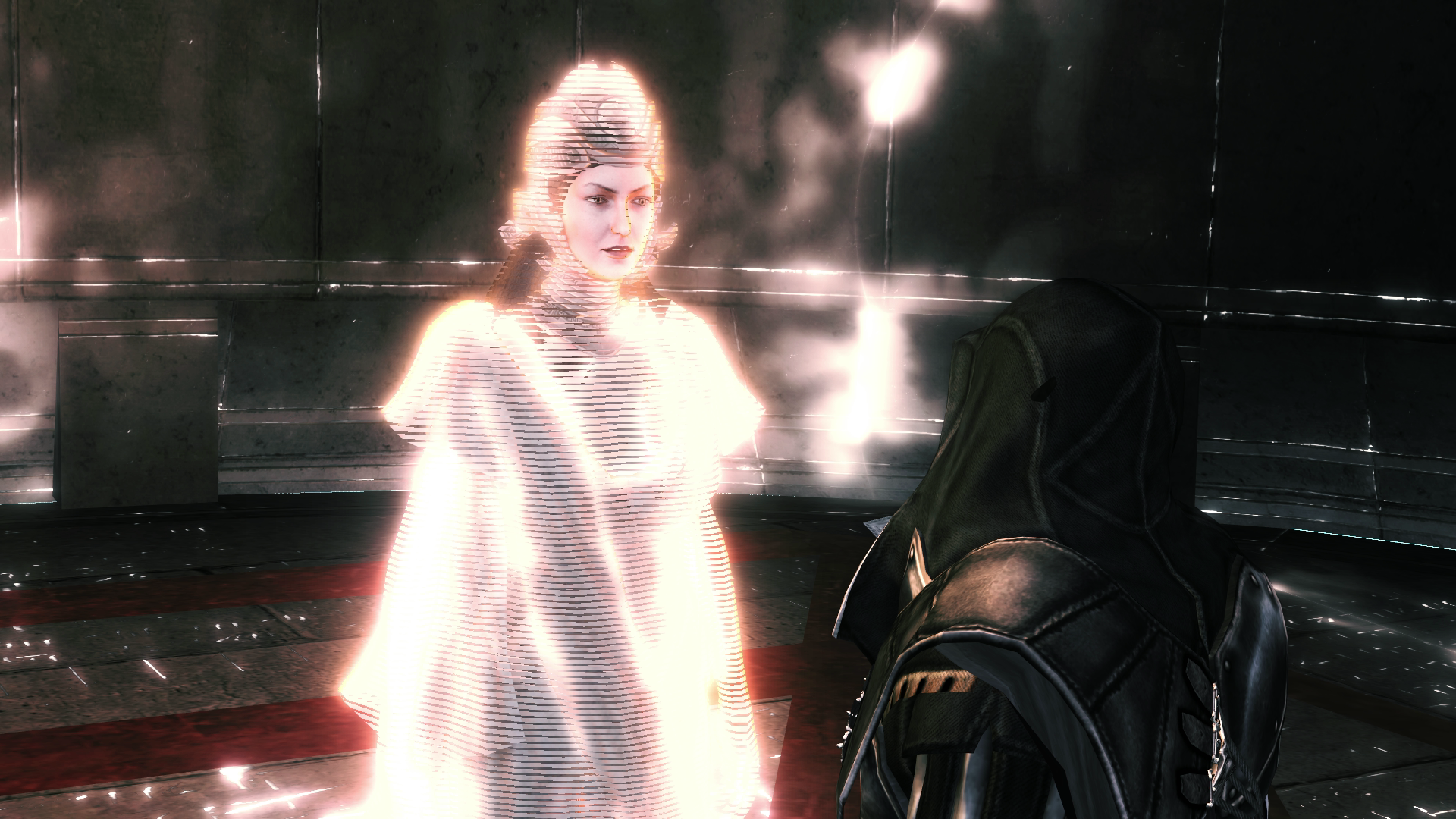
Again, it’s a small touch, both his previous mentions of Adha and not even mentioning Maria by name. Maria doesn’t even get named until ACII, by Desmond when he experiences the Bleeding Effect outside the Animus.
Speaking of, the vision Desmond has is the first indication of Maria and Altaïr together in the main games.
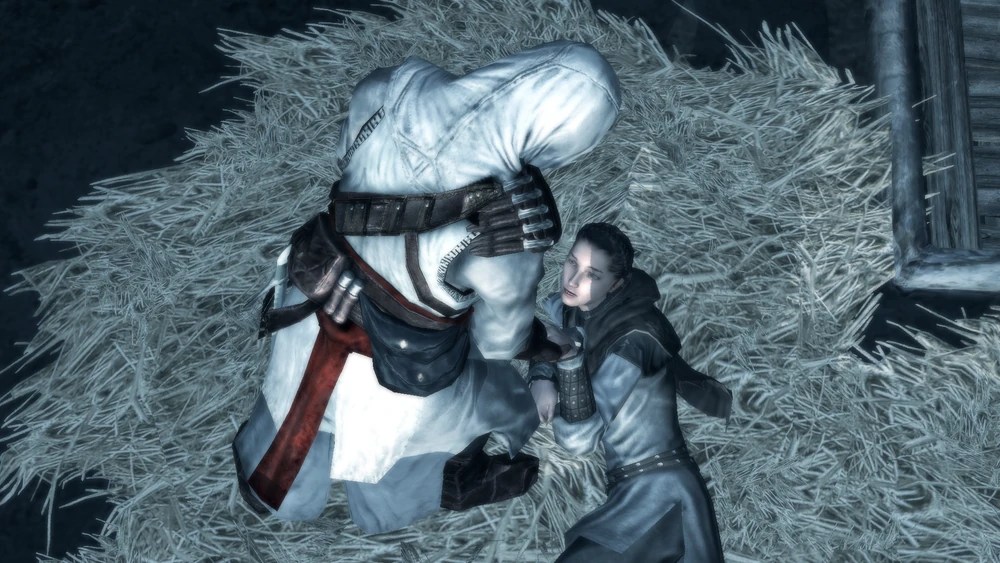
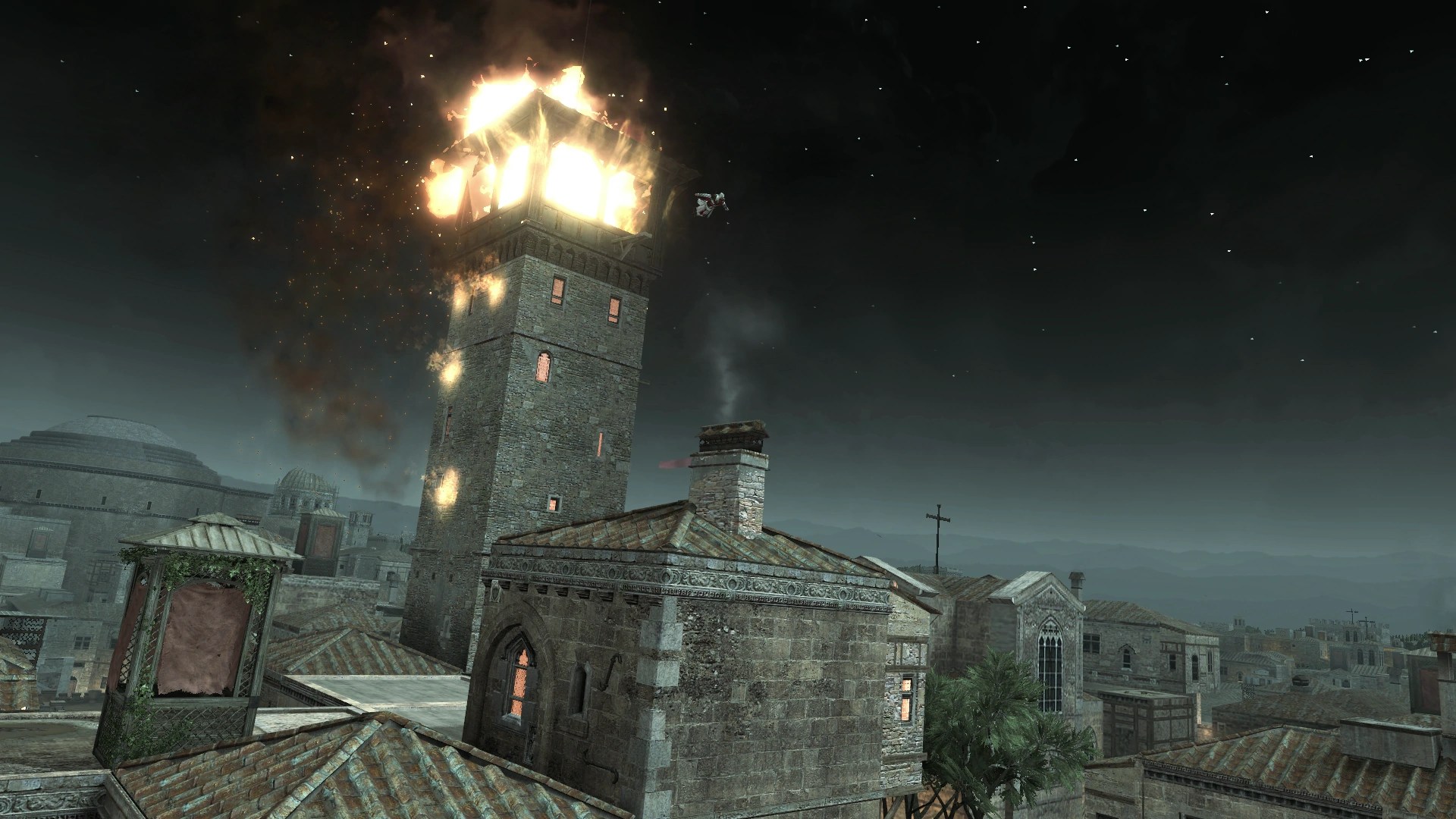
The vision starts with Altair chasing after a hooded “target” across the rooftops of Acre. Only when the target is cornered at the top of a tower that she pulls down her hood, revealing her face, and beckoning Altaïr towards her. It hints at a playfulness that has developed between the two, followed by a night of passionate lovemaking beneath the stars.
***
In the novelisation The Secret Crusade, the narrator Niccolò Polo says to his brother,
“This [time with Maria] represented a mainly peaceful and fruitful period for the Master. He talks of it little, as though it is too precious to bring out into the light.”
It could be read as a continuation of Altaïr’s parents, something which isn’t discussed or important to the Order, something to be held inside. It could also be Maria’s background. Being the first Templar to switch sides to the Assassins, a lot of the Order would have held her in suspicion.
But Maria proves herself, helping Altaïr and their two sons Darim and Sef in learning the ways of the Assassins, aiding Darim in his assassination of Genghis Khan, mentioned in #29 of Altaïr’s Codex.
However, tragedy strikes when they arrive back to Masyaf after the family’s time working in the field. When Altaïr and Maria come back through the gates, they find Abbas, another Assassin Master having taken over the Order, killing Malik and Altaïr’s son Sef.
Abbas wants the Apple and sends the other Assassin’s to take it, but in the struggle Maria is killed and Altaïr has to flee for his life. In the novelisation of the events, Altaïr leaps once again from the platform that allowed him to defeat Robert, another “fall from grace”.
We do not see or hear of Altaïr for another twenty years. Nothing has been even speculated as to what he has been doing, only that he returns to Masyaf first to talk with Abbas, and leading a full-on revolt as more Assassin’s join his side.
There are whispers in the village of an old man saving a merchant in the next valley over, and using a hidden blade. Even at over 80 years old, Altaïr is still protecting the innocent, but in the novelisation, he is almost killed, his age slowly his reflexes. At first I thought this was a relapse of his nihilism drawn from losing his lover again, but its actually Maria’s memory that keeps him going.
Before Altaïr fled Masyaf, Maria tells him, “Resist your desire for revenge…speak truth and they will see their error…speak reasonably, and reasonable men will listen.” As they continue into the Masyaf Garden, Altaïr says they may be walking to their doom, and Maria replies. “We may. But we walk together.”
When Altaïr returns it is this message that emboldens him, to fight the honourable fight and if it is his time to die then he will face it.
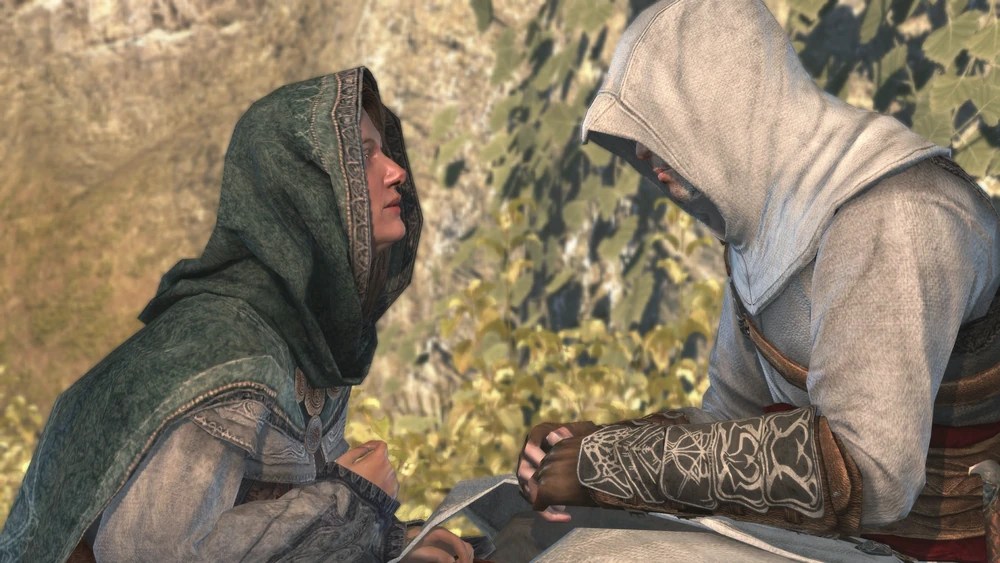
As the Assassins turn to his side and face off against their former brothers, Altaïr shows that pastoral care that he developed when he took over as Mentor. He says only those that have, “…raised their blade against an innocent,” should die for they have comprised the Order and the creed.
When fighting against Abbas’ minions, he orders the Assassins to, “…spill no blood if [they] can help it,” calling back to Maria’s final words to him.
***
Once he frees Masyaf from Abbas’ grip, Altaïr disbands the entire Order in its current form. He sends the townspeople away and empties the castle. Ezio remarks when he visit the castle with Sofia Sartor, “[Altaïr] built us up, then set us free. He saw the folly of keeping a castle like this. It had become a symbol of arrogance and a beacon for all our enemies.”
Altaïr alone stays in Masyaf with the Apple. As opposed to Ezio who earned comfort in leaving the Piece of Eden, Altaïr still yearns to seek truth even in his dying days.
He says to his son Darim, “When I was very young, I was foolish enough to believe that our Creed would bring an end to all these conflicts. If only I had possessed the humility to say to myself, I have seen enough for one life. I have done my part. Then again, there is no greater glory than fighting to find truth.” (36:23).
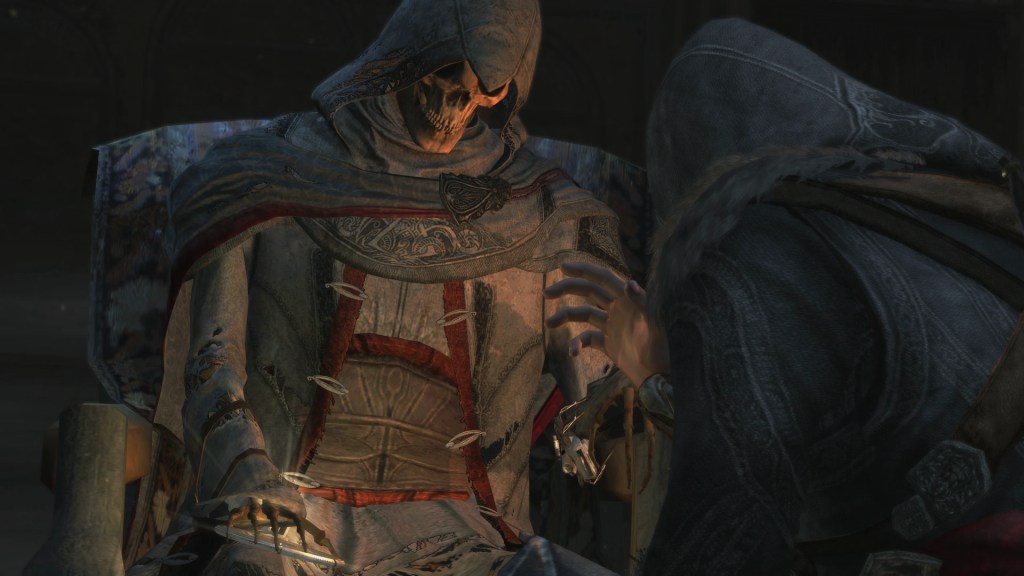
In his final Codex entry, Altaïr ponders about what will happen to him once he dies, what of his consciousness and identity. He thinks back on his time with the Apple and there was no greater force stopping him from abusing its power. He is even tempted to look back into it to see if there is some way to extend his time on Earth.
These two sections are a perfect distillation of Altaïr’s entire persona; a life of contradictions and internal struggle, a journey of finding the secrets of the world, yet conflicted by his connection to the Order and his life.
And so he looks one last time into the Apple, before heading to his library vault, cleared out of all his possessions. He douses the fire in the brackets, and hears Maria’s voice calling out to him, telling him to abandon the Apple, and him regretting not listening to her. (38:25).
A man once known for his cold and calculating air, with his final thoughts, remembering those he loved, a departure from the Creed he grew up with.
Conclusion
It’s been interesting to look back on Altaïr, especially for the shadow he has cast long after his one game.
I think he got forgotten quite quickly due to his follow-up, Ezio (who I’ve also written a character study about).
And I get it. Ezio is a lot of players’ entry point to the series. He’s fun, he’s cool, his story is better. There were a few nods to Altaïr in ACII but they could be brushed aside if you hadn’t played it.
I remember at the time of Revelations that there was a sense of fatigue in the air surrounding the game. It was another Ezio game, another Desmond game…and then also partly an Altaïr game.
I think he got lost again, a call back to something players had already forgotten about too, with the audience ready for Edward to sweep them off their feet again like Ezio had done at the beginning of his trilogy.
Yet I feel Altaïr has made his way back into the pantheon. His outfit has been an unlock able in Unity, Syndicate, Origins and Mirage. There have even been talks about a remake of the first game.
And while Ezio may have the accolades and the high praise, it doesn’t take away the fact that an entire franchise started around this quiet and unassuming man in a white hood.
Altaïr is still one of the prominent figures of Assassin’s Creed, influencing countless others along the way, and that’s why he deserves to be remembered.
Banner Photo Source: alphacoders.com

 TOM CLEMENT | GAME PRODUCER | NARRATIVE DESIGNER