Learning German with Assassin’s Creed: Valhalla

I have been on-and-off learning German for five years now.

Through online classes, a dash of Duolingo, and general world-exposure, I am able to get by in most situations and conversations, only struggling with speed and specialised words.

General linguistic wisdom tells a student to immersive themselves in a language, such as reading books and watching films and TV in the target language. But as gaming fought with TV time, I decided I was should start playing games in German to increase my vocabulary.

While I had pondered whether to play a game I knew the dialogue of for a fun challenge, I also had a behemoth of a game on my “to-play” pile, and decided to go for that.

The first game I would play in German would be Assassin’s Creed: Valhalla.

So, let me have an indulgence as I write about my time in Viking England, with a German valkyrie as my avatar guide (because who plays Valhalla as male Eivor? Female Eivor forever!)

“Ich bin Eivor vom Raben-Clan!” – Learning German With Assassin’s Creed: Valhalla

I have written before about the use of other languages in games, even using Assassin’s Creed as an example.

When I had played AC: Unity and Liberation, I set the language for both to French, as Unity is set in Paris and Liberation in colonial-era New Orleans. However, these switches were for immersion rather than to learn, but they had started an interest in me to search for language settings in games.

And actually, Ubisoft, creators of Assassin’s Creed, have a great track record for doing languages in games. So many games, even AAA ones, don’t make a distinction between language audio, subtitles, and game text.

You may want a different language for dialogue, but keep the text and subtitles in another, and most games won’t let you. It’s a luxury in development time and extra tech logic to separate them. But Ubisoft separates the individual components, so players can customise how they would like.
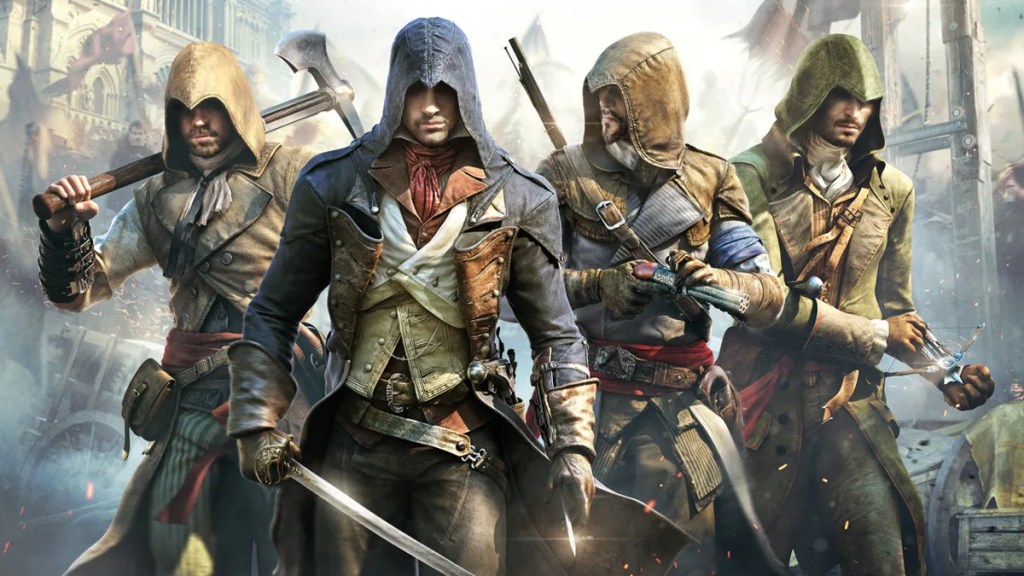
AC: Unity was one of the first games I changed the language, making Paris much more immersive (Source: ign.com).

***

One of the main reasons I chose AC: Valhalla for my start in German is for the story. Not the narrative per se, but the nuts-and-bolts dialogue and missions.

If I had played something like Call of Duty in German, I might learn the words for “missile”, “tango” and “terrorist”. Interesting for sure, but not words I would be able to use every day.

A big part of Valhalla is the role-playing aspect, dialogue trees and quest-based design. It would give ample opportunities and for every day words to be used in-game.

So whenever I would play, I would sit down with my pen and paper and when I would hear a word that I could use, I would note the English from the subtitle and write down a phonetic sound-by-sound version of the word..

After playing I would go through and edit my notes to be the correct spelling or straighten up any mis-aligned phonetics.When I started, my focus was on singular words, meaning I could easily match subtitle to phonetic something like “sofort”, meaning “exactly”. I eventually graduated to full sentences and questions.

And after marauding across the English hills for many hours, I had an eye-opening moment. I heard Eivor ask, “Habe ich eine Wahl?” (“Do I have a choice?”) and I could understand each and every word without even glancing at the subtitles.

It was a true light-bulb moment, of words I had learned through classes, exposure, or TV, and my brain made the snap translation almost immediately.
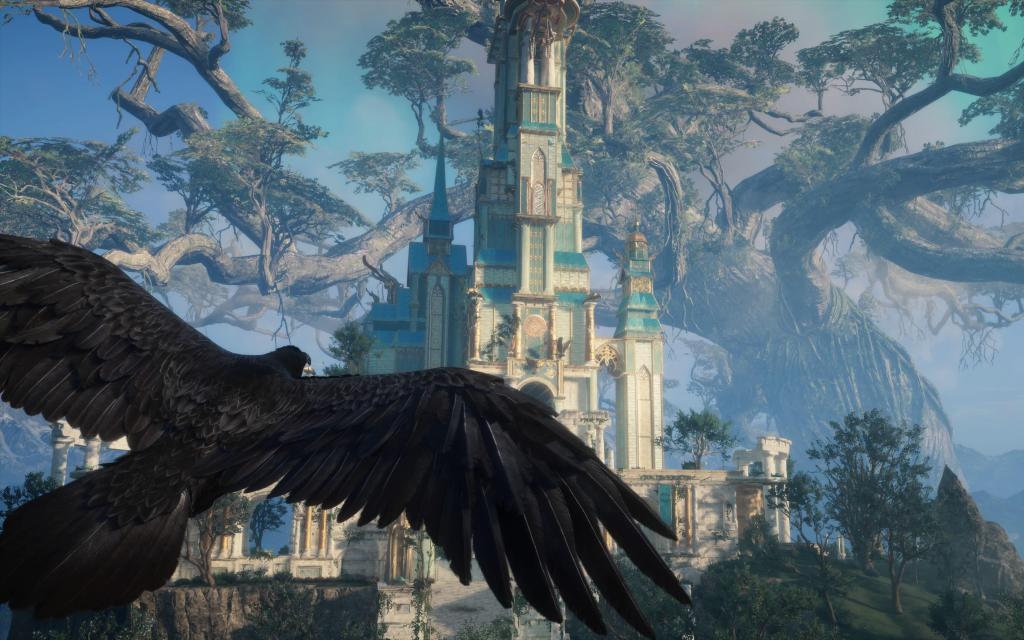
“Was siehst du, Synin?” – Eivor’s pet raven, and one of my first noted phrases (Source: reddit.com).

***

Something that I learnt about while playing was German dubbing culture in film, TV, and games.

While a lot of films and TV made in the US or UK are shown in Germany and Europe as a whole, that can be two different ways it is presented.

First is showing the original, but with subtitles (this is how a lot of non-English speakers learn English, and why sometimes they come away with specific accents because of a show they watched).

The second is dubbing, where certain dub actors are attached to one or two actors. For example, Maria Koschny, female Eivor’s German dub, also dubs for Jennifer Lawrence, and does all the films that Jennifer Lawrence has starred in.

Being dub specialists, these voice actors are usually brought in for games and anime dubbing, even if their original voice actor is not present. This led to a great moment where my partner, in earshot of me playing, asked “Why is Julia Roberts playing a Viking princess?”
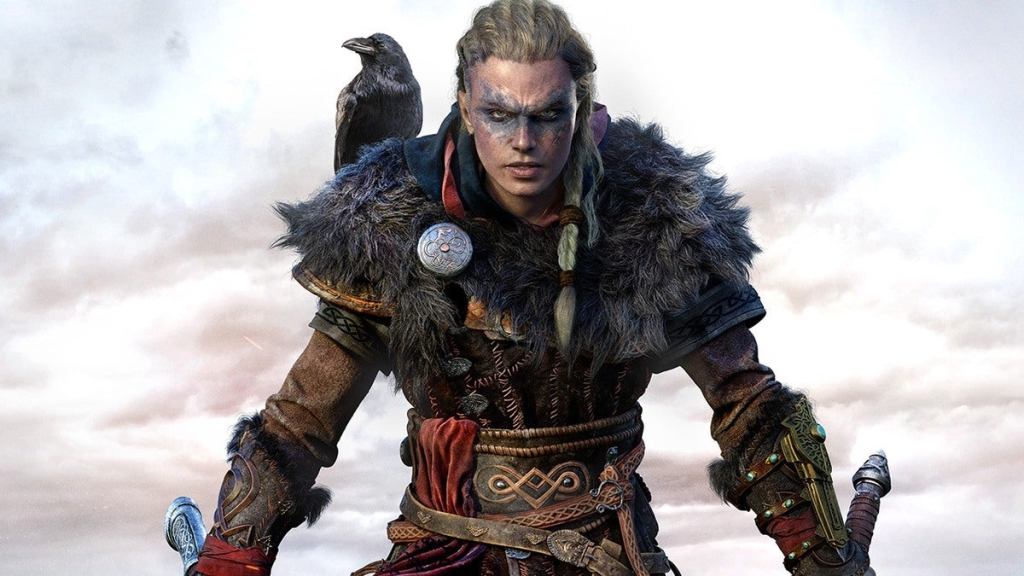
I have to praise Maria Koschny’s excellent performance, whose voice I now solely associate with Eivor (Source: ign.com).

***

One of the great things about such a deep narrative game as Valhalla is it’s interpersonal connections. Eivor has several deep discussions with allies, enemies, and everyone in-between.

Valhalla has a sprawling 300+ hours of content with main story missions, as well as a variety of in-world encounters and side-quests.

The people that Eivor encounters in each mission life to talk about a whole range of topics such as life, history, politics, and philosophy, mainly advancing character development rather than advancing a plot point.

It was here where I found the most advantageous words and phrases, rehearsed their sounds and how to use them in a sentence, and then brought them out into the world.

And still, when I think of those specific words, my memory returns to those exact moments in the game. Eivor walking through a night-time market, celebrating with friends after a successful siege, arguing with ice giants in Jotenheim, and returning relics to the Saxon king Alfred.

When the end credits came, I was a little emotional. Not only for the countless hours and months I put into the story, but also something deeper. A learning experience, personalised to not feel like memorisation of key words. And so I will continue to change languages where I can and adding to my word list.

But AC: Valhalla has a soft spot in my heart, for being the first and being a great introduction to learning through play.

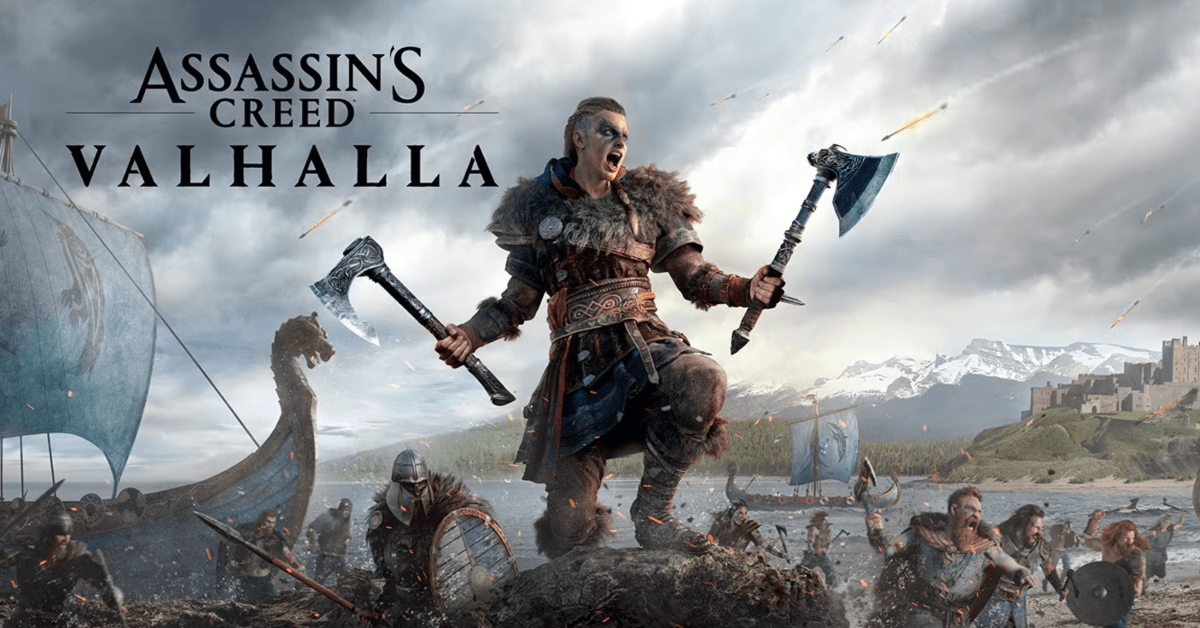
Photo Banner Source: gamerant.com

Thoughts on the Assassin’s Creed Film/Trailer

The first teaser trailer for the Assassins Creed film came out last night morning and as both a connoisseur of film and a fan of the games (up until Assassins Creed III, because that’s when it went too far into stupid territory) I thought I would give my thoughts on the trailer and then general ideas about the film and casting.

First, roll call of the men and women involved in bringing Assassins Creed to the cinema. Kurzel, Fassbender, Cotiallard, Kurzel (again?), Arkapaw and finally Kyd. To most people, they are just a load of names, so let’s break it down.

  1. Justin Kurzel. The director of Assassins Creed. Director of 2015’s Macbeth (prepare to see that film pop up a lot in the following paragraph) my number one film of 2015.
  2. Michael Fassbender. The main star. To see his best work, I recommend Hunger, Shame (if you’re feeling up for it) and 12 Years A Slave (all by Steve McQueen). Also Macbeth.
  3. Marion Cotillard. The first female role in the trailer. To see more of her work, look for the Edith Piaf musical biopic La Vie En Rose or if that ain’t your thing watch her work in Public Enemies. Also Macbeth.
  4. Jed Kurzel. The composer. Brother to director Justin. His best work includes Kodi Smit-Pchee and Fassbender’s Slow West last year. Also Macbeth.
  5. Adam Arkapaw. The cinematographer (aka the guy who makes the film look like it does). Responsible for the camera work in season one of True Detective and THAT six-minute long take (WARNING: Contains strong language and violence). Also Macbeth.
  6. Jesper Kyd. The other composer (although for Assassins Creed he’s in the “music department”). Composer of the AC games from the first through to Revelations and the superb Hitman game scores. Sadly no ties to Macbeth.

I could stop writing there. Six names. Damn good pedigree and an exciting intellectual property. Let’s look at the trailer.

Done? Okay. Let’s talk.

The Assassins Creed trailer is how you do a trailer. Oh yeah, there are problems with it, but what a trailer should do is tell you the story, not the plot. To see of a film that does the reverse, look at the trailer for The Double. It gave away its twist long before it was ever in theatres. What does Assassins Creed do? We learn about the Animus, Michael Fassbender’s double lead role, his abilities as an Assassin and our setting, but what have we learnt about the plot? Nothing.

The trailer is giving us the nice blend of the things that made Assassins Creed the series it now is. Hack-and-slash combat, free-running across exotic rooftops, a brooding misery-guts under the hood and some bonkers modern day stuff involving sinister corporations. It’s got the iconography down; the eagle, the colourful rooftop base-jumping (Spain here is represented by Malta), the mantras of the Assassins and the signature Leap of Faith at the end. According to Fassbender, that move is a real guy and a real stunt, “We’ve got [stuntman] Damien Walters doing a 120-foot leap of faith, without any rope, into a bag.” If the rest of the parkour-infused set pieces are practical as well then this will definitely be one to watch just for the stunts alone. Malta is also a good choice of location/filming. While big films like Captain Phillips and World War Z were filmed there, no film has shown off the architecture of the small island or it’s capital Valetta.

From the clips, the film looks great. Arkapaw is earning his name as one of the greatest cinematographers alive today with the compositions. The fights look to be wide-angle shots with good choreography, so hopefully the rest of the film doesn’t mirror something akin to the fights in Quantum of Solace. There will obviously be handheld camerawork for some fights (ever since Paul Greengrass popularised it in The Bourne Supremacy it will feature in every film with a fight scene) but hopefully most will keep their distance from the actors.

mW2eyqtp4TmayXxSRPTSCL-970-80
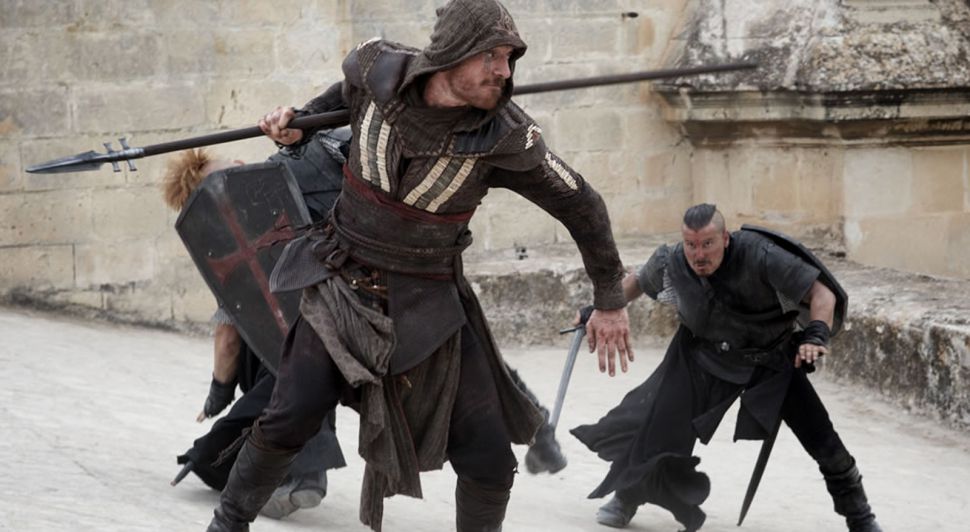
Still from the trailer showing Fassbender in combat. Source: Games Radar.

The Animus was a sticking point for me. To any who don’t know, the Animus is a machine that when you are plugged in, you can jump back into the memories of your ancestors (Michael Fassbender will be playing two roles, one as Callum Lynch in the present and Aguilar the Assassin during the 1500s.) I thought this might throw a film audience. Gamers can suspend their disbelief while I think films need a bit more coercing. To anyone a bit confused, think of the Animus as similar to The Matrix. It’s a fake world that you can play around in to your hearts content. It might have been better to drop all present day stuff though. The games tried a similar double narrative and it only served to highlight how bland the present day character was in comparison to his ancestors. Eventually they did drop all pretence about a future-based war and got on with the free-running across European cities, but if the film handles it, again, like The Matrix did in the first film, it might just work.

The film moves away from the storylines of the game, which I think is for the best. The ability of the Animus is that we can have several unconnected films but they are all under the banner of Assassins Creed. I’m curious however on the choice of the Spanish Inquisition as a setting. Sure, it’s a great setting, mirroring the settings of the American War Of Independence in AC3 and the French Revolution in AC: Unity. But the choice of the Inquisition, the 1500s, mirrors the timeline of the “Ezio Auditore trilogy” three games following Italian Assassin Ezio Auditore during the Italian Renaissance. There is also a rumour of a Caribbean Assassin featuring in the film, which ties in with the Kenway Saga (which follows a grandfather to grandson storyline of the Golden Age of Piracy to the American War of Independence). If they do want to include these references to the games, I hope they keep them to a cameo at best. As a fan I want Assassins Creed to draw in more people than the games ever could and I think these titbits might detract from the story at play here.

Assassins-Creed-videogame-characters
Will the other Assassins appear in the film? From L to R, Altair Ibn-La’ahad, Ezio Auditore, Connor Kenway, Edward Kenway, Aveline De Grandpre and Nikolai Orelov. Source: Google Images.

Lastly, that trailer music. Ugh. The AC series is known for it’s rather excellent musical choices for it’s trailers (Justice for AC2, Imagine Dragons for AC3 and Nils Frahm for Unity) but here we have Kanye West. Remember this is a teaser to start with and it’s more a marketing decision rather than a reflection of the film. Let’s wait until the next one, it can only get better.

And to end, I’ll rank my list of Assassins Creed games. Note: I have only played up until AC3, so everyone shouting “B-but Black Flag…”, I haven’t had a game system for a while, so calm down.

  1. Assassin’s Creed 2
  2. Assassin’s Creed Revelations (mainly for the city and multiplayer)
  3. Assassin’s Creed (best combat of the entire series and the Arabian setting was interesting. Also you actually assassinated people)
  4. Assassin’s Creed Brotherhood (felt like a step back after AC2 and a terrible story. This is where is became less about the assassinating and more about faffing about)
  5. Assassin’s Creed III (the only redeeming thing about it was the tomahawk combat)

Cover photo source: Google Images.