As the 2020s have rolled on, I enjoy looking back at games from my childhood and teens as they reach important milestones.
I’ve talked before about some big anniversaries, such as the original Assassin’s Creed and its sequel turning ten years old, the Medal of Honor reboot turning fifteen, and Driver reaching twenty.
Another game of my early teens had its 20th anniversary in 2025, and I would love to write about it because as it stands it doesn’t get as much as attention or love today.
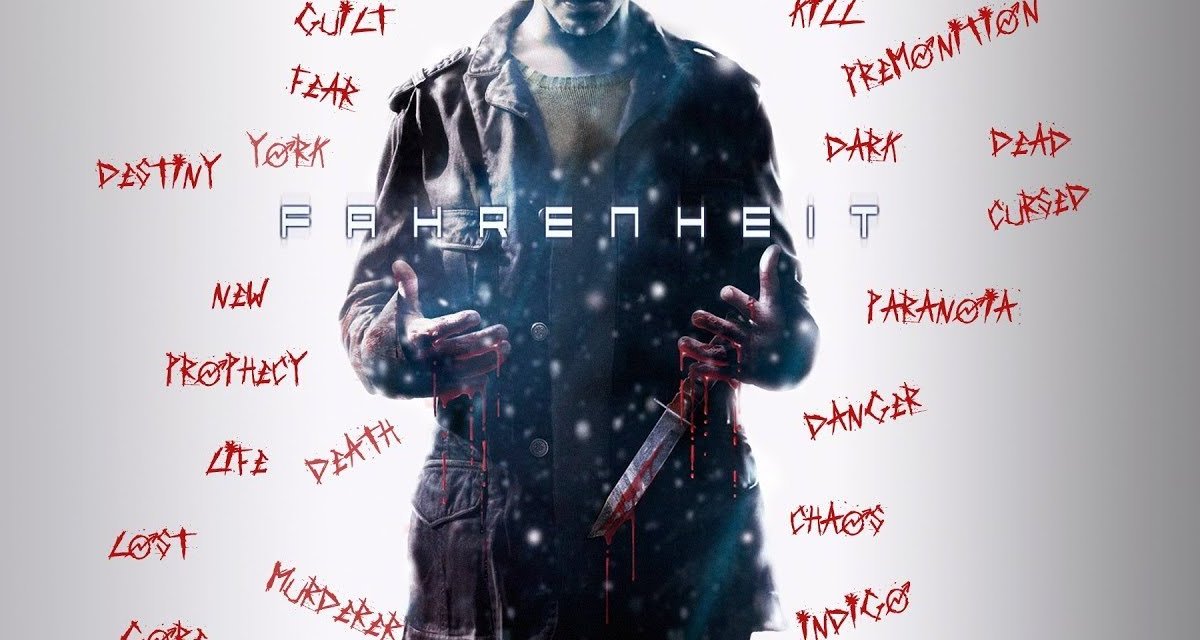
Let me introduce you to Fahrenheit: Indigo Prophecy.
Guilt is a Chilling Feeling – Fahrenheit at 20 Years Old
First off, I have to address the name. The original title is Fahrenheit, and is named that Europe. However, the game came out in 2005, a year after the Michael Moore documentary Fahrenheit 9/11.
As to not make American audiences think the game was in any way connected to the film, the game was renamed to Indigo Prophecy, a name that fits the story better, but is 100% less cool than “Fahrenheit”.
And just for clarity and for my sake, I’ll be referring to it as Fahrenheit throughout this look back.
So, what is this game and why do I love it?
Fahrenheit was created French developer Quantic Dream, more well known nowadays for their games Heavy Rain, Beyond: Two Souls, and most recently, Detroit: Become Human.
Quantic Dream games are focussed heavily on their cinematic quality, featuring long, winding stories connecting several characters, and recently use the voice and performance of Hollywood talent such as Elliot Page, Willem Dafoe, Clancy Brown, and Lance Henriksen.
Fahrenheit is the first game that Quantic Dream tried to make that followed this “cinematic” aspect, so is a fascinating artefact of a team working on the first of what would be their signature gameplay style.
The gameplay in Fahrenheit is a focussed mainly on quick-time-events that take over for major actions in the game, like performing feats of strength. The other half of the game is filled with dialogue sequences, guiding the story through our choices. But before I get too bogged down in the tech, I want to talk about the story, as it is the high point of the game.
***
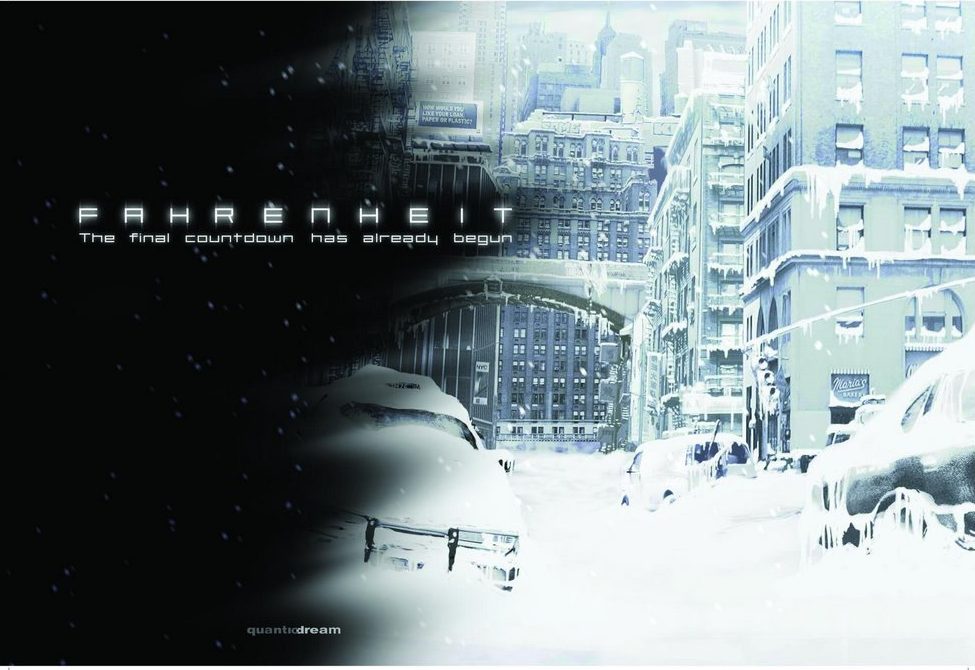
Fahrenheit is a modern-day murder mystery, where the player works on both sides of the case. First, the murderer Lucas Kane, who believes he was possessed into killing a random person. Second, the “smouldering” detective, Carla Valenti, who will hunt down Lucas through the largest snowstorm in history.
The story flies between genres freely, so alongside a murder mystery story we get an occult conspiracy, a hyperaction movie, a “deep” philosophical treaty on humanity, and in the end, an absolute mess of a story.
But however bad and ridiculous this game becomes, the opening is one of the best starts to a game I have ever played. Even for the 15th anniversary, the team at Quantic Dream talked about their favourite moments, and all three team members said the opening.
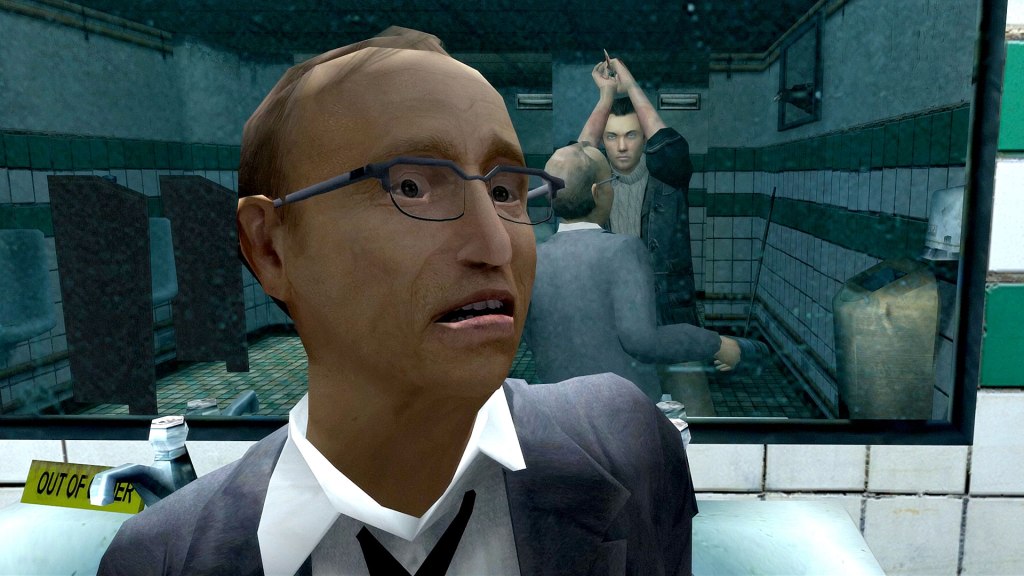
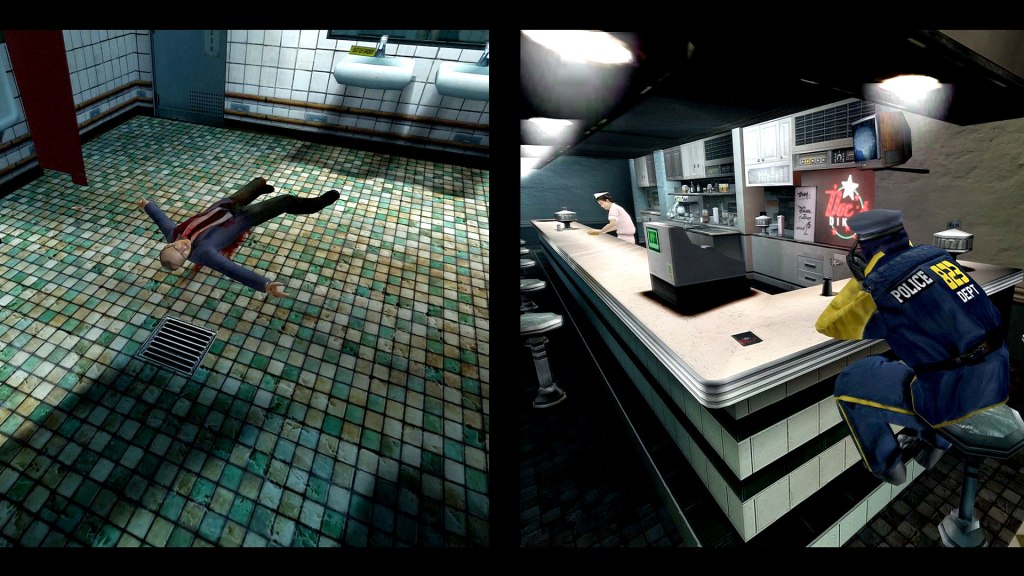
After sweeping shots over New York City at night, we arrive at Chapter 1: “The Murder”. In the dirty, cold bathroom of “Doc’s Diner”, a man, Lucas Kane hides in a bathroom stall.
Using a knife he had taken from his table, Lucas carves archaic symbols into his arms, before exiting the stall and heading for the unsuspecting man washing his hands.
As Lucas staggers forward, eyes rolled back in his head, we see a shadowy man surrounded by candles, guiding him through the same actions. Lucas eventually reaches his prey and attacks, stabbing the victim three times in the chest.
As soon as the murder is complete, Lucas is pulled back to reality, and it’s here where the game begins.
The opening is instantly iconic, cementing a player’s interest and establishing a dark, brooding tone over the game. It’s a perfect microcosm of the game that works as its own mini-story, and worked so well the did a very similar thing for the opening of Detroit: Become Human.
***
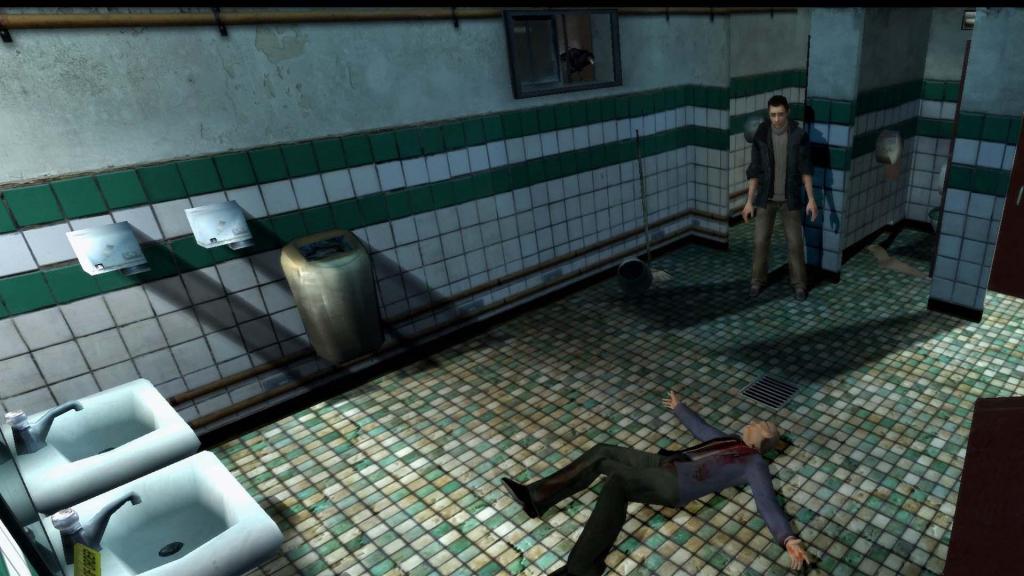
Now a player is in control of Lucas, but what to do? And just to make the situation a little more tense, there is an off-duty police officer having a cup of coffee right outside the bathroom door.
The situation can feel overwhelming at first, but luckily the game guides you subtly with its camera angles. To interact with objects in the world, the character must be within reaching distance from them.
Luckily, Lucas’ starting point allows him to pick up the man and drag him via a QTE into a bathroom stall and close the door. It’s here where another mechanic of Fahrenheit comes into play, the “Sanity Meter”.
Certain actions in the game have a hidden point score attached to them. If the action is something “positive”; taking an aspirin when feeling ill, talking with your estranged brother…or hiding a body you just murdered in a toilet stall, will increase the Sanity Meter.
Doing actions like remembering you killed someone, not kissing your girlfriend on the way out of the door, or losing a game of basketball taking place in sub-zero weather, will deplete the Sanity Meter.
There are six points, 100% (Neutral, because in Fahrenheit nobody is enjoying a moment of their life), then Tense, Anxious, Depressed, Overwrought, and finally Wrecked.
If one of the characters ever “gets rekt” then the game ends. Lucas commits suicide, and the two police officers, Carla and Tyler, resign from the Police Force.
***
Back to the bathroom, it’s amazing how many permutations there are. This scene was the demo for the game so probably got the most amount of attention paid to it, but it’s amazing how a player can intentionally mess up the story to make things harder for themselves.
The general first level moments are Lucas hiding the body, cleaning the blood on the floor, washing his hands, hiding the knife, paying for his meal, and then leaving (via taxi or subway), with a few extras like playing the jukebox or buying condoms in the bathroom (because why not?).
But if the player wants, they can immediately leave the bathroom in a panic, bloody arms on displayed, knocking into the waitress and alerting the police officer. The police officer starts moving towards Lucas, and now the only way out is through the backdoor.
If you’re not fast enough to escape, Lucas will be caught and the game ends with an iconic line, “That’s the end of my story…”
Lucas will wax lyrical about him, the place he was in, and how everyone thinks he’s a murderer, before you reload the save. Every time you are in a no-win situation it will start with this same phrase, and will become meme-worthy by the end of a play through.
Of course, successfully escaping the police is a different story due to the controls. The characters work on momentum, so you have to hold the directional stick for a very long time to get the character to move, which in chase sequences or moments of action, makes it agonisingly slow.
At least you think the movement could be solved by camera controls, but since we are going for a “cinematic” game, there is no traditional camera moment.
Instead, the player can switch between different camera angles reminiscent of old Silent Hill or Resident Evil games. The problem is with tank controls, switching the camera may switch the direction of travel and make the character do a complete 180 spin.
After a while you get a general sense of it, learning to quickly flick between cameras until you find the optimal one.
***
Now that Lucas has escaped the diner, we switch to the other side of the coin, Detective Carla Valenti.
Carla (and partner Tyler Miles) analyse the crime scene and interrogate a witness via a new gameplay mechanic; the dialogue system.
Dialogue trees were nothing new in games, with text-adventures and some RPGs having different dialogues that could be chosen, but having the majority of a game focussed heavily on this one aspect is quite revolutionary for the time.
You have to remember, this game was five to ten years away from the nouveau point-and-click boom that really cemented the concept, with games such as Telltale’s The Walking Dead or ZA/UM’s Disco Elysium.
There is a set path to the dialogue in Fahrenheit, but it isn’t telegraphed, allowing the player to either stumble upon it naturally or make it feel as if the conversations flows that way.
For example, in the Diner when Carla is talking to the off-duty cop that was there, you may talk first about the waitress witness, moving the story forward to the next moment.
But you can also ask about the cop and why he was there, before it segues into conversation of the suspect, to the weapon, and eventually back to the waitress.
And it’s not just conventional optional dialogue, these dialogue trees wind around one another so certain topics will be off-limits if you take a different path. It’s neat and gives a sense of role-playing, acting how you think Carla would talk to people.
The only real downside is how the conversation mechanic works in practice. When a conversation mechanic starts, the game just throws up three or four different topics.
For that first conversation in the diner, the choices are “Martin”, “Suspect”, “Witnesses” and “Victim”, with nothing else to go on about what will be discussed.
On top of that, there is a timer, from anywhere from ten to five seconds, leading some dialogue systems to be a mad scramble to hit which topic you want. I get why there was a timer, so the player isn’t stuck in any down time pondering their choices like in Mass Effect, but does make the moments more tense than it needs to be.

***
If players feel inclined they can switch between Carla and Tyler in the game, but apart from a few bits of dialogue, they play mostly the same.
Having two cops playable is an interesting dynamic, and Carla and Tyler do have good banter and enough of different personalities to work off each other, Carla being the forever-single workaholic and Tyler the more laid-back and in a long-term relationship.
If the player does switch to Tyler though, the most generic of RnB Hip-Hop beat begins the play. No other character has an “underscore” theme like this, and it only plays with Tyler. It’s so tonally off and outright racist that I would have to believe someone at Quantic Dream thinks this is great compliment to Tyler.
So the plot continues on these two threads, Lucas trying to figure out what happened to him, and Carla (with sometimes Tyler) trying to identify and catch the killer.
It’s a fascinating double thread, of getting to piece together a story from both sides and on a first play through you will wonder how it will all fit together (oh the sweet innocence of wanting a mystery to be solved!)
***
But for a while, the story does actually work.
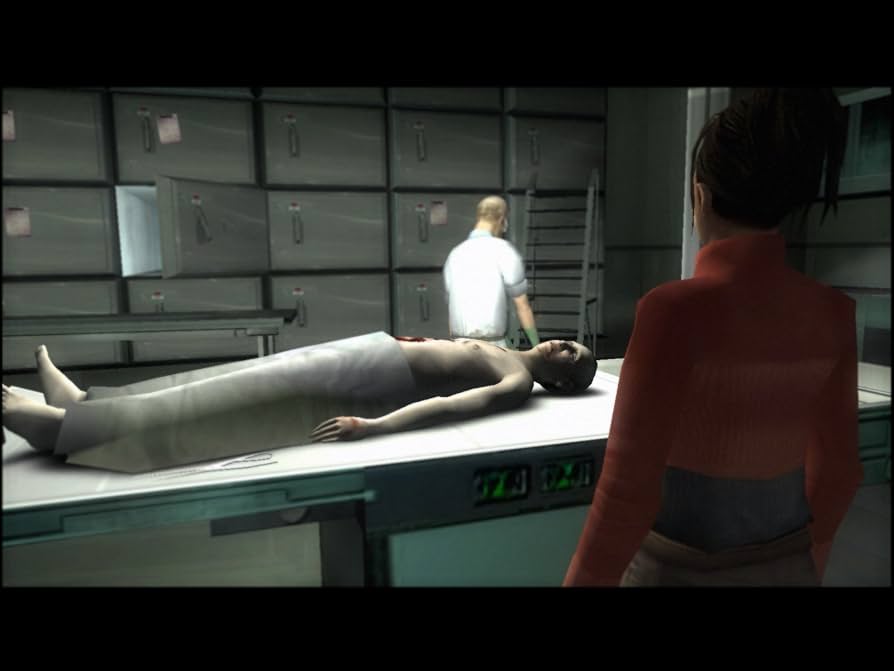
Carla’s search for answer leads to old case files, a suspicious autopsy and two sequences based on claustrophobia which she suffers from, the first a spooky trip to the police archives (which looks like Arkham Asylum) and then to an actual asylum (where the power goes out, leading to the inmates to chase her through the dark).
Lucas struggles with his guilt in self-destructive and dangerous ways, and begins to have visions (of giant Matrix-green dust mites trying to eat him).
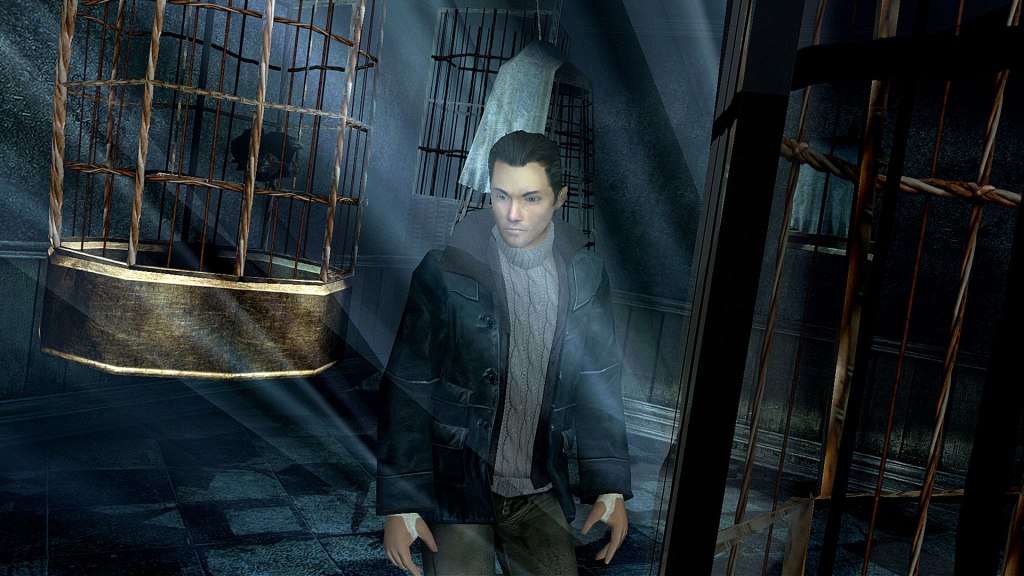
He goes to visit a psychic, a blind wheelchair-bound woman called Agatha, who hypnotises him back to the night of the murder and is honestly one of the best scenes of the entire game.
The scene replays multiple times as Agatha talks Lucas through the scene. She guides him to his table, but he is already gone, inside the bathroom murdering his victim. Lucas starts to panic but Agatha calms him down and it’s genuinely a high point of the voice acting.
We go through the scene again, skewed camera angles, blurred lighting, different vignettes of the scene playing out, is feels much more powerful and yes…”cinematic”.
***
Despite it being Quantic Dream’s first time at this gameplay style, they nail the aesthetic. And playing this game for the first time as a teenager, that artistic flourish pulled me in.
It’s the little things throughout game like the inventive multiple angle technique, the editing, dual cameras for simultaneous actions, even the main menu saying “New Movie” instead of “New Game”.
And since this was 2005, it was a good few years before Naughty Dog and the entire “cinematic” genre collapsed in on its own smug self-importance, and so Fahrenheit still feels unique, even twenty years on.
Unfortunately the game comes to a complete halt after the the halfway point, right after we get the first face off between Lucas and Carla at his place of work. It’s an interesting moment, playing the fugitive but now having to bluff your way out of all your hard work you’ve done as a police officer.
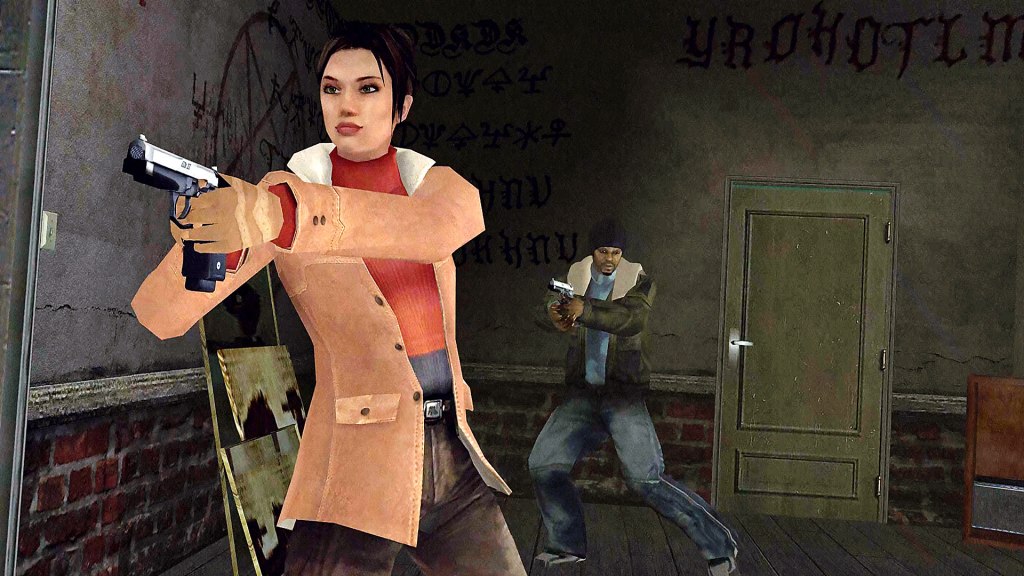
But Lucas can’t keep the suspicion off him for too long, and soon Carla and Tyler come to Lucas’ apartment to arrest him. He’s not at home, instead with Agatha, but someone has been in his apartment, as blood-red pentagrams and satanic symbols adorn the walls and lit candles cover the floor.
***
Lucas senses the police presence as he returns home, and gets spotted and arrested on the spot. But this isn’t a game over. It’s the start of the game spiralling into bad movie ripoffs and nonsensical writing.
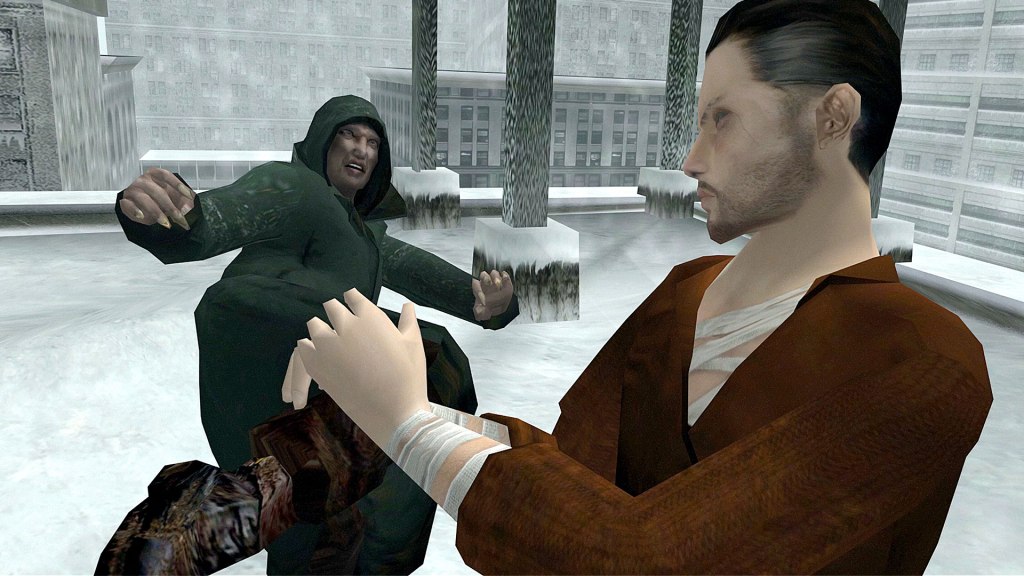
Ever since the murder Lucas has been experiencing heightened senses; he can hear thoughts, sees visions, and has also discovered his possessed Chi-based martial arts and acrobatics.
So instead of simply being arrested he begins running up walls, throwing Hadoukens at the cops, dodging bullets by leaning out the way, and all-in-all gloriously fucking up the story…which still has another twenty chapters to go!
Any semblance to a gritty crime thriller with a dash of the supernatural has been slam dunked into a bin. Now we have secret societies, Mayan death rituals, stone statues coming to life, the Internet becoming sentient (and taking over Agatha’s body) and Lucas being killed by the Mayans and then revived by the Internet being.
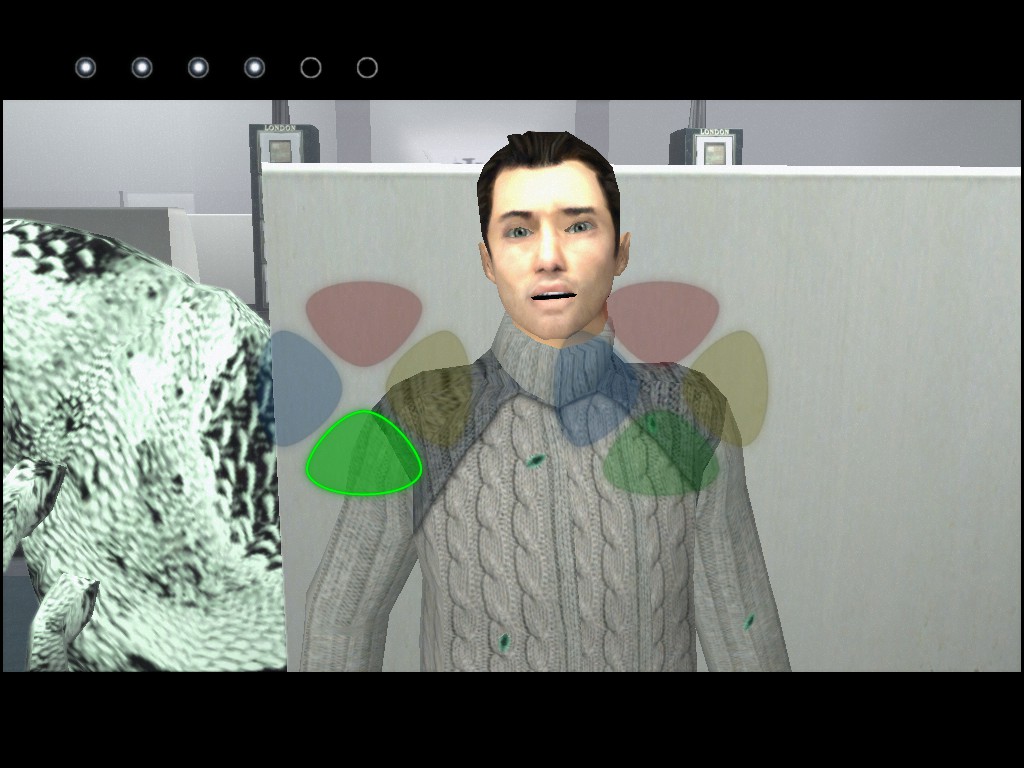
There is hardly any more dialogue sequences, the focus is now on the worst of the gameplay aspects. It’s another QTE variation, using a bizarre sequence of buttons reminiscent of the Simon Says board game.
Eight sets of coloured arrows appear on the screen, mirroring the two analog sticks. When the arrows flash up, the player must move the stick in that direction as fast as possible.
It’s not very intuitive and since they are in the middle of the screen it obscures any action taking place, and is something that Quantic Dream quickly improved and iterated on for the rest of their games.
***
But back to the tailspin of a story.
The Internet and the Mayans are fighting a secret war, the snow (controlled by the Internet) is about to wipe out the entire world, but there is a secret weapon yet to be used. Lucas has been seeing a little girl during his visions (called the Indigo Child, hence Indigo Prophecy).
The Indigo Child holds the secret to unlimited power and both the Internet and the Mayans want her to help them rule of the world. So Lucas and Carla team up to kidnap the child and take her to a place called “The Chroma”, a secret military base that Lucas grew up on that was studying aliens or something, I wasn’t quite sure.
Since the snow is covering most of the world they have to use a secret underground militia of homeless people to shepherd them across the country…but only before Carla and Lucas put aside their differences and have sex in a disused train compartment.
There are a total of three sex scenes in this game. And one of those is PLAYABLE, with full-on “analog stick” control.
So the plot nonsenses its way to its conclusion, where we learn Lucas was given his Psycho Mantis powers by whatever this Chroma is when he was a baby.
The game rips off The Matrix and Dragonball Z for a final showdown, where either the Mayans, the Internet, or Lucas will hear the Indigo Child reveal her prophecy and we get other a good, bad, or mid ending.
Lucas sits around and monologues on the state of the world and who heard the prophecy, and Carla is revealed to be pregnant with their train compartment sex baby, who will be the next Indigo Child.
And Tyler…where is he? His girlfriend guilt-tripped him into quitting the police force and selling sneakers in Florida six chapters ago. You can intentionally say “No” to leaving with her, but Tyler never appears in the story again either way.
He doesn’t get to join the homeless resistance. He doesn’t get to meet the Indigo Child. He doesn’t even get to have sex in a dirty disused train compartment with a zombified Lucas. He’s just cut from the entire ending, as if he never existed at all.
***
It might sound like I hate this game. And to be fair, I spent a good amount of the this retrospective tearing into the gameplay and story. But when I think about Fahrenheit, I can’t help but smile.
I think of the opening, the wide-eyed awe I had at the dialogue sequencing, the action, the mood and style of the game. And also part of me loves that it went so far off course yet still tries to take itself seriously.
It’s interesting to see the bones of Quantic Dream’s later games in here. Each chapter you will see a nod to Heavy Rain or Detroit: Become Human, like seeing an early draft that has all the pieces but just slightly misses the mark. And maybe that’s why Fahrenheit isn’t as fondly remembered, when its spiritual sequels do things so much better.
Yet, the game still lives on. For its 10th Anniversary, the game got a quick update by remake titans Aspyr, who cleaned up the textures and gameplay for the PC but was released with little fanfare. Around the same time it was released as backwards compatible on both the PlayStation and Xbox Online Store.
But now, another ten years after that, maybe Fahrenheit will get some of the recognition it deserves. Not only as a fascinating crime mystery (for the first half of its run time), but as a model that hundreds of cinematic games and nouveau point-and-clicks stand on the shoulders of.
It’s adorably weird and wonderful in the way only a pet project from an auteur is, and that’s why it deserves to be remembered.
***
Banner Photo Source: blog.quanticdream.com
 TOM CLEMENT | GAME PRODUCER | NARRATIVE DESIGNER